Skip to content
Mallorca Fritz Discover the island Saved places
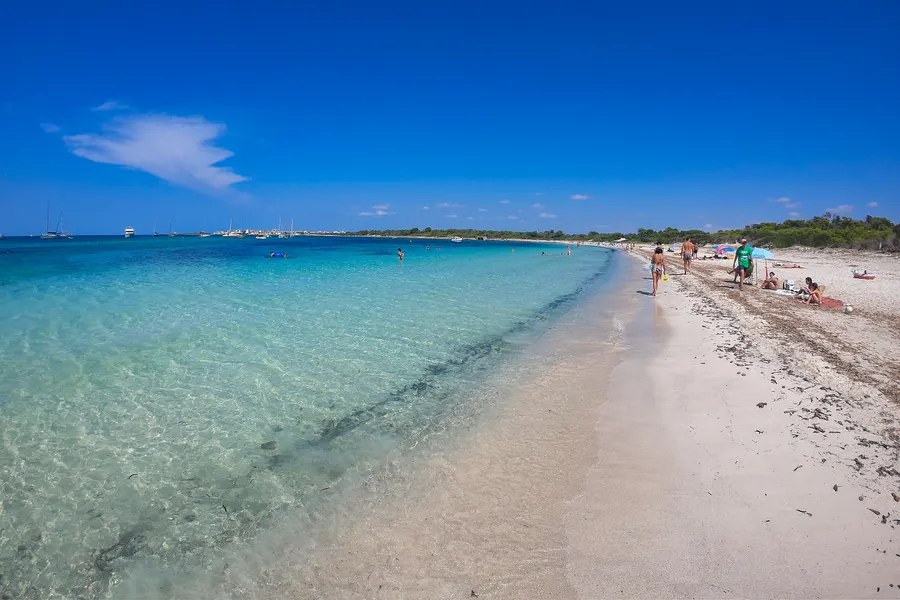
The wide bay at Cala Mondragó, with deep blue water, pale rocks and pine trees.

Beaches and coves in Mallorca

Beaches and swimming

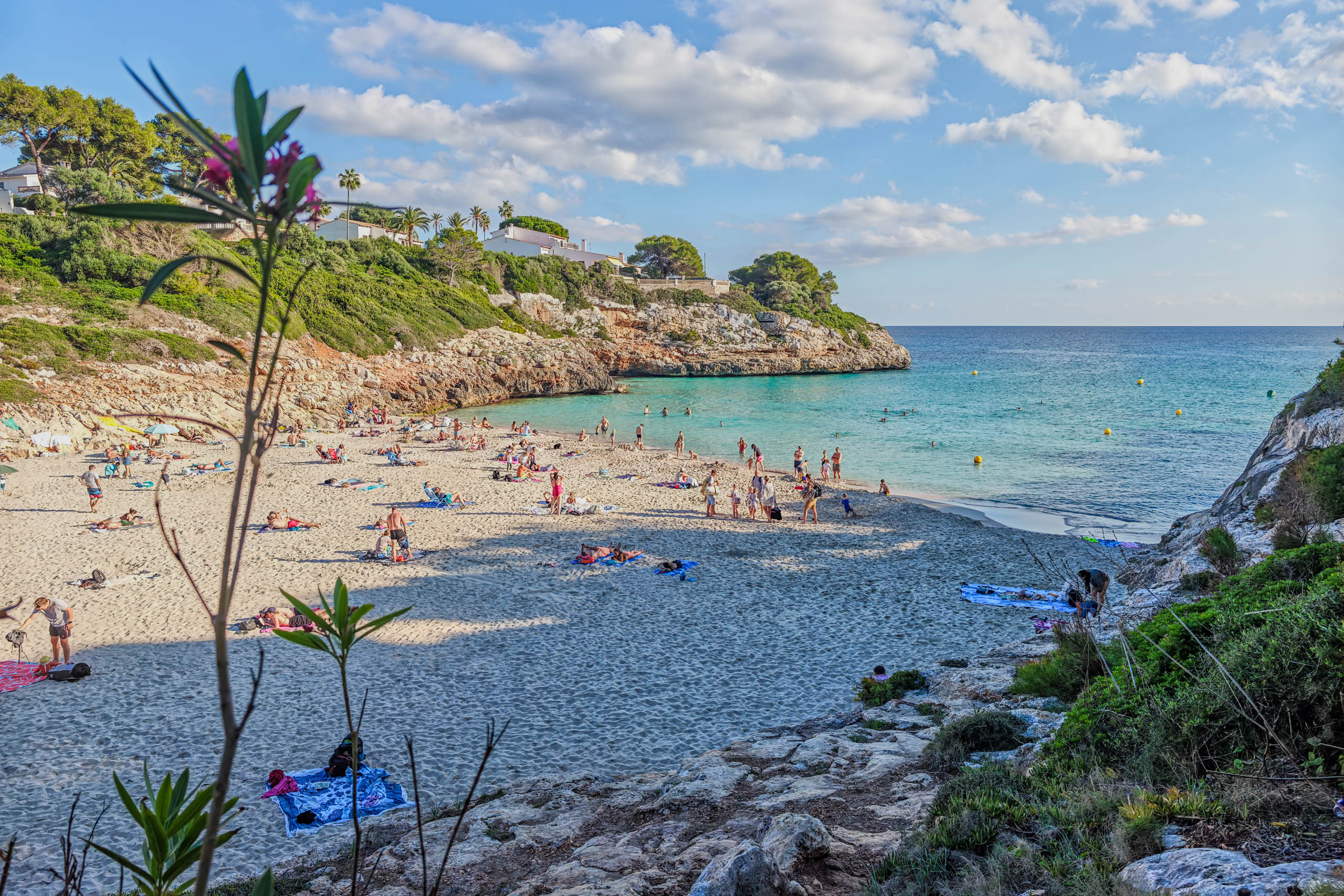
Cala Mondragó, in the nature park on Mallorca’s south-east coast.

There are plenty of beautiful coves. Finding the right one for your day comes down to four practical things.

The four things to check

Start your beach plans with the wind and the way down to the water. A sheltered sandy bay is very different from a rocky shore reached by a steep path. Shade and facilities matter too.

A photo only shows one moment. The wind, waves and number of visitors may be quite different on your day out. Check conditions before leaving, then decide again at the beach whether to go into the water.

Here are four things to help you choose, followed by all our beach and cove guides, arranged by coast.

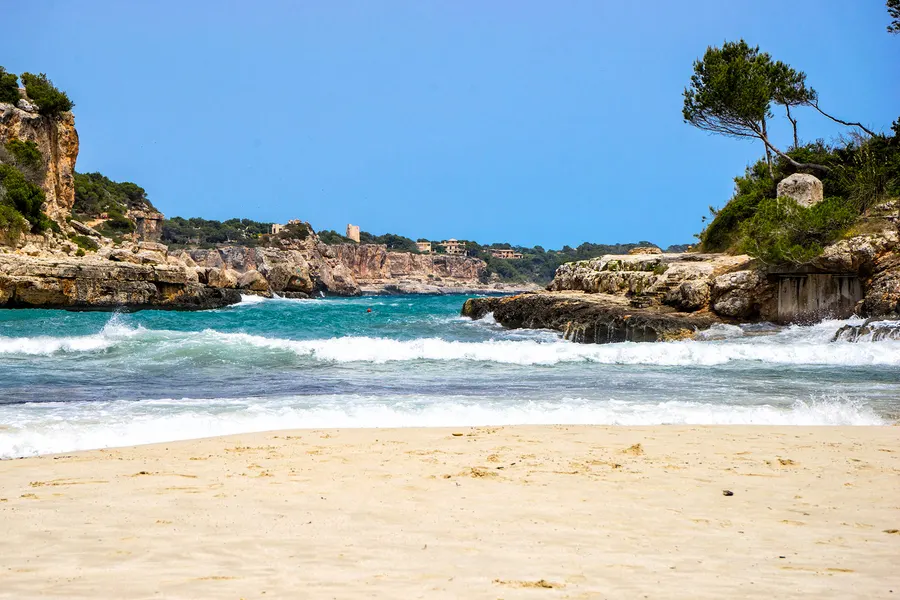
White surf rolls onto the empty sandy beach at Cala Llombards, beneath the vegetated cliffs.
1

Wind direction

Check the wind and waves before you set off.

A cove facing away from the wind may be more sheltered. That does not necessarily make the water calm or safe: swell, currents and the shape of the bay matter too. Check the forecast, then follow the beach flags and lifeguards’ advice when you arrive. A red flag means no swimming; a yellow flag calls for particular caution.
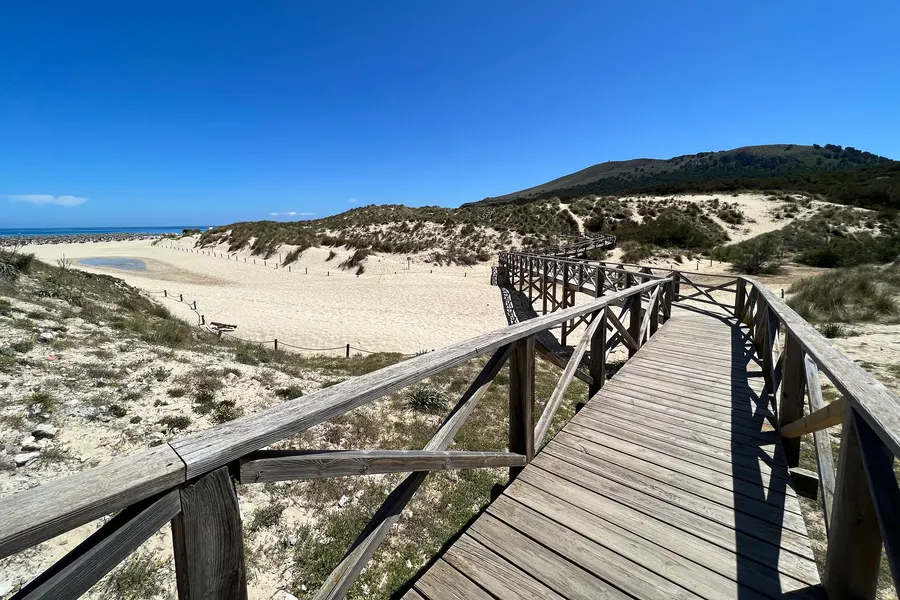
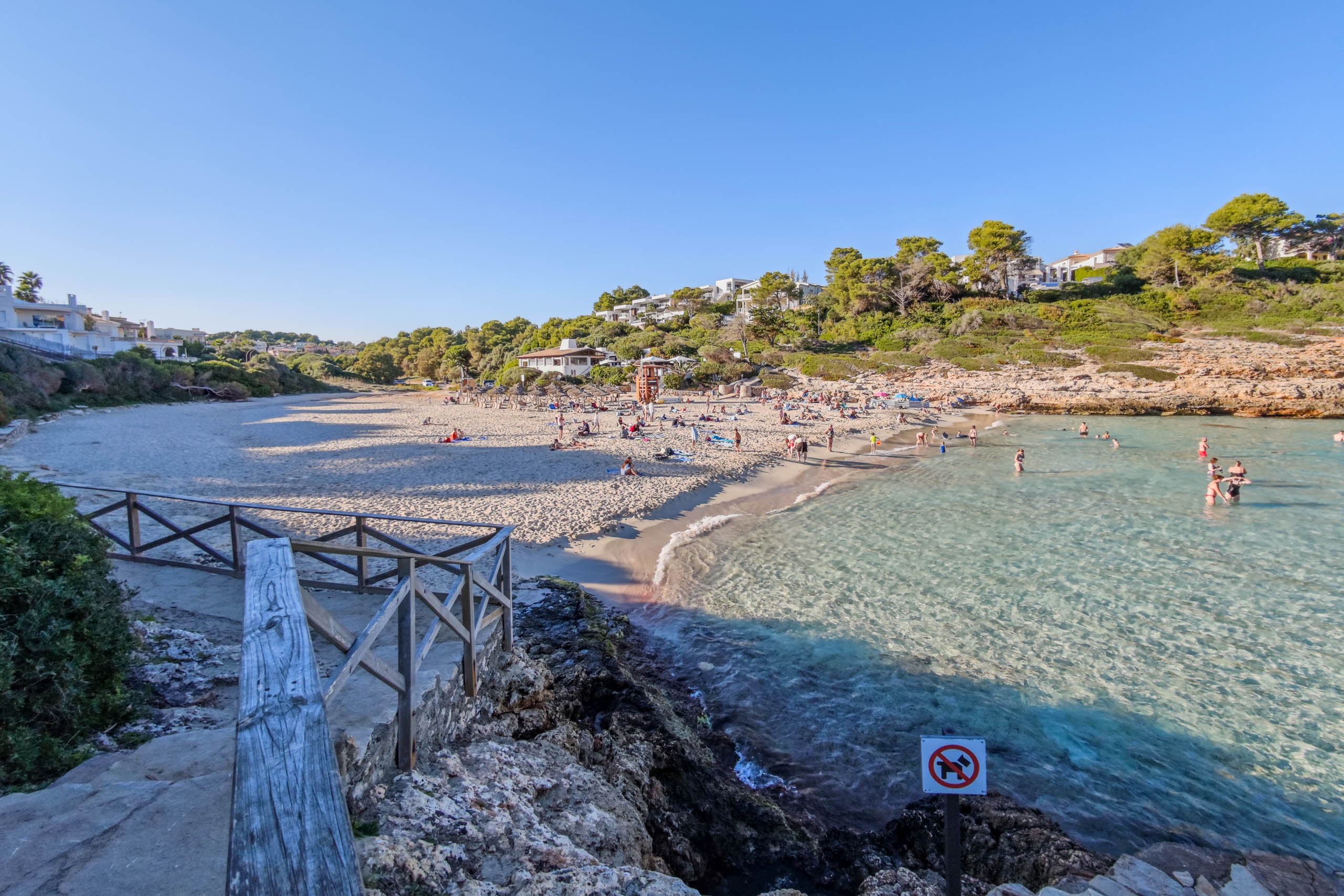
A wooden boardwalk with a handrail crosses the dunes behind Cala Mesquida towards the beach.
2

Getting to the water

How far is it from the car, and how steep is the path?

Some beaches are close to a car park. Others involve steep paths, steps or rocks. Check access beforehand, especially with children or limited mobility. A longer walk does not guarantee peace and quiet: even remote coves can be busy in summer.

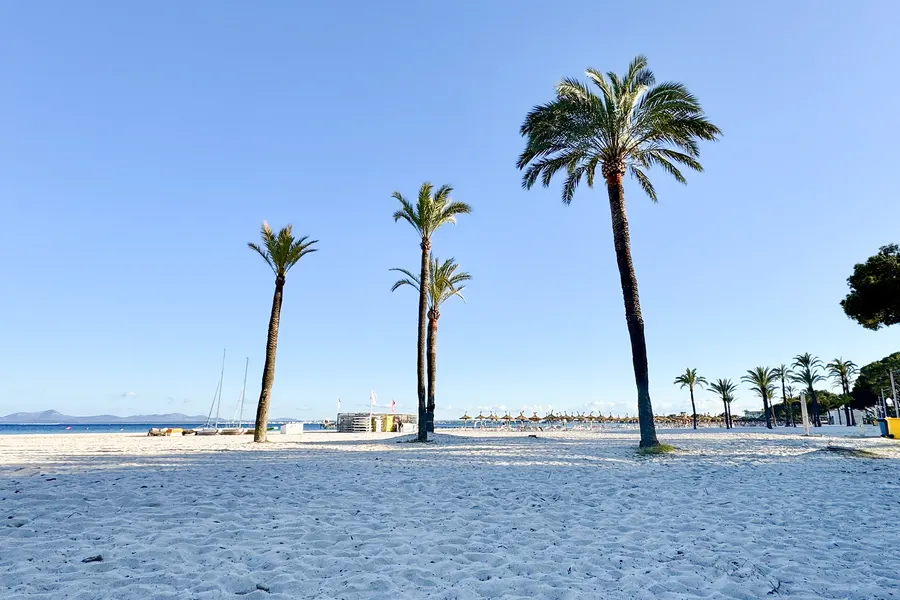
Three tall date palms on the empty, freshly smoothed sand in Port d’Alcúdia early in the morning.
3

Time of day

The same cove can feel very different in the morning and at four in the afternoon.

Popular beaches are often quieter early in the morning. There is no fixed time when a cove empties out. Plan to return in daylight, and remember that lifeguard cover may finish before your beach day does. In narrow rocky coves, the shade moves as the day goes on.

White sand at Platja des Carbó, with a dark strip of seagrass in the shallows, swimmers and pine trees beyond.
4

What is underfoot?

Sand, pebbles, rock shelves or seagrass.

Not every beautiful cove is suitable for swimming. On the south coast, washed-up seagrass helps protect the shore and is deliberately left in place at many beaches. Rocky entries can be slippery. Water shoes offer some protection but do not make an unsafe access point safe. Waves can also make getting out much harder.

Which coast suits you?

In the north, Alcúdia and Pollença bays offer long sandy beaches and smaller swimming spots. Much of the west coast is rocky and steep; the south-west also has sandy bays with plenty of facilities.

In the east and south-east, larger beaches alternate with little coves. Around Es Trenc in the south, there are long stretches of sand and dunes. Palma Bay combines beach life with city facilities.

No coast is automatically safe in a particular wind direction. Follow the 112 beach safety advice, the flags and the lifeguards on the spot.

At popular coves

Access may be restricted when car parks are full. Have another beach in mind and keep emergency access clear. Even arriving early does not guarantee a parking space.

All 37 swimming spots on Mallorca Fritz

Mallorca’s beaches and coves

Choose a coast, then open a guide for the season-by-season advice, access, beach surface and facilities.

The north

Pollença and Alcúdia bays combine long sandy beaches with smaller swimming spots. Wind and waves can change your plans here too.

A narrow paved lane with steps between white and sand-coloured houses in Alcanada, with pots and geraniums along the walls. AlcanadaAlcúdia

A quieter alternative to Port d’Alcúdia, 3 km to the east. Low villas sit among pines beside a pebbly, sandy shore without rows of sunbeds. Just offshore is Illa d’Alcanada, with its 19th-century lighthouse.

Elevated view of a Cala de Sant Vicenç cove, with turquoise water, a pale beach and parasols, white hotel buildings and bare mountain slopes behind. Cala de Sant VicençPollença

Four small coves beneath the dramatic cliffs of Cavall Bernat, rising around 300 metres above the coast. Houses and hotels cluster around the water, in a landscape that has drawn painters for more than a century.

Rust-red CAN PICAFORT metal lettering on a low wall beside the waterfront, with choppy water, an obelisk and mountains under cloud. Can PicafortSanta Margalida

A small fishing settlement first recorded in 1860 has become a busy holiday resort. Come for the beach, the promenade and everything within walking distance. For more space on the sand, head north towards Platja de Muro.

Formentor beach with turquoise shallows and a pale crescent of sand, a white lifeguard tower beneath pines and the peninsula's wooded ridge behind. Platja de FormentorPollença

One of the north's best-known beaches: pale sand beneath old pines, the peninsula's mountains behind and water in shades of blue ahead. Summer road access needs planning.

A broad, almost empty sandy beach beneath clouds, with a low vegetated dune to the left, surf to the right, two walkers and the Alcanada headland and mountains on the horizon. Platja de MuroMuro

A long sandy stretch of the Bay of Alcúdia, with protected dunes and pines at Es Comú rather than a continuous hotel frontage. S'Albufera lies behind it, while near Can Picafort around 140 little holiday houses stand among sandy lanes.

Pale sandy beach and turquoise sea at Port d'Alcúdia, with walkers at the water's edge and pines along the shore beneath blue sky. Port d'AlcúdiaAlcúdia

Five kilometres of pale sand shelving gently into the sea, backed by hotels, bars and shops. A classic beach holiday on Alcúdia bay, with a medieval walled town just two kilometres inland.

View from a wooded hill across Pollença bay, with pines and houses, anchored sailing boats, the long waterfront and layers of Tramuntana mountains. Port de PollençaPollença

A quieter, more expensive neighbour to Alcúdia bay, with the waterfront Pine Walk, a royal yacht club and reliable afternoon sailing breezes between the mountains. Some local life continues through winter.

Broad pale beach at Son Serra de Marina with turquoise shallows and few people, backed by the Massís d'Artà beneath blue skies. Son Serra de MarinaSanta Margalida

A planned village of grid-pattern streets, no hotels and houses no higher than two storeys. In front lies a long, natural beach backed by protected dunes — a coast that narrowly escaped becoming another Rimini.

The east

Sandy beaches and rocky coves between Cala Mesquida and Porto Cristo. Access, shade and facilities vary from place to place.

Cala Agulla seen from a wooded hill, with deep blue and turquoise water, a pale crescent of sand and dense pines, and Cala Ratjada's buildings beyond. Cala AgullaCapdepera

A broad sandy bay north-west of Cala Ratjada, backed by pine woods and dunes. Pale sand fills the centre, with rocky shelves in the shallow water at either end. There are beach bars and a car park, rather than a line of hotels.

Side view of Cala Anguila's sandy beach, bathers and turquoise water between rocky shores covered in plants.Cala AnguilaManacor

Cala Anguila lies south of Porto Cristo, beside Cala Mandia. A small sandy beach opens between low rocks and pines, with clear, shallow water. A restaurant and sunloungers make a beach day easy. Many families share the bay in high summer; outside the main season, there is more room to relax.

Cala Mandia's pale sandy beach, bathers and clear water, with rocks, pines and holiday homes behind.Cala MandiaManacor

Cala Mandia, also called Cala Mendia, lies south of Porto Cristo. Pale sand, clear water and gently shelving shallows make this small bay popular with families. Hotels and holiday homes stand behind it. High season is busy; spring and autumn offer a more relaxed beach day.

View over scrub towards Cala Mesquida's pale beach and turquoise water, with white resort buildings at the left edge of the bay. Cala MesquidaCapdepera

A broad stretch of pale sand with protected dunes behind it and a wooden boardwalk crossing them. Cala Mesquida faces north, so waves and currents can be strong. Check the beach flags before swimming.

Cala Millor's broad bay, with clear turquoise water, a pale sandy beach and hotels behind beneath a blue sky. Cala MillorSon Servera

Nearly two kilometres of pale sand, a car-free promenade and hotels behind it. Cala Millor is an unmistakable holiday resort, with a few more year-round services than many of its neighbours on the east coast.

Cala Moltó's narrow pale sandy strip between rocks, with two sailing boats in calm water and a wooded headland beyond. Cala MoltóCapdepera

A small cove beyond Cala Agulla, reached by a ten-minute walk over rocky ground. There is a narrow strip of sand between the rocks, sometimes boats offshore, and no kiosk, sunloungers or lifeguards.

Cala Ratjada harbour with closely moored white motorboats, waterfront buildings and restaurants, and wooded hills behind. Cala RatjadaCapdepera

A working fishing harbour and lively holiday resort on Mallorca's north-east coast. Three different beaches are within reach on foot, with a 19th-century lighthouse and sculpture gardens on the hills above.

View over pines and a tiled roof towards Canyamel's turquoise bay, pale sandy beach and waterfront hotels. CanyamelCapdepera

A sandy bay backed by pine-covered slopes, a handful of hotels and a golf course. Canyamel is one of the quieter beach resorts in the north-east, with the Coves d'Artà in the cliffs nearby.

A large white stone sculpture of a seated woman on the red-paved promenade, facing the rocky shore, calm sea and mountains of the Victòria peninsula. Colònia de Sant PereArtà

Founded in 1880, this small coastal town has a harbour, a short beach and a promenade with a handful of restaurants, backed by the mountains of Artà. A quieter alternative to the larger resorts around the Bay of Alcúdia.

Porto Cristo's sandy beach at the head of a sheltered bay, with turquoise water, swimmers and hotels and houses rising behind. Porto CristoManacor

A town with two different daily moods. From ten until four, coaches bring visitors to the Coves del Drac. Before and after, Porto Cristo is a quiet harbour town with an old centre, a beach and a watchtower dating from 1577.

The south and south-east

Wide beaches around Es Trenc and smaller coves near Santanyí and Felanitx. Take water and sun protection for the more remote stretches.

Cala Brafi's clear turquoise and green-blue water between low rocky shores, with dense vegetation close to the sea. Cala BrafiFelanitx

A small, undeveloped bay with no kiosk or road to the sand. A rough path between dry-stone walls leads past a low wall to cross, the remains of a fisherman's house and trees offering welcome shade.

Drone view of Cala d'en Marçal, with turquoise water, two boats, a pale sandy beach and rocky shores. Cala d'en MarçalFelanitx

Golden sand, gently shelving water and a nearby bus stop make Cala d'en Marçal Portocolom's convenient family beach. It is easy to enjoy — and understandably busy in summer.

Drone view of Cala d'Or's coast, with deep blue sea, the harbour entrance, pale rocky shores and white houses among trees. Cala d'OrSantanyí

A resort planned in the 1930s by an Ibizan who brought the style of his home island with him. Low white buildings surround turquoise coves and a marina, giving Cala d'Or a distinctive look.

Drone view from the sea towards Cala Llombards' turquoise water, pale sandy beach and rocky pine-covered shores with scattered houses. Cala LlombardsSantanyí

Pale sand between high rocky sides, clear water and boathouses built into the shore. Cala Llombards is no secret, but outside the busiest weeks it still makes a lovely place to spend time by the sea.

Elevated view of S'Amarador's pale sandy curve, beachgoers and turquoise water, surrounded by dense pines. Cala MondragóSantanyí

Three beaches within a natural park — S'Amarador, Ses Fonts de n'Alís and small Caló des Borgit. Pale sand lies between pines and rocks, reached by walking from the designated parking areas.

View from the cliff into Cala Pi's narrow inlet, with green-turquoise water between pale, densely planted rocky sides and open sea beyond. Cala PiLlucmajor

A narrow inlet reaches roughly 400 metres inland, ending in a small sandy beach. Old boathouses line the water, while a watchtower built in 1663 stands above the cliffs. A steep flight of 147 steps leads down to the sand.

Old pale stone fishermen's cottages and boathouses above Cala s'Almunia's rocky shore, with turquoise water and bare rock in front. Cala s'AlmuniaSantanyí

Around 110 steep steps lead down to fishermen's cottages, boathouses, rock and a tiny strip of sand. Cala s'Almunia is quite different from a conventional beach. Paths continue towards Caló des Moro, but remember the climb back when planning your day.

Drone view of Cala Santanyí's turquoise inlet between planted rocky shores, with boats and the sandy beach at the far end. Cala SantanyíSantanyí

Pale sand and gently shelving water in a rocky-sided bay, with hotels close behind. Cala Santanyí is a practical family beach and a useful starting point for a walk to the Es Pontàs rock arch.

View down towards Caló des Moro's tiny pale sandy area between steep rocks, with turquoise and deep blue water and a planted headland beyond. Caló des MoroSantanyí

One of Mallorca's best-known small coves, with turquoise water below steep rocky sides. Reaching the tiny sandy area involves rough paths and a demanding final descent. The nearby Cala s'Almunia route also includes a long flight of steps.

A broad shallow bay near Colònia de Sant Jordi, with clear turquoise water, pale sand and a low line of pines behind. Colònia de Sant JordiSes Salines

A former fishing harbour in southern Mallorca, now a holiday resort with several beaches close by. Boats leave for Cabrera, and you can walk along the coast towards Es Trenc.

Es Trenc’s dune-backed beach with fine pale sand, shallow turquoise water and low vegetation, with flat rocks in the foreground. Es TrencCampos

Pale sand, dunes and turquoise water: Es Trenc lies on Mallorca’s south coast between Ses Covetes and Colònia de Sant Jordi. Behind the beach are the Salobrar de Campos wetlands and salt pans. The landscape has been part of a natural park since 2017.

Very clear, gently shelving water beside a narrow strip of white sand at Platja des Carbó, with pines and anchored boats behind. Platja des CarbóSes Salines

A strip of white sand between Colònia de Sant Jordi and Mallorca's southern tip, reached on foot or by boat. The water is clear enough to see the seabed a long way out — a good reason for the walk.

White houses with green boathouse doors beside Porto Petro's natural harbour, with small fishing boats on calm, clear water. Porto PetroSantanyí

A kilometre and a half from Cala d'Or, but a different world — a natural harbour where fishermen still unload their catch, small sandy coves and a quiet enough pace to linger over dinner by the water.

Drone view of Portocolom's black-and-white striped lighthouse and white keeper's house on pale cliffs above blue sea. PortocolomFelanitx

One of Mallorca's largest natural harbours, with a quieter atmosphere than many east-coast resorts. Fishing boats line up outside colourful boathouses, backed by an old town where people still live and work.

Long paved breakwater at Sa Ràpita marina, with railings, sailing-boat pontoons on the right and rock armour on the left. Sa RàpitaCampos

A marina on the flat south coast, with an old watchtower and a beach strewn with seagrass rather than loungers. From here, you can walk along the shore to Es Trenc.

The west and south-west

Rocky and pebbly swimming spots along the Tramuntana coast, with well-equipped sandy bays in the south-west.

Palma and its bay

City beaches and seaside resorts close to cafés, shops and bus routes.

Questions about Mallorca’s beaches

What is the most beautiful cove in Mallorca?

There is no single answer, thankfully. The cove that makes your best beach day depends on the conditions: north wind or south wind, young children or snorkelling, August or May. Think about wind direction, access, time of day and what is underfoot. Below you will find the beaches and seaside places covered by Mallorca Fritz.

Where is sheltered in a northerly wind?

Coves on the coast facing away from the wind may be more sheltered. Wind direction alone does not tell you whether swimming is safe. Swell, currents, beach flags and advice on the spot matter too.

Is seagrass on the beach a bad sign?

No. Posidonia meadows help protect the coast, and washed-up material helps stop the beach being eroded in winter. It is deliberately left in place at many beaches. Seagrass on the shore does not, by itself, indicate poor water quality.

When are the coves quietest?

Early mornings and times outside peak season are often quieter. Popular coves can still be busy then. Access roads may be restricted when car parks fill up, so have an alternative in mind.

Can you swim in winter?

The sea is much colder than in summer. Mallorca Fritz’s climate averages show the warmest water in August, with September often still pleasantly warm. Many beaches have no lifeguards in winter. Take account of the cold, waves and how you will get out safely.