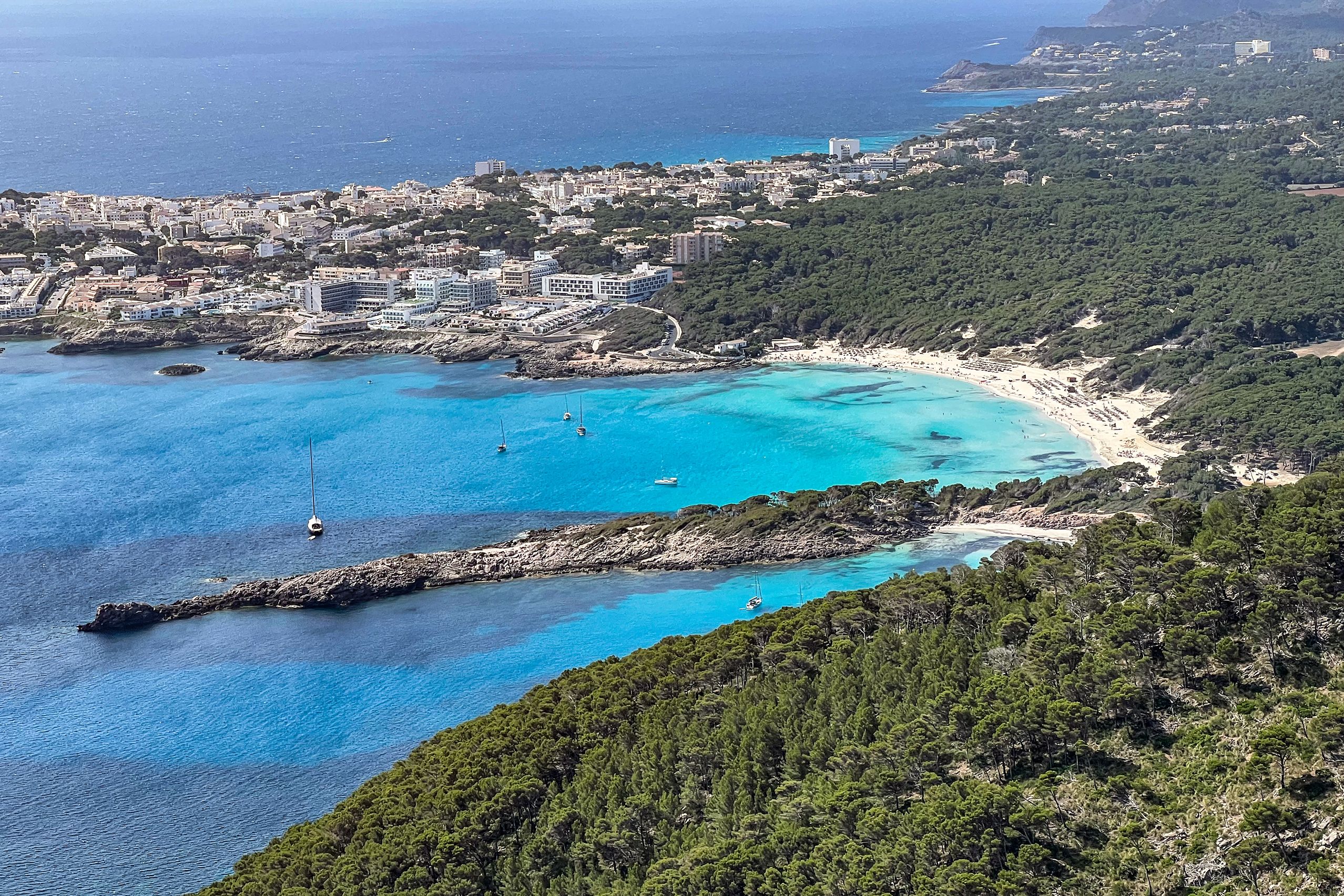
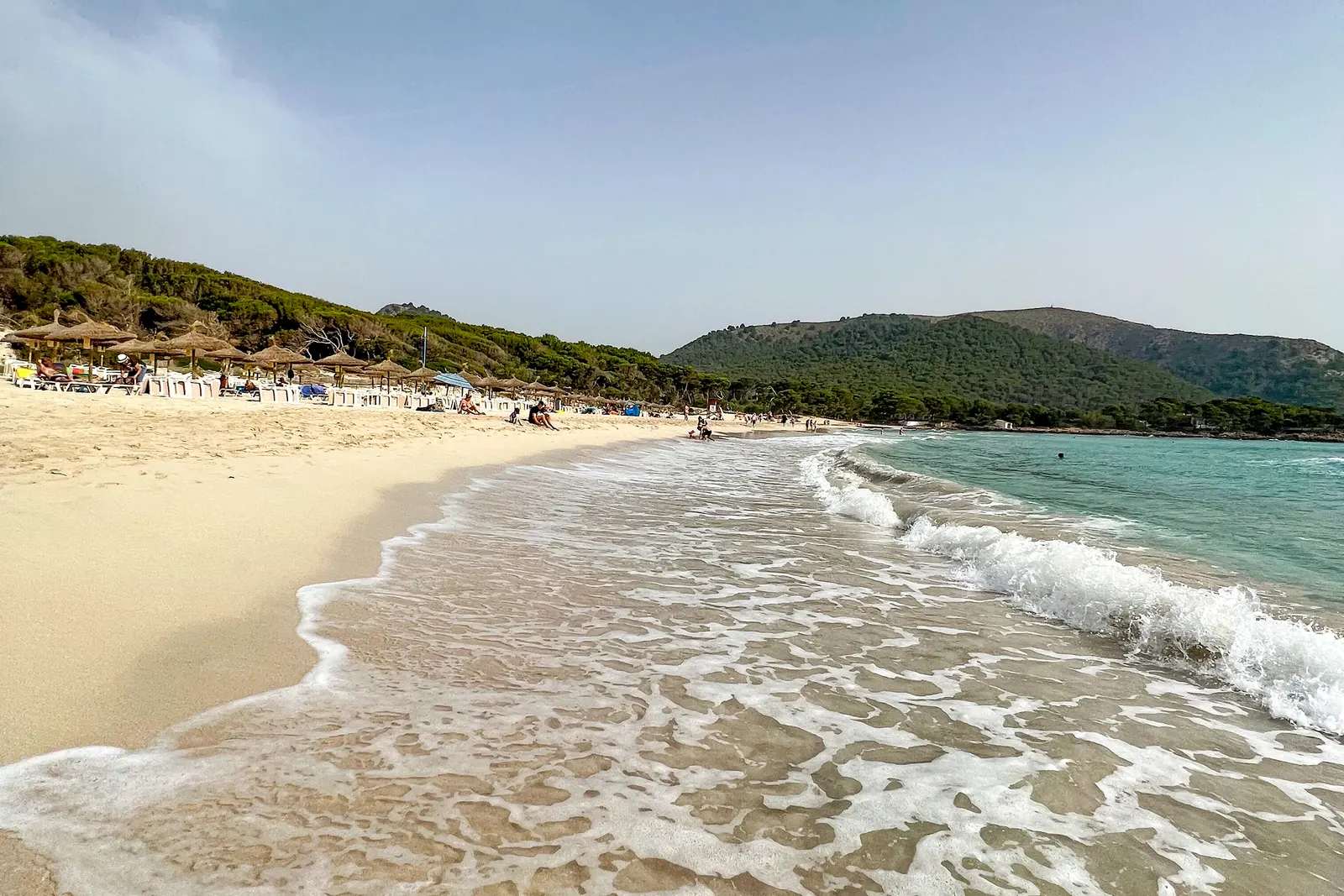
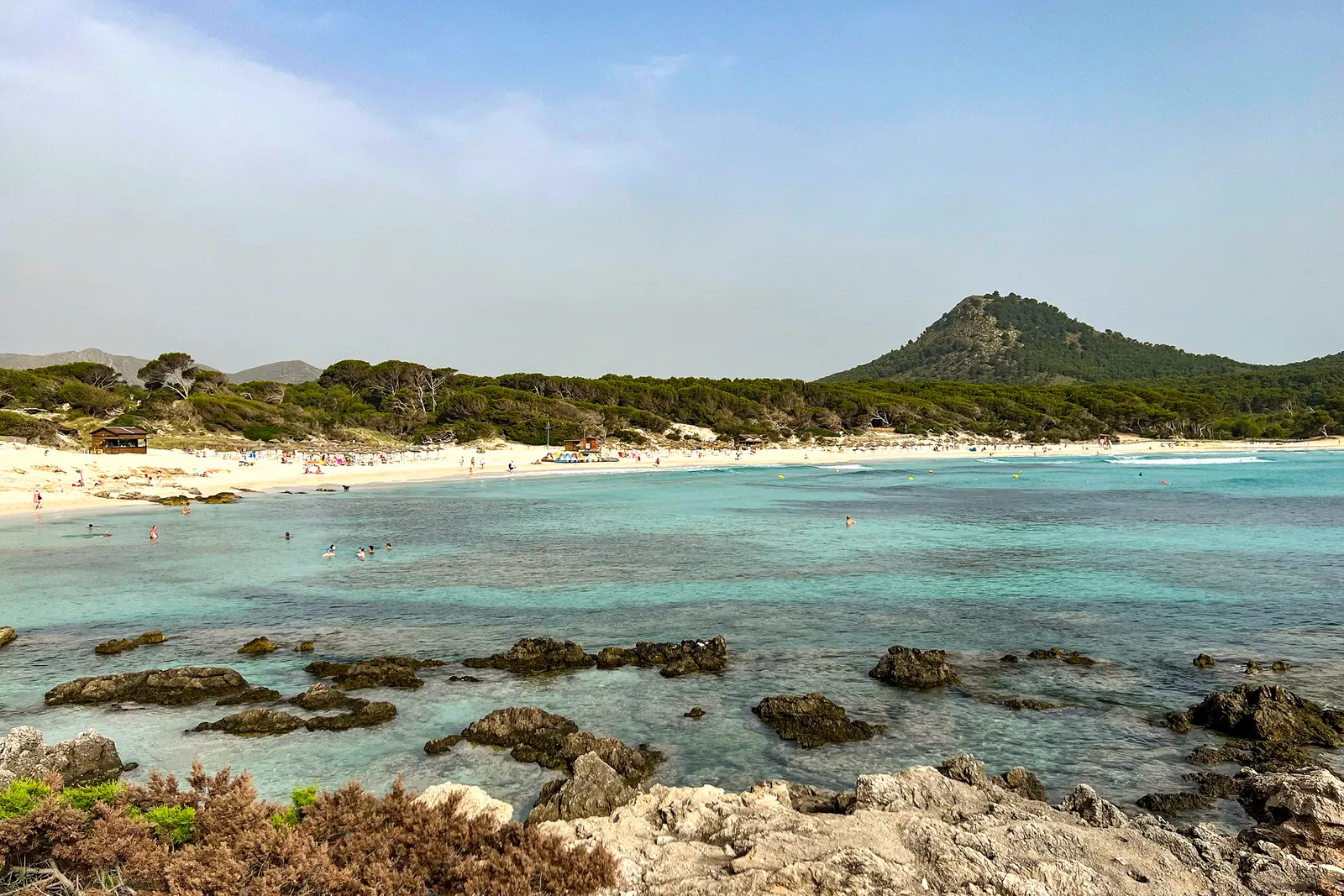
A broad sandy bay north-west of Cala Ratjada, backed by pine woods and dunes. Pale sand fills the centre, with rocky shelves in the shallow water at either end. There are beach bars and a car park, rather than a line of hotels.
Cala Agulla
Cala Agulla in 30 seconds
The essentials at a glance
- Worth visiting for
- A short visit
- Best for
- A large sandy beach backed by pine woods rather than hotels
- Best months
- March–June, September–October
- Time to allow
- Half a day, or a full day including Cala Moltó or the watchtower
- With children
- Good in calm conditions, with lifeguards during the season
- Without a car
- Easy enough
- Parking
- Large paid car park, often full by mid-morning in summer
- Getting into the water
- Gently shelving and sandy in the centre, rocky towards the sides
- Keep in mind
- Arriving by car at the last minute in high summer
- Access
- Pushchairs: Manageable as far as the beach edge · Wheelchairs: Access to the beach edge; the sand beyond is difficult
Get a feel for Mallorca. Find your kind of place.
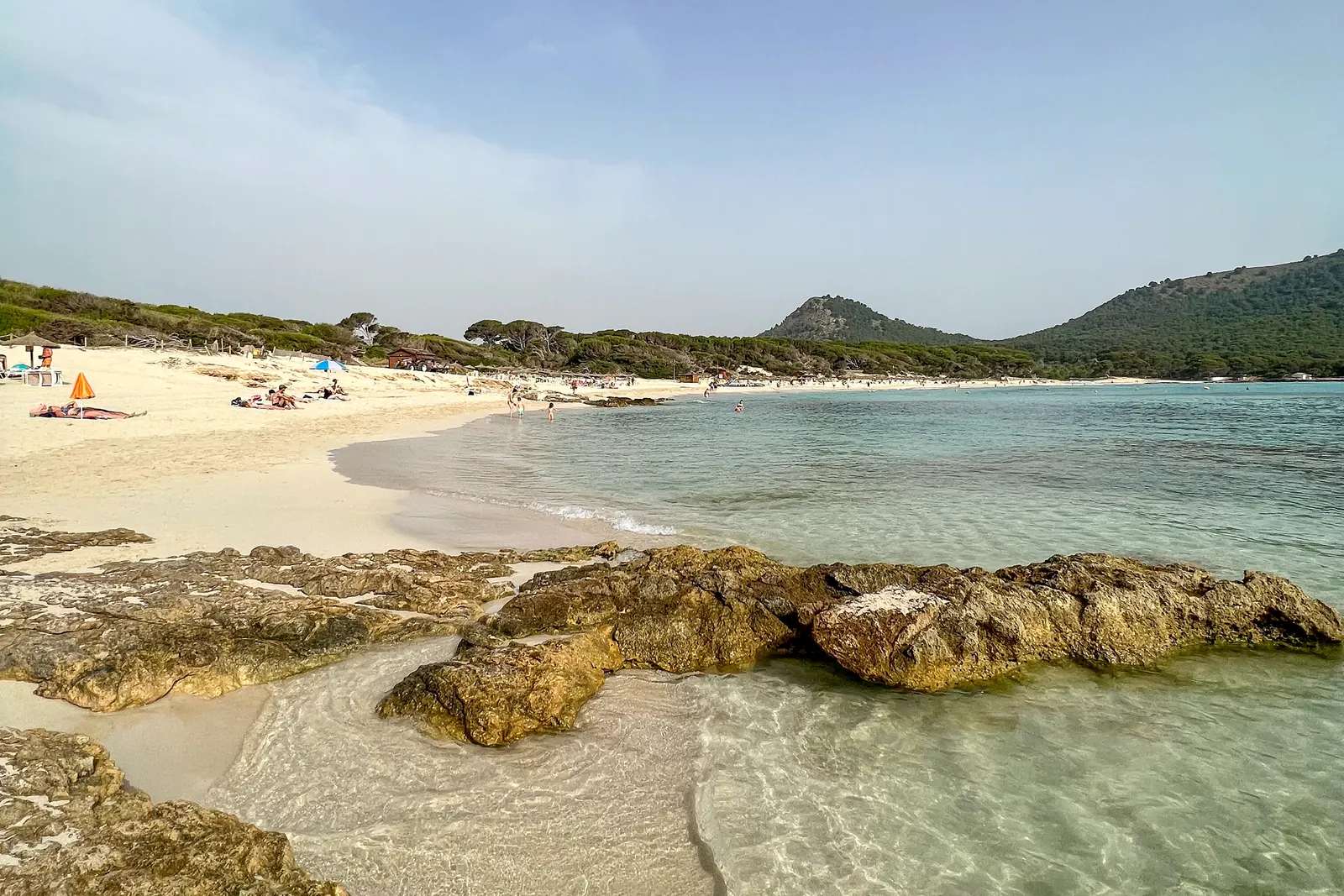
The rocky edges are worth exploring with a snorkel in calm conditions, and are often quieter.
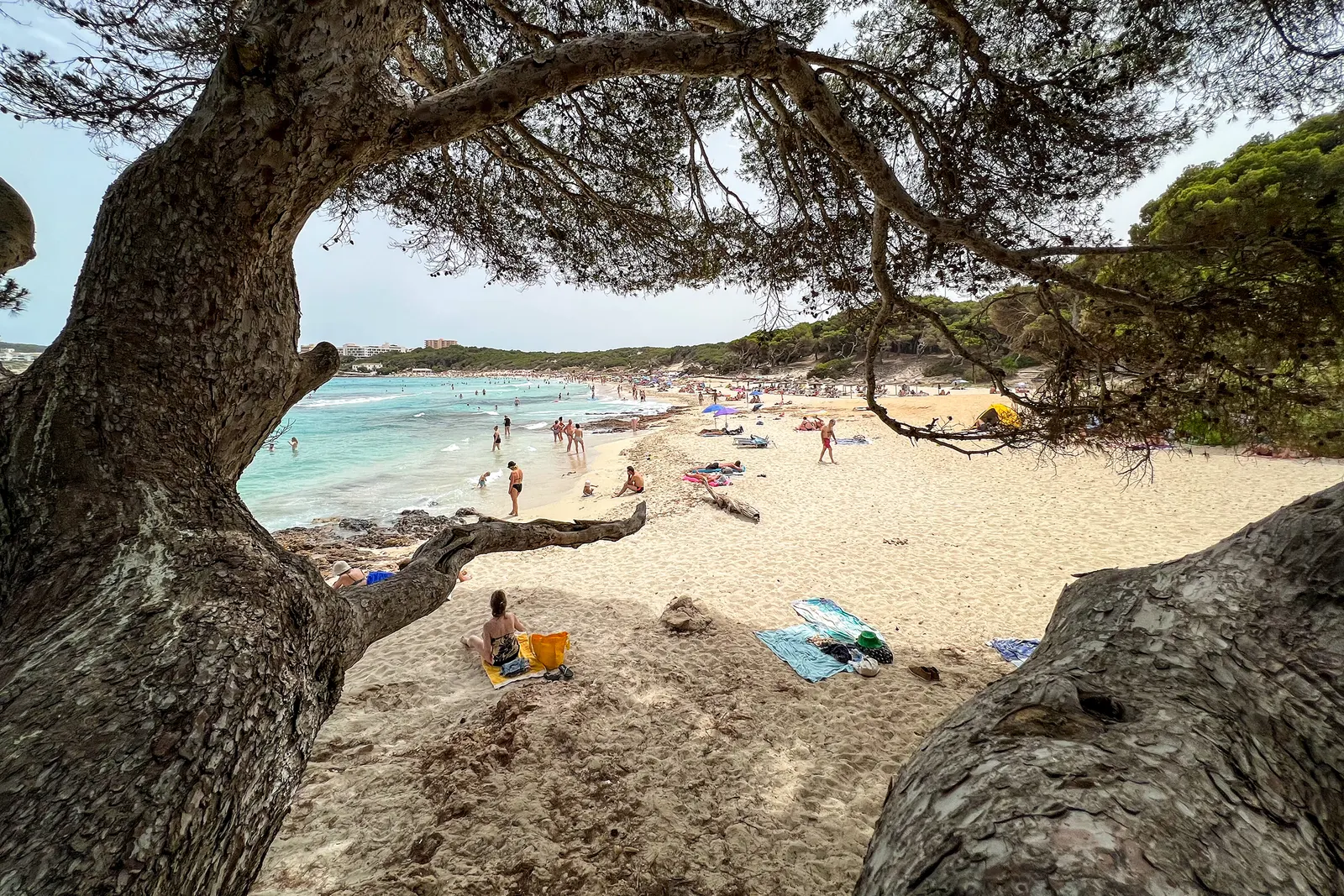
The old pines at the back of the beach provide its natural shade.
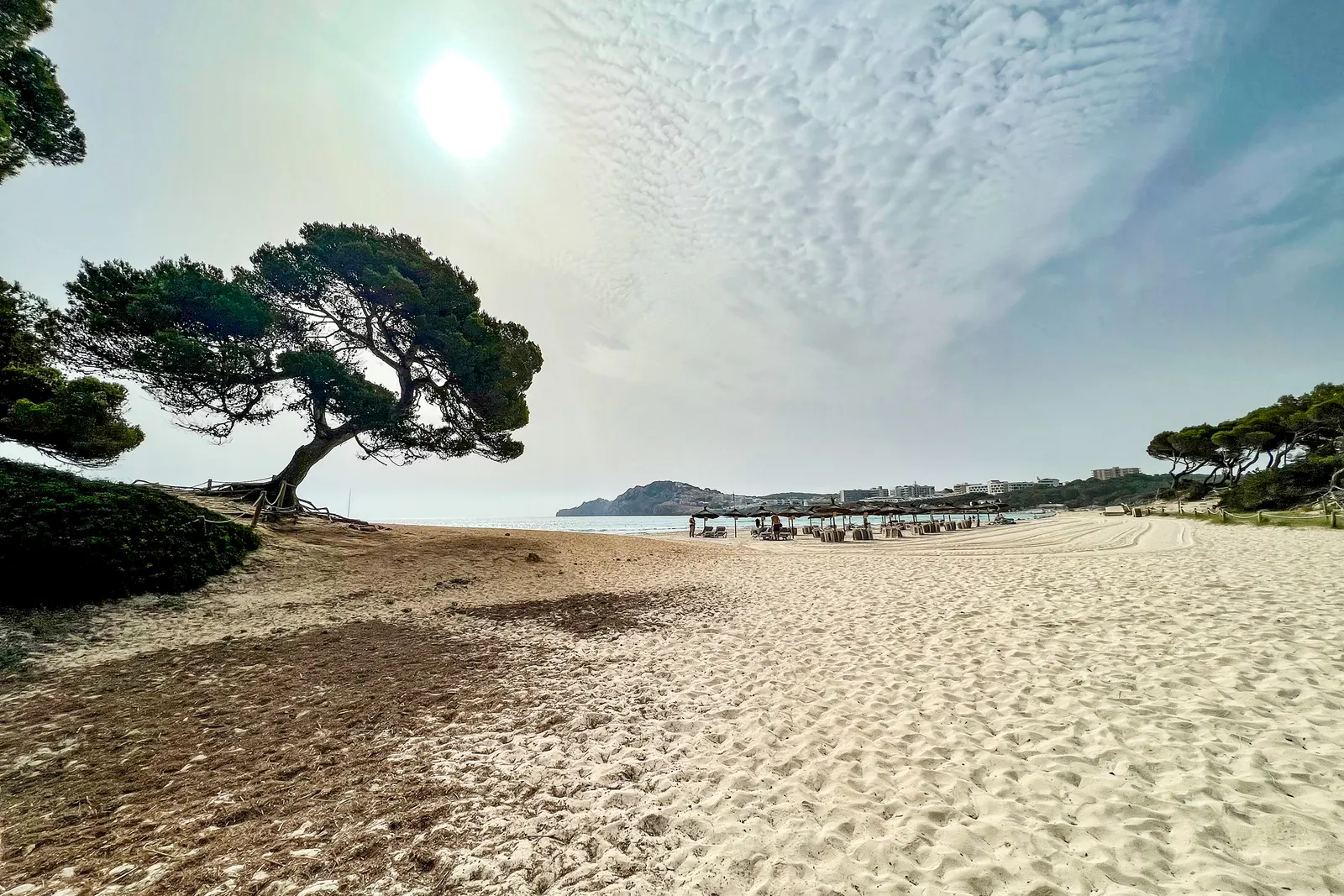
Early morning is the best chance of finding the sand quiet, especially in July.
Getting to know Cala Agulla
Does Cala Agulla suit your plans?
What to expect and what to know before you visit.
Who it suits
- A large sandy beach backed by pine woods rather than hotels
- Families looking for a gently shelving beach with seasonal lifeguards
- Walking from Cala Ratjada, around half an hour along the coast
- Snorkelling around the rocky edges of the bay
Things to bear in mind
- Arriving by car at the last minute in high summer
- Expecting peace and quiet on the area's main beach
- Needing shops and services beyond the beach bars
- Swimming when a northerly wind brings strong waves
Drive from the airport
80 minutes
80 km
Bus connections
Check seasonal services from Cala Ratjada and Capdepera
Region
Llevant
Nearest beach
Cala Moltó
1 km
Elevation
3 m
above sea level
Season guide for Cala Agulla
November Worth considering
Very quiet Mostly closed
Worth visiting in March, April, May, June, September and October. Less suitable in August. Mostly closed in January, February, March, November and December.
Location
Location of Cala Agulla
- Region
- Llevant
- Municipality
- Capdepera
- Elevation
- 3 m above sea level
- Airport
- 80 km , around 80 minutes
- Hire car
- not essential
- Worth visiting for
- a brief stop
- Coordinates
- 39.7222,3.4531
What makes this bay special
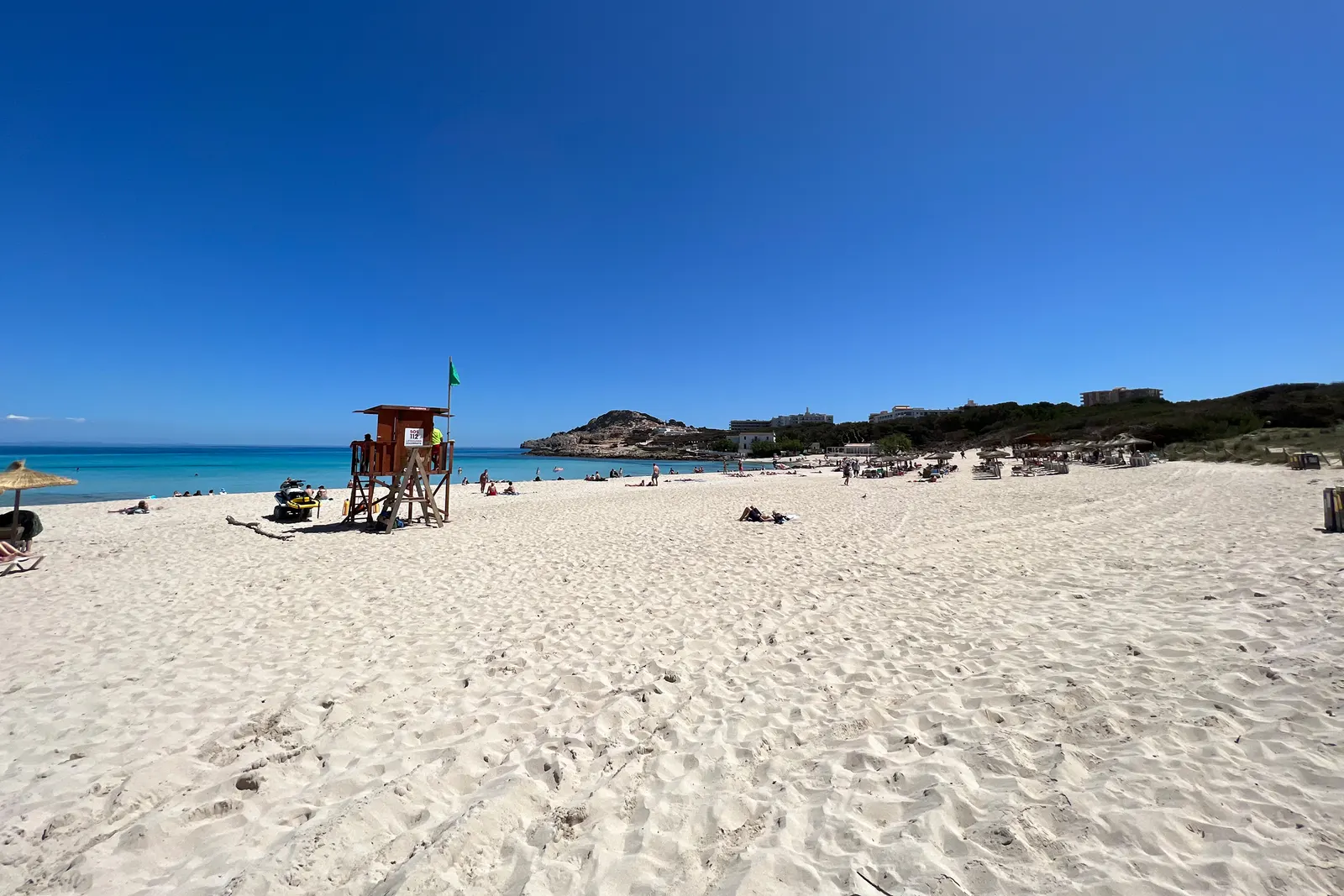
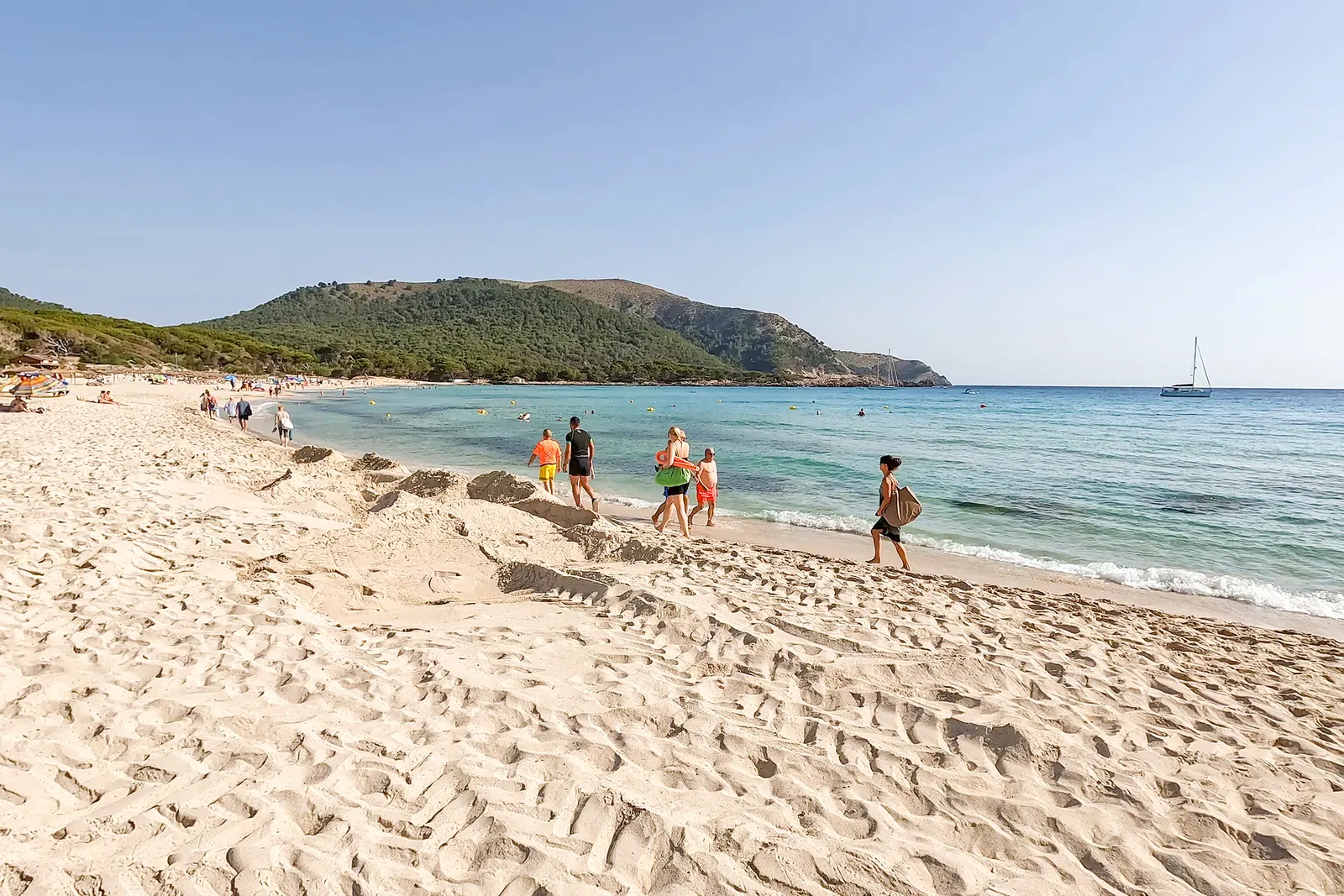
Cala Agulla is a broad sandy beach in Mallorca’s north-east, with pine woods and dunes behind its roughly 500-metre crescent. There are beach bars and a car park, but no line of hotels directly behind the sand. The protected landscape gives it a very different setting from the resort coast further south.
Try the edges
The sandy centre shelves gently into the sea and works well for children in calm conditions. Lifeguards are on duty during the season. At the edges, low rocky shelves lie in clear shallow water. These are good places for snorkelling, and often offer more space when the middle is crowded.
A northerly wind brings waves into this bay. Son Moll in Cala Ratjada may be more sheltered, but check conditions and the flags wherever you decide to swim.
Choosing your stretch of sand
Different parts of the beach can have quite different atmospheres.
The southern end, towards Cala Ratjada, attracts families with young children, with shallow water and convenient access.
Further along, it can be livelier. Groups visiting after their sports season sometimes gather here to celebrate, including handball, basketball, volleyball and football teams. If you want a quieter afternoon, keep walking.
The far end is often calmer, with views towards the rocky shelves and pine woods close behind. Choosing your spot makes a real difference to the day.
Parking and getting here
The large car park charges a fee and can fill during the morning in high season. If you are staying in Cala Ratjada, the coastal walk takes around 30 minutes and is an enjoyable part of the outing. You can also check the current local bus timetable before setting off.
Two nearby walks
A path heads north to small Cala Moltó, around ten minutes away on foot. It is generally quieter, but has no facilities.
Another route climbs to Torre de Son Jaumell, the old watchtower on the hill behind the beach. Allow roughly three kilometres and around 50 minutes uphill from the car park. The coastal views are wide, but choose a cool part of the day for the climb.
Seabirds along the coast
The coast between Cala Agulla and Cala Mesquida supports seabird colonies. Bring binoculars and look from the walking paths, where you can often see more than from the sand. Keep your distance from nesting birds.
Photographs
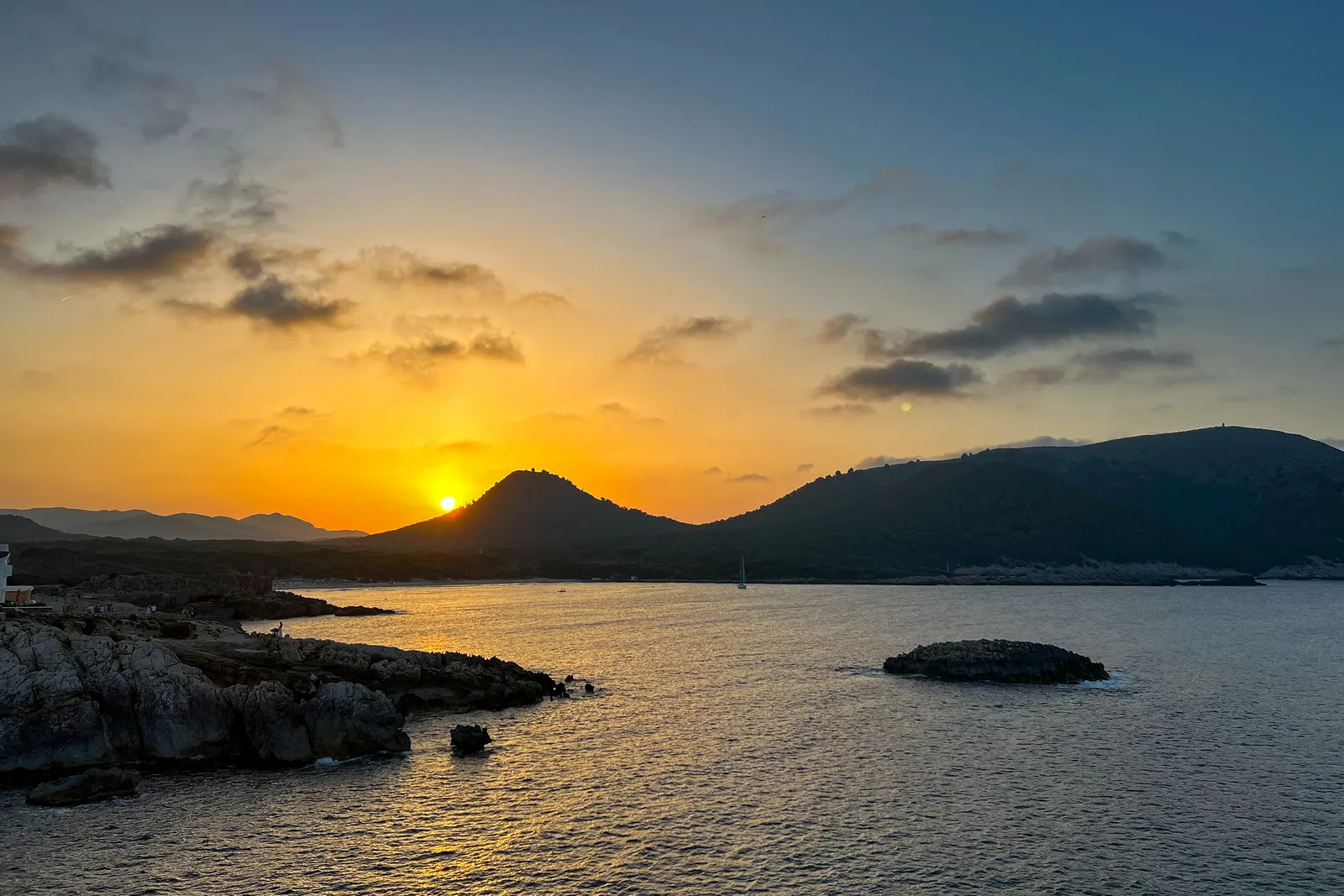
Cala Agulla in Mallorca
How much time do you have?
Things to do in Cala Agulla
Three hours
Arrive early, settle on the sandy central stretch, then explore a rocky edge with your snorkel in calm conditions.
Half a day
Spend the morning on the beach, then follow the path north to smaller, quieter Cala Moltó, around ten minutes away on foot.
A full day
Combine swimming with the walk to Torre de Son Jaumell, roughly three kilometres and about 50 minutes uphill from the car park. Walk during the cooler part of the day, then return for a swim.
On a rainy day
There is little to do here in rain. Capdepera and its castle are around ten minutes away.
The beach at a glance
- Underfoot
- Fine pale sand, with flat rocky shelves at the edges
- Getting into the water
- Gently shelving and sandy in the centre, rocky towards the sides
- Length
- Roughly 500 metres in a broad crescent
- Shade
- Beneath the pines at the back of the beach; none on the open sand
- Wind
- A northerly wind brings waves into the bay. Son Moll in Cala Ratjada may be more sheltered, but check local conditions and flags there too.
- With children
- Good in calm conditions, with lifeguards during the season
- Facilities
- Sunloungers and parasols for hire · Beach bars · Seasonal lifeguards · Large paid car park
Practical details
- Parking
- Large paid car park, often full by mid-morning in summer
- Public transport
- Check current services from Cala Ratjada and Capdepera
- Time to allow
- Half a day, or a full day including Cala Moltó or the watchtower
- Good to know
- The coast between Cala Agulla and Cala Mesquida supports seabird colonies. Bring binoculars if you enjoy birdwatching.
- Bus
- Check seasonal services from Cala Ratjada and Capdepera. The walk from Cala Ratjada takes around 30 minutes.
- Shops and services
- Supermarkets: None at the beach; the nearest shops are in Cala Ratjada · Pharmacy: In Cala Ratjada · Medical care: In Cala Ratjada · Cash machines: Limited availability near the car park · Fuel: In Capdepera
- Access
- Firm path from the car park to the beach edge, then sand · Pushchairs: Manageable as far as the beach edge · Wheelchairs: Access to the beach edge; the sand beyond is difficult · Dogs: Not permitted during the season
- What you will not find
- A village centre at the beach · Hotels directly behind the sand · A supermarket · Free parking in the main car park
- Coordinates
- 39.7222,3.4531 Google Maps Apple Maps
Within reach
Places to visit
Nearby

Above Capdepera stands a former walled settlement, with walkable defensive walls, the Miquel Nunis tower and a …

A limestone cave with a huge opening above the sea near Canyamel. Inside, a guided route climbs and descends steps …
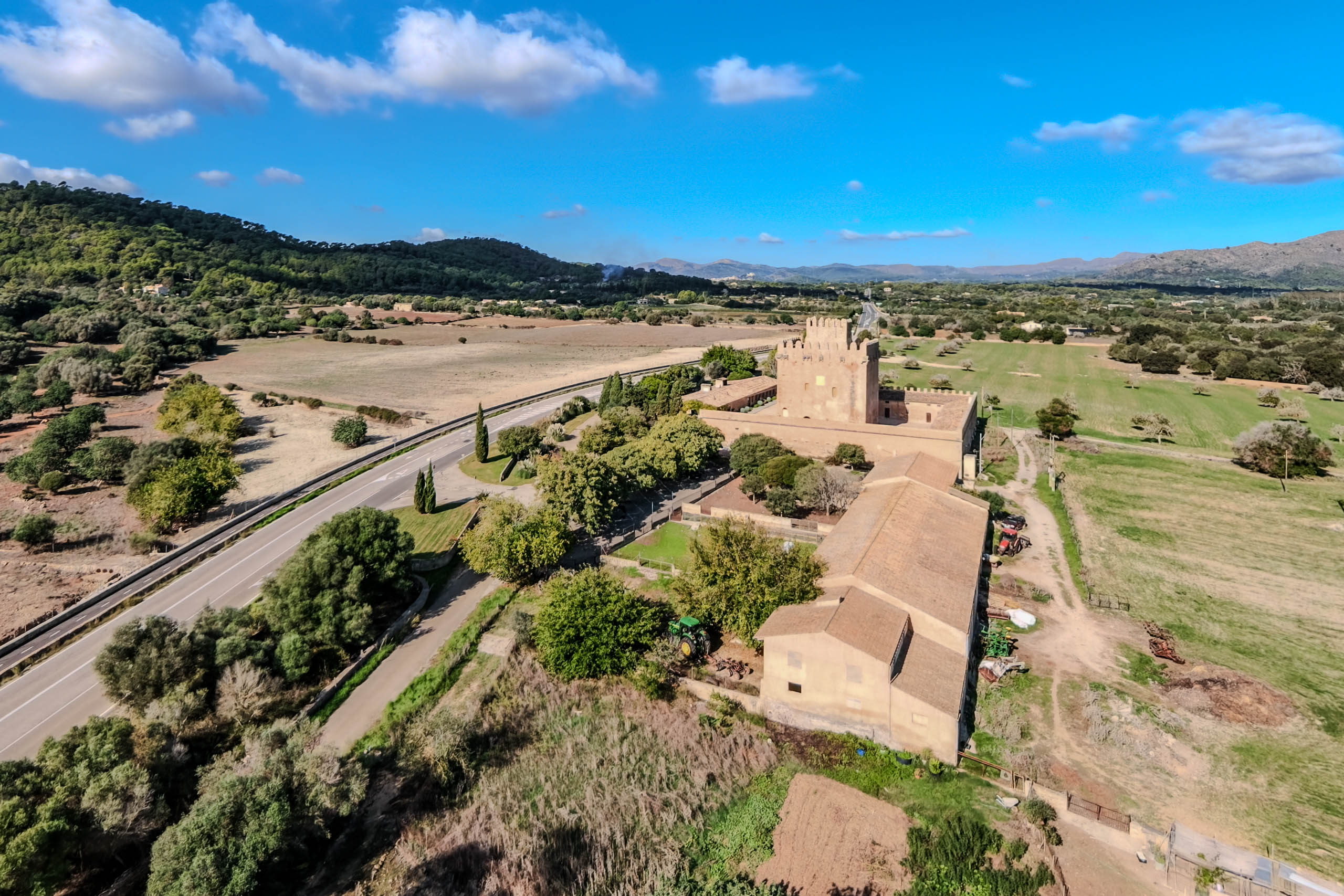
Torre de Canyamel stands in the valley beside the road to the coast. The imposing 13th-century defensive tower …

A fortress with a church inside, high above Artà. Walls with nine towers surround a courtyard of palms, an old …
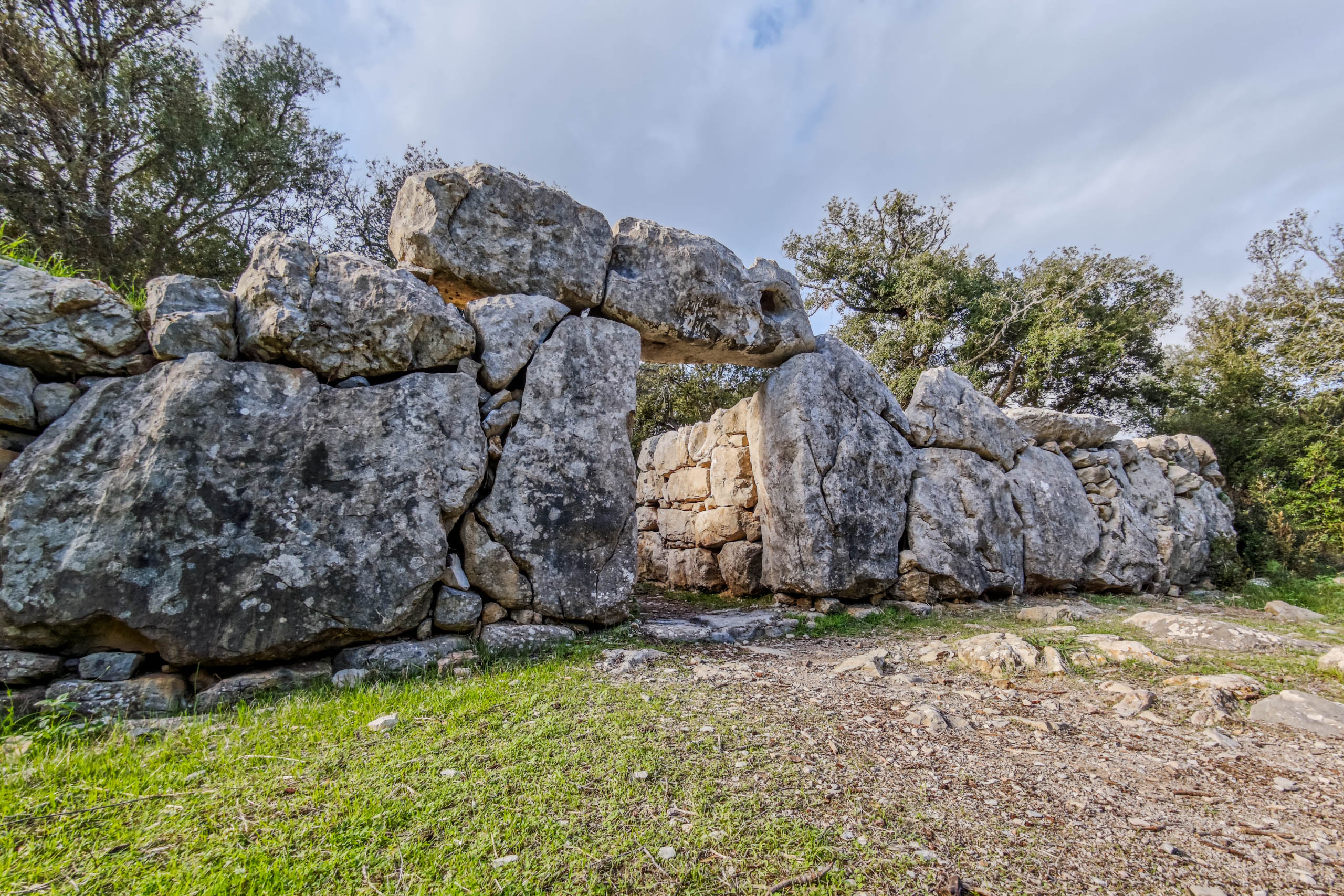
Behind a wall of enormous stone blocks on the edge of Artà lies a Talayotic settlement with around 3,000 years of …

A hermitage founded in 1805 in the hills of Artà, reached by a narrow, winding road. The last resident hermits …
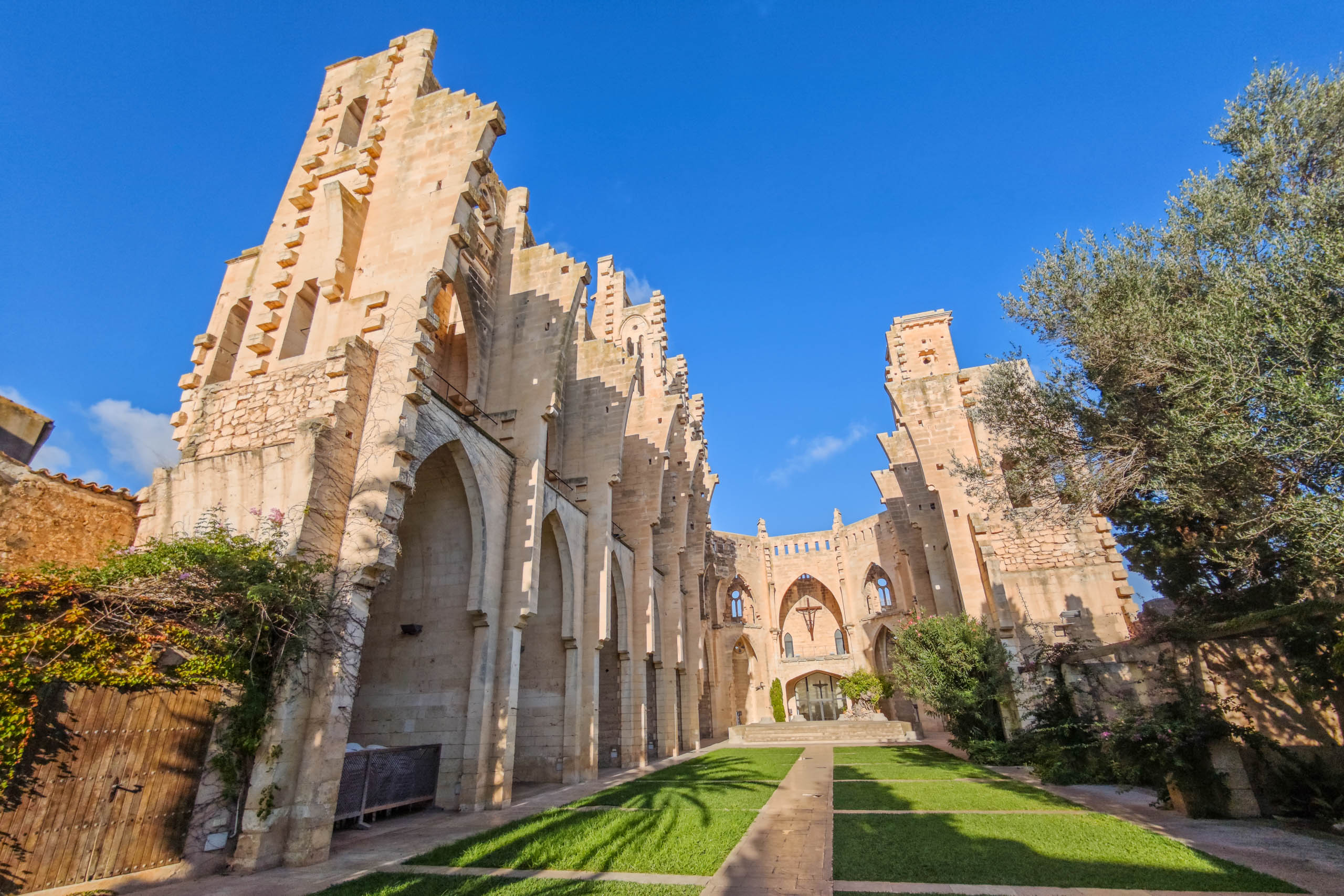
A church without a roof stands in the middle of Son Servera. Beyond Església Nova’s iron gate, garden paths pass …
Distances without a driving time are measured in a straight line. The road journey can be much longer; known driving times are shown alongside.
Other beaches to consider
Beaches and swimming nearby

A small cove beyond Cala Agulla, reached by a ten-minute walk over rocky ground. There is a narrow strip of sand …
On foot only, around ten minutes

A working fishing harbour and lively holiday resort on Mallorca's north-east coast. Three different beaches are …
Around 30 minutes on foot along the coast

A broad stretch of pale sand with protected dunes behind it and a wooden boardwalk crossing them. Cala Mesquida …

A sandy bay backed by pine-covered slopes, a handful of hotels and a golf course. Canyamel is one of the quieter …
Explore from here
Your questions answered
Your questions about Cala Agulla
Do you have to pay for parking at Cala Agulla?
Yes, the main car park charges a fee and often fills during the morning in high season. If you are staying in Cala Ratjada, consider walking — around half an hour along the coast — or check the current bus timetable.
Is Cala Agulla suitable for children?
In calm conditions, the sandy centre shelves gently into the water and seasonal lifeguards are on duty. Rocky shelves lie in the shallows at the edges, where extra care and water shoes are useful. Northerly winds can bring strong waves, so follow the beach flags.
Is there shade at Cala Agulla?
Mature pines provide shade at the back of the beach, with the best spots taken early. On the open sand, you need your own shade or a hired parasol.
How do you walk from Cala Agulla to Cala Moltó?
Follow the path from the northern end of the beach. It takes around ten minutes over rocky ground and through low scrub. Cala Moltó is smaller and generally quieter, but has no visitor facilities.
Why hasn't Cala Agulla been built up?
The protected landscape behind the beach includes pine woods and dunes. The coast towards Cala Mesquida also provides habitat for seabirds, helping make this stretch feel very different from the resort streets nearby.
Practical questions
When is the best time to visit Cala Agulla?
Recommended months: March, April, May, June, September, October. Access and opening are limited in January, February, March, November, December. See the visiting advice on this page. A pleasant time for beach walks and the climb to the watchtower.
Is Cala Agulla worth visiting in July and August?
July: worth considering with some reservations. Usually very crowded. The car park fills during the morning. Walk or check available bus services. August: another month may suit you better. Usually very crowded.
How far is Cala Agulla from Palma airport?
About 80 km from Palma airport. Allow roughly 80 minutes by car. The large paid car park can fill during the morning in summer. Walking or using available public transport is often easier.
Do I need a hire car for Cala Agulla?
Easy to manage without a car Check seasonal services from Cala Ratjada and Capdepera. The walk from Cala Ratjada takes around 30 minutes.
Where can I park in Cala Agulla?
Large paid car park, often full by mid-morning in summer
Can you swim at Cala Agulla?
Yes. Fine pale sand, with flat rocky shelves at the edges Gently shelving and sandy in the centre, rocky towards the sides Roughly 500 metres in a broad crescent Beneath the pines at the back of the beach; none on the open sand Good in calm conditions, with lifeguards during the season
Can I visit Cala Agulla with a pushchair or wheelchair?
Firm path from the car park to the beach edge, then sand Pushchairs: Manageable as far as the beach edge Wheelchairs: Access to the beach edge; the sand beyond is difficult
Are dogs allowed at Cala Agulla?
Not permitted during the season
Cala Agulla features in our Mallorca highlights
Words and photographs: Friedhelm Fischer. Exploring Mallorca since 2013 — by bike, on foot and with a camera.