Mallorca does not only celebrate in summer. Sant Antoni and Sant Sebastià bring music and crowds to the squares in January. Spring brings processions and historic celebrations, followed by many harbour and village festivals in summer.
A festival makes a good addition to a day out. Check start times and viewing areas beforehand, particularly for crowded parades or events involving fireworks.
This calendar covers celebrations that return every year. It gives their usual dates or timing, such as “16–17 January” or “the Monday after the second Sunday in May”, rather than a one-off concert programme.
Worth planning a trip around
A selection by month
The festival calendar
January
Cavalcada dels Reis5 January, evening
Palma · almost every town
The Three Kings parade through towns on the evening before Epiphany. In Palma, they traditionally arrive by boat. For many families, exchanging presents on 6 January is one of the most important Christmas traditions.
Sant Antoni16–17 January
Sa Pobla · Artà · Manacor · Muro · Pollença
Bonfires in the squares, music and dimonis fill the evening before the feast day. On 17 January, many towns hold the Beneïdes, the blessing of animals. The programme and main traditions vary from town to town.
Sant Sebastià19–20 January
Palma
Palma celebrates its patron saint with concerts and events. The Revetla on 19 January is particularly lively. Check the city programme for stages, bonfires and start times.
February
Carnaval — Sa RuaFebruary or March: check the local programme
Palma · many towns
Costume parades and decorated floats bring colour to towns across the island. In Palma, the main parade is Sa Rua and the children’s version is Sa Rueta. The council sets the exact dates each year.
March
Setmana SantaHoly Week, March or April
Palma · Pollença · Sineu · across the island
Processions mark Holy Week. In Pollença, the Davallament takes place on Good Friday evening: after a symbolic descent from the cross on the Calvari, the procession makes its way down the steps.
May
Es FiróMonday after the second Sunday in May
Sóller · Port de Sóller
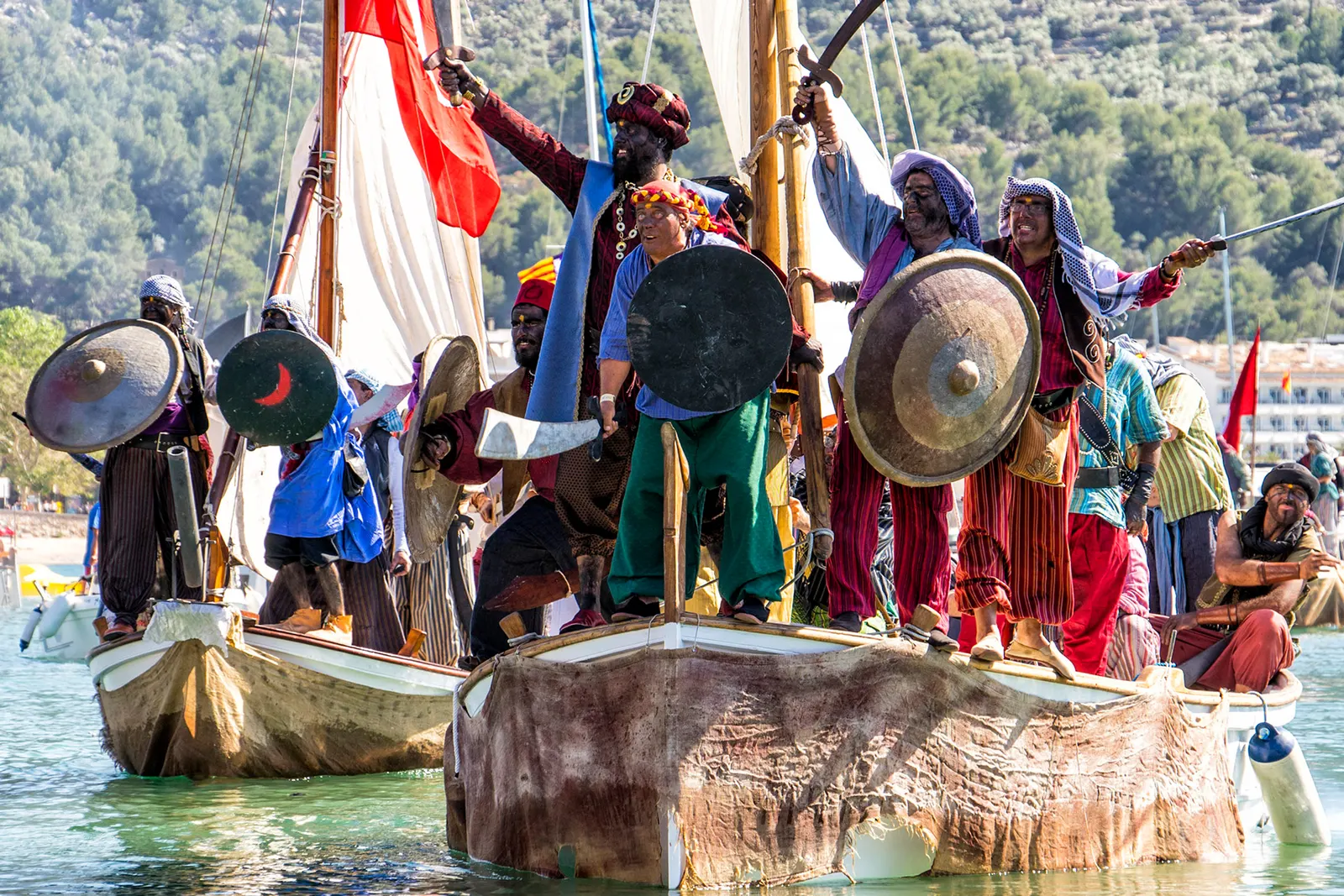
Sóller and Port de Sóller re-enact the defence against the attack of 1561, with scenes stretching from the harbour to the town. It gets loud and crowded. Follow barriers and the organisers’ instructions.
June
Sant JoanNight of 23–24 June
Palma · Muro · coastal towns
St John’s Eve marks the start of summer with celebrations and local traditions. Palma’s programme includes a correfoc fire run. Beach fires are not automatically allowed: check the rules of the local council.
Sant Pere28–29 June
Colònia de Sant Pere · Port d'Alcúdia · other harbour towns
Several harbour towns honour St Peter, patron saint of fishermen. Depending on the place, celebrations include music, church services or boat processions. Check the local programme for the exact days.
July
Mare de Déu del Carme16 July
Port de Pollença · other harbour towns
Harbour towns including Port de Pollença celebrate the patron saint of seafarers. Many hold boat processions, though these do not necessarily fall on 16 July itself.
August
La Patrona — Moros i Cristians2 August
Pollença
Pollença commemorates the defence against the corsair attack of 1550. The re-enactment on 2 August takes place in the evening. The lanes become very crowded, so choose a safe place to watch.
Sant Bartomeu and the Cossiers24 August
Montuïri
In Montuïri, the Cossiers dances are part of the Sant Bartomeu celebrations. Six dancers accompany the Dama, with the Dimoni also taking part. The festival programme lists individual performances and locations.
September
La BeataFirst Sunday in September
Santa Margalida
Dimonis and a procession honouring Catalina Thomàs make their way through Santa Margalida. Clay jugs smashed by the dimonis are part of the tradition. Keep a safe distance from the performers.
Festa des VermarSecond half of September
Binissalem
Binissalem celebrates the grape harvest with music, parades and shared meals. Well-known events include fideus de vermar and the grape battle. The council publishes the individual dates.
November
Dijous BoNovember: check Inca’s annual programme
Inca
Inca becomes a huge fairground for agriculture, crafts and market stalls. The exact Thursday is announced in the annual programme. Taking the train saves you hunting for parking in the centre.
December
Festa de l'Estendard31 December
Palma
Palma holds an official ceremony commemorating the conquest of the city in 1229. It takes place in the morning and is a historic civic occasion, rather than a New Year’s Eve party.
Dates refer to the traditional feast day or period, rather than the full annual programme. Check individual events with the local council, such as Pollença, Inca or Palma.
Being a considerate visitor
Give processions and dancers plenty of space and take photographs from the side. Follow the stewards’ directions. Safety areas matter particularly at events with fire or firecrackers. With children, keep a little further back.
Planning around a festival
Big celebrations can mean road closures, fewer parking spaces and concerts continuing late into the evening. Check where your accommodation is and allow for changes to your journey. Our place guides include seasonal advice for the towns concerned.
In brief
Questions about festivals
What is Mallorca’s most important festival?
It depends on the town. Sant Antoni is especially important in Sa Pobla and Artà, while Palma celebrates Sant Sebastià, Sóller has Es Firó and Pollença has La Patrona. In November, Dijous Bo draws large crowds to Inca.
Is there anything happening in winter?
Yes. Sant Antoni and Sant Sebastià are celebrated in January, followed by carnival parades in February or March. Have a look at the programme for the place where you are staying.
Can visitors attend local festivals?
Many events take place publicly in streets and squares. Some areas or individual events may have restricted access. Respect barriers, safety distances and the organisers’ instructions.
Where can I find the exact dates for a particular year?
The local council publishes the annual programme. A saint’s day may be fixed, while concerts, parades and other events happen on neighbouring days. For moveable celebrations, check that year’s calendar.
What are dimonis?
Dimonis are figures dressed as devils, part of several Mallorcan festival traditions. A correfoc may also involve fireworks. Watch from a safe distance and follow local safety advice.