Sóller
An orange-growing town in a mountain-ringed valley, once easier to reach by sea than overland. Citrus trading brought wealth, French-influenced houses and a narrow-gauge railway opened in 1912 that still runs today.
Sóller
Sóller in 30 seconds
The essentials at a glance
- Worth visiting for
- A longer stay
- Best for
- Historic railway, architecture and town life
- Best months
- January–May, September–December
- Time to allow
- Half a day for town; a full day with Port de Sóller and Fornalutx.
- Without a car
- Hire car recommended
- Parking
- Use the car park on the edge of town. Much of the old centre is restricted to traffic.
- Highlight
- Orange-growing town with a historic railway
- Keep in mind
- Beach holidays in the town centre
- Access
- Pushchairs: Straightforward · Wheelchairs: Main square and principal streets largely accessible
Get a feel for Mallorca. Find your kind of place.
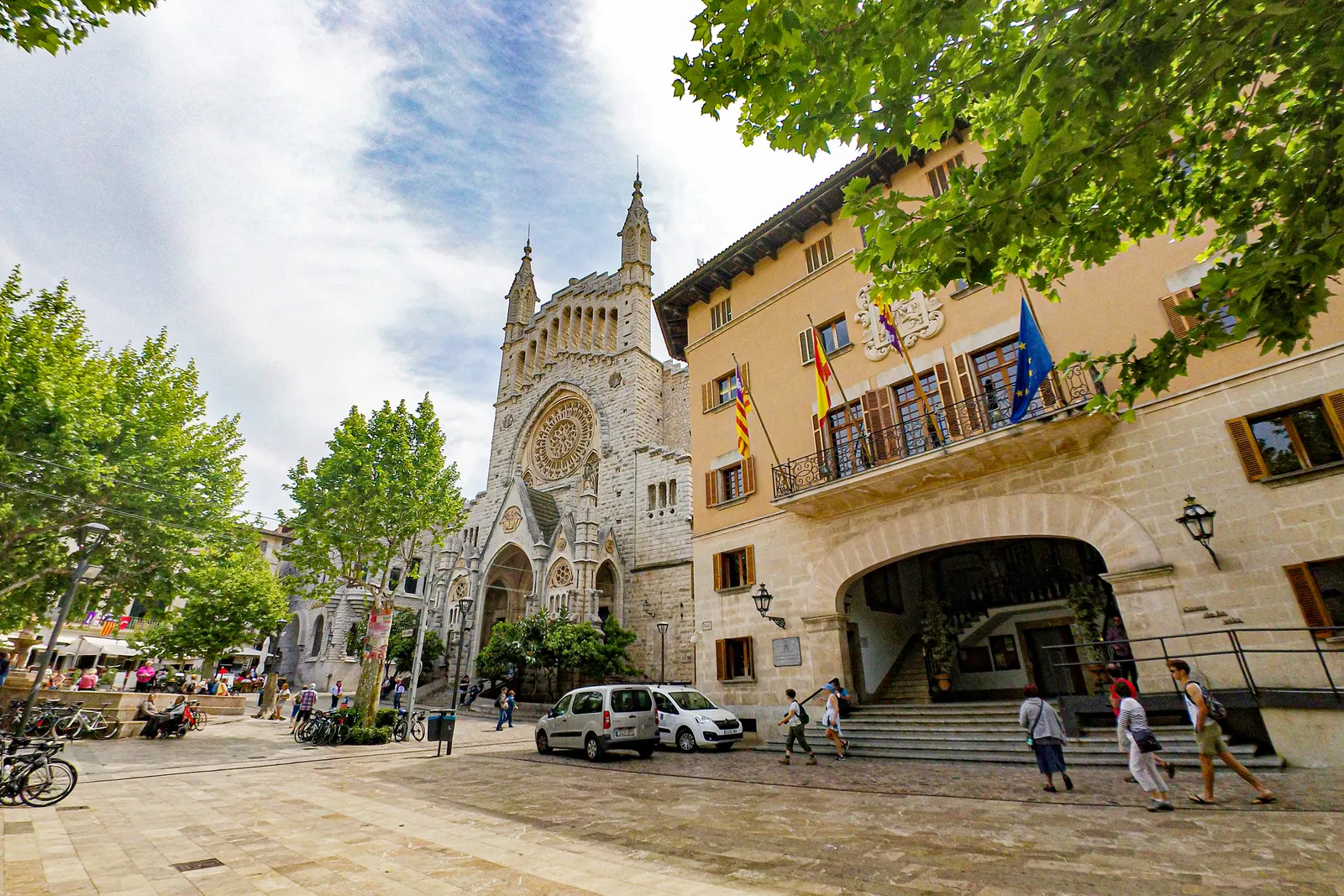
Designed by Joan Rubió i Bellver, a colleague of Gaudí, and funded by the citrus traders' prosperity.
Stand closer and look up to appreciate the stonework.
The tram has crossed the square since 1913. Keep an eye on the tracks as you walk.
Drive from the airport
40 minutes
33 km
Bus connections
Bus 204 from Palma
Region
Serra de Tramuntana
Nearest beach
Port de Sóller
4 km
Elevation
54 m
above sea level
Markets
Saturday
Season guide for Sóller
November Worth a visit
Quiet Open
Worth visiting in January, February, March, April, May, September, October, November and December. Less suitable in August.
Location
Location of Sóller
- Region
- Serra de Tramuntana
- Population
- 14,200
- Elevation
- 54 m above sea level
- Airport
- 33 km , around 40 minutes
- Hire car
- recommended
- Worth visiting for
- a longer stay
- Coordinates
- 39.7667,2.7167
The town in the orange valley
Sóller is the main town of the orange-growing valley, with around 14,000 residents, at 54 metres above sea level in a bowl surrounded by the Serra de Tramuntana. The municipality includes Port de Sóller, five kilometres north-west, and the smaller settlements of Biniaraix and L’Horta.
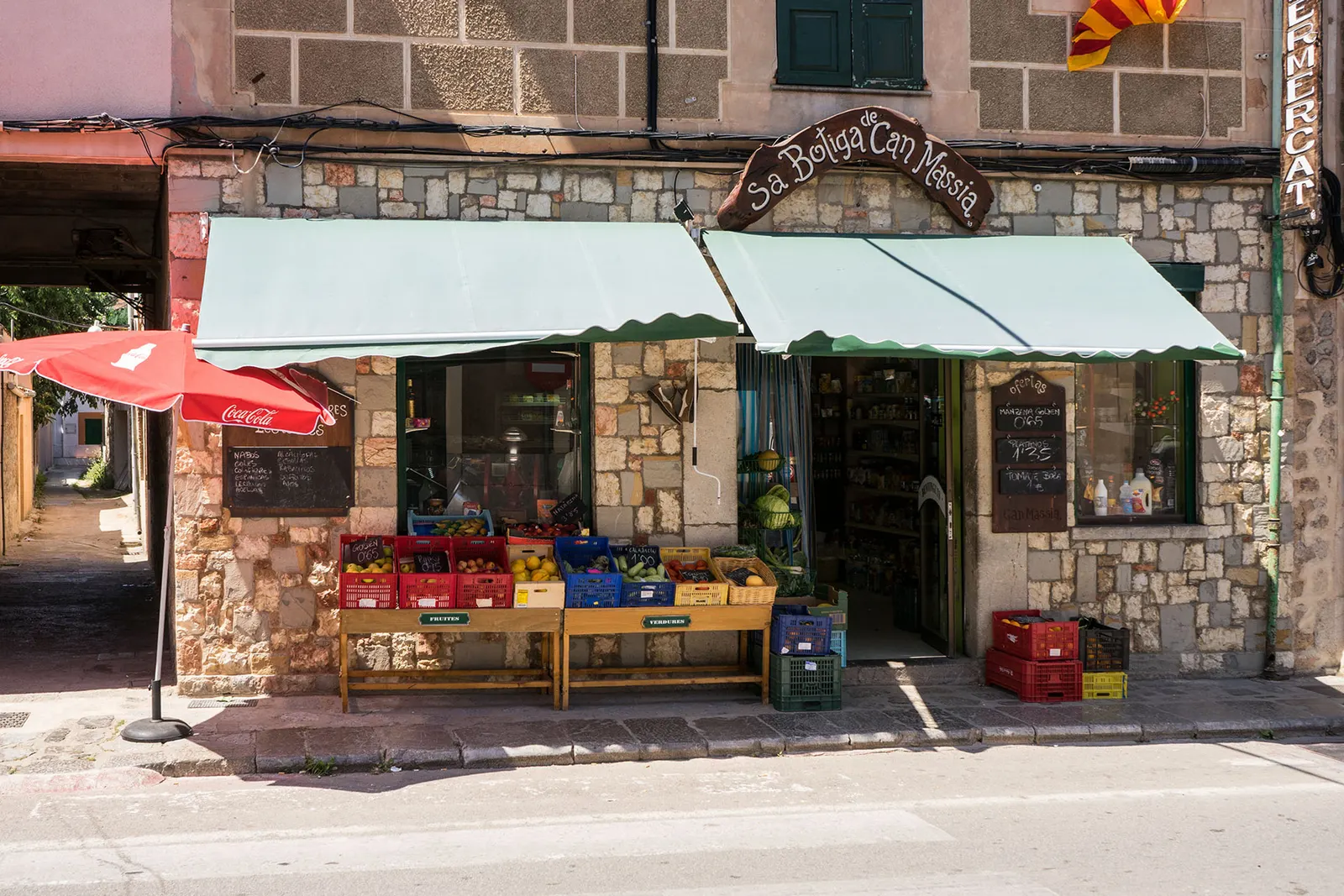
It is a working small town, with a town hall, market hall and everyday services, rather than simply a collection of sights.
How Sóller became wealthy
Mountains separate the valley from Palma. Before the road tunnel opened in 1997, the Coll de Sóller pass road, with fifty-seven bends, made moving freight difficult.
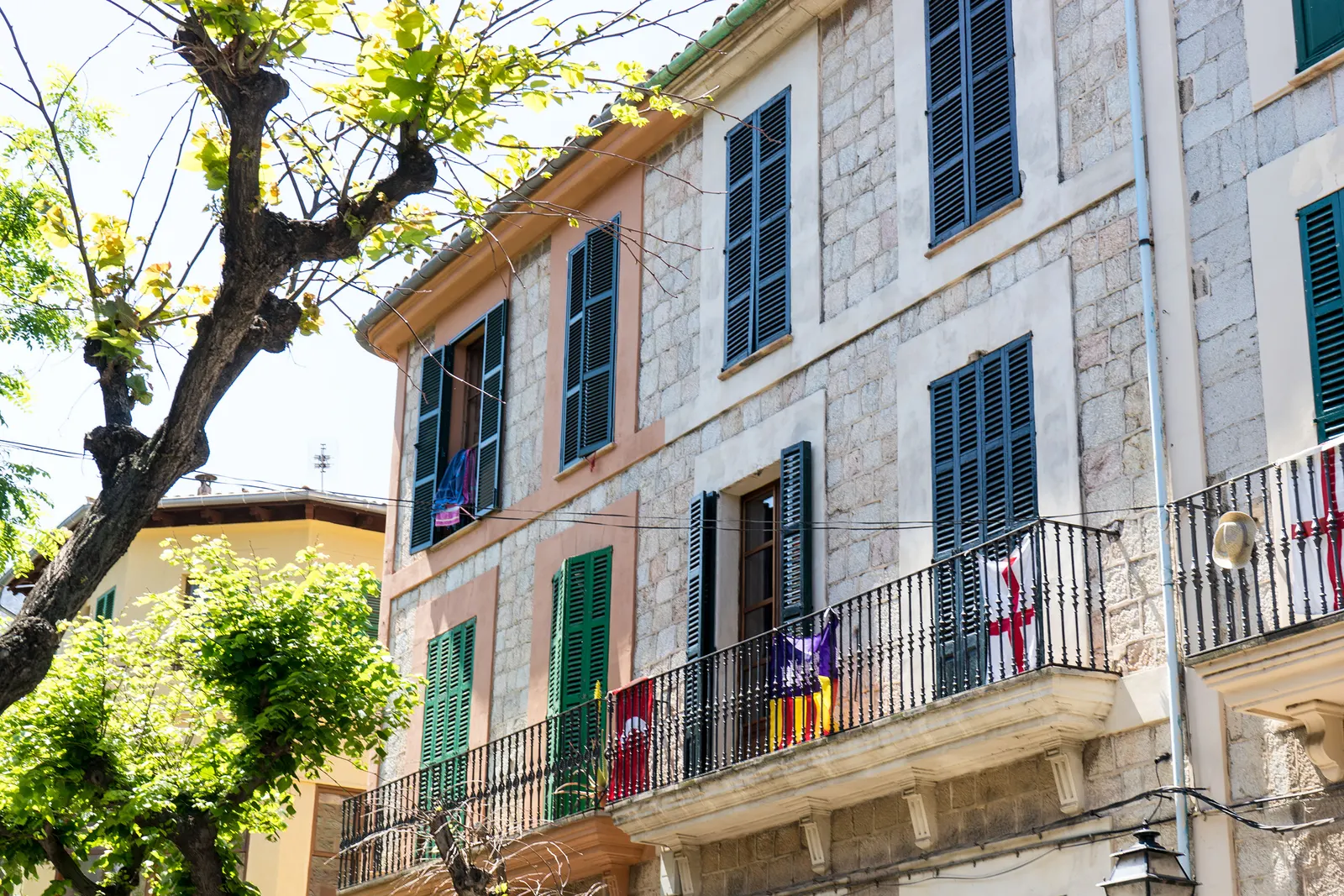
Trade went by sea instead, particularly to southern France. Oranges and lemons left the valley, and money returned. During the 19th century, families moved to Marseille, Nîmes and Sète, founded trading businesses and sent their profits home. Successful families built grand houses in Sóller, with broad façades, cornices and wrought iron.
French words also found their way into the valley’s local speech.
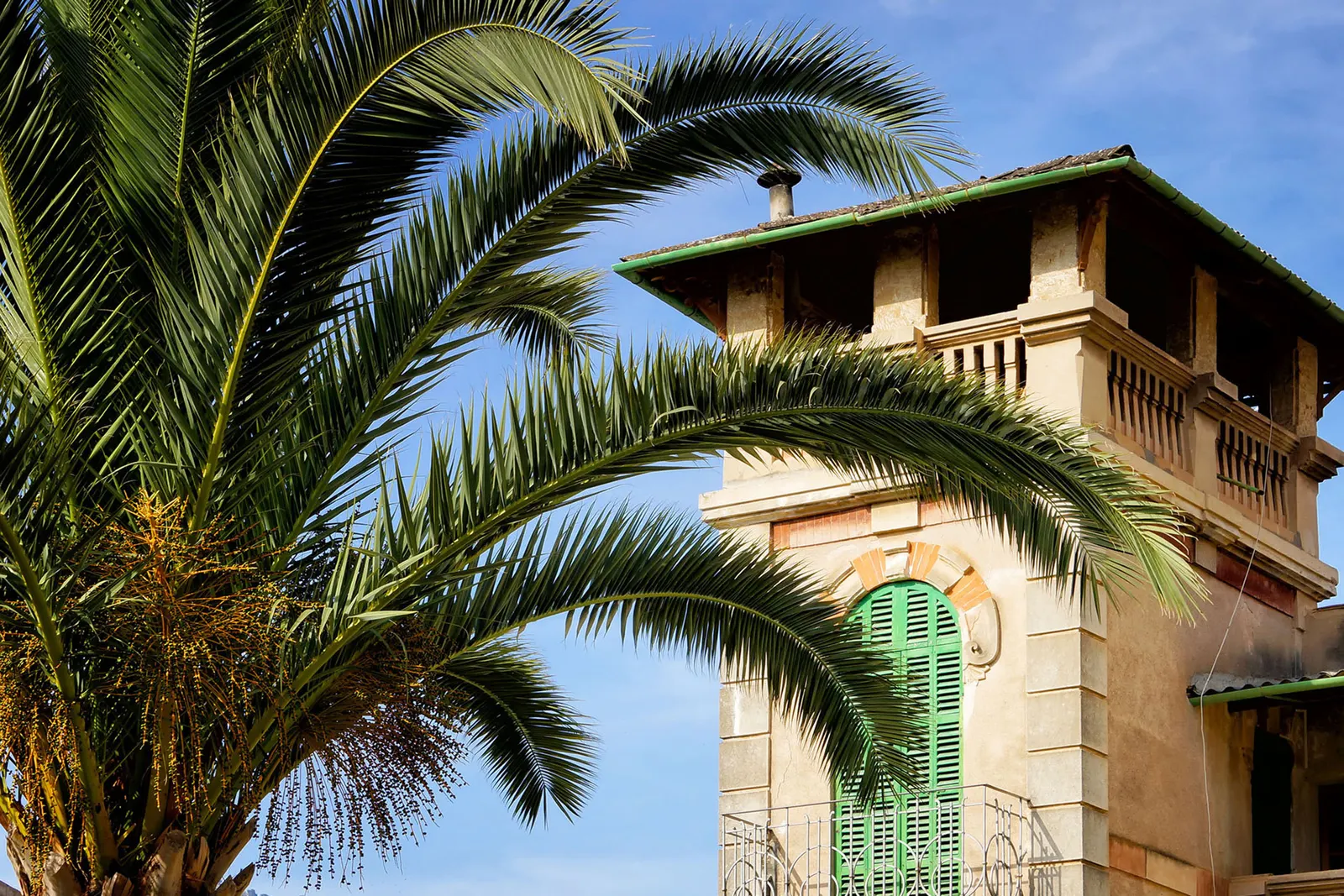
What citrus wealth built
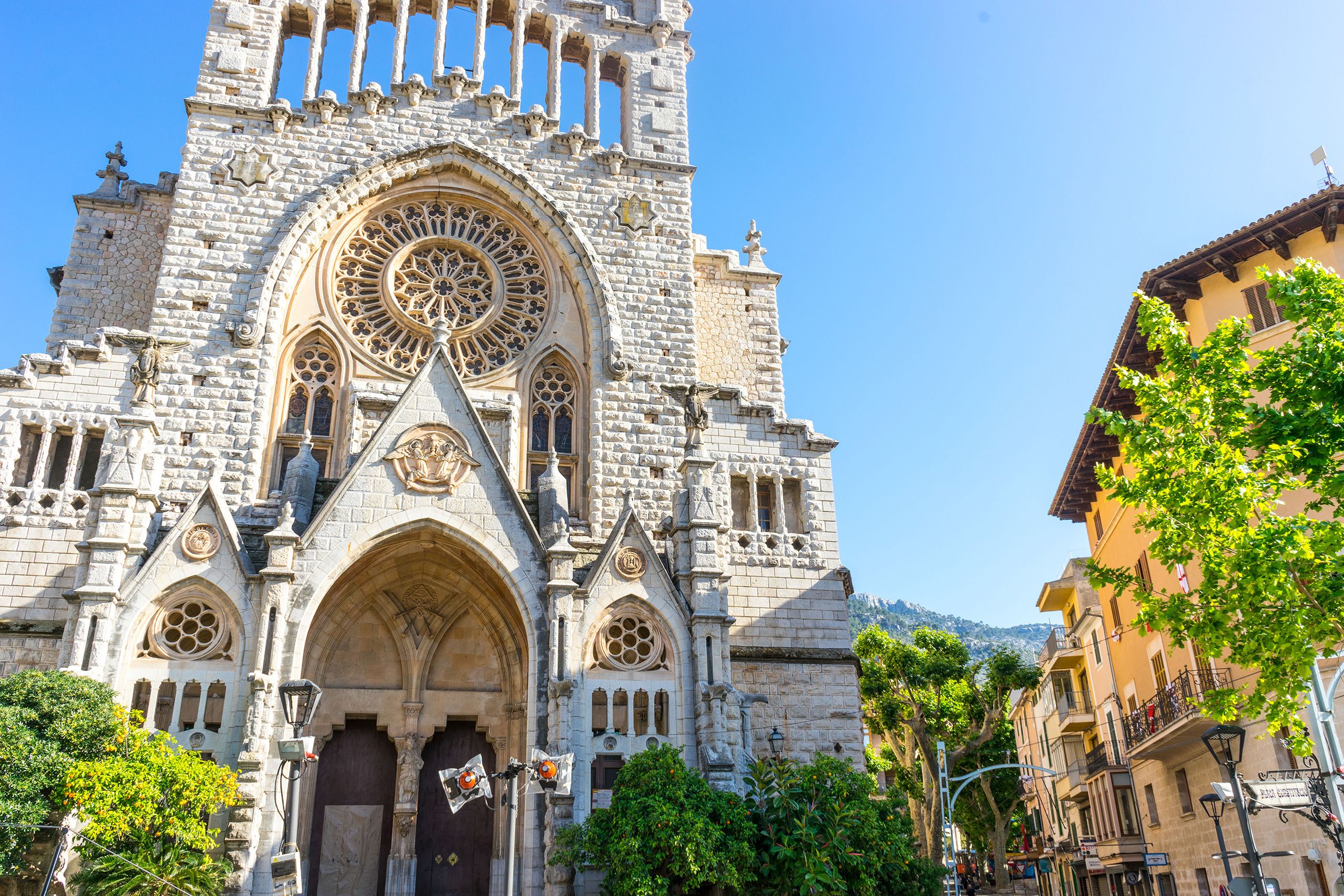
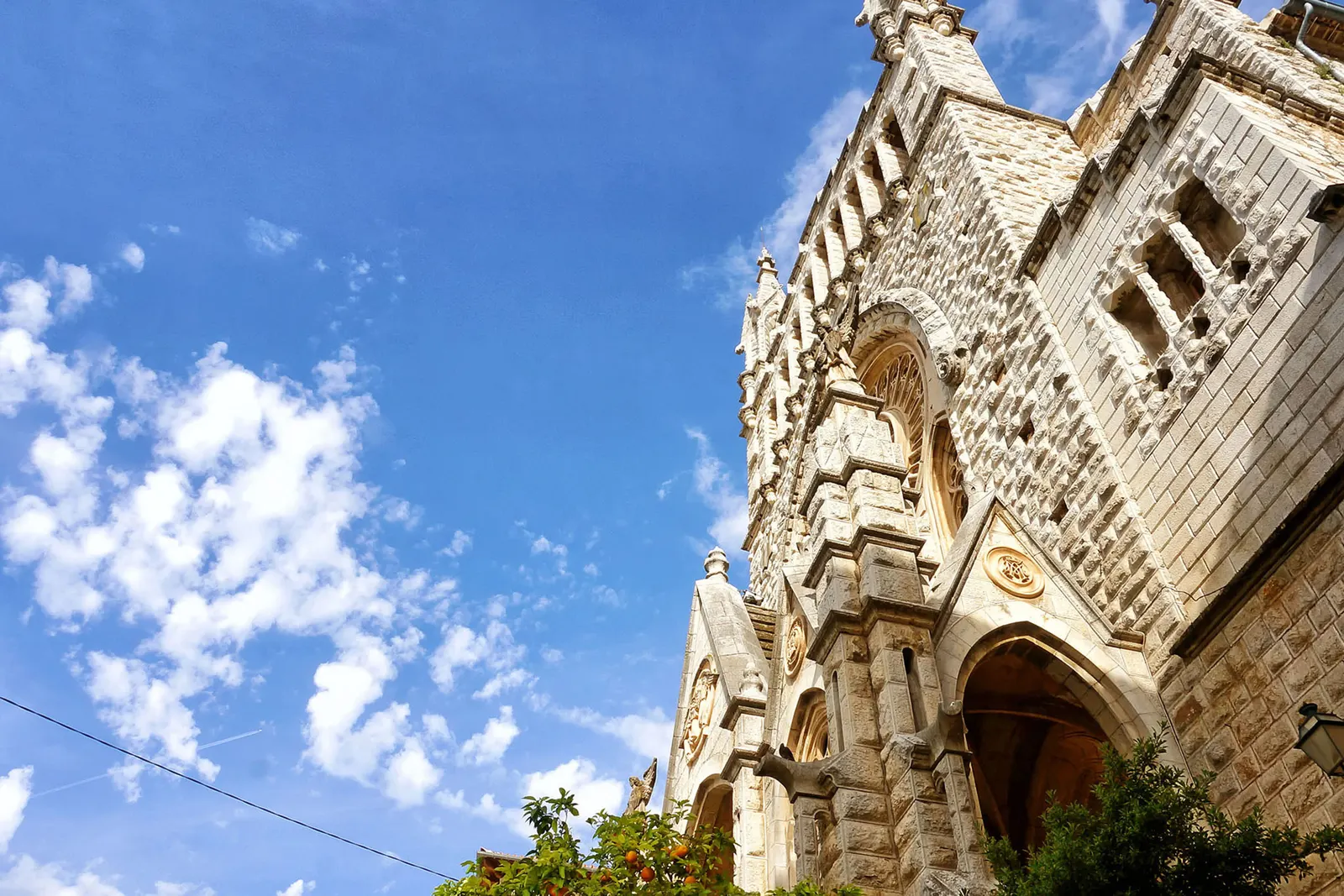
The parish church of Sant Bartomeu stands on the main square. The church itself is older, but its prominent façade was built between 1902 and 1912, designed by Joan Rubió i Bellver, a pupil and colleague of Antoni Gaudí. Rubió also designed the neighbouring Banc de Sóller façade, a bank serving the fruit merchants’ international business.
A short walk uphill brings you to Can Prunera, a Modernista house from 1911, also attributed to Rubió. Since 24 August 2009, it has housed the Museu Modernista. Original furniture, floors and the staircase remain, alongside works by Miró, Picasso, Gauguin, Klimt, Foujita and Miquel Barceló. It is a substantial collection for a small mountain town.
The train
The Ferrocarril de Sóller has linked Palma and Sóller since 16 April 1912. Local citrus traders financed it to get their produce to Palma’s port in hours rather than days.
The engineering helps explain the appeal: 27.3 kilometres, 199 metres of elevation change, average gradients of 23 per thousand and thirteen tunnels. The longest, Tunnel Major beneath the mountains, is 2,876 metres long. There is also a viaduct, with wooden and brass-trimmed carriages recalling the railway’s early years.
Today it is priced as a visitor attraction, but remains a memorable way to arrive in the valley.
The tram to the port
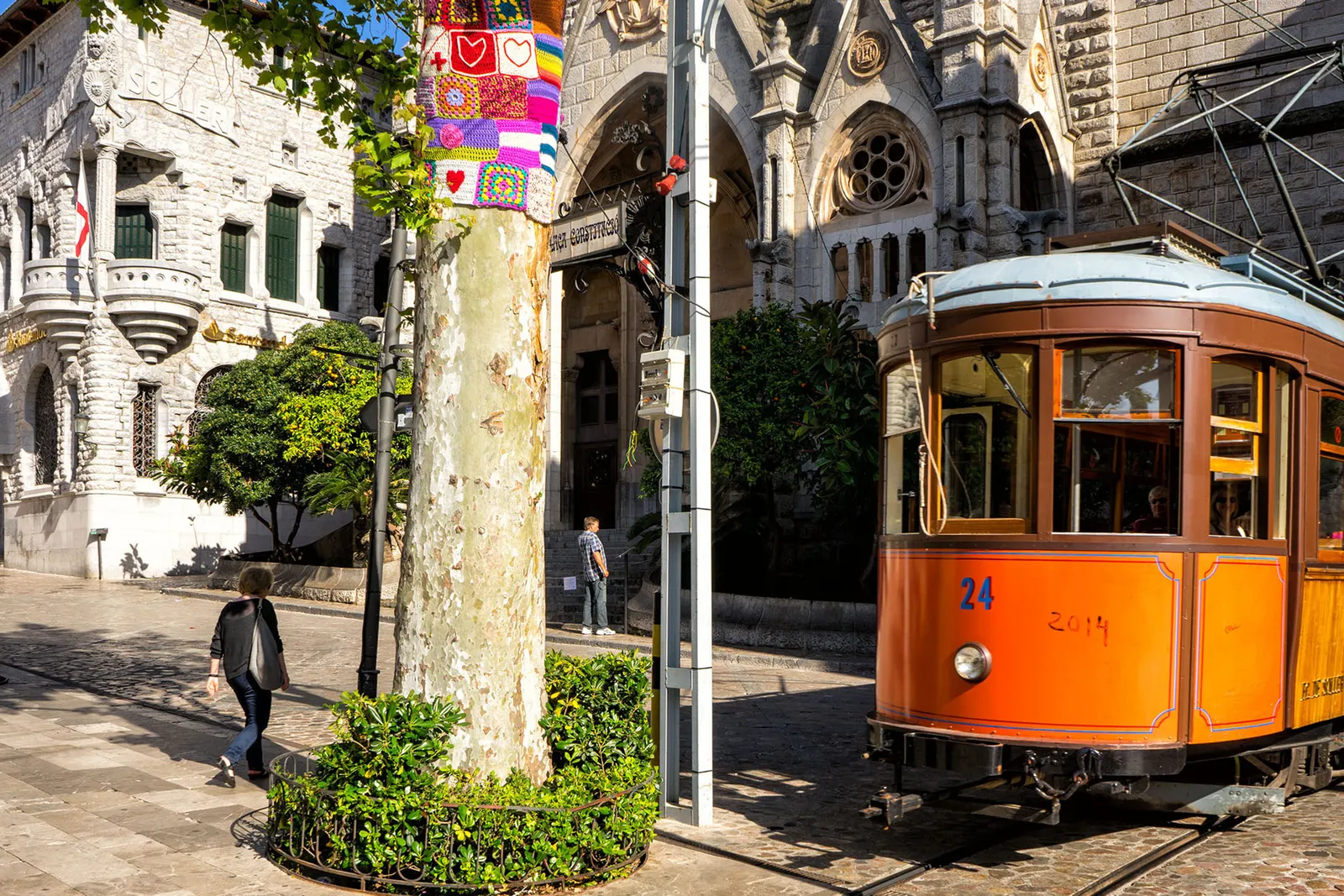
The tram followed a year later. Its line was inaugurated on 4 October 1913, with regular services beginning on 13 October. The 4.9-kilometre route runs from the station through town, past orange groves and down to the harbour promenade.
It crosses the main square, close to the café tables. Keep chairs and feet clear when it passes.
Es Firó and the pirate raid
According to the chronicles, around 1,600 Algerian and Turkish corsairs landed at Sóller’s harbour on 11 May 1561, intending to plunder the town and take captives. The local people fought them off.
Two stories are especially remembered: the sisters Francisca and Catalina Casesnoves, who killed attackers in their own home, and the women associated with Can Tamany, credited in local tradition with helping turn the battle.
During the May celebrations, the town re-enacts the attack with boats, gunpowder, costumes and dense crowds. Es Firó matters deeply to local participants; visitors watch rather than treating it as a show staged for them.

Port de Sóller
Five kilometres and a tram ride away is an almost enclosed circular bay, with a sandy beach, two lighthouses and more holiday activity than the inland town. Summer boats leave from here for Sa Calobra.
Practicalities
The road tunnel has been toll-free since 28 December 2017. Legal disputes over the compensation have not changed free passage. If you have time, try the old Coll de Sóller road too. Much quieter since the tunnel opened, it is a scenic alternative.
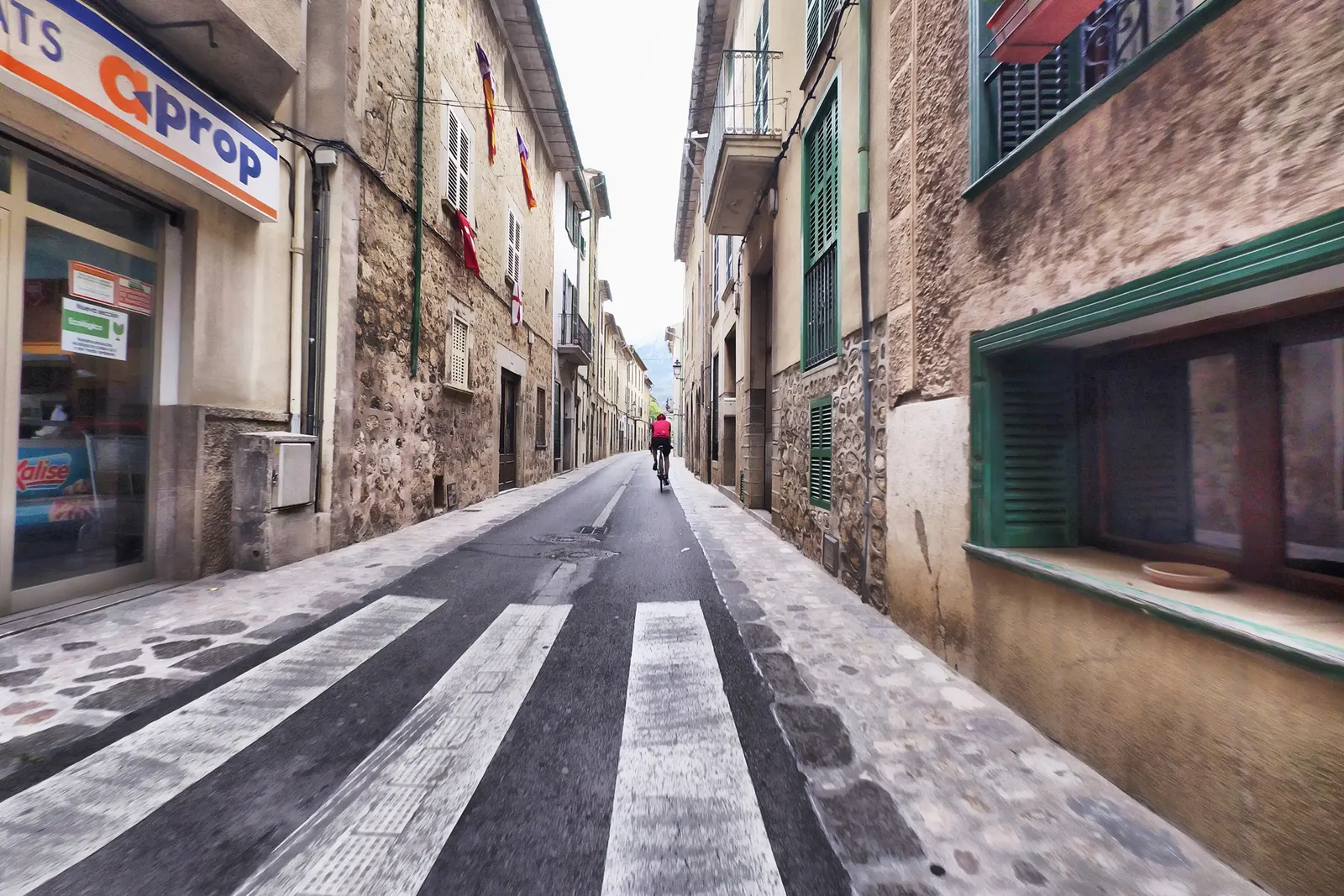
Parking in the old town is scarce. Use a car park on the edge instead. The weekly market is on Saturday.
When to visit
October is my favourite: warm days, fewer visitors and oranges beginning to colour. January and February bring the harvest and almond blossom, with oranges at the market sometimes cheaper by the kilo than a coffee.
In August, train tickets can sell out, heat builds up in the valley and the port is crowded.
Photographs
Sóller in Mallorca
Practical details
- Parking
- Use the car park on the edge of town. Much of the old centre is restricted to traffic.
- Public transport
- Bus 204 from Palma through the tunnel takes around half an hour. The train from Palma's Plaça d'Espanya takes about an hour and is a scenic experience rather than the quickest option.
- Time to allow
- Half a day for town; a full day with Port de Sóller and Fornalutx.
- Good to know
- The road tunnel has been toll-free since 28 December 2017. The tram has linked town and harbour since 1913 and is a pleasant way to cover the roughly five kilometres.
- Bus
- Bus 204 from Palma, plus the Palma–Sóller train
- Access
- Paved streets and squares, with some gentle slopes in the old centre · Pushchairs: Straightforward · Wheelchairs: Main square and principal streets largely accessible · Dogs: Straightforward
- What you will not find
- Parking in the old town · A beach — it is five kilometres away at the port · Peace in August · Cheap historic train tickets
- Coordinates
- 39.7667,2.7167 Google Maps Apple Maps
Dates that change the town
When a race comes to town
Mallorca 312 Road cycling · 25 April 2026
Road closures begin in the morning. The affected roads and reopening times follow the organiser’s traffic plan. Allow extra time for transfers and day trips.
The season guide describes whole months. A race weekend can transform a normally quiet town for a couple of days. Find the dates in our guide to Sporting events.
Within reach
Places to visit
Nearby

At the foot of the Sóller pass, this garden has irrigation rooted in Moorish times. Palm groves, a pergola with …

Archduke Ludwig Salvator's country estate above the west coast, with a white marble pavilion on the edge — the …

Ramon Llull founded a school for Eastern languages here in 1276. Six hundred years later, Archduke Ludwig Salvator …

Mallorca’s largest reservoir sits in the heart of the Tramuntana beside the MA-10. Swimming is forbidden, there’s …

A country estate near Bunyola, transformed by an 18th-century cardinal into an Italian-style villa. A terraced …

A pilgrimage church on a rocky ledge above Mancor de la Vall, documented since 1275. The terrace looks across much …

Mallorca's spiritual centre, a sanctuary at 525 metres in the heart of the Tramuntana, with guest rooms, a …

A historic country estate near Esporles, with a manor house and gardens. Public access hasn’t been confirmed, so …
Distances without a driving time are measured in a straight line. The road journey can be much longer; known driving times are shown alongside.
Where to swim nearby
Beaches and swimming nearby

An almost circular, sheltered bay with a sandy beach, two lighthouses and a tram that has run down from Sóller …

A tiny fishing settlement beneath the cliffs, reached by six kilometres of tight hairpin bends. A few stone houses …

A shingle cove at the mouth of the Torrent de Pareis, reached by a winding road completed in 1932 that is almost …
Explore from here
Your questions answered
Your questions about Sóller
How did Sóller become wealthy?
Mountains separated the valley from Palma, with the winding Coll de Sóller road making freight transport difficult before the tunnel opened in 1997. Sóller traded by sea, especially with southern France, exporting oranges and lemons. Returning wealth funded the grand façades, cornices and ironwork you see around town.
When did the Sóller train start running?
On 16 April 1912. The narrow-gauge railway covers 27.3 kilometres between Palma and Sóller, with 199 metres of elevation change and thirteen tunnels. The longest, Tunnel Major, measures 2,876 metres. Local citrus traders helped finance the line to move produce more quickly to Palma's port.
What is Can Prunera?
A Modernista house dating from 1911, attributed to Joan Rubió i Bellver, a short uphill walk from the main square. It opened as the Museu Modernista on 24 August 2009. Original furniture, floors and stairs survive alongside art including works by Miró, Picasso, Gauguin, Klimt, Foujita and Miquel Barceló.
Who designed Sant Bartomeu church's façade?
Joan Rubió i Bellver, a pupil and colleague of Antoni Gaudí. The church is older, but its showpiece façade was built between 1902 and 1912. Rubió also designed the neighbouring Banc de Sóller façade, reflecting the banking needs of the international fruit trade.
Is there a beach in Sóller?
Not in the town itself. The beach is five kilometres north-west at Port de Sóller. The tram reaches it on a 4.9-kilometre line inaugurated on 4 October 1913.
Practical questions
When is the best time to visit Sóller?
Recommended months: January, February, March, April, May, September, October, November, December. Orange harvest. A kilo at Saturday's market can cost less than a coffee.
Is Sóller worth visiting in July and August?
July: worth considering with some reservations. Usually busy. Heat builds up in the enclosed valley, with midday temperatures reaching 35°C. August: another month may suit you better. Usually very crowded. Train tickets can sell out, traffic queues at the tunnel and the port is crowded.
How far is Sóller from Palma airport?
About 33 km from Palma airport. Allow roughly 40 minutes by car.
Do I need a hire car for Sóller?
A car is useful Bus 204 from Palma, plus the Palma–Sóller train
Where can I park in Sóller?
Use the car park on the edge of town. Much of the old centre is restricted to traffic.
Can you swim at Sóller?
There is no beach here. See the nearby swimming options on this page.
Can I visit Sóller with a pushchair or wheelchair?
Paved streets and squares, with some gentle slopes in the old centre Pushchairs: Straightforward Wheelchairs: Main square and principal streets largely accessible
Are dogs allowed at Sóller?
Straightforward
Sóller features in our Mallorca highlights
Words and photographs: Friedhelm Fischer. Exploring Mallorca since 2013 — by bike, on foot and with a camera.