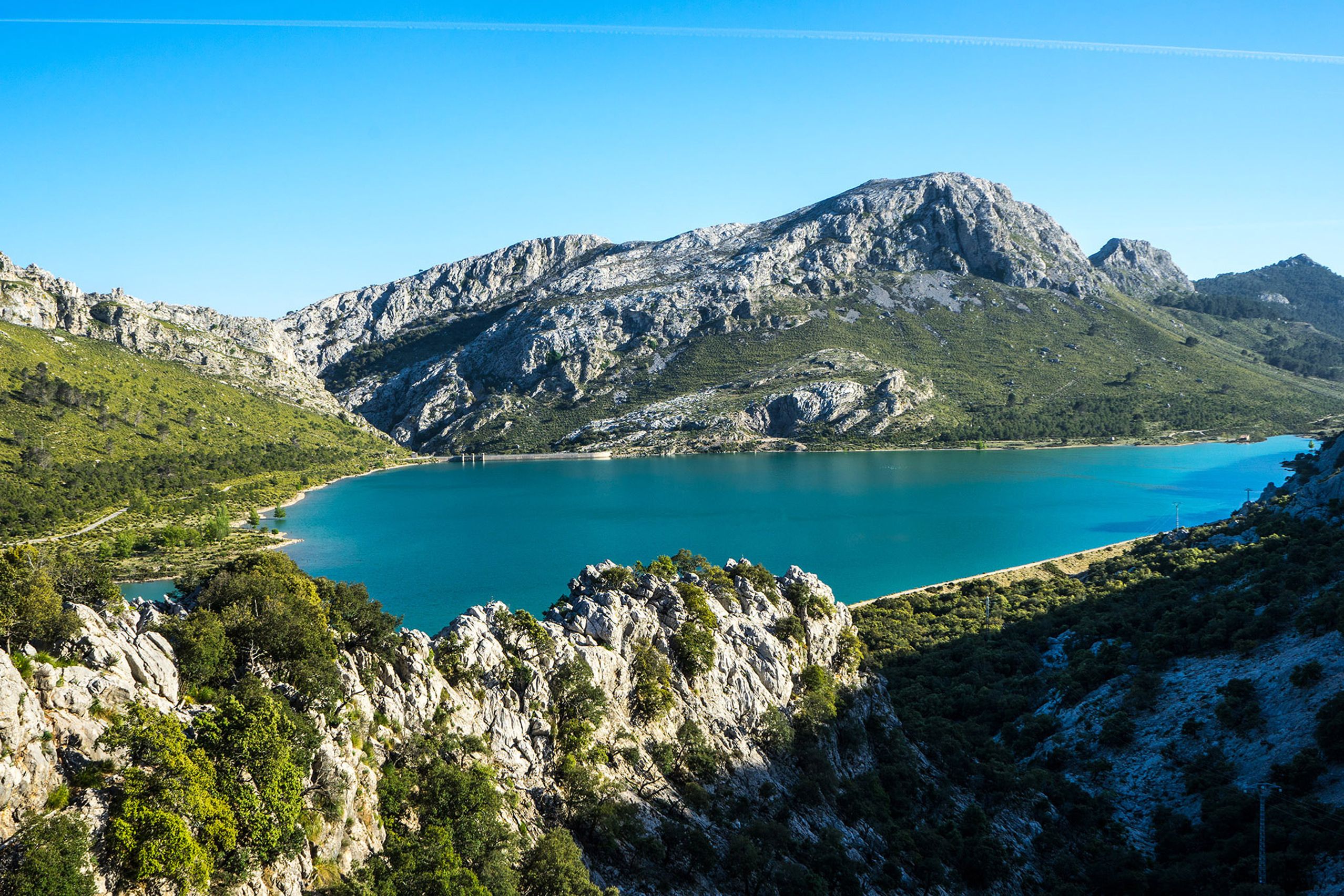
Gorg Blau
Mallorca’s largest reservoir sits in the heart of the Tramuntana beside the MA-10. Swimming is forbidden, there’s no café or proper car park, but the road here is one of the island’s loveliest drives.
Gorg Blau
Gorg Blau in 30 seconds
The essentials at a glance
- Worth visiting for
- A short visit
- Best for
- Mountain views and a scenic stop
- Best months
- January–May, September–December
- Time to allow
- Ten minutes for the view, or one to two hours including a waterside walk.
- Without a car
- Hire car needed
- Parking
- Roadside lay-bys only; space is scarce at weekends.
- Highlight
- A reservoir surrounded by Tramuntana mountains
- Keep in mind
- Swimming or an outing with facilities on site
- Access
- Pushchairs: Not a practical choice. · Wheelchairs: Visible from the roadside, but the paths aren’t wheelchair accessible.
Get a feel for Mallorca. Find your kind of place.
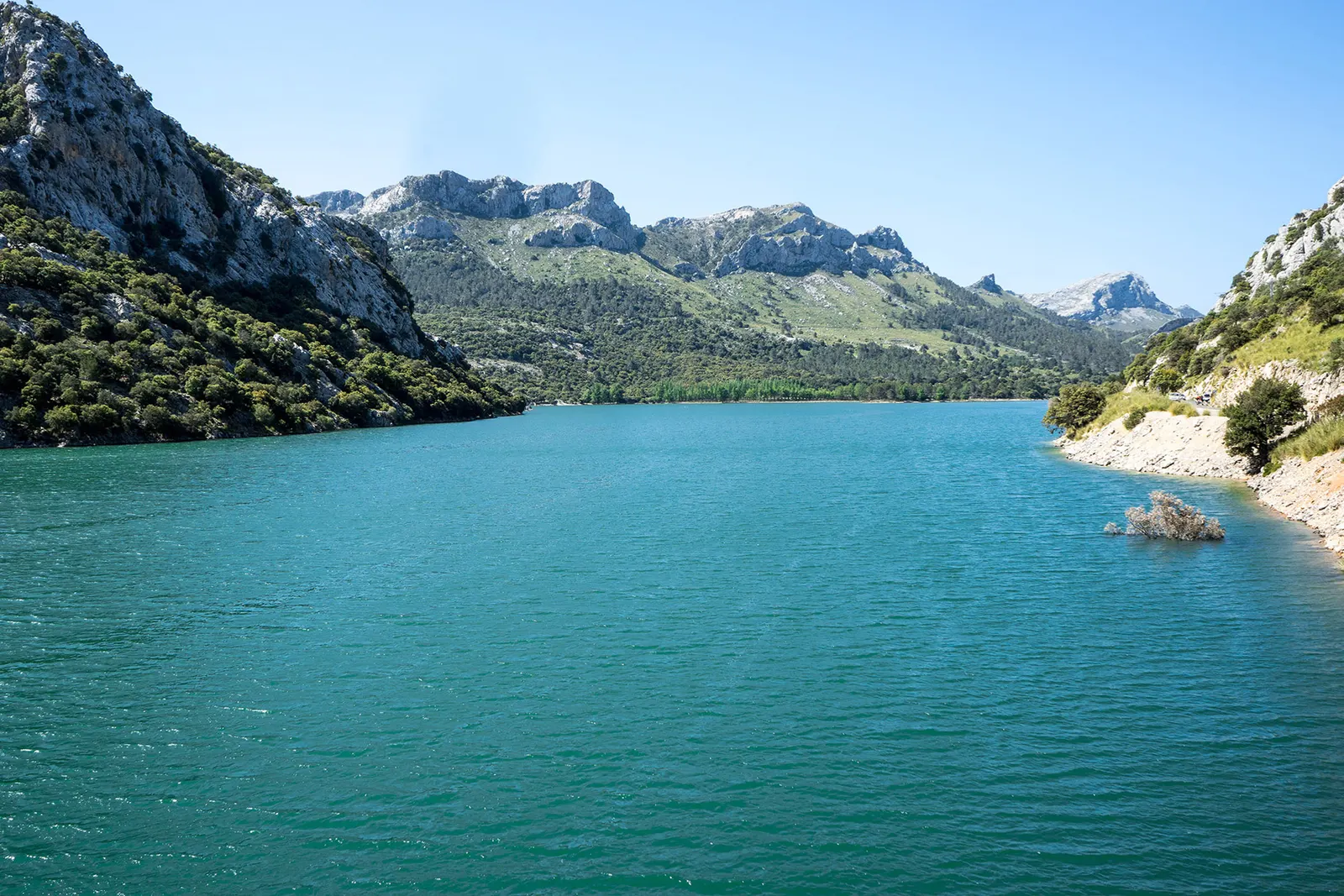
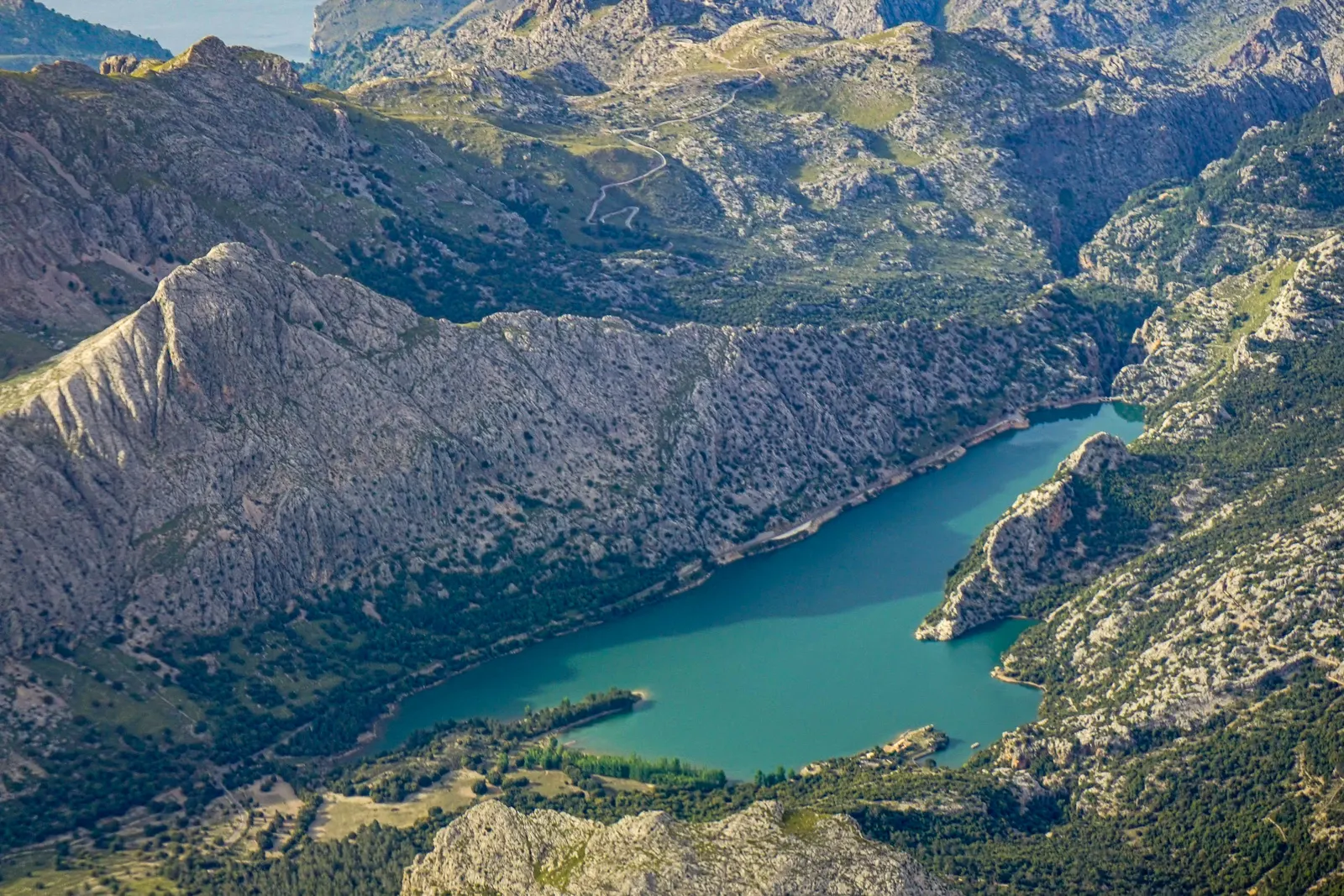
From the shore, you see the colour most clearly. It comes from the limestone beneath.
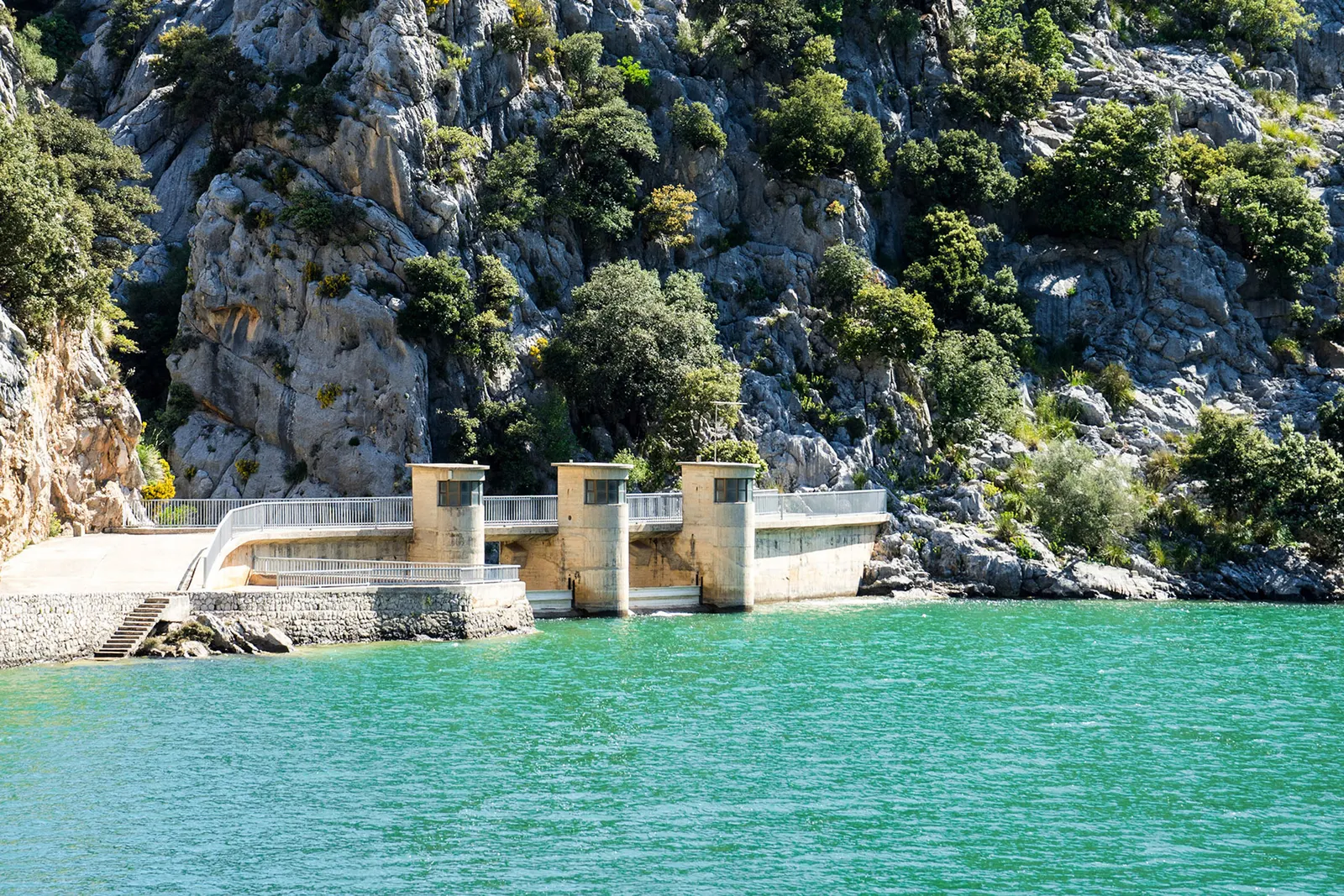
The dam is a reminder that this is a reservoir, however natural it may look.
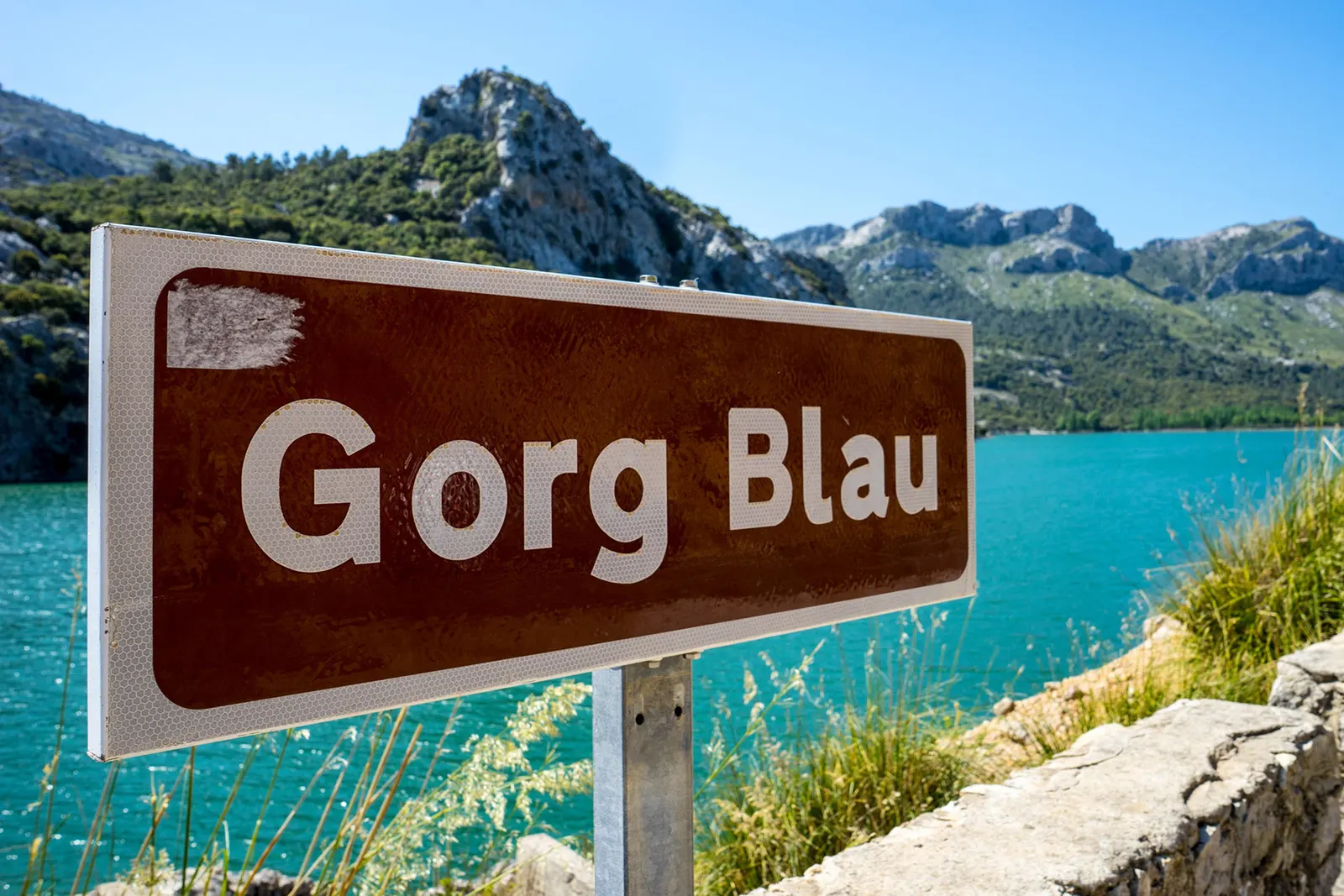
The sign beside the MA-10 is the main marker for the stop.
Drive from the airport
75 minutes
62 km
Bus connections
No dependable connection
Region
Serra de Tramuntana
Nearest beach
Sa Calobra
6 km
Elevation
600 m
above sea level
A glimpse of Gorg Blau
Season guide for Gorg Blau
November Worth a visit
Very quiet Open
Worth visiting in January, February, March, April, May, September, October, November and December.
Location
Location of Gorg Blau
- Region
- Serra de Tramuntana
- Municipality
- Escorca
- Elevation
- 600 m above sea level
- Airport
- 62 km , around 75 minutes
- Hire car
- needed
- Worth visiting for
- a brief stop
- Coordinates
- 39.8025,2.8183
About Gorg Blau
A reservoir in the central Serra de Tramuntana, Gorg Blau is Mallorca’s largest, with a capacity of around 7.4 million cubic metres. Nearby Cúber holds about 4.6 million. Both were created in the 1970s to supply Mallorca with drinking water.
Limestone beneath the water gives it its turquoise-green colour. Wooded slopes rise around it, with bare mountain peaks above.
What lies beneath the water
The reservoir is relatively young. It was filled in 1971–72, flooding the Almallutx valley.
A Moorish settlement stood here, larger than was long assumed. At low water levels, archaeologists were able to measure an area of around 60,000 square metres, including houses, a mosque, an administrative building and a cemetery.
Older remains nearby include two settlements and three sanctuaries, dating from the 7th century BC through to Roman times. Some researchers believe this may have been a religious centre for the whole island.
In dry summers, when the water falls far enough, walls reappear. You can’t count on seeing them, but a late-summer visit in a drought year may reveal more than usual.
Before the reservoir
Gorg Blau was once a deep pool in a stream, spanned by an old bridge and enclosed by rock walls. The name originally referred to that pool, rather than today’s reservoir.
Its beauty was well known on the island and drew artists. The poet Miquel Costa i Llobera wrote about it, and Joaquim Mir painted a triptych now in Barcelona.
When the reservoir was built, the bridge was dismantled and the road diverted through a tunnel. Old pictures show the place that preceded today’s lake.
Swimming and facilities
Swimming is forbidden. The reservoir supplies drinking water.
There’s no café, toilet, shade or proper car park, just roadside lay-bys that fill on fine weekends.
The road
The drive is a major reason to come. Gorg Blau sits directly beside the MA-10, the Tramuntana’s scenic road. From Sóller, you pass Cúber before the view suddenly opens onto the larger reservoir.
This stretch is a favourite with road cyclists, particularly busy in spring.
If you stay for a walk
A path follows the channel linking the two reservoirs, with views of the water and rock faces. The reservoir is also an important bird habitat, including for rare species. Binoculars can be more rewarding than a camera here.
When to come
Choose March for green surroundings and water replenished by winter rainfall, or October for the light. After dry summers, August water levels can be much lower. The view changes, and some visitors find it more interesting then.
In winter, snow often covers the surrounding peaks. Ice may close the MA-10, so check before setting out.
Photographs
Gorg Blau in Mallorca
Practical details
- Parking
- Roadside lay-bys only; space is scarce at weekends.
- Time to allow
- Ten minutes for the view, or one to two hours including a waterside walk.
- Good to know
- Swimming is forbidden because the reservoir supplies drinking water. There’s no café, toilet or shade.
- Bus
- No dependable connection; route 354 along the MA-10 runs infrequently.
- Access
- Tarmac road and unsurfaced waterside paths. · Pushchairs: Not a practical choice. · Wheelchairs: Visible from the roadside, but the paths aren’t wheelchair accessible. · Dogs: Keep dogs on a lead.
- What you will not find
- Permission to swim · Places to eat or drink · Toilets · Car park · Shade
- Coordinates
- 39.8025,2.8183 Google Maps Apple Maps
Within reach
Places to visit
Nearby

Mallorca's spiritual centre, a sanctuary at 525 metres in the heart of the Tramuntana, with guest rooms, a …

A pilgrimage church on a rocky ledge above Mancor de la Vall, documented since 1275. The terrace looks across much …

One of Mallorca's oldest churches, standing alone among the fields outside Campanet. Built on the site of a mosque …

A quieter cave visit near Campanet, with limestone formations rather than a boat ride or colourful show. Allow …

At the foot of the Sóller pass, this garden has irrigation rooted in Moorish times. Palm groves, a pergola with …
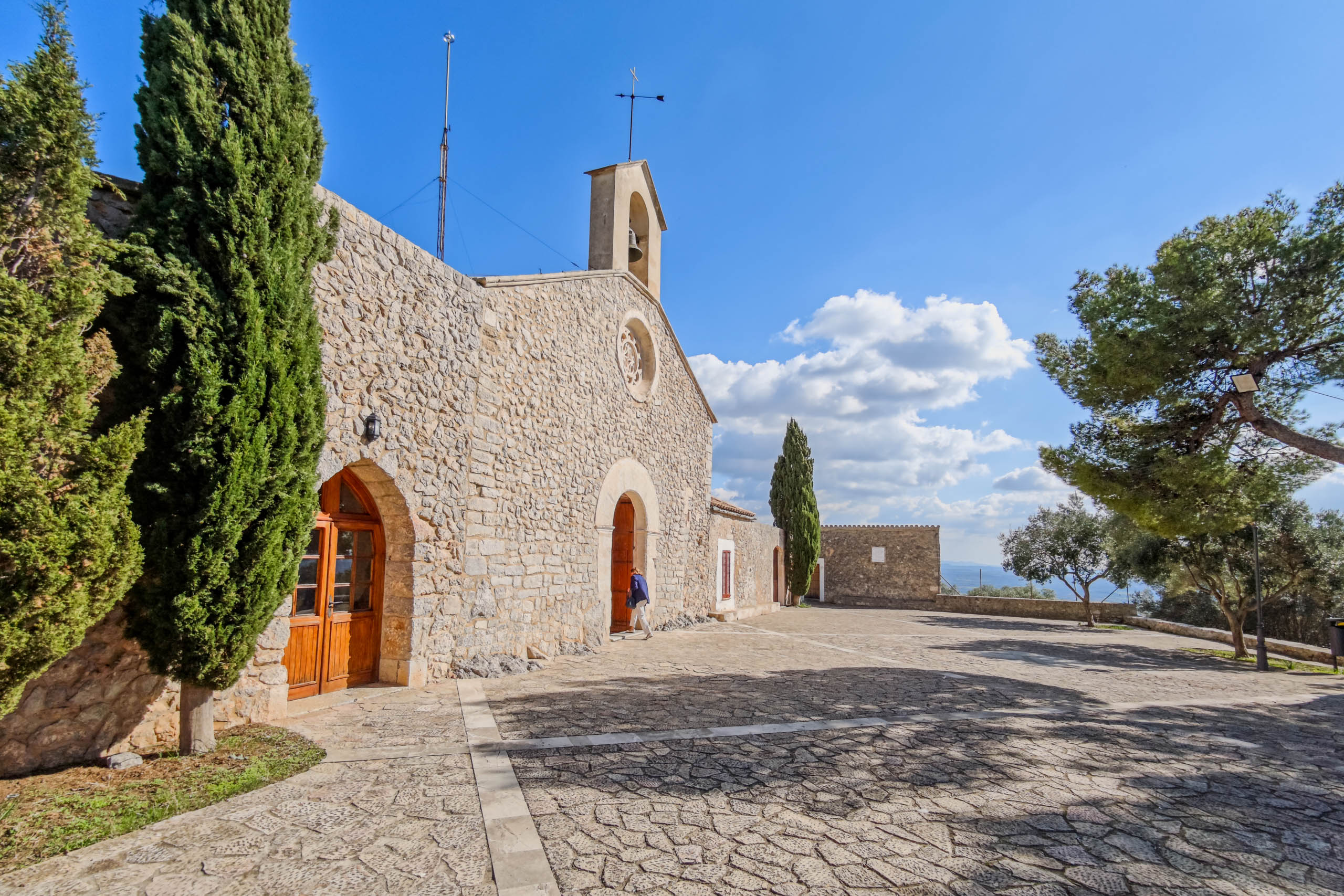
A small chapel and a wide view across Mallorca. Santa Magdalena stands on a hill near Inca. The winding climb is …

A small pilgrimage chapel among pines near Sa Pobla, on the site of an older settlement. A paved path leads up to …

Archduke Ludwig Salvator's country estate above the west coast, with a white marble pavilion on the edge — the …
Distances without a driving time are measured in a straight line. The road journey can be much longer; known driving times are shown alongside.
Where to swim nearby
Beaches and swimming nearby

A shingle cove at the mouth of the Torrent de Pareis, reached by a winding road completed in 1932 that is almost …
Via the winding MA-2141.

An almost circular, sheltered bay with a sandy beach, two lighthouses and a tram that has run down from Sóller …
Places to stay within reach
Explore from here
Your questions answered
Your questions about Gorg Blau
Can you swim in Gorg Blau?
No. Gorg Blau supplies drinking water, so swimming isn’t allowed. For a swim, head to the coast. Sa Calobra is about thirty minutes away along the winding mountain road.
How big is Gorg Blau?
Its capacity is around 7.4 million cubic metres, making it the larger of the two Tramuntana reservoirs. Nearby Cúber holds about 4.6 million. Both were created in the 1970s to supply the island with drinking water.
How do you get to Gorg Blau?
Follow the MA-10 between Sóller and Lluc, the Tramuntana’s scenic road. Coming from Sóller, you pass Cúber before the view opens onto Gorg Blau. Parking is only in roadside lay-bys.
Are there walking paths at Gorg Blau?
Yes. A path follows the channel linking the two reservoirs, with views of the water and surrounding cliffs. The reservoir is also an important bird habitat, including for rare species, so bring binoculars.
When does Gorg Blau look its best?
March, when winter rainfall can fill the reservoir and the mountains are green, and October for the light. After dry summers, the August water level is much lower and the view changes considerably.
Practical questions
When is the best time to visit Gorg Blau?
Recommended months: January, February, March, April, May, September, October, November, December. Clear air, often with snow on the surrounding peaks. Ice may close the MA-10.
Is Gorg Blau worth visiting in July and August?
July: worth considering with some reservations. Usually busy. The MA-10 is busy in high summer and lay-bys fill up. August: worth considering with some reservations. Usually busy. After a dry summer, the reservoir level is noticeably lower.
How far is Gorg Blau from Palma airport?
About 62 km from Palma airport. Allow roughly 75 minutes by car. Beside the MA-10 between Sóller and Lluc. Parking is limited to roadside lay-bys, which fill on fine weekends.
Do I need a hire car for Gorg Blau?
A car is needed No dependable connection; route 354 along the MA-10 runs infrequently.
Where can I park in Gorg Blau?
Roadside lay-bys only; space is scarce at weekends.
Can I visit Gorg Blau with a pushchair or wheelchair?
Tarmac road and unsurfaced waterside paths. Pushchairs: Not a practical choice. Wheelchairs: Visible from the roadside, but the paths aren’t wheelchair accessible.
Are dogs allowed at Gorg Blau?
Keep dogs on a lead.
Words and photographs: Friedhelm Fischer. Exploring Mallorca since 2013 — by bike, on foot and with a camera.