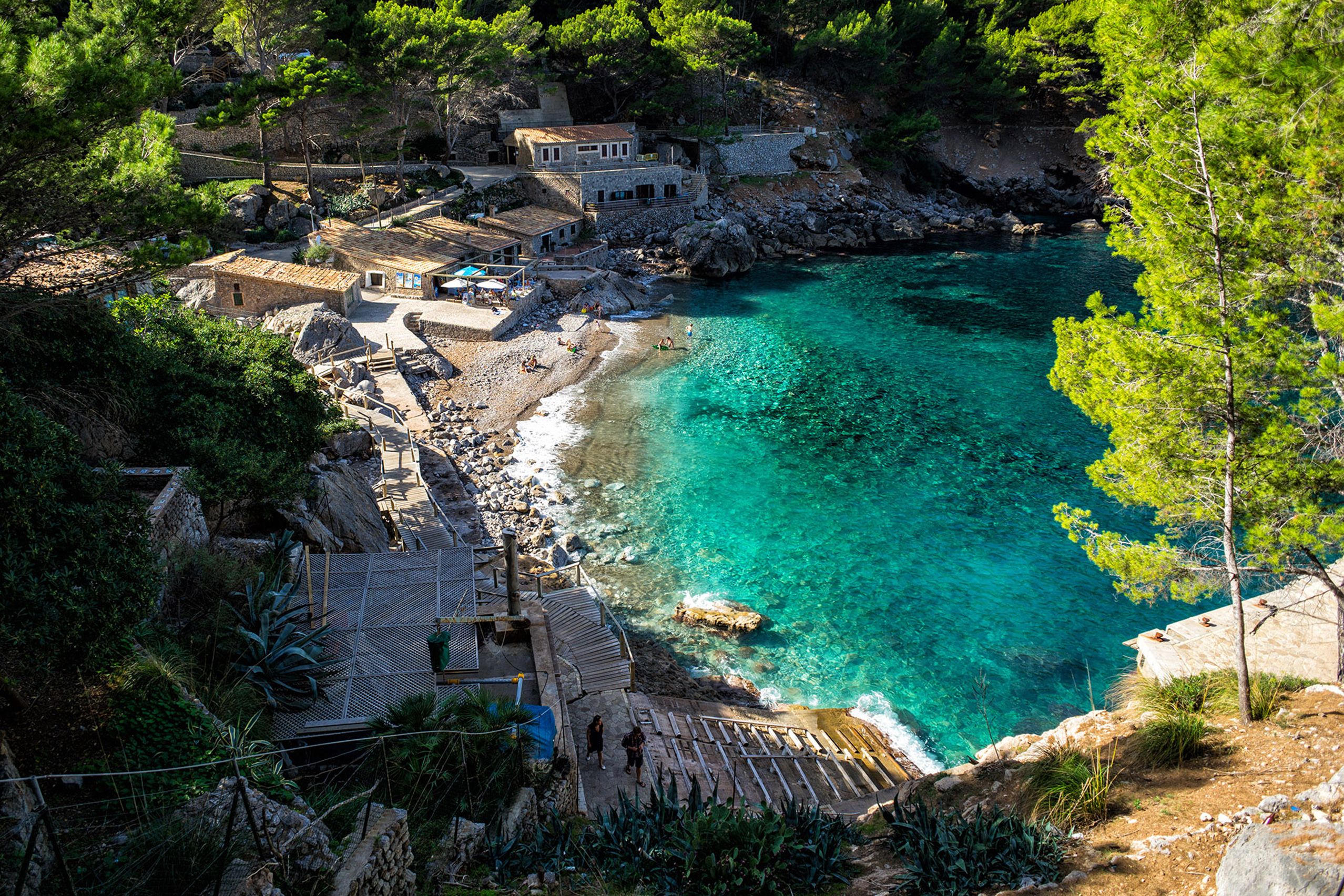
Sa Calobra
A shingle cove at the mouth of the Torrent de Pareis, reached by a winding road completed in 1932 that is almost more famous than the destination. Twelve kilometres, 800 metres of descent and a full 360-degree bend.
Sa Calobra
Sa Calobra in 30 seconds
The essentials at a glance
- Worth visiting for
- A day trip
- Best for
- Dramatic cliffs, hairpin bends and the mouth of the gorge
- Best months
- January–March, October–December
- Time to allow
- Two hours for the cove and mouth of the gorge. The full Torrent de Pareis descent is a demanding all-day outing.
- Without a car
- Hire car needed
- Parking
- One large paid car park, filling during the morning in season.
- Highlight
- The mouth of the Torrent de Pareis
- Keep in mind
- An easy walk through the whole Torrent de Pareis
- Access
- Pushchairs: Manageable as far as the cove, but not over the shingle · Wheelchairs: Limited access towards the mouth of the gorge
Get a feel for Mallorca. Find your kind of place.
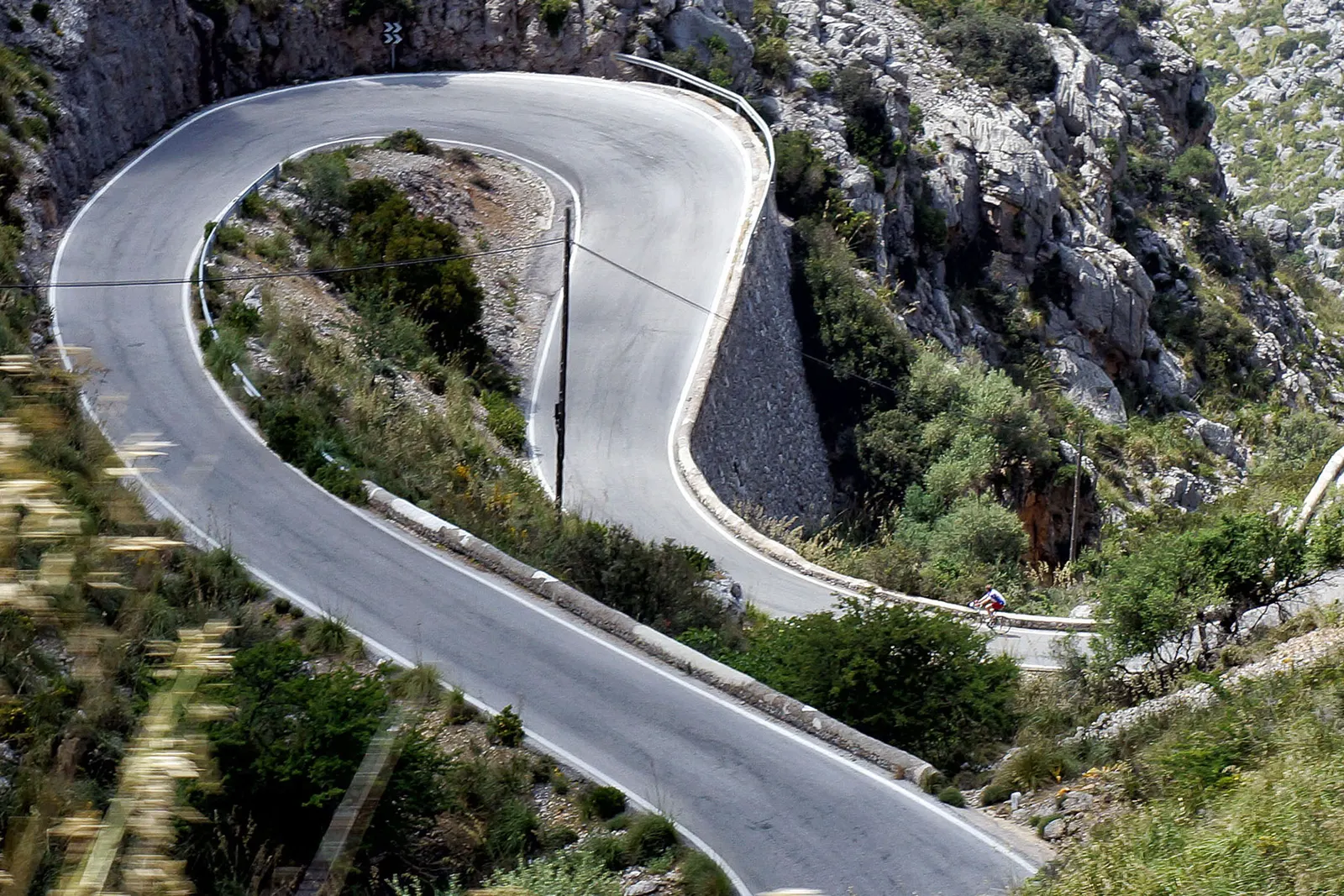
One of many bends on the way down. Cyclists coming up have already put in quite an effort by this point.
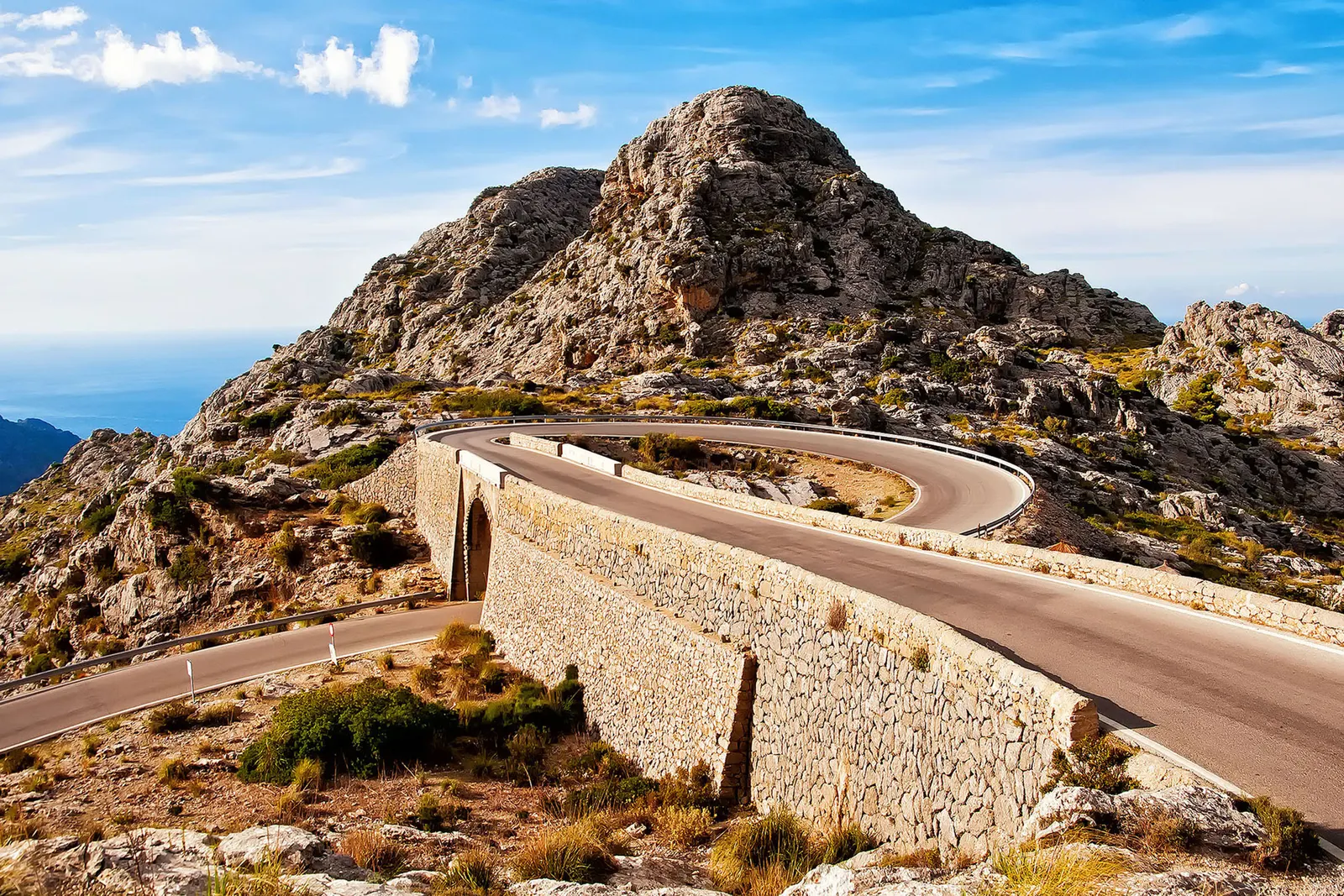
The tie knot. The road makes a full turn, crosses this bridge and then passes underneath it — a practical solution to the steep terrain.
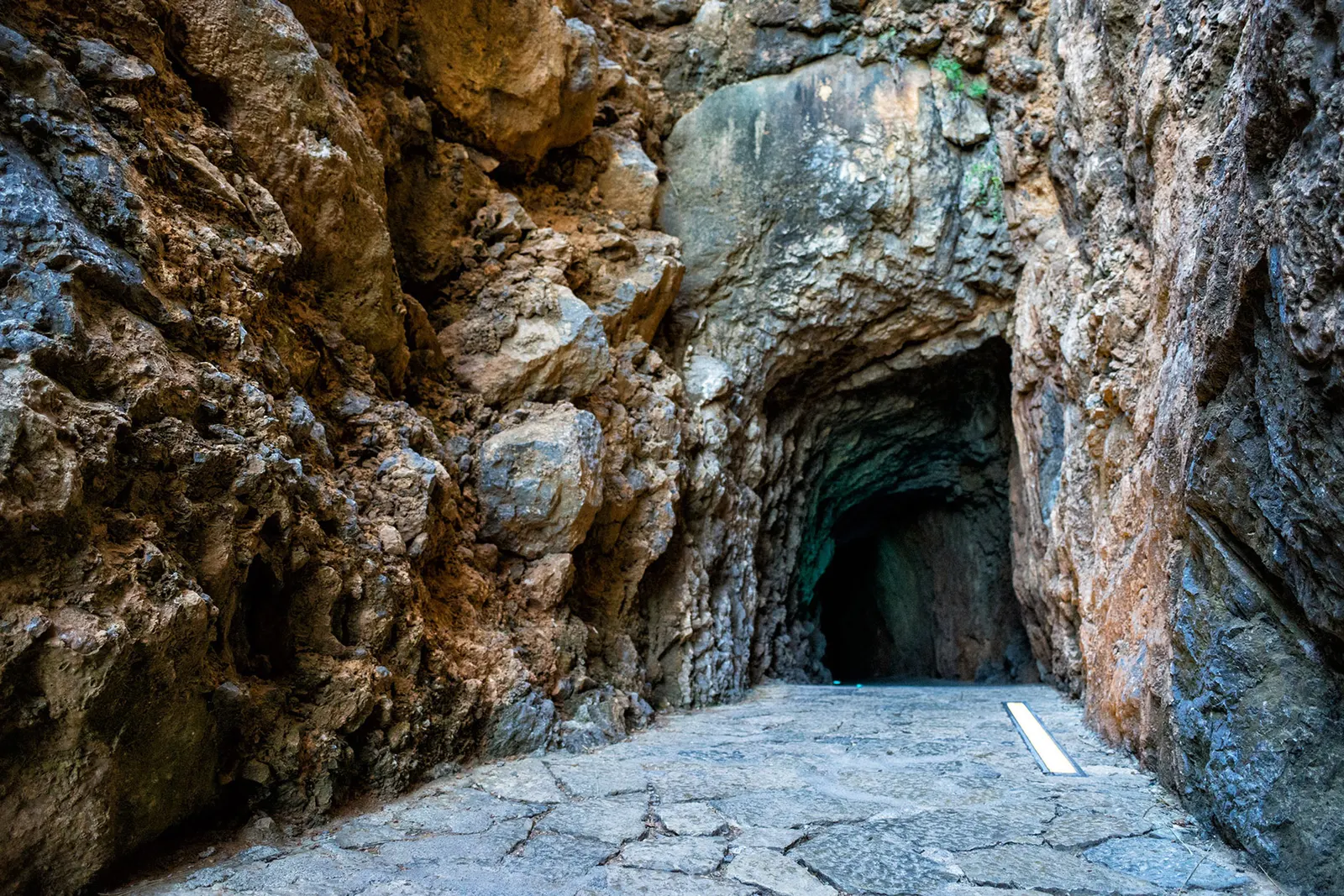
The final stretch passes through two short tunnels cut into the rock. The shingle cove opens out unexpectedly beyond them.
Drive from the airport
90 minutes
60 km
Bus connections
No scheduled bus
Region
Serra de Tramuntana
Nearest beach
Port de Sóller
11 km
Elevation
0 m
above sea level
Season guide for Sa Calobra
November Worth a visit
Quiet Some places closed
Worth visiting in January, February, March, October, November and December. Less suitable in June, July and August. Mostly closed in January, February and December.
Location
Location of Sa Calobra
- Region
- Serra de Tramuntana
- Municipality
- Escorca
- Elevation
- 0 m above sea level
- Airport
- 60 km , around 90 minutes
- Hire car
- needed
- Worth visiting for
- a day trip
- Coordinates
- 39.8506,2.8000
What Sa Calobra is like
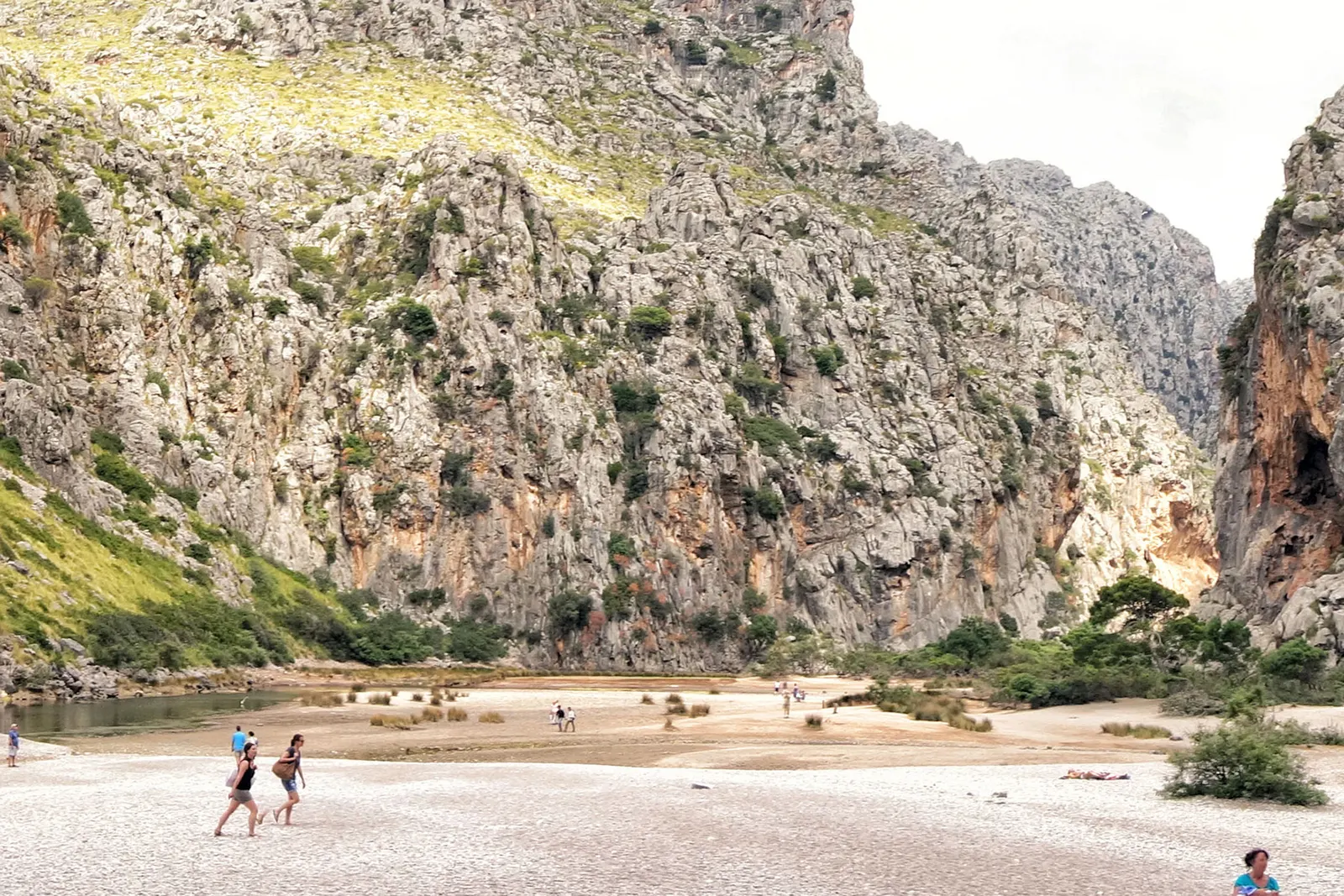
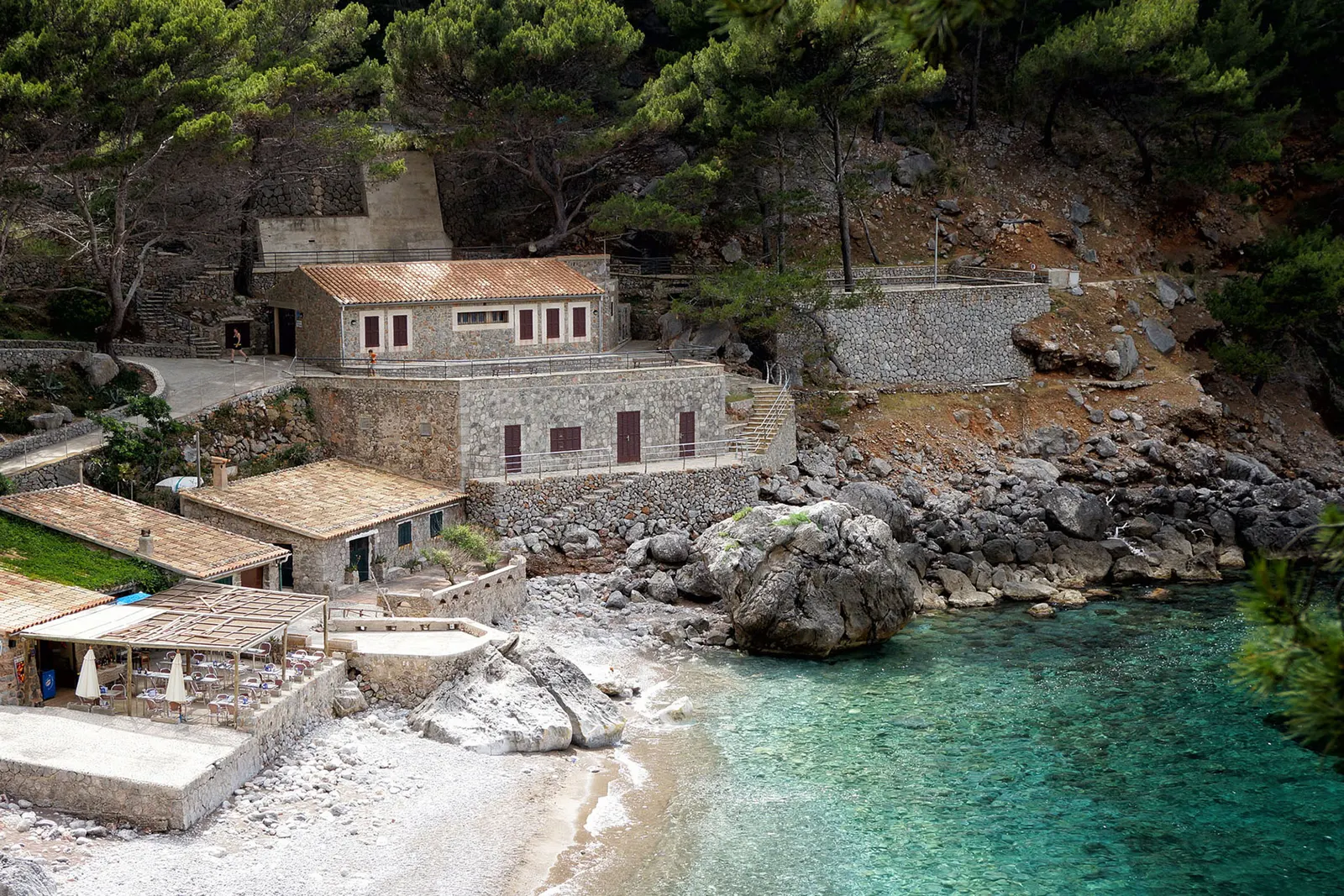
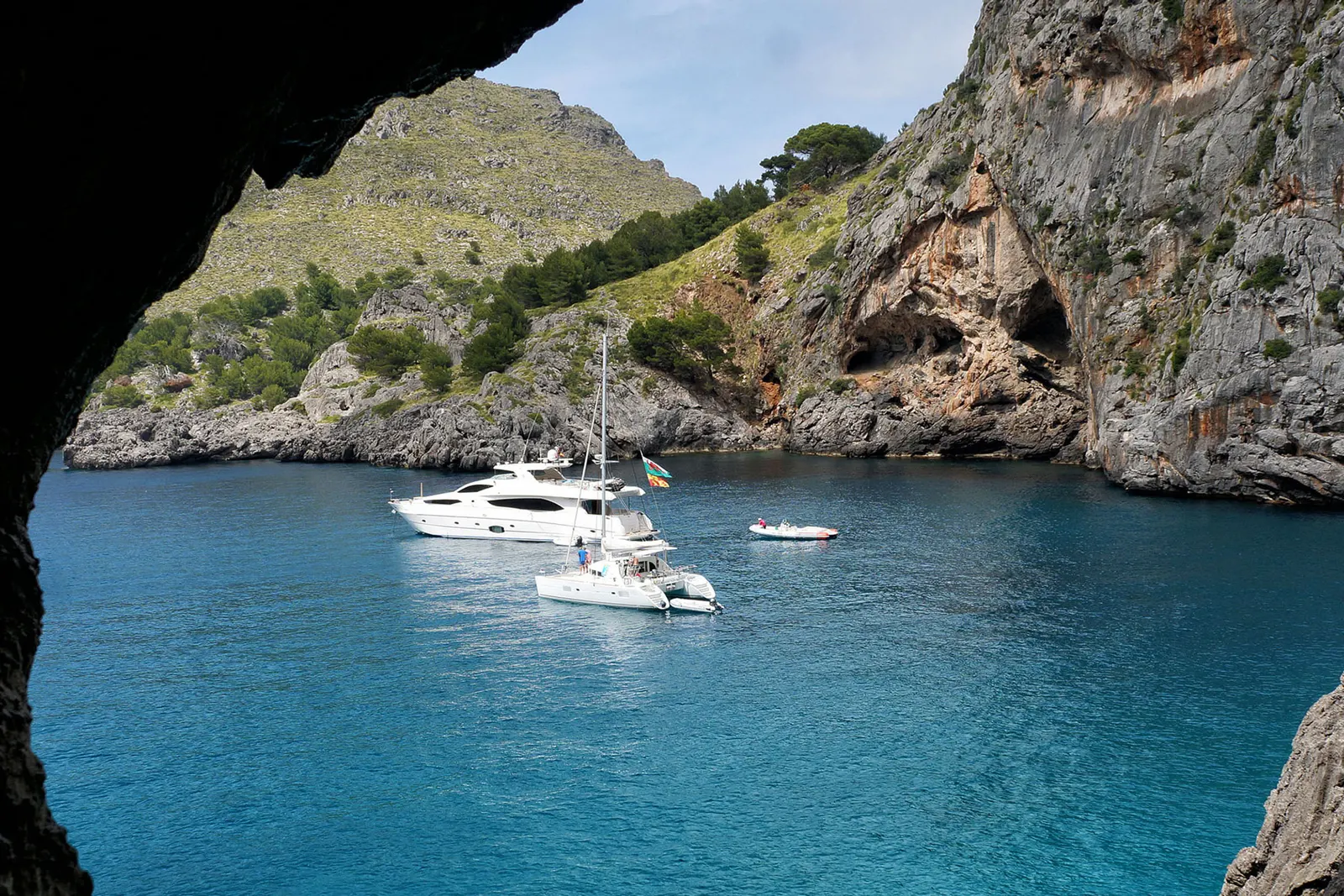
A tiny cove on the north-west coast beneath the Serra de Tramuntana, in the municipality of Escorca. Two things make it famous: the road down and the gorge that meets the sea here.
The road
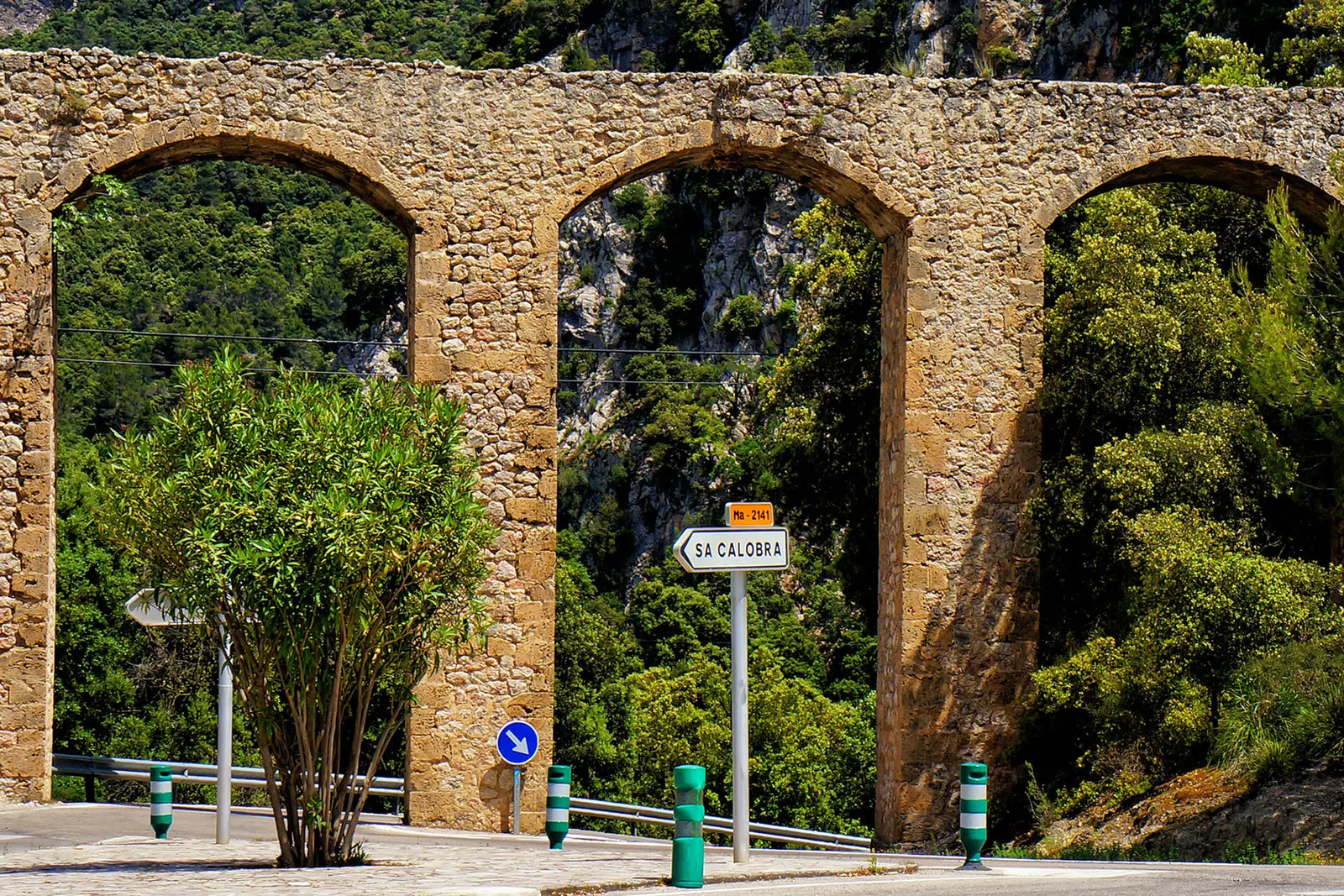
Mallorcan engineer Antonio Parietti designed the approach road, completed in 1932. The Ma-2141 covers around twelve kilometres, descending roughly 800 metres.
Its best-known section is the Nus de sa Corbata, or tie knot, at Coll dels Reis. The road makes a complete turn, crossing a bridge and then passing underneath that very same bridge. Parietti used this arrangement to lose height without cutting more hairpins into the hillside.
Remarkably, the road was built without explosives. It follows the terrain rather than blasting through it. Parietti used the same approach on the road to Cap de Formentor.
Today it attracts road cyclists from far and wide. The climb is serious: from the bottom, all 800 metres of ascent come in one stretch, without a flat section to recover.
The Torrent de Pareis
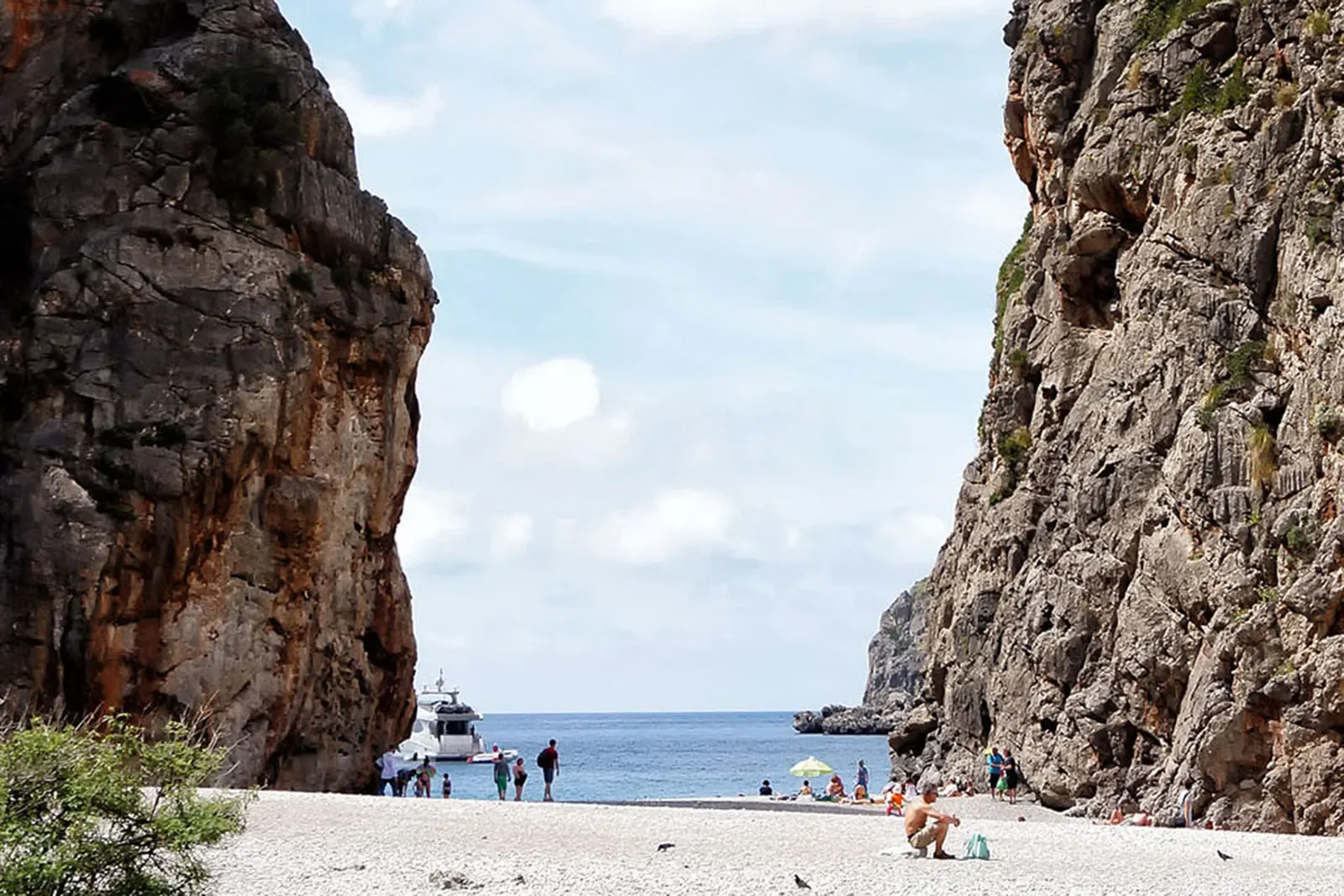
The torrent drains the upland valleys around Escorca. Over time, it has carved a gorge that narrows to just a few metres between walls more than 200 metres high. It is one of the most striking gorges in the western Mediterranean.
At its mouth, beyond two short tunnels cut into the rock, lies a shingle cove. You can reach it from Sa Calobra in a few minutes on foot, without climbing.
Summer concerts have taken place inside the gorge since 1964, without amplification. The rock walls provide the acoustics.
Before entering the gorge
The full descent of the Torrent de Pareis from Escorca is not an ordinary walk. It involves climbing, scrambling and jumps, and requires experience. If rain is forecast, it becomes life-threatening: water from the whole catchment can rise in the narrow channel within minutes.
If you simply want to see the cove, enter from the coast and return the same way. That gives you plenty to appreciate.
Getting there
There are three options. The second is the most relaxing.
By car, along the Ma-2141. Beautiful, but slow in season, with a paid car park at the bottom that fills early.
By boat from Port de Sóller. You follow the cliffs, avoid the bends and approach the cove from its most impressive side.
By bike, if you are prepared for the climb back out.
When to visit
Early or late. Between eleven and four, the road is busy and space in the cove is limited. Spring and October give you a better chance of enjoying both without the high-summer crowds.
Photographs
Sa Calobra in Mallorca
Practical details
- Parking
- One large paid car park, filling during the morning in season.
- Public transport
- No scheduled service. Excursion coaches and summer boats from Port de Sóller.
- Time to allow
- Two hours for the cove and mouth of the gorge. The full Torrent de Pareis descent is a demanding all-day outing.
- Good to know
- The full descent requires climbing experience, sure footing and dry weather. It is life-threatening after rain. It is not a beginner's walk, however widely it is advertised.
- Bus
- No scheduled bus; boats from Port de Sóller
- Access
- Tunnels and paved paths, then coarse shingle at the cove · Pushchairs: Manageable as far as the cove, but not over the shingle · Wheelchairs: Limited access towards the mouth of the gorge · Dogs: On a lead
- What you will not find
- A sandy beach · A scheduled bus service · Peace in the main season · Shade on the shingle
- Coordinates
- 39.8506,2.8000 Google Maps Apple Maps
Within reach
Places to visit
Nearby

Mallorca’s largest reservoir sits in the heart of the Tramuntana beside the MA-10. Swimming is forbidden, there’s …

Mallorca's spiritual centre, a sanctuary at 525 metres in the heart of the Tramuntana, with guest rooms, a …

A pilgrimage church on a rocky ledge above Mancor de la Vall, documented since 1275. The terrace looks across much …

One of Mallorca's oldest churches, standing alone among the fields outside Campanet. Built on the site of a mosque …

A quieter cave visit near Campanet, with limestone formations rather than a boat ride or colourful show. Allow …

At the foot of the Sóller pass, this garden has irrigation rooted in Moorish times. Palm groves, a pergola with …

Archduke Ludwig Salvator's country estate above the west coast, with a white marble pavilion on the edge — the …
Distances without a driving time are measured in a straight line. The road journey can be much longer; known driving times are shown alongside.
Where to swim nearby
Beaches and swimming nearby

Explore from here
Your questions answered
Your questions about Sa Calobra
How long is the road to Sa Calobra?
The Ma-2141 runs for around twelve kilometres and descends roughly 800 metres. Mallorcan engineer Antonio Parietti designed it, and it was completed in 1932. Built without explosives, it follows the terrain rather than cutting straight through it.
What is the Nus de sa Corbata?
The tie knot at Coll dels Reis is the road's best-known feature. It makes a full turn, crossing a bridge and then passing underneath the same bridge. Parietti designed it to lose height without carving more hairpins into the slope.
Can you walk through the Torrent de Pareis?
The full descent from Escorca involves climbing and scrambling, including jumps, and requires experience. Forecast rain makes it life-threatening, as water from the catchment can rise within minutes in the narrow gorge. To see the cove, approach from the coast instead, walking through two short tunnels from Sa Calobra with no climbing required.
How can I reach Sa Calobra without a car?
By boat from Port de Sóller. The journey follows the cliffs, avoids the hairpins and approaches the bay from its most impressive side. There is no scheduled bus service.
Is there a sandy beach at Sa Calobra?
No. The cove at the mouth of the gorge is shingle, with no shade on the beach.
When should I visit Sa Calobra?
Avoid the busiest middle part of the day if possible. Spring and autumn are generally quieter than high summer, although neither an empty road nor an empty cove is guaranteed.
Practical questions
When is the best time to visit Sa Calobra?
Recommended months: January, February, March, October, November, December. Access and opening are limited in January, February, December. See the visiting advice on this page. Facilities are closed and the road is quiet. Water runs through the gorge after rain. This is how I like to see Sa Calobra.
Is Sa Calobra worth visiting in July and August?
July: another month may suit you better. Usually very crowded. Coaches crowd the bends. Allow an hour for twelve kilometres. August: another month may suit you better. Usually very crowded. The car park fills from nine and space on the shingle is limited. Visit another time if you can.
How far is Sa Calobra from Palma airport?
About 60 km from Palma airport. Allow roughly 90 minutes by car.
Do I need a hire car for Sa Calobra?
A car is needed No scheduled bus; boats from Port de Sóller
Where can I park in Sa Calobra?
One large paid car park, filling during the morning in season.
Can you swim at Sa Calobra?
Sa Calobra is a swimming cove. See the beach and access information above.
Can I visit Sa Calobra with a pushchair or wheelchair?
Tunnels and paved paths, then coarse shingle at the cove Pushchairs: Manageable as far as the cove, but not over the shingle Wheelchairs: Limited access towards the mouth of the gorge
Are dogs allowed at Sa Calobra?
On a lead
Sa Calobra features in our Mallorca highlights
Words and photographs: Friedhelm Fischer. Exploring Mallorca since 2013 — by bike, on foot and with a camera.