Car hire in Mallorca
A car can make the quieter corners of Mallorca easier to reach.
A good car-hire deal is about more than the daily rate. Here is what to check before booking, at the desk and when you return the keys.
A hire car opens up places beyond the bus stops: south-eastern coves, Tramuntana villages and monasteries above the plain. A few checks can stop an attractive daily rate turning into an expensive holiday.
Still deciding whether you need a car, or whether a few days would be enough? Start with getting around Mallorca.
Chapter 1 · Eleven questions before you pay
Before you book
Eleven questions before you pay
Compare the total price for everything you need. Extra drivers, equipment and collection outside normal hours can add to the cost.
Fuel policy
Collect full, return full is usually straightforward to understand. With other policies, check the fuel price, service fees and whether unused fuel is refunded. Keep your final fuel receipt and photograph the gauge when you return the car.
Cancellation terms matter
The usual EU 14-day cooling-off period does not apply to online car hire for specified dates. If you decide not to travel, the cancellation conditions apply. Rights relating to a service that is not delivered are a separate matter. Your Europe explains the rules.

Chapter 2 · Understanding the total cost
Insurance, payment card and deposit
The terms in plain English
- Third-party liability cover
- Covers damage to other people within the legal and contractual limits. Required third-party cover must be included in the hire price. Damage to the hire car itself is a different matter.
- Collision damage waiver, or CDW
- Limits your liability for damage to the hire car. It is often a contractual waiver, rather than a separate insurance policy. The terms set out the cover, excess and excluded damage.
- Theft protection
- Limits your liability for theft under the agreed conditions, often with an excess. Check whether it is included.
- Excess
- The amount you remain responsible for in a covered claim, often up to an agreed maximum. Different rules may apply to excluded damage.
- Zero excess from the hire company
- Removes the agreed excess for covered damage. You still need to check exclusions, your obligations and any other charges.
- Reimbursement through a separate insurer
- The hire company may charge you first. You then claim reimbursement from the insurer, providing the required evidence within its deadlines.
Read “zero excess” carefully. A waiver from the hire company and a later reimbursement from an insurer work differently. Check the damage covered, exclusions and your responsibilities.
What may still be excluded
- Tyres and wheels
- Windows and mirrors
- Underbody
- Roof
- Interior
- Vehicle keys
- Wrong fuel
- Recovery costs
- Damage caused by an unlisted driver
- Gross negligence
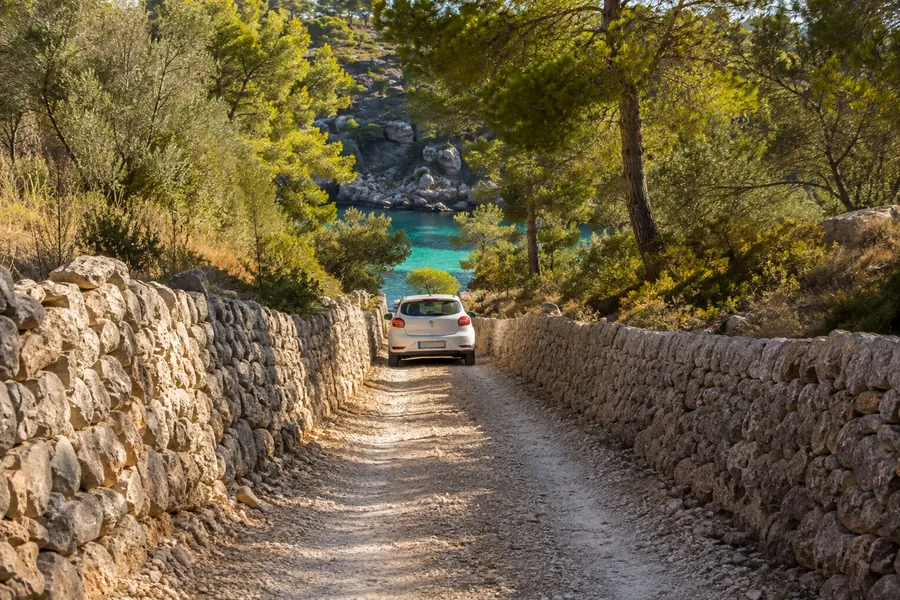
For narrow or unpaved access roads, check which roads your contract allows and what damage is covered. An extra package does not automatically remove every exclusion.
Payment cards and deposits
Paying for the booking and collecting the car are separate steps. A debit card accepted online may not be enough at the desk. The hire terms often require a credit card in the main driver’s name with sufficient available credit.
- Is a credit card required, or is a debit card accepted?
- Must it be in the main driver’s name? Usually, yes.
- How much is the deposit, and is it blocked or charged?
- Will your available limit also cover hotels, meals and the rest of your trip?
- Will you need the card’s PIN?
If something goes wrong
The hire company, booking portal and extra insurer may be different businesses. An English-language booking does not tell you which law applies or who is responsible for a particular problem.
Keep the booking confirmation, rental agreement, insurance terms and handover forms. Complain in writing to the relevant business. For a dispute with an overseas company, UK residents can contact the UK International Consumer Centre. Your legal position depends on the circumstances.
Chapter 3 · Checks at the car park
Collecting the car
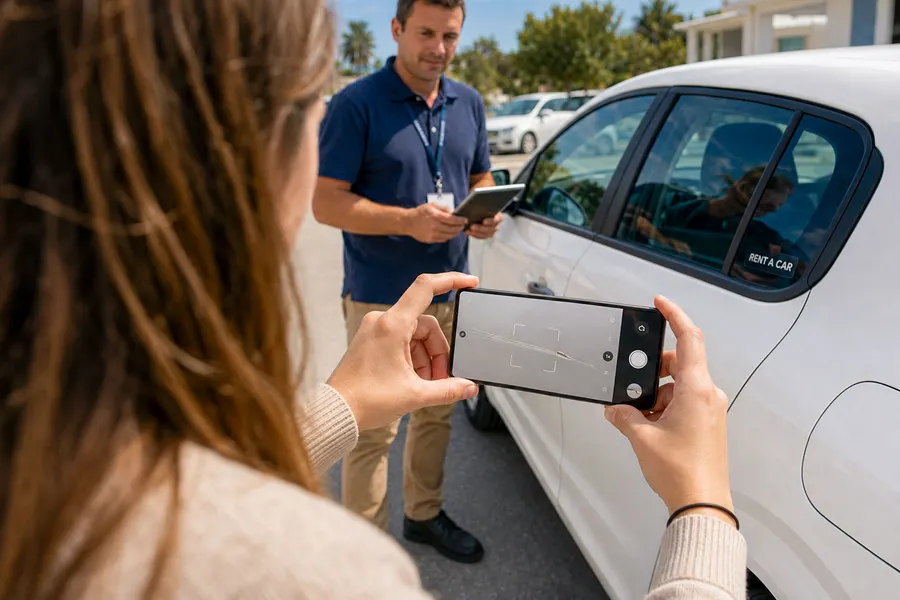
Photograph the car before driving away: all sides, wheels, windows, roof and interior. Have existing damage written on the handover form and keep a copy. This helps avoid later arguments about marks that were already there.
You can tick these lists at the car park. Your progress is saved only in this browser, without an account or sending the answers to us or anyone else.
The V16 warning beacon
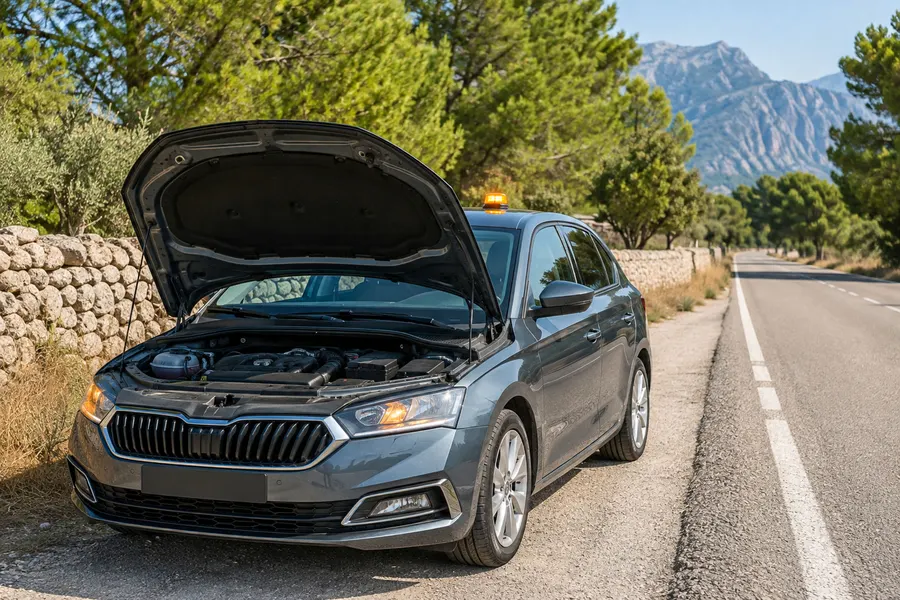
Since 1 January 2026, a connected V16 beacon has replaced the warning triangle for Spanish-registered cars. The approved beacon sends the vehicle’s position to the DGT traffic platform. Check that your Spanish-registered hire car has one and find out where it is kept. DGT guidance.
The aim is to warn other traffic without walking along the carriageway to put out a triangle. Where possible, the beacon can be placed on the roof from inside the car.
Chapter 4 · On the road, Palma and Formentor
Driving and parking
Driving in Spain
Drive on the right. Speed limits are in kilometres per hour.
| Road and pavement at the same level | 20 km/h |
|---|---|
| Urban road with one lane in each direction | 30 km/h |
| Urban road with two or more lanes in each direction | 50 km/h |
| Ordinary rural road | 90 km/h |
| Motorway or dual carriageway | 120 km/h |
Urban limits follow the rules introduced in May 2021. DGT speed-limit guide.
- Roundabouts: traffic already on the roundabout generally has priority. Move to the outside lane safely before leaving.
- Cyclists: only overtake with a clear view and at least 1.5 metres of space. Where there is more than one lane in your direction, change lanes completely.
- Coaches on hairpin bends: look ahead and use passing places. Priority depends on signs and the situation, not simply vehicle size. On narrow, steep roads, uphill traffic generally has priority unless it can reach a passing place more easily.
- Phones: do not hold your phone while driving, including at traffic lights.
- Seat belts: wear them in every seat. Children up to 135 cm require a suitable child restraint.
- Alcohol: legal limits apply, but the simplest plan is not to drink if you are driving.
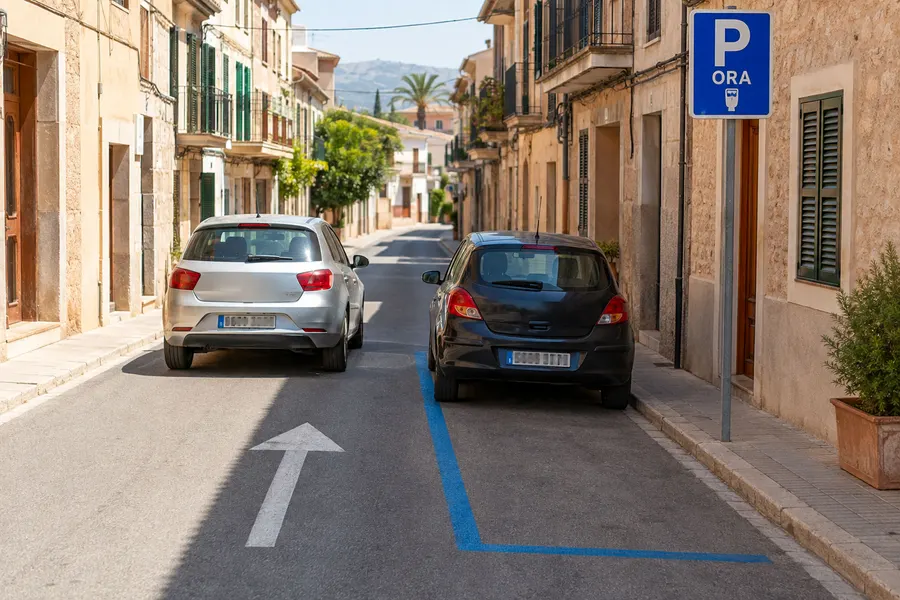
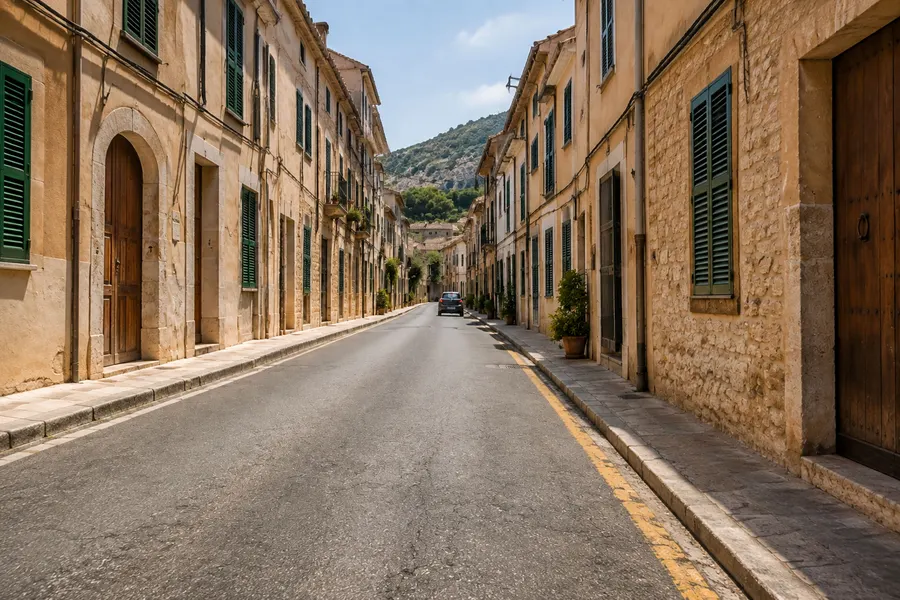
Parking colours
- Blue
- Usually a controlled parking zone. Check charging hours, maximum stay and exceptions on the sign, then buy the required ticket from the machine or approved app.
- Orange
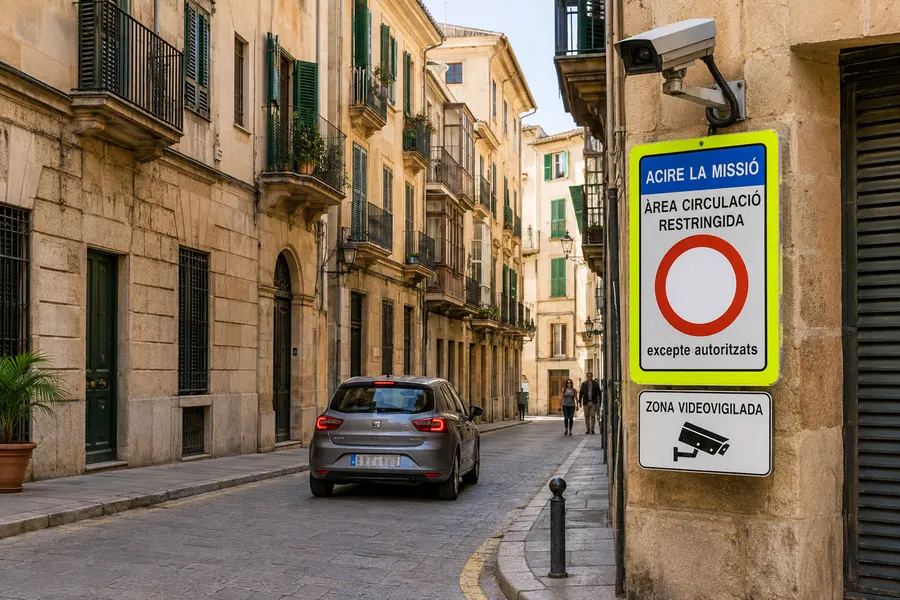
- A local parking arrangement. Read the signs for the rules. A marked parking space does not authorise entry into an ACIRE zone.
- Yellow
- A continuous yellow line prohibits stopping and parking; a broken yellow line prohibits parking. Signs explain time restrictions and loading bays.
- White
- Often free, but check the sign for days, hours and restrictions first.
Read the road markings and signs together. Local zones, charges and time limits apply alongside general traffic rules. Our place guides add local parking tips, but the rules on the spot take precedence.
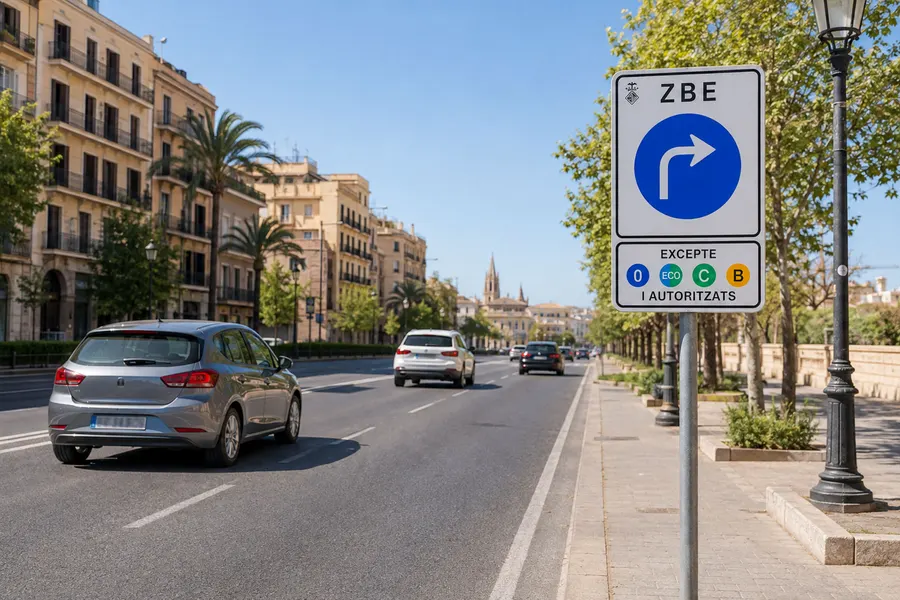
Palma: low-emission and restricted-access zones
ZBE is the low-emission zone in the centre, inside the Avingudas and seafront road. It concerns emissions categories. Under the published timetable, categories B, C, ECO and 0 are allowed from 22 December 2024. Vehicles are identified by registration number; a windscreen sticker is not required.
ACIRE areas are separate, smaller restricted-access zones, including parts of the old town. They require access authorisation, regardless of emissions class. Being allowed into the ZBE does not automatically allow you into ACIRE.
For public car parks within the zone, follow the signed authorised access route. Recent Spanish hire cars will generally meet the emissions requirements. Foreign registration numbers are not classified in the Spanish system and need separate permission, relevant if you bring your own car by ferry.
The published timetable removes category B on 1 January 2027, leaving C, ECO and 0. From 1 January 2030, only ECO and 0 are listed. Check Mobipalma’s current rules before driving in, and see ORA parking information.
Formentor
2026 season
Restrictions on the Ma-2210 applied from 15 May to 18 October, 10 am–10 pm.
- Beach section, km 2–8.7: access depends on available authorised parking.
- Lighthouse section, km 8.7–19.6: closed in both directions without permission, including to hire cars.
- Early visits: leave the lighthouse section by 9.59 am.
- Bus 334: Alcúdia–Port de Pollença–Formentor lighthouse. Check the return timetable.
- Signs and temporary closures still apply outside the restriction times.
Dates and hours are set for each season. Check the Consell de Mallorca’s Formentor information before every trip.
In brief
More questions about car hire
Do I need an international driving permit for Mallorca?
You can drive in Spain with a valid UK photocard licence without an international driving permit. Check the specific rules if you have a paper licence or a licence issued elsewhere. Take your licence and passport, and check the hire company’s minimum age and licence-held requirements. It may also ask for a DVLA check code.
Which country’s law applies if there is a dispute?
The hire company, booking site and insurer may be separate businesses. Booking in English does not, by itself, mean UK law applies. It depends on the contract and circumstances. UK residents can ask the UK International Consumer Centre for help with a cross-border dispute.
Do I get a cooling-off period when booking a hire car?
Not automatically. Vehicle hire for specified dates is excluded from the usual EU 14-day distance-selling cooling-off right. If you choose to cancel, the booking’s cancellation terms matter. This is separate from rights when a service is not provided or is faulty. Read the terms before paying.
Can I drive a hire car to Formentor?
For the 2026 season, restrictions ran from 15 May to 18 October, between 10 am and 10 pm. Access towards the beach depended on authorised parking spaces being available. The lighthouse section was closed in both directions without permission, so early visitors had to leave it by 9.59 am. Bus 334 is the alternative. Check the rules for the year of your visit.
How long will my deposit remain blocked?
It depends on when the hire company releases it and how quickly your bank processes that release. While blocked, it reduces your available card limit. Ask about the expected timescale and follow up with the company and bank if it passes. Keep the written return confirmation.
General information, based on the German guide’s checks of 16 September 2026, with UK licence and consumer-help guidance checked for the English edition. Check current official rules and the terms of your own booking.
- GOV.UK: driving in Spain
- GOV.UK: international driving permits
- DGT: V16 warning beacons
- DGT: driving rules for visitors
- Consell de Mallorca: Formentor access
- Palma: low-emission zone
- Palma: ORA parking
- European Consumer Centre Spain: car hire
- Your Europe: hiring a car abroad
- Rome I Regulation: consumer contracts
- UK International Consumer Centre
More for your trip