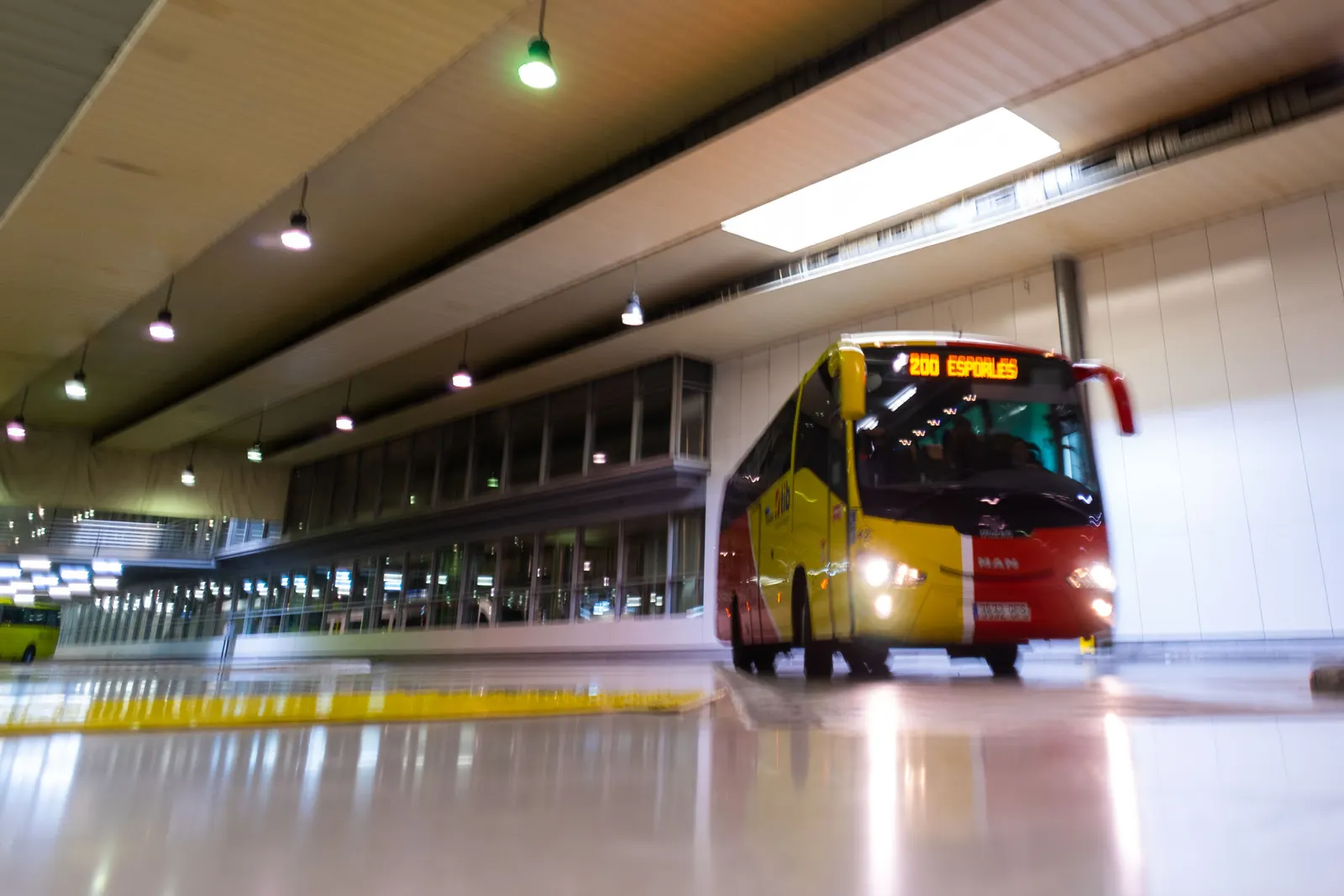
Buses and trains in Mallorca
Estació Intermodal, Palma
Reach towns, mountain villages and beaches by bus and train. Here is how the network fits together and what to know before you travel.
For many days out in Mallorca, buses and trains are a good alternative to driving. Palma is the main hub, with other connections at Inca, Manacor and Campos. Departure times and the number of changes usually matter more than the distance on the map.
Buses also run between seaside towns. The 322, for example, connects Alcúdia and Pollença bays. Other journeys mean heading inland first. Look up your exact connection for the day you want to travel and check the last bus back at the same time. Within Palma, EMT Palma runs the city buses; they are not included in this TIB overview.
Understanding the route numbers
The first digit broadly indicates the area. Still check the destination and stop: the number alone does not tell you which direction the bus is going. An A at the start marks an airport route; an e an express service. A d means demand-responsive transport, which may need advance booking and use different payment rules.
When the train is the easier option
The T1, T2 and T3 leave Estació Intermodal by Plaça d’Espanya in Palma for Inca, Sa Pobla and Manacor. Take the T3 for the Wednesday market in Sineu and save yourself the search for parking. Check the walk from the station to your destination too: not every station is in the town centre.
These are separate from the Ferrocarril de Sóller, the historic wooden train whose railway opened in 1912. It crosses the mountains to Sóller and has its own timetable and tickets. TIB tickets are not valid on it.
Planning your days out
The network at a glance
- T2 · Palma — Inca — Sa Pobla
- T3 · Palma — Inca — Manacor
- Sóller · Palma — Sóller (historic train)
- Tram · Sóller — Port de Sóller
- Year-round bus corridor
- Seasonal bus connection
This schematic map shows selected connections rather than exact roads, tracks or stop locations. Not all intermediate stops, metro and airport routes are shown. Check your journey in the TIB timetable.
Four rail routes
Trains and metro
The route-number colours match those used by the operator on signs and vehicles. They help you recognise a route; they do not follow a geographical system.
The train for the Sunday markets in Sa Pobla and Muro.
Stops at Sineu: a practical way to reach the Wednesday market.
Metro, mainly useful for journeys beyond the usual visitor areas.
The mountains and their villages
200 · Tramuntana
Along the west coast via Valldemossa and Deià.
Through the tunnel, much quicker than route 203.
Seasonal route across the Tramuntana. For Fornalutx village centre, check route 232.
Inca, Lluc and Alcúdia Bay
300 · Raiguer and the north
The main bus route serving Alcúdia Bay.
Links the two bays without going round via Inca.
Seasonal connection between Alcúdia Bay and the north-east.
Listed by TIB as Alaró–Orient. Check individual departures and connections in the timetable.
Bus to the lighthouse during seasonal road restrictions. Check departures and the return journey beforehand.
In Palma, serves Hospital Son Llàtzer and FAN, rather than Estació Intermodal.
The central plain and the east, as far as Cala Rajada
400 · Pla and Llevant
The south, from Llucmajor to Cala d’Or
500 · Migjorn
The south-west between Palma and Andratx
100 · Ponent
Seasonal connection between the south-west and the western Tramuntana.
Direct connections to the airport
A · Airport routes
Year-round connection to the north.
Tickets and payment
Fares are based on fare zones, not kilometres. The simplest option is to tap a contactless bank card when boarding and again when leaving. Always use the same card and the same device: do not tap in with a physical card and out with your phone. On trains and the metro, validate at the station entrance and exit.
Up to five people can travel together on one bank card. On a bus, tap once per person when boarding, then once for the whole group when leaving. At rail stations, each person must validate when entering and leaving. The TIB guide to bank-card payment explains how charges work. Demand-responsive services may have different rules. The Tarjeta Única is principally for eligible residents, rather than a general tourist card.
For current fares, visit tib.org. You will also find each route’s timetable and a map of the stops there.
Journeys that need a little planning
- Sa Calobra: there is no regular service in the TIB network shown here. If taking a boat from Port de Sóller, check your return sailing and sea conditions.
- Across the Tramuntana: the 231 connects Port de Sóller with the north via Lluc. It is seasonal. Outside its operating period, look for another route with a change.
- A late journey home: services on smaller routes can be widely spaced. Check the last departure before heading out.
- The season: 22 routes in this guide are marked seasonal. Exact operating dates vary. A coastal route is not necessarily summer-only.
Check with the operator
The Consorci de Transports de Mallorca publishes timetables, fares and short-notice changes. This guide helps you understand the network; the operator’s website has the details for your travel day.
In brief
Questions about public transport
Can I get around Mallorca without a car?
For many resorts and day trips, yes. Palma is an important interchange, and there are also connections between seaside towns, including around Alcúdia Bay. Remote coves and some cross-island journeys need more planning. When choosing where to stay, check the journey back as well as the way out.
How do TIB route numbers work?
The first digit gives a rough indication of the area: 100 for the south-west, 200 for the Tramuntana, 300 for Raiguer and the north, 400 for the plain and east, and 500 for the south. A marks airport routes, e express services and d demand-responsive services. The latter may require booking ahead and have different payment rules. Check the individual timetable.
Do buses run in winter?
Many main routes run all year. Seasonal services, such as the 231 across the Tramuntana and 334 to Formentor lighthouse, run for a limited period. Frequencies can also change on year-round routes. Check the current TIB timetable for your travel date.
How do I pay for buses and trains?
On the regular TIB network, you can pay with a contactless bank card. Use the same card or device when entering and leaving. Fares depend on the number of fare-zone boundaries crossed. Groups and demand-responsive services have additional rules. The Tarjeta Única is not a general visitor pass for longer stays.
Is there a bus to Sa Calobra?
There is no regular route to Sa Calobra in the TIB network shown here. You can arrive by road or take a boat trip from Port de Sóller. Check the boat timetable and your return sailing: services also depend on the weather and sea conditions.
How do I get from Palma airport to the north?
The A33 runs from the airport via Inca, Sa Pobla and Alcúdia to Port d’Alcúdia. The seasonal A32 continues via Platja de Muro to Can Picafort. Check the right route and stop for your arrival date. A direct service avoids changing in Palma.
Network based on information from the Consorci de Transports de Mallorca, September 2026. Timetables and fares change during the year; check TIB for the latest details.
Plan your day