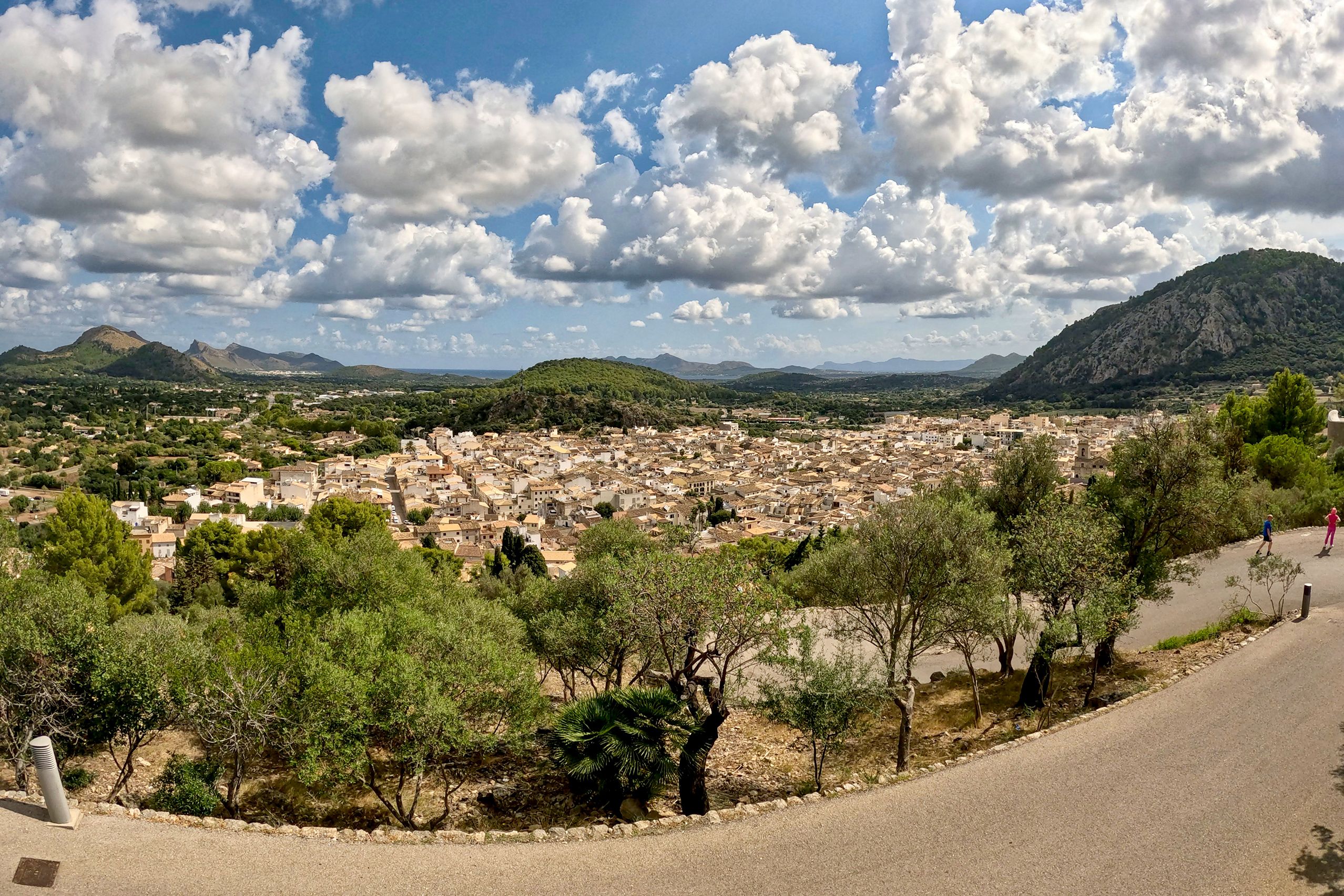
Pollença
A small town at the northern end of the Tramuntana, set inland because the sea brought pirates for centuries. Climb 365 cypress-lined steps to the Calvari, browse the Sunday market on Plaça Major or watch the whole town re-enact a battle in August.
Pollença
Pollença in 30 seconds
The essentials at a glance
- Worth visiting for
- A longer stay
- Best for
- Anyone wanting a town that would carry on without its visitors
- Best months
- January–June, September–December
- Time to allow
- Half a day for the town; a week as a base for the north
- Without a car
- Hire car recommended
- Parking
- Car parks around the edge of town are usually straightforward. Arrive early for Sunday's market. Driving into the old town to park is not a good idea.
- Keep in mind
- Anyone wanting the sea on their doorstep — it is six kilometres away
- Access
- Pushchairs: Plaça Major and the main lanes are manageable; the steps are not · Wheelchairs: The square is accessible; the old town is more restricted and the Calvari steps are unsuitable
Get a feel for Mallorca. Find your kind of place.
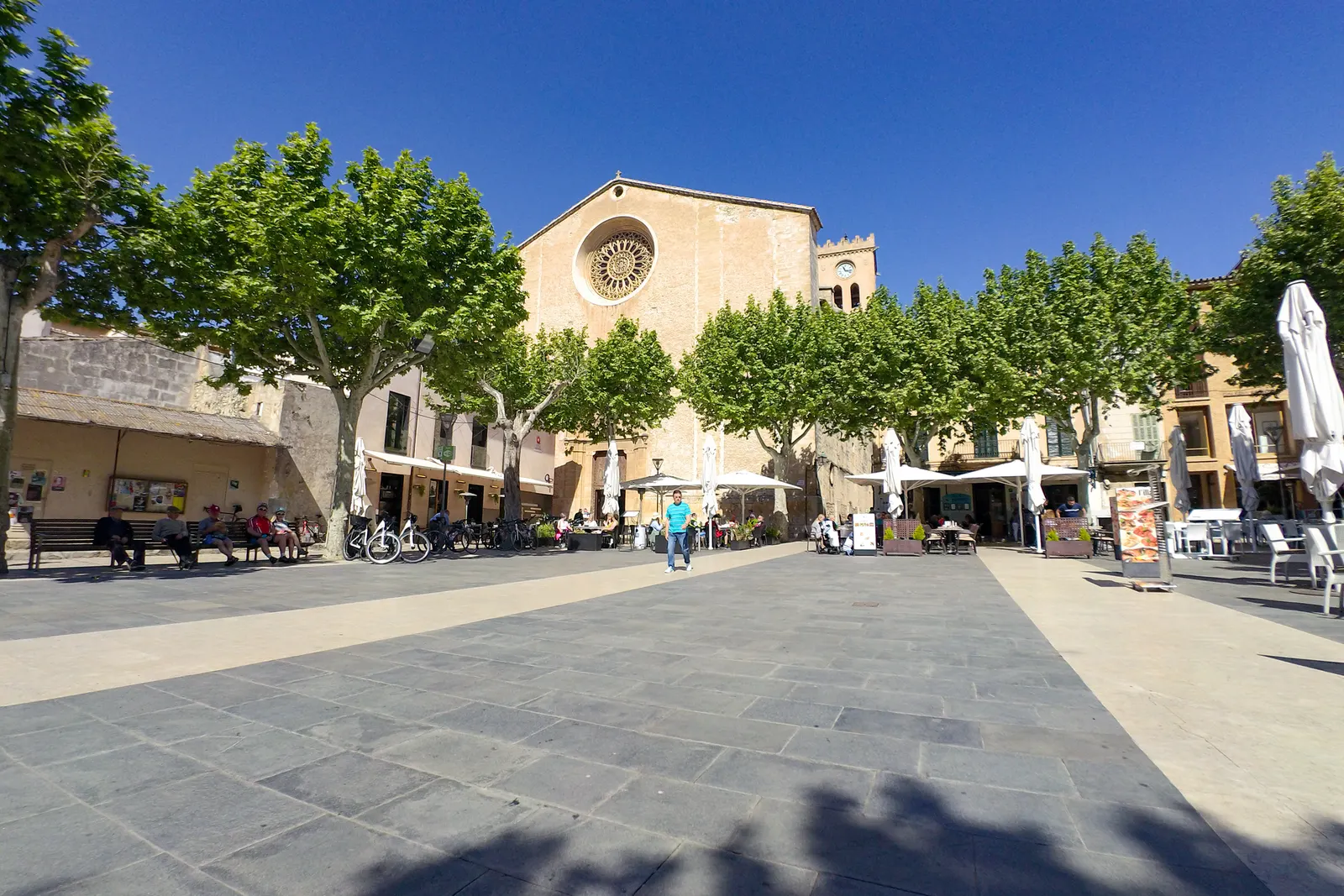
Locals say Plaça Major is Mallorca's loveliest market square. They have a point.
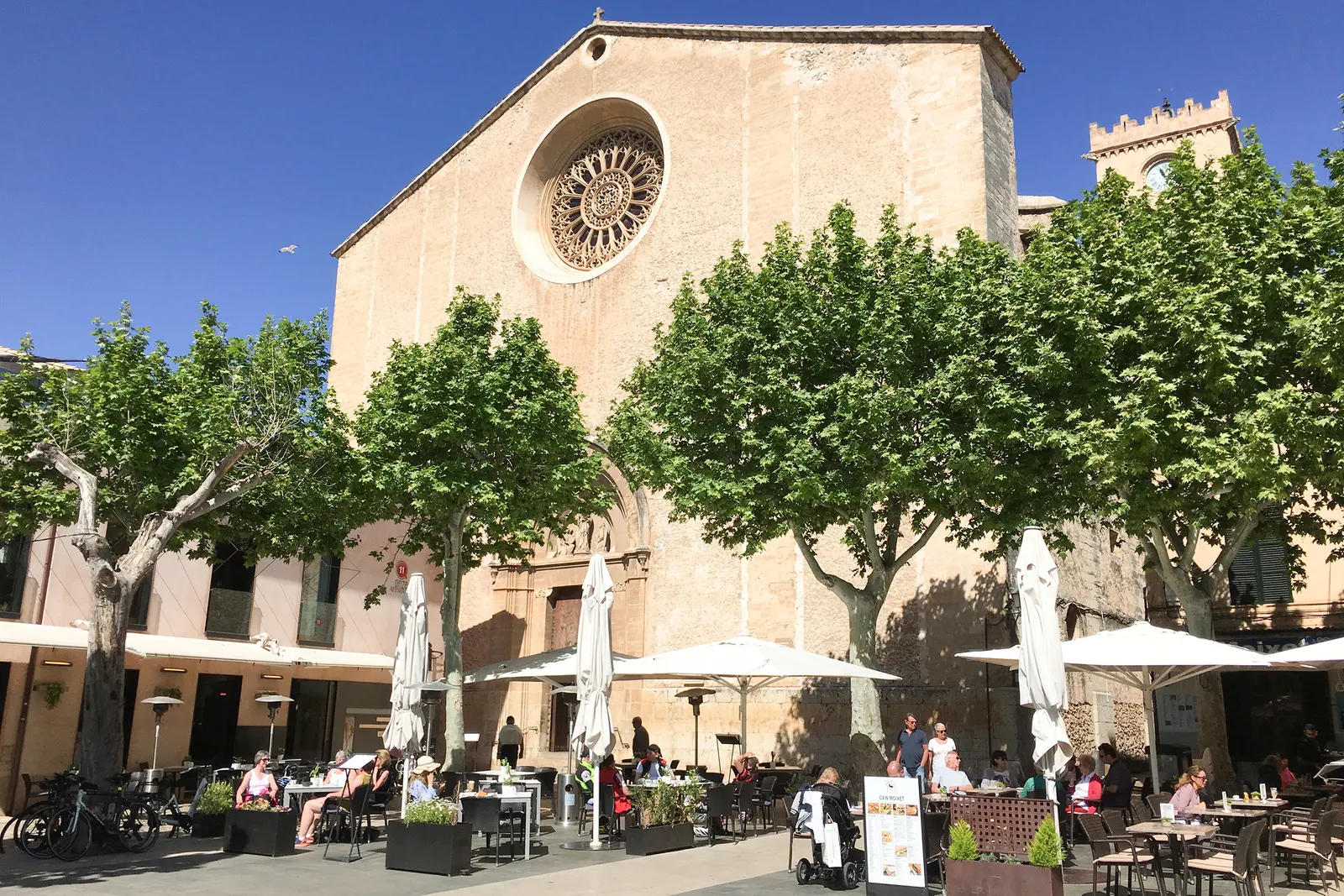
Santa Maria dels Àngels' rose window looks different throughout the day from the café tables below.
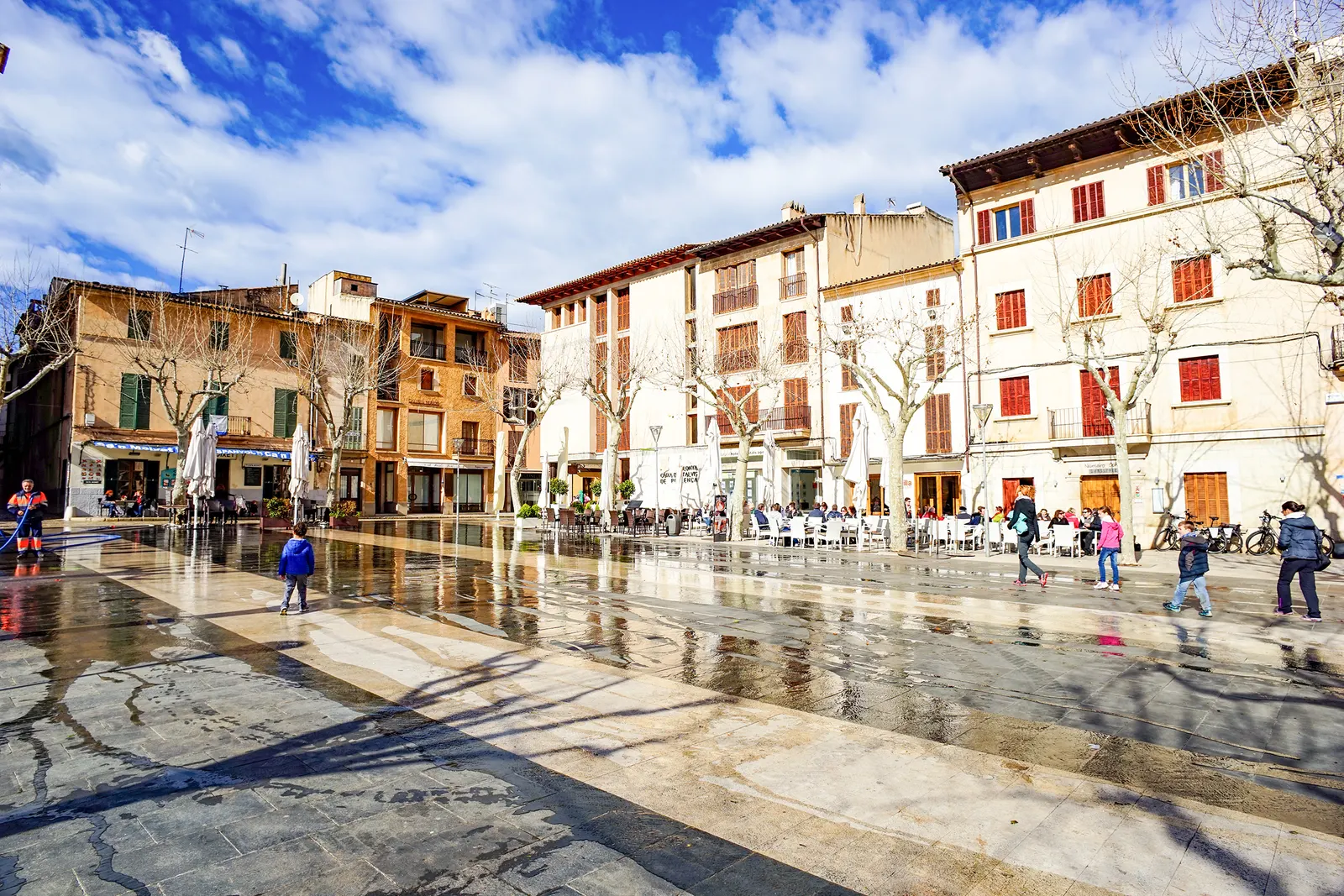
January, just after the square has been washed. The cafés are still busy — people live here all year.
Getting to know Pollença
Does Pollença suit your plans?
What to expect and what to know before you visit.
Who it suits
- Anyone wanting a town that would carry on without its visitors
- Walkers — Puig de Maria, Ternelles and the Tramuntana begin here
- Anyone exploring the north — everywhere is within reach
- Winter visitors wanting a town that stays open
Things to bear in mind
- Anyone wanting the sea on their doorstep — it is six kilometres away
- Anyone looking for peace in August, especially around the 2nd
- Visitors with limited mobility — the old town is steep and cobbled
- Anyone after cheap meals — Plaça Major prices reflect the setting
Drive from the airport
55 minutes
60 km
Bus connections
Route 301 to Palma via Sa Pobla and Inca
Region
Serra de Tramuntana
Nearest beach
Cala de Sant Vicenç
6 km
Elevation
60 m
above sea level
Markets
Sunday
Season guide for Pollença
November Worth a visit
Very quiet Some places closed
Worth visiting in January, February, March, April, May, June, September, October, November and December.
Location
Location of Pollença
- Region
- Serra de Tramuntana
- Population
- 16,400
- Elevation
- 60 m above sea level
- Airport
- 60 km , around 55 minutes
- Hire car
- recommended
- Worth visiting for
- a longer stay
- Coordinates
- 39.8769,3.0161
The town of 365 steps
Pollença lies around seven kilometres inland, between the last mountains of the Tramuntana. Finds in nearby caves show that people lived in the area two thousand years before Christ. The Romans later founded Pollentia, once an important centre of Roman Mallorca. Its excavations are outside Alcúdia, rather than here: the two places share a history through their names, but the Roman remains are elsewhere.
A parish church is recorded here in 1236. Until the plague of 1348, Pollença was one of the island’s most influential towns alongside Palma.
Why the town is not by the sea
It was a matter of protection. The coast remained unsafe into the 18th century, with regular Ottoman and North African corsair raids. Building beside the water left people exposed to attack, so the town grew inland, out of sight, with only a landing place on the coast.
After piracy declined, that landing place developed into Port de Pollença. A few kilometres away, Alcúdia and its port follow a similar pattern: the walled town inland, its harbour two kilometres away.
It helps explain why town and port feel so different today. The town has an eight-hundred-year head start.
The Calvari
The climb starts just behind the town hall. 365 steps, one for each day of the year, lead between cypresses to a neo-Gothic chapel at around 170 metres. The staircase can seem endless, but the top rewards you with views over the town and Pollença bay, stretching to Cap de Formentor on clear days.
And yes, you have to walk those 365 steps back down. Fortunately, there are stone walls along the way where you can pause.
On Good Friday, the staircase takes on a different role. The Davallament, or Descent from the Cross, is re-enacted at the top. The figure is then carried down in a silent torchlit procession. It is a moving occasion, with visitors watching quietly.
The Sunday market
The market fills Plaça Major and the surrounding lanes in the morning. Vegetables, cheese, olives, tools, clothes and leather goods sit alongside souvenirs, with local shoppers still very much part of the scene. Join the bustle or sit at the edge with a coffee and watch.
Come early, particularly if you want a parking space and a café table.
Plaça Major
Locals call it the loveliest market square on Mallorca, and they are not far wrong. It is broad, paved in pale stone and lined with plane trees. On one side stands Santa Maria dels Àngels, its rose window changing with the light as you watch from a café table.
In the evening, residents and local artists meet here, with visitors joining them. Even in winter, after the morning wash-down leaves the paving wet beneath bare trees, the cafés have customers. This is a lived-in town, rather than somewhere that depends entirely on holidays.
A couple of lanes away
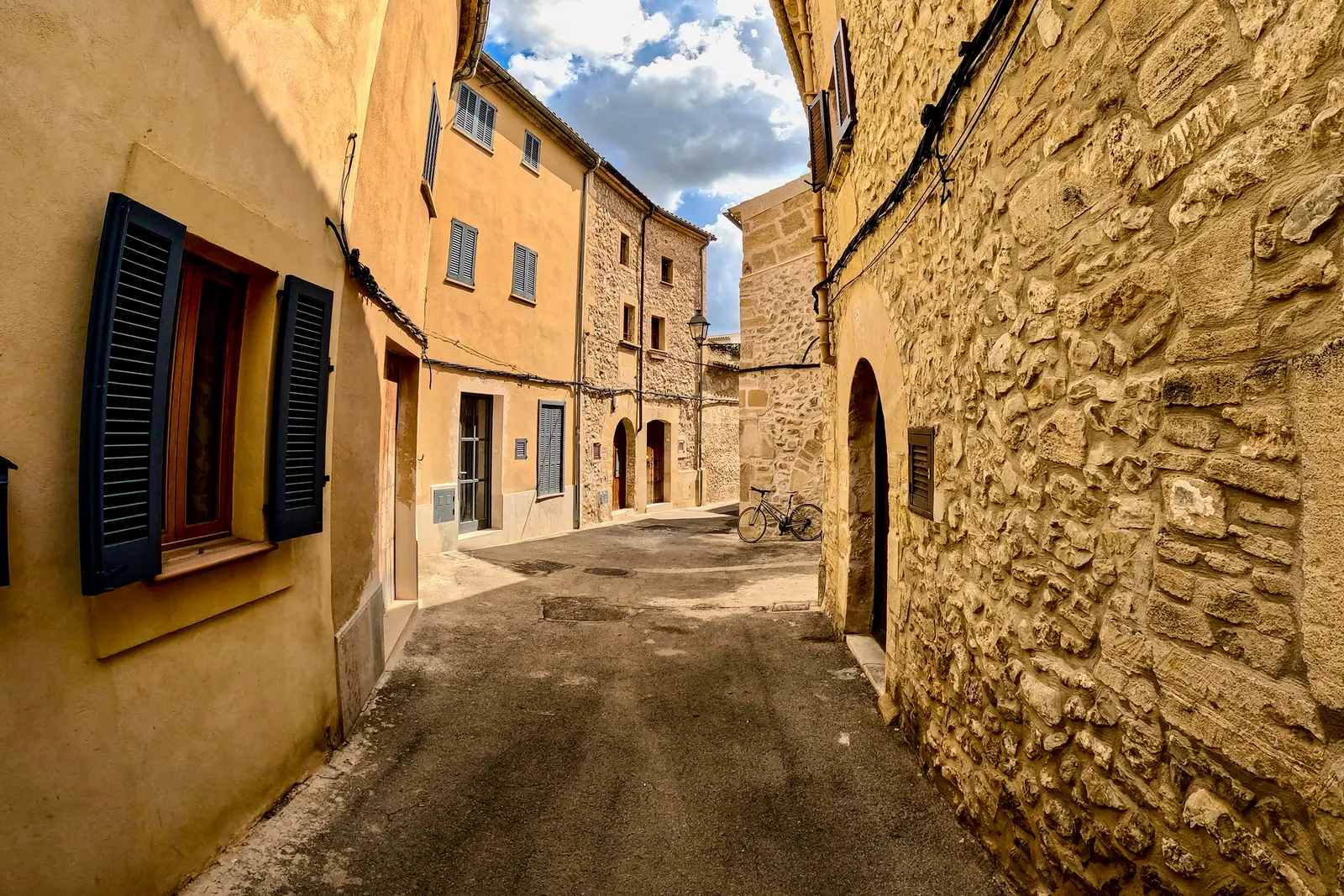
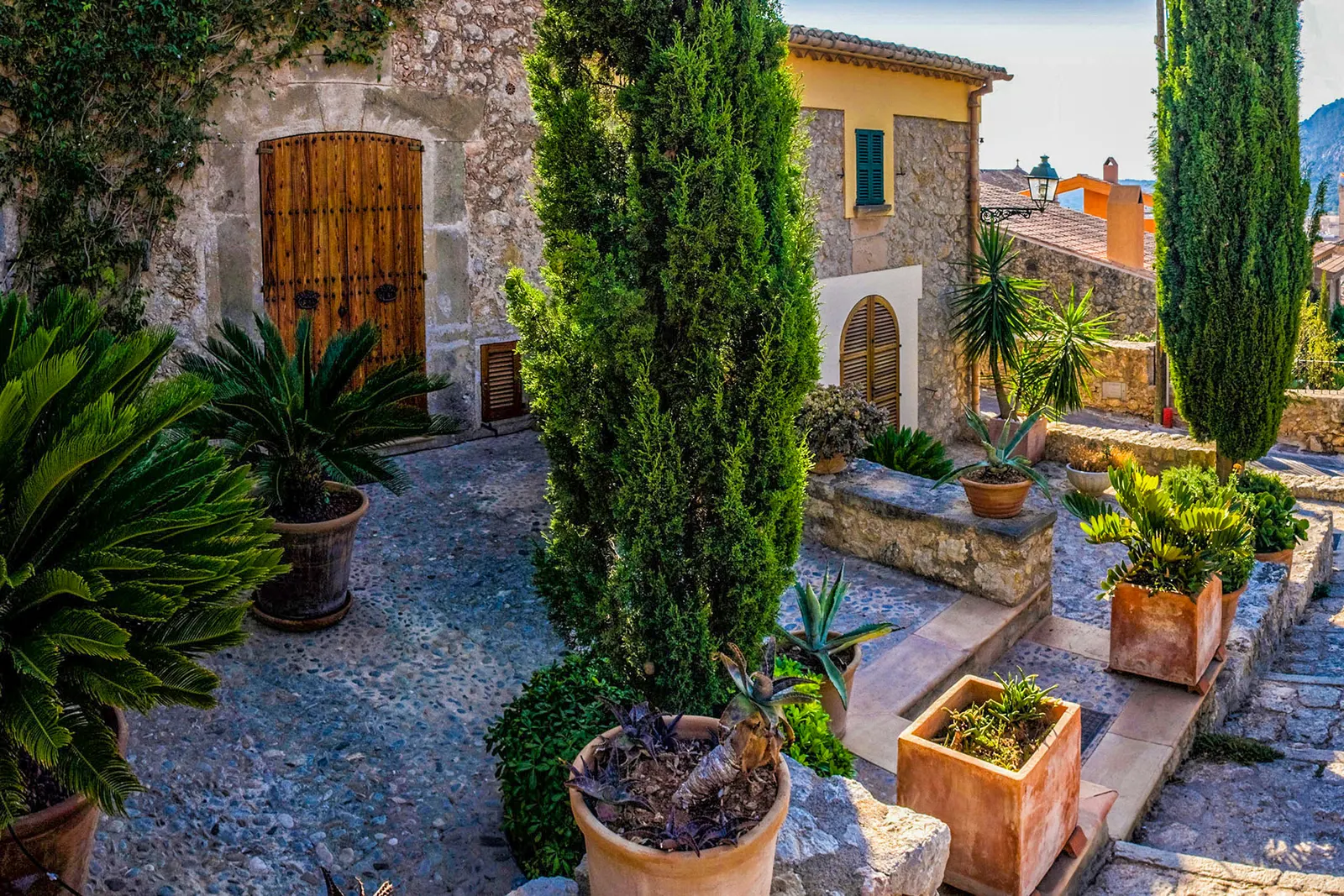
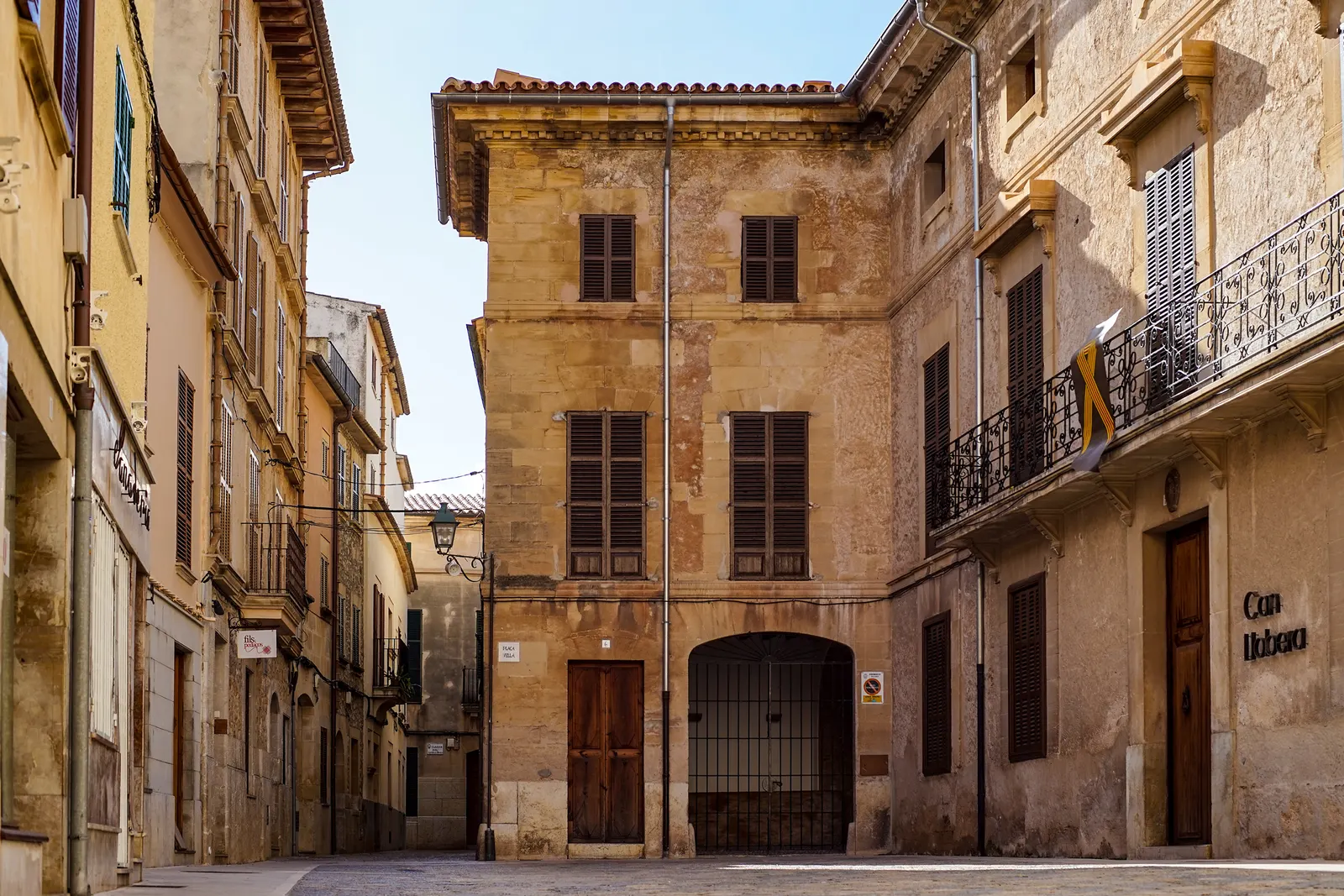
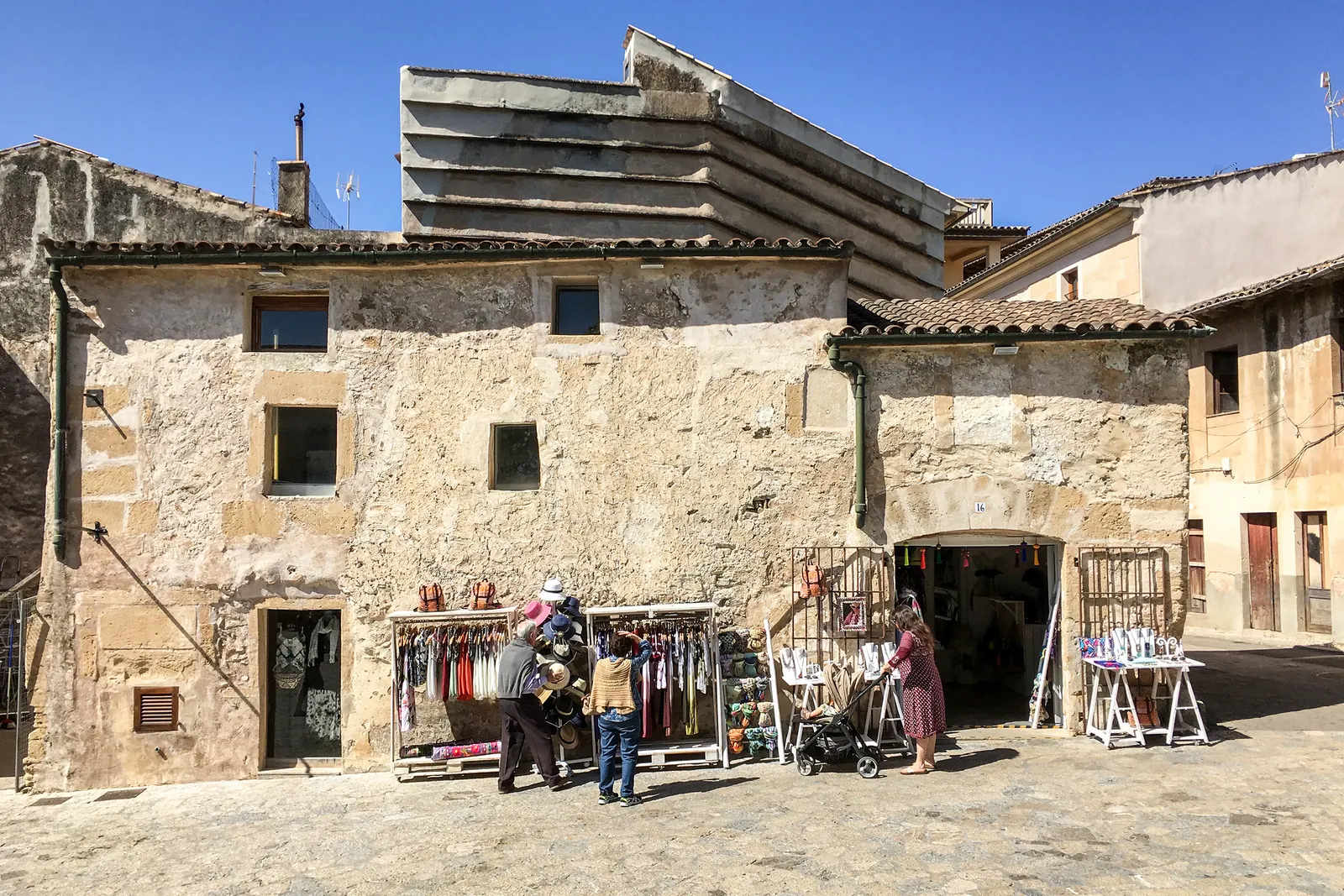
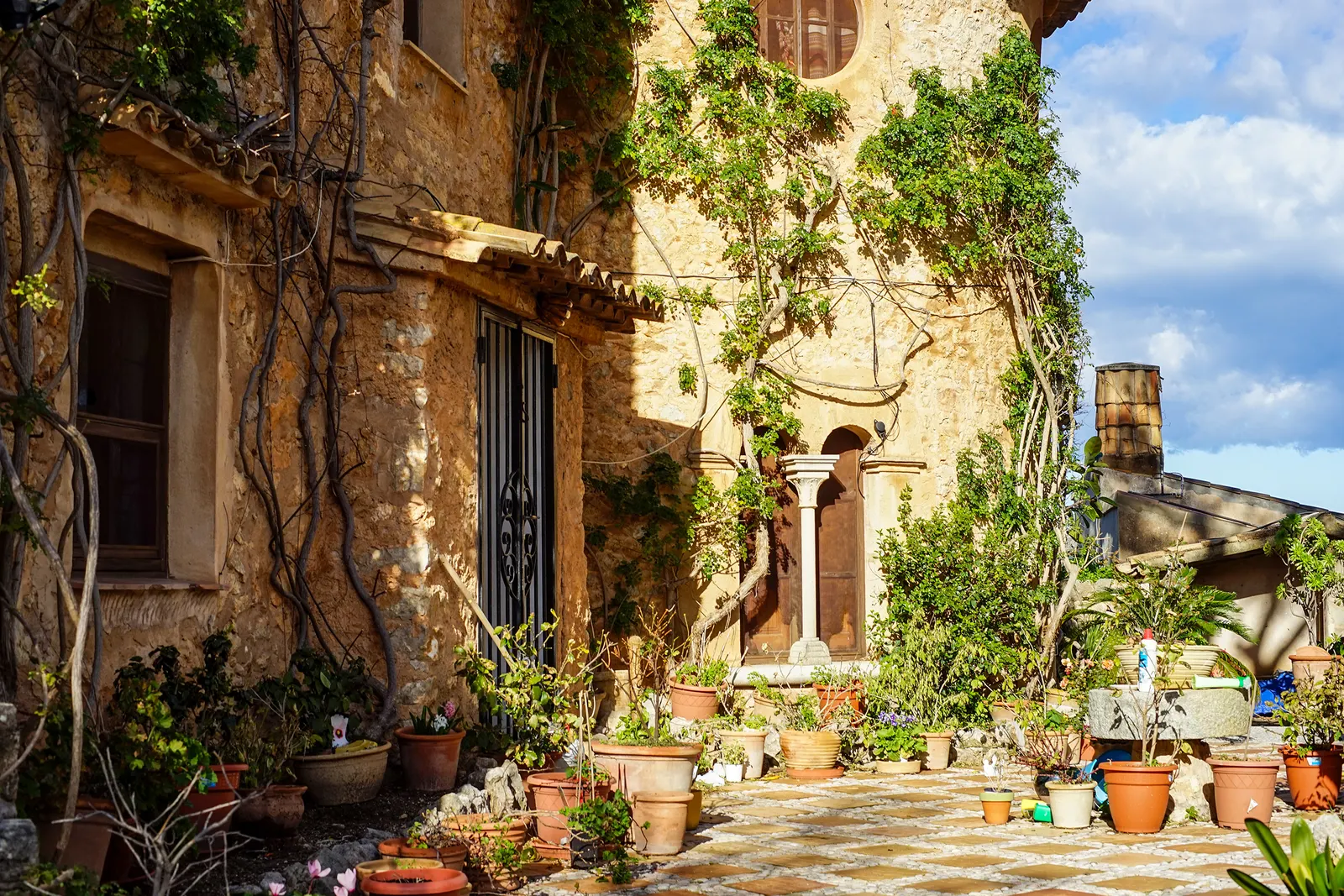
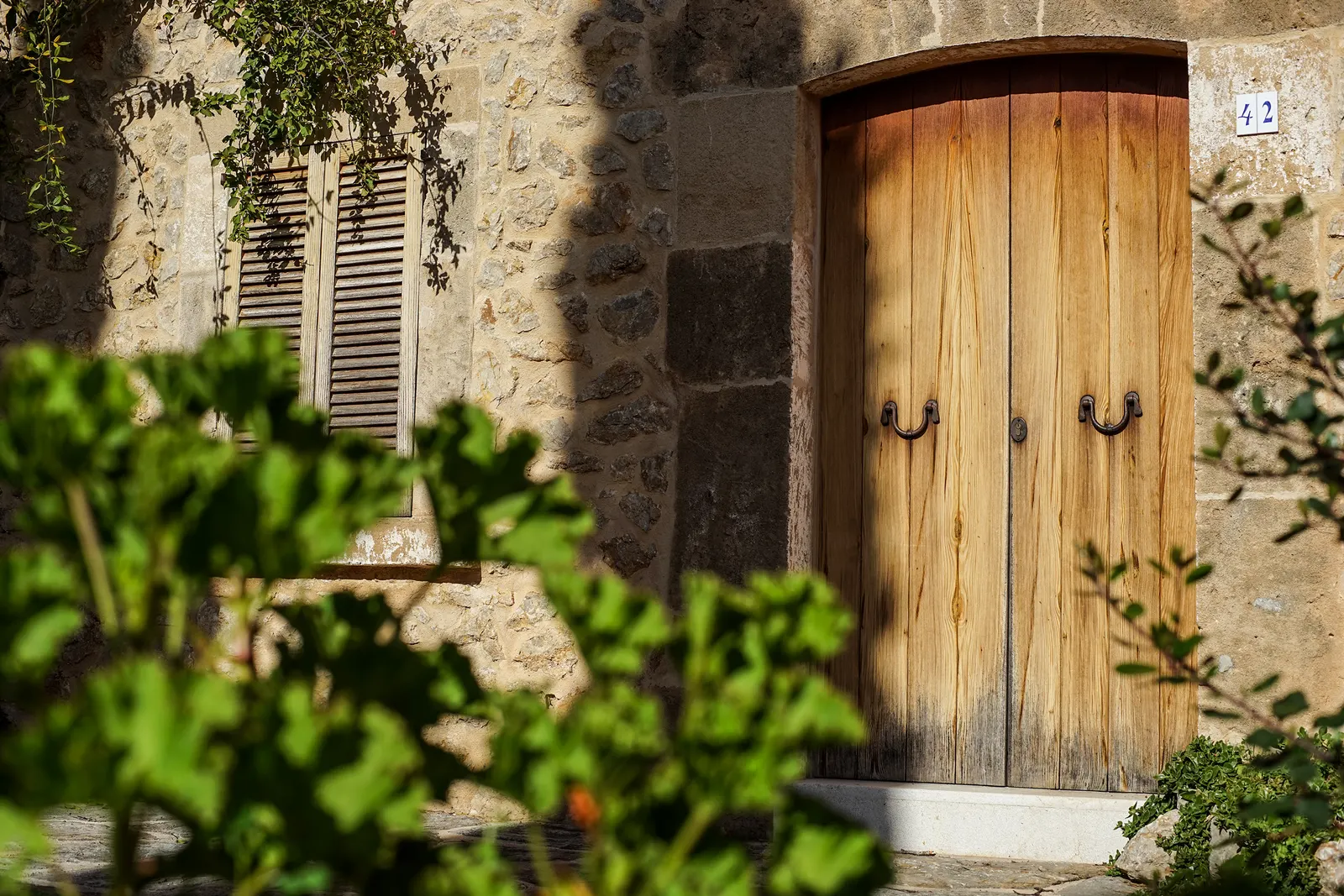
Leave the square and it soon becomes quiet. Sandstone façades, wooden shutters, wrought-iron balconies and the occasional small shop with its goods outside in the lane. An open doorway may reveal a courtyard filled with terracotta pots and old climbing plants that you would otherwise miss.
The old town climbs towards the Calvari. You will feel the slope as you explore.
La Patrona
On 2 August, the town re-enacts the corsair raid in Moros i Cristians. The battle moves through the streets with an intensity that often surprises visitors; fireworks follow in the evening.
It recalls Pollença’s best-known attack, when more than a thousand corsairs landed and were driven back. For me, this is a very good reason to visit in August despite the crowds.
Easy things to miss
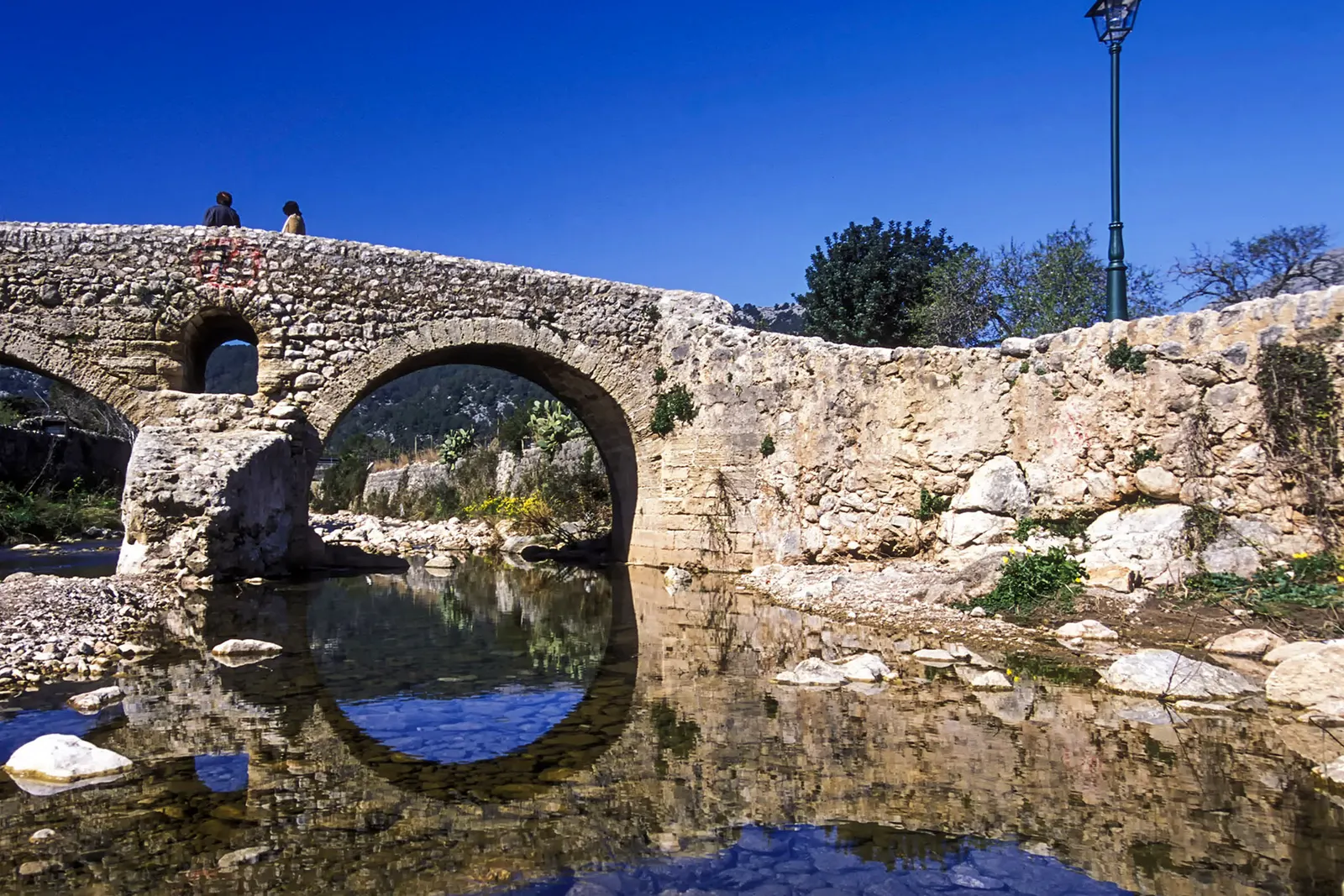
The Pont Romà, on the northern edge of town, is a two-arched stone bridge over the Torrent de Sant Jordi, traditionally associated with Roman origins. It is slightly out of the way, and many visitors miss it.
The Museu de Pollença occupies the former Dominican monastery. Its Santo Domingo cloister hosts the Festival de Pollença in summer.
Puig de Maria rises to 330 metres, with a former monastery and simple accommodation at the top. The climb takes around 45 minutes, and you can look over both the bay of Pollença and the bay of Alcúdia.
Photographs
Pollença in Mallorca
How much time do you have?
Things to do in Pollença
Three hours
Start at Plaça Major with a coffee beneath the plane trees, climb the 365 Calvari steps and come back down. Return through the lanes to the Pont Romà.
Half a day
Add the Museu de Pollença in the former Dominican monastery and the Santo Domingo cloister. Head down to the bay in the afternoon.
A full day
Explore town in the morning, then climb Puig de Maria to the former monastery at 330 metres. Allow 45 minutes uphill, with views over both bays. Return to Plaça Major for the evening.
On a rainy day
Museu de Pollença, Santo Domingo and the churches, followed by a long afternoon in a café on the square. There is a surprising amount under cover for a small town.
Local celebrations
- Good Friday — Davallament The Descent from the Cross is re-enacted on the Calvari, followed by a silent torchlit procession down the 365 steps.
- 2 August — La Patrona — Moros i Cristians The town re-enacts the corsair attack, with a battle through the streets and fireworks in the evening.
- July and August — Festival de Pollença Concerts in the cloister of the former Dominican monastery of Santo Domingo.
Practical details
- Parking
- Car parks around the edge of town are usually straightforward. Arrive early for Sunday's market. Driving into the old town to park is not a good idea.
- Public transport
- Services from Palma, Inca and Alcúdia, with frequent summer buses to the port
- Time to allow
- Half a day for the town; a week as a base for the north
- Good to know
- Puig de Maria, at 330 metres, has a former monastery with simple accommodation. The climb takes 45 minutes, with views across both bays.
- Bus
- Route 301 to Palma via Sa Pobla and Inca; 322 to Port de Pollença, Alcúdia and Port d'Alcúdia. In summer, 231 crosses the mountains to Lluc and Sóller, while the 334 Formentor shuttle leaves from the port.
- Shops and services
- Supermarkets: Several in town, open year-round · Pharmacy: Several in the centre · Medical care: Health centre in town · Cash machines: Around Plaça Major · Fuel: On the road out towards Port de Pollença
- Access
- Cobbled lanes, some steep; natural stone steps on the Calvari · Pushchairs: Plaça Major and the main lanes are manageable; the steps are not · Wheelchairs: The square is accessible; the old town is more restricted and the Calvari steps are unsuitable · Dogs: On a lead; dogs are a common sight at the market
- What you will not find
- A beach or direct access to the sea · Peace on 2 August · Low prices on Plaça Major
- Coordinates
- 39.8769,3.0161 Google Maps Apple Maps
Dates that change the town
When a race comes to town
Mallorca 312 Road cycling · 25 April 2026
Road closures begin in the morning. The affected roads and reopening times follow the organiser’s traffic plan. Allow extra time for transfers and day trips.
Ironman 70.3 Alcúdia-Mallorca Triathlon · 9 May 2026
Temporary closures and extra crowds affect the start, finish and race route. Check access to your accommodation and the course map, especially if you have an airport transfer.
The season guide describes whole months. A race weekend can transform a normally quiet town for a couple of days. Find the dates in our guide to Sporting events.
Town or port — where should you stay?
| Pollença | Port de Pollença | |
|---|---|---|
| Character | Old town with local life and a market | Seaside resort and sailing base |
| Sea | Six kilometres away | On your doorstep |
| Winter | Open and lively | Partly open and quiet |
| Prices | Mixed with higher prices on the square | Generally higher |
| Best for | Walkers and cultural or longer stays | Sailors and beach holidays with a quieter atmosphere |
The bus takes fifteen minutes and runs frequently in season. If you cannot decide, I would stay in town. It is easy to head down to the sea; if you stay at the port, you may forget to come up.
Within reach
Places to visit
Nearby

Mallorca’s best-known viewpoint stands 232 metres above the sea on the Formentor peninsula. A terrace occupies a …
via Port de Pollença; in summer, access after 10am only when the barrier is open

A quieter cave visit near Campanet, with limestone formations rather than a boat ride or colourful show. Allow …

The remains of an important Roman town just outside Alcúdia. An urban centre developed here after the conquest of …
in Alcúdia

One of Mallorca's oldest churches, standing alone among the fields outside Campanet. Built on the site of a mosque …

A small pilgrimage chapel among pines near Sa Pobla, on the site of an older settlement. A paved path leads up to …

A pilgrimage church on the Victòria peninsula, seven kilometres north-east of Alcúdia. The road ends at a …
via Alcúdia, then a narrow mountain road

Mallorca's spiritual centre, a sanctuary at 525 metres in the heart of the Tramuntana, with guest rooms, a …

Mallorca's north-eastern tip, reached along a rocky peninsula with a lighthouse at its end since 1863. The …
summer access restrictions from Platja de Formentor
Distances without a driving time are measured in a straight line. The road journey can be much longer; known driving times are shown alongside.
Where to swim nearby
Beaches and swimming nearby

Four small coves beneath the dramatic cliffs of Cavall Bernat, rising around 300 metres above the coast. Houses …

A quieter, more expensive neighbour to Alcúdia bay, with the waterfront Pine Walk, a royal yacht club and reliable …

One of the north's best-known beaches: pale sand beneath old pines, the peninsula's mountains behind and water in …

A long sandy stretch of the Bay of Alcúdia, with protected dunes and pines at Es Comú rather than a continuous …
Explore from here
Your questions answered
Your questions about Pollença
How many steps are there on Pollença's Calvari?
365 — one for each day of the year. The staircase starts just behind the town hall and climbs between cypresses to a neo-Gothic chapel at around 170 metres. From the top you can see the town, Pollença bay and, on clear days, Cap de Formentor. Remember that you have to walk all 365 steps back down. Fortunately, stone walls along the way offer somewhere to pause.
When is Pollença market?
Sunday mornings on Plaça Major and the surrounding streets. It is one of Mallorca's best-known markets, with plenty of everyday shopping alongside souvenirs. Arrive early for a parking space and a café table.
What is the difference between Pollença and Port de Pollença?
Six kilometres and two very different places. Pollença is the old inland town, with Plaça Major, narrow lanes and the Calvari. Port de Pollença is the seaside resort that developed in the 20th century. For both, stay in town and head down to swim — the bus takes fifteen minutes.
Why is Pollença inland?
For protection. Ottoman and North African corsairs regularly raided the coast, which remained unsafe into the 18th century. The town was built six kilometres inland, out of sight from the sea. The port developed after piracy declined. You can see a similar arrangement at Alcúdia and its port.
What is La Patrona in Pollença?
The Moros i Cristians festival on 2 August, when the town re-enacts the corsair attack of 1550. The battle moves through town with an intensity that often surprises visitors, followed by fireworks in the evening. For me, it is a very good reason to visit in August despite the crowds.
What is the Davallament?
The Good Friday procession. The Descent from the Cross is re-enacted on the Calvari, then the figure is carried silently down the 365 steps by torchlight. It is a deeply moving religious event, with visitors watching quietly from the sidelines.
What is the Pont Romà?
A two-arched stone bridge over the Torrent de Sant Jordi on the northern edge of town. Traditionally considered Roman in origin, it recalls the area's long history. The Roman city of Pollentia itself was near present-day Alcúdia, where you can visit its excavations.
Is Pollença worth visiting in winter?
Yes. While the port winds down between December and February, the town carries on, with shops open, Sunday market and cafés on the square. It makes a particularly quiet northern base for walkers.
Practical questions
When is the best time to visit Pollença?
Recommended months: January, February, March, April, May, June, September, October, November, December. The town carries on while much of the port closes. A very peaceful base for walkers.
Is Pollença worth visiting in July and August?
July: worth considering with some reservations. Usually busy. The Festival de Pollença brings concerts to Santo Domingo's cloister. The port is busy. August: worth considering with some reservations. Usually very crowded. On 2 August the town re-enacts the pirate attack in Moros i Cristians. A memorable spectacle, with huge crowds.
How far is Pollença from Palma airport?
About 60 km from Palma airport. Allow roughly 55 minutes by car. Explore the town on foot. A car is useful for the rest of the north. Arrive early on Sundays, when market shoppers fill the car parks on the edge of town.
Do I need a hire car for Pollença?
A car is useful Route 301 to Palma via Sa Pobla and Inca; 322 to Port de Pollença, Alcúdia and Port d'Alcúdia. In summer, 231 crosses the mountains to Lluc and Sóller, while the 334 Formentor shuttle leaves from the port.
Where can I park in Pollença?
Car parks around the edge of town are usually straightforward. Arrive early for Sunday's market. Driving into the old town to park is not a good idea.
Can you swim at Pollença?
There is no beach here. See the nearby swimming options on this page.
Can I visit Pollença with a pushchair or wheelchair?
Cobbled lanes, some steep; natural stone steps on the Calvari Pushchairs: Plaça Major and the main lanes are manageable; the steps are not Wheelchairs: The square is accessible; the old town is more restricted and the Calvari steps are unsuitable
Are dogs allowed at Pollença?
On a lead; dogs are a common sight at the market
Pollença features in our Mallorca highlights
Words and photographs: Friedhelm Fischer. Exploring Mallorca since 2013 — by bike, on foot and with a camera.