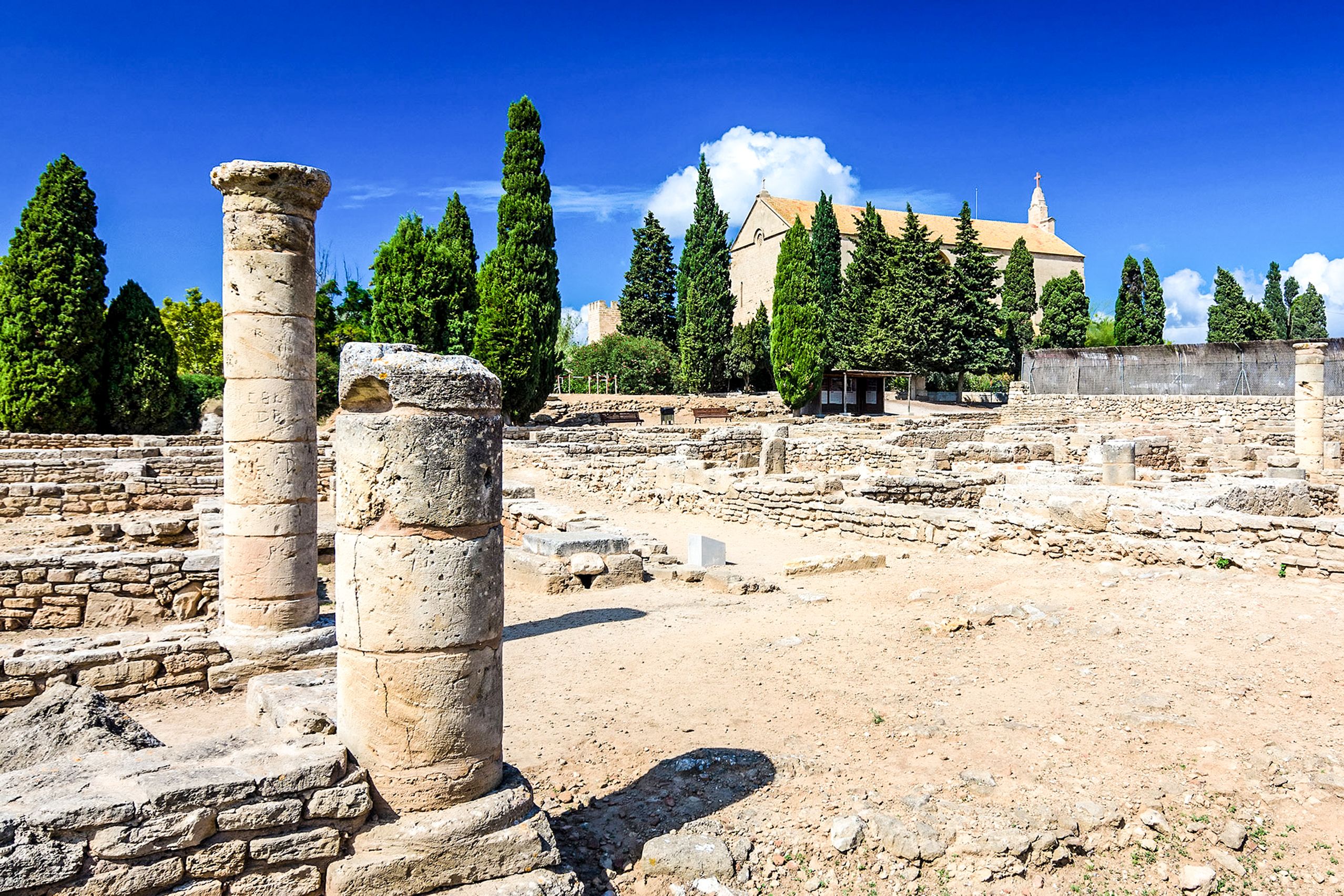
The remains of an important Roman town just outside Alcúdia. An urban centre developed here after the conquest of 123 BC. The forum, theatre and Sa Portella residential quarter offer a glimpse of everyday life in the town.
Pollentia
Pollentia in 30 seconds
The essentials at a glance
- Worth visiting for
- A short visit
- Best for
- Roman history and archaeological sites
- Best months
- January–May, September–December
- Time to allow
- Allow 45–60 minutes for the ruins, or an hour and a half including the museum.
- Without a car
- Hire car recommended
- Parking
- At the edge of the site and in the old town car parks.
- Highlight
- The forum, residential quarter and Roman theatre
- Keep in mind
- Not a walk on smooth, surfaced paths throughout
- Access
- Pushchairs: Possible in some areas, with limitations · Wheelchairs: Only partially accessible
Get a feel for Mallorca. Find your kind of place.
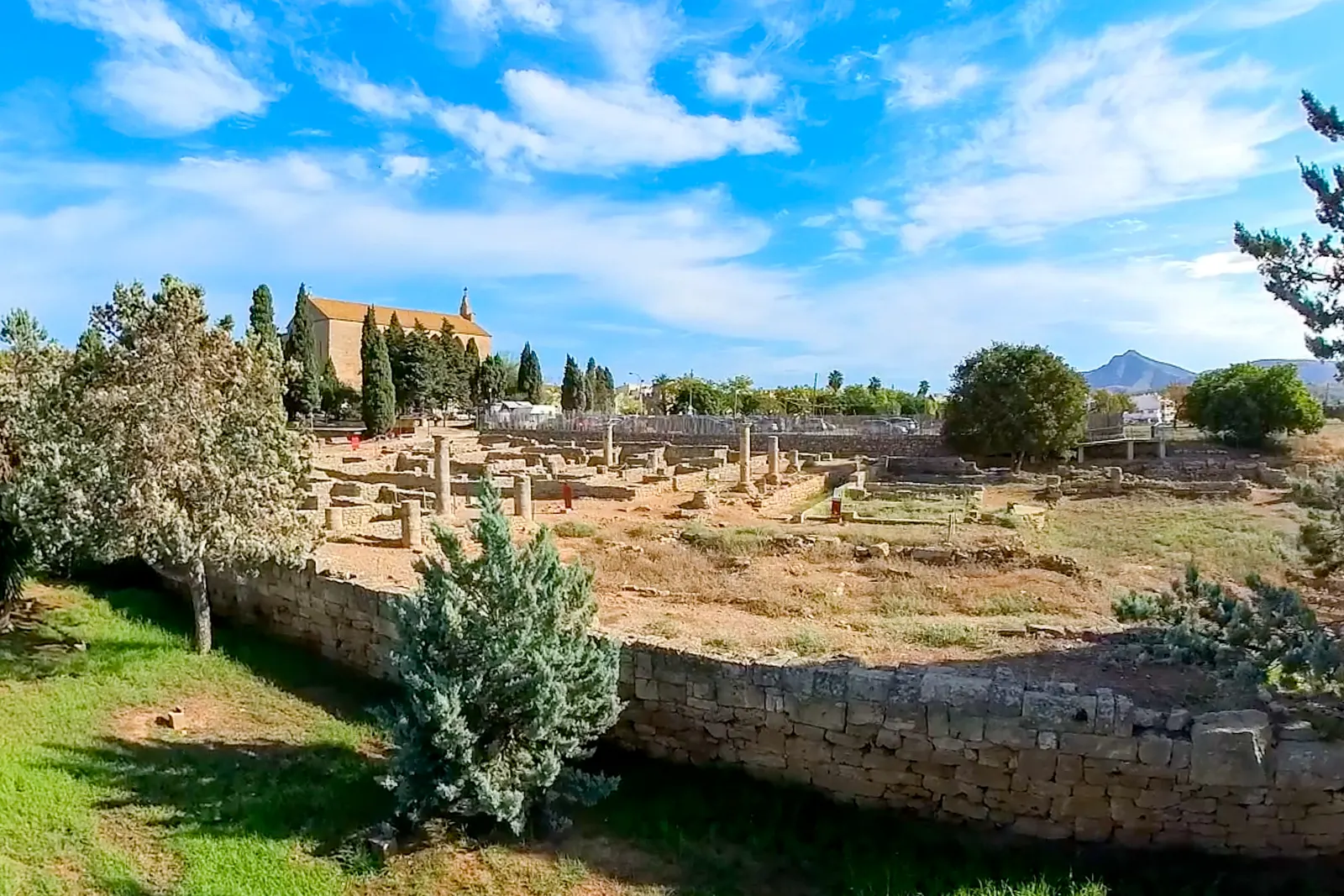
From outside, you can see how large the town was — and how little of it is still standing.
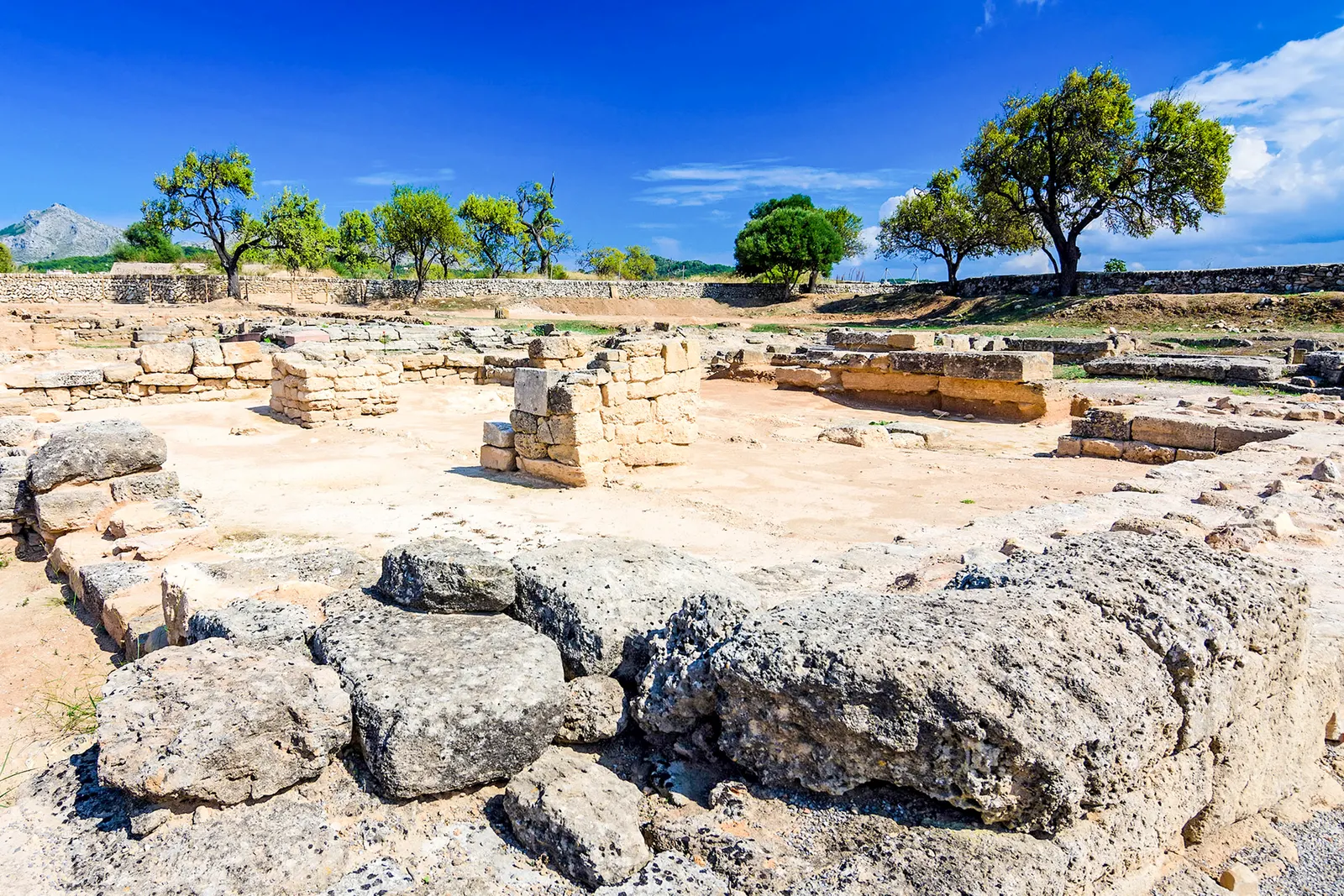
The house plans of Sa Portella, where you can make out rooms, thresholds and cisterns.
Drive from the airport
55 minutes
55 km
Bus connections
Routes 351/352 to Alcúdia
Region
Raiguer
Nearest beach
Port d'Alcúdia
1 km
A glimpse of Pollentia
Season guide for Pollentia
November Worth a visit
Very quiet Open
Worth visiting in January, February, March, April, May, September, October, November and December. Less suitable in July and August.
Location
Location of Pollentia
- Region
- Raiguer
- Municipality
- Alcúdia
- Airport
- 55 km , around 55 minutes
- Hire car
- recommended
- Worth visiting for
- a brief stop
- Coordinates
- 39.8493,3.1224
Getting to know Pollentia
The founding of Pollentia is associated with the Roman conquest under Quintus Caecilius Metellus in 123 BC. The earliest confirmed Roman building evidence in the forum, however, dates to around 70 BC. Over successive generations, an important town developed between the two great bays. Read more in The Romans on Mallorca.
Its most prosperous period ran from the 1st century BC to the 3rd century AD. By then it covered 15–20 hectares, a size unmatched by any other town in the Balearics.
A fire destroyed parts of the town in the second half of the 3rd century AD. Its cause is unknown. Pollentia remained in use afterwards, and some former public spaces later became burial grounds. Vandal rule in the Balearics began only in the 5th century.
What you can see today
Three areas have been excavated, each showing a different part of town life.
Sa Portella was a residential quarter. You can follow the plans of three town houses, their cisterns and the lanes between them, tracing where the doorways once stood.
The forum was the main square. Here are the foundations of the Capitoline temple, two smaller temples, a long row of tabernae, or shops, and remains of the square’s fittings. This area opened to visitors in 2002. Excavations still take place during the summer months.
A little farther away, towards the cemetery, is the Roman theatre, cut into the bedrock. It is Mallorca’s only surviving theatre building from Roman times. In Late Antiquity it stopped being used for performances and graves were cut into the seating. You can still see them.
What is missing
Excavations have been going on at Pollentia for around a hundred years, and not everything has survived. During Franco’s rule, part of the site was removed to build a railway. Whatever lay there has been lost.
The finds — coins, pottery and bronzes — are displayed at the Museu Monogràfic de Pollentia in Alcúdia old town, rather than among the ruins. They help explain the buildings and the people who used them, which makes the combined ticket worthwhile.
Photographs
Pollentia in Mallorca
Practical details
- Parking
- At the edge of the site and in the old town car parks.
- Time to allow
- Allow 45–60 minutes for the ruins, or an hour and a half including the museum.
- Good to know
- Admission is charged, usually with a combined ticket for the Museu Monogràfic in the old town. Visit the museum first to make more sense of the ruins.
- Bus
- Routes 351/352 to Alcúdia, followed by a ten-minute walk
- Access
- Unsurfaced paths, gravel and grass; mostly level · Pushchairs: Possible in some areas, with limitations · Wheelchairs: Only partially accessible
- What you will not find
- Shade · Food and drink on site
- Coordinates
- 39.8493,3.1224 Google Maps Apple Maps
Within reach
Places to visit
Nearby

A pilgrimage church on the Victòria peninsula, seven kilometres north-east of Alcúdia. The road ends at a …

Mallorca’s best-known viewpoint stands 232 metres above the sea on the Formentor peninsula. A terrace occupies a …

Mallorca's north-eastern tip, reached along a rocky peninsula with a lighthouse at its end since 1863. The …
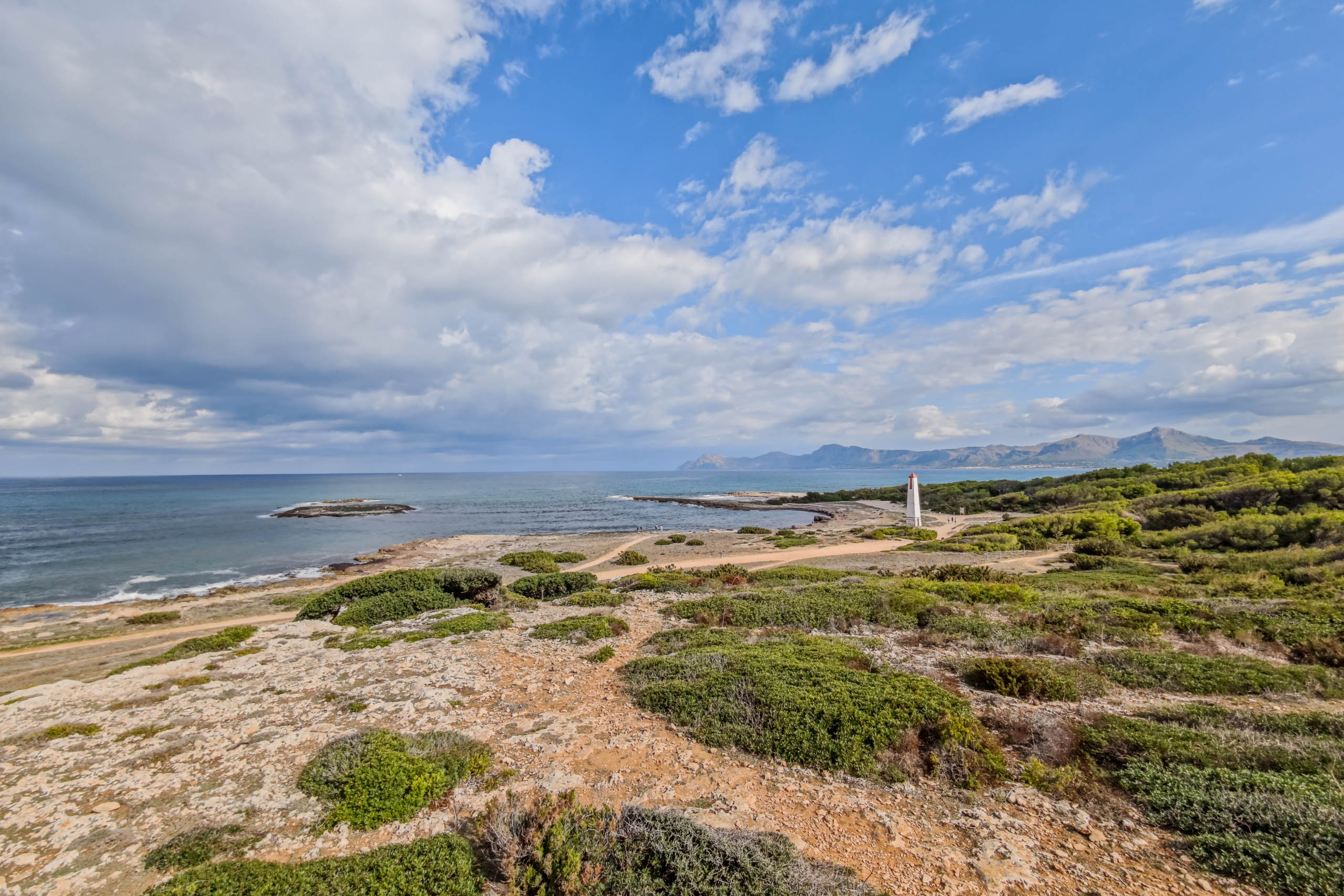
A few steps onto a wooden platform reveal the coast of Son Real. A dolmen lies beside the viewpoint, with the …

A Talayotic burial ground right beside the sea between Can Picafort and Son Serra de Marina. Around 110 tombs …

A small pilgrimage chapel among pines near Sa Pobla, on the site of an older settlement. A paved path leads up to …

A church among the pines, beside the old Son Serra estate with its towers and farm buildings. A glimpse of the …
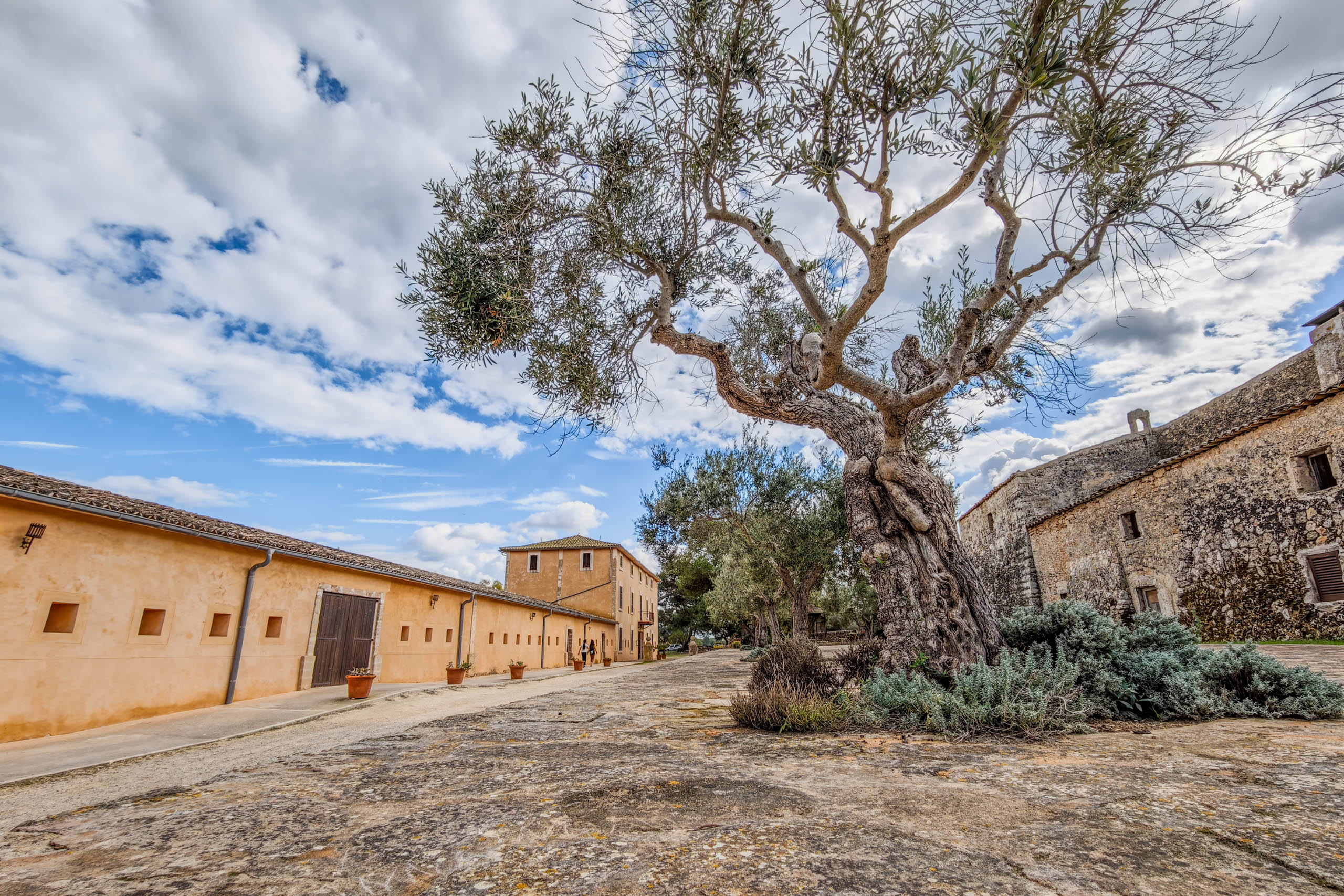
Old farm buildings, gnarled olive trees and a museum about earlier life on Mallorca. Son Real lies between Can …
Distances without a driving time are measured in a straight line. The road journey can be much longer; known driving times are shown alongside.
Where to swim nearby
Beaches and swimming nearby

Five kilometres of pale sand shelving gently into the sea, backed by hotels, bars and shops. A classic beach …

A quieter alternative to Port d’Alcúdia, 3 km to the east. Low villas sit among pines beside a pebbly, sandy shore …

A long sandy stretch of the Bay of Alcúdia, with protected dunes and pines at Es Comú rather than a continuous …

A quieter, more expensive neighbour to Alcúdia bay, with the waterfront Pine Walk, a royal yacht club and reliable …
Places to stay within reach
Explore from here
Your questions answered
Your questions about Pollentia
What can you see at Pollentia?
The foundations of the Roman town include the forum and temple remains, the house plans of Sa Portella, and the theatre a little farther away — the oldest surviving theatre building in the Balearics. Finds are displayed at the Museu Monogràfic in Alcúdia old town.
How old is Pollentia?
Its foundation is associated with the Roman conquest of 123 BC. However, the earliest confirmed Roman building evidence in the forum dates to around 70 BC. The town grew over many generations and remained in use into Late Antiquity.
How long should I allow for Pollentia?
Allow 45–60 minutes for the ruins, or an hour and a half including the museum in the old town. You can comfortably combine both with a walk around Alcúdia in a morning.
Practical questions
When is the best time to visit Pollentia?
Recommended months: January, February, March, April, May, September, October, November, December. Shorter opening hours, but you can have the site almost to yourself.
Is Pollentia worth visiting in July and August?
July: another month may suit you better. Usually lively. With no trees to shelter under, this isn't an enjoyable midday visit. August: another month may suit you better. Usually lively.
How far is Pollentia from Palma airport?
About 55 km from Palma airport. Allow roughly 55 minutes by car.
Do I need a hire car for Pollentia?
A car is useful Routes 351/352 to Alcúdia, followed by a ten-minute walk
Where can I park in Pollentia?
At the edge of the site and in the old town car parks.
Can I visit Pollentia with a pushchair or wheelchair?
Unsurfaced paths, gravel and grass; mostly level Pushchairs: Possible in some areas, with limitations Wheelchairs: Only partially accessible
Words and photographs: Friedhelm Fischer. Exploring Mallorca since 2013 — by bike, on foot and with a camera.