Pollentia near Alcúdia
The most extensive visit on this map: houses in Sa Portella, temple and shop foundations in the forum, and the theatre cut into the rock. Explore Pollentia →
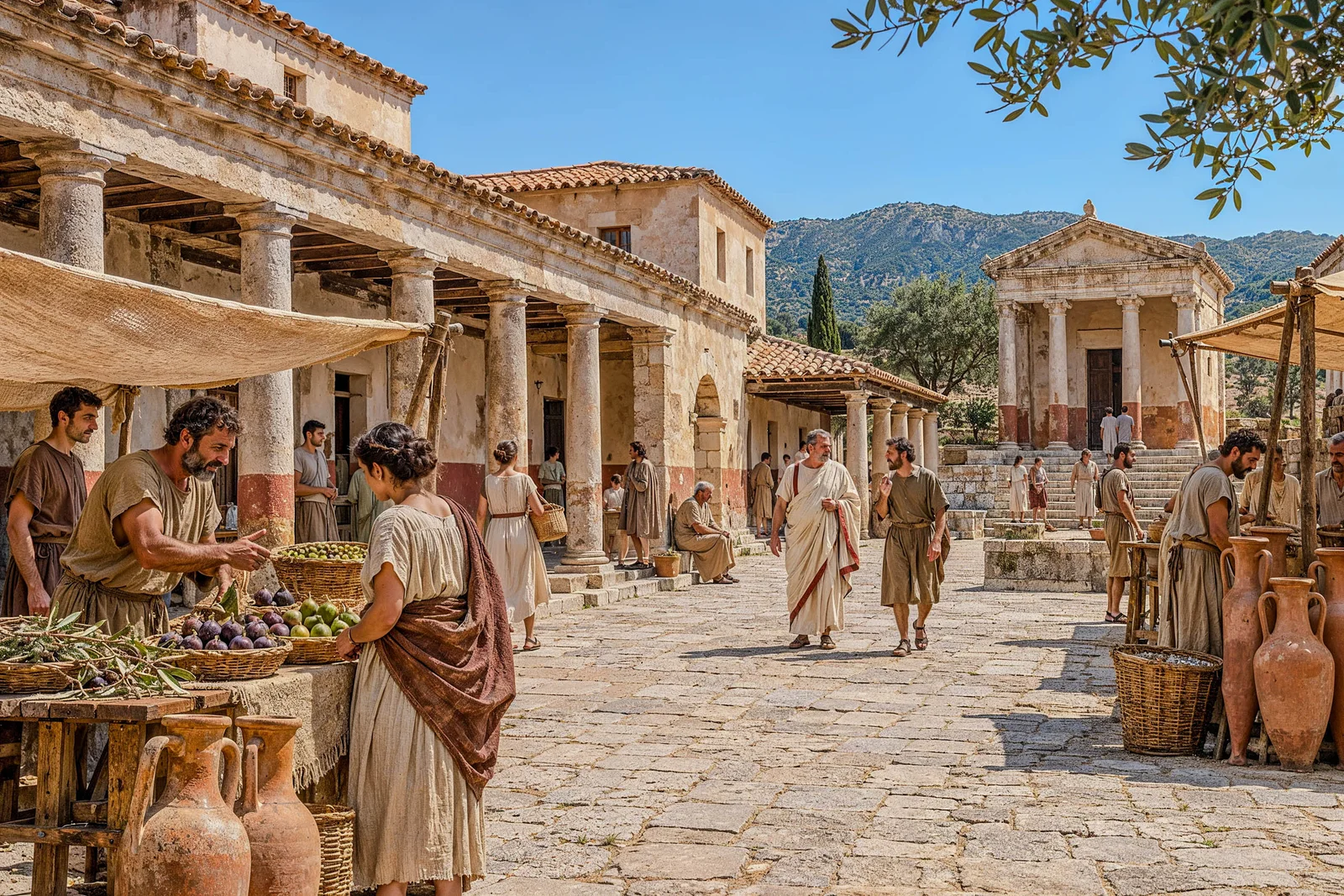
Market life in Roman Pollentia
The Romans conquered Mallorca in 123 BC. They built towns, temples and a theatre you can still visit. Discover how they ruled, how people lived and where you can explore the remains today.
123 BC
In 123 BC, the Roman consul Quintus Caecilius Metellus conquered Mallorca and Menorca. The campaign later earned him the name Balearicus. Rome was still a republic: the imperial period would not begin for almost another hundred years.
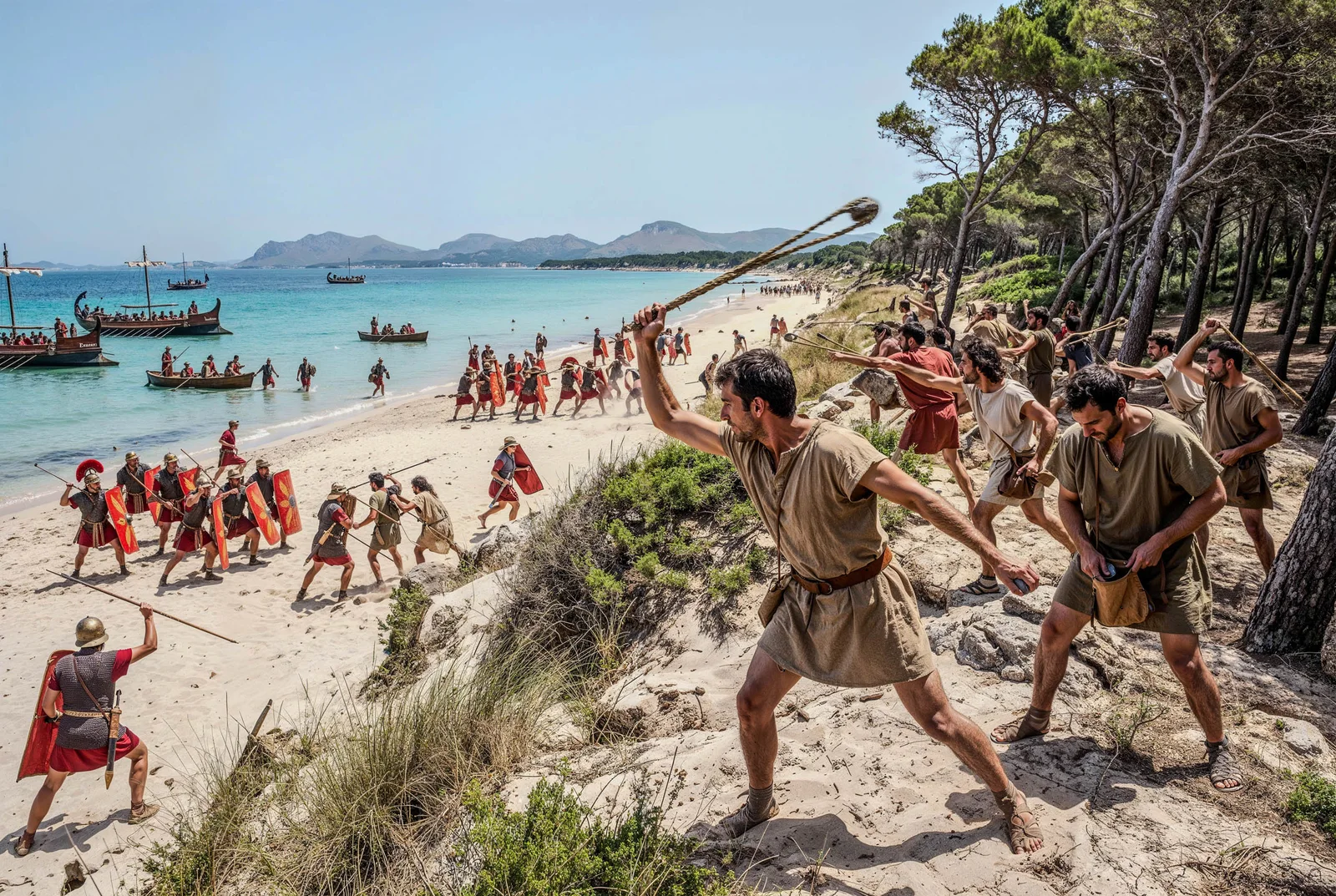
People on Mallorca lived in settlements of the post-Talayotic culture. They farmed and traded with other parts of the Mediterranean. Balearic slingers were well-known mercenaries and had already fought in Carthaginian armies.
Ancient writers give piracy as the reason for the attack. It threatened shipping between Italy and the Iberian Peninsula. Strabo, however, wrote that only a small proportion of the islanders were involved. The conquest also gave Rome bases along these trading routes.
 AI
Metellus and the Balearic slingers
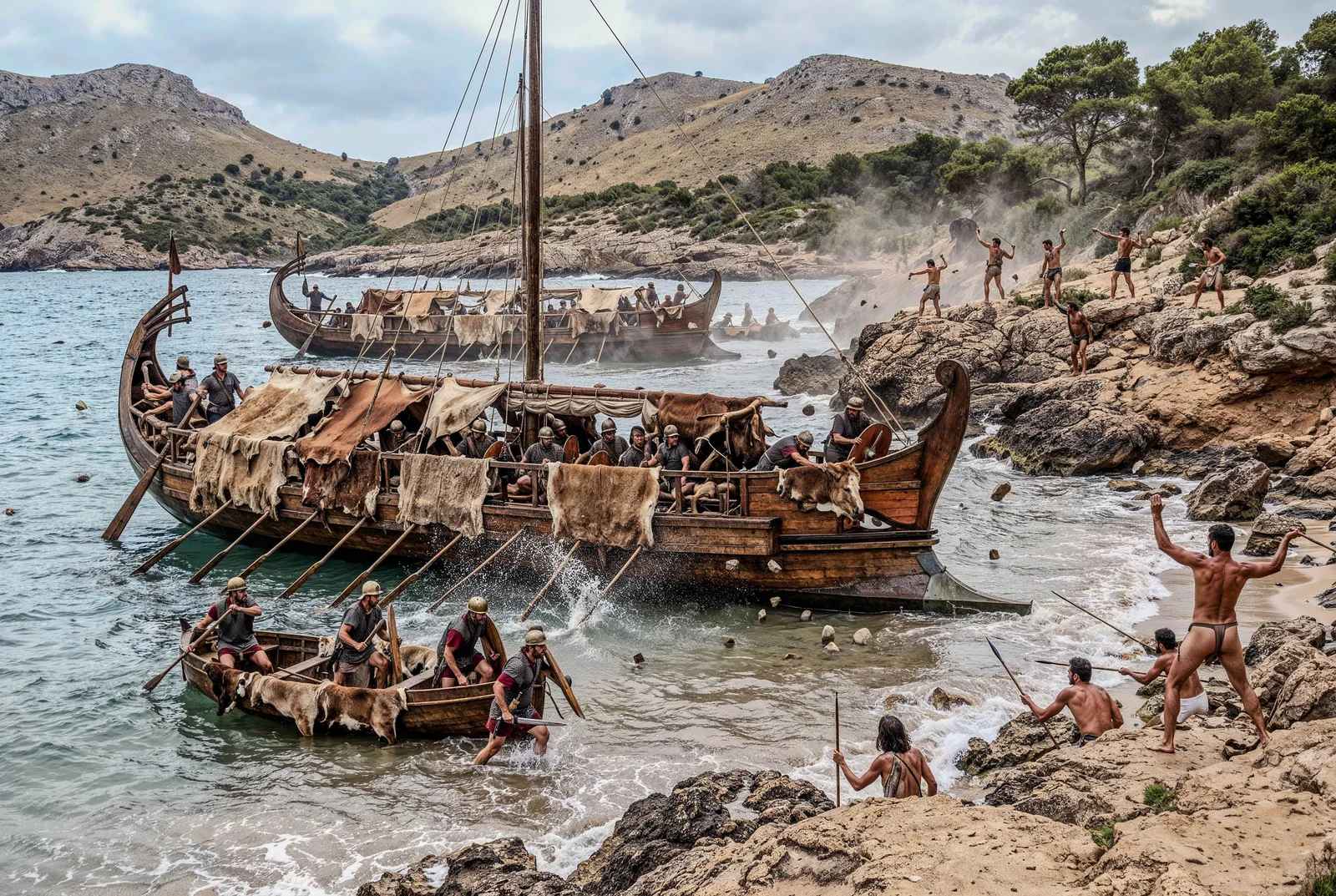
According to Strabo, Metellus had his ships covered with animal hides to protect them from the slingers’ stones. The islanders resisted the approaching fleet, but little survives about the fighting that followed. The precise landing place on Mallorca is also unknown.
The campaign and subsequent reorganisation are dated to 123–121 BC. The Romans established military bases. Remains have been found at Son Espases near Palma and in Ses Salines.
 AI
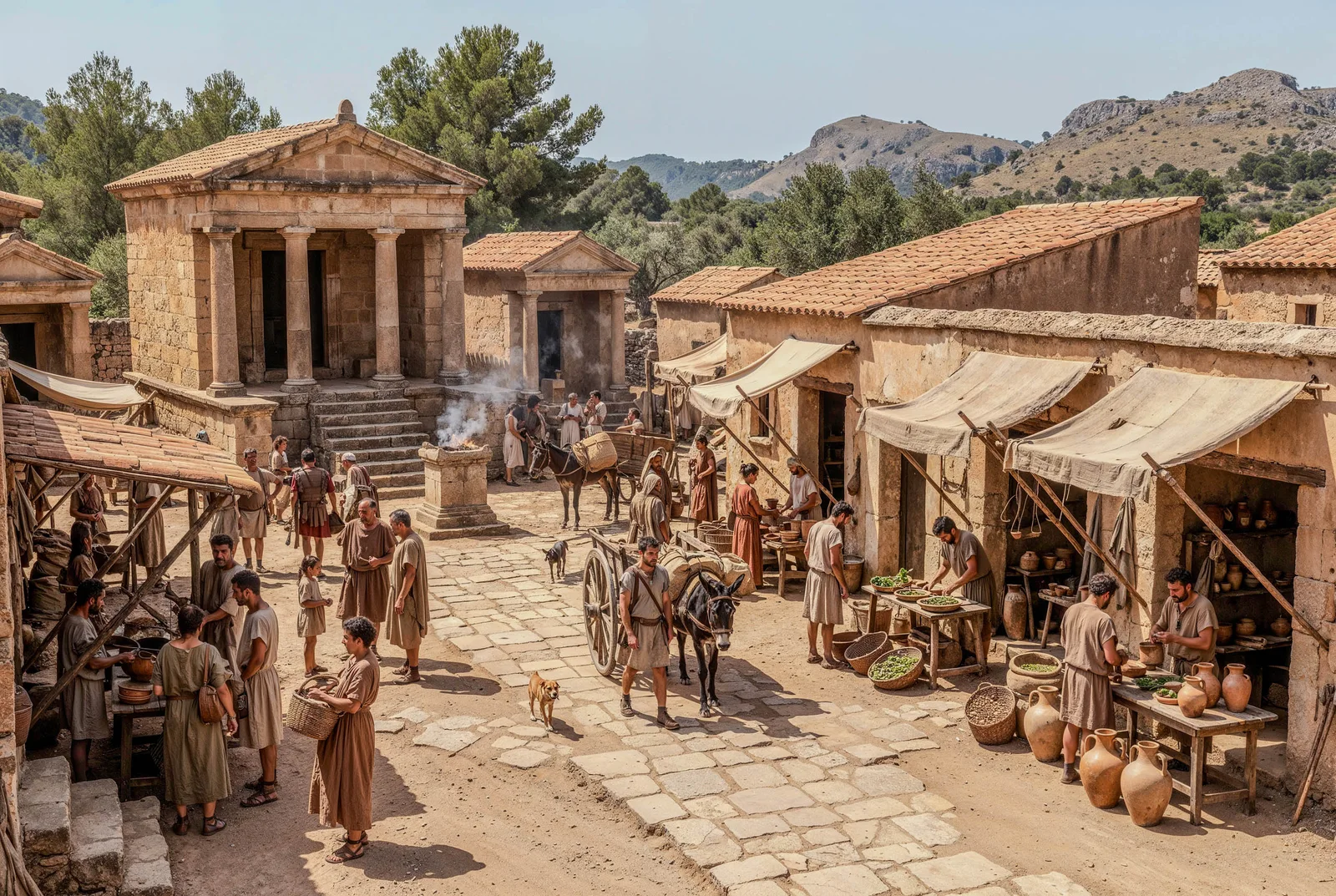
Towns and settlements
Mallorca and Menorca initially became part of the province of Hispania citerior. Strabo mentions 3,000 Roman settlers whom Metellus brought to the islands from Iberia. Palma and Pollentia became Mallorca’s most important Roman towns.
Courtyard houses, temples, shops and public squares appeared in the towns. Latin became the language of administration. Roman law governed property and citizenship. Wealthy families owned large houses and land; enslaved people had no personal freedom.
Older settlements continued to be used in the countryside. At Son Fornés, archaeologists have uncovered workrooms and storage areas from before and after the conquest. Imported pottery arrived alongside pots still made in local traditions.
 AI
Amphorae, wine and oil
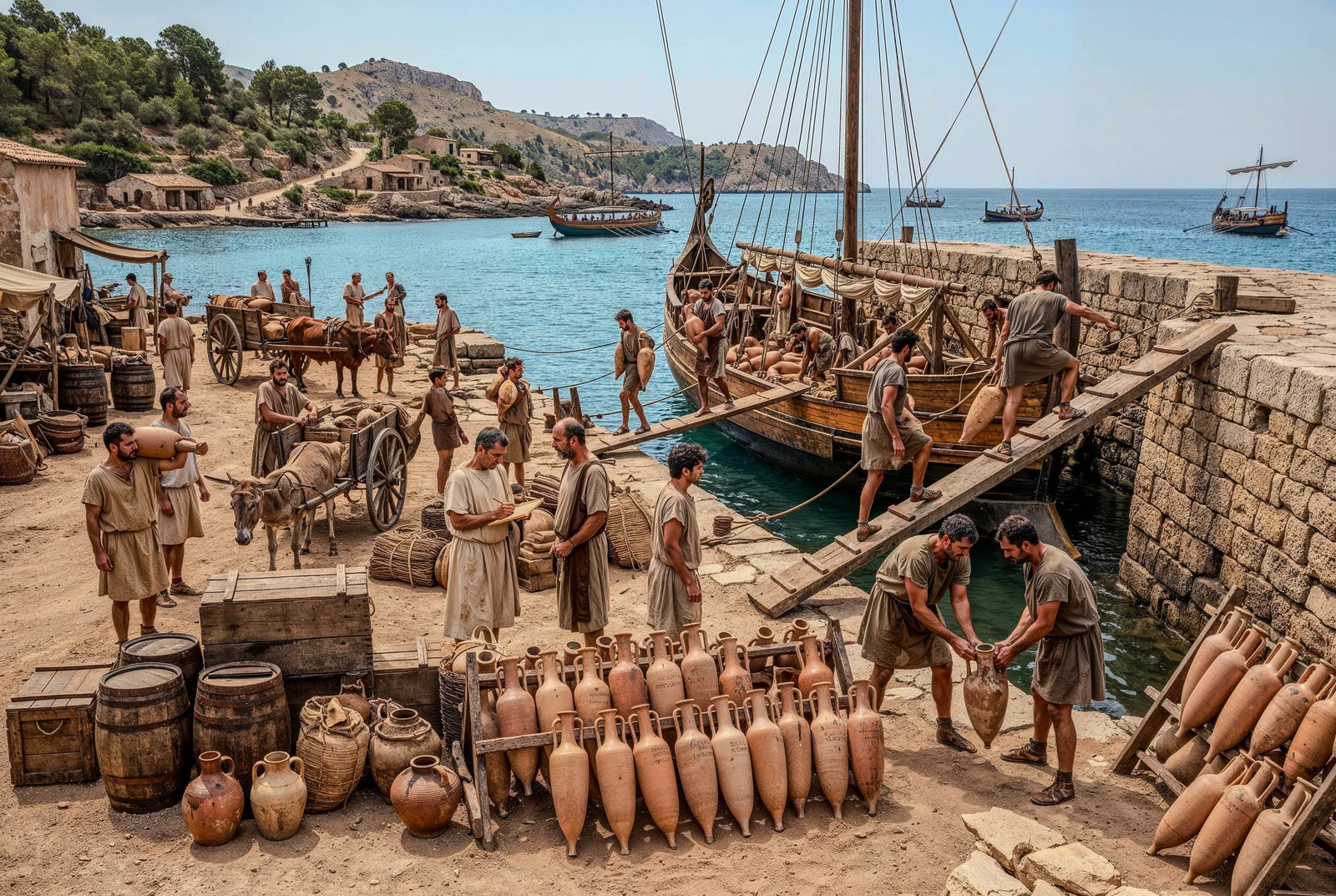
Roman shipwrecks lie off Mallorca and Cabrera. Their cargoes include amphorae from Baetica, in what is now southern Spain. These pottery containers carried olive oil, wine and preserved fish products, among other goods.
Ships travelled between ports in Iberia, North Africa and Italy. Not every cargo that sank off Mallorca was intended for the island: some vessels were heading for Rome or Narbonne.
Wine was also produced in the Balearics, and Pliny praised it. Both locally made vessels and imported tableware have been found in settlements. At Son Fornés, for example, wine amphorae were discovered alongside imported drinking bowls.
 AI
The Roman town beside Alcúdia
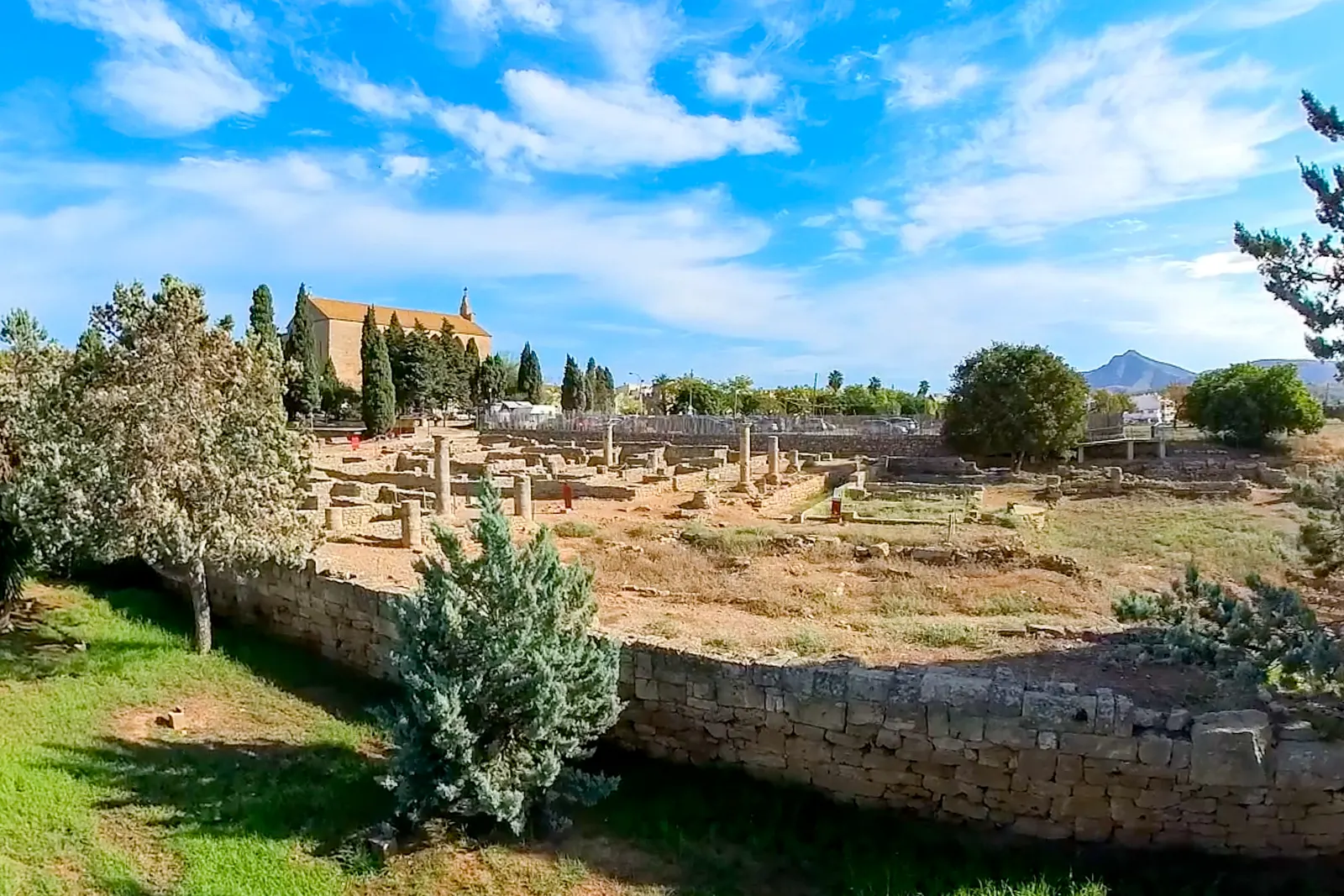
Pollentia lies just outside Alcúdia’s old town, between the bays of Alcúdia and Pollença. You can visit a residential quarter, the forum and the theatre.
The town’s foundation is associated with Metellus and the conquest of 123 BC. However, the earliest Roman building remains found in the forum so far are later, dating to around 70 BC. The theatre was not built until the 1st century AD.
Take time to explore each of the three areas. In the residential quarter you can make out rooms and streets; at the forum, the remains of temples and shops. The path to the theatre continues a little further south.
Sa Portella
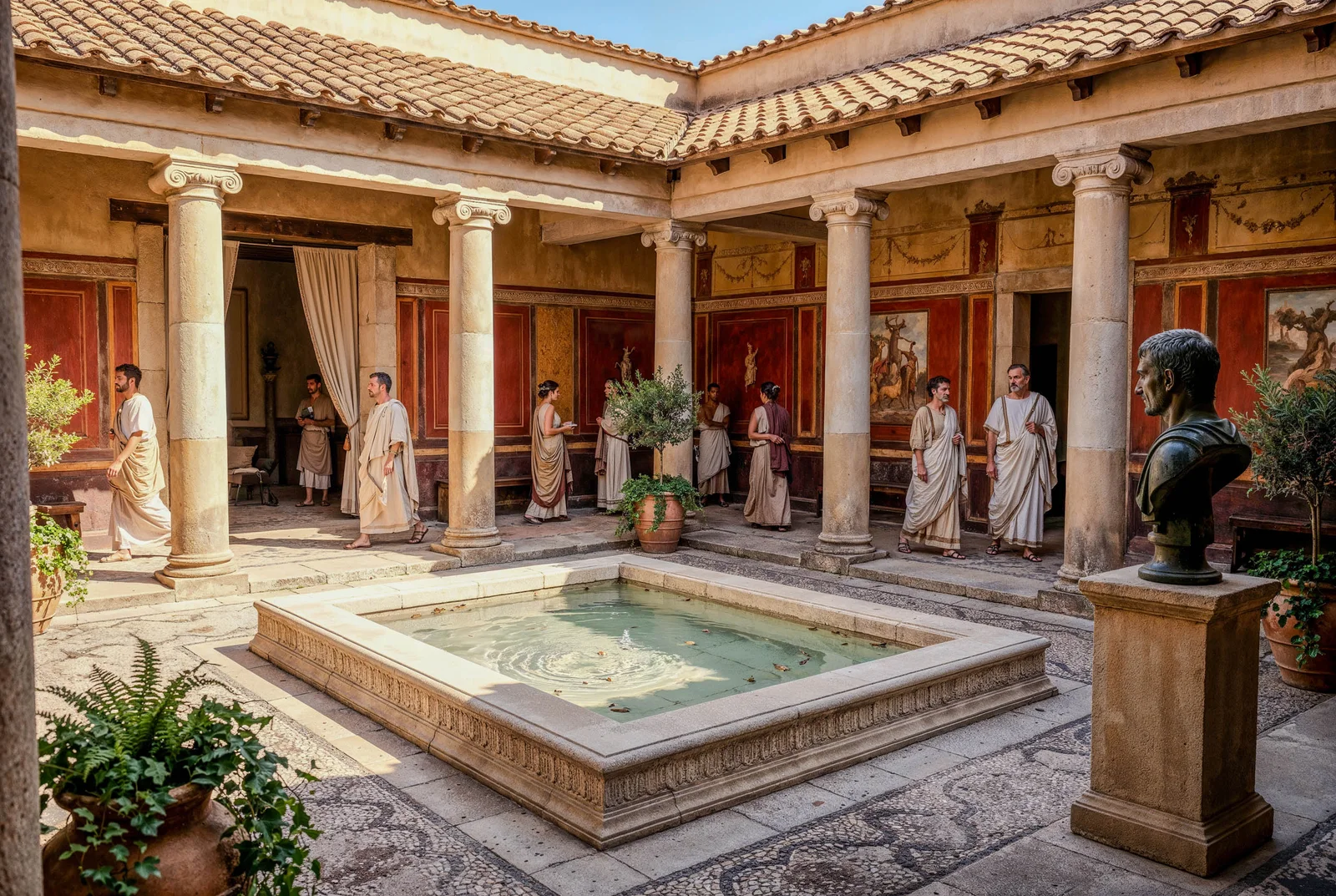
Sa Portella contains the foundations of three town houses. The best preserved is the Casa dels Dos Tresors, with rooms arranged around an atrium. Columns from its former portico still stand beside the street.
The Casa del Cap de Bronze takes its name from a bronze head found there. It had a courtyard surrounded by columns. The bronze head is kept in Pollentia’s museum.
Fewer walls survive from the third house, the Casa del Noroest. Part of a later fortification runs over its foundations. These large houses belonged to wealthy residents; more modest homes would have looked different.
 AI
Temples and shops
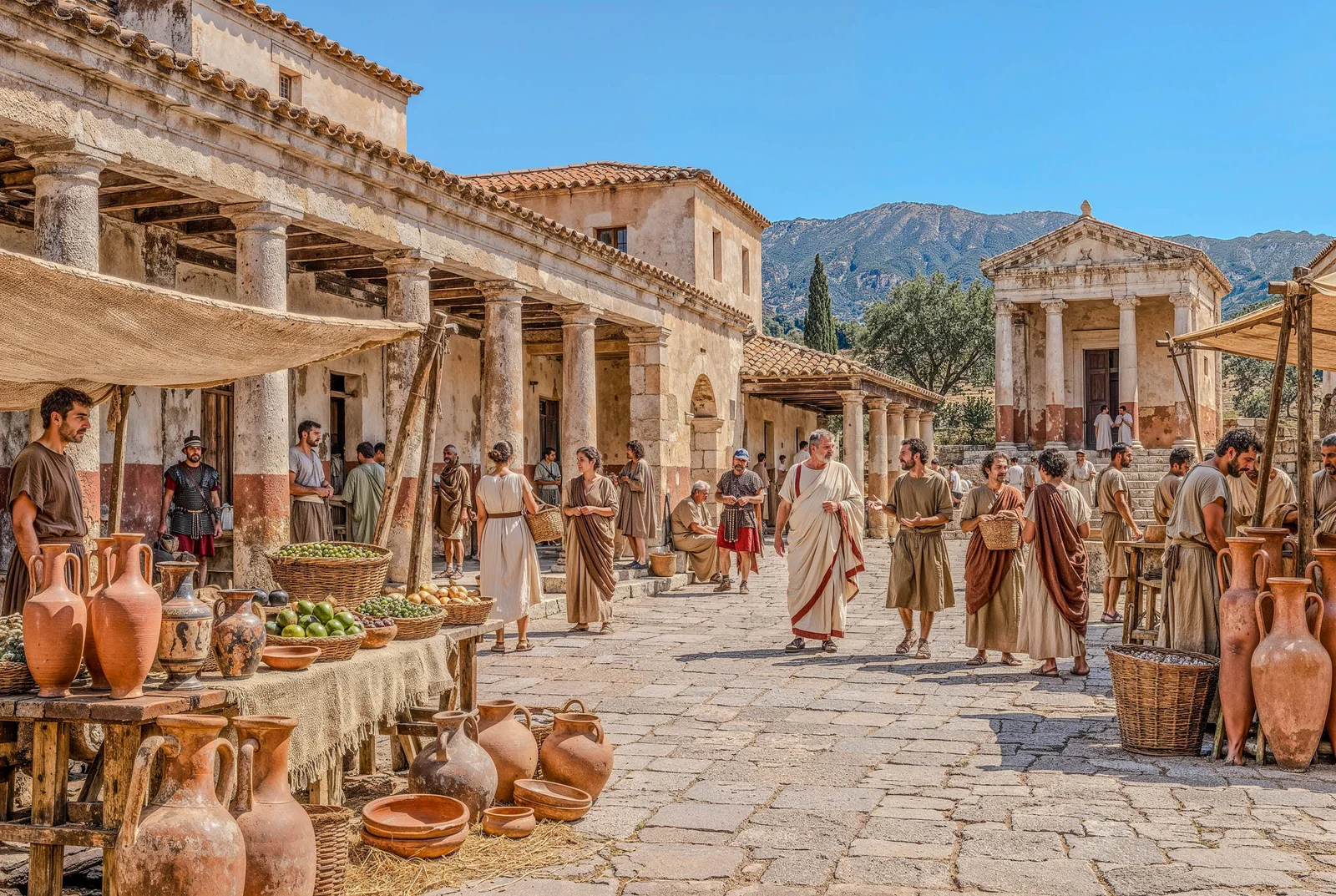
Temples and shops stood close together in the forum. The large temple is known as the Capitolium and is associated with Jupiter, Juno and Minerva. Smaller shrines and a row of shop rooms have also been excavated.
You will see these rooms described as tabernae: shops or workshops where people sold goods and worked. The square also hosted public and religious events.
Today, most of what remains is at foundation level. The information boards help you identify the temples and rows of shops.
 AI
1st century AD
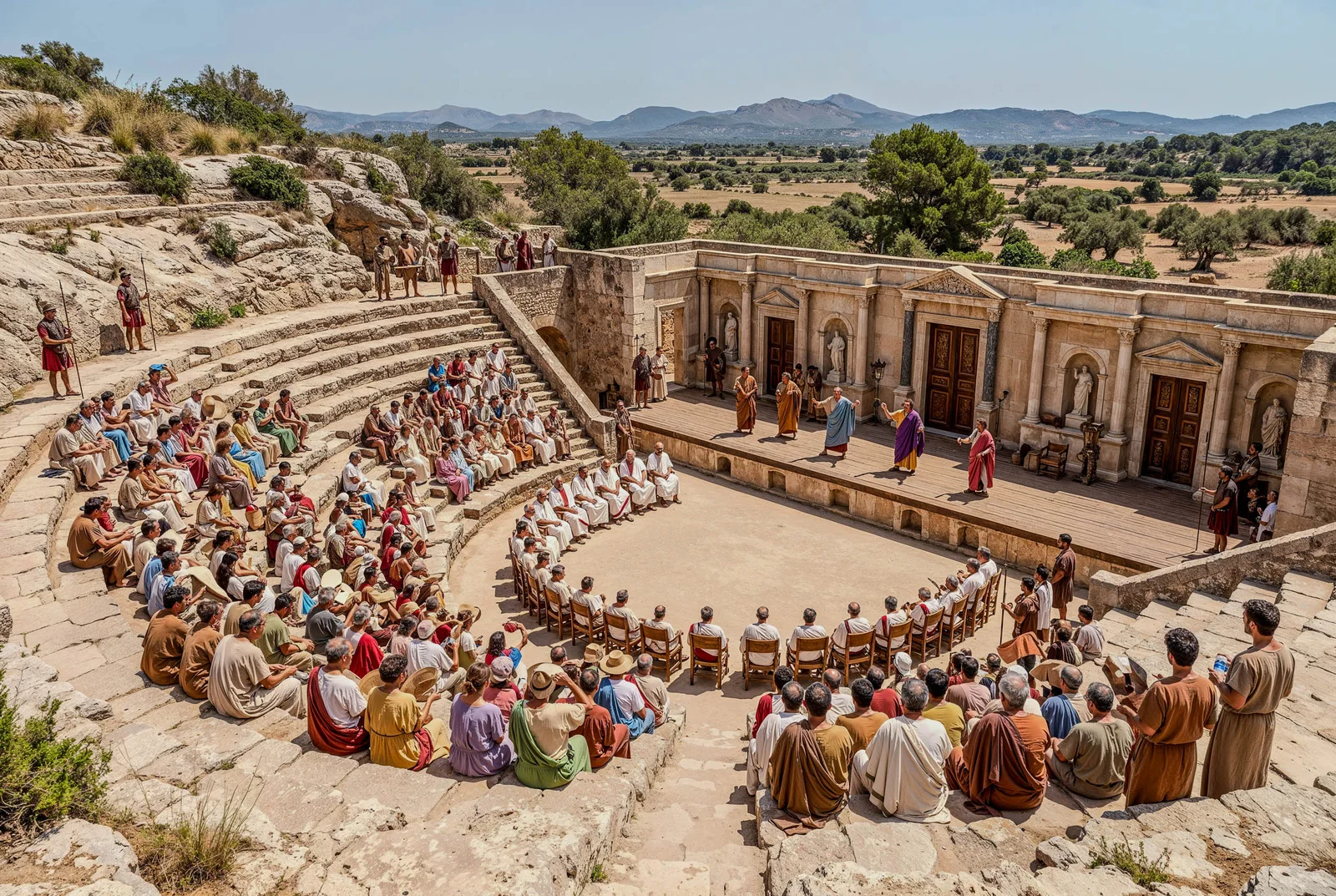
The theatre lies south of the residential quarters. Its builders used the slope, cutting some of the seating directly into the rock. From above you can make out the auditorium, the semicircular space in front and the stage area.
Plays were performed here; it was not designed for gladiatorial contests. Built in the 1st century AD, the theatre is one of the town’s later buildings.
The walk there is part of a visit to Pollentia. Bring water, especially in summer: the open ground offers little shelter from the sun.
 AI
Food, home life and religion
The Museu Monogràfic de Pol·lèntia in Alcúdia’s old town displays finds from the site, including cooking pots, tableware, storage jars, jewellery and religious objects. A visit complements your walk around the ruins.
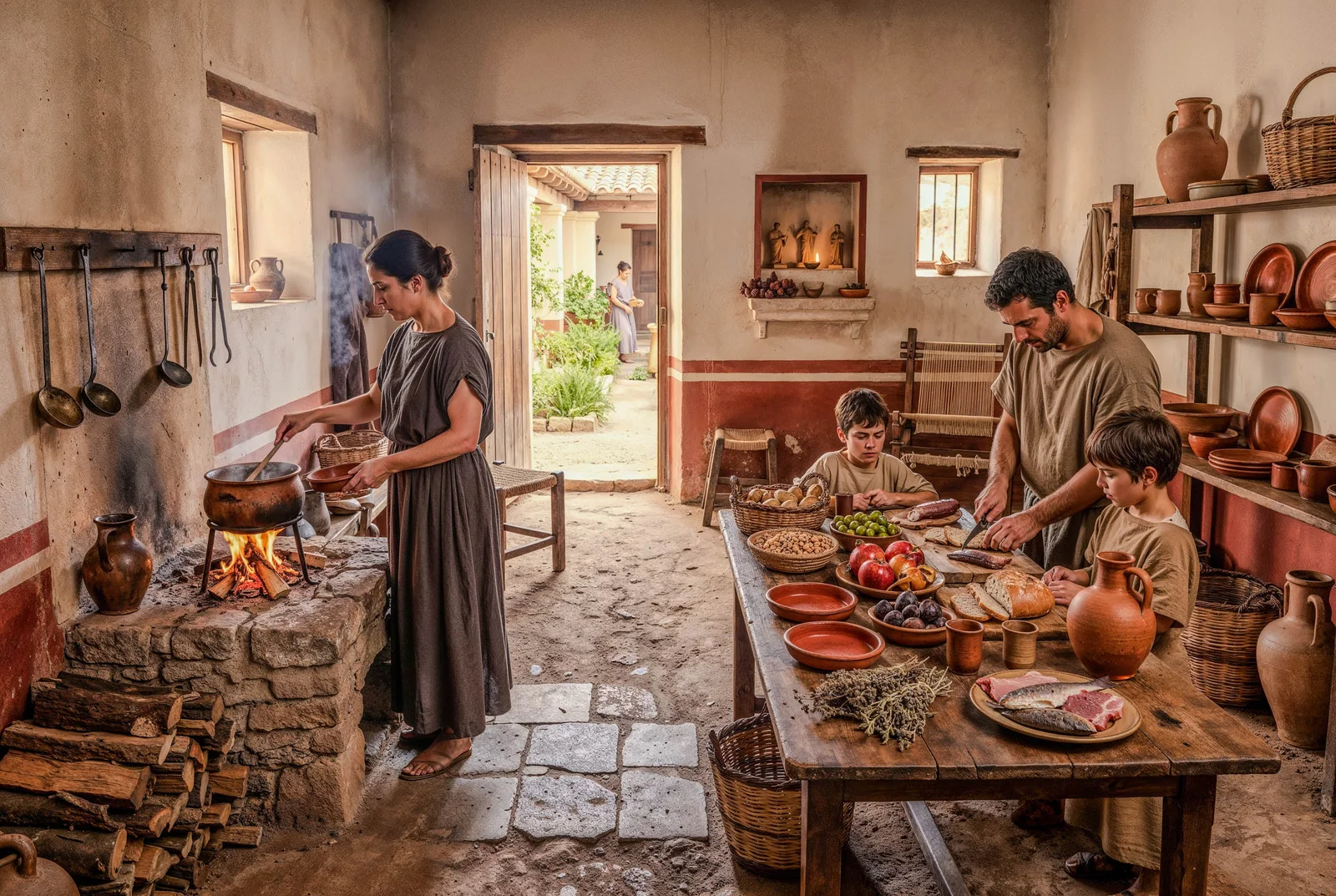
People cooked over fires or on masonry hearths. Their food included pulses, fruit, olives, fish and meat, as well as oil and wine. What a family could afford depended on its income.
Deities were worshipped at home too, with small altars used for household religion. Graves and grave goods provide evidence of burial practices. Alongside the public temples and theatre at the site, the museum shows objects from residents’ private lives.
 AI
3rd to 6th centuries
Parts of Pollentia burned in the second half of the 3rd century AD. The fire is often dated to around AD 270–280, but its cause is unknown.
The town remained in use afterwards. Graves were later laid out in areas that had once been public spaces. The Vandals did not take over the Balearics until the 5th century, long after this fire. From 534, the islands belonged to the Eastern Roman, or Byzantine, Empire.
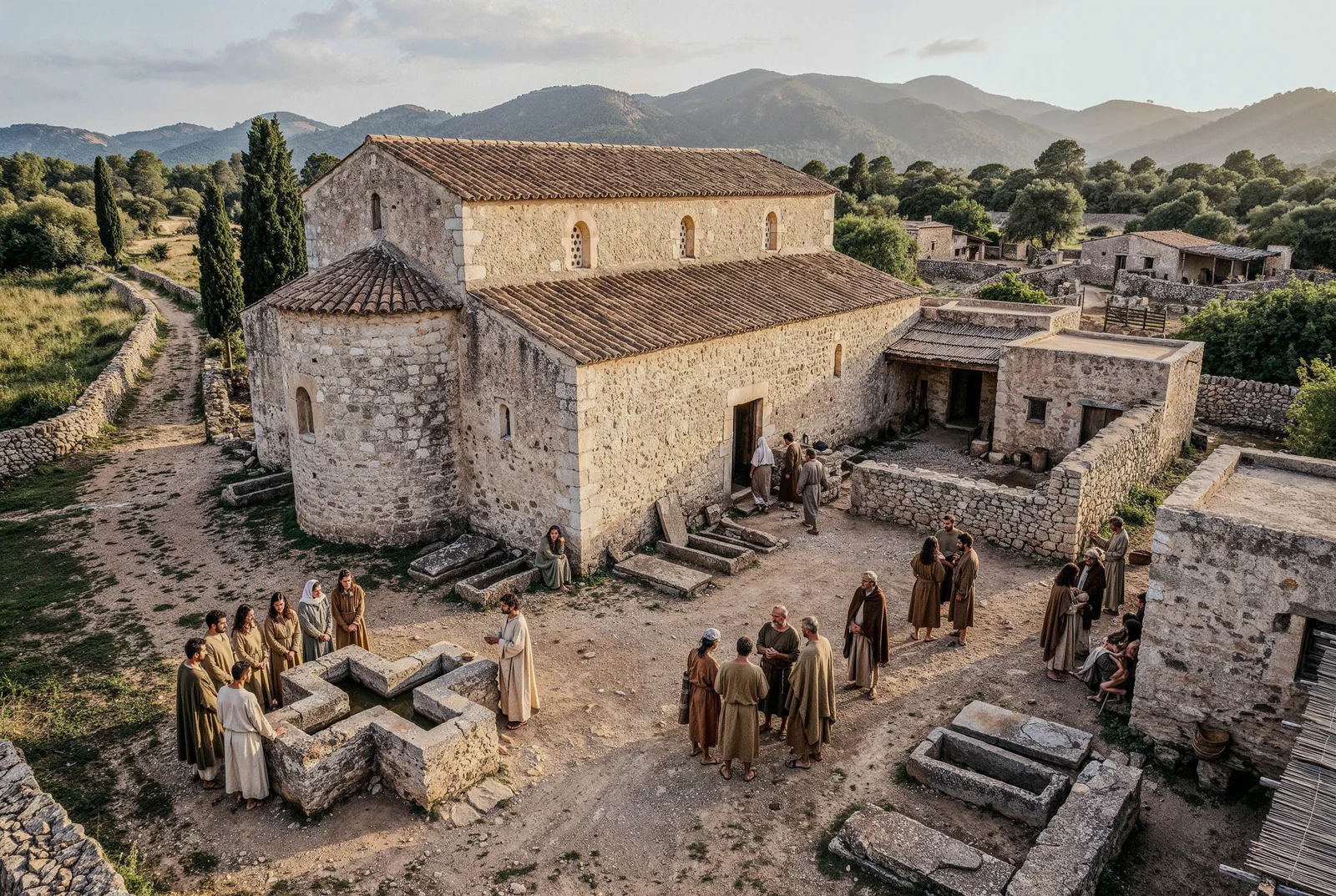
The early Christian site of Son Peretó near Manacor belongs to this later period. Its church foundations, baptismal pools and graves date from the 5th to 7th centuries. You can read about the rulers who followed in our history of Mallorca.
 AI
Excavations and surviving walls
At Pollentia you can walk through a Roman town. In Palma, part of a wall survives, while Son Fornés contains buildings from several periods. Son Peretó takes you into the later Christian era. Pont Romà near Pollença is also on the map, although its Roman origins have not been established.
With a place guide Another historic site
The most extensive visit on this map: houses in Sa Portella, temple and shop foundations in the forum, and the theatre cut into the rock. Explore Pollentia →
Part of the Roman town wall is exposed on the side of Can Bordils at Carrer de l’Almudaina, 9. The archway beside it is medieval. An easy detour on a walk around Palma.
Later buildings stand among the older talayots. Workrooms and storage areas have been excavated from the Classical period, which extends into Roman rule. The great stone towers themselves are much older. Explore Son Fornés →
Here you can see the foundations of an early Christian basilica, baptismal pools, adjoining rooms and graves. Dating from the 5th to 7th centuries, the site belongs to Late Antiquity, including the Byzantine period. It is beside the road from Manacor to Sant Llorenç, with information boards along the route. Manacor council’s visitor information →
This stone bridge over the Torrent de Sant Jordi was first recorded in 1403 as Pont de Cubelles. It has been called the “Roman bridge” since the 19th century. Whether it actually has Roman origins remains uncertain. Explore Pollença →
History on your travels

The Roman town
House foundations, forum and theatre: follow the traces of everyday Roman life on foot.
Photographs and visiting tips →
Old town and museum
Combine the excavations with the museum and a walk through today’s old town.
Photographs and visiting tips →
A city with Roman roots
Palma was a Roman centre too. Its present streets mostly reveal the centuries that followed.
Photographs and visiting tips →Time to explore
Begin in the residential quarter of Sa Portella. Follow the walls and look at how the rooms and streets fit together. Then continue to the forum, with its temple and shop remains.
Allow time for the walk to the theatre too. Afterwards, the museum in the old town adds the small objects of everyday life to the buildings you have seen. If you would rather see the finds first, simply reverse the order.
Finish with a stroll around Alcúdia. The old town is right beside the excavations, with cafés and restaurants for a break.
Friedhelm Fischer’s notes and research from 2013 to 2026, together with: