S’Hospitalet Vell
Near Manacor, compare earlier naviformes with later Talayotic buildings at the same site. It makes clear why prehistoric stone structures do not all belong to the same period.
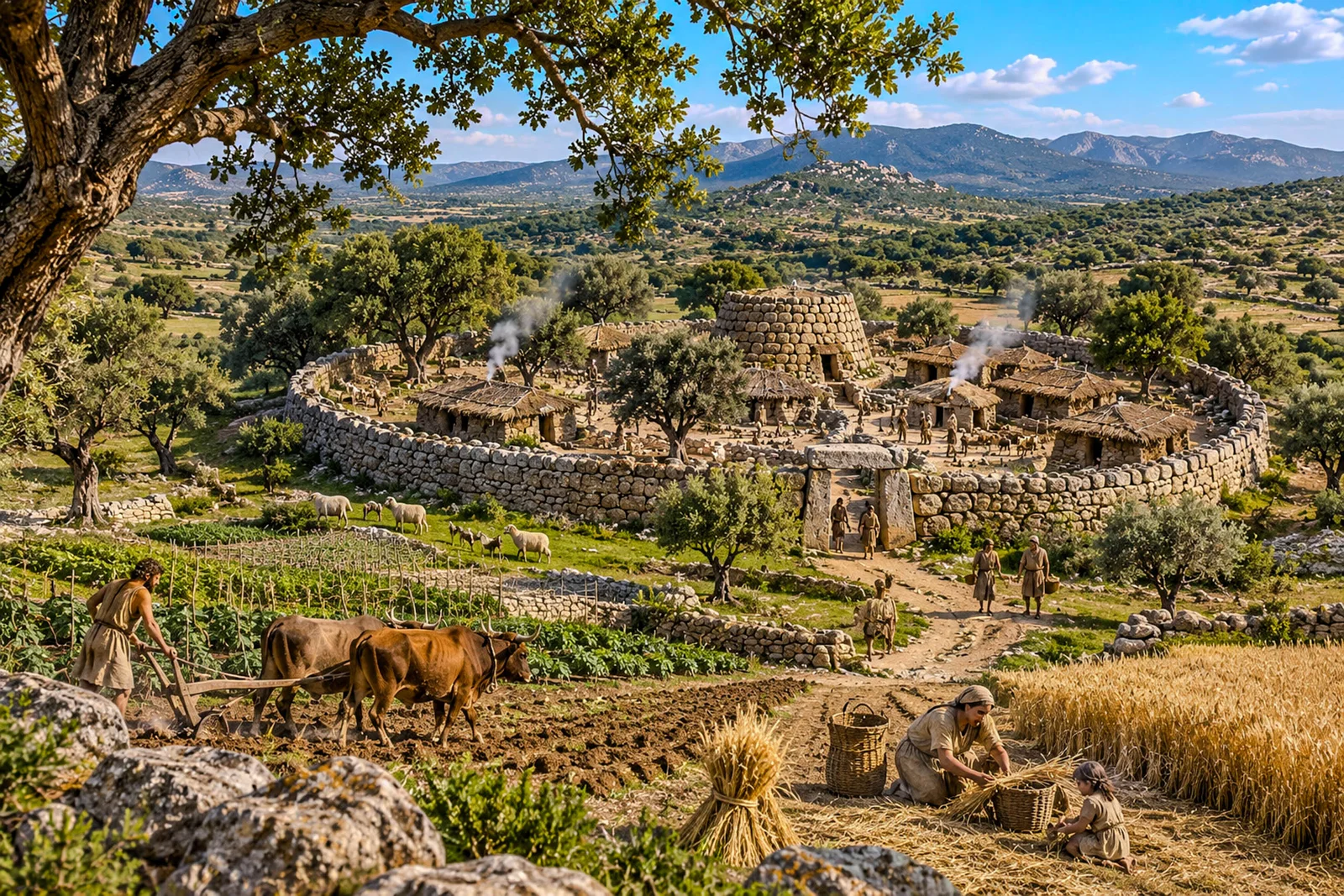
A village surrounded by its fields
Huge stones, low entrances and everyday life around them. Explore the settlements, sanctuaries and tombs left by Mallorca’s early communities.
The age of the Talayots
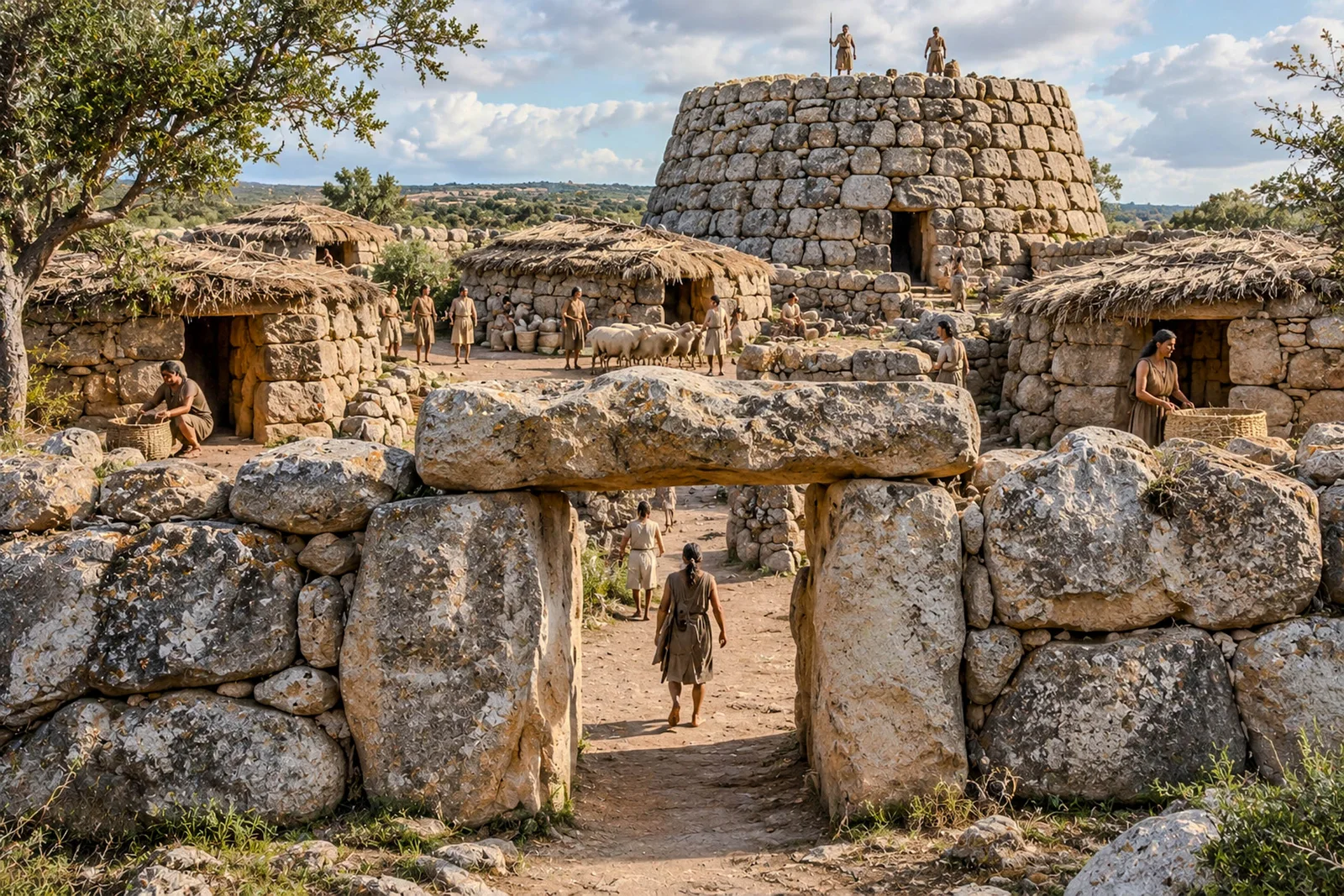
Stand in front of Son Fred and the huge stones catch your eye first, followed by the low entrance. Once inside, you cannot help wondering how people managed to build it. That curiosity is a good reason to explore Mallorca. Among fields, beneath trees and sometimes in the middle of a modern resort are remains of a world that existed long before the Romans.
The great stone towers are called talayots, or talaiots in Catalan, and give the Talayotic culture its name. On Mallorca, its beginnings are usually placed around the 9th century BC. At Son Fornés, the Talayotic settlement phase dates from roughly 850 to 550 BC. We are mainly looking at the early Iron Age.
People had lived on the island before then. During the Bronze Age, they built elongated houses with plans resembling upturned boats, known as naviformes. These predate the classic talayots. A large stone structure is therefore not necessarily a talayot, and a dolmen is a tomb rather than a residential tower.
Many settlements changed from around the middle of the 6th century BC. This later development is described as post-Talayotic. Buildings were altered, sanctuaries appeared and overseas contacts increased. These dates are useful guides rather than exact boundaries: every village did not change in the same year.
For a visit, a simple distinction helps. Son Fred brings you to a talayot, Son Corró to a later sanctuary and Son Real to a burial ground. All three reveal Mallorca’s prehistory from different perspectives.
 AI
Building the towers
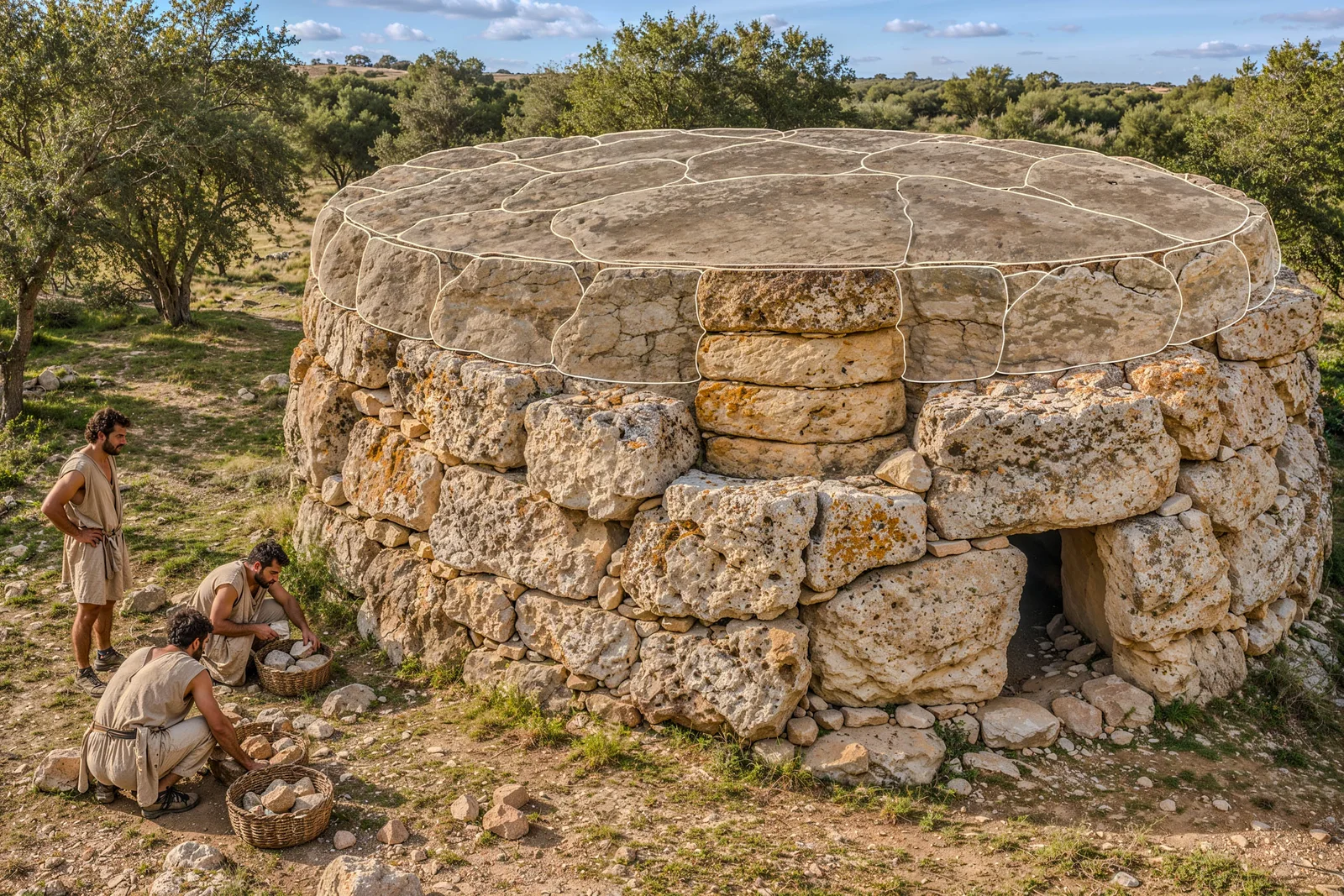
Walk slowly around a talayot. Some have round plans, others roughly square ones. Their outer walls consist of huge stone blocks laid without mortar, a technique known as dry-stone construction. Smaller stones and filling material sit between the larger blocks and within the thick walls. Up close, you begin to appreciate the work involved.
The low entrance often leads through a narrow passage. Some talayots have a central pillar inside, which once supported the roof. Today, you often look straight up at the sky. The thickness of the walls explains why such a substantial structure can contain a surprisingly small room. Son Fred makes this particularly clear.
No surviving building plan sets out every stage of the work. Quarrying, moving, positioning and stacking the stones required skill and collective effort. The precise equipment used to move the blocks at an individual tower usually cannot be established. That makes the buildings no less impressive.
A talayot was not necessarily a home, nor was every one a watchtower. Son Fornés offers useful examples: its first talayot is associated with butchering animals and distributing meat, while the second is interpreted as a meeting space. The original use of other towers is less clear. Similar plans do not automatically mean identical functions.
Compare the entrances, pillars, room sizes and neighbouring houses. Those details help you see each tower as a building within a settlement, rather than an isolated pile of stones.
 AI
Homes and work
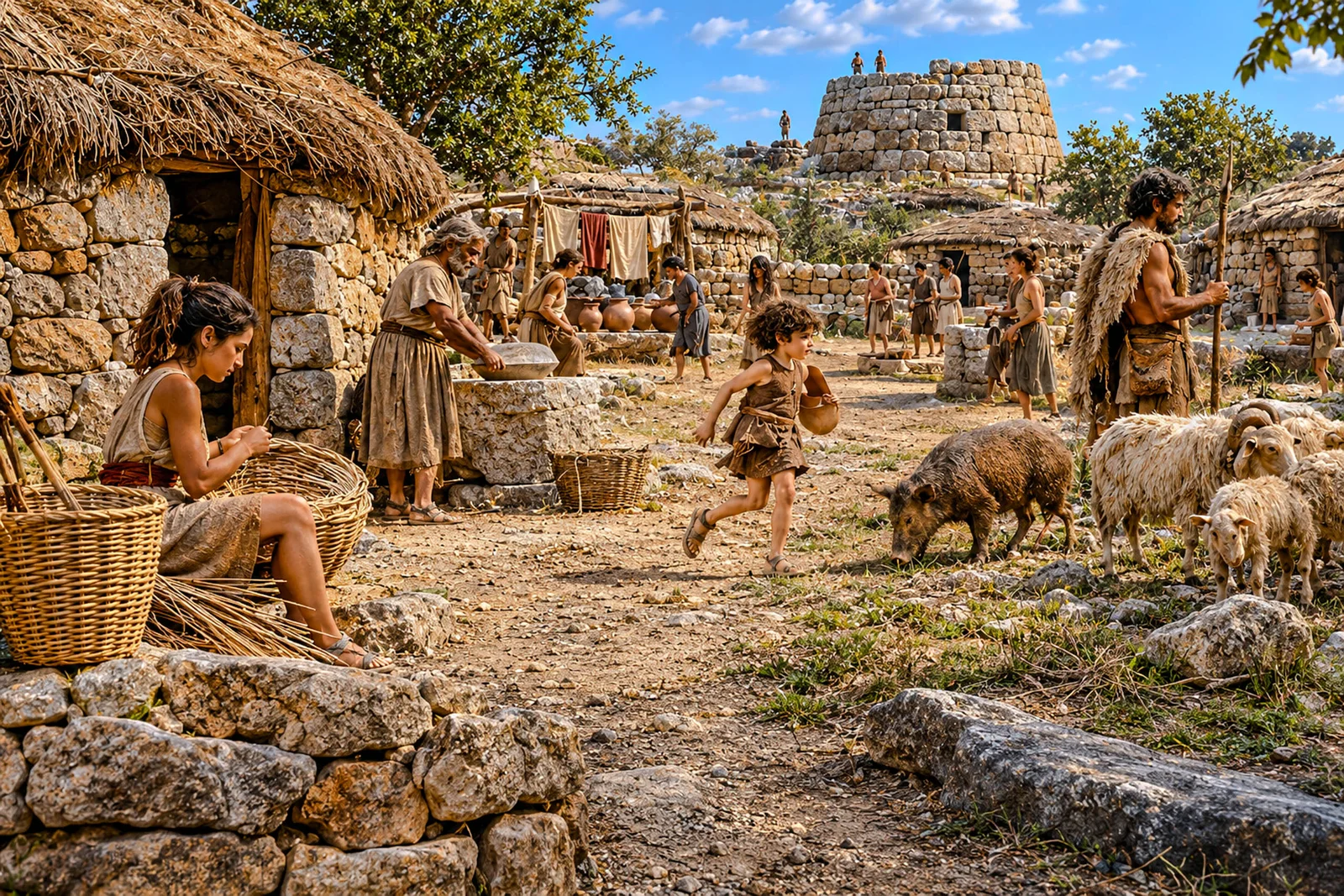
The largest tower draws attention, but the lower walls around it are just as interesting for understanding daily life. Meals were prepared here, tools used, supplies stored and belongings repaired. These open ruins were once rooms shared by people living close together.
At Son Fornés, early houses often contained one or two rectangular rooms. Stone walls enclosed them, with timber and other plant materials used in the roofs. Hearths and working areas help explain how the rooms were used. Spaces that look bright and open today felt different with roofs and furnishings in place.
Finds reveal everyday tasks. Grain was ground with stones, pots were shaped by hand and bone provided material for small tools. Needles and other implements offer evidence of clothing and textile work. Much of what was made from wood, leather or plant fibres has disappeared, leaving the surviving stone only part of the picture.
Pottery tells us more than what a vessel looked like. Its size and shape suggest whether it suited storage, cooking or eating. Sherds found alongside a hearth and grinding stones can help identify a working area. An object on its own reveals much less than one understood in its original setting.
With children, try looking for clues without touching or collecting anything. Where might the doorway have been? Which wall belongs to which room? How much space would be left with several people living inside? You do not need to remember dates to enjoy that kind of exploring.
 AI
Fields, livestock and stores
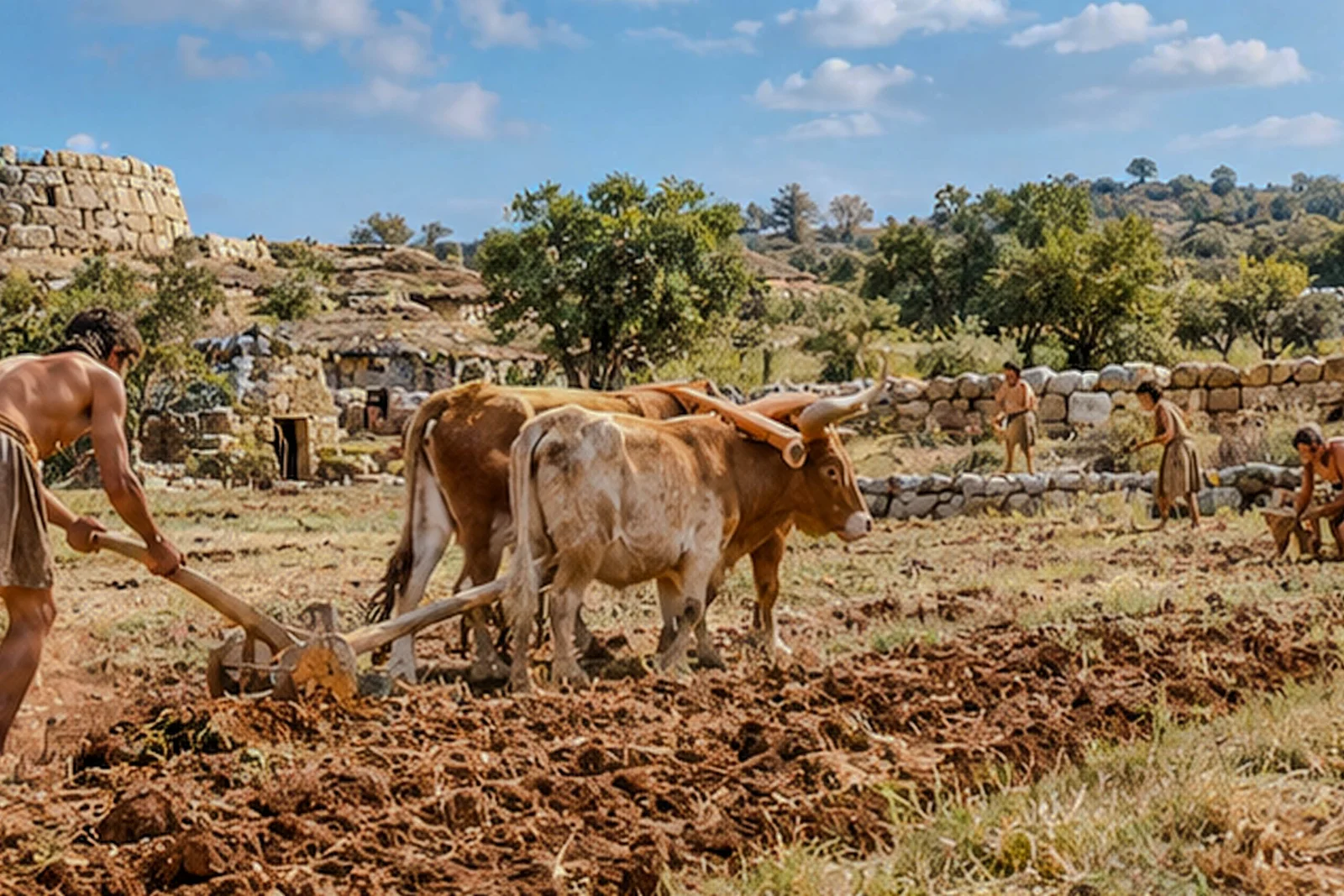
The villages did not rely only on whatever could be found in the landscape. Farming and livestock were central to their livelihoods. Research at the settlements records sheep, goats, cattle and pigs. Animals supplied food and other useful materials, while both fields and herds needed care.
Charred plant remains from Son Fornés provide particularly clear evidence. Researchers have identified barley, wheat and broad beans, among other plants. Oats were present too, though their role as a deliberately cultivated crop is uncertain. Such tiny remains sometimes survive for thousands of years precisely because they were burnt.
Analysis of cereal grains suggests that fields were manured. This was organised agriculture, requiring knowledge, repeated work and adaptation to local conditions. Finds of figs, olives and grapes alone do not prove established orchards or vineyards, however: the fruit could also have come from wild plants.
Driving through green spring fields or dry summer countryside towards a site helps you imagine how strongly the seasons could shape daily life. Today’s landscape has changed, though; it is not an untouched view of the prehistoric island.
 AI
Work through the year
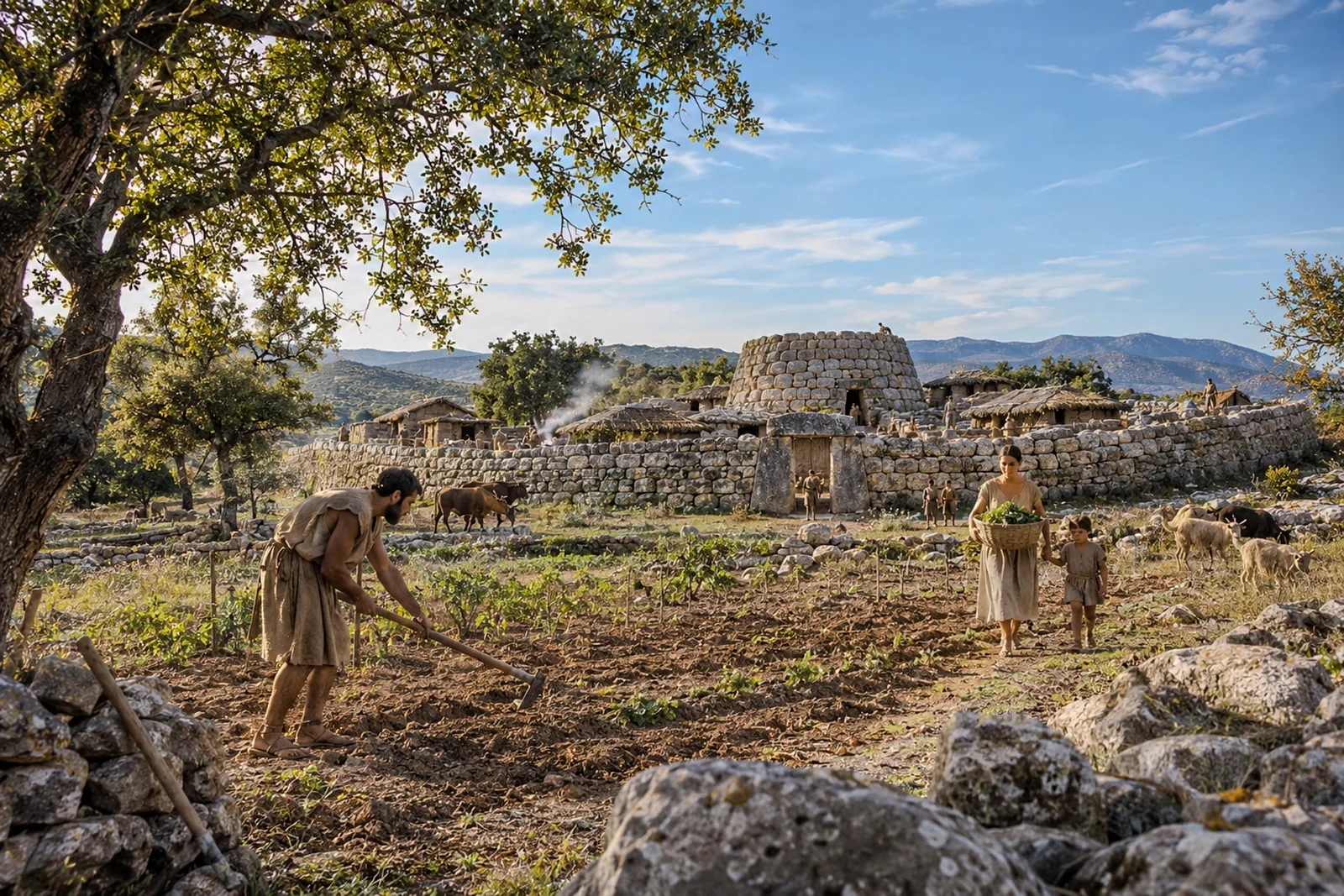
Sowing, tending animals, harvesting and storing food filled the year. Looking at an empty room plan, it is easy to overlook how much had to fit inside. A storage jar was part of keeping a household fed, rather than simply a decorative object.
As you walk around, imagine the routes between the house, working space and fields. Where could something be set down? Where was the entrance? How would the room feel with a roof overhead? These questions are more useful than trying to assign a definite purpose to every stone.
No personal diaries survive to describe ordinary days. We do not know the families’ names or their conversations beside the fire. Small finds bring us closer to them: a worn grinding stone, a broken bowl or a mark on an animal bone.
 AI
Living and working together
The enormous walls show that people coordinated their work. Materials and construction had to be organised while everyone still needed food. That does not, by itself, prove that every village was ruled by a powerful king or priest.
Researchers interpret the distribution of power and tasks in different ways. Collective organisation appears to have mattered. At Son Fornés, similarities between households have been discussed as evidence of relatively limited differences in the early settlement. The same conclusion cannot simply be applied to every village across every century.
Differences become more visible later. Imported goods, jewellery and weapons could express status, while settlements themselves were altered. A site often contains the overlapping traces of many generations, rather than one village frozen at a single moment.
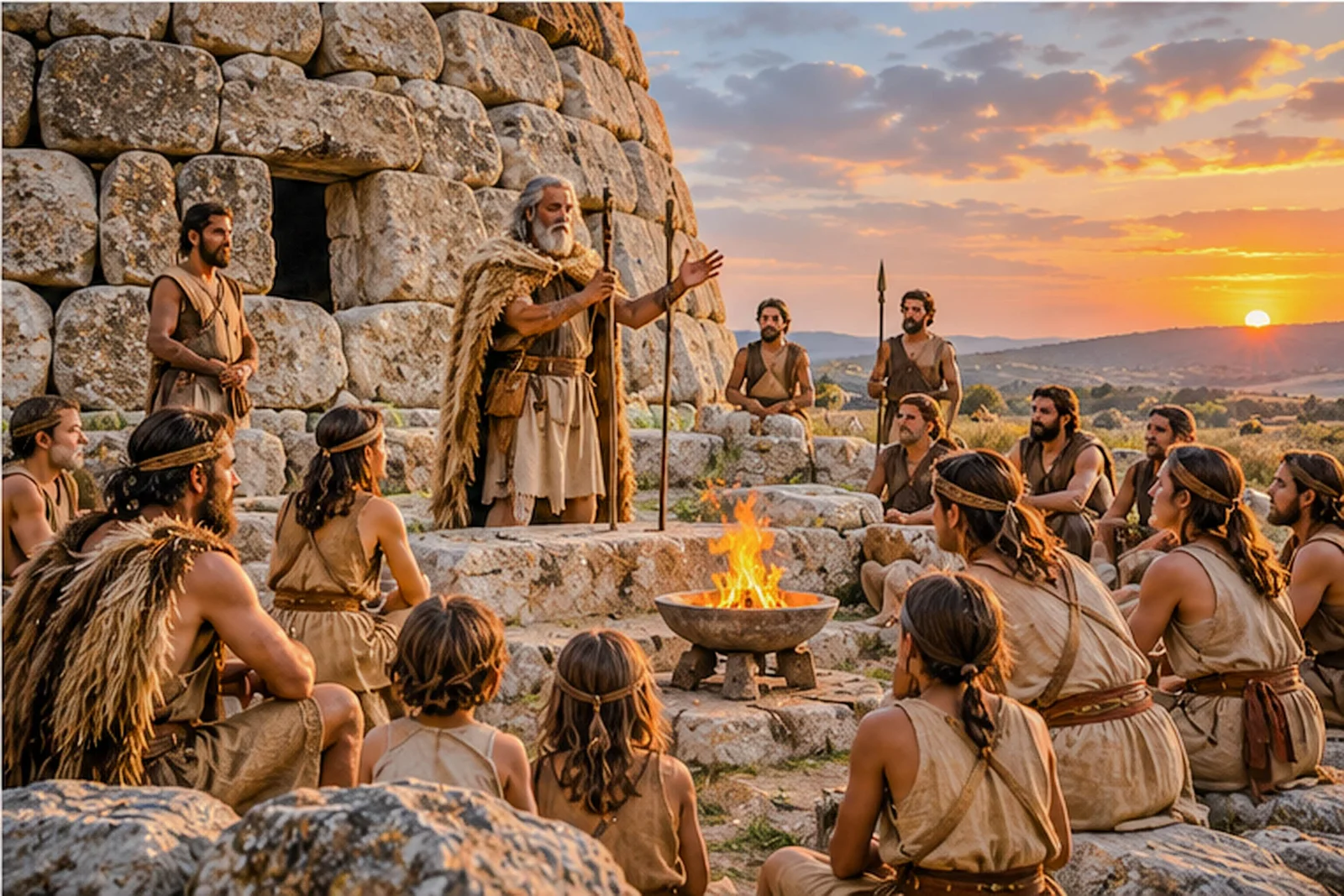
Imagining people gathering beside a tower helps bring the place to life. Their words, who had the final say and exactly how decisions were made remain unknown. The buildings offer evidence without answering every question.
 AI
Son Corró and Son Real
No written account of these communities’ beliefs survives. Archaeologists study distinctive buildings, objects and burials, paying close attention to when they were made. The famous bulls’ heads of Costitx belong to the later, post-Talayotic period. They should not be treated as symbols of one unchanged religion lasting for centuries.
The bronze sculptures were found at the sanctuary of Son Corró. Spain’s national archaeological museum dates them to the 5th–3rd centuries BC. The animal figures are associated with religious beliefs. The originals are now in Madrid; at Son Corró, you visit the sanctuary remains, with its re-erected columns.
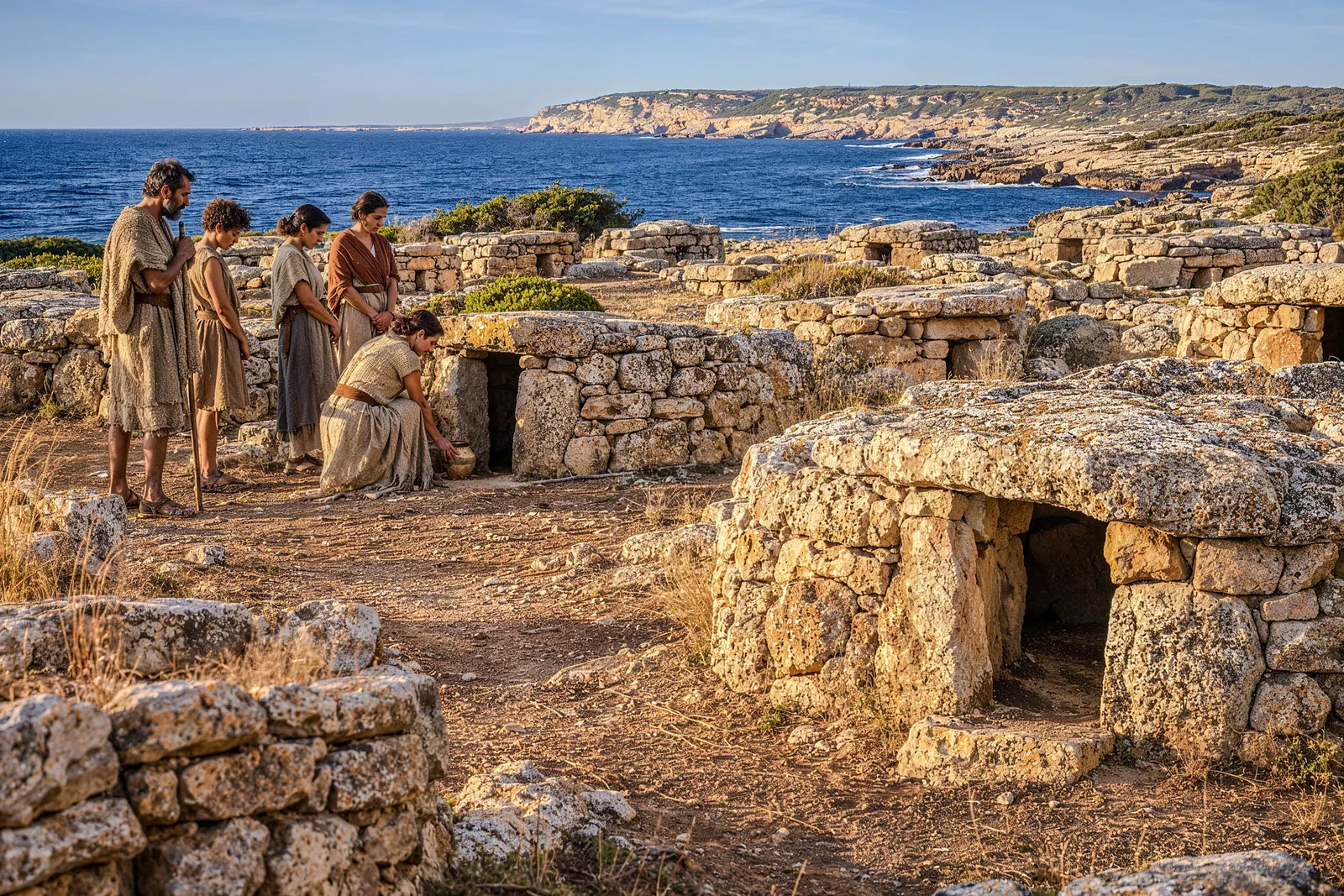
The necropolis of Son Real feels very different. Small burial chambers stand close together beside the sea, some recalling the shapes of larger buildings used by the living. Burials continued here over a long period, from the Iron Age into Roman times. This is a cemetery, rather than a former residential neighbourhood.
Burial practices, grave goods and tomb construction help researchers understand the community. Who was allowed to be buried here is another question: a burial ground need not represent the whole population. Son Real shows how varied the evidence for this past can be.
 AI
Trade, slingers and the Romans
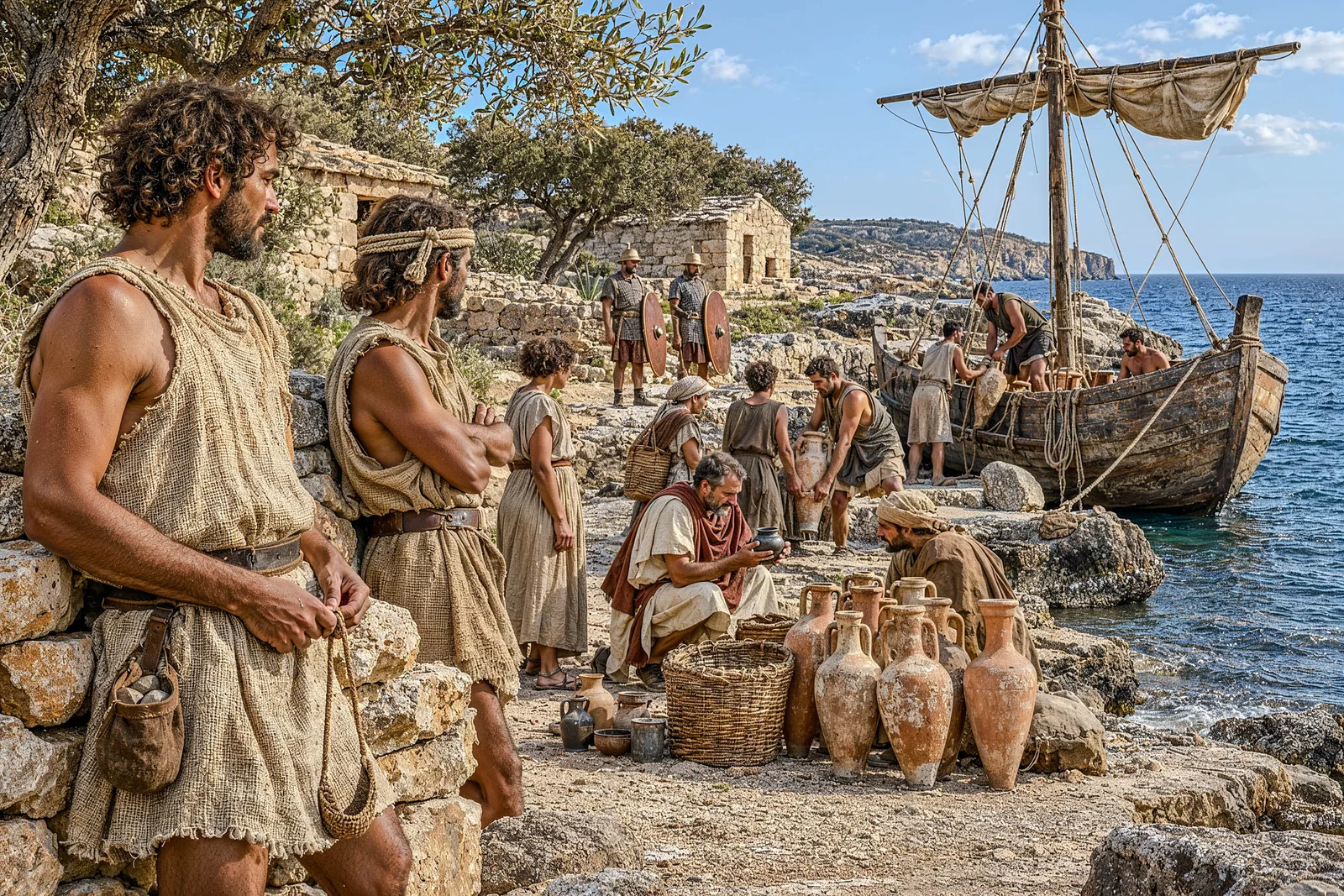
Mallorca was not cut off from the rest of the Mediterranean. Imported goods became more important during later prehistory. Containers and their contents, jewellery and other objects arrived by sea. The Balearic slingers who fought overseas as mercenaries also belong to this history of wider connections.
Son Fornés makes change particularly visible. After destruction affected the early settlement, new buildings were erected and older remains reused. Sanctuaries and altered homes show a different organisation of the site. This does not mean every talayot on Mallorca was abandoned at the same time.
The Romans conquered the island in 123 BC. A new political period began, but everyday life did not change instantly everywhere. Some places continued in use and were remodelled. Roman finds at a site are therefore entirely compatible with an earlier Talayotic origin.
Look closely at walls added against older towers: they belong to a different phase from the first courses of stone. Colour-coded plans on information boards can help you separate these building periods.
 AI
More history beneath your feet
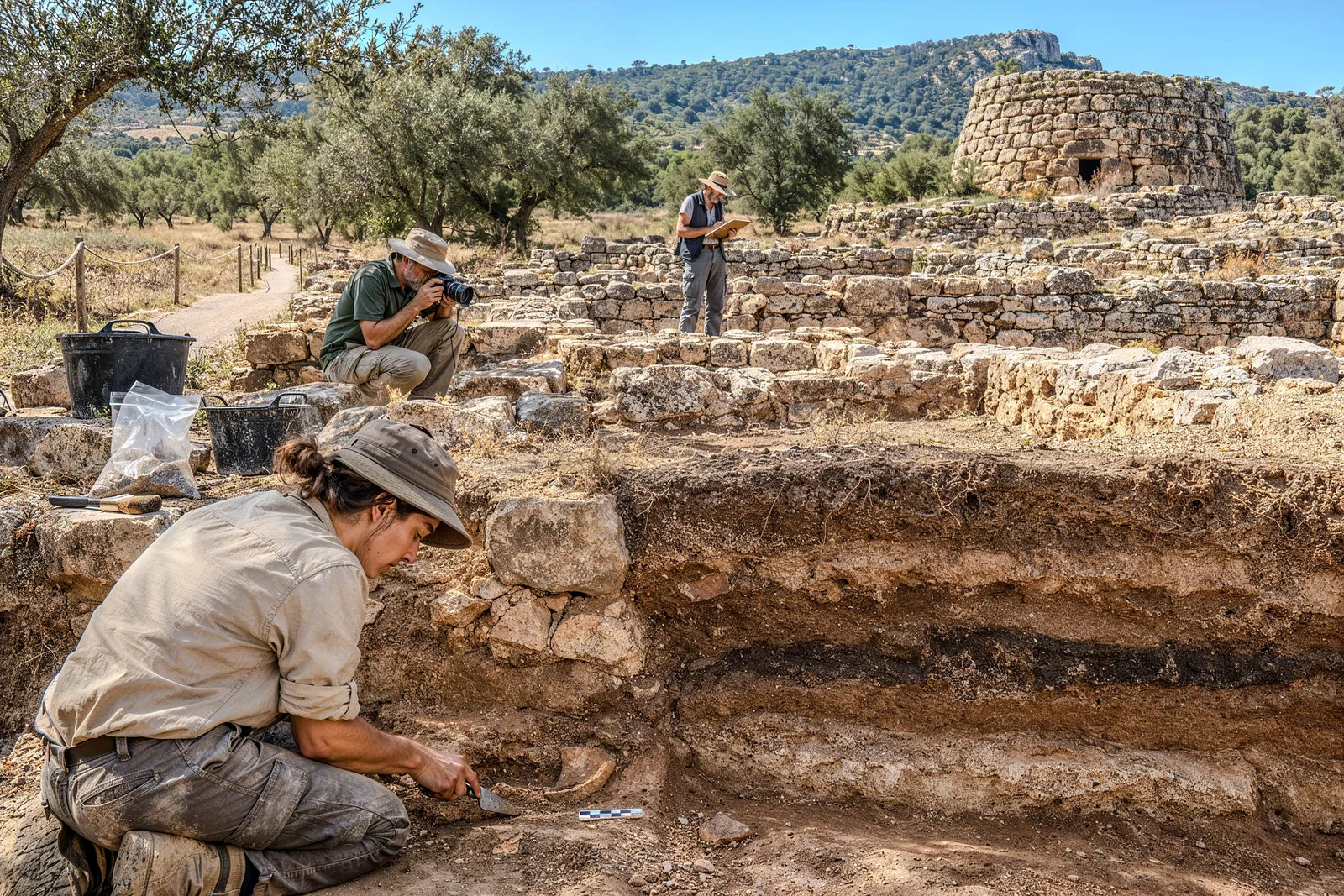
An archaeological site is rarely completely excavated. What you see may be only part of it. Research at Son Fornés began in 1975. New rooms, construction phases and findings have emerged over decades, so even familiar sites can still hold surprises.
During excavation, an object’s position matters as much as the object itself: its layer, the things beside it and its relationship with a wall. Archaeologists record deposits, take samples and examine tiny plant remains and bones. Work continues in laboratories and analysis long after the soil has been removed.
A burnt layer can indicate a fire, but cannot alone tell us who caused it. Pottery helps establish dates, while successive floors can reveal rebuilding. These observations gradually build an understanding of the place.
Exposed walls need conservation and sometimes partial rebuilding. Information panels help distinguish original fabric from later work. Stay on the intended paths, do not climb walls and leave even small pottery fragments where they are. Their position in the ground is part of the evidence.
 AI
From stone towers to coastal tombs
Ten selected sites around the island. Coloured points lead to our place guides with photographs and visiting tips. Other sites are shown in pale grey.
With a place guide Other sites
See the ancient buildings up close

Talayot · Sencelles
A substantial single tower, a low entrance and a central pillar. A good place to understand the construction up close without first navigating a large excavation.
Photographs and visiting tips →
Settlement · Montuïri
Talayots stand beside house foundations. See the towers as part of a village and look for its different building phases.
Photographs and visiting tips →
Settlement · Artà
The great stone gateway makes an immediate impression. Inside, paths lead among trees, rooms and the central talayot. Allow time for the information boards and varied building plans.
Photographs and visiting tips →
Settlement · Llucmajor
Several talayots and extensive walls survive in southern Mallorca. The contrast between large towers and smaller rooms helps reveal the scale of the settlement.
Photographs and visiting tips →
Sanctuary · Costitx
Re-erected columns mark a post-Talayotic sanctuary where the famous bronze bulls’ heads were found. A small site with a remarkable story.
Photographs and visiting tips →
Burial ground · near Can Picafort
Small tombs stand close to the water, with wide views across the bay. This cemetery adds another perspective on life and death in the Iron Age.
Photographs and visiting tips →More to discover
Near Manacor, compare earlier naviformes with later Talayotic buildings at the same site. It makes clear why prehistoric stone structures do not all belong to the same period.
Among modern buildings on the east coast are the remains of a settlement with a long history. Homes, a monumental centre, walls and later sanctuaries show how the place changed over generations.
These settlement remains lie near Canyamel, in the municipality of Capdepera. Another opportunity to explore prehistoric buildings in the north-east.
Above Santa Ponça, an archaeological park combines walking paths with settlement remains from several periods. The site continued in use long after prehistory.
Plan an enjoyable day out
Son Fred and Son Corró work well together: first a talayot, then a later sanctuary. Save another day for the larger settlement at Son Fornés, with plenty of buildings to compare.
Ses Païsses fits naturally into a visit to Artà. Son Real is a separate coastal outing involving a walk. Give each enough time, especially in hot weather.
Capocorb Vell makes a worthwhile stop in the municipality of Llucmajor. Look beyond the biggest tower: the rooms and connecting spaces make the settlement more interesting.
Friedhelm Fischer’s notes and research from 2013 to 2026, together with: