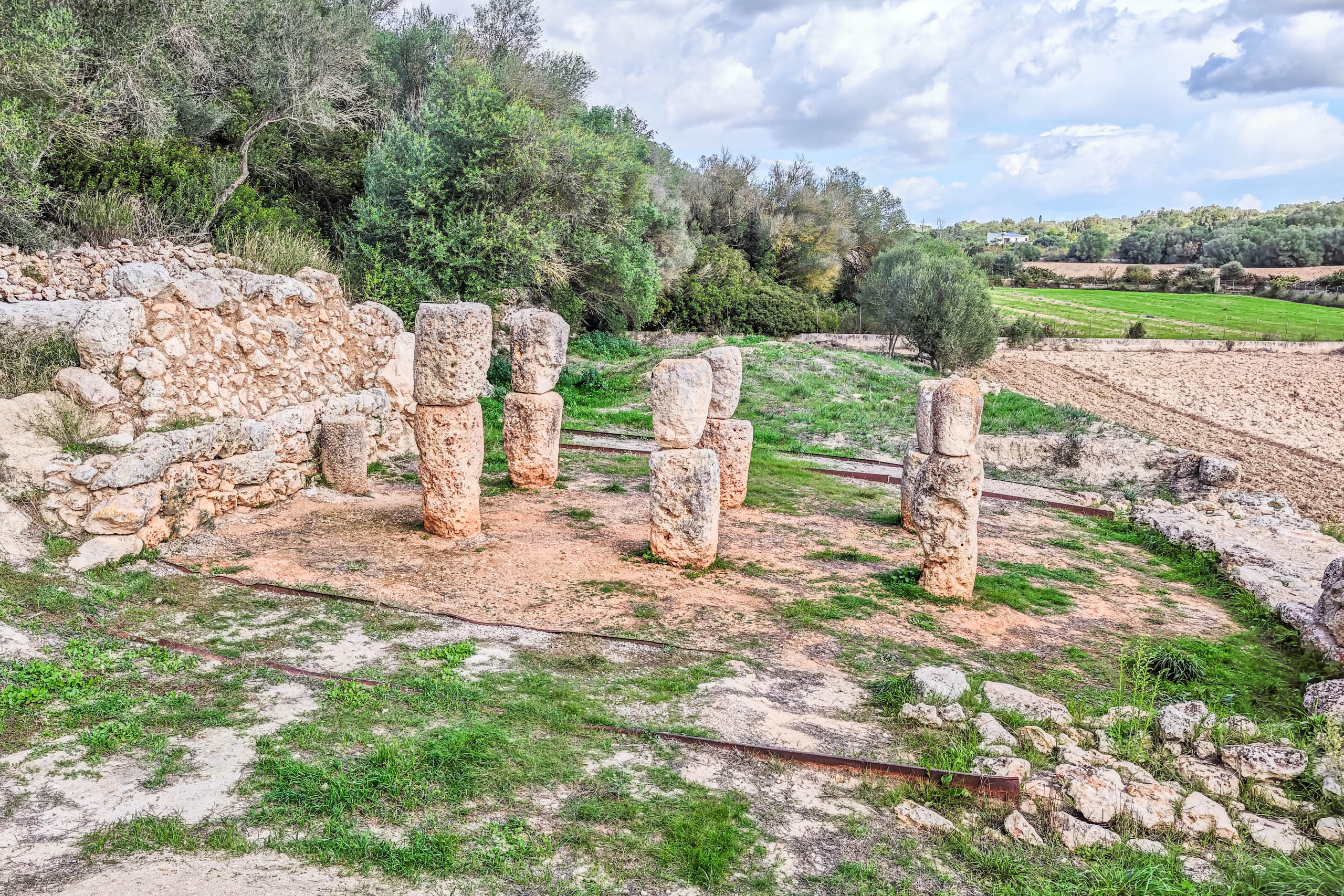
Son Corró
Son Corró is a small prehistoric sanctuary near Costitx. Six re-erected stone columns stand among low walls. The famous bronze bull heads of Costitx were found here; the originals are now in Madrid.
Son Corró
Son Corró in 30 seconds
The essentials at a glance
- Worth a visit?
- A short stop for anyone interested in Mallorca's prehistory
- Best for
- Anyone interested in Mallorca's prehistory
- Best months
- January–June, September–December
- Time to allow
- Allow roughly 15–30 minutes at the site
- Without a car
- Bus to Costitx, followed by a country road
- Parking
- Small unmade area beside the site, with limited space
- Highlight
- The stone columns and the discovery site of the Costitx bull heads
- Keep in mind
- A small ruin; the original bull heads are not on site
- Access
- Pushchairs: Limited access among the ruins · Wheelchairs: No reliably step-free circuit on surfaced paths
Get a feel for Mallorca. Find your kind of place.
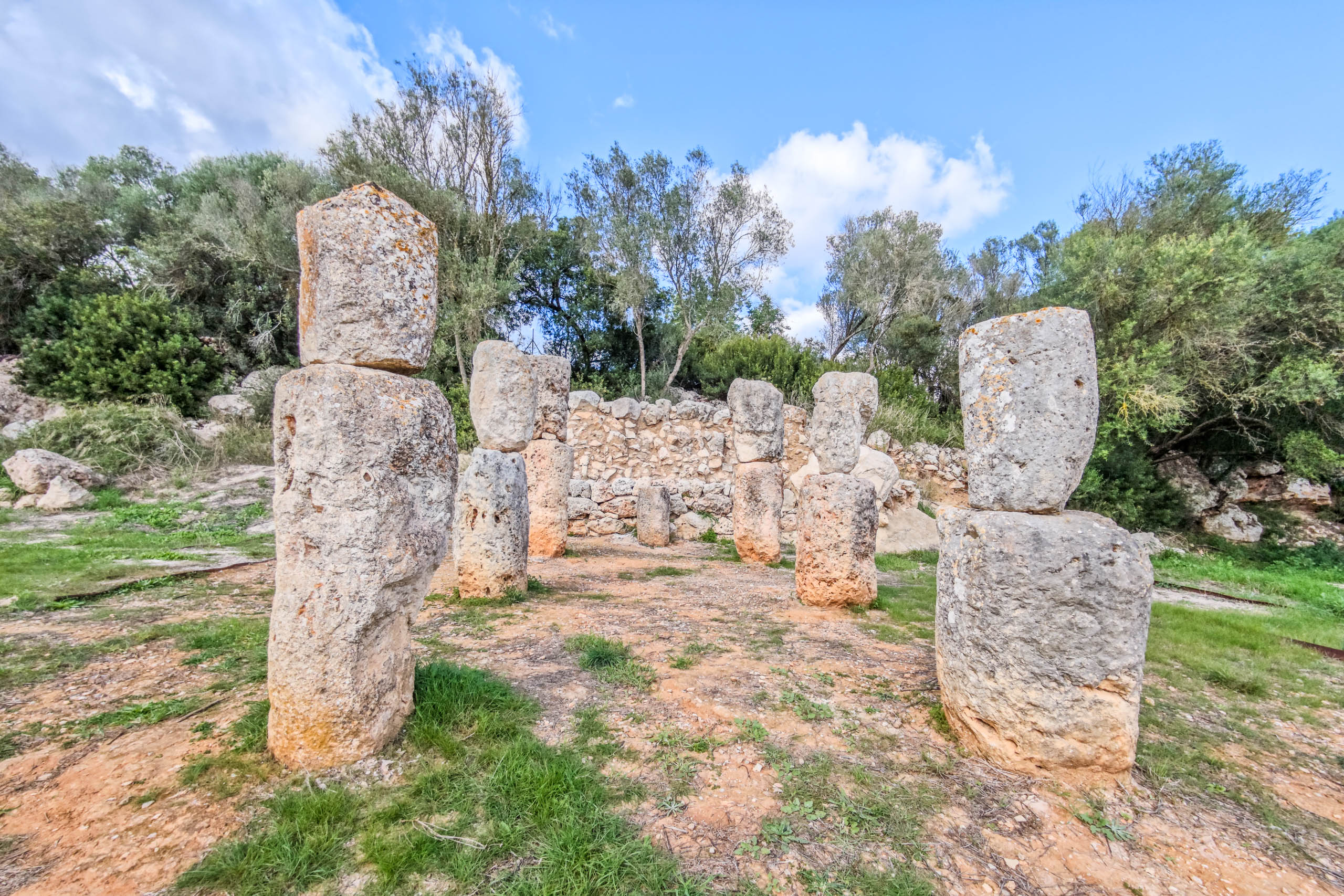
Heavy stone drums stacked to form columns.
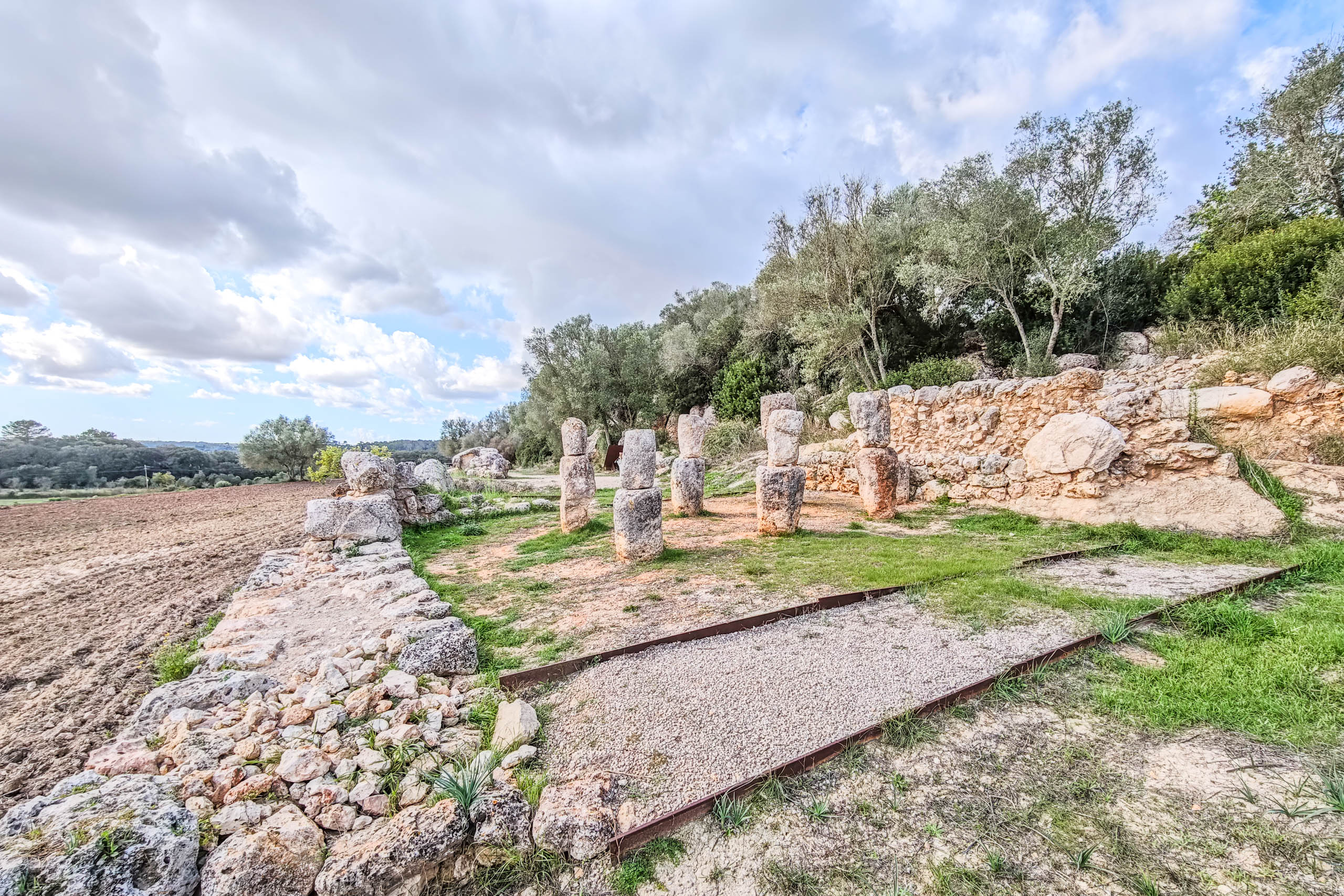
Low walls trace parts of the former sanctuary.
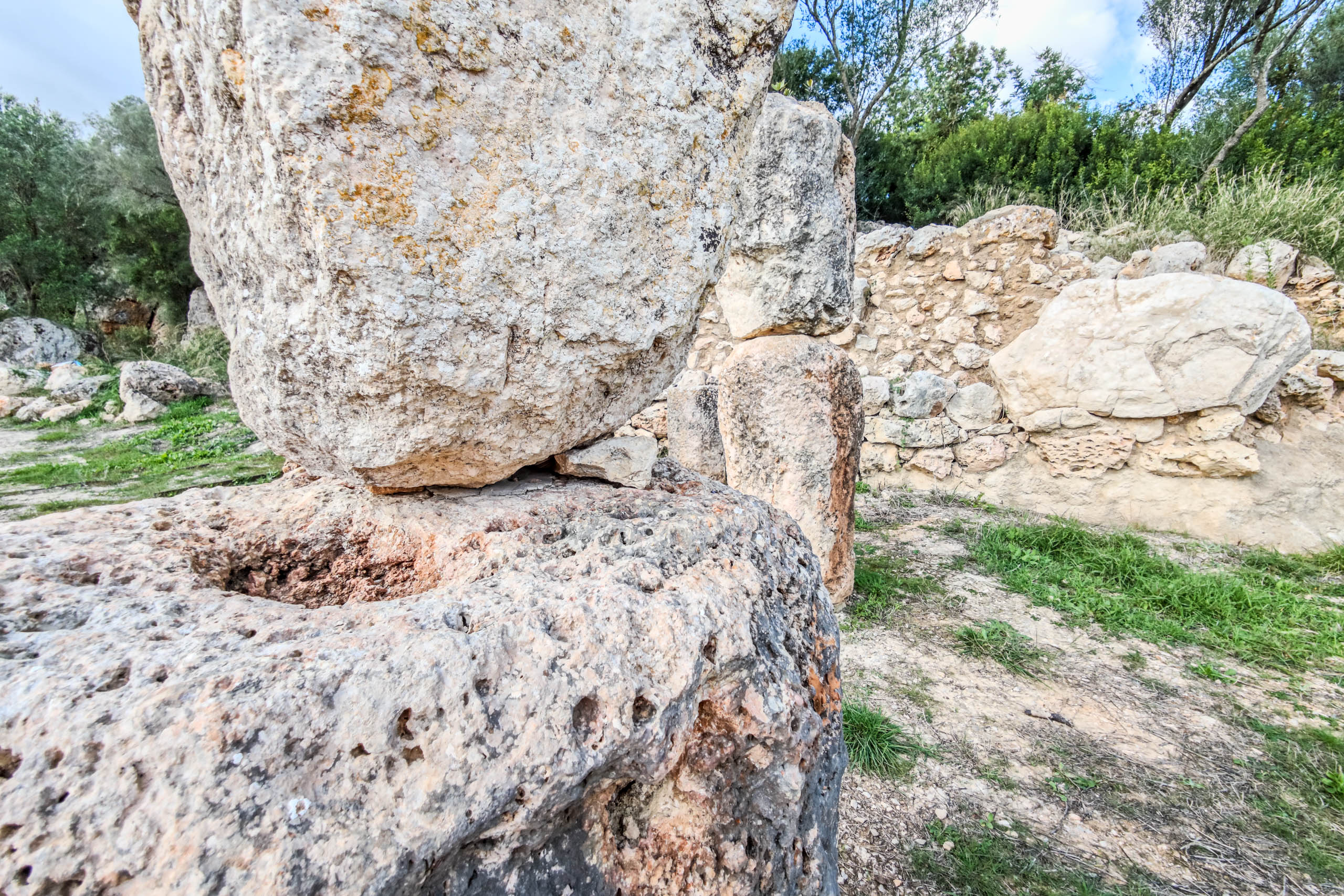
Close up, you can see the joints between the individual stones.
Getting to know Son Corró
Does Son Corró suit your plans?
What to expect and what to know before you visit.
Who it suits
- You are interested in Mallorca's prehistory
- You want a short stop on a drive through the Pla
- You enjoy small archaeological sites without elaborate displays
Things to bear in mind
- You expect a fully preserved building
- You want to see the original bronze bull heads
- You are looking for a full-day outing
Bus connections
Route 304 to Costitx
Region
Pla de Mallorca
Season guide for Son Corró
November Worth a visit
Quiet Check access before visiting
Worth visiting in January, February, March, April, May, June, September, October, November and December.
Location
Location of Son Corró
- Region
- Pla de Mallorca
- Municipality
- Costitx
- Hire car
- recommended
- Worth visiting for
- a brief stop
- Coordinates
- 39.6531,2.9334
What is Son Corró?
Son Corró is a prehistoric sanctuary near Costitx, in the heart of the Pla de Mallorca. Six re-erected stone columns now stand among low walls. The site is small and easy to take in. Do not expect a preserved temple building: these are remains from which only part of its former use can be understood.
Columns, walls and unanswered questions
The standing columns dominate the site, but they form part of a reconstruction. They were re-erected during restoration work in the 1990s. Their arrangement does not simply show an ancient interior preserved unchanged.
Their purpose is also open to archaeological debate. One interpretation sees them as roof supports; another links individual pillars to religious use. Keep that uncertainty in mind as you look around. You can examine the joints between the large stone drums closely without climbing on them.
The bull heads of Costitx
Son Corró became famous through three bronze cattle heads discovered here in the late 19th century. Usually called the bull heads of Costitx, they are described by the Museo Arqueológico Nacional as two bulls and a young female animal. The museum dates them to the 5th–3rd centuries BC, and places the sanctuary’s use between the 5th century BC and the Roman conquest.
The heads are associated with religious beliefs, but they do not provide a definitive explanation of every ritual. Nor were the columns necessarily arranged exactly as they stand today.
The originals are in Madrid, at the Museo Arqueológico Nacional. The local council lists replicas at the Casal de Cultura in Costitx. If you would like to see them there, check visiting arrangements first. The original finds are not displayed at the ruins.
Getting there and planning a short visit
Son Corró is beside the Ma-3121, around 1.5 kilometres from Costitx. The small unmade parking area is not a large visitor car park. It was empty when I visited, but that does not mean it always will be.
I would allow 15–30 minutes for the site. Sturdy shoes help on the stony ground. In summer, come early and bring water. The council is working to preserve the site, so follow any barriers and notices when you arrive.
Without a car, you can reach Costitx on TIB bus route 304. The onward route follows a country road, not a guaranteed walking route with a continuous pavement.
Places to combine with your visit
Costitx is a natural next stop. To continue exploring archaeological sites, visit the talayot of Son Fred, where you can see the surviving interior and its central pillar. Sencelles and Sineu also fit well into a drive through the Pla. Son Corró suits anyone happy to spend time looking at a few ancient stones. Its importance lies more in its finds and unresolved questions than in the size of the ruins.
Sources: Costitx council — places of interest, Museo Arqueológico Nacional — bull heads of Costitx, Museum — dating the bronze sculptures and Costitx council — conservation of Son Corró.
A coffee in nearby Costitx
The small centre of Costitx is a good place for a short wander through the lanes and a coffee break. Friedhelm’s photographs show the church square and the surrounding houses.
Photographs
Son Corró in Mallorca
How much time do you have?
Things to do in Son Corró
Three hours
A short stop at Son Corró, followed by a walk around Costitx.
Half a day
Combine Son Corró and Costitx with a break in Sencelles.
A full day
Include it in a drive through the Pla, perhaps with Costitx, Sencelles and Sineu.
On a rainy day
The open ruins offer no shelter. Postpone your visit in heavy rain.
Practical details
- Parking
- Small unmade area beside the site, with limited space
- Public transport
- TIB 304 to Costitx; check the timetable and onward route beforehand
- Time to allow
- Allow roughly 15–30 minutes at the site
- Good to know
- Bring water and sun protection. Watch for uneven ground and do not climb on the walls or columns. Follow signs, barriers and any restrictions due to work on the site.
- Bus
- Route 304 to Costitx, then along the Ma-3121
- Access
- Uneven, stony ground among the remaining walls · Pushchairs: Limited access among the ruins · Wheelchairs: No reliably step-free circuit on surfaced paths
- What you will not find
- The original bronze bull heads · A fully preserved temple building · A surfaced route through the ruins
- Coordinates
- 39.6531,2.9334 Google Maps Apple Maps
Within reach
Places to visit
Nearby
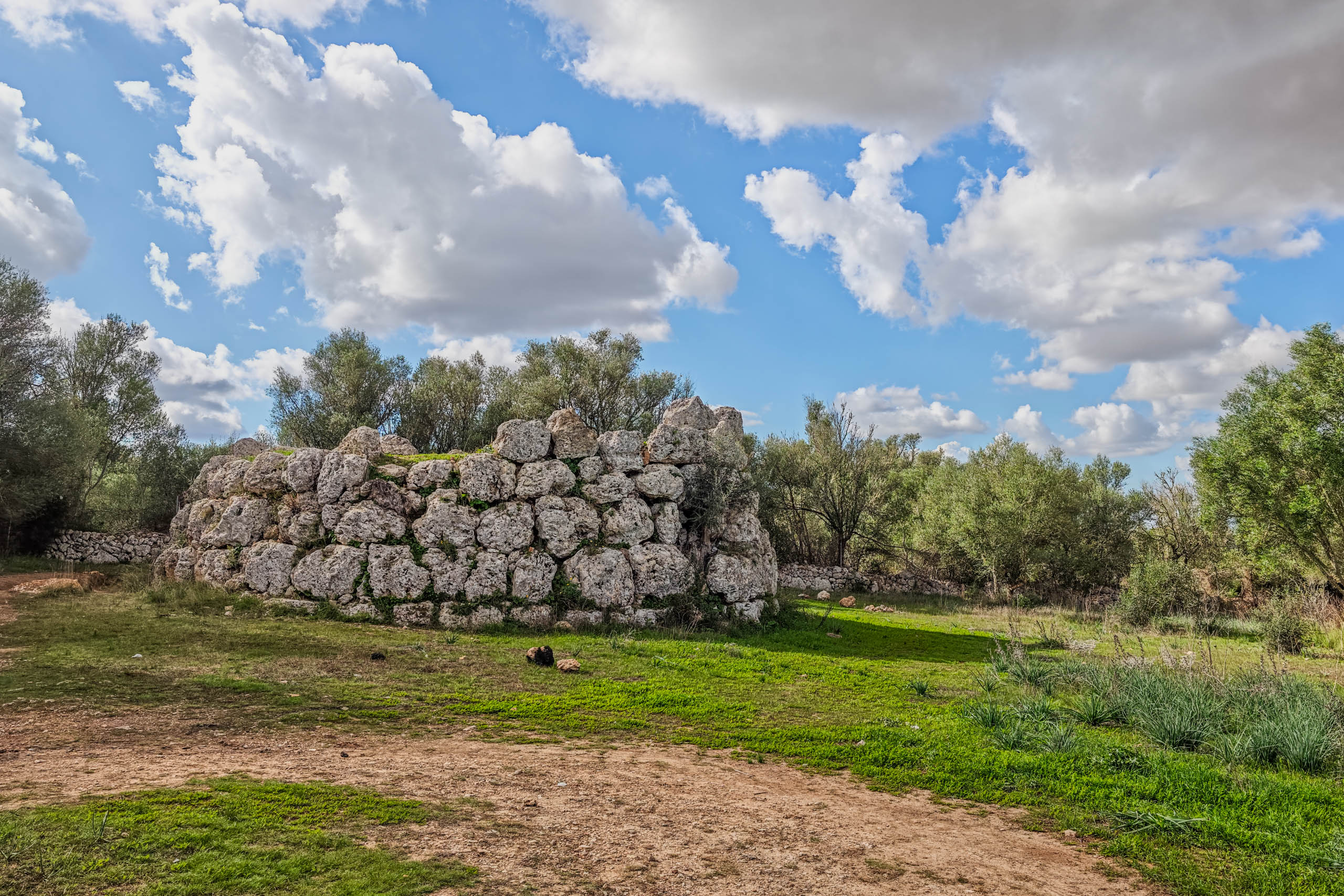
Son Fred is a well-preserved talayot near Sencelles, a round tower built from enormous stone blocks. Duck through …
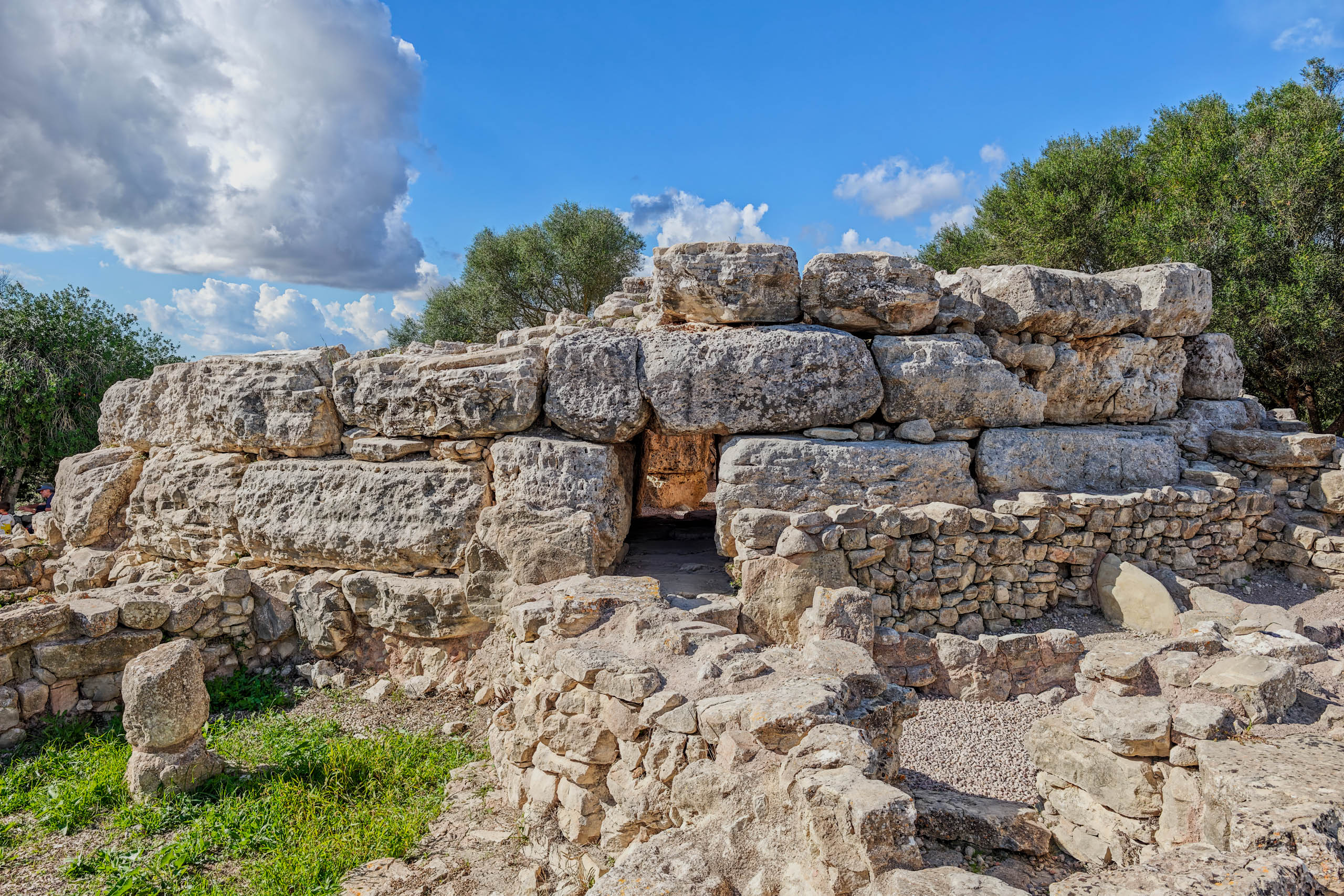
On a low hill near Montuïri are the remains of a settlement founded almost 3,000 years ago. Massive talayots, low …

A family glassworks dating back to 1719, beside the road to Manacor in a castle-like building. Watch glassblowers …
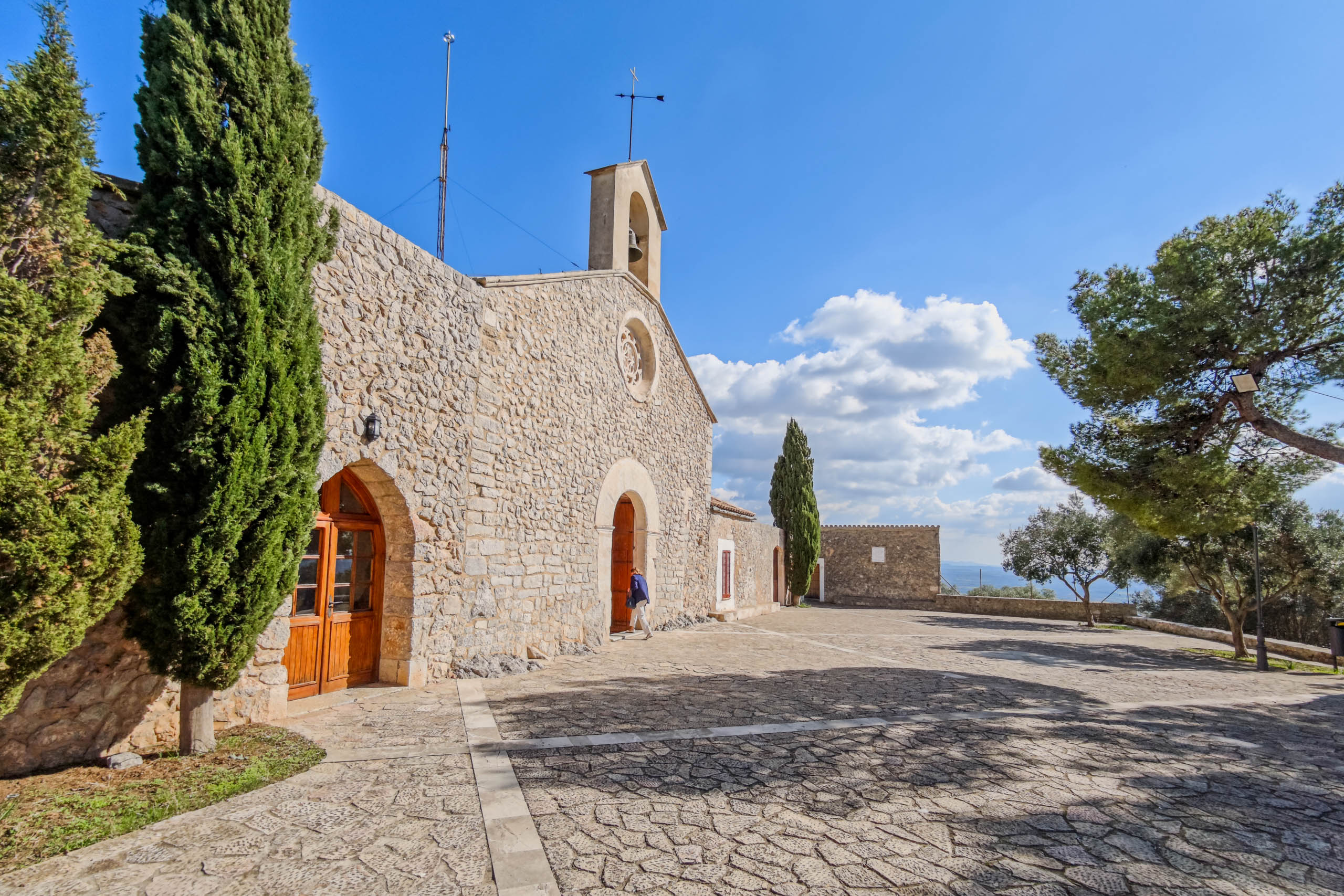
A small chapel and a wide view across Mallorca. Santa Magdalena stands on a hill near Inca. The winding climb is …

A small pilgrimage church on a hill above Sant Joan, reached by a broad stone staircase. There is a well, shade …

A pilgrimage church on a rocky ledge above Mancor de la Vall, documented since 1275. The terrace looks across much …
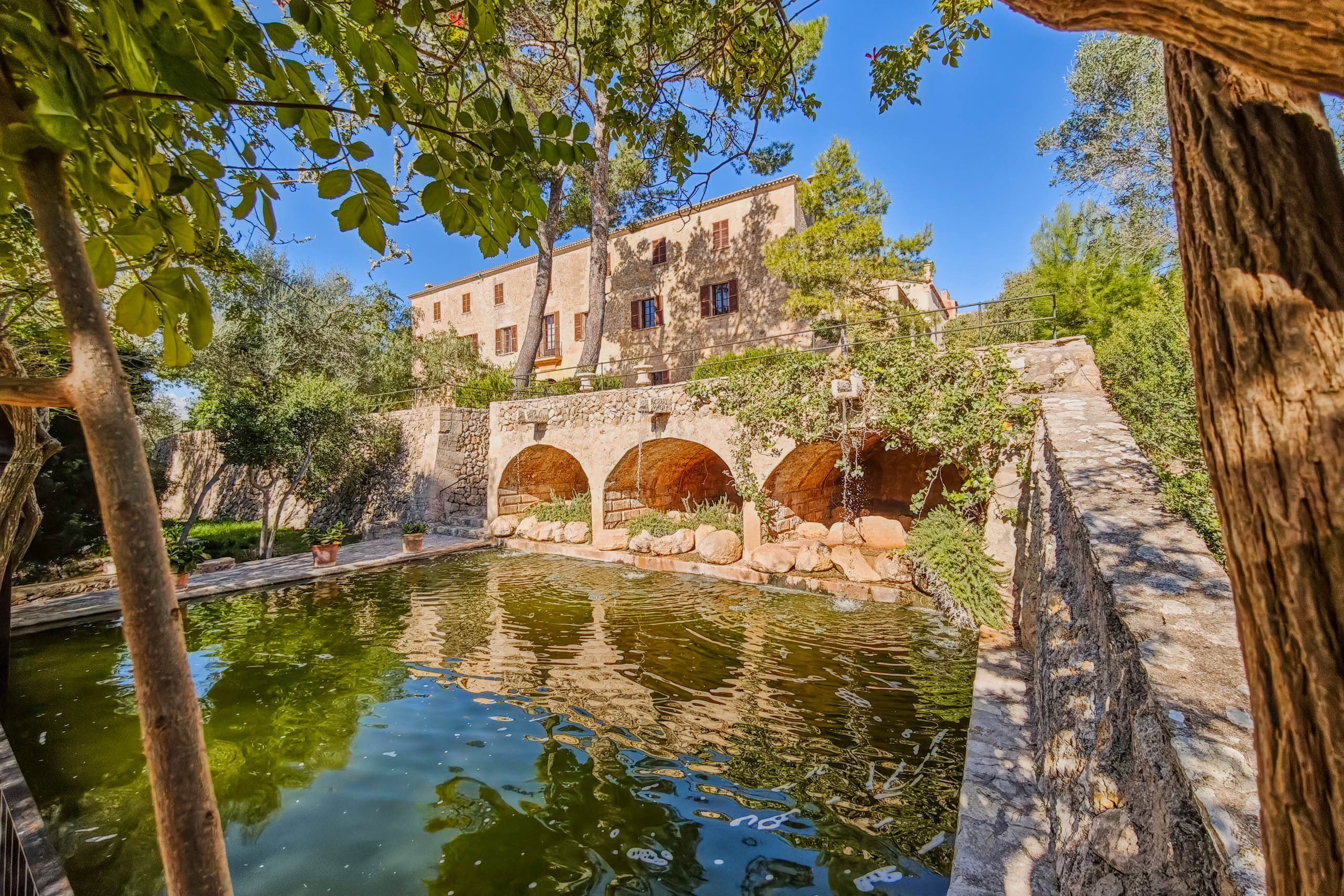
An old country estate near Sant Joan where it’s easy to stay longer than planned. Behind the substantial walls are …

The middle of the three religious houses on Puig de Randa, built beneath an overhanging cliff that extends right …
Distances without a driving time are measured in a straight line. The road journey can be much longer; known driving times are shown alongside.
Places to stay within reach
Explore from here
Your questions answered
Your questions about Son Corró
What is Son Corró?
A prehistoric sanctuary near Costitx. You can see low walls and six re-erected stone columns. The site is particularly known for the bronze bull heads discovered here.
Have the columns remained standing since ancient times?
No. The columns you see today were re-erected during restoration. Their original arrangement and purpose are not fully understood. The present layout is a reconstruction.
Where can you see the bull heads of Costitx?
The originals belong to the Museo Arqueológico Nacional in Madrid. According to the council, replicas are kept in Costitx's Casal de Cultura. Check visiting arrangements before going to see them.
How long does a visit take?
Allow around 15–30 minutes to look around the small site and its stone columns. Stay longer if you want to explore the archaeological questions in more detail.
Can you reach Son Corró by bus?
TIB route 304 serves Costitx. The sanctuary is outside the village on the Ma-3121. Check the current timetable and the onward route beforehand; there is no guarantee of a continuous pavement to the site.
Practical questions
When is the best time to visit Son Corró?
Recommended months: January, February, March, April, May, June, September, October, November, December. Choose a dry day and follow any signs about works or access.
Is Son Corró worth visiting in July and August?
July: worth considering with some reservations. Usually quiet. It can get very hot. Visit in the morning if possible and bring water and sun protection. August: worth considering with some reservations. Usually quiet. It can get very hot. Visit in the morning if possible and bring water and sun protection.
Do I need a hire car for Son Corró?
A car is useful Route 304 to Costitx, then along the Ma-3121
Where can I park in Son Corró?
Small unmade area beside the site, with limited space
Can I visit Son Corró with a pushchair or wheelchair?
Uneven, stony ground among the remaining walls Pushchairs: Limited access among the ruins Wheelchairs: No reliably step-free circuit on surfaced paths
Words and photographs: Friedhelm Fischer. Exploring Mallorca since 2013 — by bike, on foot and with a camera.