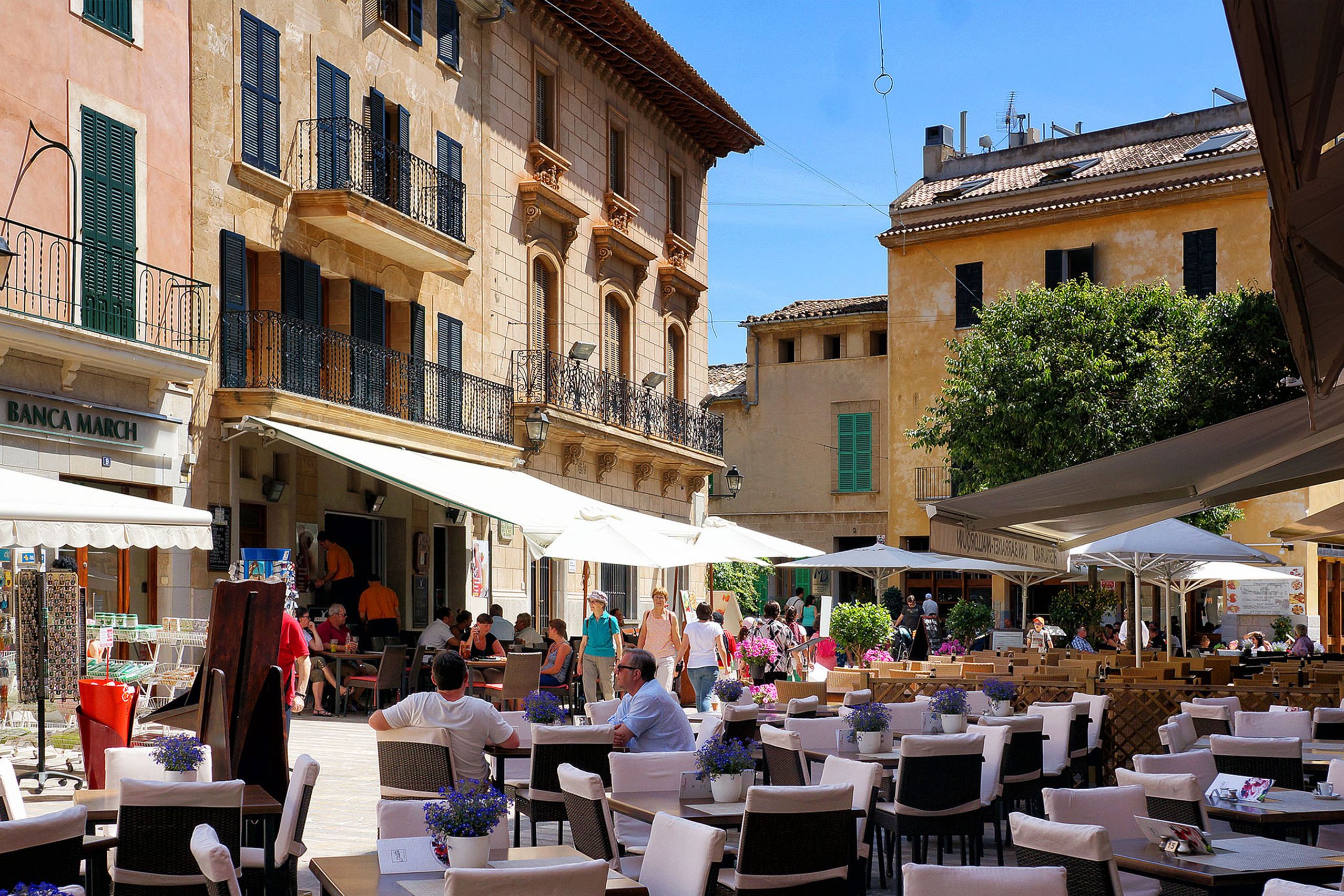
Mallorca’s best-preserved medieval town walls enclose lanes of honey-coloured sandstone, while the Roman remains of Pollentia lie just outside. The old town is car-free, and twice a week it hosts one of the island’s largest markets.
Alcúdia
Alcúdia in 30 seconds
The essentials at a glance
- Worth visiting for
- A day trip
- Best for
- You enjoy history and want to see Roman and medieval remains in one morning.
- Best months
- January–May, October–December
- Time to allow
- Three hours for the old town, half a day with Pollentia, or a full day including the peninsula or nature park.
- Without a car
- Hire car recommended
- Parking
- The old town is car-free. Use the car parks around the walls, which fill from about nine on market days. The largest is on Avinguda dels Prínceps d’Espanya.
- Keep in mind
- For swimming, head to Port d’Alcúdia, around 3 km away.
- Access
- Pushchairs: Manageable in the main lanes, but not on the wall walk. · Wheelchairs: Main routes are accessible; the wall walk and side lanes are not.
Get a feel for Mallorca. Find your kind of place.
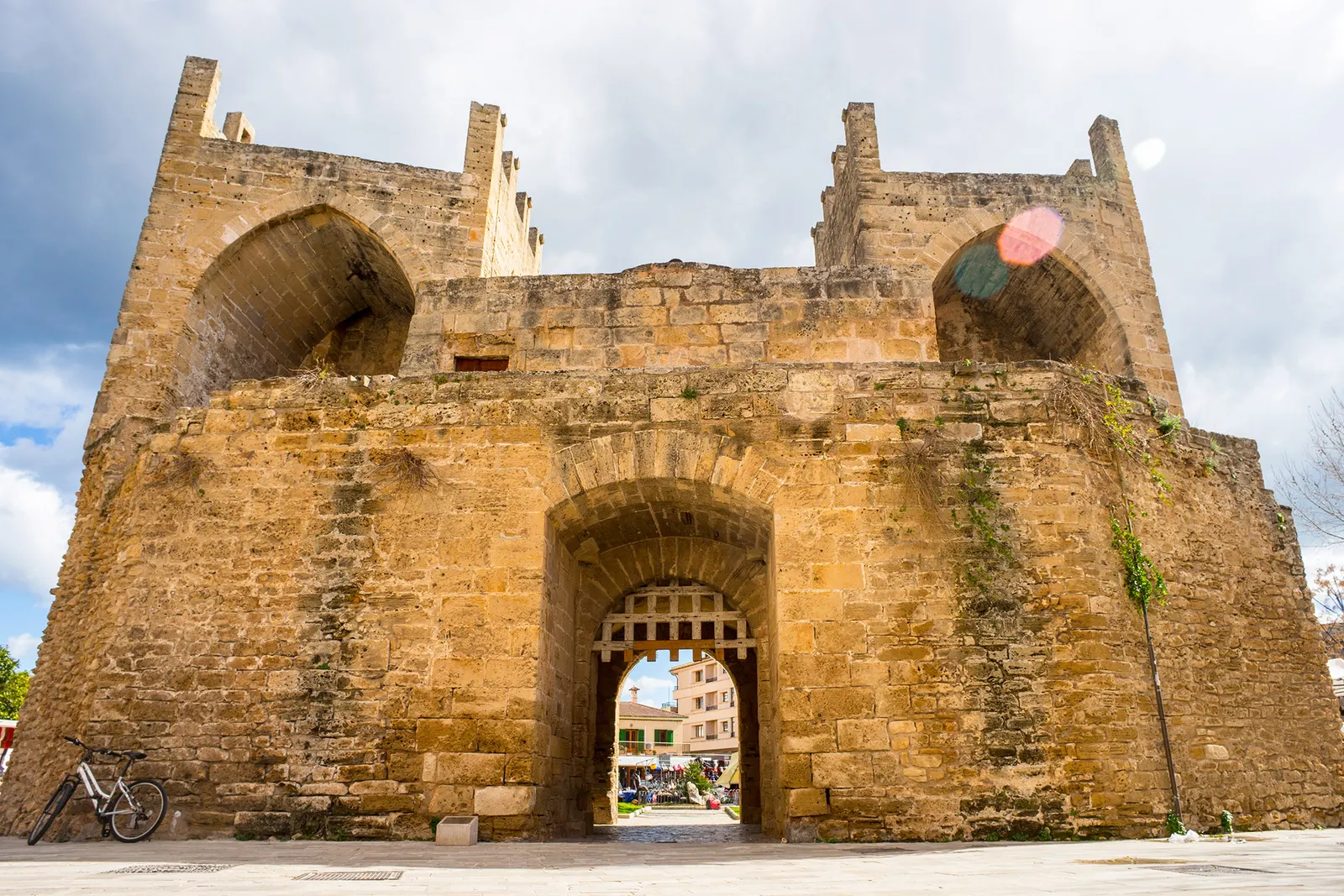
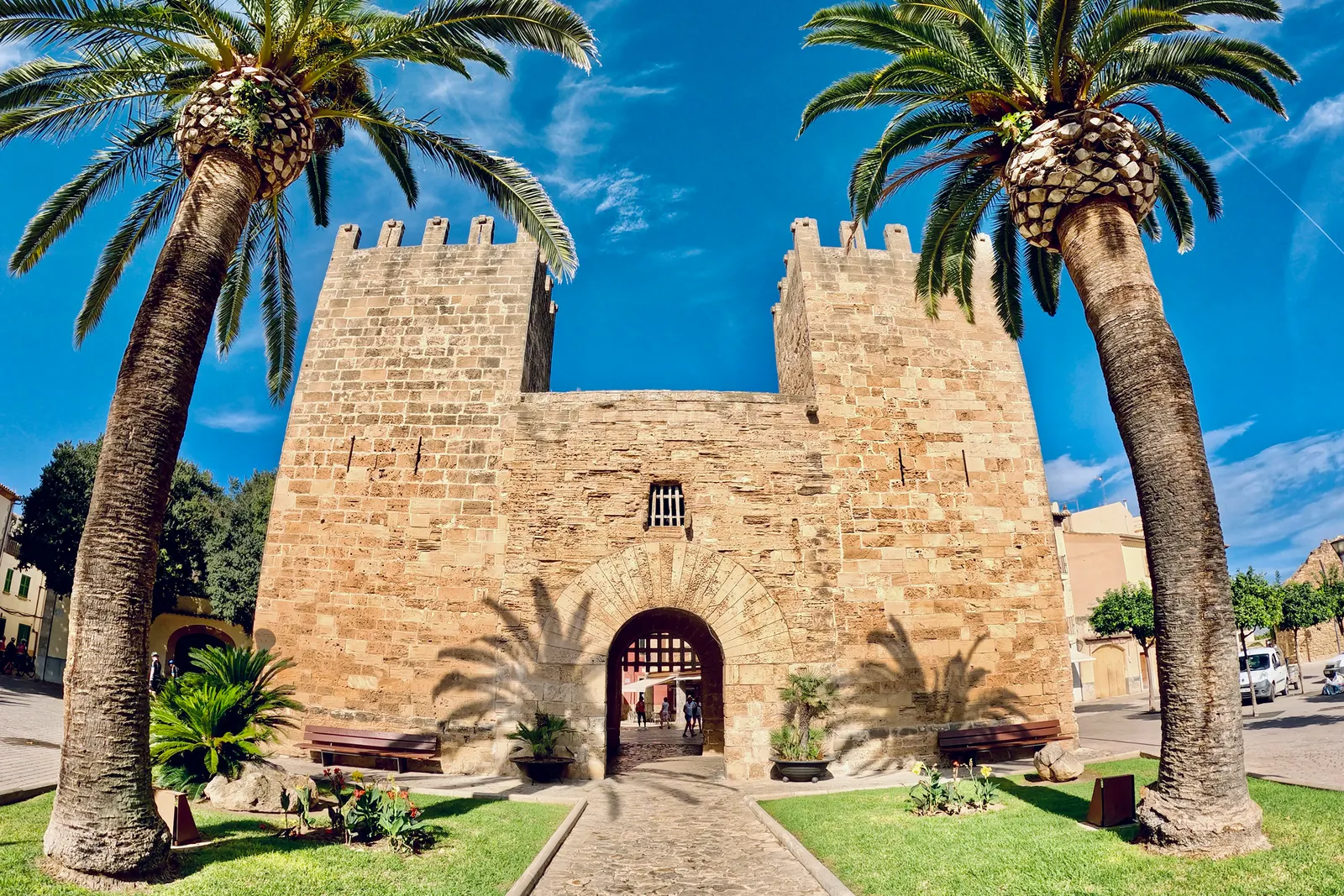
From outside, the walls look like a fortress. Pass through the arch and you’re in the town.
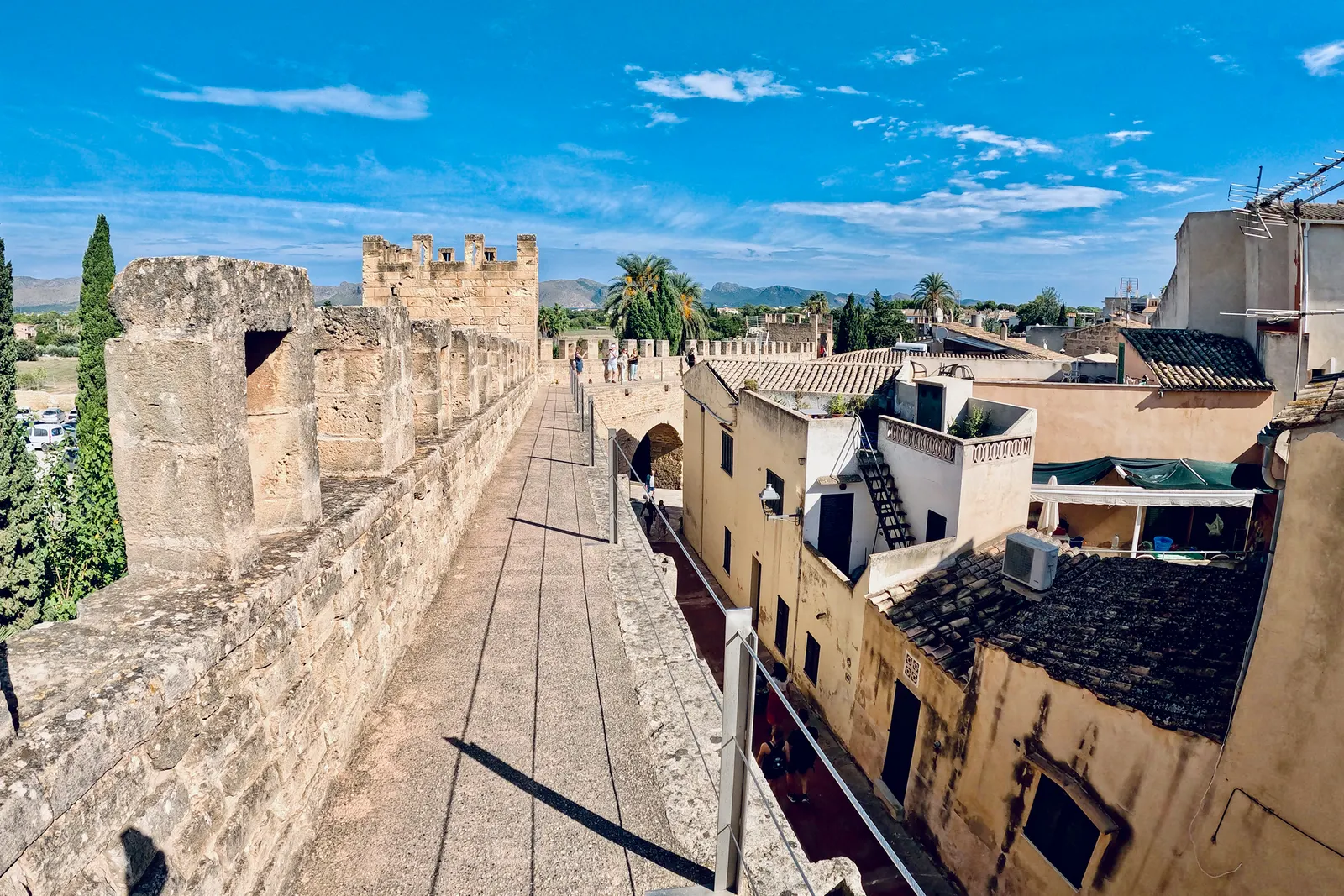
Parts of the walls are open to walkers, with views towards the Tramuntana.
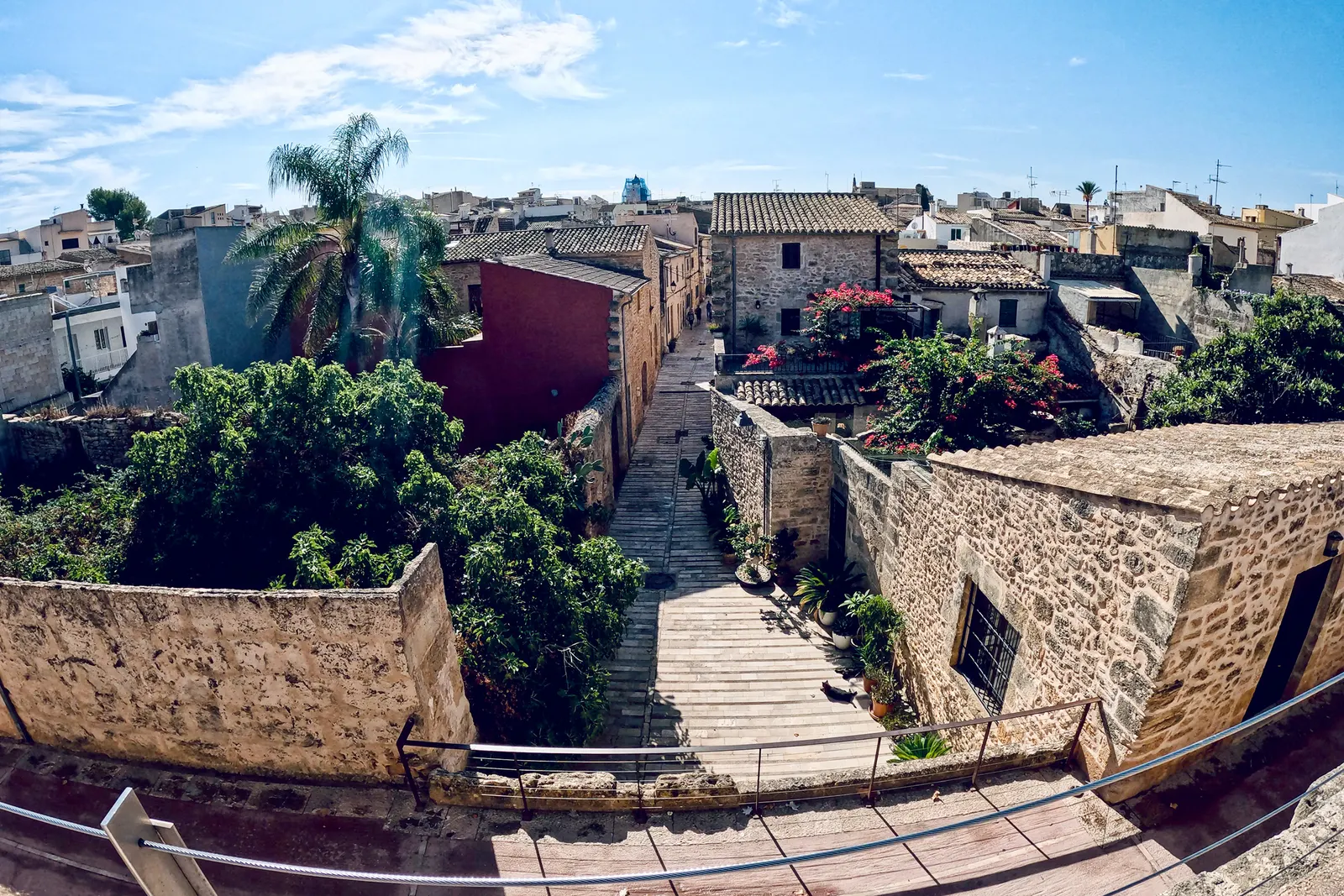
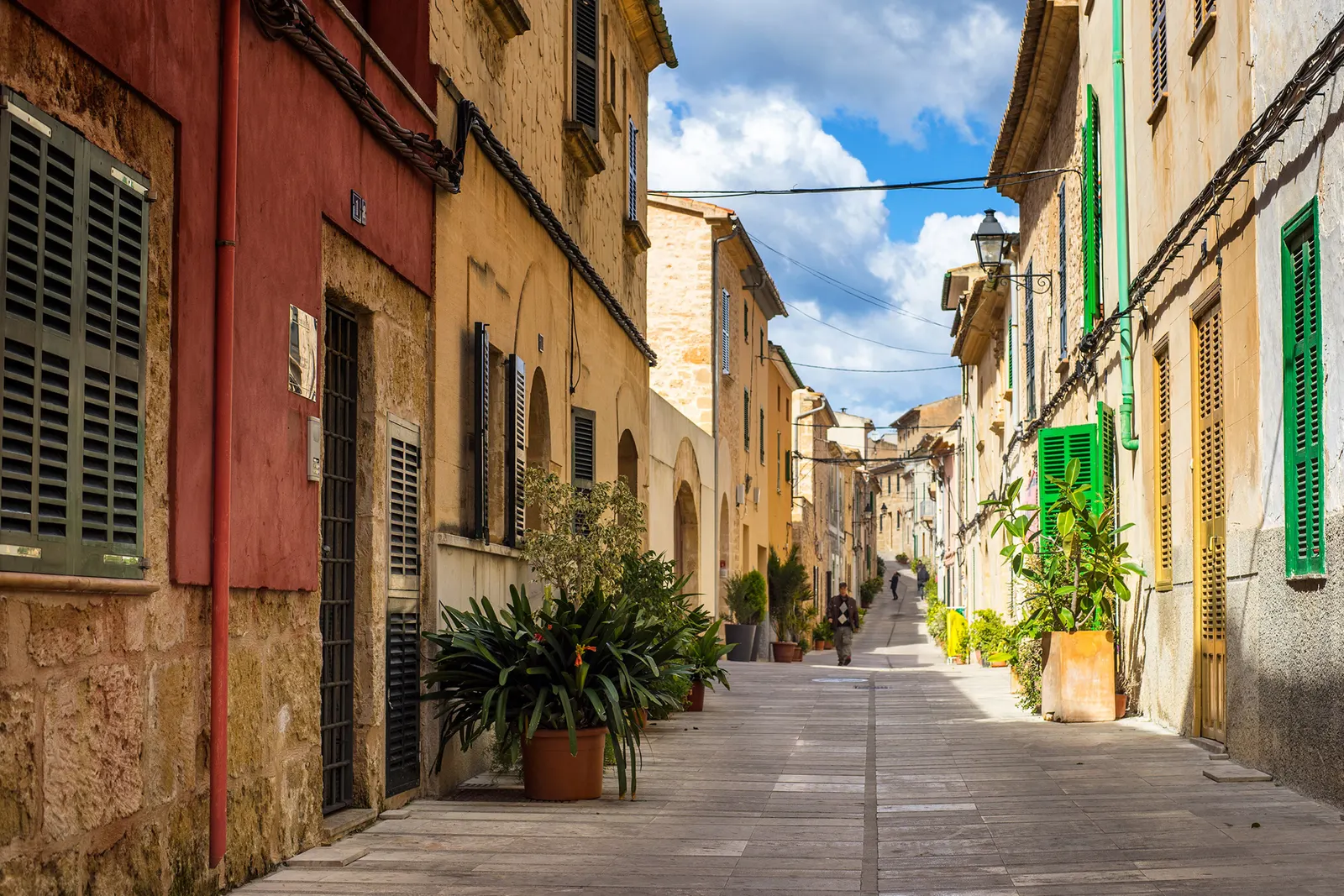
From the walls, you can look into the gardens behind the houses.
Getting to know Alcúdia
Does Alcúdia suit your plans?
What to expect and what to know before you visit.
Who it suits
- You enjoy history and want to see Roman and medieval remains in one morning.
- You like exploring on foot; the old town is car-free.
- You enjoy markets and can visit on Tuesday or Sunday.
- You’re staying in the north and want a town with more than hotels.
- You’re happy to arrive early or visit in the evening.
Things to bear in mind
- For swimming, head to Port d’Alcúdia, around 3 km away.
- Quiet is hard to find in summer between eleven and five.
- Cobbled streets can be difficult if you have limited mobility.
- Some restaurants close in January and February.
Drive from the airport
55 minutes
55 km
Bus connections
TIB buses link Alcúdia with Palma and the northern resorts
Region
Raiguer
Nearest beach
Port d'Alcúdia
2 km
Elevation
26 m
above sea level
Markets
Tuesday & Sunday
Season guide for Alcúdia
November Worth a visit
A more relaxed town and a particularly pleasant time to walk the walls.
Quiet Open
Worth visiting in January, February, March, April, May, October, November and December. Less suitable in July and August.
Location
Location of Alcúdia
- Region
- Raiguer
- Population
- 20,500
- Elevation
- 26 m above sea level
- Airport
- 55 km , around 55 minutes
- Hire car
- recommended
- Worth visiting for
- a day trip
- Coordinates
- 39.8536,3.1214
How the town developed
The Roman remains of Pollentia lie just outside Alcúdia’s old town. The city’s origins are associated with the Roman conquest of 123 BC, although the earliest securely identified Roman foundation remains in the forum date to around 70 BC. Its position between two large bays helped it become one of Roman Mallorca’s most important cities. The ruins can still be visited today.
Finds from nearby burial caves, including Cova de la Murada close to the town walls, show that people lived in the area long before the Romans.
After the Muslim conquest in 902/903, an estate called Alcúdia, meaning roughly the hill, developed on and beside the older remains. Jaume II established the parish in 1298, and work began on the church and walls, completed by 1362. Alcúdia received city status in 1523, under Charles I of Spain, also known as Emperor Charles V.
Two circuits of walls
Repeated corsair raids led to a second circuit of defences, completed by 1660. The surviving fortifications are Mallorca’s best-preserved medieval town walls. Two gates remain: Porta del Moll and Porta de Sant Sebastià.
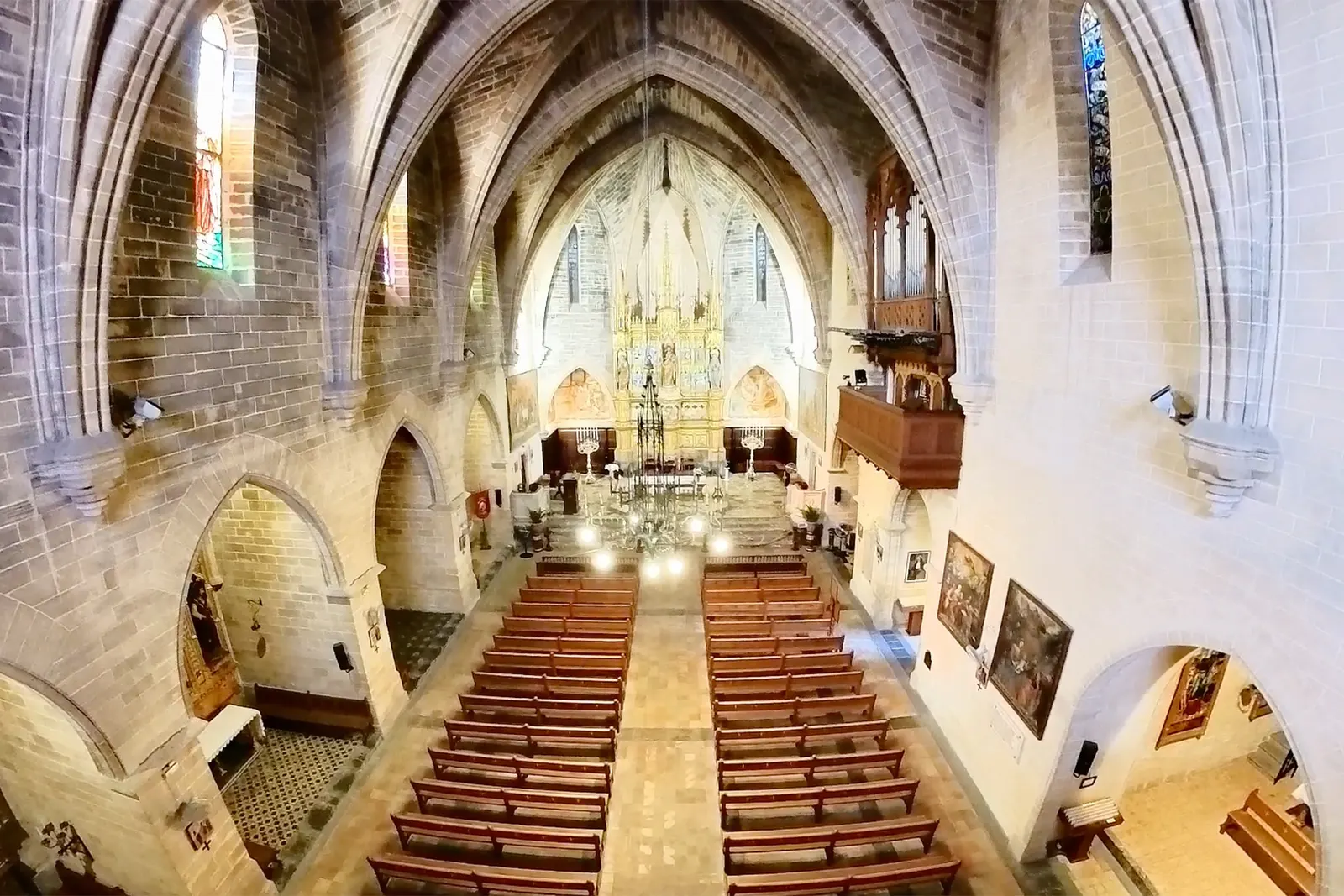
The town later lost economic importance. Epidemics and plague reduced its population, and buildings fell into disrepair. Even the 14th-century parish church of Sant Jaume collapsed in 1870, before being rebuilt twelve years later.
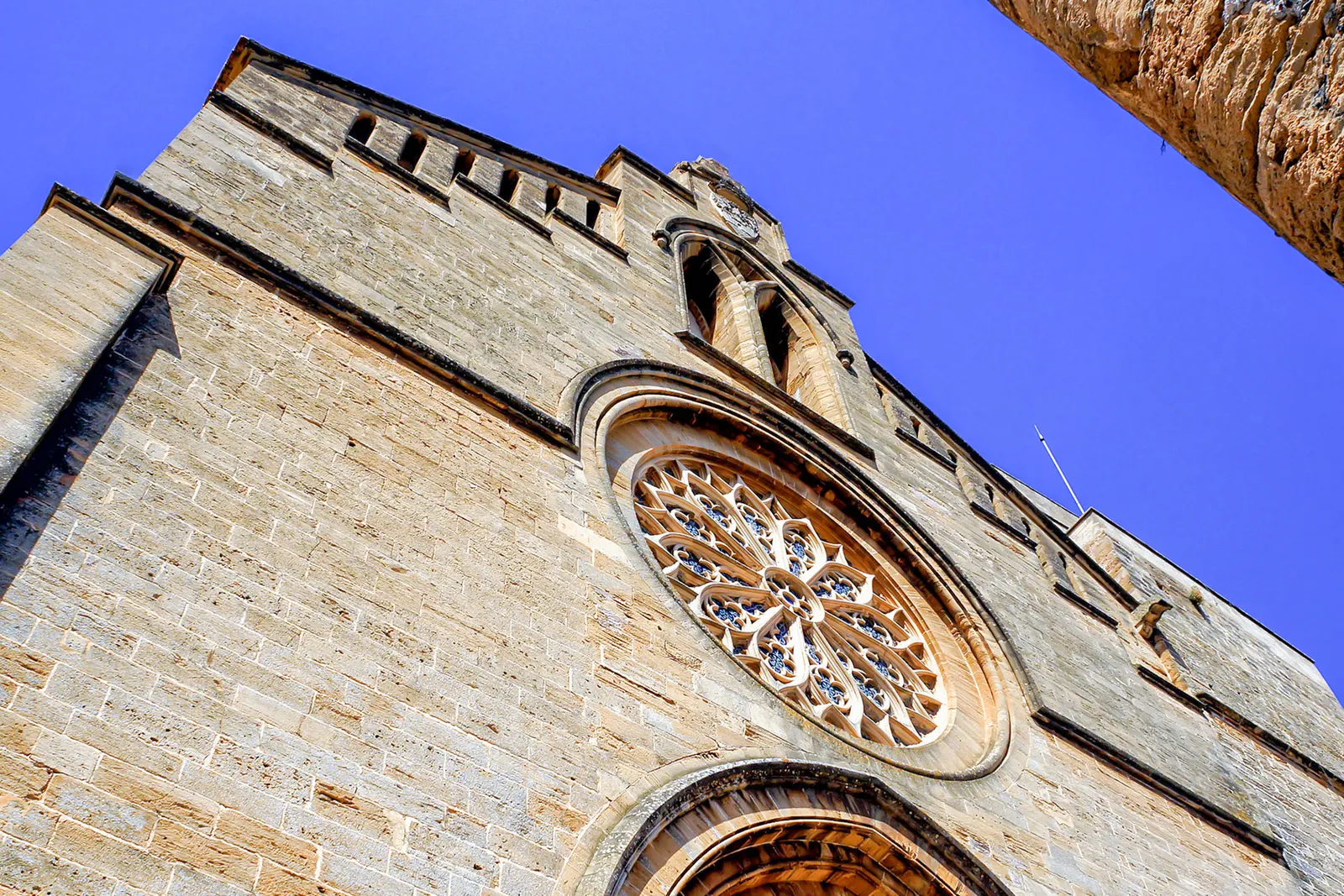
Walking through the old town
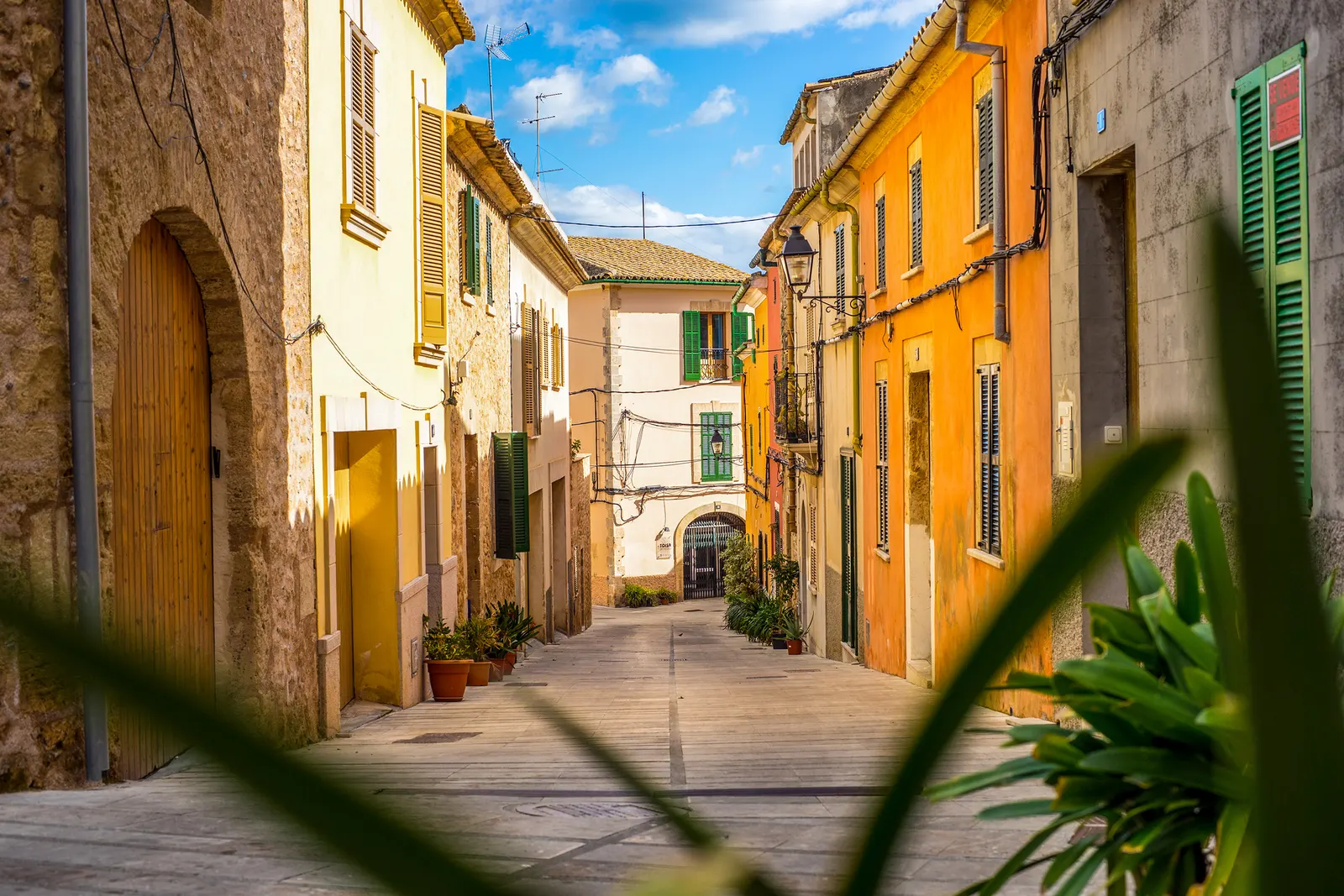
Step through either gate and there are small lanes to explore without worrying about cars. In the main season, other visitors are more likely to slow you down.
You can walk along parts of the walls. The accessible stretches of the battlements offer views over the rooftops towards the Serra de Tramuntana and give you a clearer sense of how the town was laid out.
The market
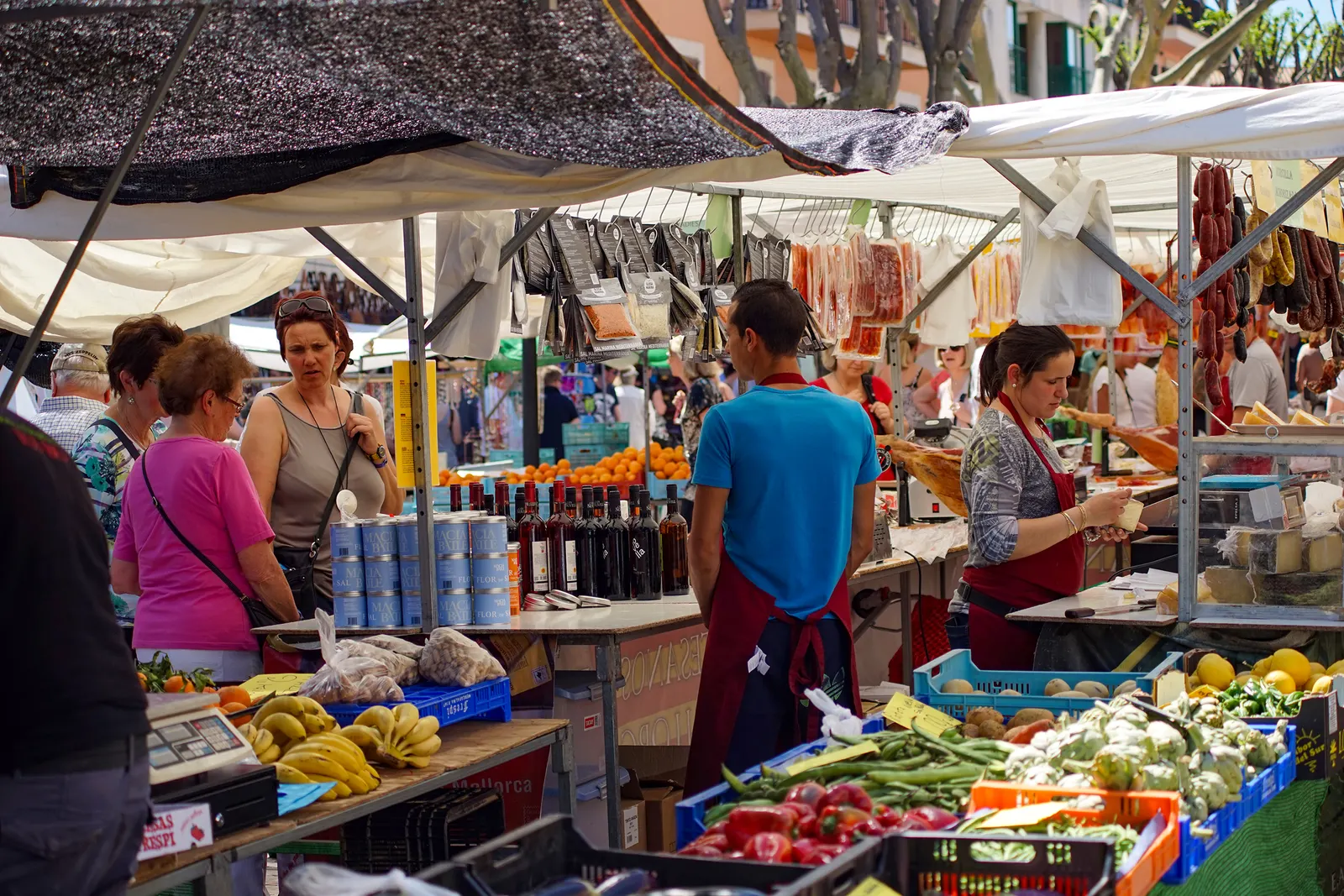
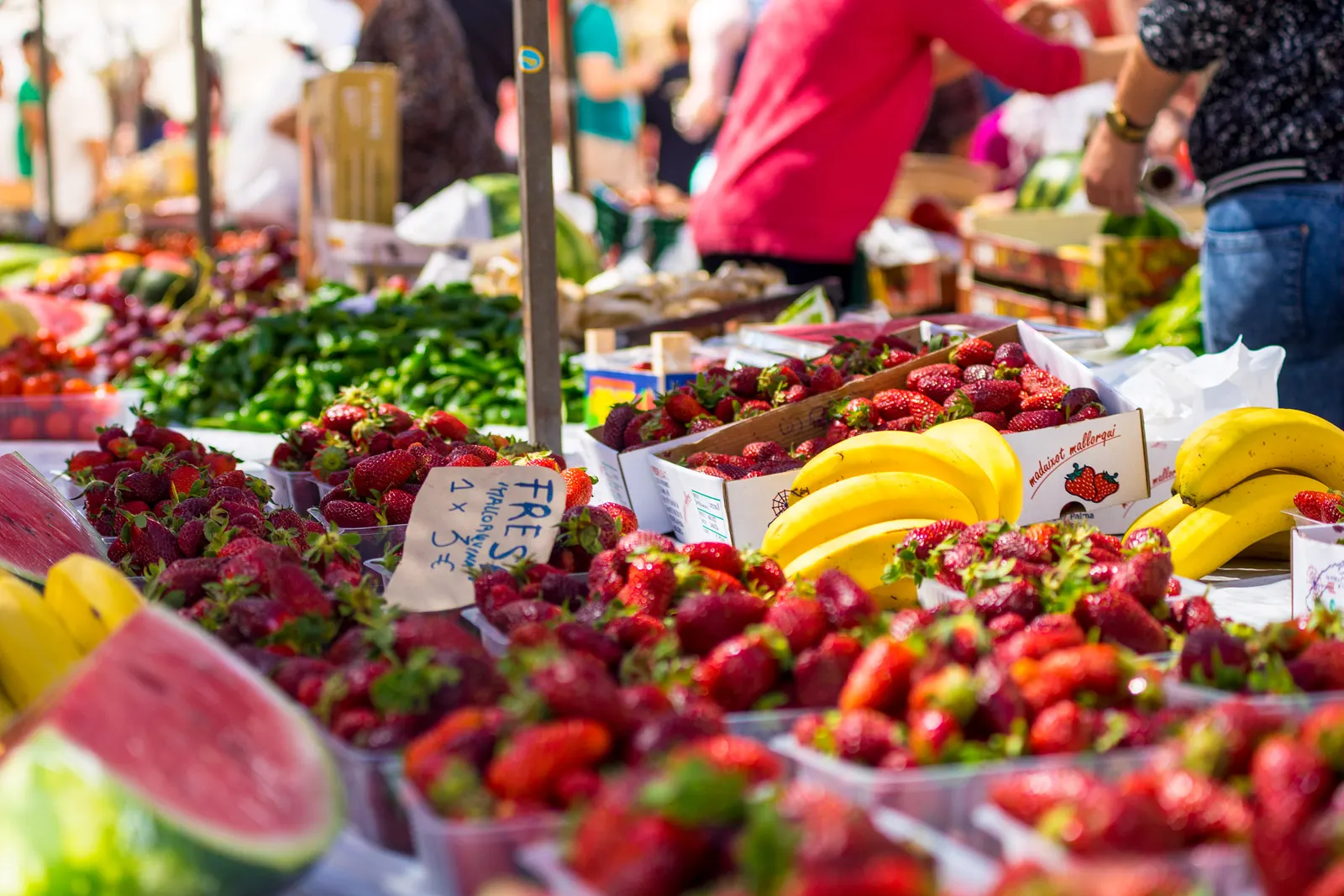
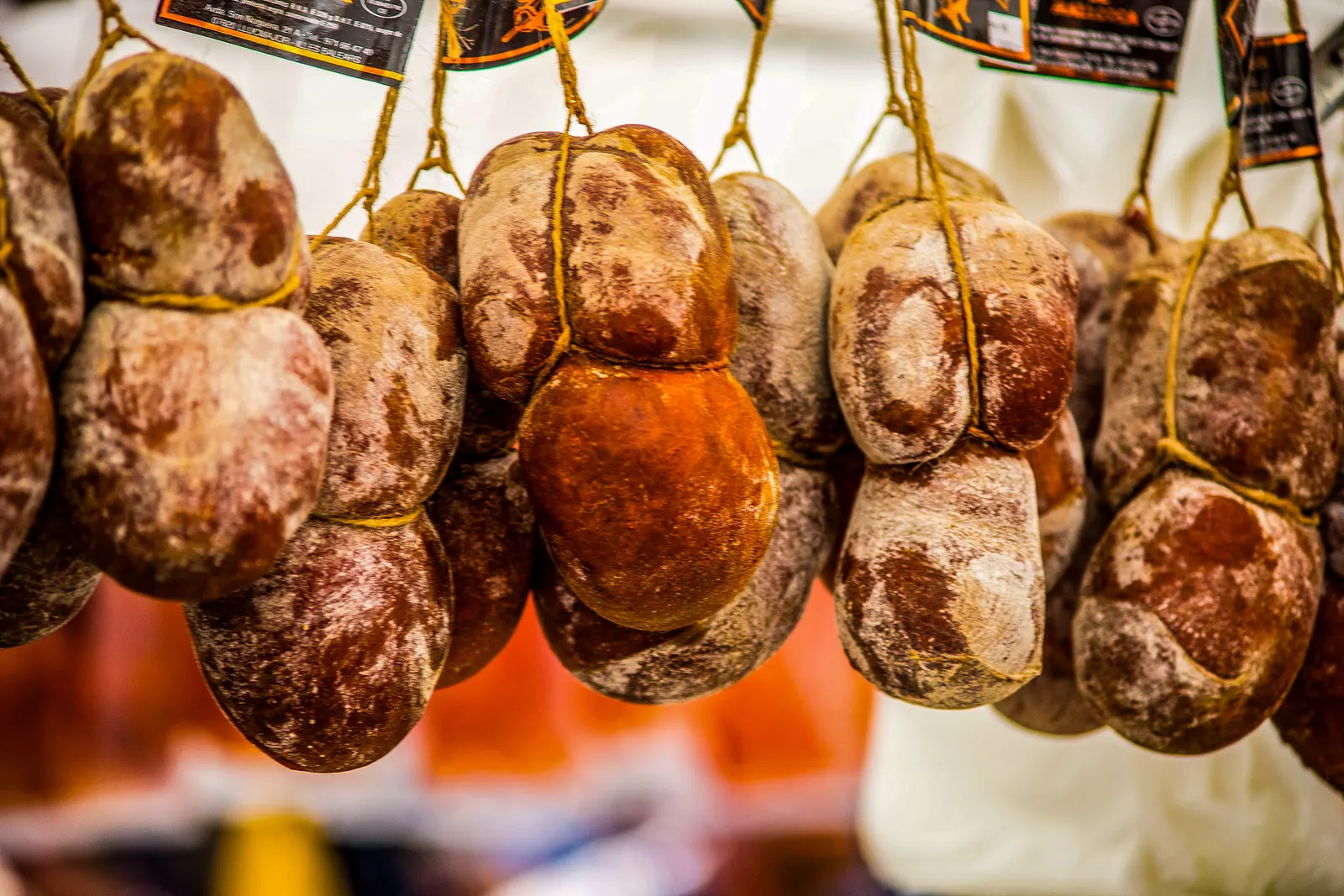
The market runs on Tuesday and Sunday, 8.30 am–1.30 pm. Its atmosphere and range make it one of the island’s major markets: local fruit and vegetables, sobrassada, Menorcan cheese, olives and baked goods, as well as leather goods, pottery and textiles.
Some stalls stand in the lanes, others beside the Roman remains. Come early or out of season if you can. During the main holiday months, day-trippers from Port d’Alcúdia and Port de Pollença tend to arrive together.
Places you might miss
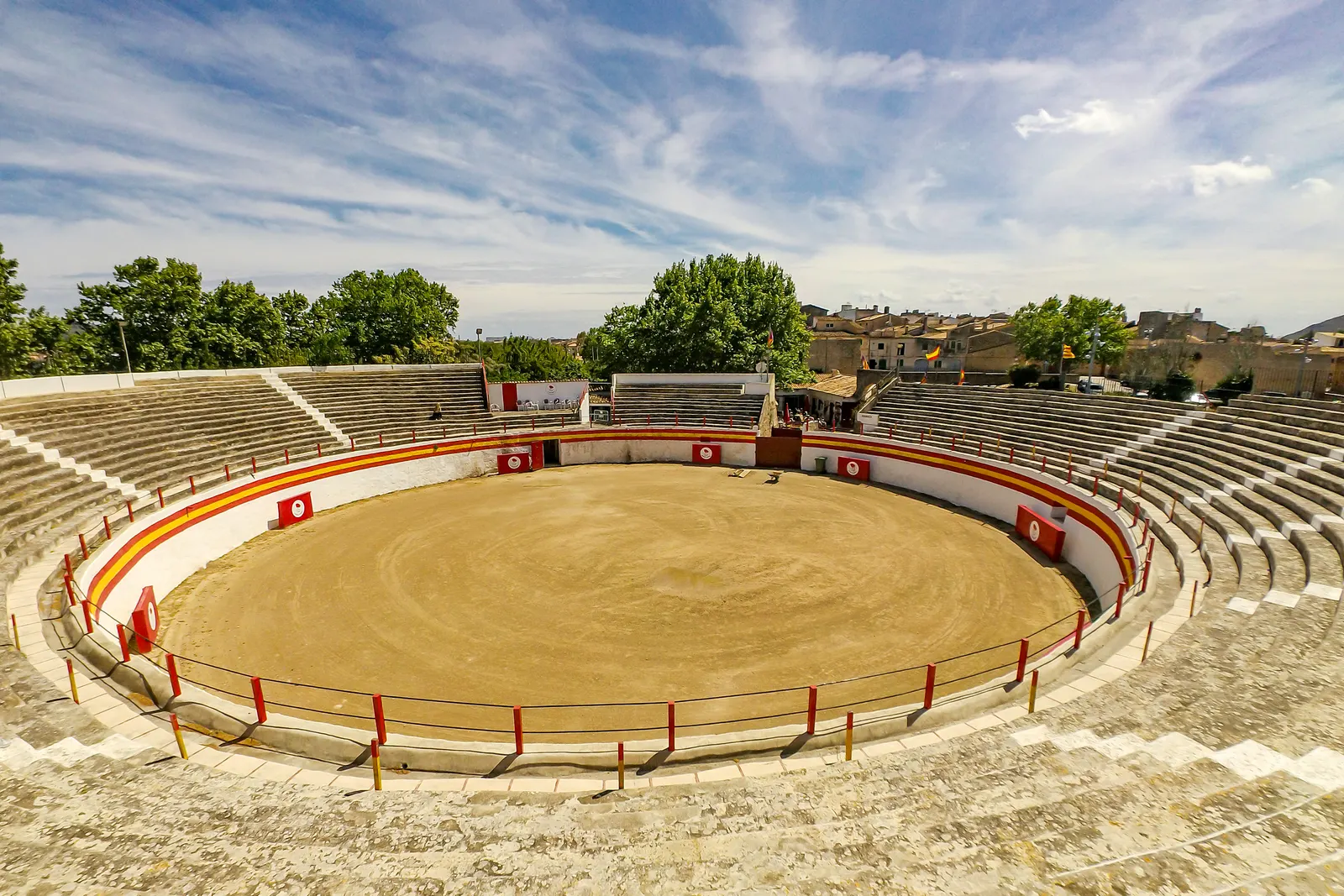
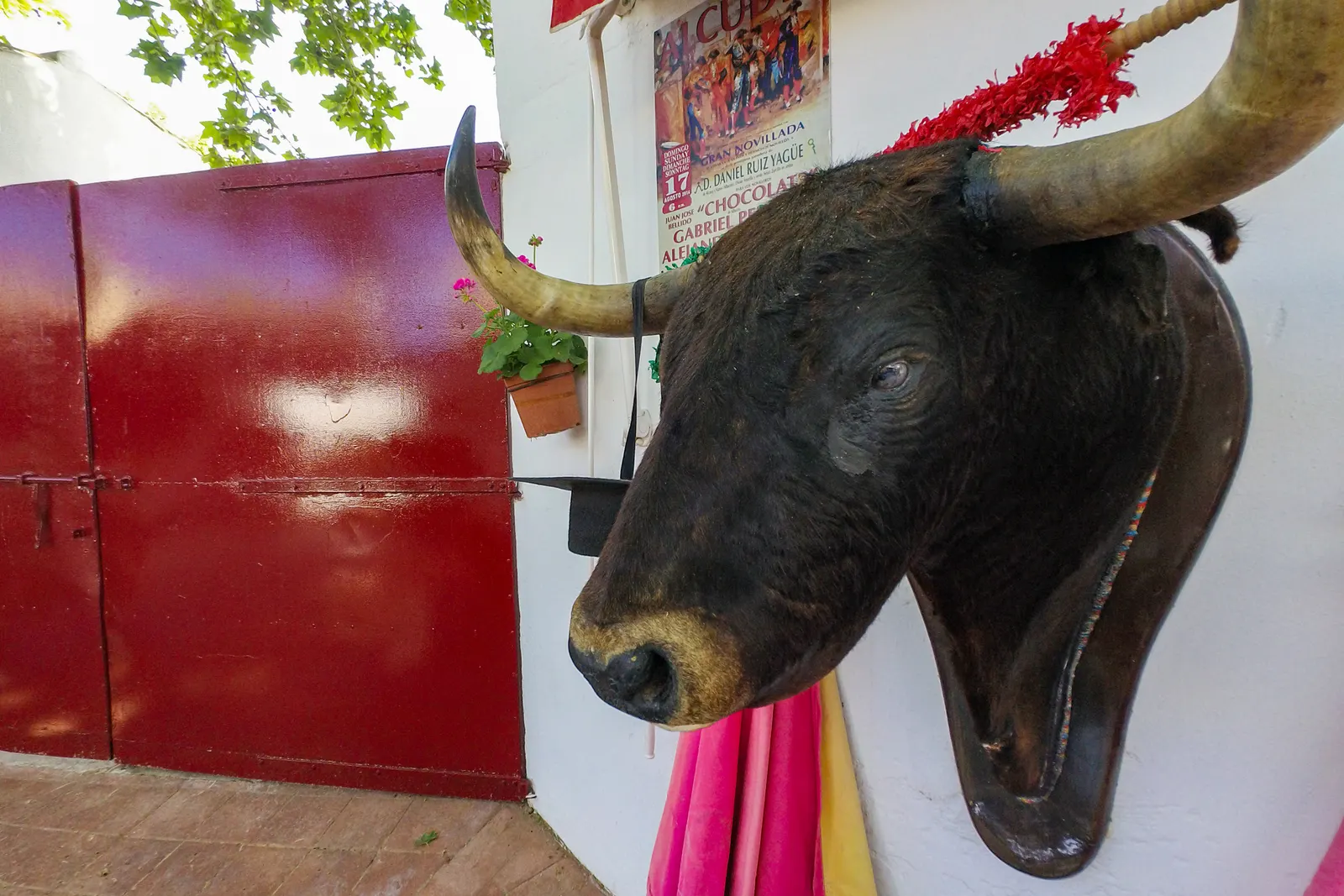
On the north-western edge is Plaça de Toros, the island’s oldest bullring. It was built in 1892 within the 17th-century Sant Ferran bastion. In its final years, it staged two bullfights annually, accompanied by animal-welfare protests.
Bullfighting stopped here in 2021, when the operator’s concession expired and wasn’t renewed. The municipality intends to convert the arena into an events venue. You can still see the building from outside.
At the foot of Puig de Sant Martí is the pre-Christian sacred site Cova de Sant Martí. For a quieter stop in town, try Can Torró library, established with substantial support from Germany’s Bertelsmann Foundation.
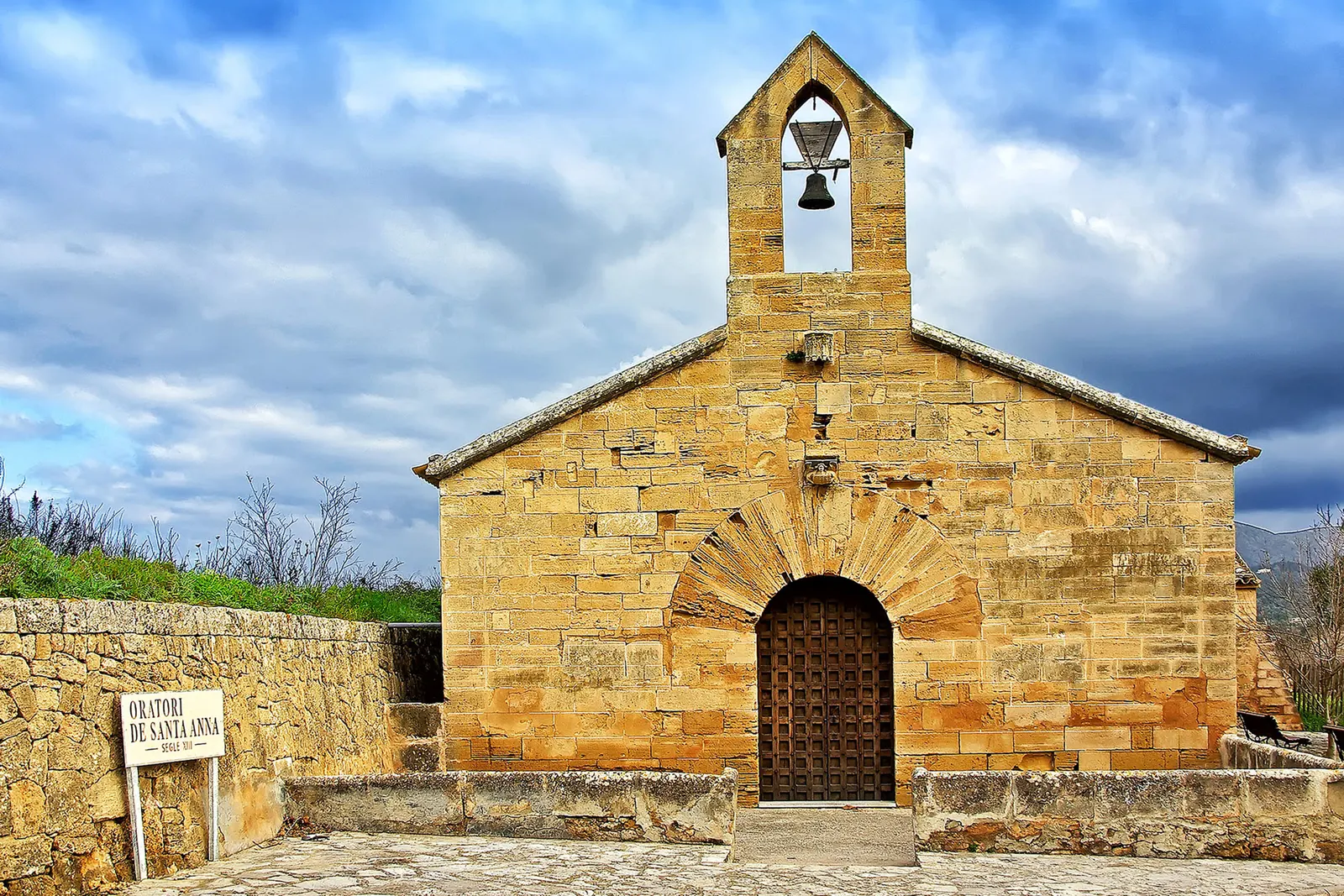
Just outside the walls on Carretera Cementiri stands Oratori de Santa Anna, a small 13th-century Gothic chapel dedicated to Saint Anne. It’s often a peaceful place to visit.
Exploring from Alcúdia
The Victòria peninsula is about fifteen minutes away. The road ends at the hermitage, with views across both bays. S’Albufera, the Balearics’ largest wetland, is less than ten minutes south and is particularly rewarding for birdwatching in spring and autumn. Port d’Alcúdia’s long, shallow sandy beach is close enough to combine with the old town in a day.
For buses, check the current TIB routes and timetables before travelling, including your return journey.
Photographs
Alcúdia in Mallorca
How much time do you have?
Things to do in Alcúdia
Three hours
Enter through Porta del Moll, follow Carrer Major to Sant Jaume church, then climb onto the wall walk and follow part of it. Return along Carrer d’en Serra. That gives you a good first impression.
Half a day
Add around an hour at Pollentia outside the walls, visiting the forum, theatre and residential quarter. Afterwards, have a coffee on Plaça de la Constitució and stop at Oratori de Santa Anna on the cemetery road.
A full day
Spend the morning in the old town, then head onto the Victòria peninsula at lunchtime. The road ends at the hermitage, with views over both bays. In the afternoon, choose the beach at Port d’Alcúdia or birdwatching in S’Albufera nature park, both close by car.
On a rainy day
Visit the Museu Monogràfic de Pollentia, Sant Jaume parish church and Can Torró library, which received support from Germany’s Bertelsmann Foundation. Follow them with a long lunch beneath the arcades.
Local celebrations
- Tuesday and Sunday — Weekly market 8.30 am–1.30 pm, year-round. One of Mallorca’s largest markets.
- Holy Week — Semana Santa Processions through the old town, particularly atmospheric on Maundy Thursday.
- 24–26 July — Sant Jaume The town’s patron saint celebrations, with concerts, fireworks and a correfoc fire run.
Practical details
- Parking
- The old town is car-free. Use the car parks around the walls, which fill from about nine on market days. The largest is on Avinguda dels Prínceps d’Espanya.
- Public transport
- TIB services link the town with Palma and the northern resorts. Check current routes and return times with TIB.
- Time to allow
- Three hours for the old town, half a day with Pollentia, or a full day including the peninsula or nature park.
- Good to know
- Markets are held on Tuesday and Sunday. Choose another day if the town itself is your priority; for the market, arrive before nine.
- Bus
- TIB buses link Alcúdia with Palma and the northern resorts. Airport services include A33 and seasonal A32; check the timetable and stop for your travel date.
- Taxi
- Around €90–110 from Palma airport, as a guide rather than a fixed fare.
- Shops and services
- Supermarkets: Several in town, with larger stores outside the walls · Pharmacy: Two in the old town · Medical care: Local health centre; hospital in Inca, 28 km away · Cash machines: Several around Plaça de la Constitució · Fuel: On the road towards Port d’Alcúdia
- Access
- Cobbles and stone paving, with gentle slopes. · Pushchairs: Manageable in the main lanes, but not on the wall walk. · Wheelchairs: Main routes are accessible; the wall walk and side lanes are not. · Dogs: Generally straightforward in the old town; check current access rules before visiting protected natural areas.
- Price guide
- Coffee €1.80–2.50 · Lunch €16–24 · Parking Around €1.50 per hour on the edge of town · Admission Pollentia and the museum have a combined ticket, priced below €10 in the recorded guide. (as of 2025)
- What you will not find
- Beach · Nightlife · Parking inside the walls
- Coordinates
- 39.8536,3.1214 Google Maps Apple Maps
Dates that change the town
When a race comes to town
Mallorca 312 Road cycling · 25 April 2026
Road closures begin in the morning. The affected roads and reopening times follow the organiser’s traffic plan. Allow extra time for transfers and day trips.
Ironman 70.3 Alcúdia-Mallorca Triathlon · 9 May 2026
Temporary closures and extra crowds affect the start, finish and race route. Check access to your accommodation and the course map, especially if you have an airport transfer.
The season guide describes whole months. A race weekend can transform a normally quiet town for a couple of days. Find the dates in our guide to Sporting events.
Within reach
Places to visit
In the town

Nearby

A pilgrimage church on the Victòria peninsula, seven kilometres north-east of Alcúdia. The road ends at a …
Along a narrow mountain road

Mallorca’s best-known viewpoint stands 232 metres above the sea on the Formentor peninsula. A terrace occupies a …
Via Port de Pollença; seasonal access restrictions apply, so check before driving.

Mallorca's north-eastern tip, reached along a rocky peninsula with a lighthouse at its end since 1863. The …
Via Port de Pollença; use the seasonal bus when road restrictions are in force.
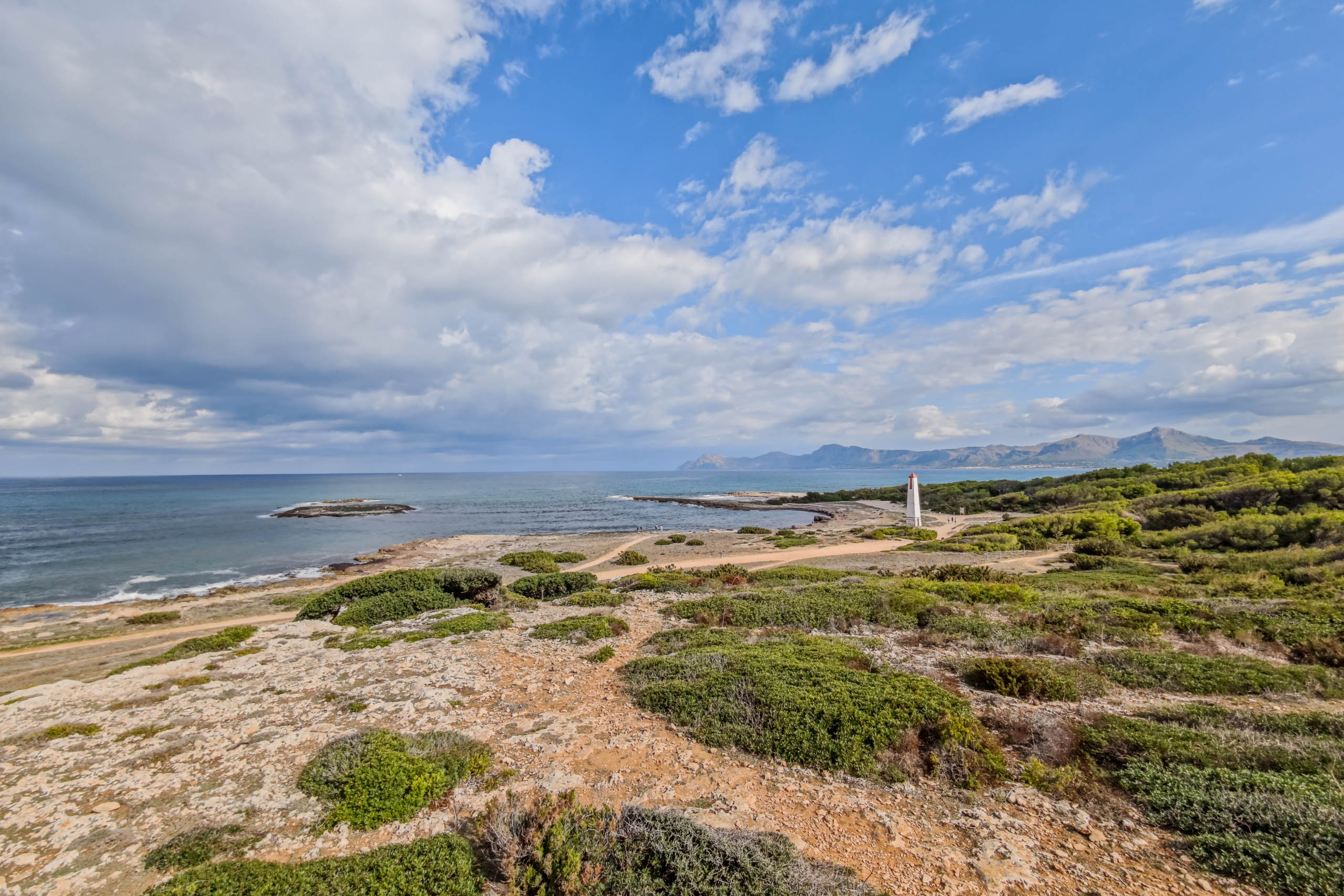
A few steps onto a wooden platform reveal the coast of Son Real. A dolmen lies beside the viewpoint, with the …

A Talayotic burial ground right beside the sea between Can Picafort and Son Serra de Marina. Around 110 tombs …

A small pilgrimage chapel among pines near Sa Pobla, on the site of an older settlement. A paved path leads up to …

A church among the pines, beside the old Son Serra estate with its towers and farm buildings. A glimpse of the …
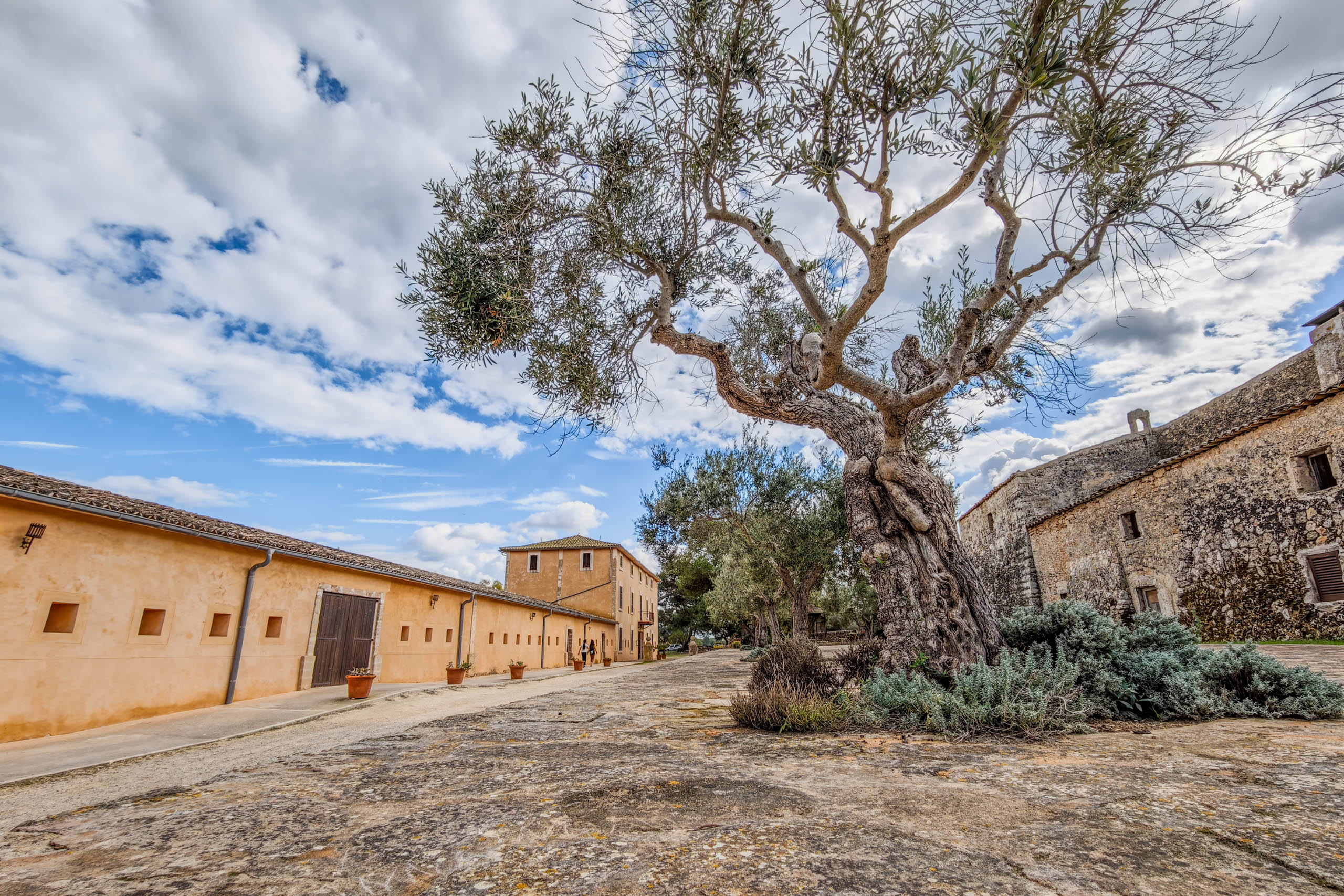
Old farm buildings, gnarled olive trees and a museum about earlier life on Mallorca. Son Real lies between Can …
Distances without a driving time are measured in a straight line. The road journey can be much longer; known driving times are shown alongside.
Where to swim nearby
Beaches and swimming nearby

Five kilometres of pale sand shelving gently into the sea, backed by hotels, bars and shops. A classic beach …

A quieter alternative to Port d’Alcúdia, 3 km to the east. Low villas sit among pines beside a pebbly, sandy shore …

A long sandy stretch of the Bay of Alcúdia, with protected dunes and pines at Es Comú rather than a continuous …

A quieter, more expensive neighbour to Alcúdia bay, with the waterfront Pine Walk, a royal yacht club and reliable …
Explore from here
Your questions answered
Your questions about Alcúdia
When is the market in Alcúdia?
Tuesdays and Sundays, 8.30 am–1.30 pm, all year. Stalls fill the old-town lanes and extend towards the Roman remains of Pollentia. It’s one of Mallorca’s largest markets. In the main season, arrive before nine, as the narrow lanes soon become crowded.
How old are Alcúdia’s town walls?
Work on the inner circuit began in 1298 under Jaume II and continued until 1362, so the oldest sections are over 700 years old. A second circuit was added by 1660 in response to pirate raids. This is Mallorca’s best-preserved medieval town fortification, and parts of the wall walk are accessible.
Can you swim in Alcúdia?
Not in the old town, which stands inland on a rise. The beach is at Port d’Alcúdia, around 3 km away, where kilometres of shallow sandy shoreline continue towards Platja de Muro. The bus journey takes roughly ten minutes.
What is Pollentia?
A major Roman city beside today’s Alcúdia. Its origins are associated with the Roman conquest of 123 BC, although the earliest securely identified Roman foundation remains in the forum date to around 70 BC. You can visit the forum, theatre and residential remains, then see finds in the museum in the old town.
How long do you need in Alcúdia?
Three hours is enough for the old town, church and part of the wall walk. Allow half a day with Pollentia, or a full day if you also visit the Victòria peninsula or nearby S’Albufera nature park.
How do you get from Palma airport to Alcúdia?
By car, allow around 55 minutes for the 55 km journey via the Ma-13. TIB airport services include the A33 and seasonal A32; check the appropriate stop and timetable for your date. A taxi was roughly €90–110 in the recorded guide, so confirm the current fare before travelling.
Are Alcúdia and Port d’Alcúdia the same place?
No. Alcúdia is the historic walled town, while Port d’Alcúdia is the harbour and beach resort around 3 km away. They belong to the same municipality but offer very different visits — old streets and history inland, beaches, hotels and a promenade beside the bay.
Practical questions
When is the best time to visit Alcúdia?
Recommended months: January, February, March, April, May, October, November, December. The town belongs to its residents again. The year-round market feels more like everyday shopping than a souvenir fair.
Is Alcúdia worth visiting in July and August?
July: another month may suit you better. Usually very crowded. The lanes become very crowded on market days, with temperatures over 30°C between the stone walls. August: another month may suit you better. Usually very crowded. The busiest month, with coach parties arriving from across the north coast.
How far is Alcúdia from Palma airport?
About 55 km from Palma airport. Allow roughly 55 minutes by car. Taxi: Around €90–110 from Palma airport, as a guide rather than a fixed fare. Follow the Ma-13 from Palma. It is a motorway as far as Sa Pobla, then a main road. Set off early on market days.
Do I need a hire car for Alcúdia?
A car is useful TIB buses link Alcúdia with Palma and the northern resorts. Airport services include A33 and seasonal A32; check the timetable and stop for your travel date.
Where can I park in Alcúdia?
The old town is car-free. Use the car parks around the walls, which fill from about nine on market days. The largest is on Avinguda dels Prínceps d’Espanya.
Can you swim at Alcúdia?
There is no beach here. See the nearby swimming options on this page.
Can I visit Alcúdia with a pushchair or wheelchair?
Cobbles and stone paving, with gentle slopes. Pushchairs: Manageable in the main lanes, but not on the wall walk. Wheelchairs: Main routes are accessible; the wall walk and side lanes are not.
Are dogs allowed at Alcúdia?
Generally straightforward in the old town; check current access rules before visiting protected natural areas.
Alcúdia features in our Mallorca highlights
Words and photographs: Friedhelm Fischer. Exploring Mallorca since 2013 — by bike, on foot and with a camera.