9 places to see on your first Mallorca holiday
If you only visit once, start here.
A capital with a Gothic cathedral, a town in an orange-growing valley, medieval walls and a spectacular road to a rocky headland: there is more to Mallorca than you can fit into one holiday.
These nine places are my starting point for a first visit. Find out how much time to allow, when to arrive and where the time of day makes more difference than the season.
Where should you start in Mallorca?
On a first visit, the choice can feel overwhelming: Mallorca Fritz covers towns and villages, beaches, monasteries, castles and markets across the island. The useful question is where to begin.
These nine places are my answer. Between them you get a city, a mountain village, an orange-growing valley, a town near the northern coast, a headland, medieval walls, everyday town life, a natural harbour and a traditional market.
Each entry explains how to get there, how much time to allow and when to visit. At several of these places, arriving at the right time of day makes a real difference.
-
1. Palma
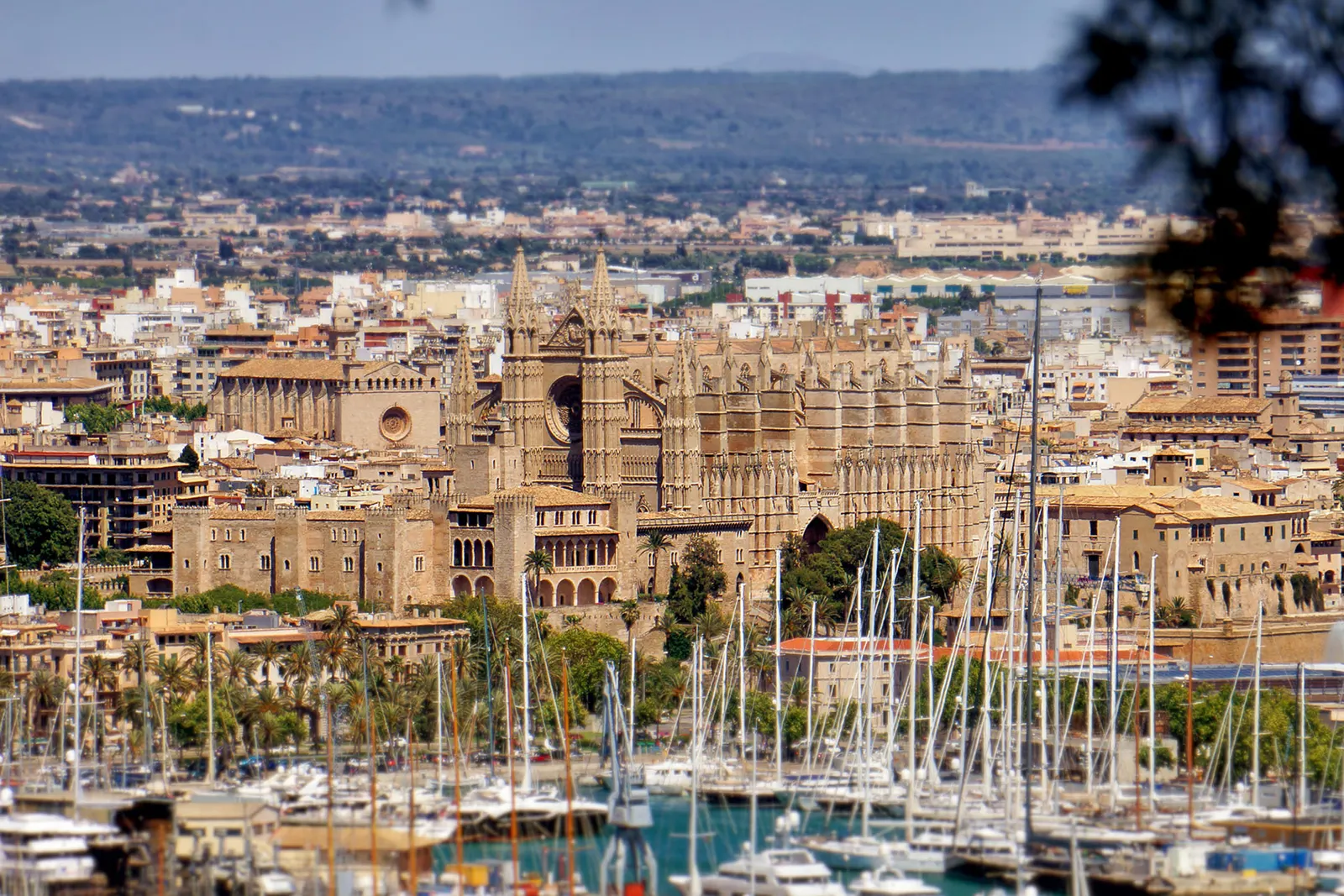
Palma is a proper Mediterranean city, home to almost half the island's population. Its great Gothic cathedral includes work by Gaudí, its old streets retain their Moorish layout, and Renaissance courtyards hide behind grand doorways. There are around 150 historic courtyards, although you cannot simply walk into them all.
The common mistake is to treat Palma as a quick day trip. Give it two full days, or better still three. Winter and spring are particularly good: walking around Palma in January is often far more comfortable than in August.
- Getting there
- Airport bus A1 runs to the centre, roughly every 15 minutes; allow around 20 minutes
- Time to allow
- At least two full days, or four to five with museums
- Good for
- City breaks, architecture, museums and evenings outside the holiday season
-
2. Valldemossa
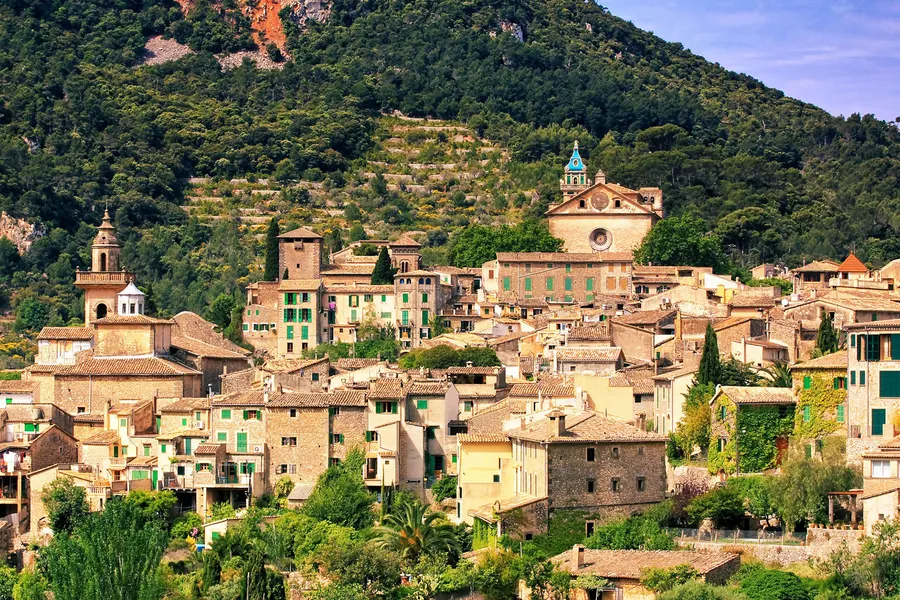
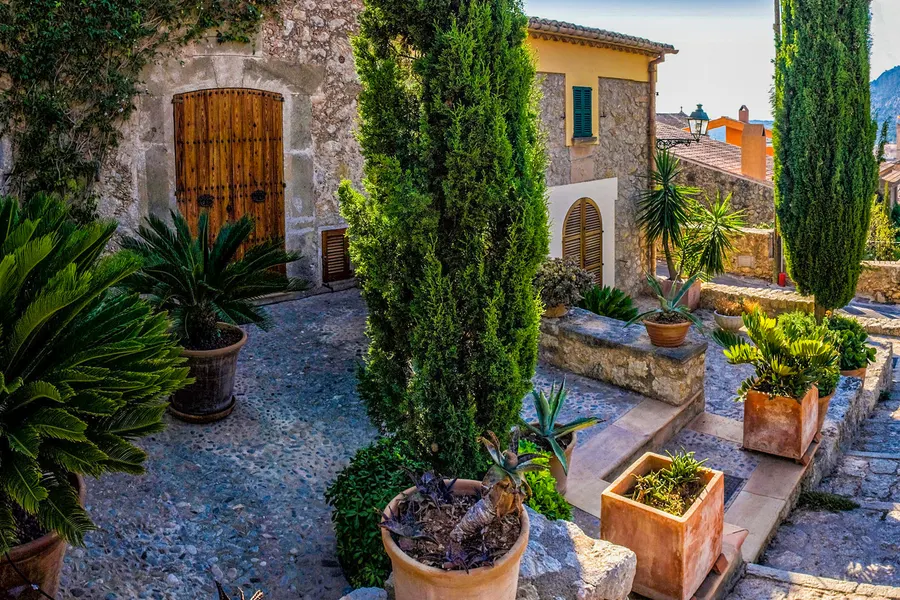
Four hundred metres above the sea, on the slopes of the Teix, Valldemossa is Mallorca's best-known mountain village. Chopin and George Sand spent the winter of 1838–39 in its former Carthusian monastery. It rained a great deal, but that stay helped make the village famous.
Between about 10am and 5pm the main street fills with tour groups. Come at eight, when the bakery is bringing out its coca de patata potato buns, and you get a much quieter village. Walk up towards the cemetery too: the view over the valley is well worth it.
- Getting there
- Bus 203 from Palma, roughly hourly; allow around half an hour
- Time to allow
- Two to three hours for the village and monastery
- Good for
- An early morning visit, culture and coffee with a valley view
-
3. Sóller
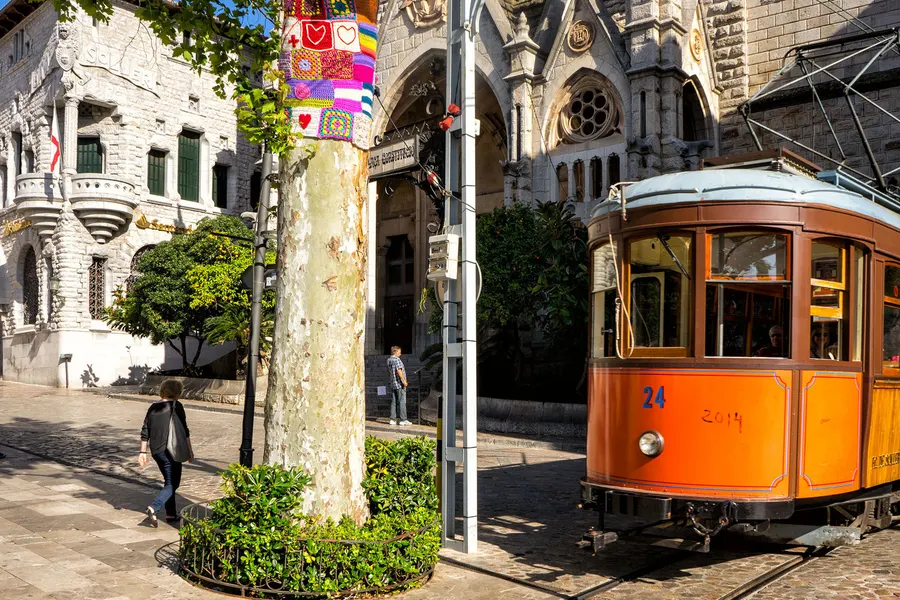
Sóller sits in an enclosed valley of orange groves. For centuries it was easier to reach by sea than by land. Its overseas connections helped bring wealth and French-influenced façades; the narrow-gauge railway opened in 1912 and still runs today.
This is a working town, with a market hall, everyday shops and a square where local people meet in the evening. Take the historic train from Palma, not just for the old carriages but to see the tunnels and engineering needed to cross these mountains more than a century ago. The tram down to the port has been running since 1913.
- Getting there
- Train from Palma takes just under an hour; bus 204 through the tunnel around 30 minutes
- Time to allow
- Half a day, or a full day with Port de Sóller and Fornalutx
- Good for
- Train lovers, the market hall and a car-free day out
-
4. Pollença
Pollença is a small town at the northern end of the Tramuntana, set back from a coast that once brought the threat of pirate attacks. A flight of 365 cypress-lined steps leads up to the Calvari chapel.
It is one of my favourite places to stay: large enough to have a life of its own, small enough to get to know on foot. Local people shop at the Sunday market on Plaça Major alongside visitors. Above the town, the former monastery on Puig de Maria has simple accommodation. The hill rises to around 330 metres, the climb takes about 45 minutes and the views stretch over both bays.
- Getting there
- Bus connections from Palma, Inca and Alcúdia; more frequent services to the port in summer
- Time to allow
- Half a day to visit, or a week as a base for the north
- Good for
- Sunday market, the Calvari steps and a northern holiday base
-
5. Cap de Formentor
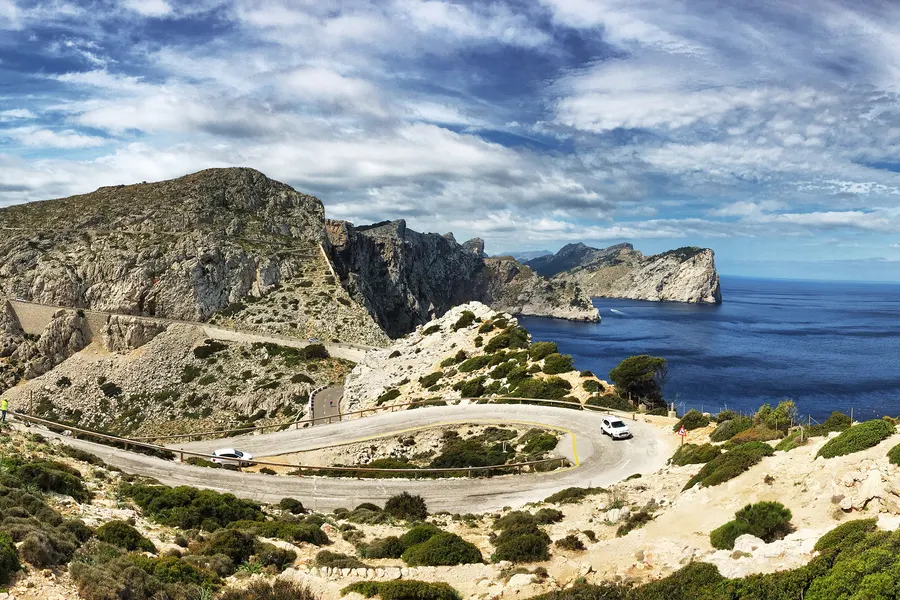
At Mallorca's north-eastern tip, a rocky peninsula stretches some twenty kilometres out to a lighthouse built in 1863. Antonio Parietti designed the road in the 1930s. The views make you want to stop at almost every bend.
In summer, plenty of other people have the same idea, and restrictions apply to private vehicles on the access road. Come early on a March morning and the drive can be wonderful. Mirador Es Colomer, roughly six kilometres from Port de Pollença, is a particularly worthwhile stop.
- Getting there
- Via Port de Pollença; check the summer restrictions on private vehicles
- Time to allow
- Two to three hours with stops, or a full day including a swim
- Good for
- Views, photography and a drive outside the main season
-
6. Alcúdia
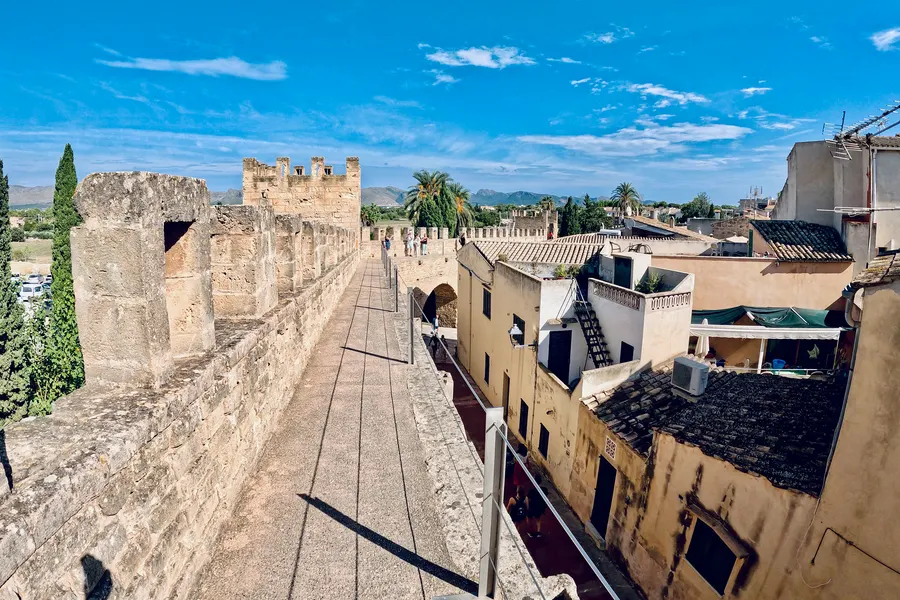
Alcúdia has some of Mallorca's best-preserved medieval town walls, close to the remains of the Roman city of Pollentia. Inside are largely pedestrian streets, honey-coloured stone buildings and stretches of rampart you can walk along above the rooftops.
Timing matters here. In summer the old town is busiest with day trips between late morning and late afternoon. Arrive at nine, when the light catches the battlements, or later in the afternoon when the walls cast long shadows. Tuesday and Sunday are market days, with one of the island's larger markets.
- Getting there
- Regular buses connect the old town with Port d'Alcúdia
- Time to allow
- Three hours for the old town, or half a day with Pollentia
- Good for
- Old-town walks, the walls and the Tuesday or Sunday market
-
7. Artà
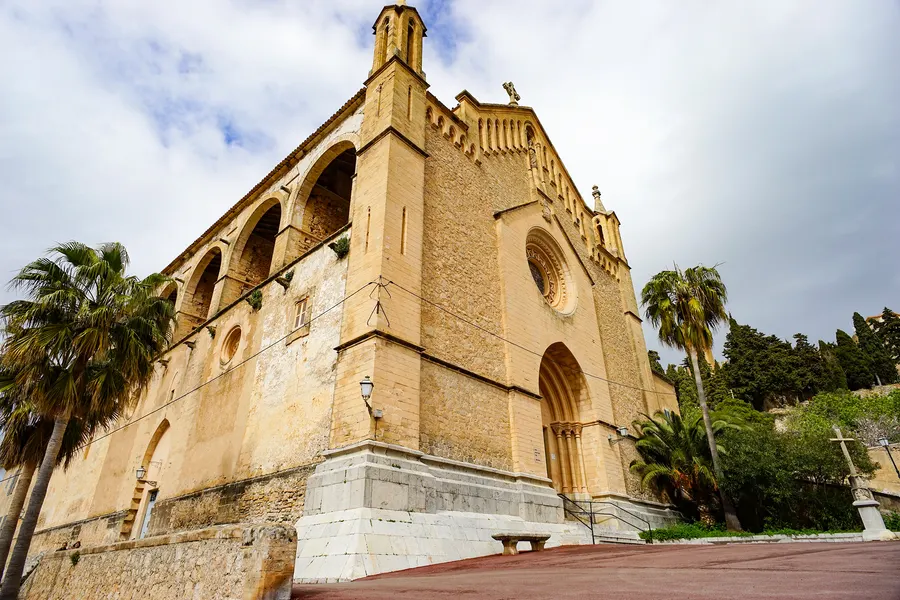
Artà is a small north-eastern town beneath a fortified hilltop sanctuary, with open countryside beyond. An arcaded approach leads towards the Santuari de Sant Salvador, whose walls give you a wide view over the plain.
There is plenty of everyday life here, as well as a good Tuesday market. Nearby Ses Païsses is one of Mallorca's best-preserved Talayotic settlements. For a walk through some of the island's less developed countryside, head north-east into the Llevant Peninsula Natural Park.
- Getting there
- Bus connections from Manacor, Palma and Cala Ratjada
- Time to allow
- Half a day with Sant Salvador and Ses Païsses
- Good for
- History, walks and a local market
-
8. Portocolom
Portocolom has one of the island's largest natural harbours and a quieter feel than many east-coast resorts. Fishing boats line up in front of boathouses with brightly painted doors, with a lived-in old quarter behind them.
The larger hotels stand away from the old harbour, and the swimming coves are spread around the coast. Sit by the quay and watch the boats: that can be quite enough for an afternoon. If you prefer somewhere calmer than the big resorts, Portocolom is worth a look.
- Getting there
- Bus connections from Felanitx and Manacor
- Time to allow
- Two to three hours for the harbour and old town
- Good for
- A quiet evening by the water and photography
-
9. Sineu
In the middle of Mallorca, Sineu holds a Wednesday market whose royal charter dates back to 1306. Livestock trading remains part of it, alongside the ordinary market stalls.
Beyond the leather goods and other stalls, a separate area has sheep, goats, rabbits and poultry. People come here to buy and sell animals, not just to put on a show for visitors. Arrive early: much of that trading is over by around eleven. The train makes the day easier, as parking in Sineu on a Wednesday can take patience.
- Getting there
- The Palma–Manacor train stops in Sineu and avoids the parking search
- Time to allow
- Half a day on Wednesday, or an hour for a brief visit on another day
- Good for
- Wednesday morning's market and rural Mallorca

Questions about your first Mallorca holiday
What should I see on my first visit to Mallorca?
Palma and its cathedral, a Tramuntana mountain village such as Valldemossa, Alcúdia's walled old town and Cap de Formentor are four good starting points. Add a market day in Sineu or Pollença to see something of life away from the coast.
How many of these places can I visit in a week?
Four or five at a comfortable pace. Palma deserves two days of its own. Valldemossa and Sóller can share a day, as can Alcúdia and Cap de Formentor. Artà, Portocolom and Sineu fit well into another visit or a holiday based further east or inland.
Do I need a hire car?
Not necessarily. Palma, Sóller, Valldemossa, Alcúdia, Pollença and Sineu are accessible by bus or train. Rail is particularly convenient for Sóller and Sineu. A car makes Artà and Portocolom easier to combine with other stops. Summer vehicle restrictions apply on the Formentor road, so check the arrangements before travelling.
When is the best time to explore Mallorca?
April to June and September to October are good choices. Walking temperatures are usually more comfortable, and crowds and parking can be easier than in high summer. Palma is also well worth visiting in January or February; the city is active throughout the year.
Where should I stay to explore the island?
Two bases are enough for many trips. Palma or Sóller work for the west and the Tramuntana, while Pollença or Alcúdia suit the north and Formentor. If you want more time in the east, consider Artà or Portocolom as a third base.
Plan your first Mallorca holiday
Nine places are more than you need for a week, deliberately so. Choose three or four that appeal to you and leave the others for another visit. There is more to the island than one holiday can cover.
Every recommendation on this page comes from a personal visit. Words and photographs are by Friedhelm Fischer, who has been exploring Mallorca on foot, by bike and with his camera since 2013.