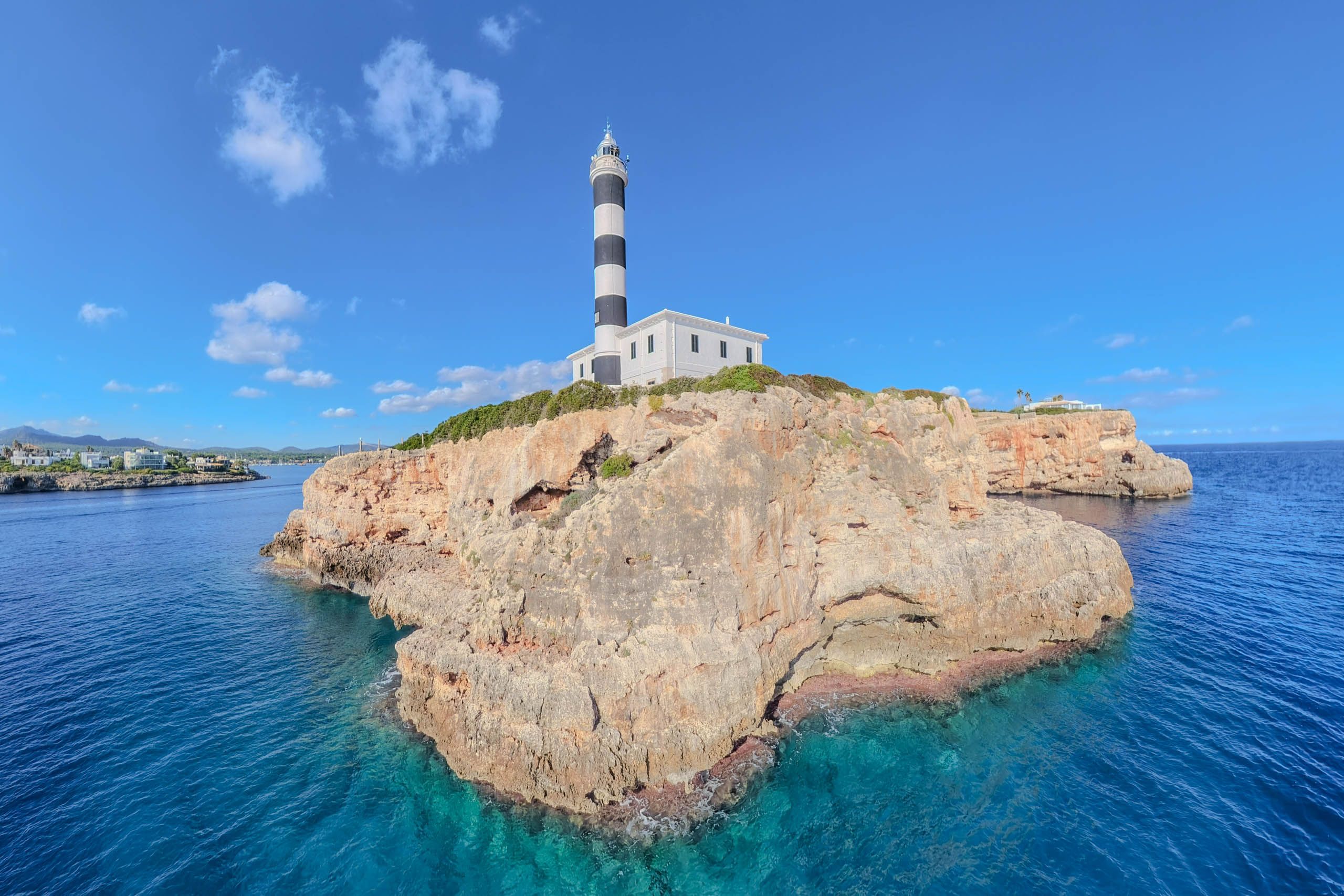
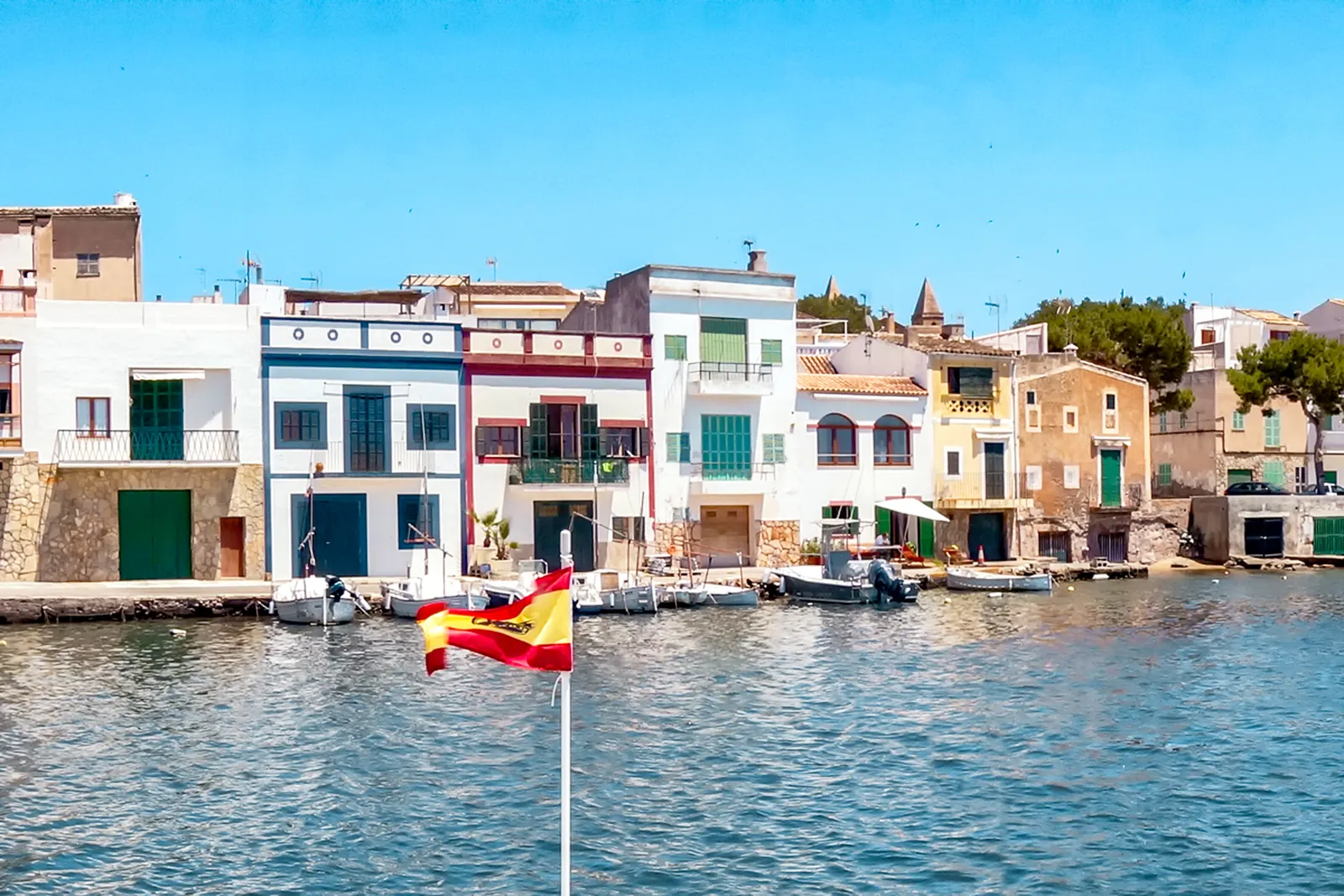
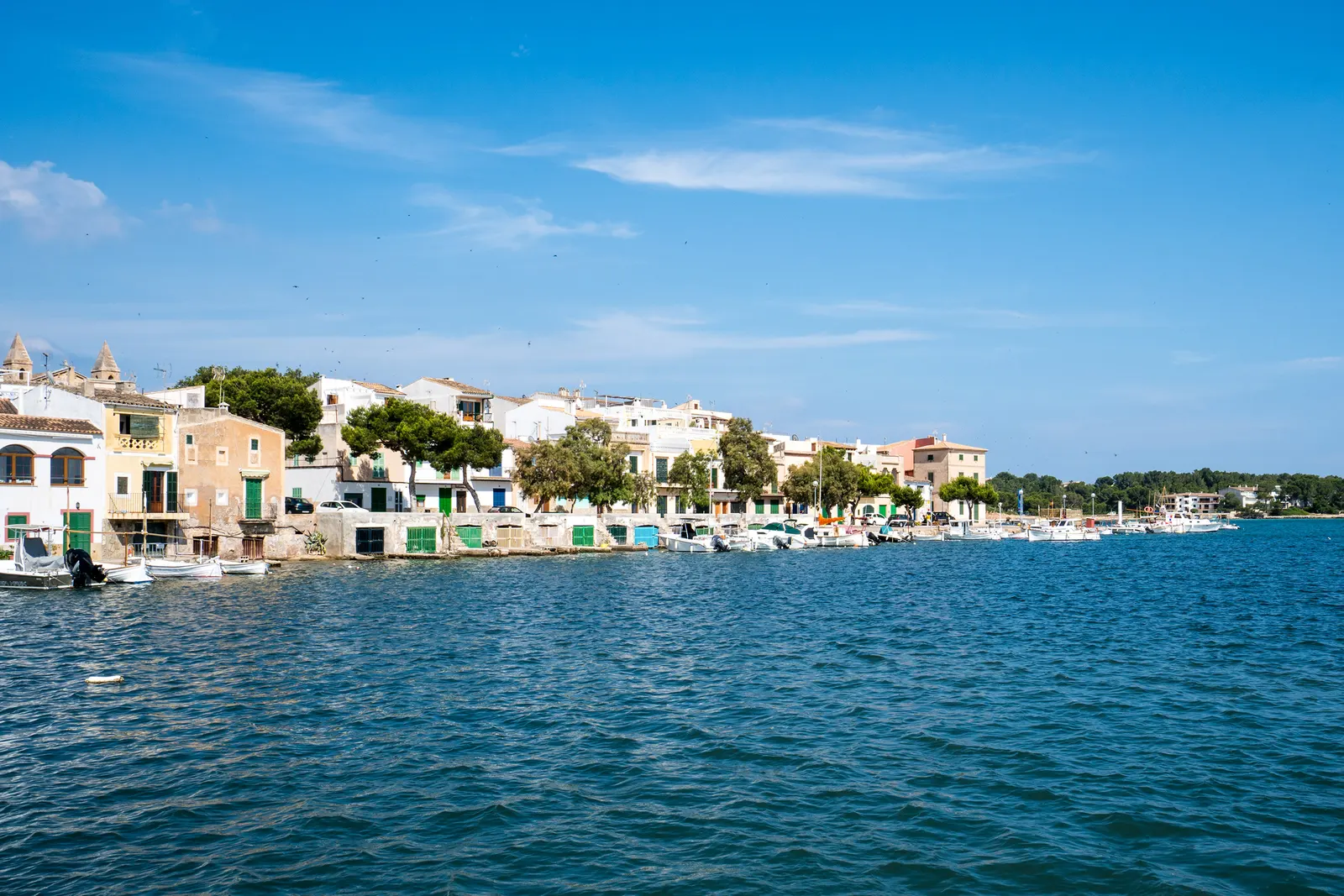
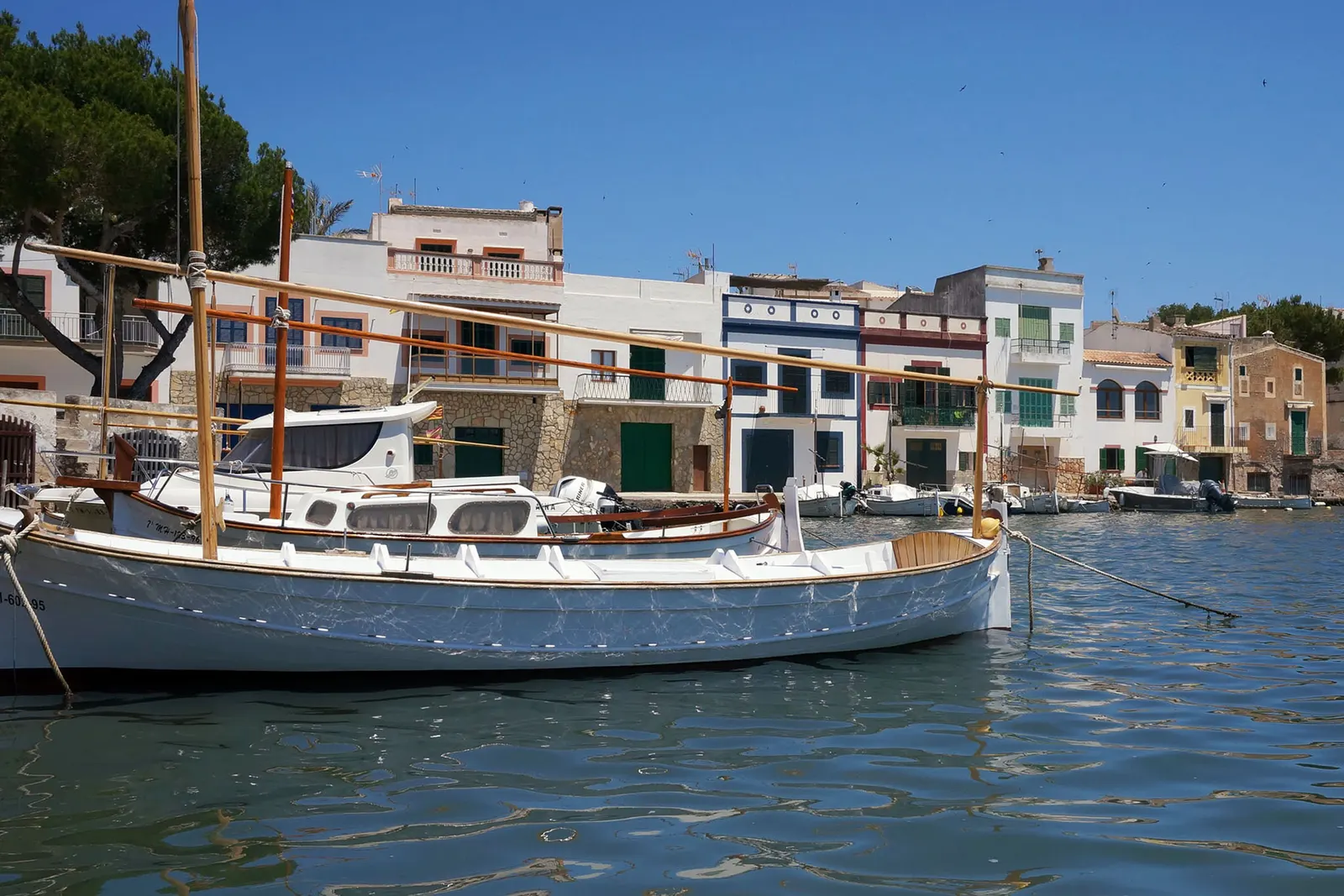
One of Mallorca's largest natural harbours, with a quieter atmosphere than many east-coast resorts. Fishing boats line up outside colourful boathouses, backed by an old town where people still live and work.
Portocolom
Portocolom in 30 seconds
The essentials at a glance
- Worth visiting for
- A longer stay
- Best for
- Anyone wanting a working natural harbour rather than just a marina
- Best months
- March–June, September–November
- Time to allow
- Two to three hours for the harbour and old town; a week as a holiday base
- With children
- Good; Cala d'en Marçal is the main beach
- Without a car
- Hire car recommended
- Parking
- Waterfront road and side streets; limited spaces in high summer
- Getting into the water
- Shallow water, but limited beach space
- Keep in mind
- Anyone needing the main beach on their doorstep — it is behind the town
- Access
- Pushchairs: Straightforward along the waterfront · Wheelchairs: Waterfront road accessible; old town partly accessible
Get a feel for Mallorca. Find your kind of place.
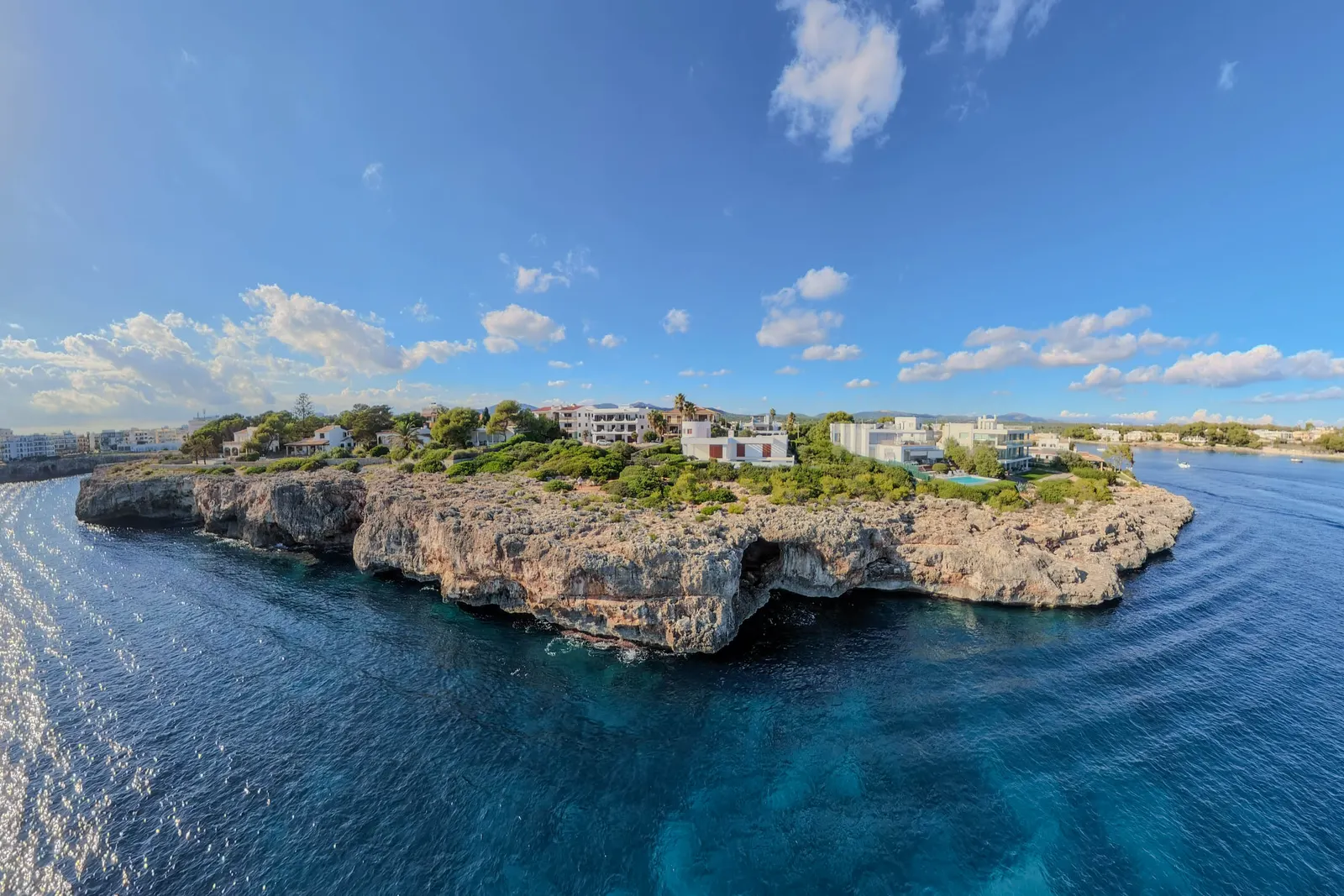
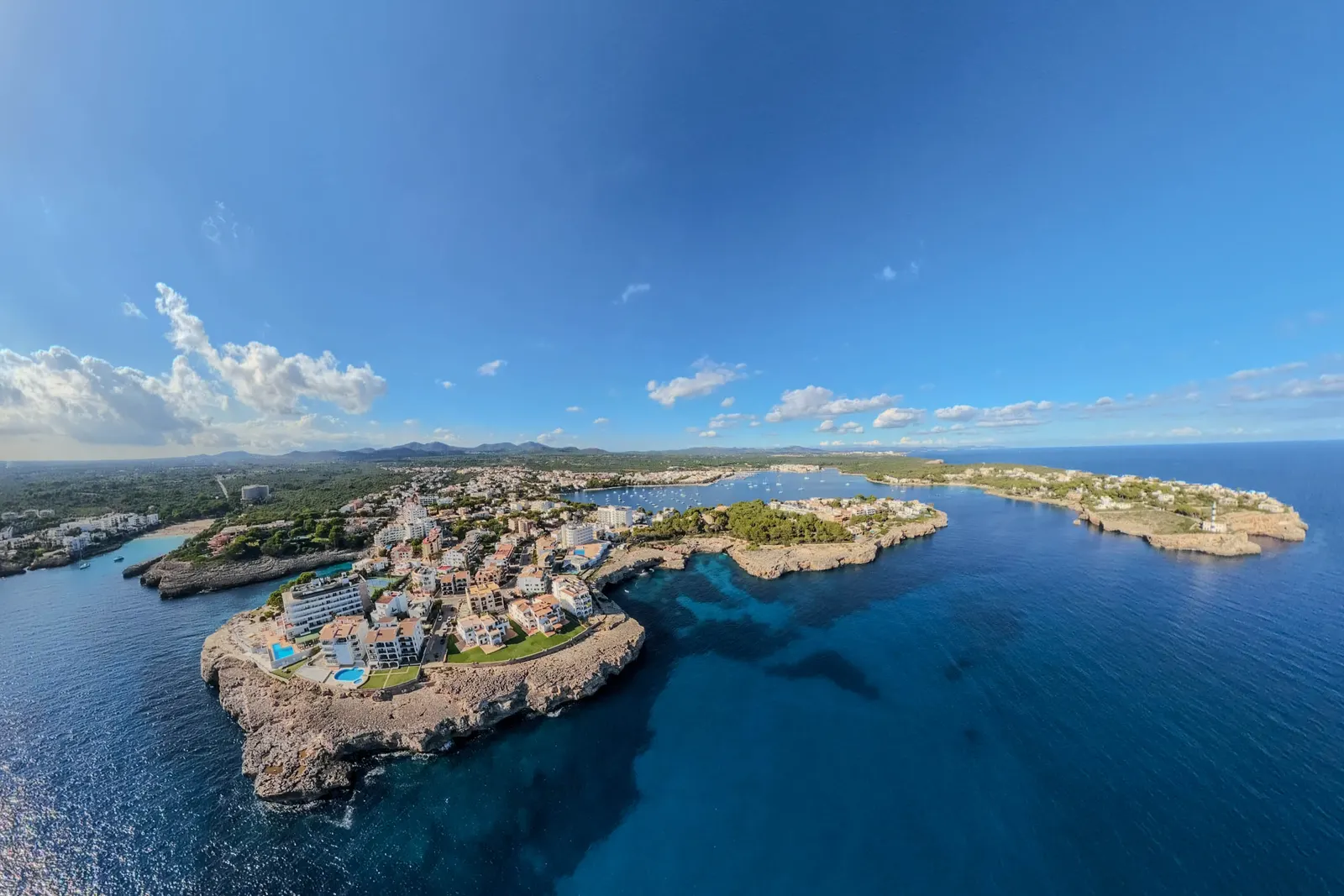
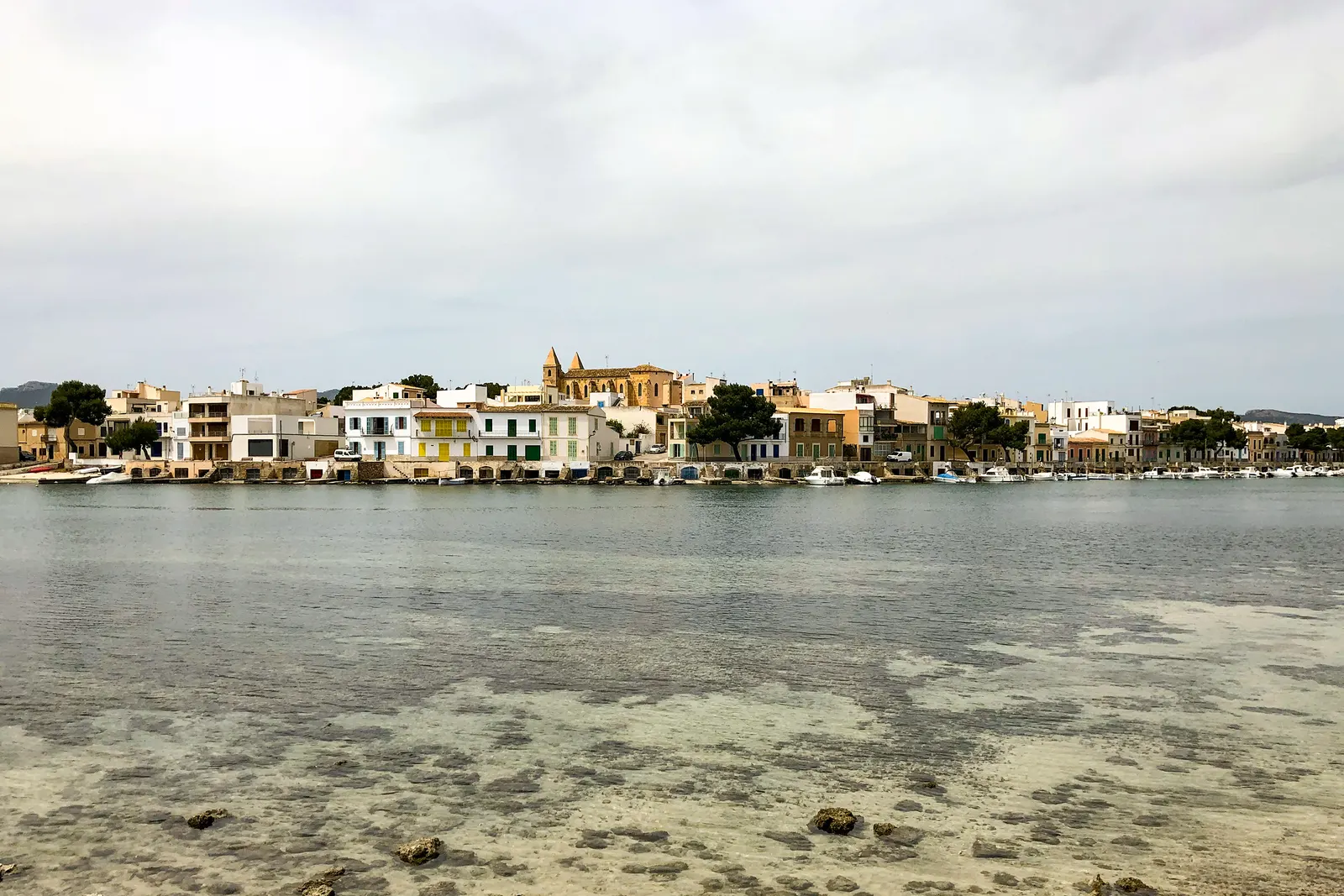
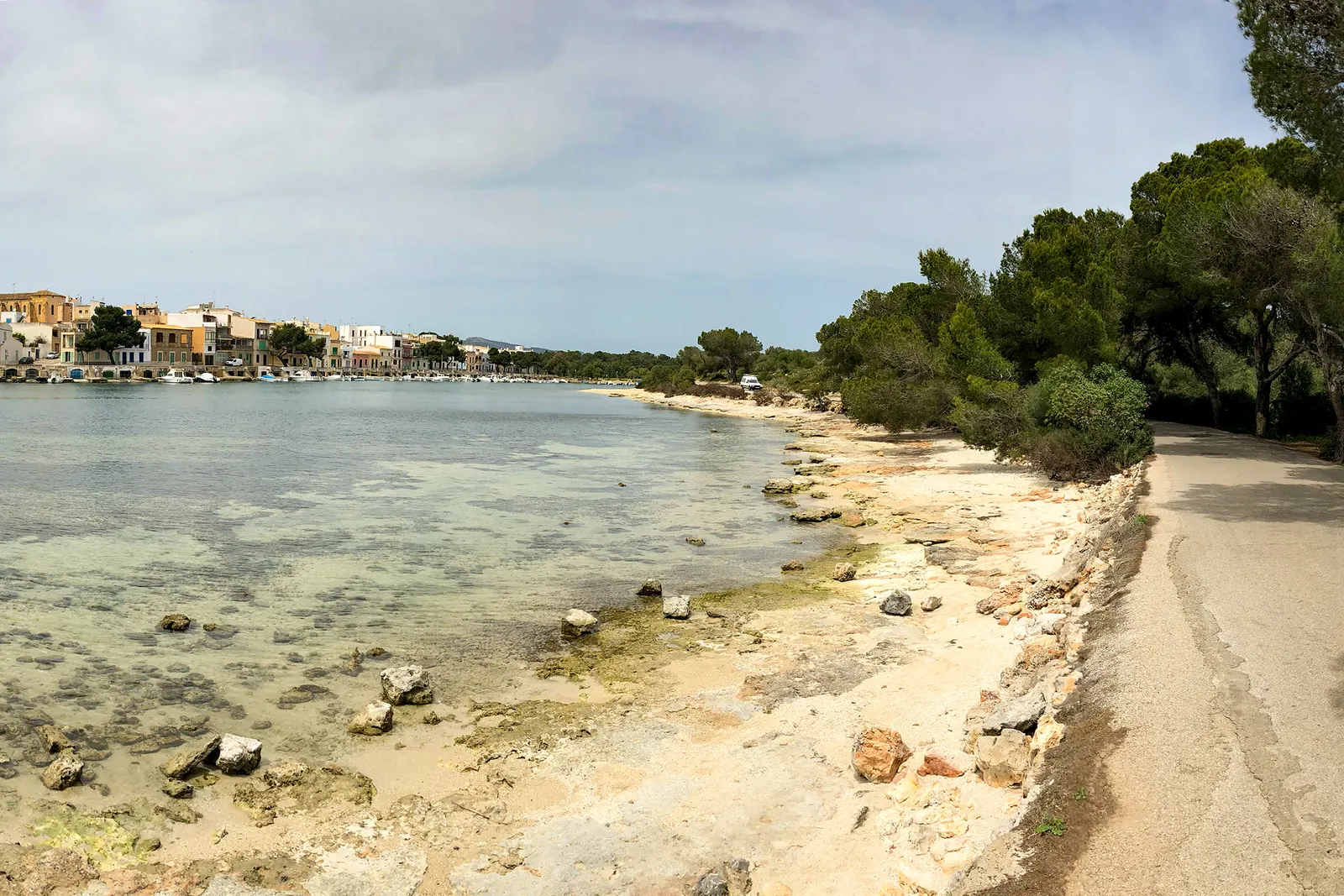
Houses and gardens along Portocolom's rocky shore.
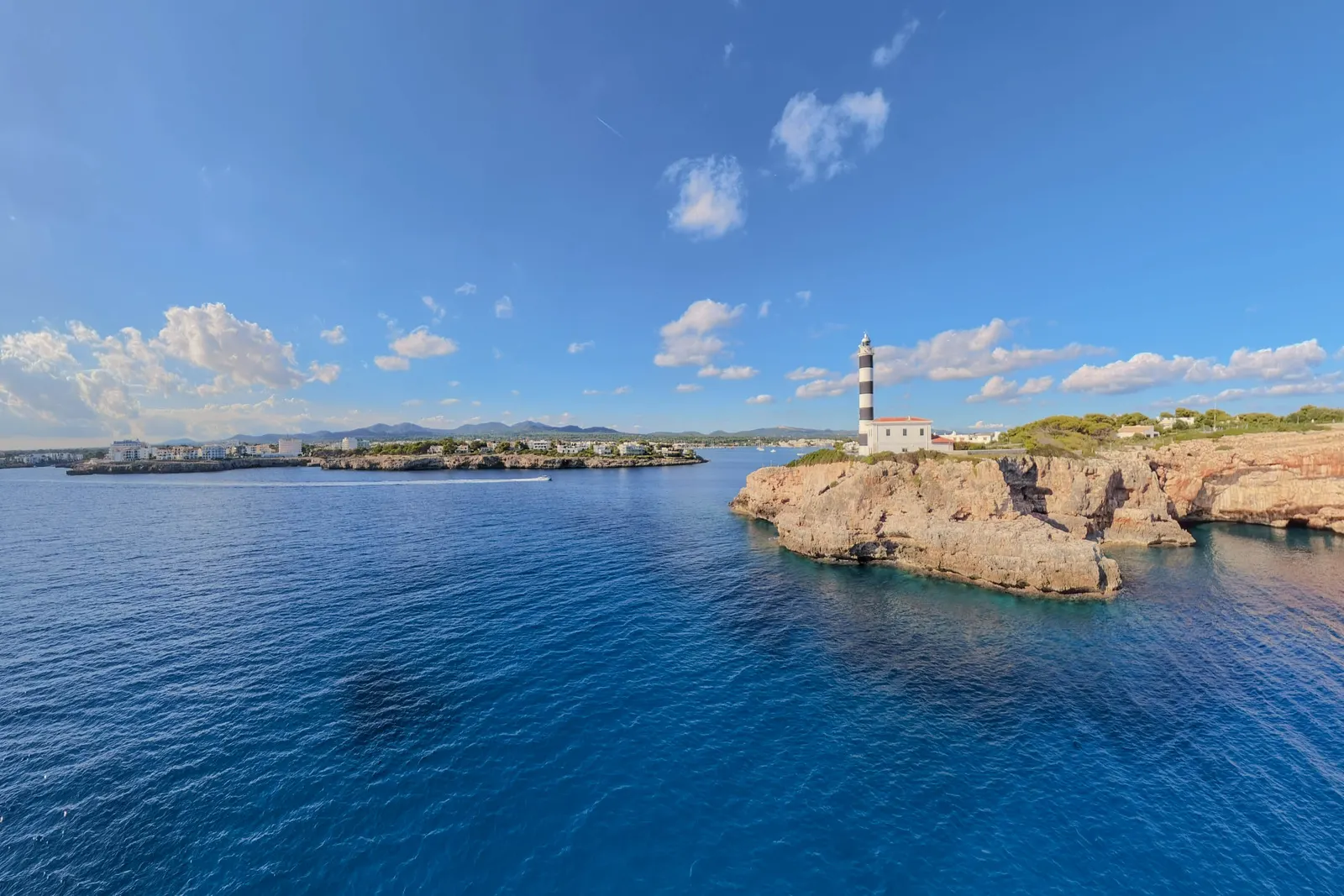
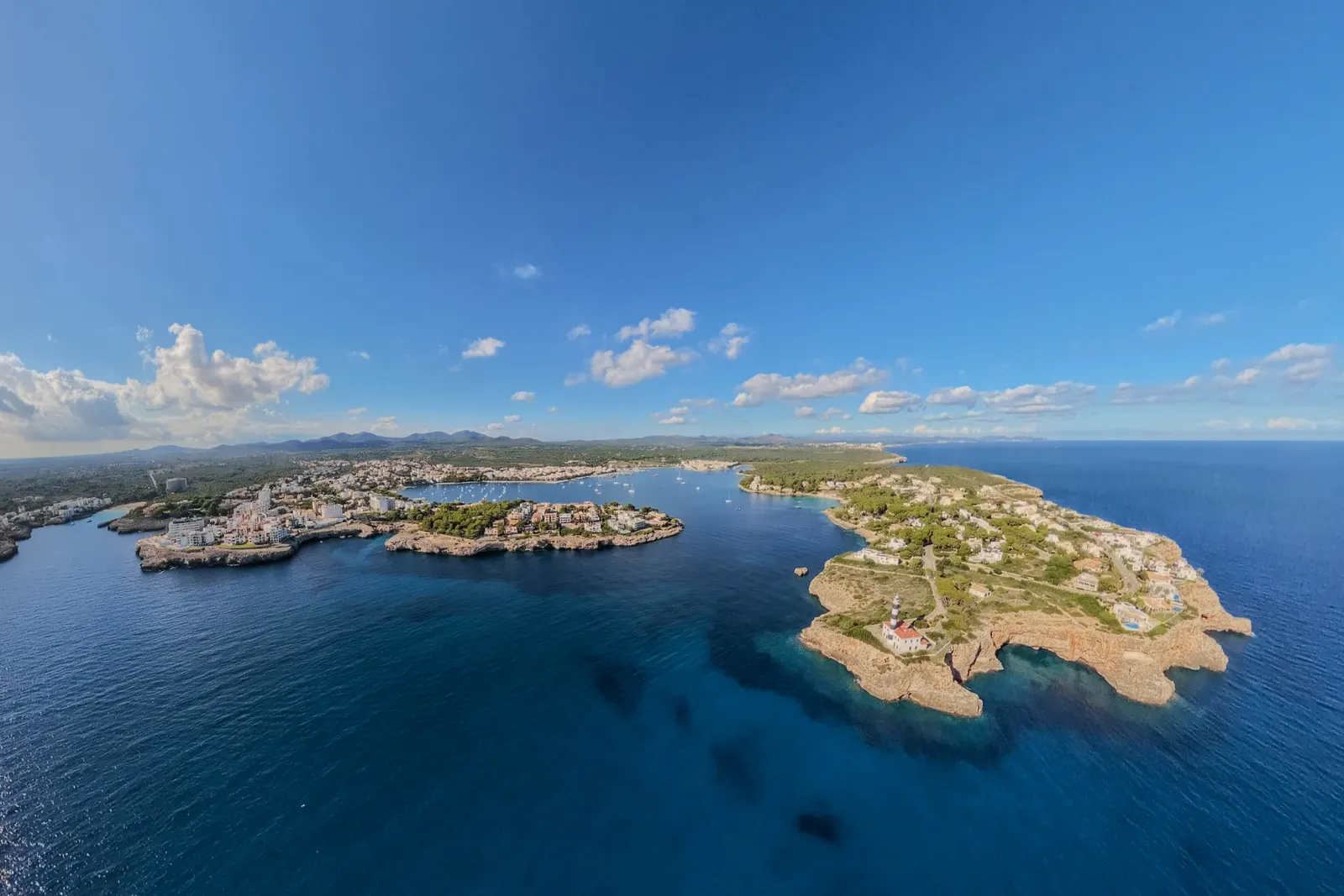
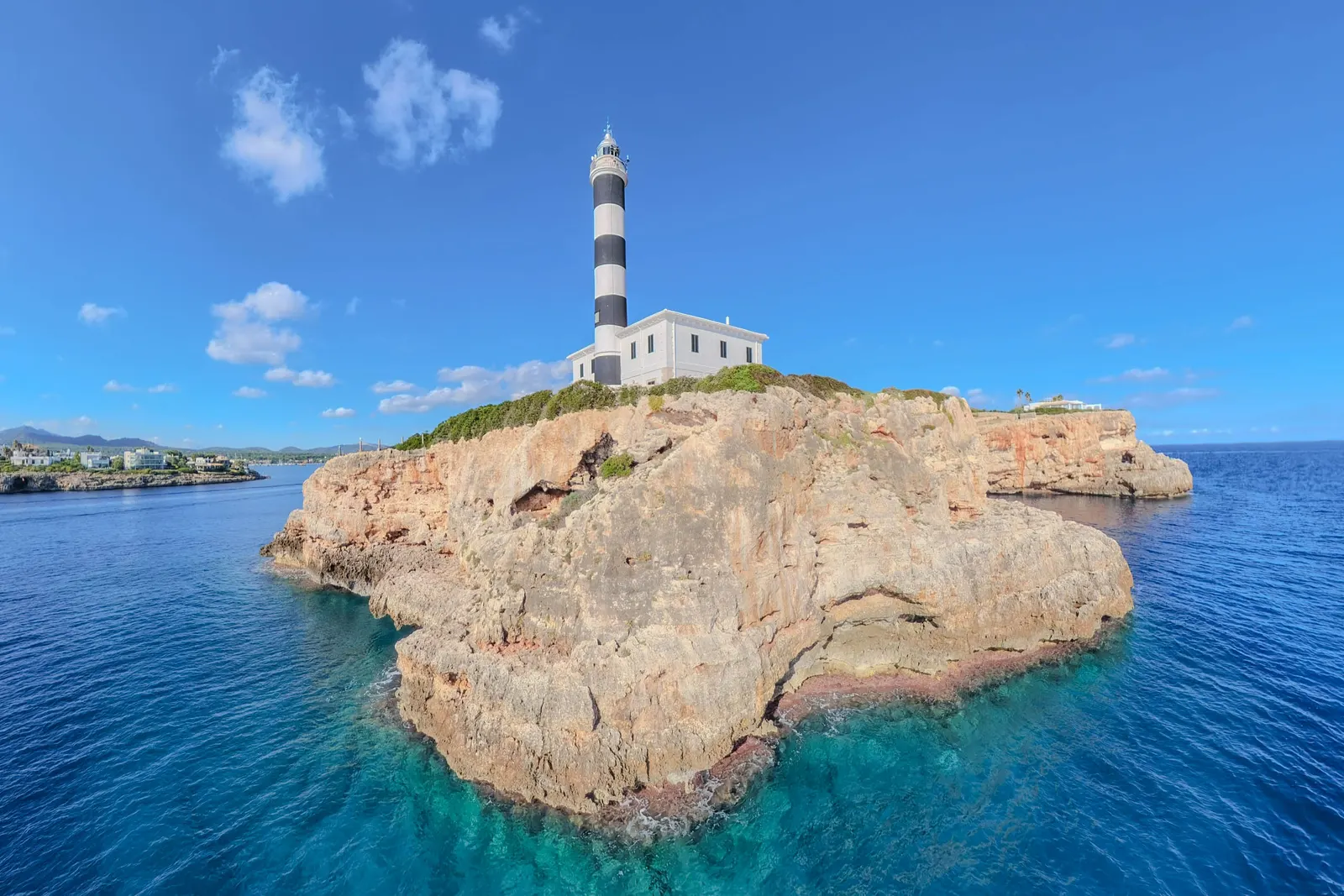
The lighthouse marks the entrance to the natural harbour.
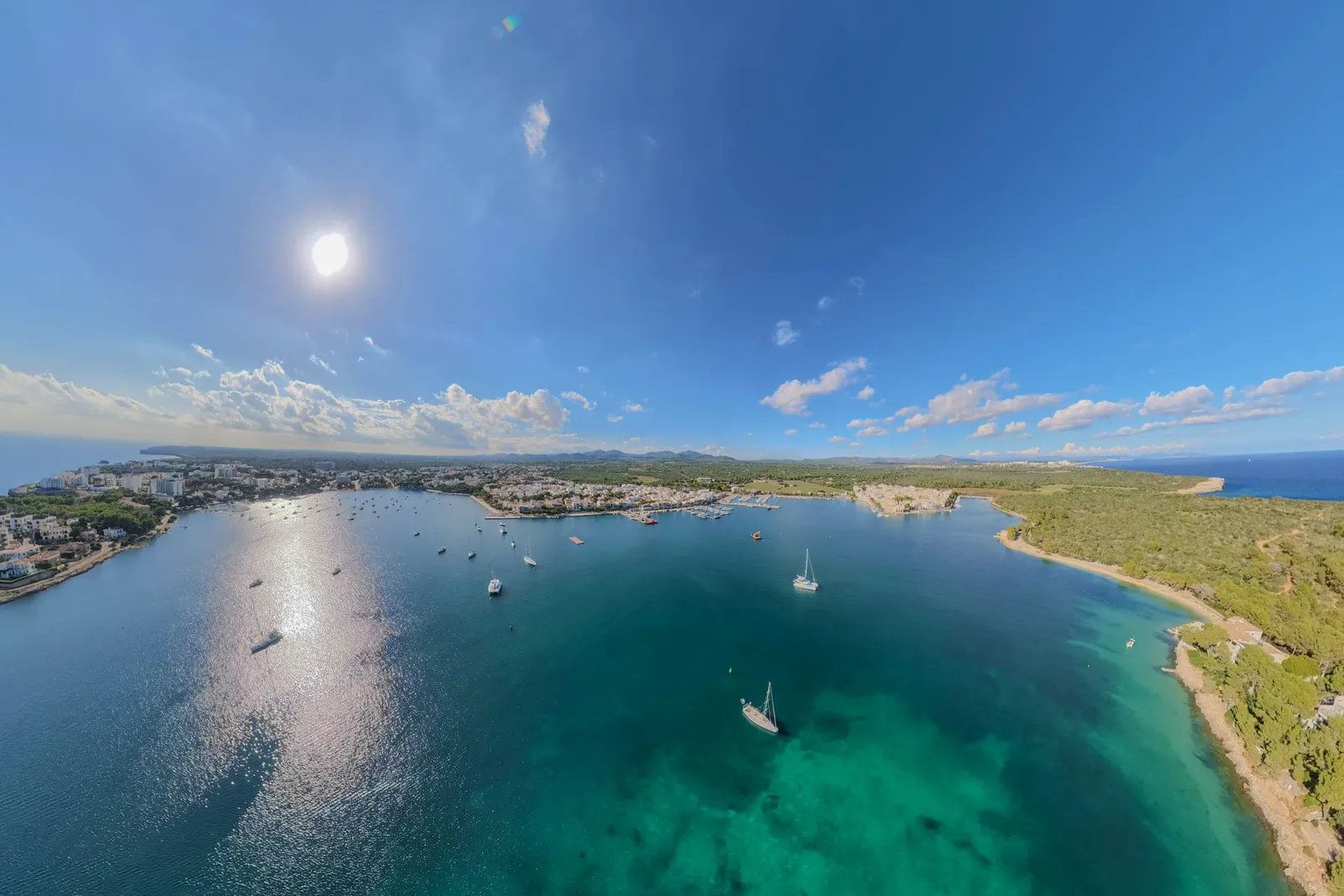
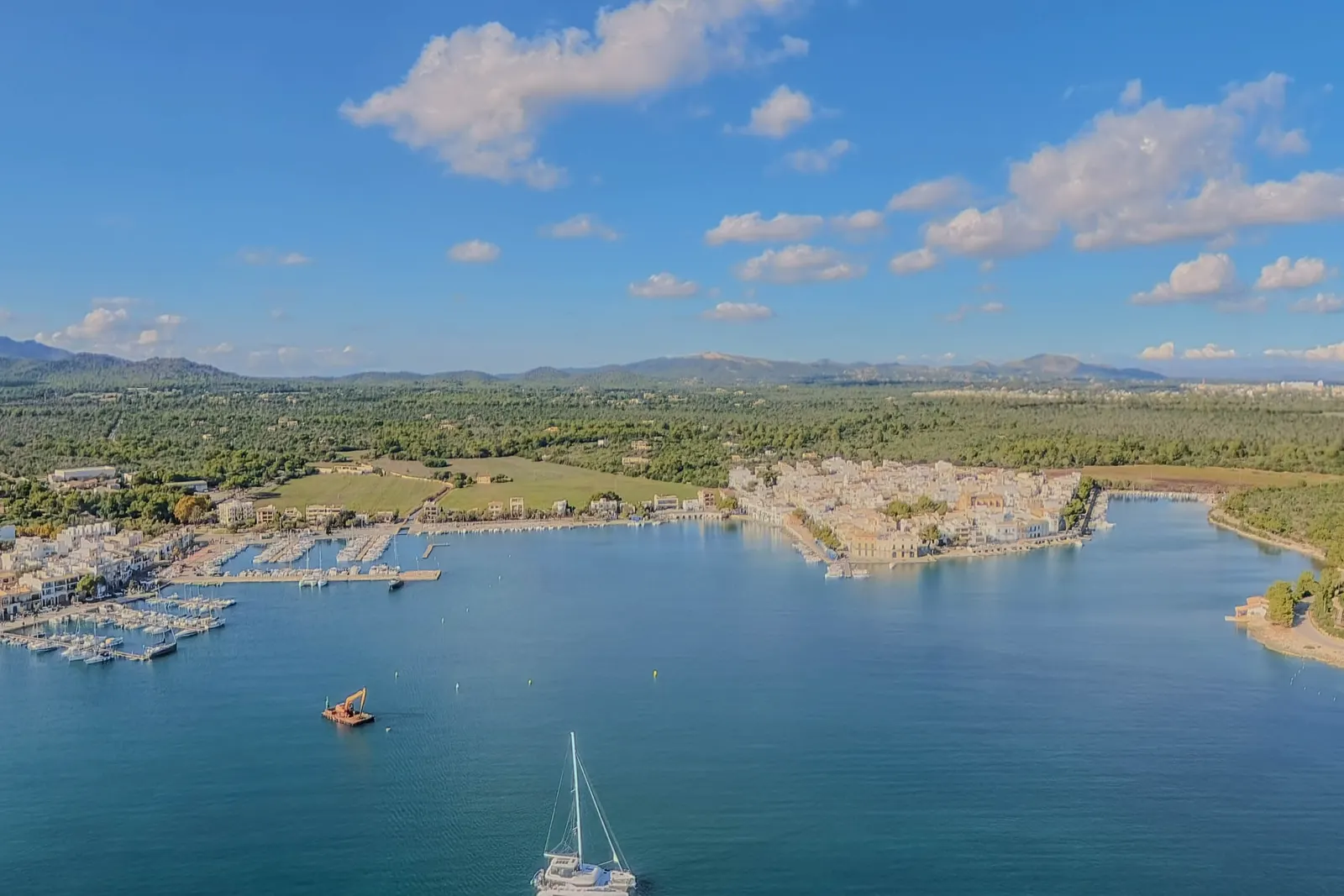
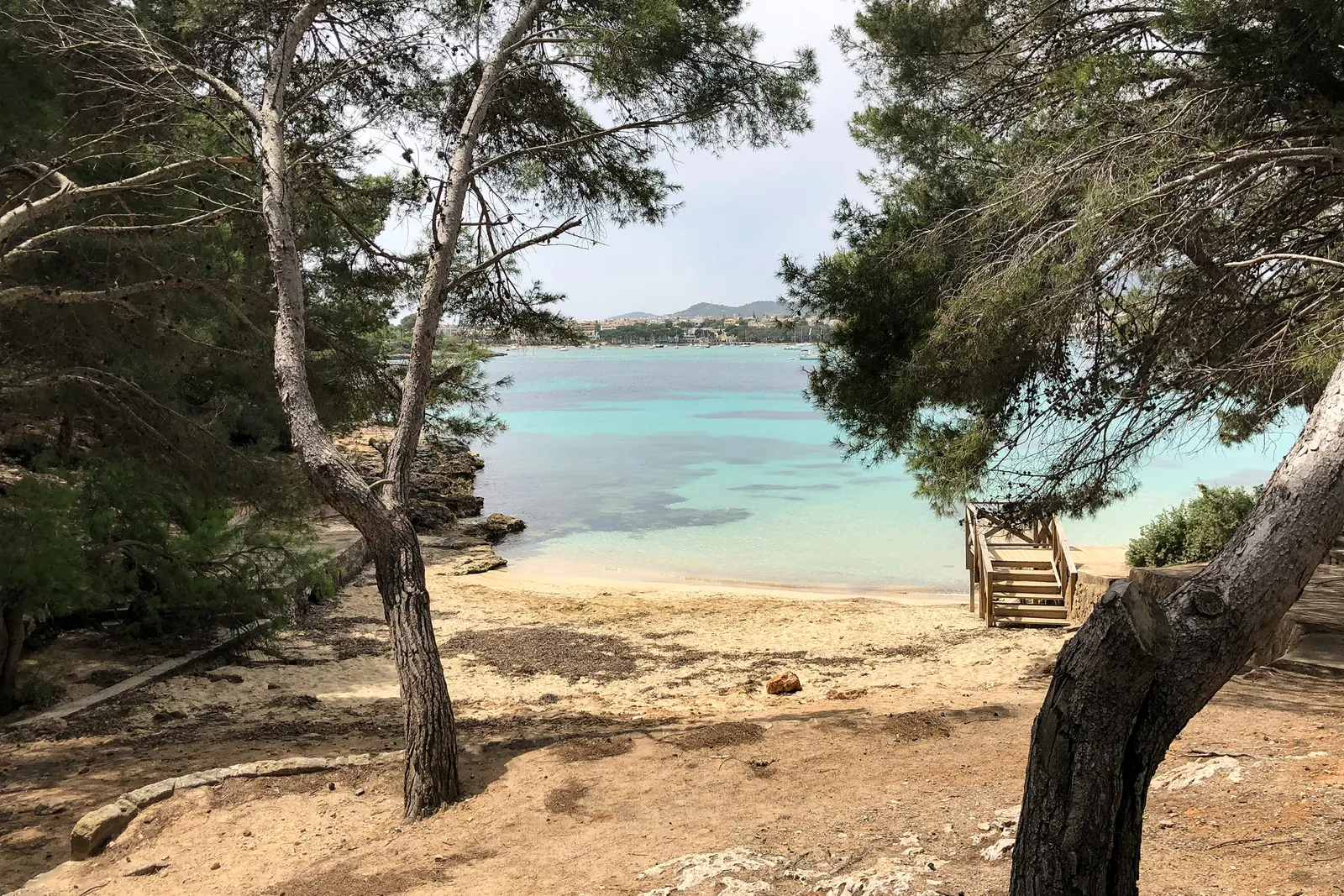
Sunlight on the water between anchored boats.
Getting to know Portocolom
Does Portocolom suit your plans?
What to expect and what to know before you visit.
Who it suits
- Anyone wanting a working natural harbour rather than just a marina
- Visitors looking for a quieter east-coast base
- Photographers — the colourful boathouses are a favourite subject
- Anyone happy to walk a little to the beach
Things to bear in mind
- Anyone needing the main beach on their doorstep — it is behind the town
- Visitors wanting nightlife or a wide choice of shops
- Anyone looking for lots of activity
- Winter visitors expecting every holiday business to be open
Drive from the airport
60 minutes
62 km
Bus connections
Services from Felanitx and Manacor
Region
Migjorn
Nearest beach
Cala d'en Marçal
1 km
Elevation
5 m
above sea level
Season guide for Portocolom
November Worth a visit
Very quiet Some places closed
Worth visiting in March, April, May, June, September, October and November.
Location
Location of Portocolom
- Region
- Migjorn
- Municipality
- Felanitx
- Population
- 4,900
- Elevation
- 5 m above sea level
- Airport
- 62 km , around 60 minutes
- Hire car
- recommended
- Worth visiting for
- a longer stay
- Coordinates
- 39.4172,3.2578
The natural harbour
Portocolom lies on the south-east coast and has one of Mallorca’s largest natural harbours, a broad, sheltered bay with a narrow entrance. It was used long before the modern town existed. In antiquity, Roman ships unloaded goods for Felanitx, twelve kilometres inland, and took on grain, fruit and wine. The harbour remained a trading point under Muslim rule.
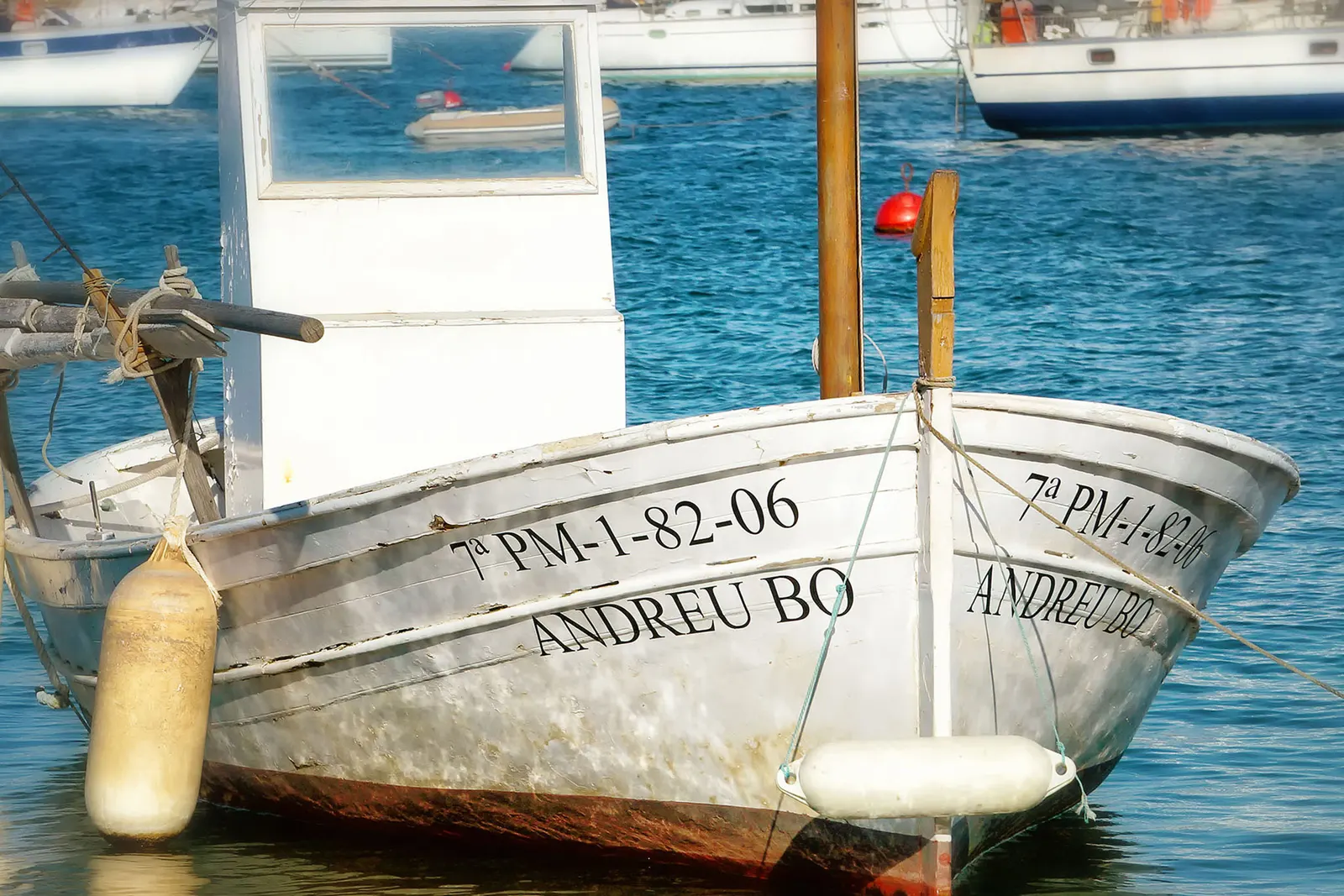
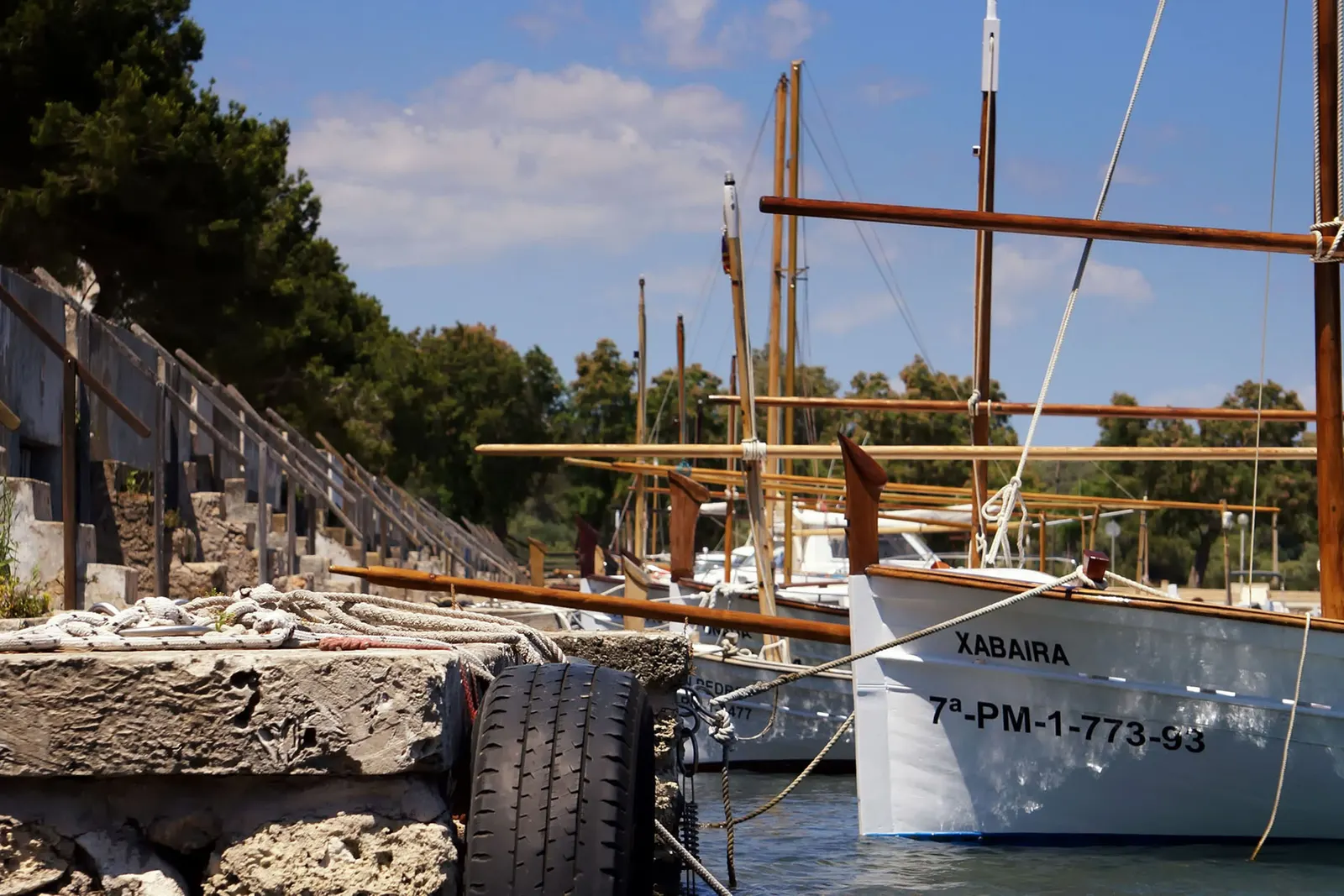
Today, traditional fishing boats line up outside the boathouses. Walk right around the bay and the boats become more modern: first llaüts, then sailing yachts, with several good waterfront restaurants along the way.
The Columbus story
Local tradition claims that Cristóbal Colón, Christopher Columbus, was born and grew up here, and that the village’s name comes from him. This is not established fact. Several places make competing claims about his origins.
The story is still told and has become part of the village’s identity.
Why it feels different
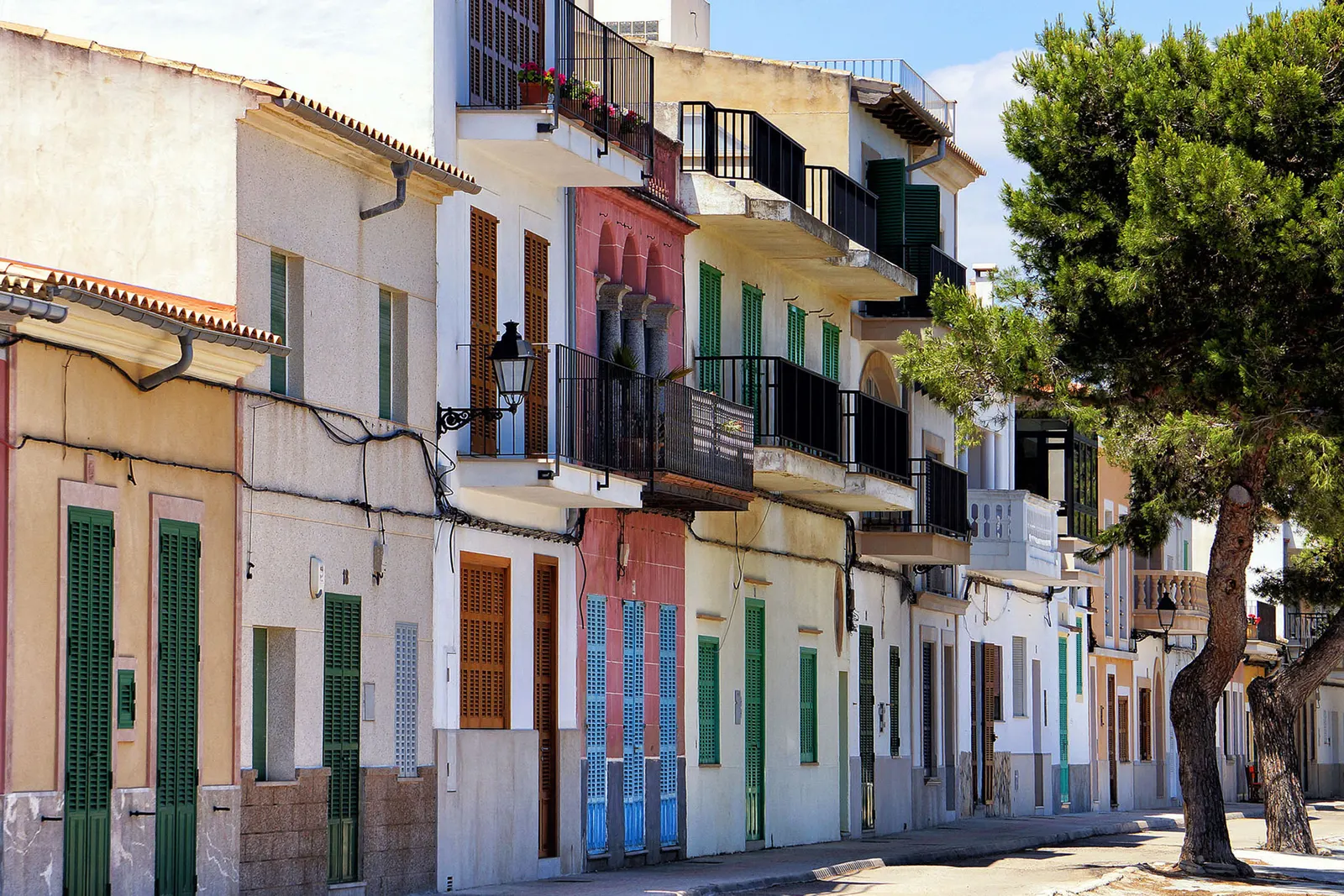
Portocolom has avoided the scale of mass tourism seen in some neighbouring resorts. Hotels and apartments largely sit outside the old centre, while the beaches are spread around the edges.
The harbour has kept its working role, and the old town remains a place where people live.
Where to swim
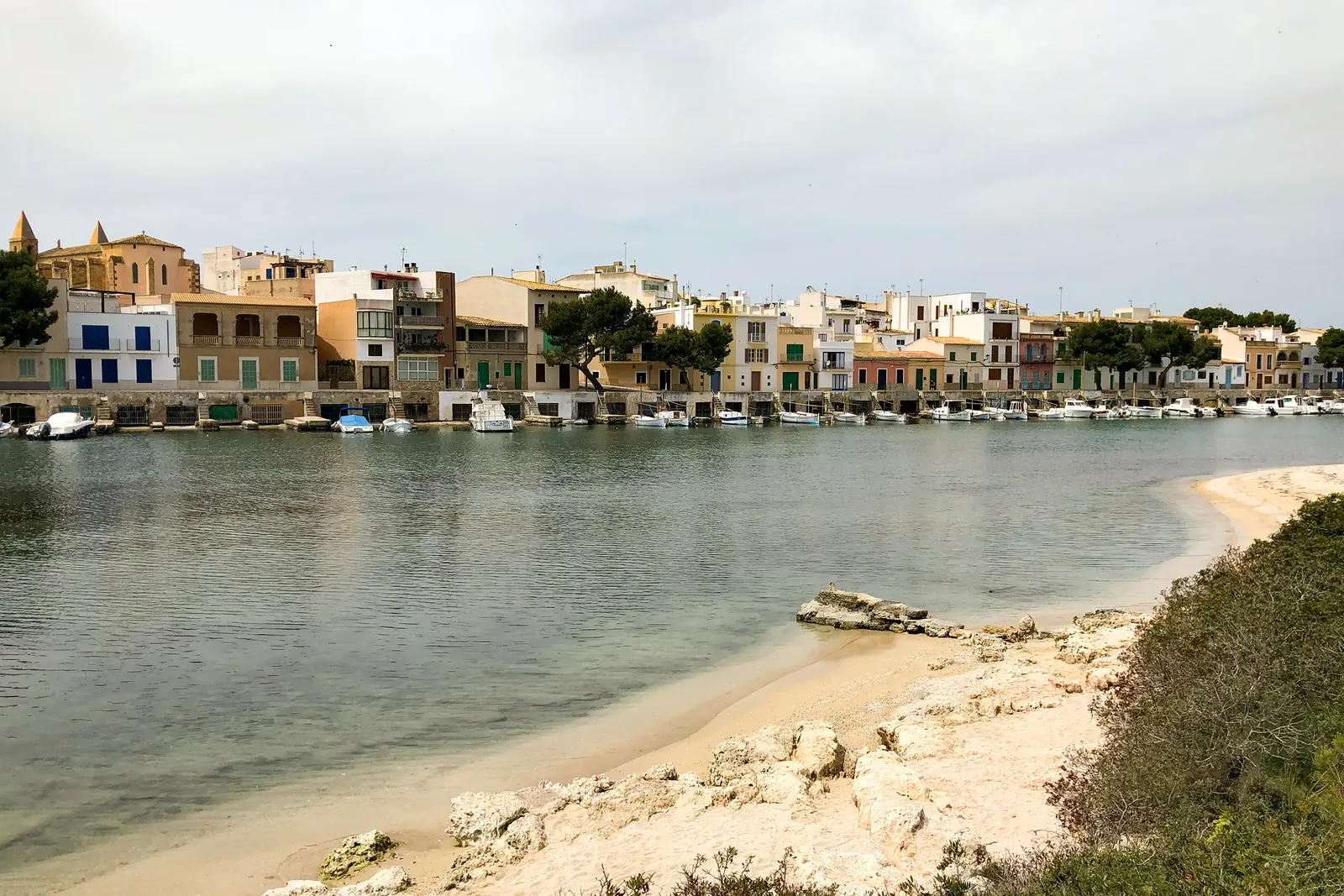
There are several bathing spots rather than one central beach, which helps spread visitors out.
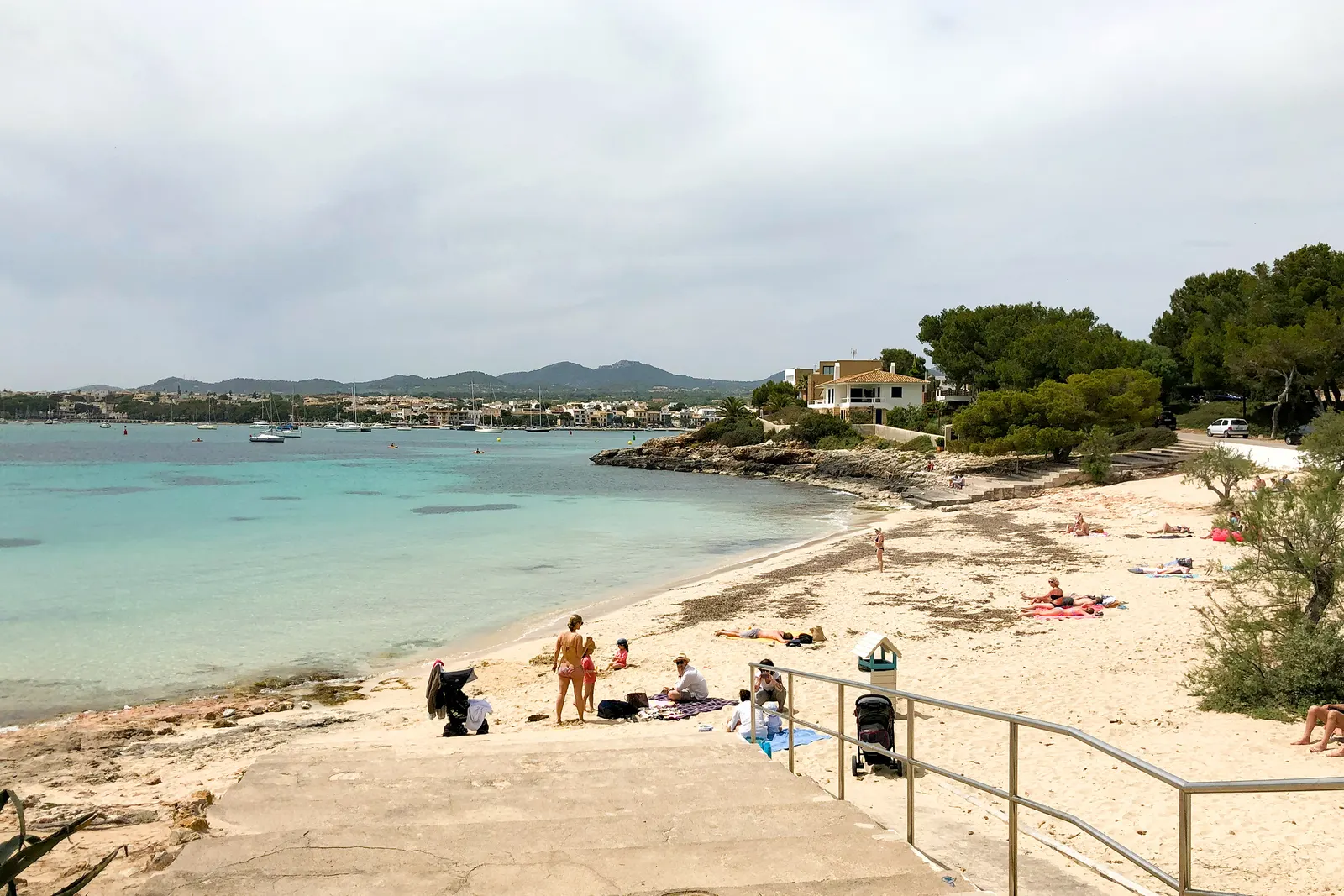
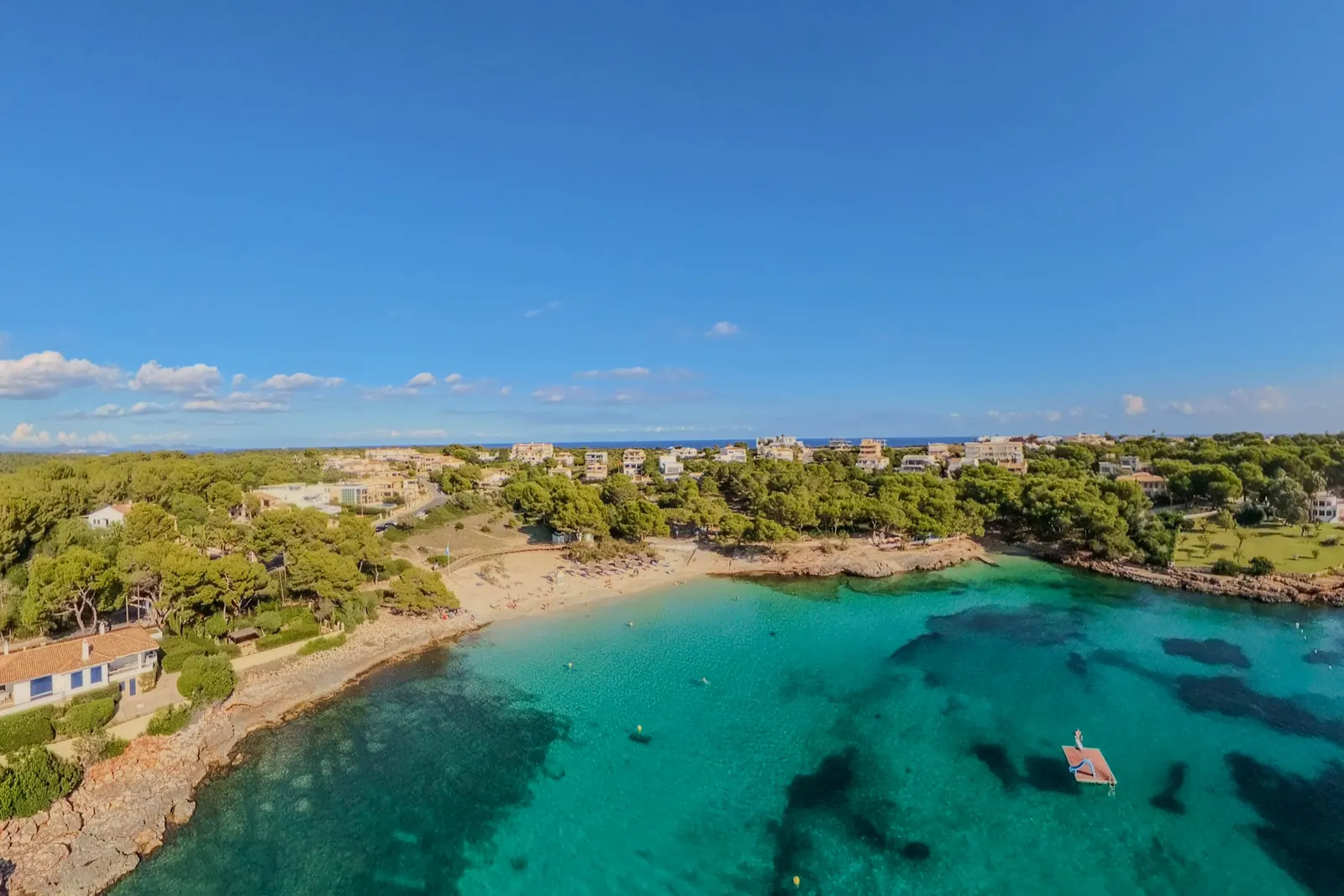
S’Arenal de Portocolom, near the lighthouse, consists of two coves separated by a small rocky ridge. S’Arenal Gran is the larger, around 150 metres long and 40 metres wide, with fine golden sand and shallow, clear water. Unusually for this coast, trees cast shade right onto the sand. Smaller S’Arenal Petit is alongside. Both suit families.
Cala d’en Marçal lies on the other side, behind the town. It has a larger sweep of sand and more facilities, with corresponding high-summer crowds.
There are also two small beaches inside the harbour bay, mainly used by local residents.
The lighthouse
At Punta de ses Crestes, beside the harbour entrance, stands Portocolom lighthouse, a white cylindrical tower with black bands. It is a popular photographic subject, and the approach takes you past S’Arenal.
When to visit
March to May and October are particularly pleasant. The town also carries on in winter rather than closing completely, although some restaurants shut.
In July and August, it is busy but generally less crowded than larger resorts. Cala d’en Marçal attracts the most beach visitors; S’Arenal can be a more relaxed choice.
Nearby
Cala d’en Marçal is five minutes away, while undeveloped Cala Brafi is a twenty-minute walk. Felanitx and Castell de Santueri lie inland, with Felanitx twelve kilometres away. Porto Cristo and its caves are around half an hour to the north.
Photographs
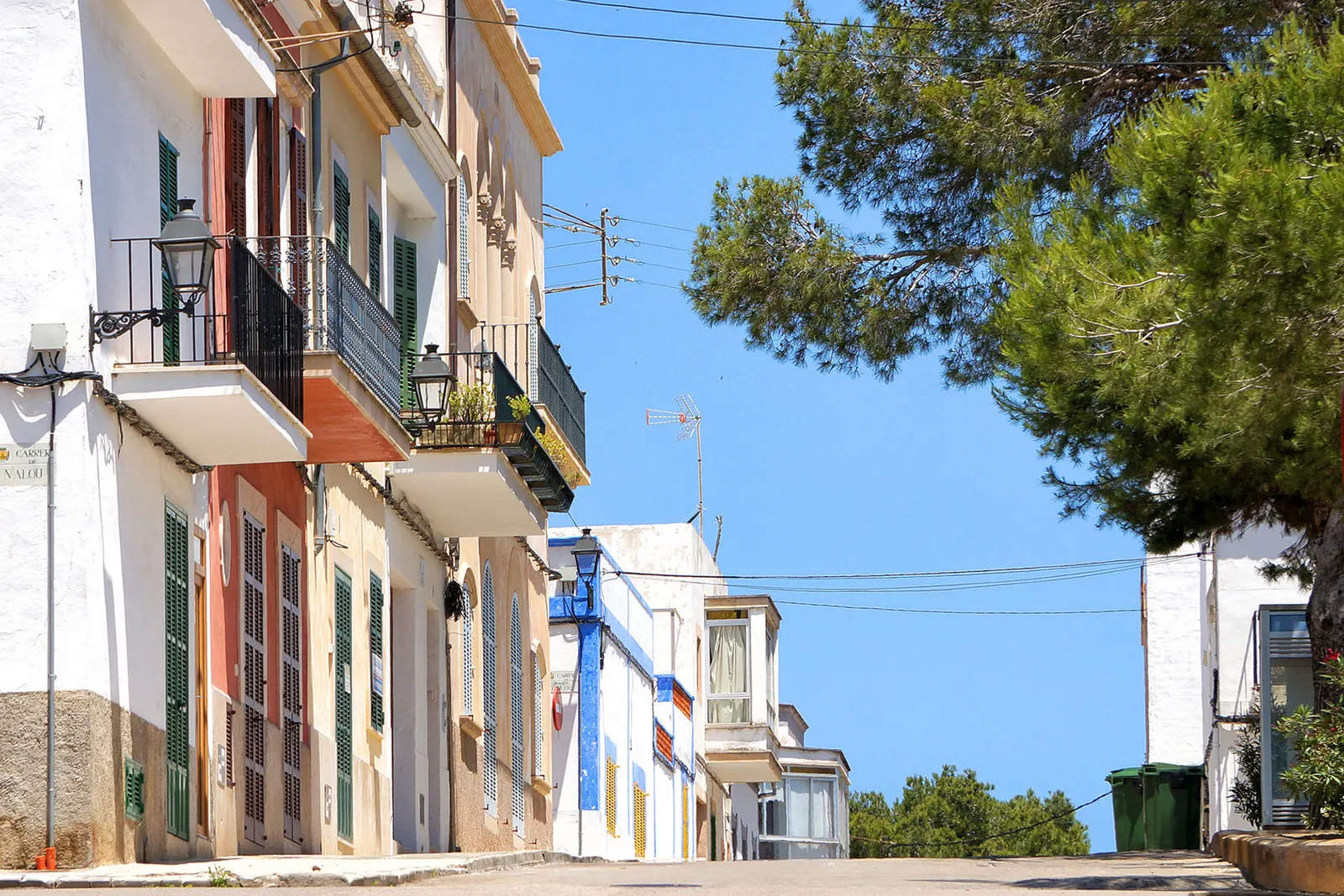
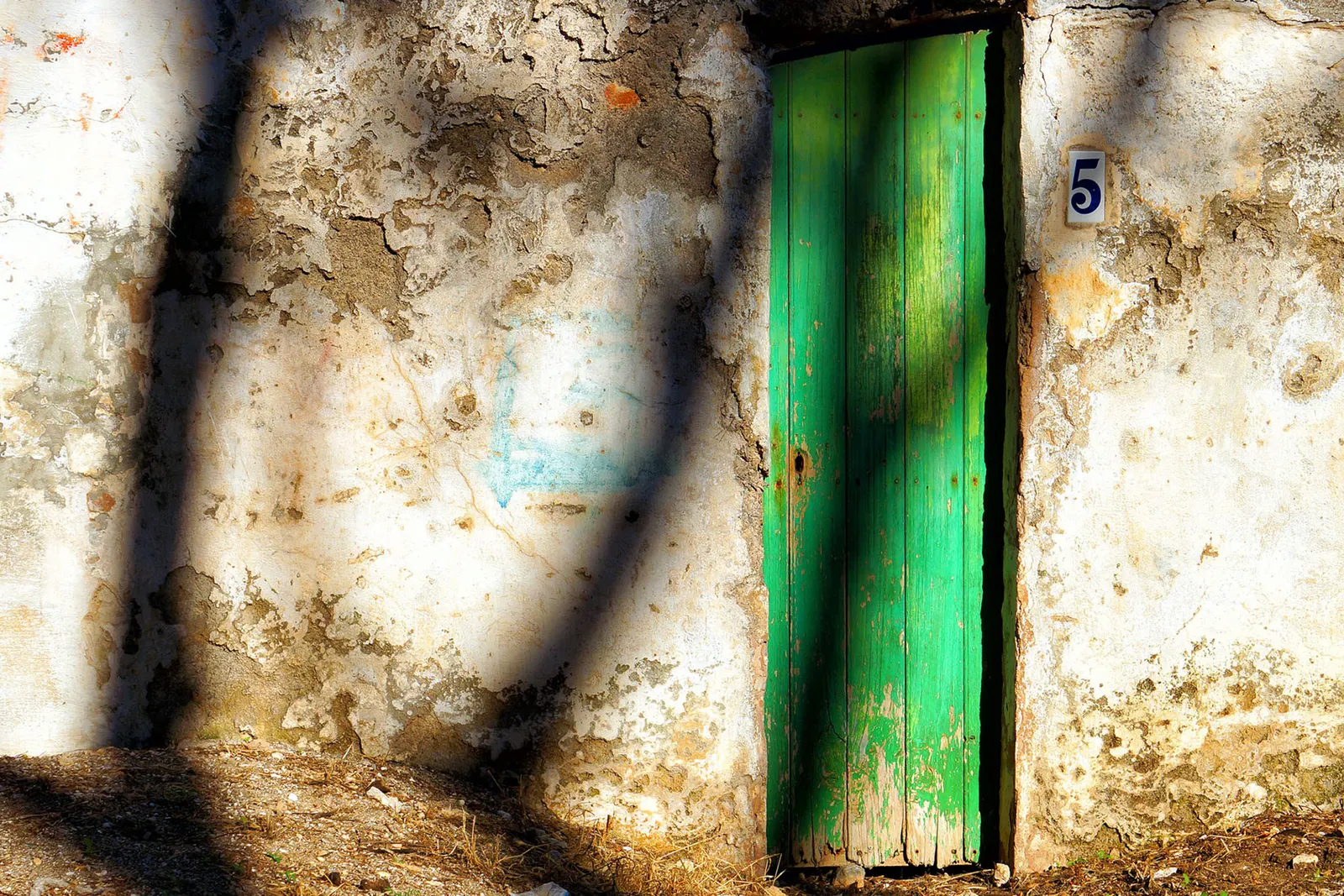
Portocolom in Mallorca
How much time do you have?
Things to do in Portocolom
Three hours
Start on the quay wall in the old town, then walk right around the bay past the boathouses towards the larger boats and waterfront restaurants. Return through the lanes.
Half a day
Add the lighthouse at the harbour entrance, then swim at Cala d'en Marçal.
A full day
Explore the town and harbour in the morning, then walk to Cala Brafi or drive inland to Felanitx and Castell de Santueri.
On a rainy day
Visit Felanitx, twelve kilometres inland, or the caves near Porto Cristo.
The beach at a glance
- Underfoot
- Sand at the small harbour beaches
- Getting into the water
- Shallow water, but limited beach space
- Length
- Two small beaches in the bay, plus Cala d'en Marçal outside the centre
- Shade
- Little
- Wind
- Sheltered inside the natural harbour
- With children
- Good; Cala d'en Marçal is the main beach
- Facilities
- Restaurants and bars by the harbour · Sunbeds and parasols at Cala d'en Marçal · No sunbed hire at the small harbour beaches
Practical details
- Parking
- Waterfront road and side streets; limited spaces in high summer
- Public transport
- Services from Felanitx and Manacor
- Time to allow
- Two to three hours for the harbour and old town; a week as a holiday base
- Good to know
- Cala d'en Marçal is behind the town, rather than inside the harbour. The two smaller harbour beaches are mainly used by local residents.
- Bus
- Services from Felanitx and Manacor, plus a local connection to Cala d'en Marçal. Change buses when travelling from Palma.
- Shops and services
- Supermarkets: Several in town, open year-round · Pharmacy: In town · Medical care: In town; hospital in Manacor · Cash machines: Several by the harbour · Fuel: On the road to Felanitx
- Access
- Level waterfront road; some cobbled old-town lanes · Pushchairs: Straightforward along the waterfront · Wheelchairs: Waterfront road accessible; old town partly accessible · Dogs: Straightforward
- What you will not find
- A large beach in the harbour area · Nightlife · A row of waterfront hotels · A strip of souvenir shops
- Coordinates
- 39.4172,3.2578 Google Maps Apple Maps
Within reach
Places to visit
Nearby

A rocky hilltop fortress 408 metres above sea level near Felanitx, its walls rising directly from the cliff edge …
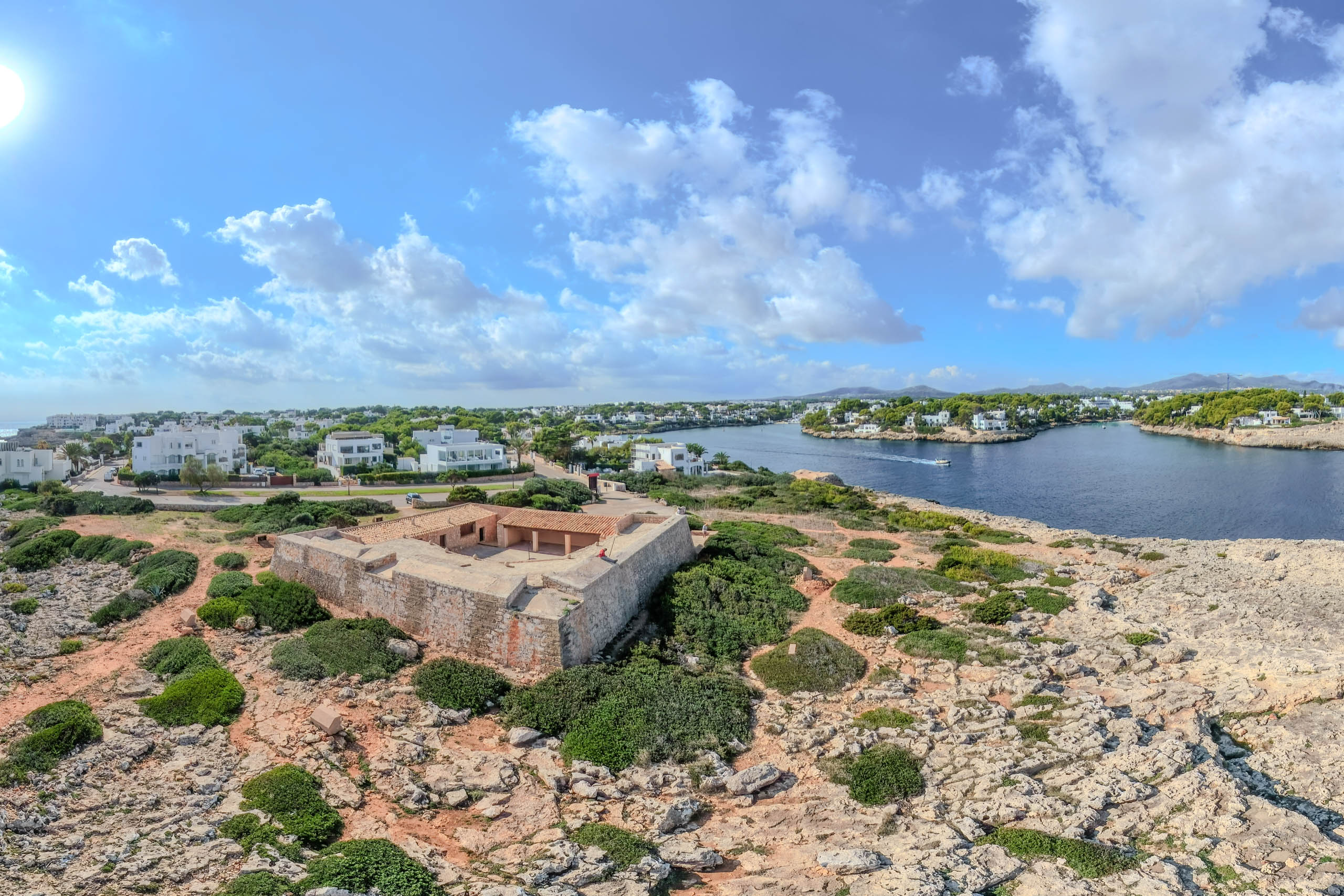
Es Fortí stands on the rocky headland at the entrance to Cala Llonga in Cala d’Or. Behind its thick walls is a …

A pilgrimage church has stood here since 1348, 509 metres above Felanitx at the southern end of the Serra de …

A small 15th-century sanctuary on a 205-metre hill near S'Alqueria Blanca, rarely busy and with views over the …

The caves near Porto Cristo take their name from their hook-shaped formations. Smaller than the nearby Coves del …

A freestanding rock arch in the sea, one of the south-east coast’s best-known views. The viewpoint lies between …
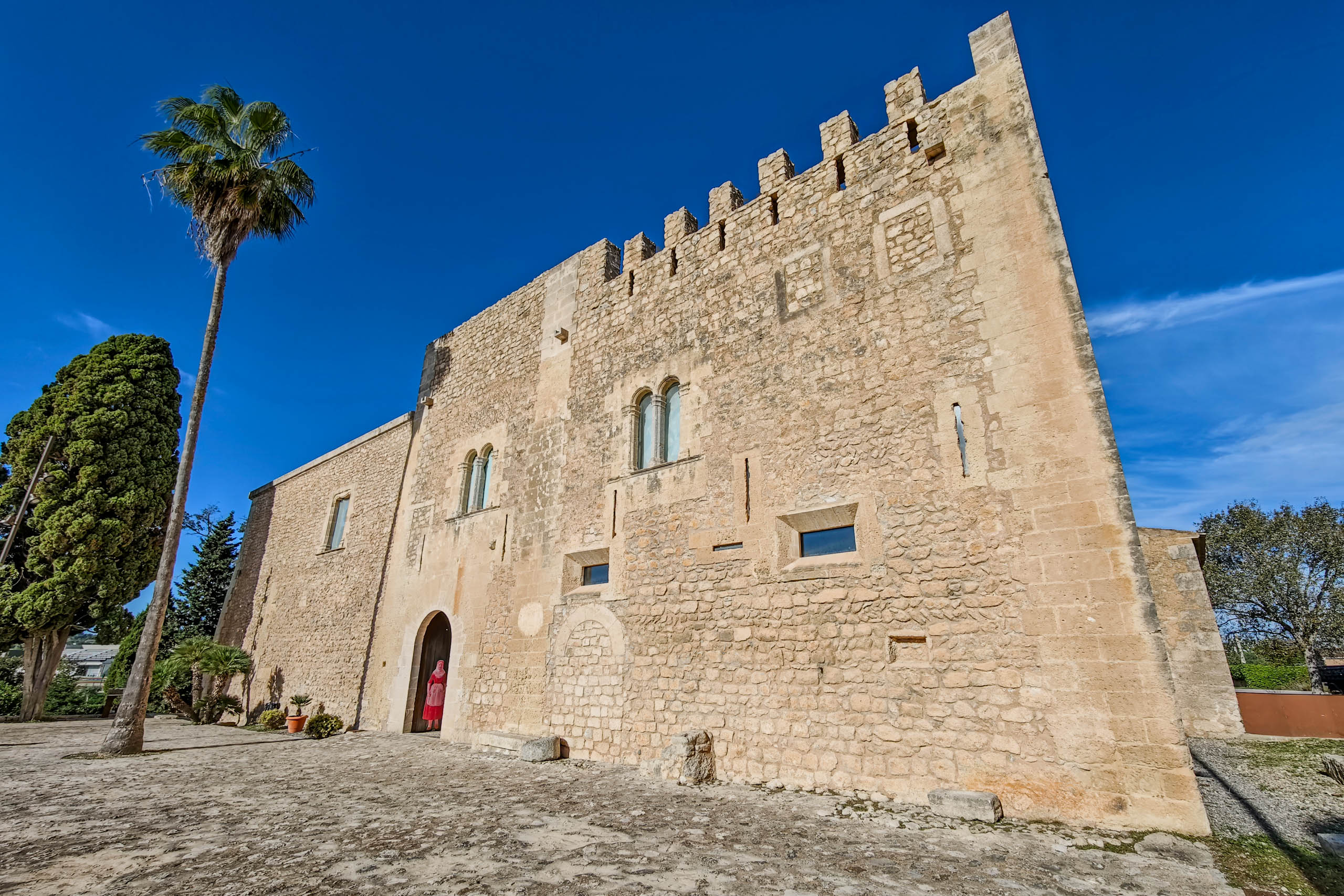
Behind the Rafa Nadal Sports Center is a museum worth taking time over. Inside Torre dels Enagistes, the galleries …
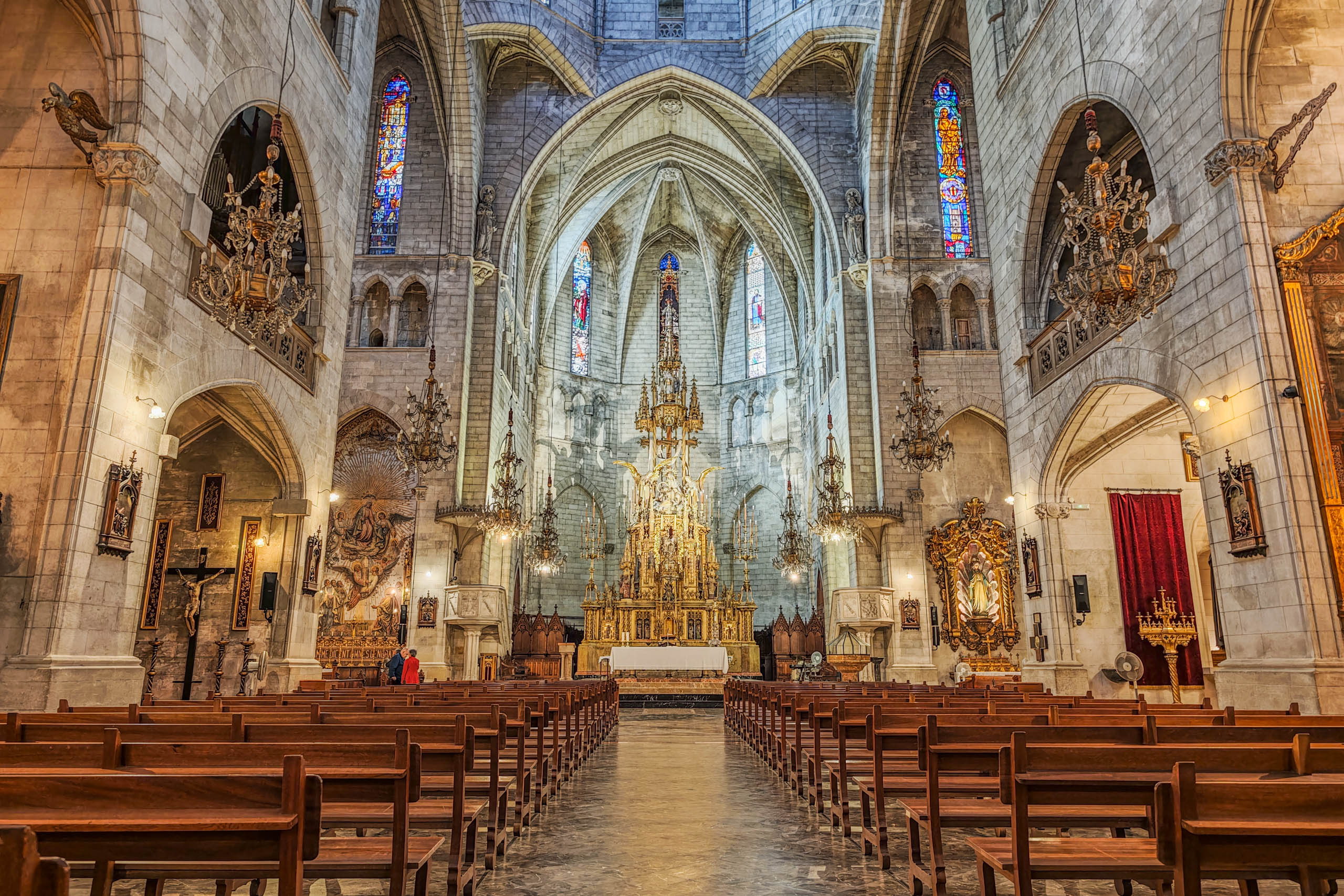
The tall bell tower of Nostra Senyora dels Dolors rises above Manacor’s rooftops. Inside are a lofty vaulted nave …
Distances without a driving time are measured in a straight line. The road journey can be much longer; known driving times are shown alongside.
Other beaches to consider
Beaches and swimming nearby

Golden sand, gently shelving water and a nearby bus stop make Cala d'en Marçal Portocolom's convenient family …

A small, undeveloped bay with no kiosk or road to the sand. A rough path between dry-stone walls leads past a low …
on foot only

A resort planned in the 1930s by an Ibizan who brought the style of his home island with him. Low white buildings …

A kilometre and a half from Cala d'Or, but a different world — a natural harbour where fishermen still unload …
Explore from here
Your questions answered
Your questions about Portocolom
Does Portocolom have a beach?
There are two small harbour beaches, mainly used by local residents. The main holiday beach is Cala d'en Marçal behind the town, with its own bus stop. Head there for a larger stretch of sand.
Why does Portocolom feel less touristy?
The hotels and apartments are mainly outside the old centre, and much of the beach activity takes place at Cala d'en Marçal. The harbour has retained its working character. It makes a quieter alternative to Cala Millor or Port d'Alcúdia.
What is Portocolom's connection with Christopher Columbus?
Local tradition claims that Cristóbal Colón, Christopher Columbus, was born and grew up here, and links the village's name to him. This is not established fact; several places claim a connection with his origins. The story is still often told locally.
How old is Portocolom harbour?
The natural harbour was used in antiquity. Roman ships brought goods for nearby Felanitx and loaded grain, fruit and wine from the surrounding area. It also served as a trading port during Muslim rule.
Is Portocolom a good holiday base?
Yes, if you prefer a quieter stay. There are year-round supermarkets, a pharmacy and medical services, waterfront restaurants and Cala d'en Marçal within walking distance. Felanitx, the Porto Cristo caves and the south-east are easy to explore. Choose elsewhere if you want lots of nightlife and shopping.
Practical questions
When is the best time to visit Portocolom?
Recommended months: March, April, May, June, September, October, November. Lovely light and few day visitors make this a good time for the harbour.
Is Portocolom worth visiting in July and August?
July: worth considering with some reservations. Usually busy. Busy does not generally mean overcrowded here, although Cala d'en Marçal can be. August: worth considering with some reservations. Usually busy.
How far is Portocolom from Palma airport?
About 62 km from Palma airport. Allow roughly 60 minutes by car. Felanitx is twelve kilometres away. Park along the waterfront road or in side streets; outside high summer, it is usually straightforward.
Do I need a hire car for Portocolom?
A car is useful Services from Felanitx and Manacor, plus a local connection to Cala d'en Marçal. Change buses when travelling from Palma.
Where can I park in Portocolom?
Waterfront road and side streets; limited spaces in high summer
Can you swim at Portocolom?
Yes. Sand at the small harbour beaches Shallow water, but limited beach space Two small beaches in the bay, plus Cala d'en Marçal outside the centre Little Good; Cala d'en Marçal is the main beach
Can I visit Portocolom with a pushchair or wheelchair?
Level waterfront road; some cobbled old-town lanes Pushchairs: Straightforward along the waterfront Wheelchairs: Waterfront road accessible; old town partly accessible
Are dogs allowed at Portocolom?
Straightforward
Portocolom features in our Mallorca highlights
Words and photographs: Friedhelm Fischer. Exploring Mallorca since 2013 — by bike, on foot and with a camera.