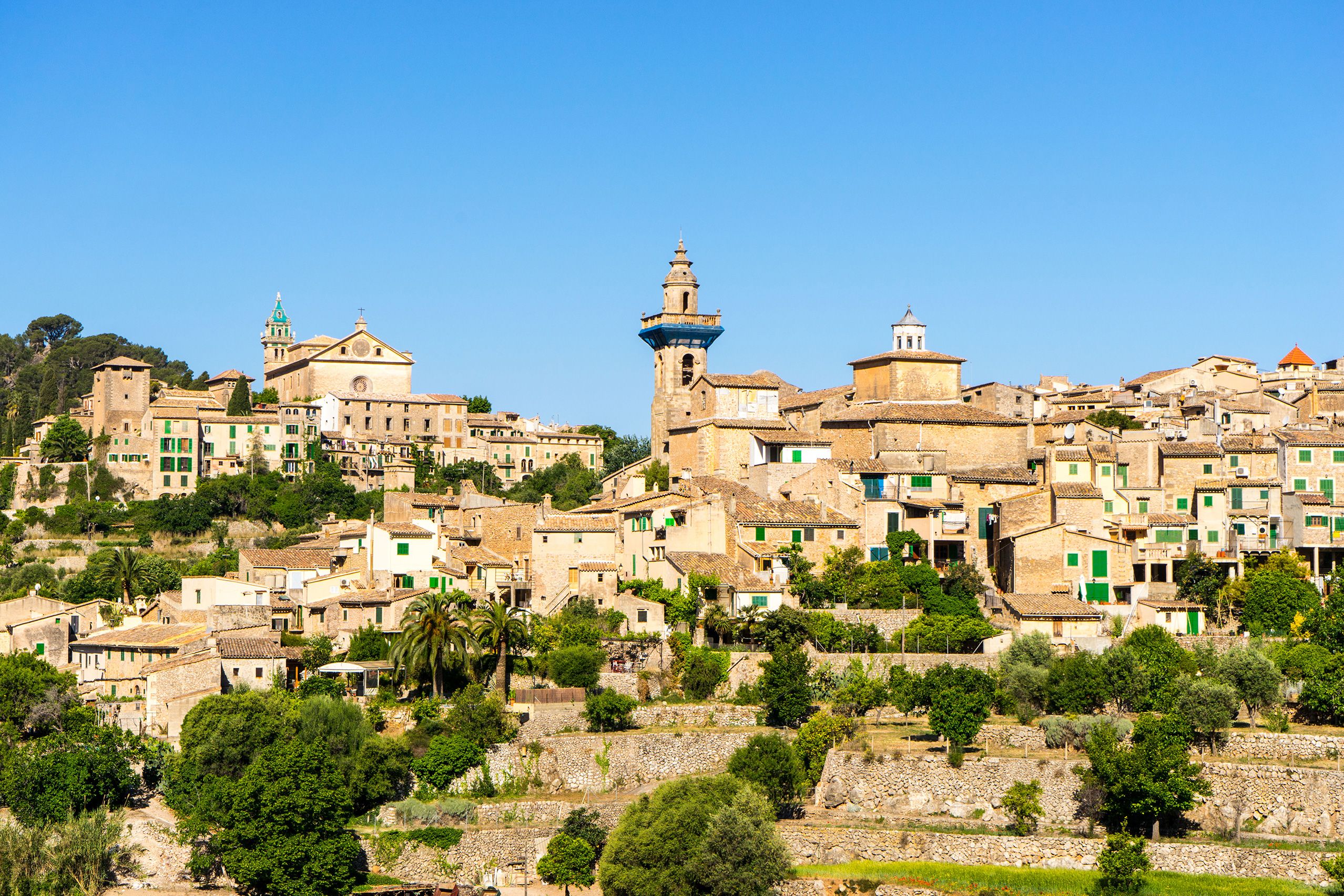
Valldemossa
Mallorca's best-known mountain village, famous for a winter that was mostly wet. Chopin and George Sand stayed in its former charterhouse in 1838–39. Visitors have been following them ever since.
Valldemossa
Valldemossa in 30 seconds
The essentials at a glance
- Worth visiting for
- A short visit
- Best for
- The charterhouse, literary history and mountain-village lanes
- Best months
- January–March, October–December
- Time to allow
- Two to three hours for the village and charterhouse. Allow a full day if adding the walk to Port de Valldemossa.
- Without a car
- Hire car recommended
- Parking
- Two paid car parks at the village entrance, filling from ten in summer. Do not expect spaces in the old centre.
- Highlight
- The charterhouse where Chopin and George Sand stayed
- Keep in mind
- A level walk without cobbles or steps
- Access
- Pushchairs: Difficult · Wheelchairs: Limited access on the main street; narrow lanes unsuitable
Get a feel for Mallorca. Find your kind of place.
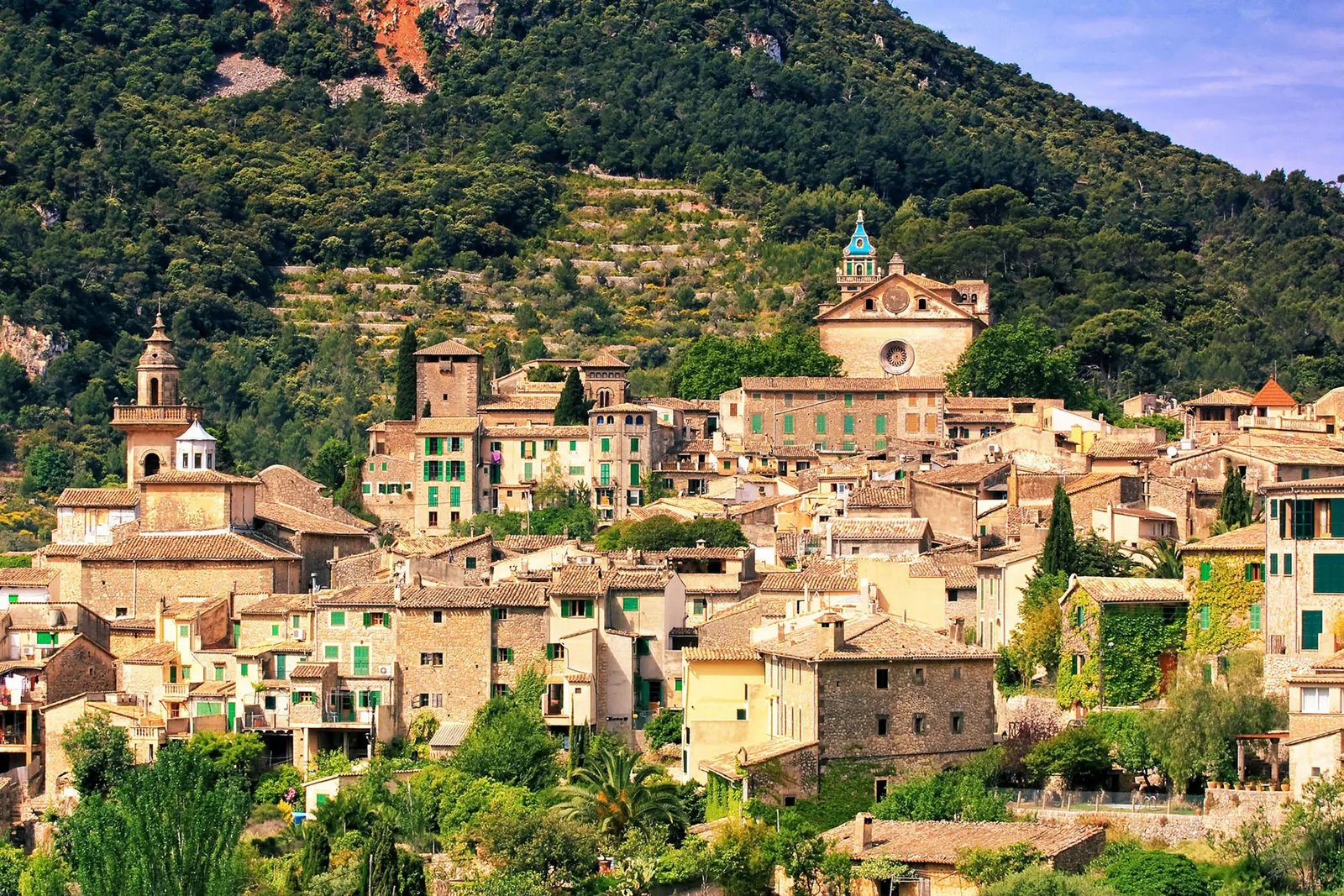
Two towers above the rooftops, with the village at 400 metres.
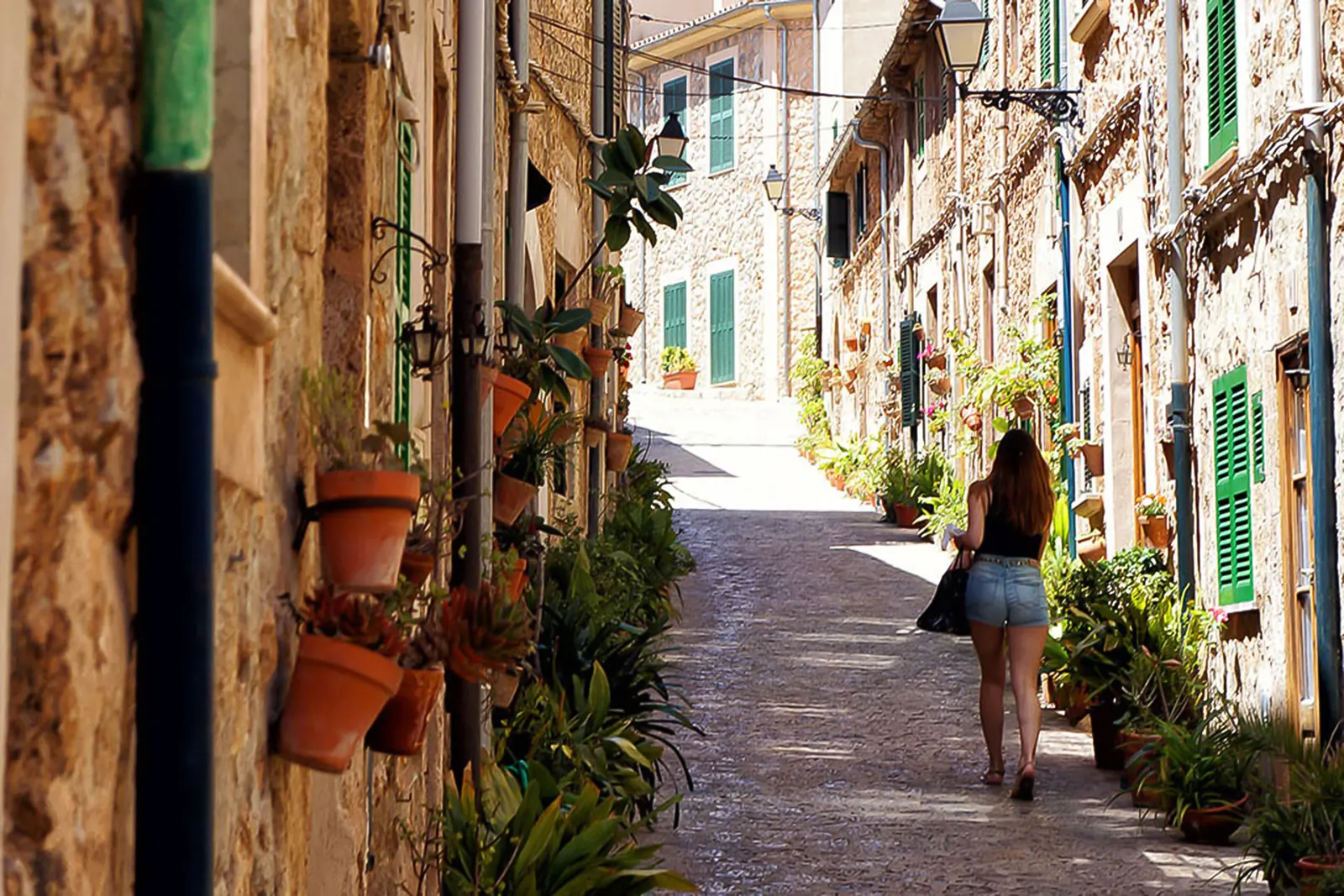
Pots line the village's best-known lanes. Early mornings are quieter.
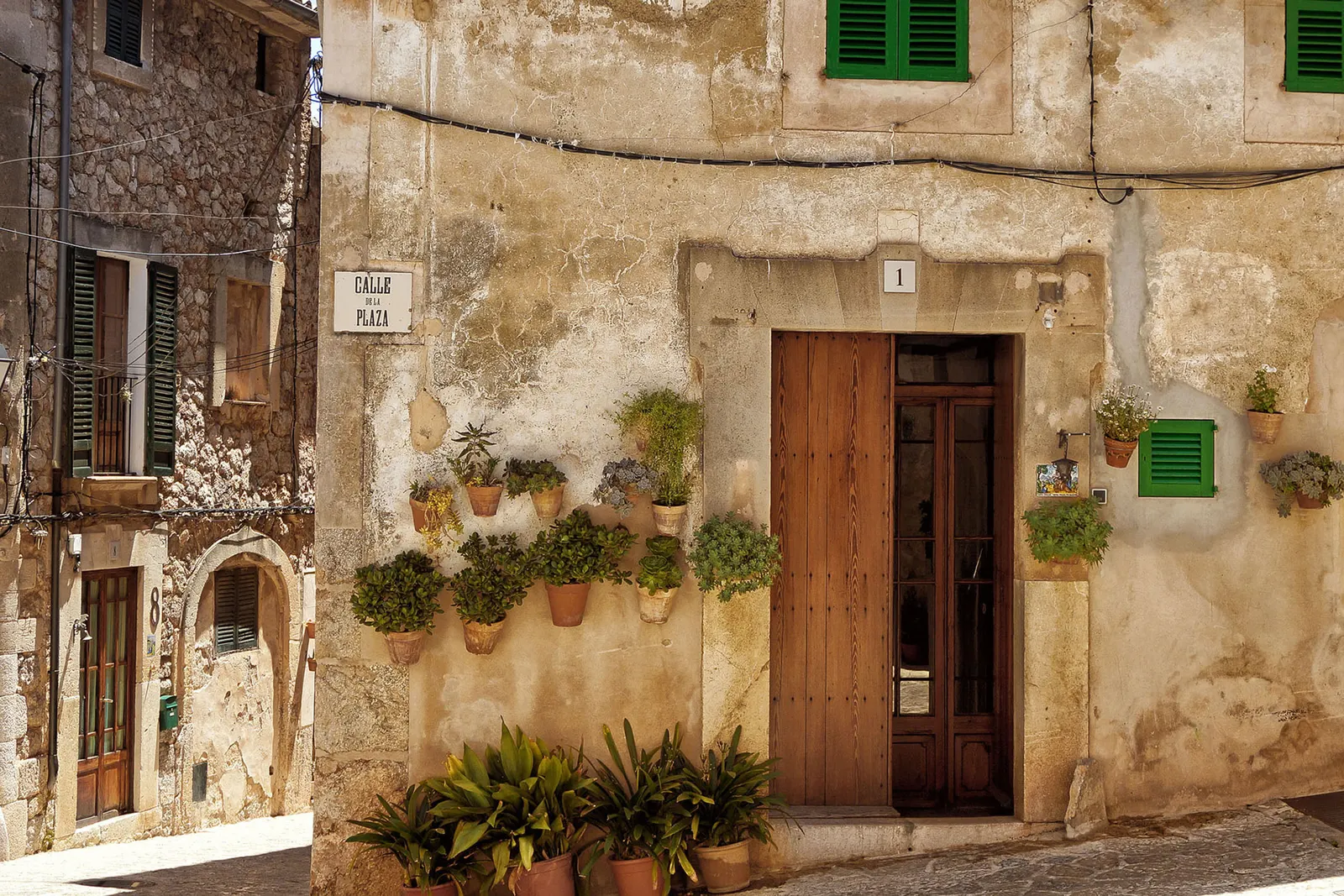
The plants are a local tradition, not decoration put out for visitors.
Getting to know Valldemossa
Does Valldemossa suit your plans?
What to expect and what to know before you visit.
Reasons to visit
- The charterhouse combines monastic history with Chopin and George Sand's stay.
- Narrow lanes and steps wind between stone houses in the old centre.
- You can combine the village and charterhouse over a few hours.
Good to know
- Cobbles, slopes and steps make pushchairs and wheelchairs difficult.
- Day visitors crowd the narrow lanes at peak times.
- Parking is at the village entrance, with the rest explored on foot.
Drive from the airport
35 minutes
25 km
Bus connections
Route 203 from Palma
Region
Serra de Tramuntana
Nearest beach
Port de Valldemossa
3 km
Elevation
400 m
above sea level
Markets
Sunday
Season guide for Valldemossa
November Worth a visit
Quieter streets than in summer. Check charterhouse opening hours before visiting.
Quiet Open
Worth visiting in January, February, March, October, November and December. Less suitable in July and August.
Location
Location of Valldemossa
- Region
- Serra de Tramuntana
- Population
- 2,050
- Elevation
- 400 m above sea level
- Airport
- 25 km , around 35 minutes
- Hire car
- recommended
- Worth visiting for
- a brief stop
- Coordinates
- 39.7096,2.6222
The mountain village
Valldemossa sits at 400 metres in the Serra de Tramuntana, with just over 2,000 residents, around half an hour north of Palma. Its name is associated with Vall de Mussa, the valley of a Muslim landowner named Musa.
Nearby are Miramar and Son Marroig along the coastal road, and the tiny Port de Valldemossa far below.
The village is best known for a monastery, a saint and a rainy winter.
The charterhouse: palace before monastery
The Reial Cartoixa began as a royal residence. James II had a palace built for his son Sancho, hoping the mountain air would ease his asthma. The Palau del Rei Sanç has its origins in that residence.
In 1399, Martin the Humane gave the royal property in Valldemossa to the Carthusians. They celebrated their first Mass on 11 August 1399 and remained until 1835, when the confiscation of church property under Mendizábal dissolved the monastery. The cells passed into private ownership.
Empty cells could then be rented as rooms, allowing a Polish composer to stay a few years later.
Today you can visit the church, old pharmacy with its jars, prior’s cell, cloister, municipal museum and cells 2 and 4 with material relating to Chopin and Sand, alongside Palau del Rei Sanç. The charterhouse and palace are separately managed.
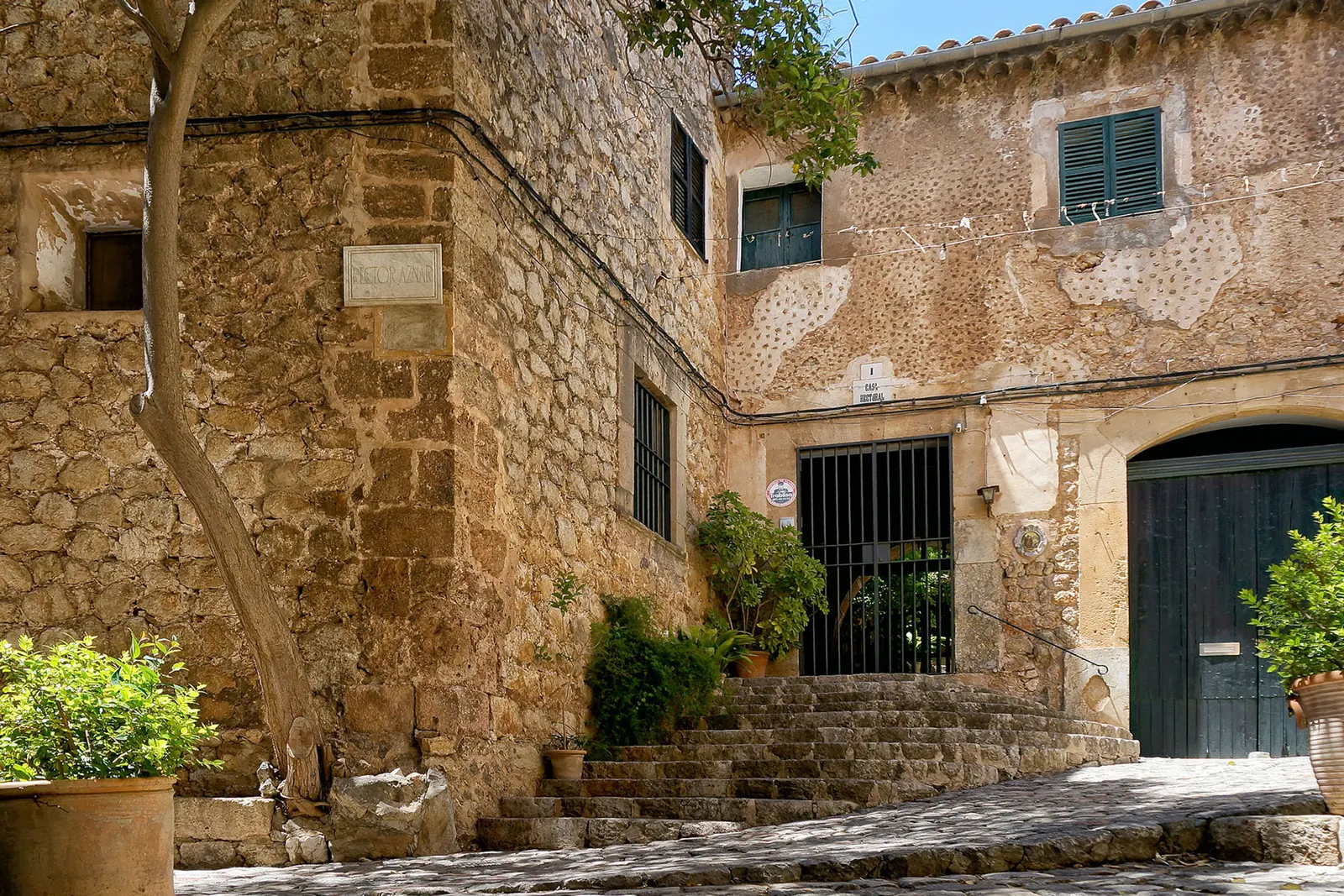
The famous winter
Frédéric Chopin and George Sand arrived on Mallorca on 8 November 1838. They moved into the charterhouse on 15 December and stayed until 11 February 1839, leaving the island for Barcelona by steamship on 13 February. That was just under eight weeks in Valldemossa and a little over three months on Mallorca.
Their stay was difficult. It rained, Chopin was seriously ill, and villagers fearful of tuberculosis kept their distance. His Pleyel upright piano, serial number 666, shipped from Paris, spent weeks held up at customs. It reached him only three weeks before departure. On 22 January 1839, he told his publisher that the twenty-four Preludes, Op. 28, were complete.
The piano stayed on the island, bought from him by Palma’s Canut family, and survives here today.
Sand turned the experience into A Winter in Majorca, or Un hiver à Majorque. Her harsh comments about the Mallorcans helped make the village famous, an irony that is difficult to miss.
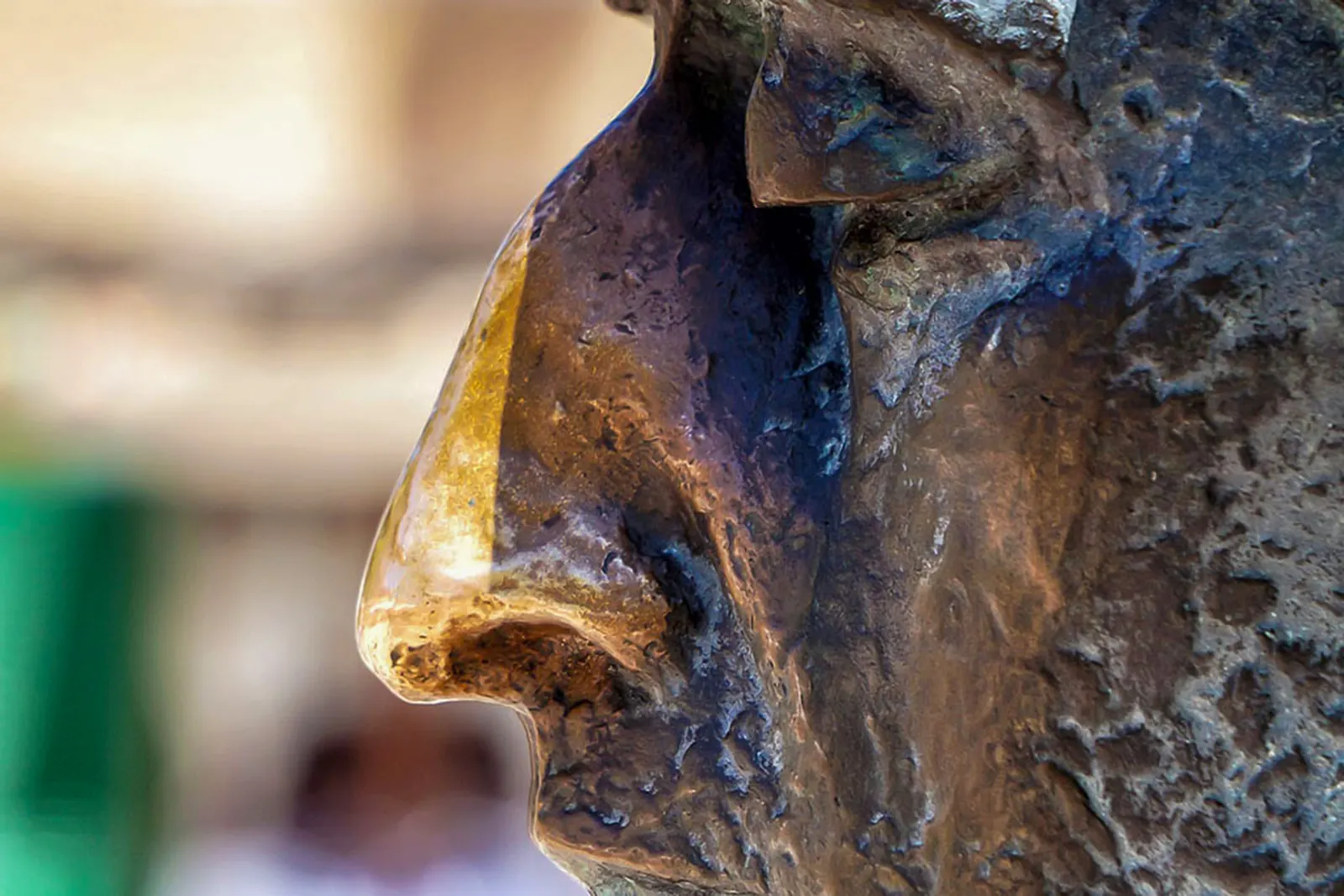
Santa Catalina Thomàs
Catalina Thomàs was born in Valldemossa on 1 May 1531. At twenty-one, she entered the Augustinian convent of Santa Magdalena in Palma. She died there on 5 April 1574, shortly before her forty-third birthday.
Pius VI beatified her in 1792, and Pius XI canonised her in 1930, making her the first saint from the Balearic Islands. On Mallorca, she is affectionately known as sa Beateta, the little blessed one. Her feast is celebrated on 28 July.
Small ceramic tiles on village houses show scenes from her life. Once you notice the first, you start seeing them everywhere.
Her birthplace beside Sant Bartomeu church is now a small chapel.
Miramar and Ramon Llull
Four kilometres north along the coastal road lies Miramar. In 1276, James II founded a missionary school there at Ramon Llull’s request. Thirteen Franciscans studied Arabic and Llull’s Ars. Llull believed that persuasion required understanding another person’s language and way of thinking. He lived and wrote here for almost three years.
Archduke Ludwig Salvator bought the estate in 1872. Museum rooms now recall both figures.
A quieter viewpoint
The cemetery at the upper edge of the village is around five minutes away on foot. Few visitors seek it out, yet the view over the valley and terraces is one of my favourites.
When to visit
November is my favourite month, with fewer visitors and low autumn light. February brings almond blossom to the valley below.
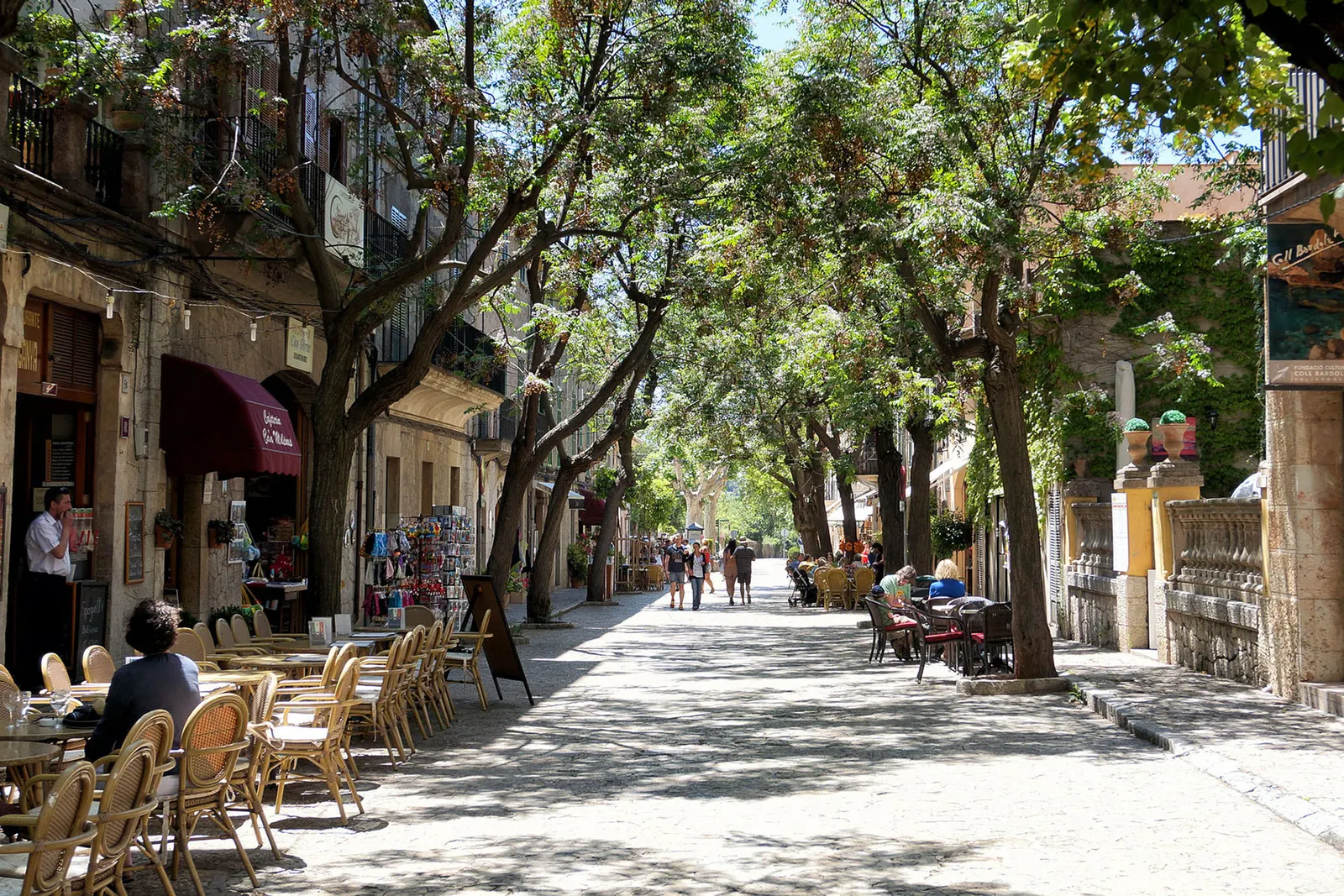
In season, tour groups fill Carrer de la Rectoria between ten and five. Arrive at eight, when the bakery is taking fresh coca de patata, the soft local potato buns, from the oven, and you can enjoy a quieter village.
In August, the car parks fill from ten.
Photographs
Valldemossa in Mallorca
Practical details
- Parking
- Two paid car parks at the village entrance, filling from ten in summer. Do not expect spaces in the old centre.
- Public transport
- Route 203 from Palma, roughly hourly and around 30 minutes. It continues via Deià to Sóller.
- Time to allow
- Two to three hours for the village and charterhouse. Allow a full day if adding the walk to Port de Valldemossa.
- Good to know
- The charterhouse and Palau del Rei Sanç are separately managed. A combined ticket makes sense only if you plan to visit both.
- Bus
- Route 203 from Palma
- Access
- Cobbled lanes and steps, with slopes throughout · Pushchairs: Difficult · Wheelchairs: Limited access on the main street; narrow lanes unsuitable · Dogs: On a lead; not inside the charterhouse
- What you will not find
- Peace between ten and five in season · Parking in the village centre · Level walking routes · A beach
- Coordinates
- 39.7096,2.6222 Google Maps Apple Maps
Dates that change the town
When a race comes to town
Mallorca 312 Road cycling · 25 April 2026
Road closures begin in the morning. The affected roads and reopening times follow the organiser’s traffic plan. Allow extra time for transfers and day trips.
The season guide describes whole months. A race weekend can transform a normally quiet town for a couple of days. Find the dates in our guide to Sporting events.
Within reach
Places to visit
Nearby

Ramon Llull founded a school for Eastern languages here in 1276. Six hundred years later, Archduke Ludwig Salvator …

A country estate near Bunyola, transformed by an 18th-century cardinal into an Italian-style villa. A terraced …

Archduke Ludwig Salvator's country estate above the west coast, with a white marble pavilion on the edge — the …

At the foot of the Sóller pass, this garden has irrigation rooted in Moorish times. Palm groves, a pergola with …

A historic country estate near Esporles, with a manor house and gardens. Public access hasn’t been confirmed, so …

A round 16th-century watchtower on an isolated rocky outcrop above the west coast. Climb the stone steps to the …

An 11th-century brick chamber in an old-town garden, with twelve columns, horseshoe arches and a dome pierced by …

A striking circular Gothic castle, built above Palma between 1300 and 1311. Inside is a two-storey round …
Distances without a driving time are measured in a straight line. The road journey can be much longer; known driving times are shown alongside.
Where to swim nearby
Beaches and swimming nearby

A tiny fishing settlement beneath the cliffs, reached by six kilometres of tight hairpin bends. A few stone houses …

An almost circular, sheltered bay with a sandy beach, two lighthouses and a tram that has run down from Sóller …
Explore from here
Your questions answered
Your questions about Valldemossa
Why is Valldemossa famous?
For a monastery, a saint and a rainy winter. Frédéric Chopin and George Sand stayed in the former charterhouse in 1838–39. Sand's book A Winter in Majorca was sharply critical of local people, but helped make the village famous.
How long did Chopin and George Sand stay in Valldemossa?
Just under eight weeks. They arrived on Mallorca on 8 November 1838, moved into the charterhouse on 15 December and stayed until 11 February 1839, leaving the island on 13 February. Chopin's Pleyel piano was delayed at customs and arrived only three weeks before departure. On 22 January, he wrote to his publisher that his twenty-four Preludes, Op. 28, were finished.
Was Valldemossa's charterhouse always a monastery?
No. James II had a palace built for his son Sancho, hoping the mountain air would help his asthma. In 1399, Martin the Humane gave the royal property to the Carthusians, who celebrated their first Mass on 11 August. The monastery was dissolved in 1835 and its cells became private property, allowing rooms to be rented to visitors such as Chopin a few years later.
What can I see in the charterhouse?
The church, old pharmacy, prior's cell, cloister, municipal museum and cells 2 and 4 associated with Chopin and Sand, as well as Palau del Rei Sanç. The charterhouse and palace are separately managed.
When is Valldemossa quiet?
Before ten in the morning and after five in the afternoon. The middle of the day is much busier in season. Park at the village entrance rather than looking for a space in the old centre.
Practical questions
When is the best time to visit Valldemossa?
Recommended months: January, February, March, October, November, December. Cold and clear, with occasional snow on the Teix above. The charterhouse has shorter opening hours.
Is Valldemossa worth visiting in July and August?
July: another month may suit you better. Usually very crowded. August: another month may suit you better. Usually very crowded. August is extremely busy, with car parks filling from ten.
How far is Valldemossa from Palma airport?
About 25 km from Palma airport. Allow roughly 35 minutes by car.
Do I need a hire car for Valldemossa?
A car is useful Route 203 from Palma
Where can I park in Valldemossa?
Two paid car parks at the village entrance, filling from ten in summer. Do not expect spaces in the old centre.
Can you swim at Valldemossa?
There is no beach here. See the nearby swimming options on this page.
Can I visit Valldemossa with a pushchair or wheelchair?
Cobbled lanes and steps, with slopes throughout Pushchairs: Difficult Wheelchairs: Limited access on the main street; narrow lanes unsuitable
Are dogs allowed at Valldemossa?
On a lead; not inside the charterhouse
Valldemossa features in our Mallorca highlights
Words and photographs: Friedhelm Fischer. Exploring Mallorca since 2013 — by bike, on foot and with a camera.