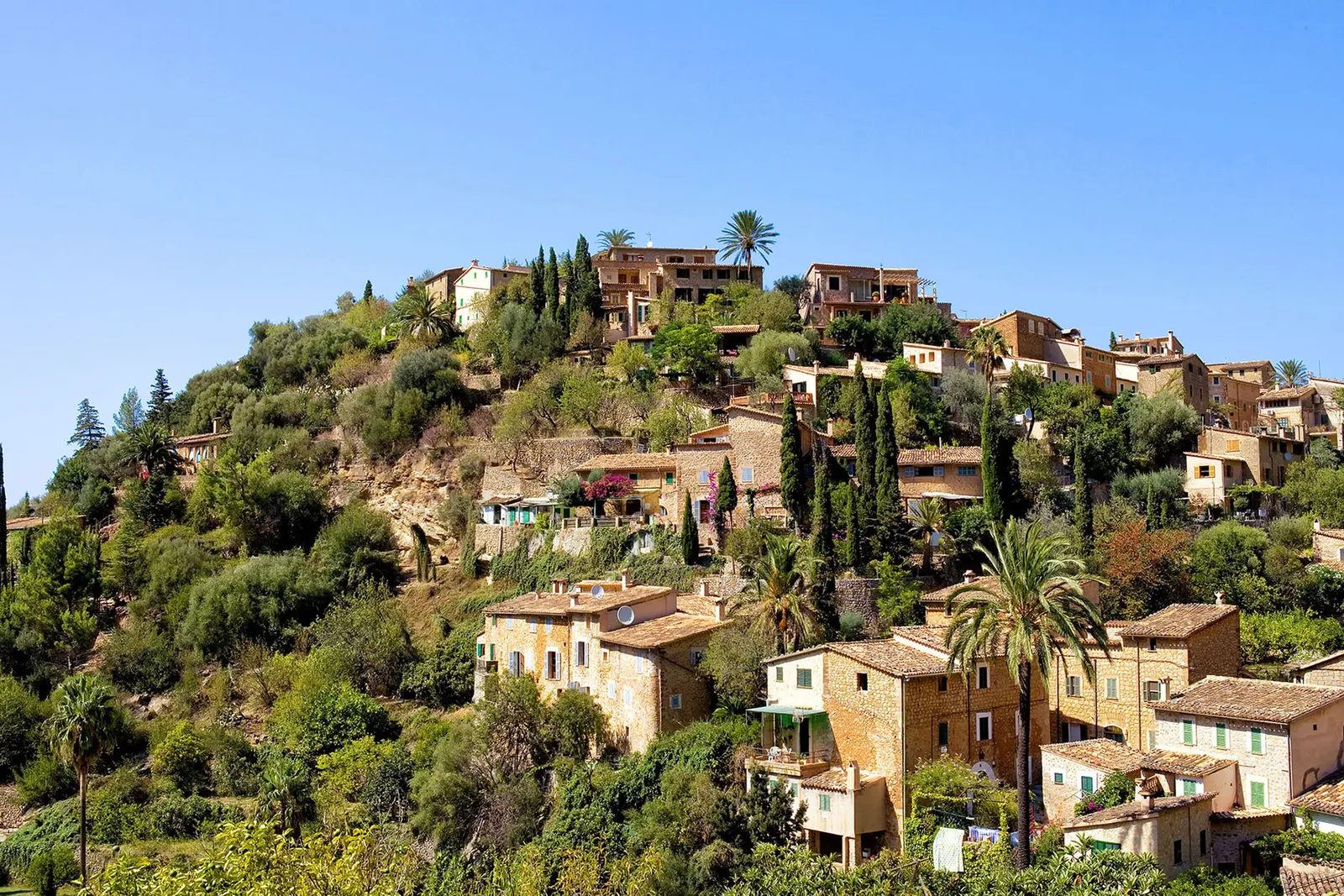
Nine beautiful mountain villages on Mallorca
Stone houses, terraced fields and lanes that turn into staircases.
Mallorca isn't all coastline. A short drive inland brings you to the Serra de Tramuntana, where villages are built from local stone, narrow lanes leave little room for cars and terraces reflect centuries of farming.
These are nine villages I return to. You'll find advice on when to come, how steep the streets are and what else to explore beyond the village lanes.
Which mountain village is worth the journey?
The Serra de Tramuntana stretches for roughly a hundred kilometres from Andratx to Cap de Formentor. Its valleys and slopes hold very different villages: some with a couple of thousand residents and buses, others with forty people and no shop. In one you may struggle to park at lunchtime; in another you may barely see anyone.
This selection follows the range from Galilea in the south-west to Caimari towards the north-east. These are the villages where I most enjoy spending a morning, not simply the best-known names.
Each has practical advice on height, the paths through the village and what makes a visit worthwhile. Many lanes are actually staircases — useful to know before arriving with a pushchair or painful knees.
-
1. Galilea
At 460 metres above the sea, Galilea has around two hundred residents, a white church with a red-tiled tower and a café on the square. It doesn't need much more.
Come for the terrace beside the church. Terraces and pine woodland drop towards the plain, and in clear air you can see the Bay of Palma. Order a coffee, sit for forty minutes and carry on. Check the visibility before coming — the view is the main attraction.
- Height
- 460 metres above sea level
- Village paths
- Paved lanes with noticeable slopes
- Good for
- Coffee with far-reaching views across the south-west
-
2. Estellencs
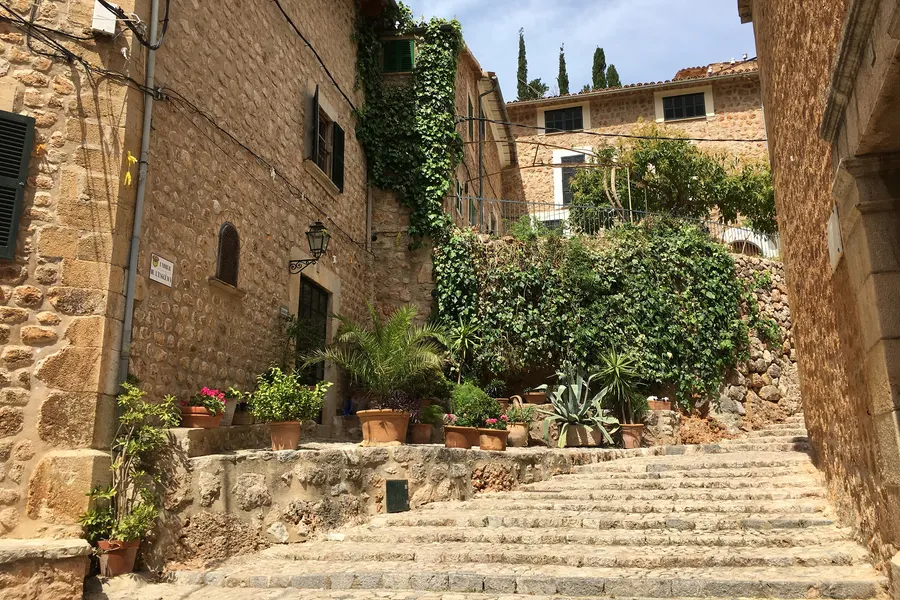
Around four hundred people live on this steep west-coast hillside. Steps take the place of streets between houses, and level ground has been created by terraces. The surrounding dry-stone walls represent centuries of work.
The church tower looks defensive because it once served that purpose, with a lookout towards approaching corsairs. Drive through on the Ma-10 and you'll be past in minutes. Stop for half an hour in the lanes instead, and you begin to appreciate the landscape recognised by UNESCO.
- Height
- 250 metres above sea level
- Village paths
- Paved lanes and steps, with continuous slopes
- Good for
- A coast-road stop, with a cove as an extra
-
3. Banyalbufar
Around two thousand dry-stone terraces descend from the village towards the sea. Their origins reach back to Islamic farming, with generations continuing to build and maintain them. Banyalbufar still shows how people cultivated a steep coastal slope.
Almond trees on the lower terraces may blossom in February, depending on the winter. From Volta des General on the Ma-10, Camí de Baix leads to Port des Canonge: the municipality gives 4.4 kilometres and about an hour and 25 minutes. Remember that the return is uphill. Two kilometres west lies Torre des Verger, a fine west-coast sunset viewpoint.
- Height
- 100 metres above sea level
- Village paths
- Narrow lanes and steps between terraces
- Good for
- Walking and exploring the terraced landscape
-
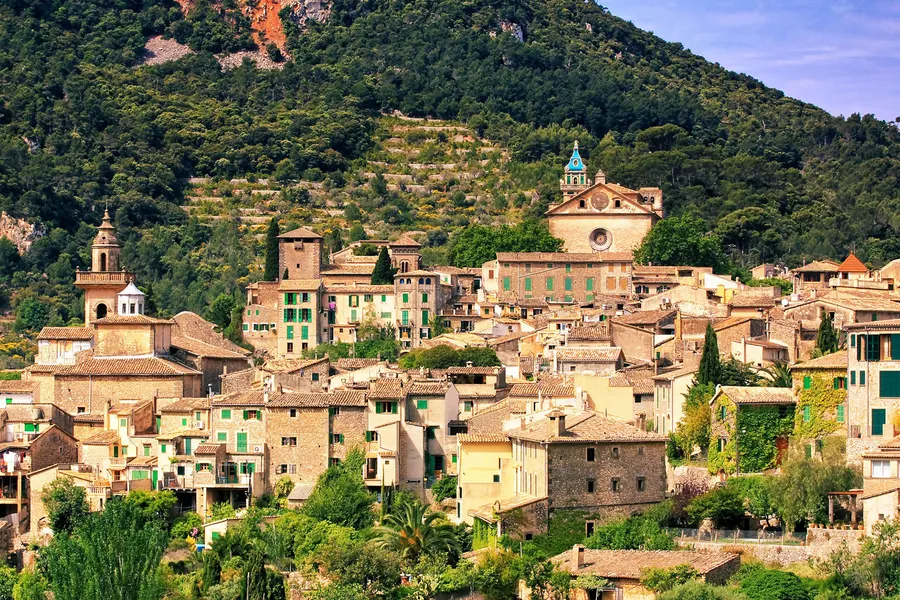
4. Valldemossa
Mallorca's best-known mountain village owes much of its fame to a very wet winter. Chopin and George Sand stayed in the former Carthusian monastery in 1838–39; visitors have followed ever since.
Between ten and five, tour groups fill the central lanes. Come at eight instead, when the bakery brings out coca de patata, buses have yet to arrive and the village is much quieter. The cemetery's view across the valley is particularly lovely and often overlooked.
- Height
- 400 metres above sea level
- Village paths
- Cobbles and stepped lanes, mostly sloping
- Good for
- An early morning with the monastery, coffee and valley views
-
5. Deià
Ochre houses climb the flank of the Teix in a village associated with artists since the 1930s. Poet Robert Graves lies in the cemetery above the church, looking over the valley towards the sea.
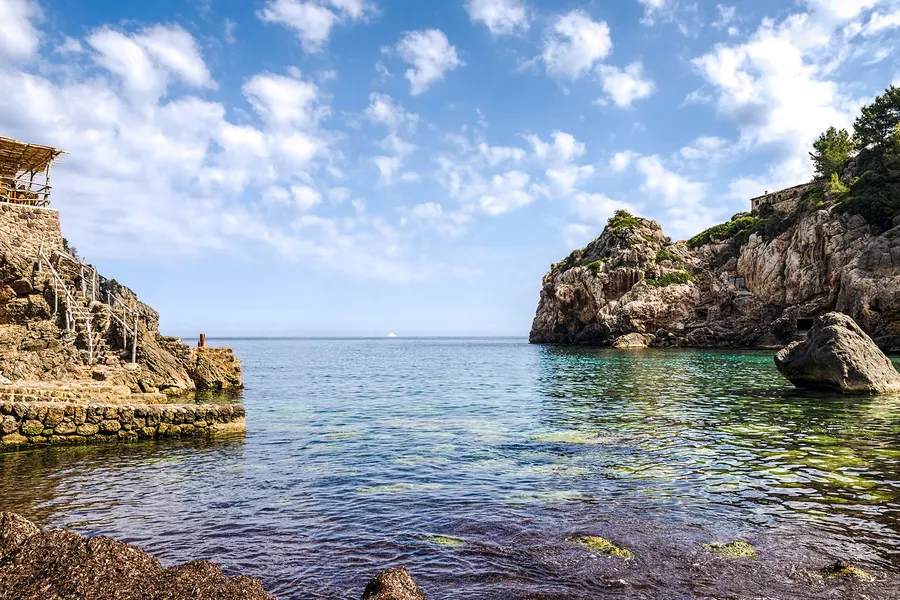
Deià is undeniably beautiful and has known it for decades. Make more of a visit by leaving the village lanes: the path down to Cala de Deià takes around 25 minutes, with roughly 40 uphill on the return. The coastal walk towards Sóller can make a rewarding full day's outing.
- Height
- 200 metres above sea level
- Village paths
- Paved hillside lanes and a footpath to the cove
- Good for
- Walkers, swimming and a long afternoon
-
6. Fornalutx
Fornalutx is built steeply into its hillside, with stepped lanes, painted roof tiles beneath the eaves and terraces climbing towards Puig Major.
Often listed among Spain's loveliest villages, it deserves the attention for its closely packed stone houses and largely preserved centre. In January, you may see snow on Puig Major while oranges ripen below — an unexpected Mallorcan combination. Consider parking in Sóller and walking up via Biniaraix.
- Height
- 180 metres above sea level
- Village paths
- Steep stepped lanes and cobbles throughout
- Good for
- Photography, walking and winter visits
-
7. Orient
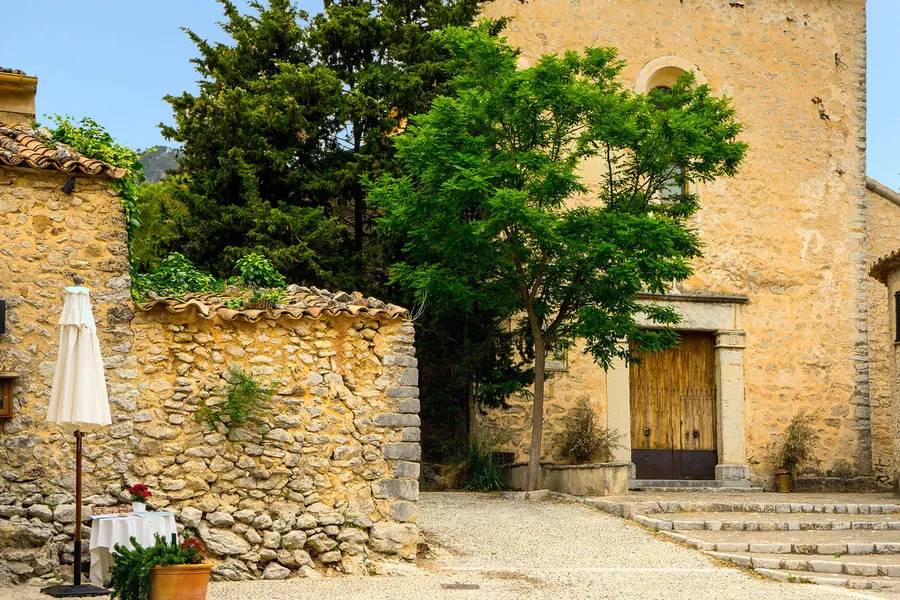
Around forty residents in a high Tramuntana valley, reached by a road with repeated hairpins. A couple of dozen stone houses, ivy-covered façades, a small church and two places to eat. No shops.
The road from Bunyola winds through holm-oak woodland, making the village's appearance at the end a surprise on a first visit. Slopes rise around it beneath Castell d'Alaró, with rewarding walking routes nearby. Twenty minutes covers the village itself, but the setting stays with you.
- Height
- 460 metres above sea level
- Village paths
- Paved lanes with steps and some slopes
- Good for
- Walkers and a genuinely quiet stop
-
8. Alaró
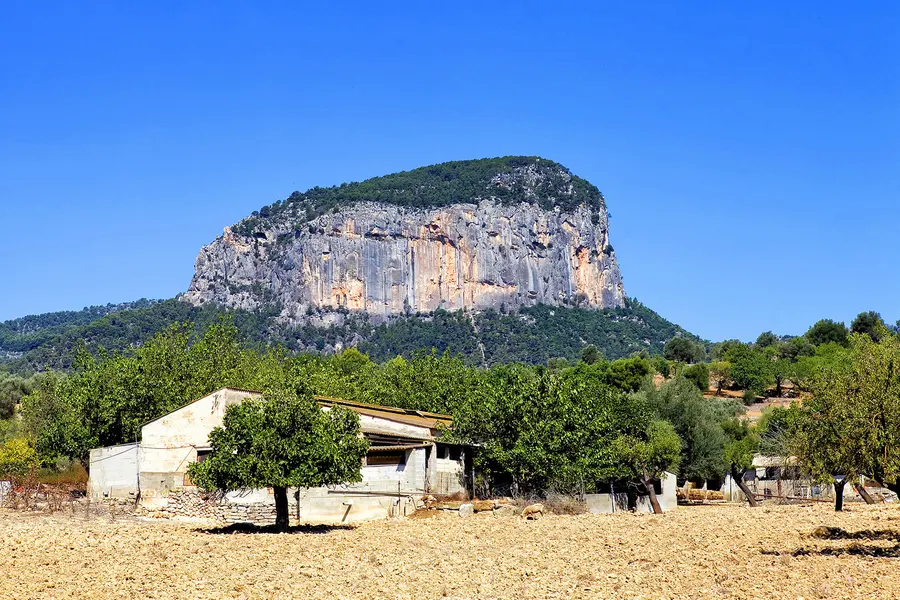
At the foot of the Tramuntana, Alaró sits beneath a table mountain with sheer cliffs. One of Mallorca's historic rock castles stood above it. Below is a church square where locals gather in the morning.
The town isn't arranged around visitors, and that is part of the appeal: no harbour, no grand viewing terrace and no souvenir street. A village visit makes a quiet morning. Add the castle climb and you have a full day out, with the final section on foot only.
- Height
- 230 metres above sea level
- Village paths
- Sloping cobbled streets; a natural path to the castle
- Good for
- A village morning and a mountain walk
-
9. Caimari
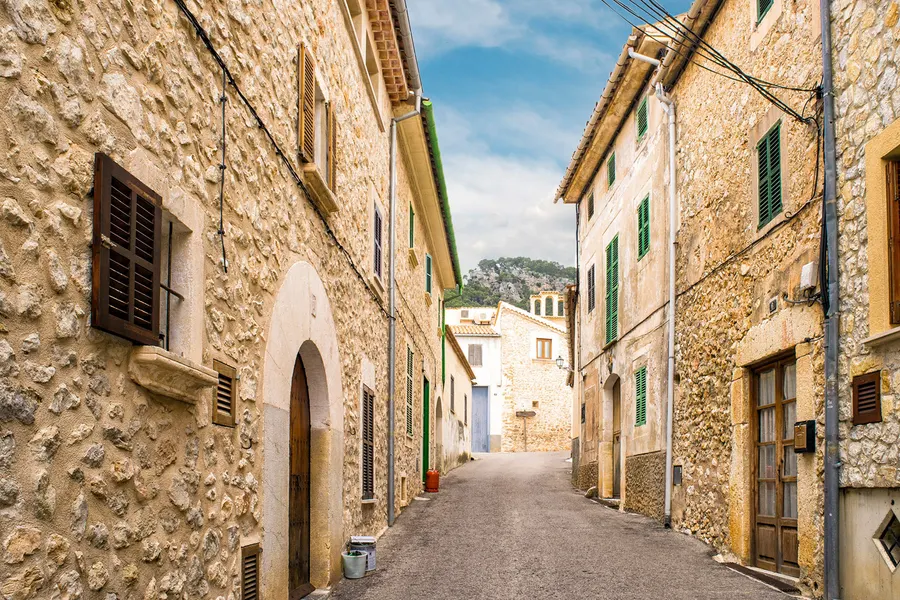
Around eight hundred residents, rough stone lanes and olive groves at the foot of the Tramuntana. The walls use irregular local rubble in shades of grey, often left unplastered right to the roof.
Olive terraces climb behind the village, cultivated for centuries. In November, fresh olive oil scents the air. Camí Vell de Lluc starts at the edge: an old pilgrimage route, largely paved and restored, marked as part of the GR 222 long-distance trail.
- Height
- 190 metres above sea level
- Village paths
- Paved lanes with clear slopes
- Good for
- Pilgrimage-route walkers and November's olive season
Your questions about Mallorca's mountain villages
Which is Mallorca's most beautiful mountain village?
Fornalutx is often named, with its steep lanes and well-preserved centre. For more quiet, try tiny Orient. Galilea offers distant views and Banyalbufar terraced landscapes. These nine are places I've returned to since 2013, rather than a measured ranking.
Can I reach the mountain villages without a car?
Route 203 links Palma with Valldemossa, Deià and Sóller. Route 200 serves Banyalbufar and Estellencs, with a scenic journey in its own right. Local buses link Sóller with Fornalutx, and services from Inca reach Caimari. Galilea and Orient need more planning and are generally easiest by car. Check current timetables.
When is the best time for the Serra de Tramuntana?
February and March for spring landscapes and possible almond blossom, plus October and November. Summer brings heat and limited parking. In January, snow sometimes lies on Puig Major while oranges ripen in Fornalutx below.
Can I visit with a pushchair or wheelchair?
Access is limited. Estellencs, Fornalutx and Orient have many stepped lanes. Parts around the main streets and squares in Valldemossa and Alaró are easier, though back lanes are harder. Galilea's square and viewing terrace are relatively manageable. Plan the exact route ahead.
Where can I park in the villages?
Valldemossa has paid parking near the entrance, often busy by ten in summer. Deià, Fornalutx and Estellencs have very limited space. For Fornalutx, parking in Sóller and continuing on foot or by bus can help; use suitable bus connections for other villages. Alaró and Caimari usually have easier edge-of-town parking.
Choose a village for your day out
Perhaps Fornalutx's stepped lanes, Banyalbufar's terraces or a coffee overlooking the Bay of Palma from Galilea. A village needn't fill a whole day, but it can give that day a very different character.
Every recommendation on this page comes from a personal visit. Words and photographs are by Friedhelm Fischer, who has been exploring Mallorca on foot, by bike and with his camera since 2013.