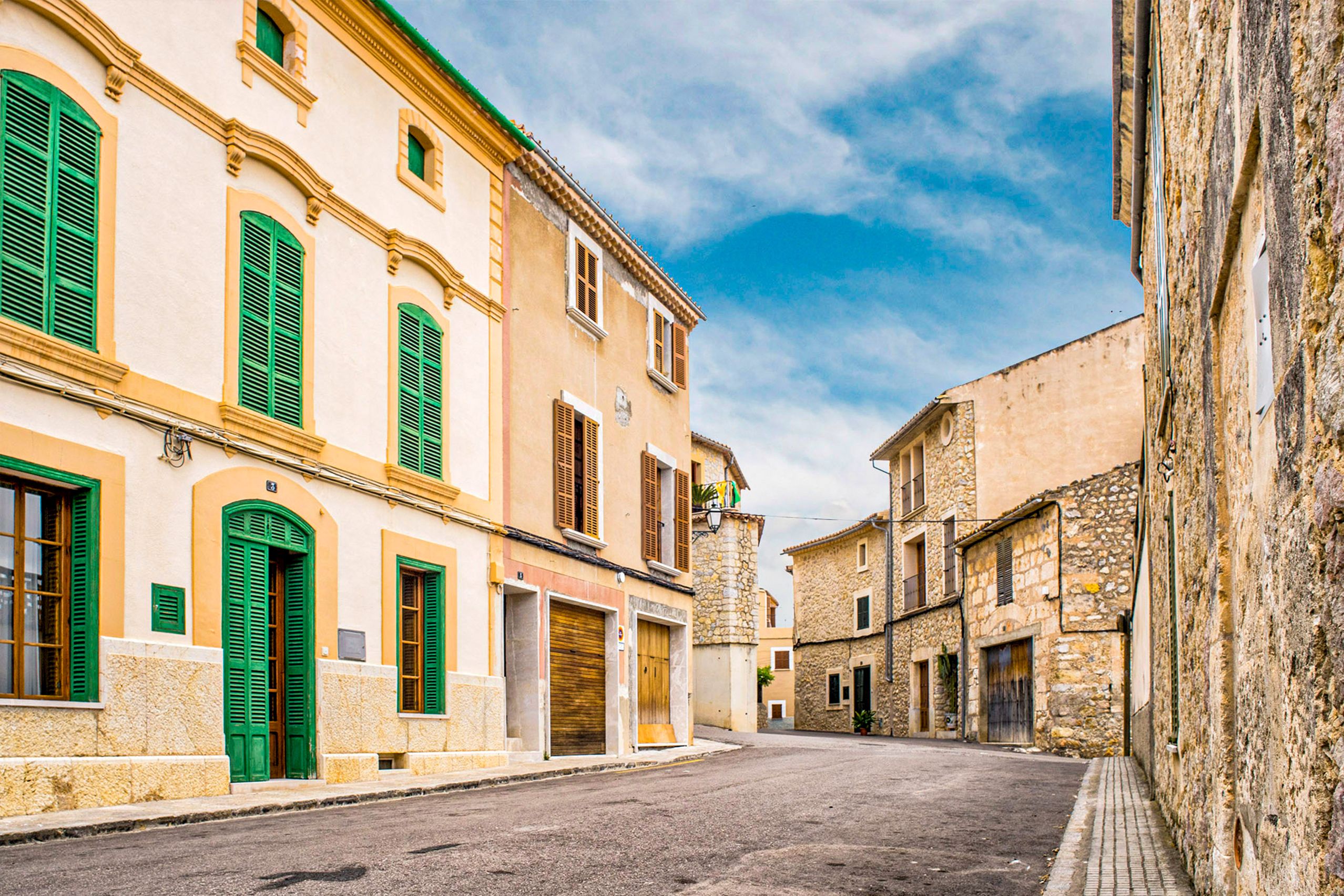
Around eight hundred people live at the foot of the Tramuntana, among rough stone lanes and olive groves. The old pilgrims' path to Lluc starts here, and November brings the scent of freshly pressed olive oil.
Caimari
Caimari in 30 seconds
The essentials at a glance
- Worth visiting for
- A short visit
- Best for
- Walking the Camí Vell de Lluc, which starts here
- Best months
- January–May, October–December
- Time to allow
- Around half an hour in the village, or half a day including a walk
- Without a car
- Hire car needed
- Parking
- On the outskirts; the central lanes are narrow
- Keep in mind
- Expecting a major visitor attraction
- Access
- Pushchairs: Hard work on the hillside streets · Wheelchairs: Mainly the lower part of the village
Get a feel for Mallorca. Find your kind of place.
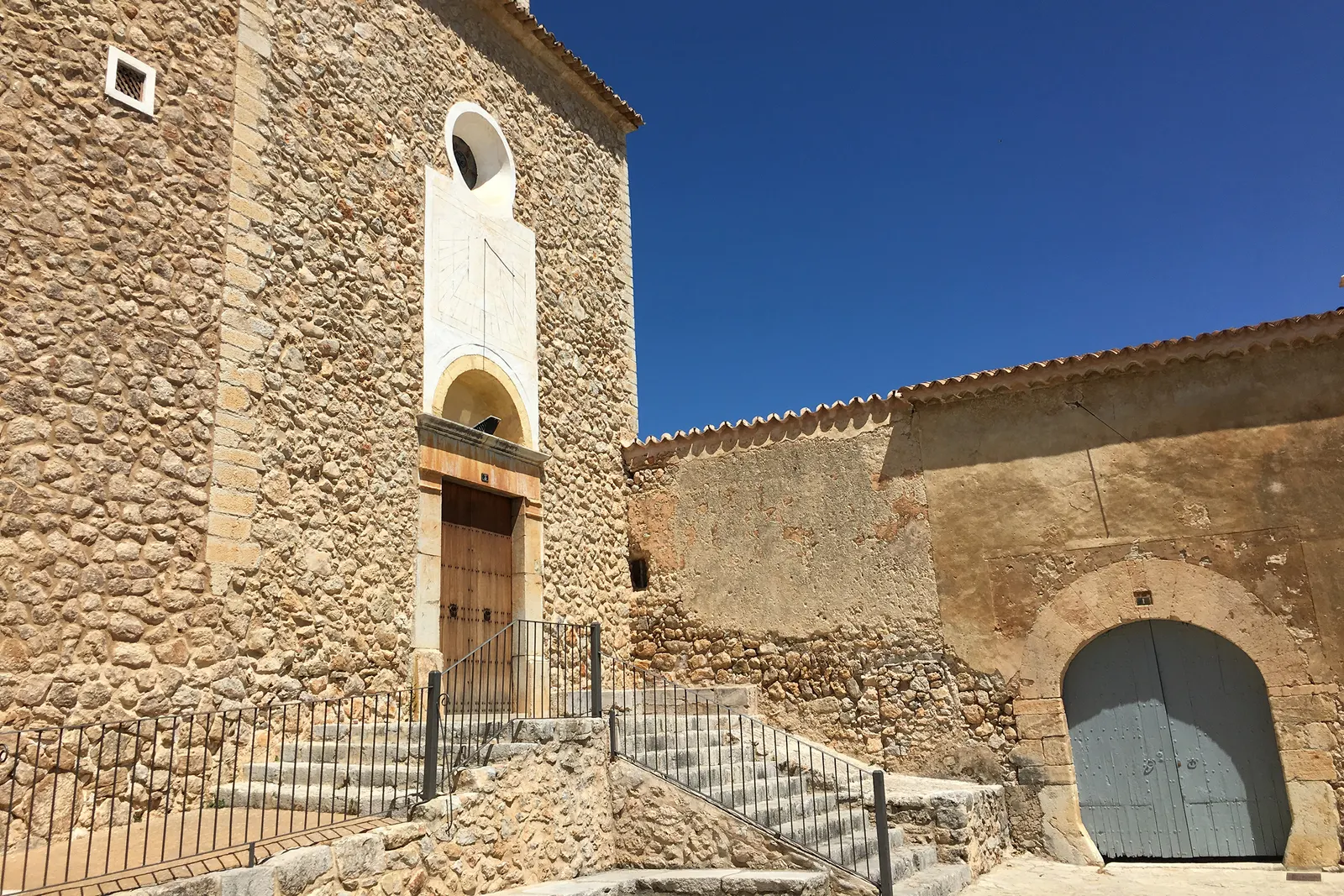
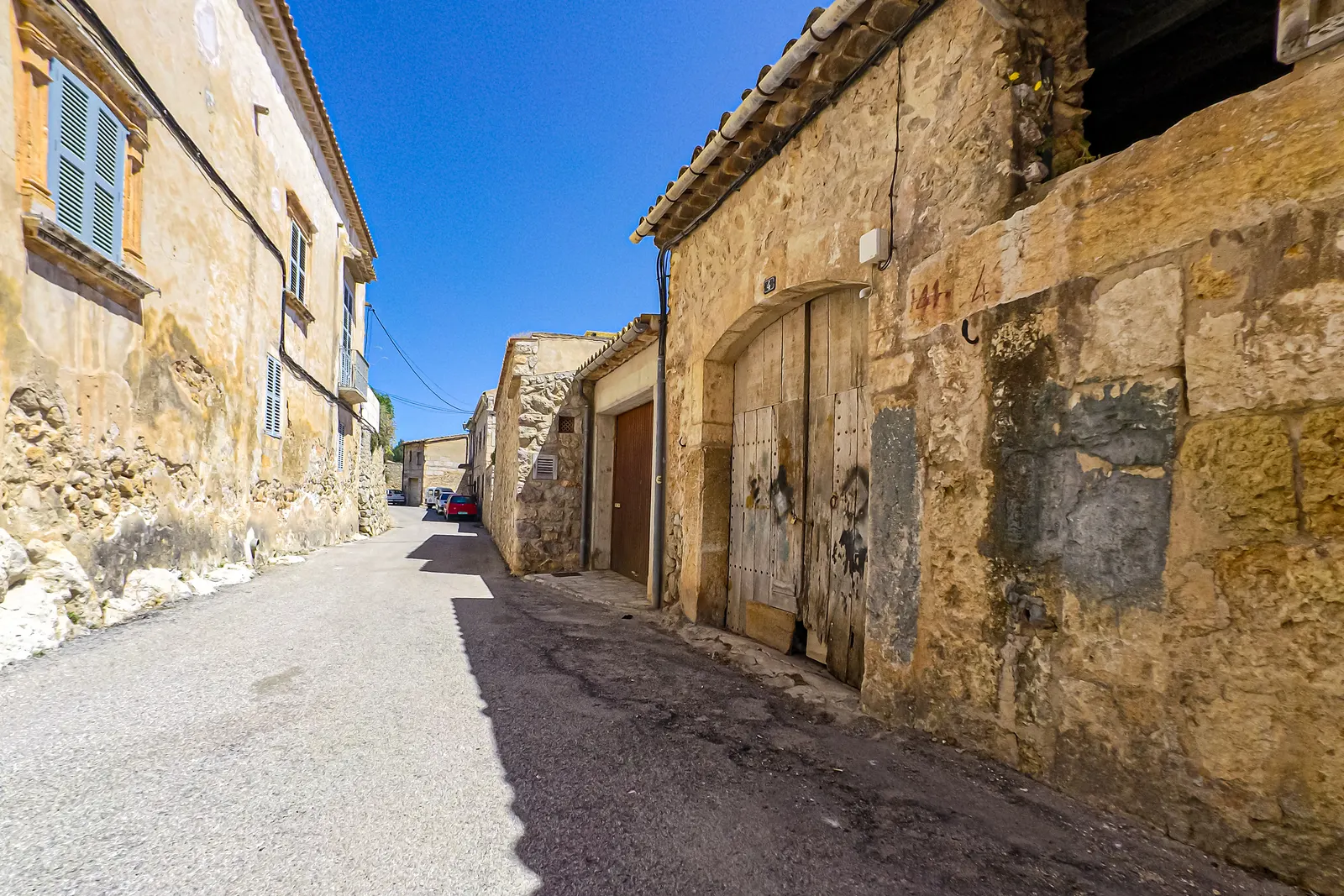
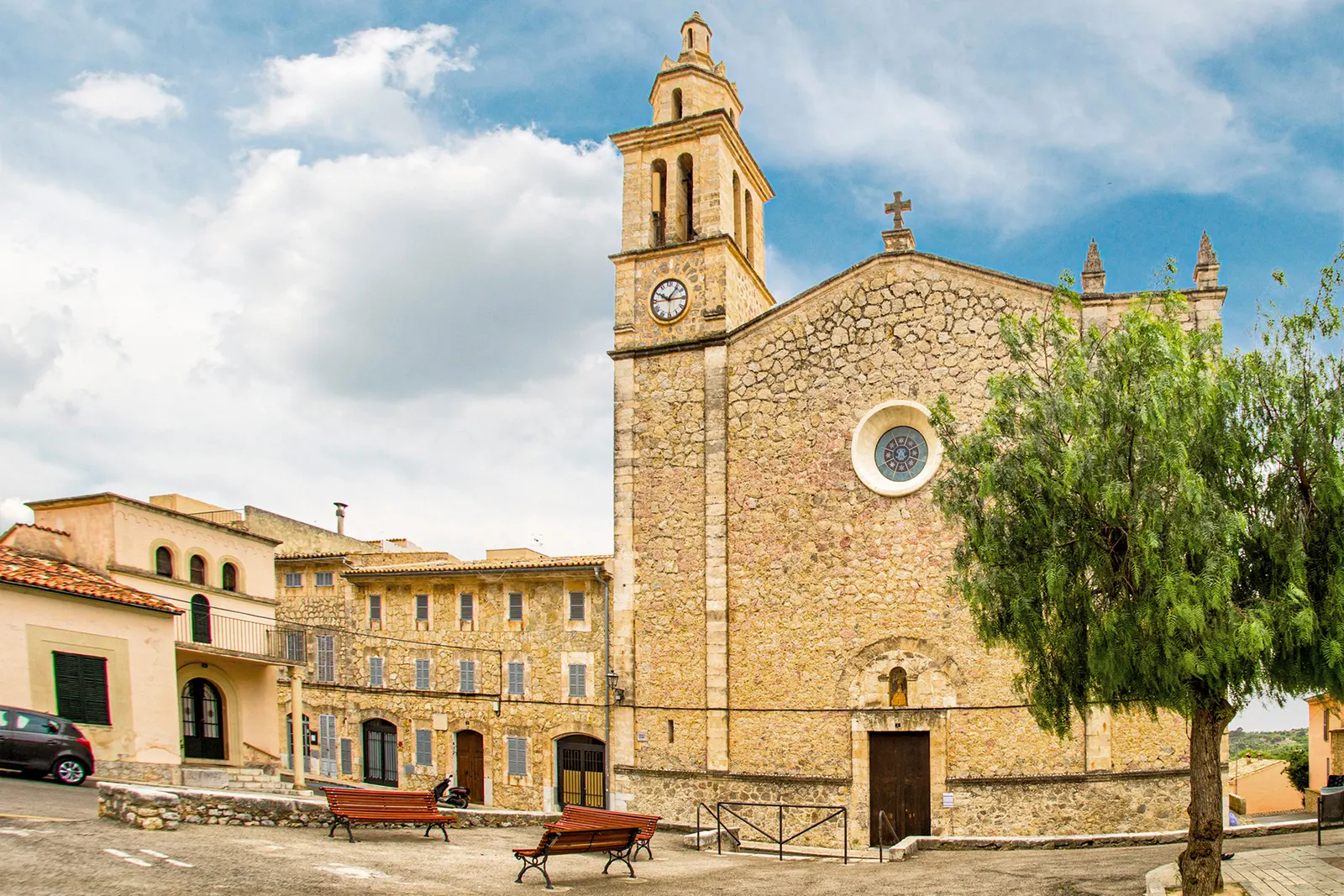
Rough stone walls and steps leading up to the church entrance.
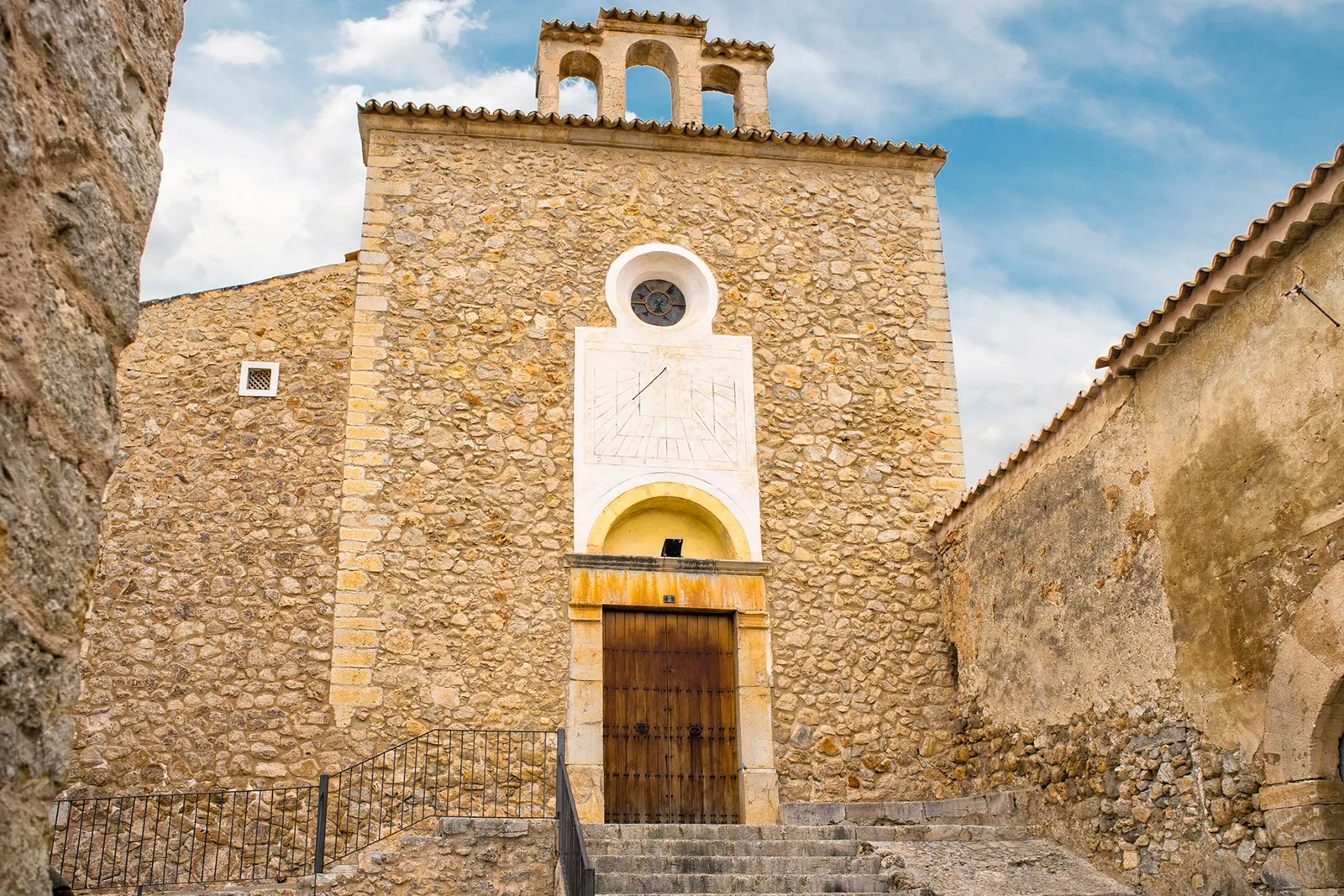
An outbuilding adjoins the church, making use of the space beside it.
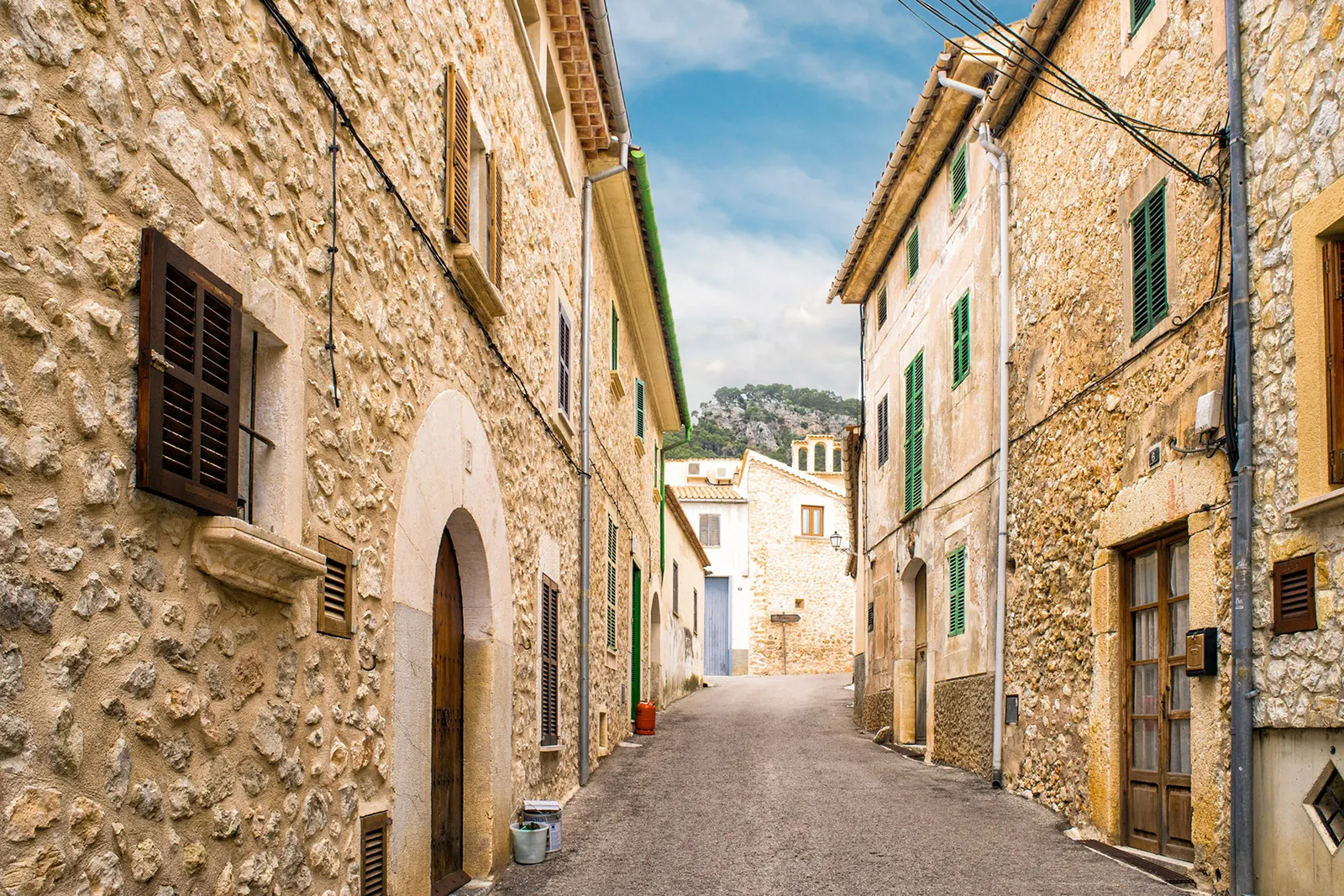
Irregular local stone gives Caimari a different appearance from many villages on the central plain.
Getting to know Caimari
Does Caimari suit your plans?
What to expect and what to know before you visit.
Who it suits
- Walking the Camí Vell de Lluc, which starts here
- Exploring villages built from rugged local stone
- Visiting the Fira de s'Oliva in November
- Stopping on the way to Lluc
Things to bear in mind
- Expecting a major visitor attraction
- Swimming
- Wanting a wide choice of restaurants
- Anyone who finds steep streets difficult
Drive from the airport
45 minutes
45 km
Bus connections
Limited services from Inca
Region
Raiguer
Nearest beach
Sa Calobra
12 km
Elevation
190 m
above sea level
Season guide for Caimari
November Worth a visit
The Fira de s'Oliva brings the village to life in November; check the year's programme.
Lively Open
Worth visiting in January, February, March, April, May, October, November and December. Less suitable in July and August.
Location
Location of Caimari
- Region
- Raiguer
- Municipality
- Selva
- Population
- 800
- Elevation
- 190 m above sea level
- Airport
- 45 km , around 45 minutes
- Hire car
- needed
- Worth visiting for
- a brief stop
- Coordinates
- 39.7711,2.9034
A village below the mountains
Caimari has around 800 residents and belongs to the municipality of Selva, at the foot of the Serra de Tramuntana. The streets climb the hillside, with a welcome level space in front of the church.
Many houses are built from rough local stone, rather than the neatly cut blocks seen in villages on the central plain. The stones are irregular, in shades of grey, and some walls remain unplastered right up to the roof.
The mountains provided the material, and the village was built with what was close at hand.
Olives and oil
Olive terraces rise behind Caimari and have been cultivated for centuries. Oil production still matters here. Harvesting begins in autumn, and pressing can continue into January.
The Fira de s’Oliva, traditionally held around the third Sunday in November, brings local producers and craftspeople to the village to sell oil, olives and other products. It is a particularly lively time to visit. Check the year’s programme for the precise dates.
The Camí Vell de Lluc
The old pilgrims’ path to Lluc starts at the village edge. Restored sections are largely stone-paved, and the route is marked as part of the GR 222 long-distance trail.
It climbs steadily. Even if the beginning looks easy, you will need sturdy footwear and water.
When to visit
Come in March for walking or November for the olive fair. February brings almond blossom on the lower slopes, while October marks the start of the olive harvest season.
In July and August, the climb can be too hot for a comfortable walk, and the village is quiet during the middle of the day.
Photographs
Caimari in Mallorca
How much time do you have?
Things to do in Caimari
Three hours
Wander through the lanes to the church, then up to the edge of the village where the olive terraces begin.
Half a day
Walk part of the Camí Vell de Lluc. The old pilgrims' path starts here and forms part of the GR 222 long-distance route.
A full day
Continue up to Lluc, or combine Caimari with Campanet, Selva and Inca.
On a rainy day
There is little to do indoors, and the walking path becomes slippery when wet.
Practical details
- Parking
- On the outskirts; the central lanes are narrow
- Public transport
- Limited services from Inca
- Time to allow
- Around half an hour in the village, or half a day including a walk
- Good to know
- The Camí Vell de Lluc starts at the edge of the village. Much of the restored path is stone-paved and marked as part of the GR 222. Bring sturdy shoes and water.
- Bus
- Limited services from Inca; check the current timetable
- Shops and services
- Supermarkets: Small village shops · Pharmacy: In Selva · Medical care: In Selva; hospital in Inca · Cash machines: In Selva or Inca · Fuel: In Inca
- Access
- Paved and tarmac lanes, with noticeable gradients · Pushchairs: Hard work on the hillside streets · Wheelchairs: Mainly the lower part of the village · Dogs: Generally straightforward; keep dogs on a lead on the pilgrims' path
- What you will not find
- A major visitor attraction · A beach · A large choice of hotels · A level village centre
- Coordinates
- 39.7711,2.9034 Google Maps Apple Maps
Within reach
Places to visit
Nearby

A pilgrimage church on a rocky ledge above Mancor de la Vall, documented since 1275. The terrace looks across much …

A quieter cave visit near Campanet, with limestone formations rather than a boat ride or colourful show. Allow …

One of Mallorca's oldest churches, standing alone among the fields outside Campanet. Built on the site of a mosque …

Mallorca's spiritual centre, a sanctuary at 525 metres in the heart of the Tramuntana, with guest rooms, a …
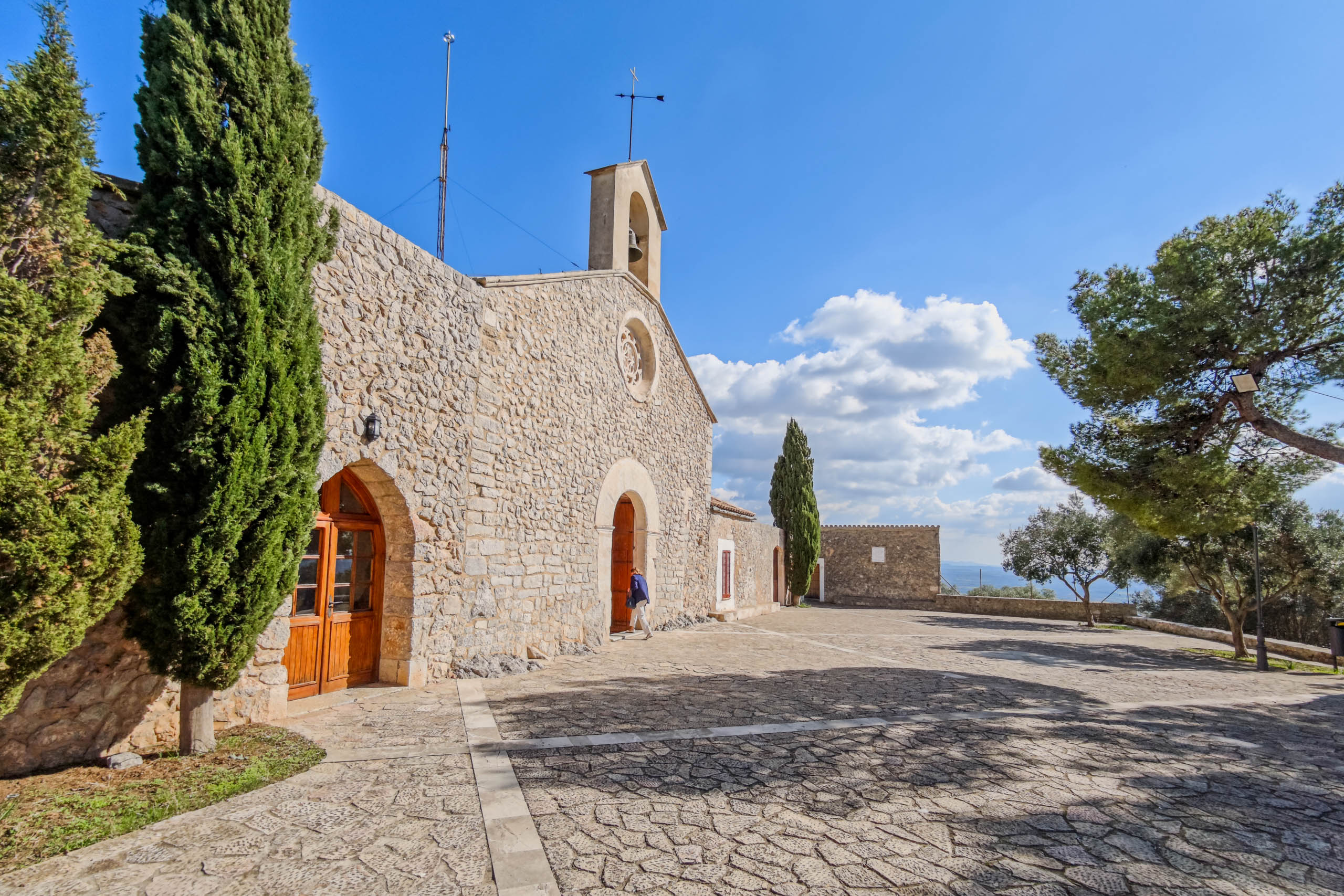
A small chapel and a wide view across Mallorca. Santa Magdalena stands on a hill near Inca. The winding climb is …

A small pilgrimage chapel among pines near Sa Pobla, on the site of an older settlement. A paved path leads up to …

Mallorca’s largest reservoir sits in the heart of the Tramuntana beside the MA-10. Swimming is forbidden, there’s …
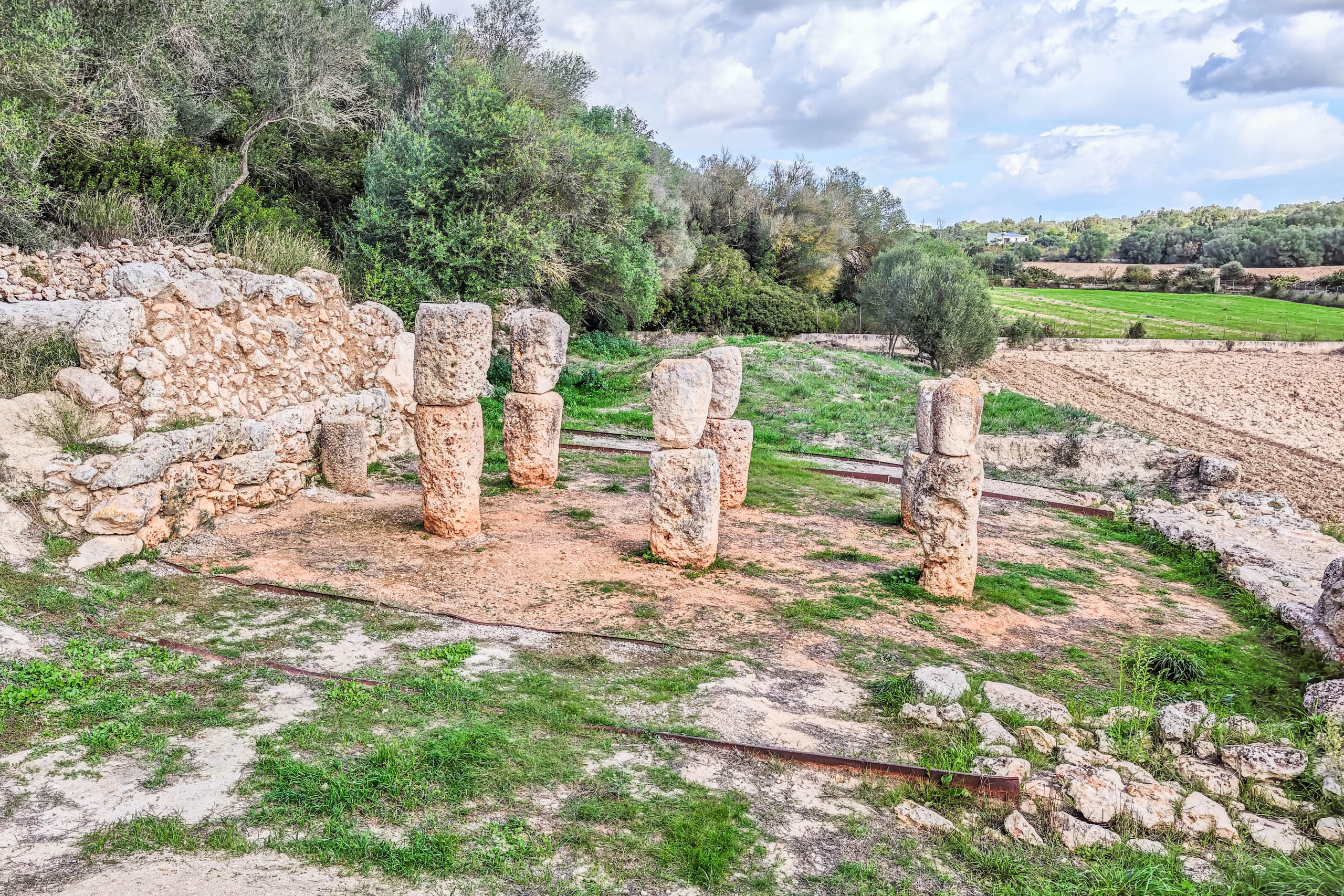
Son Corró is a small prehistoric sanctuary near Costitx. Six re-erected stone columns stand among low walls. The …
Distances without a driving time are measured in a straight line. The road journey can be much longer; known driving times are shown alongside.
Where to swim nearby
Beaches and swimming nearby

Explore from here
Your questions answered
Your questions about Caimari
What is the Fira de s'Oliva?
Caimari's annual olive fair takes place in November, traditionally around the third Sunday. Local producers and craftspeople sell olives, oil and other products. It is one of the village's busiest occasions; check the current programme for dates.
Where does the Camí Vell de Lluc start?
At the edge of Caimari. This restored section of the old pilgrims' route to Lluc is largely stone-paved and marked as part of the GR 222 long-distance path. It climbs steadily, so bring sturdy footwear and water.
What is Caimari known for?
Olive oil. The terraces behind the village have been cultivated for centuries, and oil production still shapes local life. The Fira de s'Oliva in November celebrates that tradition.
Is Caimari part of Selva?
Yes. Caimari belongs to the municipality of Selva and has around 800 residents. Selva itself is about two kilometres away, and Inca around 15 minutes by car.
Practical questions
When is the best time to visit Caimari?
Recommended months: January, February, March, April, May, October, November, December. Olive pressing may continue into winter, with clear mountain air.
Is Caimari worth visiting in July and August?
July: another month may suit you better. Usually very quiet. Often too hot for the climb; the village is quiet. August: another month may suit you better. Usually very quiet.
How far is Caimari from Palma airport?
About 45 km from Palma airport. Allow roughly 45 minutes by car. On the Ma-2130 between Selva and the climb towards Lluc. The central lanes are narrow, so park on the edge of the village.
Do I need a hire car for Caimari?
A car is needed Limited services from Inca; check the current timetable
Where can I park in Caimari?
On the outskirts; the central lanes are narrow
Can you swim at Caimari?
There is no beach here. See the nearby swimming options on this page.
Can I visit Caimari with a pushchair or wheelchair?
Paved and tarmac lanes, with noticeable gradients Pushchairs: Hard work on the hillside streets Wheelchairs: Mainly the lower part of the village
Are dogs allowed at Caimari?
Generally straightforward; keep dogs on a lead on the pilgrims' path
Caimari features in our Mallorca highlights
Words and photographs: Friedhelm Fischer. Exploring Mallorca since 2013 — by bike, on foot and with a camera.