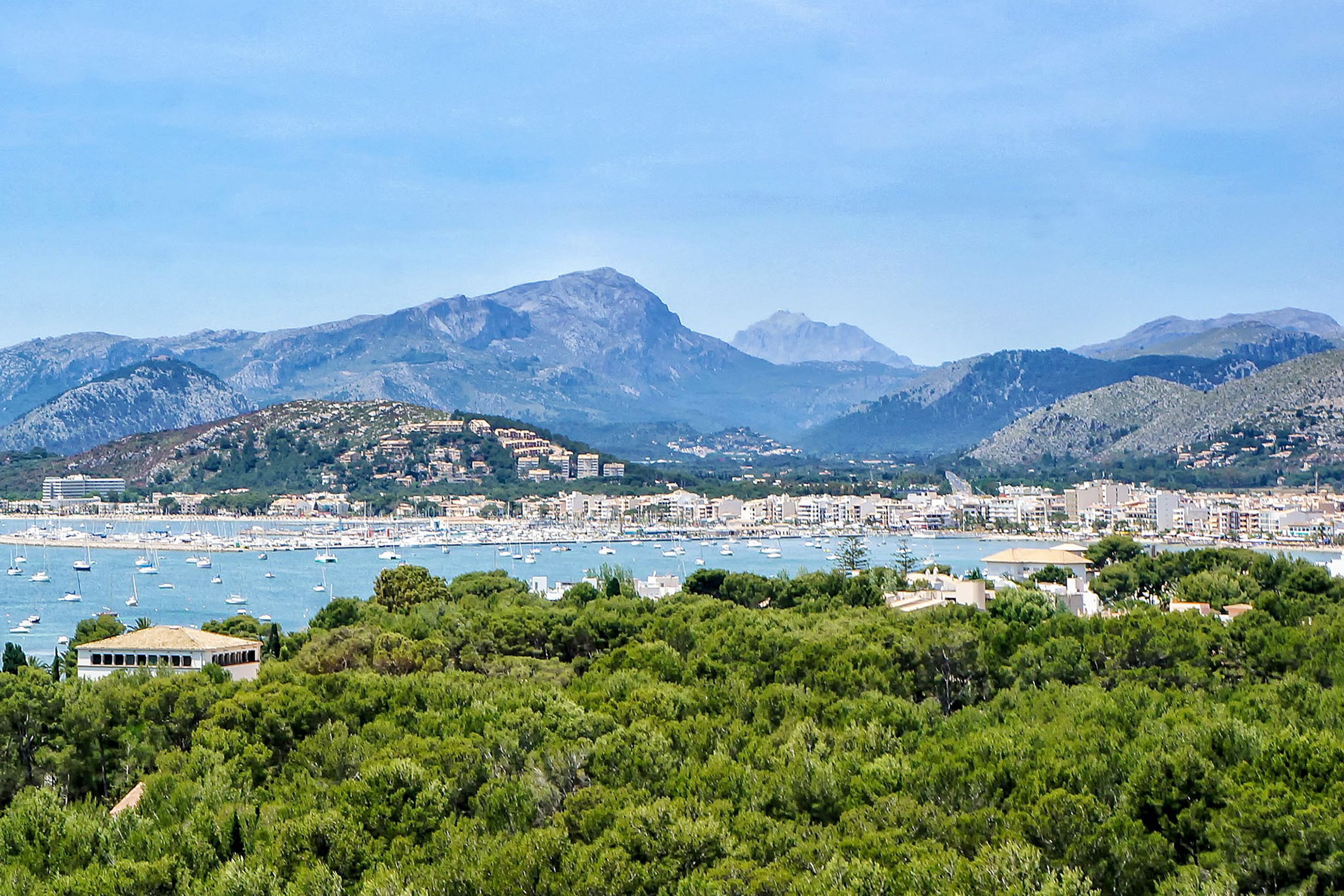
Port de Pollença
A quieter, more expensive neighbour to Alcúdia bay, with the waterfront Pine Walk, a royal yacht club and reliable afternoon sailing breezes between the mountains. Some local life continues through winter.
Port de Pollença
Port de Pollença in 30 seconds
The essentials at a glance
- Worth visiting for
- A longer stay
- Best for
- Sailors, windsurfers and kitesurfers drawn by the bay's sailing conditions
- Best months
- March–June, September–October
- Time to allow
- A week as a holiday base; half a day for a visit
- With children
- Good, although the water deepens sooner than at neighbouring beaches
- Without a car
- Hire car recommended
- Parking
- Paid spaces along the promenade and side streets fill during summer mornings. Free spaces further out mean a walk of around ten minutes.
- Getting into the water
- Shallow, though less so than Port d'Alcúdia
- Keep in mind
- Anyone looking for cheap food and drink — prices are higher than in neighbouring resorts
- Access
- Pushchairs: Straightforward along the promenade · Wheelchairs: Promenade accessible throughout
Get a feel for Mallorca. Find your kind of place.
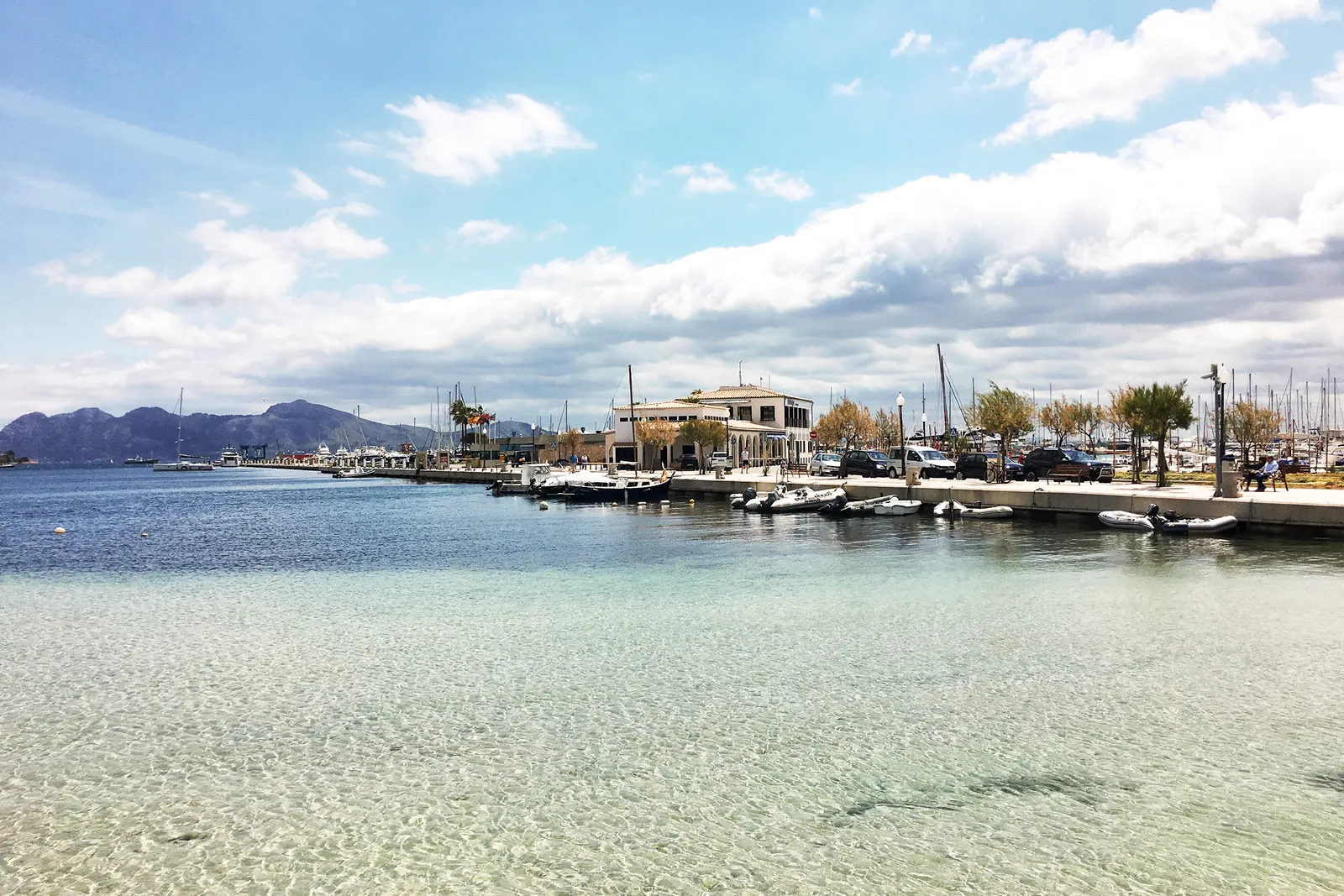
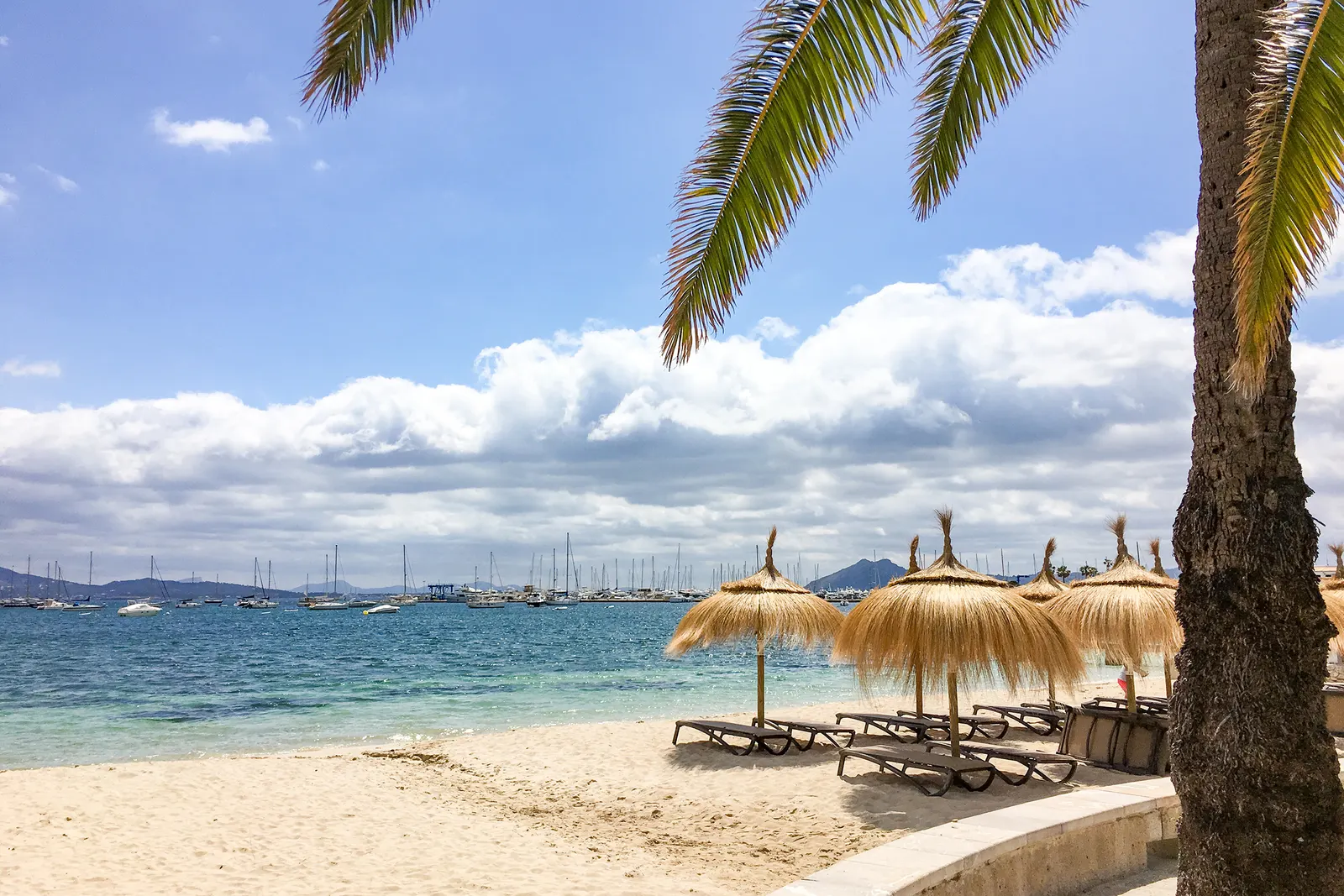
The clear water stays shallow well out from the shore, with the bottom visible before the harbour begins.
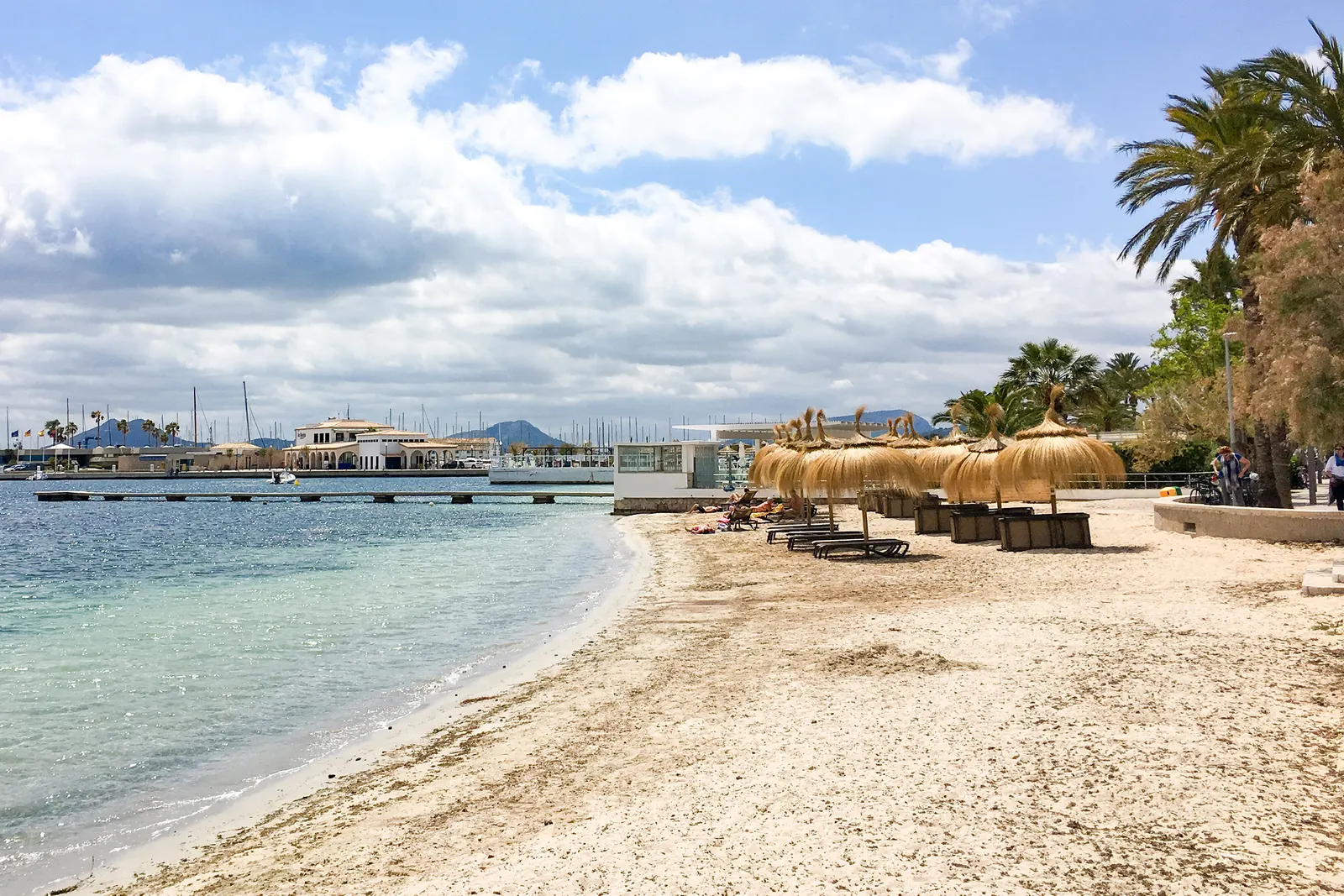
The beach sits beside the promenade, with facilities close by rather than an undeveloped setting.
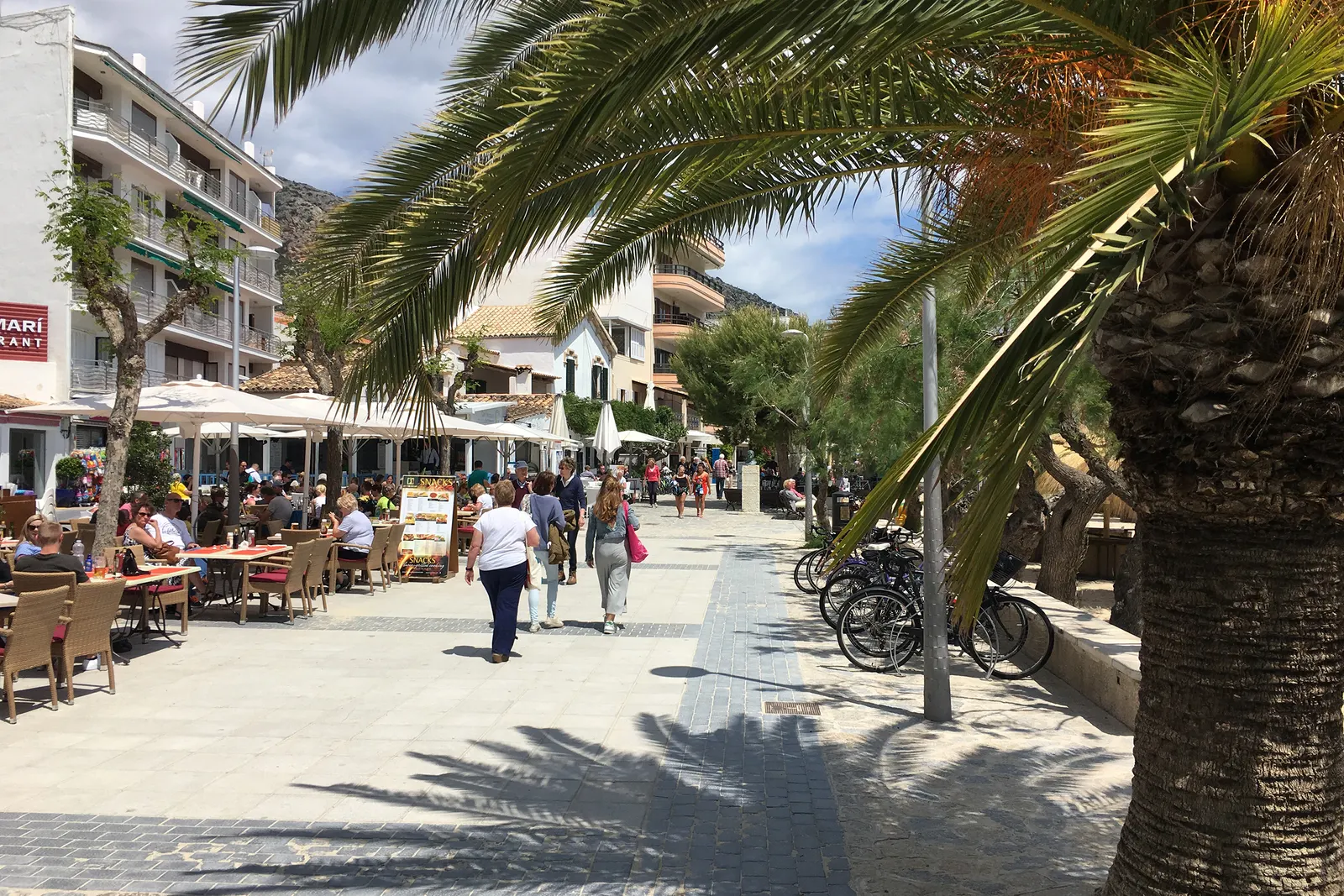
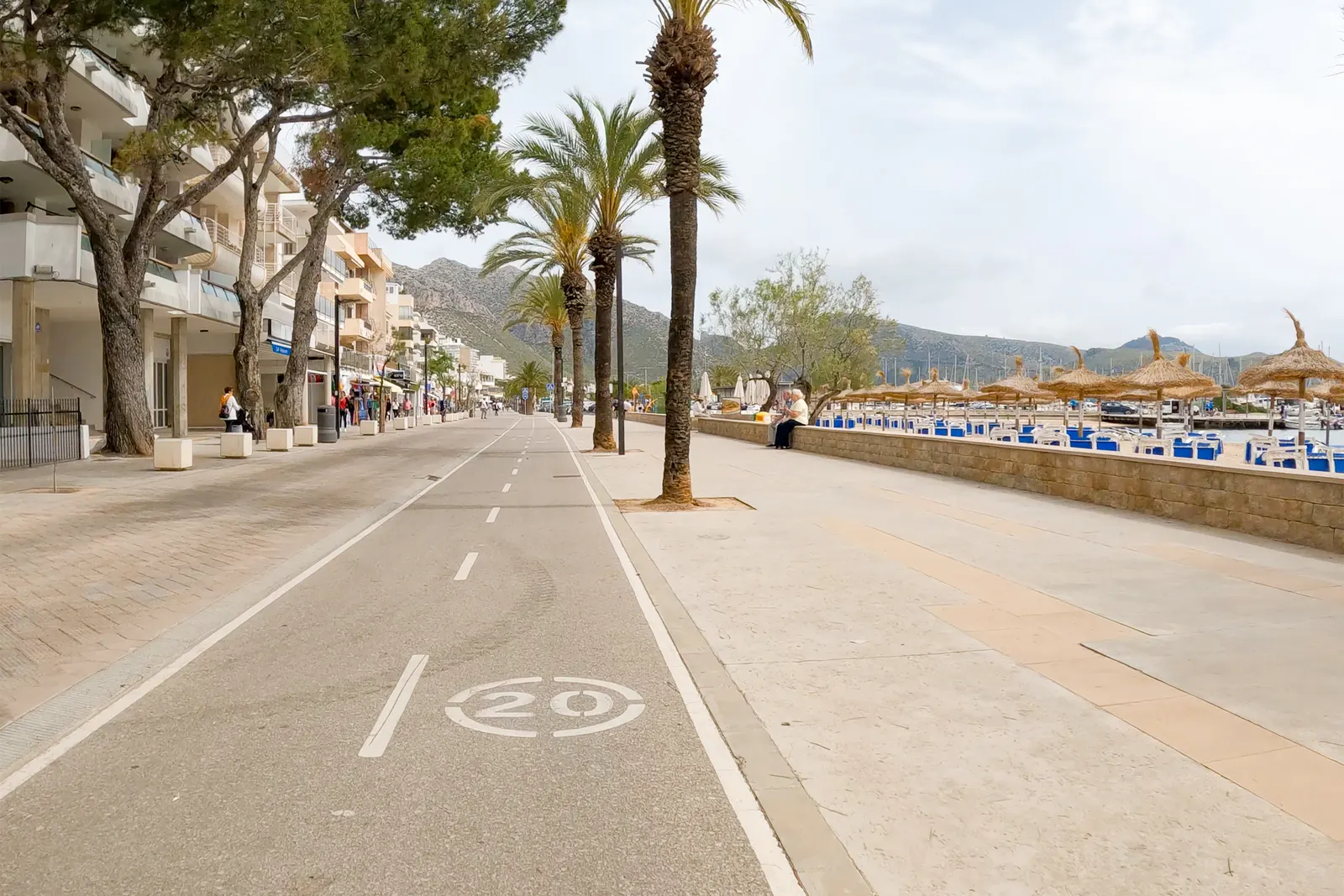
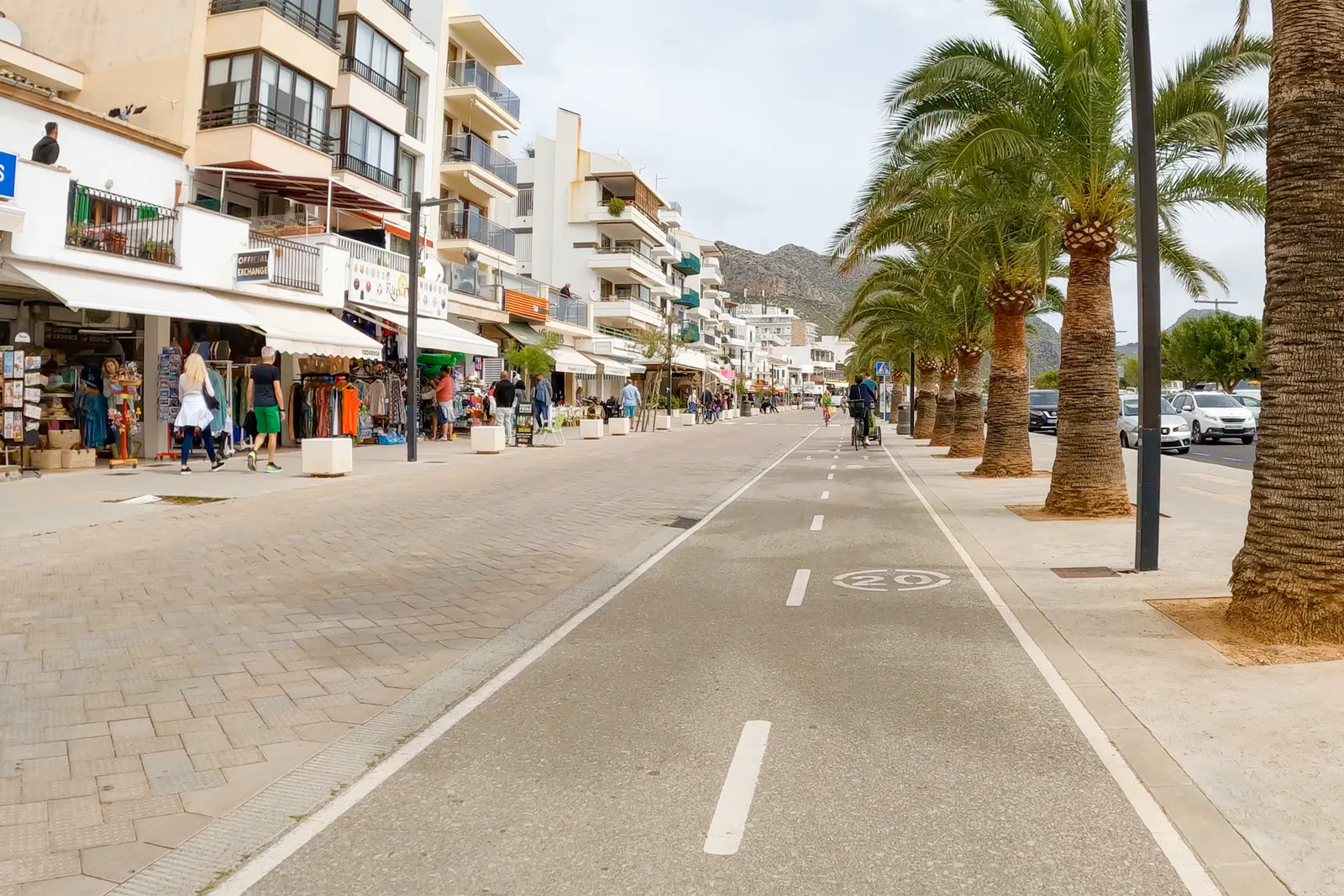
In summer, the promenade stays lively into the evening.
Getting to know Port de Pollença
Does Port de Pollença suit your plans?
What to expect and what to know before you visit.
Who it suits
- Sailors, windsurfers and kitesurfers drawn by the bay's sailing conditions
- Anyone wanting a quieter resort with an attractive promenade
- Spring cyclists — the Tramuntana begins just behind town
- Visitors wanting some local life even in winter
Things to bear in mind
- Anyone looking for cheap food and drink — prices are higher than in neighbouring resorts
- Visitors wanting nightlife
- Anyone expecting peace in August
- Families seeking the very shallowest beach — try Port d'Alcúdia
Drive from the airport
60 minutes
65 km
Bus connections
Route 301 to Palma via Pollença
Region
Serra de Tramuntana
Nearest beach
Cala de Sant Vicenç
3 km
Elevation
3 m
above sea level
Season guide for Port de Pollença
November Worth considering
Hotels and restaurants gradually close for winter.
Quiet Some places closed
Worth visiting in March, April, May, June, September and October. Less suitable in August.
Location
Location of Port de Pollença
- Region
- Serra de Tramuntana
- Municipality
- Pollença
- Elevation
- 3 m above sea level
- Airport
- 65 km , around 60 minutes
- Hire car
- recommended
- Worth visiting for
- a longer stay
- Coordinates
- 39.9075,3.0813
The neighbouring bay
Twenty minutes by car from Port d’Alcúdia brings you to a different atmosphere. Instead of a long hotel strip, there is the Pine Walk. Sailing yachts lie well out in the bay, and mountains frame the water.
Port de Pollença began as the harbour for Pollença, six kilometres inland. Today it is a resort with a character of its own: quieter than its neighbours, well kept and noticeably more expensive. British and Spanish holidaymakers have long been part of its regular clientele.
Why sailors come here
The reason lies in the landscape. Two roughly parallel mountain ranges frame the bay. In summer, the land heats up, warm air rises and a sea breeze develops on most afternoons.
Reliability matters more than sheer strength. These predictable conditions give the bay its strong sailing reputation, also appreciated by windsurfers and kitesurfers. The Reial Club Nàutic, a royal yacht club, is based here.
You do not need to sail to enjoy it. From early afternoon, boats begin leaving their moorings, and you can watch from the promenade.
The Pine Walk
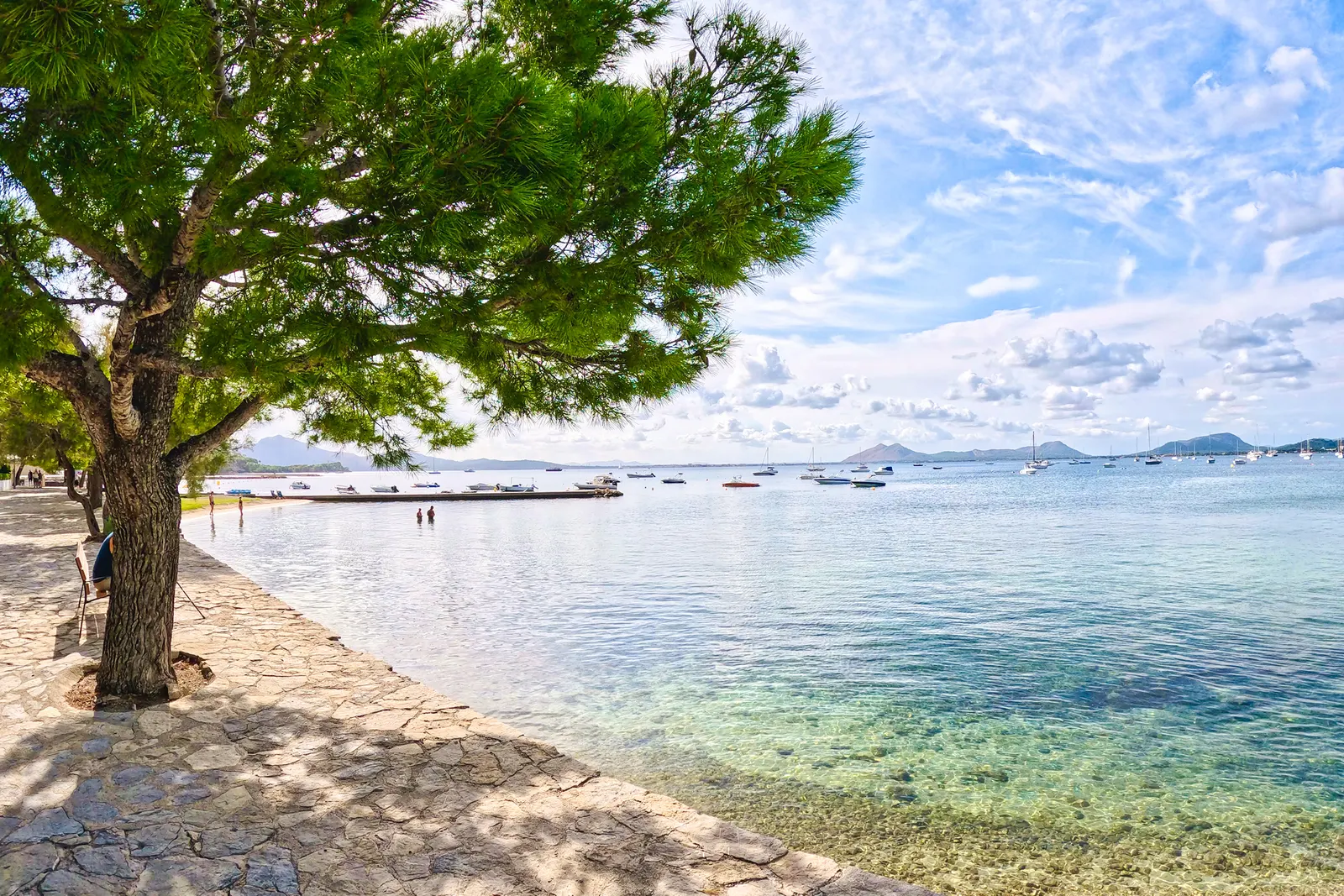
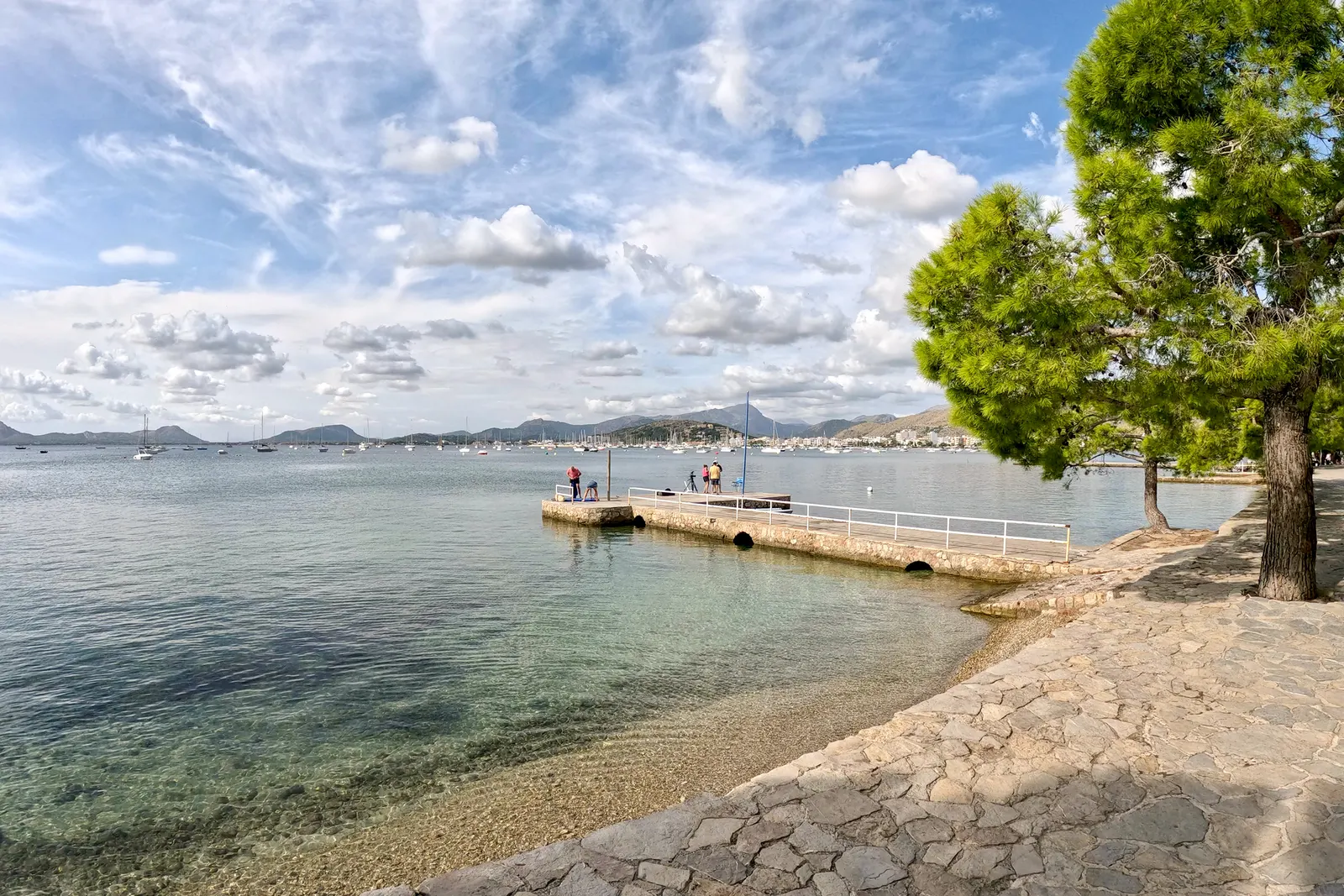
This is the view that tends to stay with you. Old Aleppo pines lean over a natural stone path beside the water, with mountains across the bay. Small stone jetties lead into the shallows at intervals.
Take your time, preferably outside midday. Early morning brings still water and motionless boats. Late afternoon puts the sun behind the pines.
The beach
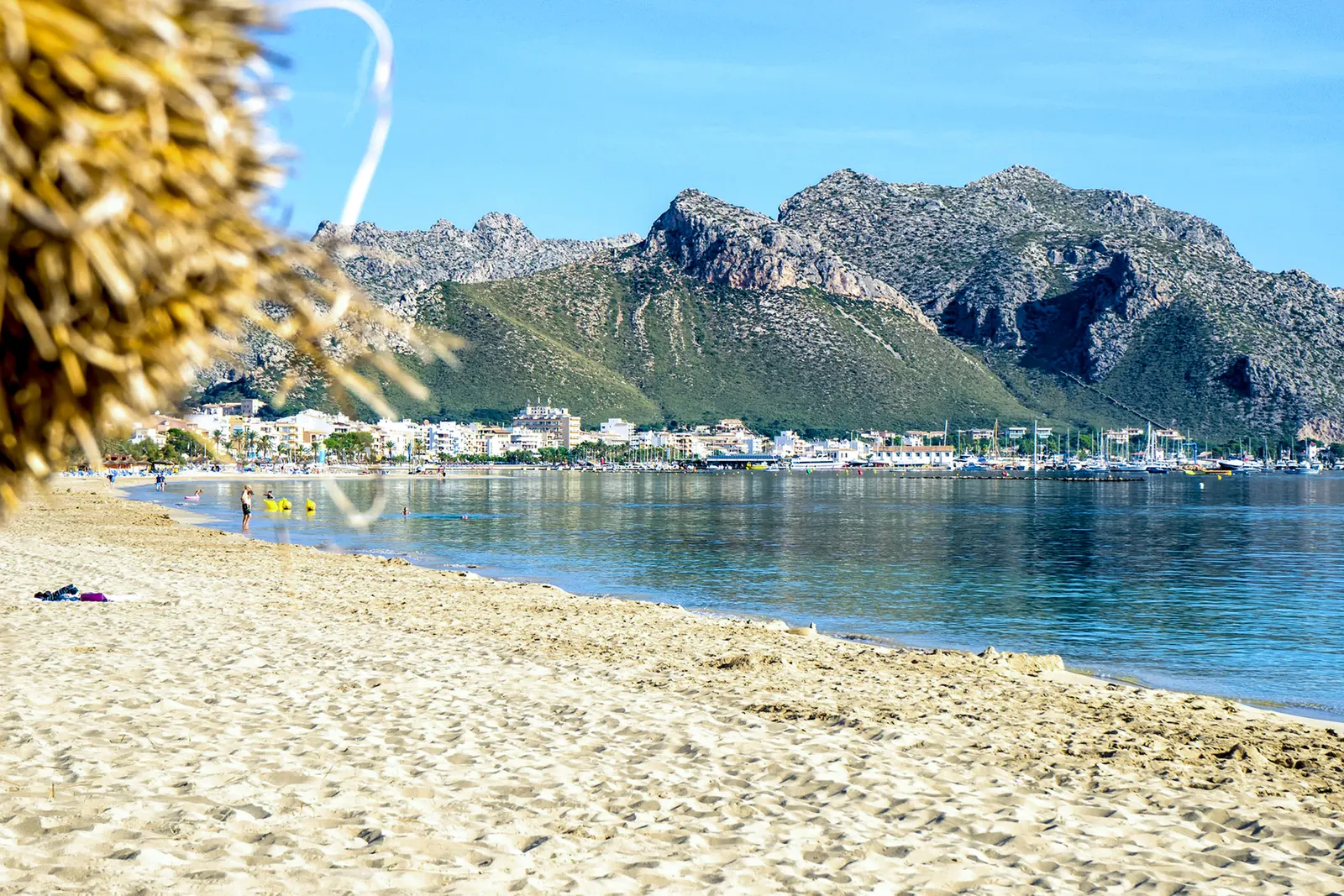
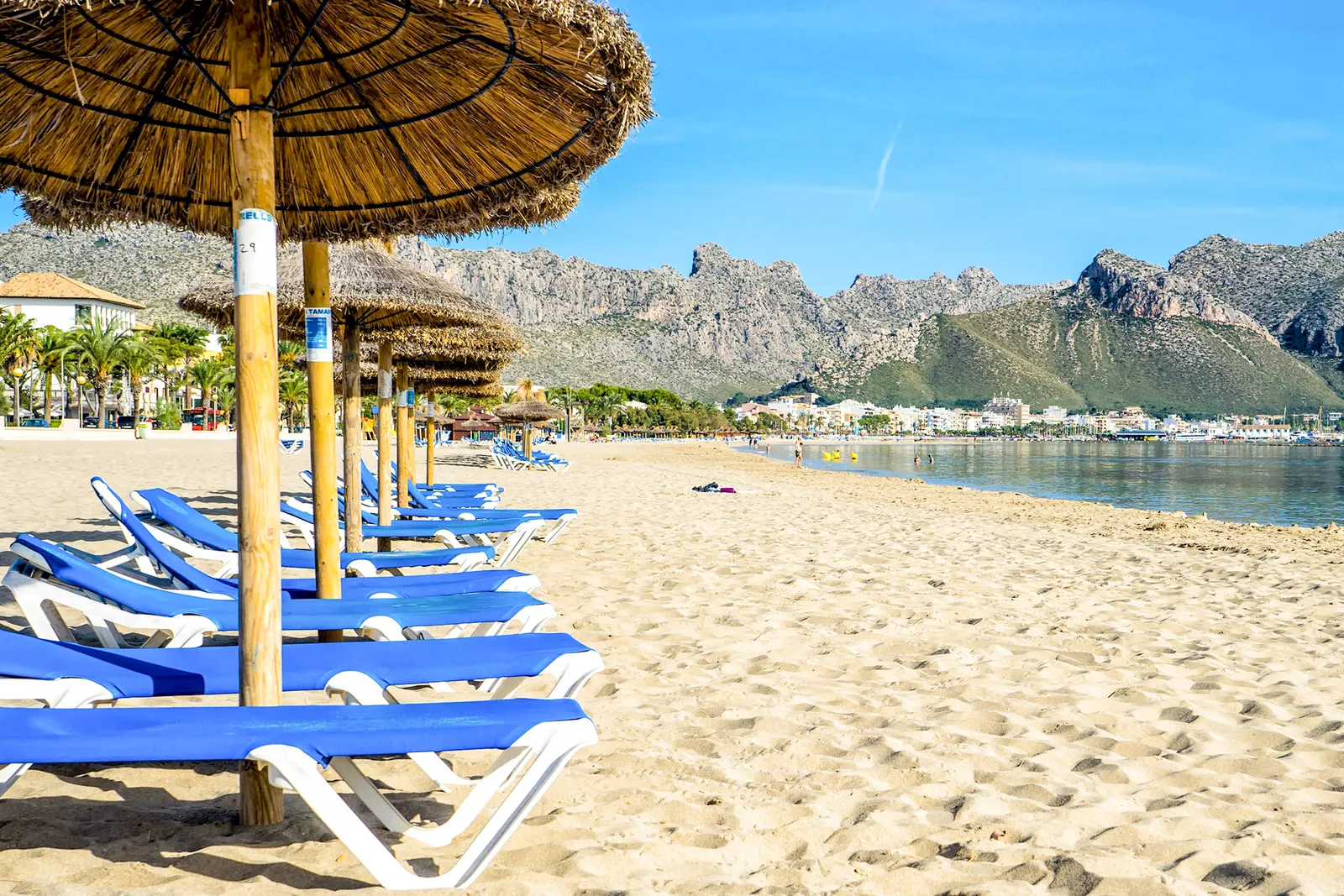
A crescent of fine sand stretches for around a kilometre and a half. The water shelves gently, although less gradually than at Port d’Alcúdia. Families with very small children may prefer the shallows in the neighbouring bay. Here, the reward is swimming with a view of the Tramuntana.
The sailing breeze has a practical consequence on land. Once it starts in the afternoon, secure your parasol and keep an eye on loose towels. For calmer beach conditions, come in the morning.
The aircraft
Military land begins north of town. Firefighting aircraft operate from the base and regularly practise over the bay, skimming low to collect water before climbing away.
You may see them elsewhere too. During fires, they take water from suitable nearby bays, including Cala Mesquida in the north-east.
Watch from public areas. The shoreline inside the military zone is closed to visitors.
Winter visits
Port de Pollença does not close completely in winter. While many businesses in Can Picafort and Port d’Alcúdia shut between December and February, some restaurants here remain open, and people still stroll along the promenade in January.
It is no longer a busy holiday resort at that time, but it remains a place where people live. If you want to visit the north coast in February, it is worth considering.
Nearby
Six kilometres inland, Pollença offers Plaça Major, the Sunday market and the 365 Calvari steps. The Formentor peninsula begins behind the resort, with Mirador es Colomer and the lighthouse around half an hour away, subject to summer shuttle restrictions. Head west and you are in the mountains in twenty minutes.
In summer, bus 231 crosses the mountains to Lluc and continues to Sóller. It provides a direct link between the north and west coast, as well as a particularly scenic bus journey.
Photographs
Port de Pollença in Mallorca
How much time do you have?
Things to do in Port de Pollença
Three hours
Follow the Pine Walk north to its end, return along the water and have coffee at the harbour. Take a walk onto one of the stone jetties if you have time.
Half a day
Beach and promenade in the morning, then a bus to Pollença for the 365 Calvari steps, Plaça Major and, on Sundays, the market.
A full day
Visit Formentor in the morning, including Mirador es Colomer and the lighthouse; use the shuttle during summer restrictions. Return to the beach as the afternoon breeze brings sailing boats onto the bay.
On a rainy day
Visit Pollença's museum and churches, then Alcúdia. Both are reachable by bus; save Pollentia's outdoor excavations for dry weather.
The beach at a glance
- Underfoot
- Fine sand, firm and gently sloping towards the water
- Getting into the water
- Shallow, though less so than Port d'Alcúdia
- Length
- Around a kilometre and a half, curving around the bay
- Shade
- Pines along the promenade; otherwise hired parasols
- Wind
- A regular onshore thermal breeze develops in the afternoon — good for sailing, but anchor parasols securely
- With children
- Good, although the water deepens sooner than at neighbouring beaches
- Facilities
- Sunbed and parasol hire · Watersports and sailing schools · Beach bars along the promenade
Practical details
- Parking
- Paid spaces along the promenade and side streets fill during summer mornings. Free spaces further out mean a walk of around ten minutes.
- Public transport
- Central stop on the main road, with services in several directions
- Time to allow
- A week as a holiday base; half a day for a visit
- Good to know
- The weekly market takes place on Wednesday mornings. Military land begins north of town, and its shoreline is closed to the public. Firefighting aircraft over the bay are a familiar sight.
- Bus
- Route 301 to Palma via Pollença, Sa Pobla and Inca; 322 to Alcúdia and Port d'Alcúdia; 321 to Cala de Sant Vicenç. Summer services include Formentor shuttle 334 to the lighthouse and 231 across the mountains to Lluc and Sóller.
- Shops and services
- Supermarkets: Several in town, open year-round · Pharmacy: Several on the main road · Medical care: Health centre in town, with further services in Pollença · Cash machines: Plenty along the promenade · Fuel: On the road to Pollença
- Access
- Level promenade, partly paved and partly natural stone slabs · Pushchairs: Straightforward along the promenade · Wheelchairs: Promenade accessible throughout · Dogs: Not allowed on the main beach in season
- What you will not find
- Nightlife · Low prices · A historic old town — that is in Pollença, six kilometres inland · Access to the northern military shoreline
- Coordinates
- 39.9075,3.0813 Google Maps Apple Maps
Dates that change the town
When a race comes to town
Mallorca 312 Road cycling · 25 April 2026
Road closures begin in the morning. The affected roads and reopening times follow the organiser’s traffic plan. Allow extra time for transfers and day trips.
Ironman 70.3 Alcúdia-Mallorca Triathlon · 9 May 2026
Temporary closures and extra crowds affect the start, finish and race route. Check access to your accommodation and the course map, especially if you have an airport transfer.
The season guide describes whole months. A race weekend can transform a normally quiet town for a couple of days. Find the dates in our guide to Sporting events.
Three nearby resorts compared
| Place | Character | Price level |
|---|---|---|
| Port de Pollença | Quieter and well kept with sailing and some winter openings | Higher |
| Port d'Alcúdia | Five kilometres of beach and extensive family facilities | Mid-range |
| Cala de Sant Vicenç | Four small coves with a quiet atmosphere and limited facilities | Mid-range to higher |
All three are within around twenty minutes of each other. If you cannot decide, think about how much evening activity you want as well as the beach.
Within reach
Places to visit
Nearby

Mallorca’s best-known viewpoint stands 232 metres above the sea on the Formentor peninsula. A terrace occupies a …
in summer, after 10am only when the barrier is open

The remains of an important Roman town just outside Alcúdia. An urban centre developed here after the conquest of …
in Alcúdia

A pilgrimage church on the Victòria peninsula, seven kilometres north-east of Alcúdia. The road ends at a …
via Alcúdia, then a narrow mountain road

Mallorca's north-eastern tip, reached along a rocky peninsula with a lighthouse at its end since 1863. The …
shuttle 334 only during high-summer restrictions

A quieter cave visit near Campanet, with limestone formations rather than a boat ride or colourful show. Allow …

A small pilgrimage chapel among pines near Sa Pobla, on the site of an older settlement. A paved path leads up to …

One of Mallorca's oldest churches, standing alone among the fields outside Campanet. Built on the site of a mosque …
Distances without a driving time are measured in a straight line. The road journey can be much longer; known driving times are shown alongside.
Other beaches to consider
Beaches and swimming nearby

Four small coves beneath the dramatic cliffs of Cavall Bernat, rising around 300 metres above the coast. Houses …

One of the north's best-known beaches: pale sand beneath old pines, the peninsula's mountains behind and water in …

Five kilometres of pale sand shelving gently into the sea, backed by hotels, bars and shops. A classic beach …

A quieter alternative to Port d’Alcúdia, 3 km to the east. Low villas sit among pines beside a pebbly, sandy shore …
Explore from here
Your questions answered
Your questions about Port de Pollença
What is the difference between Pollença and Port de Pollença?
Two places six kilometres apart. Pollença is the old inland town, with Plaça Major and the 365 Calvari steps. Port de Pollença is the seaside resort that developed in the 20th century. The bus takes fifteen minutes between them.
Why is Port de Pollença good for sailing?
The shape of the bay and its surrounding mountains encourage a thermal sea breeze on most summer afternoons. Its reliability is the attraction, rather than exceptionally strong wind. Windsurfers and kitesurfers value the same conditions.
Is Port de Pollença more expensive than neighbouring resorts?
Yes, noticeably. It has long attracted British and Spanish visitors and has a higher price level. Coffee, meals and accommodation generally cost more than in Port d'Alcúdia or Can Picafort. Consider the next bay if budget is a priority.
Is Port de Pollença worth visiting in winter?
It can be. Some restaurants remain open and people still use the promenade in January, while nearby beach resorts are largely closed. Do not expect a full summer resort, but you will find some local life.
What are the seaplanes above the bay?
Firefighting aircraft operate from the military base north of town. They practise taking water from the bay before climbing away again. It is striking to watch from public areas, but the military shoreline is closed to visitors.
When is Port de Pollença market?
Wednesday mornings. It is a manageable resort market. The larger municipal market is on Sundays in Pollença's Plaça Major, one of Mallorca's best-known and correspondingly busy markets.
Can I visit Cap de Formentor from Port de Pollença?
Yes. The lighthouse is around twenty kilometres away, a little over half an hour along the peninsula. During summer restrictions, private vehicles cannot use the road and shuttle 334 runs from Port de Pollença. Outside those times, leave early because lighthouse parking is very limited.
Practical questions
When is the best time to visit Port de Pollença?
Recommended months: March, April, May, June, September, October. The first hotels reopen around Easter.
Is Port de Pollença worth visiting in July and August?
July: worth considering with some reservations. Usually busy. Plan accommodation and transport ahead for harbour trips and walks around the bay. August: another month may suit you better. Usually very crowded. Finding a spare café table can be difficult.
How far is Port de Pollença from Palma airport?
About 65 km from Palma airport. Allow roughly 60 minutes by car. There is no direct airport bus here; change at Alcúdia or Inca. A car is useful for exploring the Tramuntana and Formentor, subject to seasonal road restrictions.
Do I need a hire car for Port de Pollença?
A car is useful Route 301 to Palma via Pollença, Sa Pobla and Inca; 322 to Alcúdia and Port d'Alcúdia; 321 to Cala de Sant Vicenç. Summer services include Formentor shuttle 334 to the lighthouse and 231 across the mountains to Lluc and Sóller.
Where can I park in Port de Pollença?
Paid spaces along the promenade and side streets fill during summer mornings. Free spaces further out mean a walk of around ten minutes.
Can you swim at Port de Pollença?
Yes. Fine sand, firm and gently sloping towards the water Shallow, though less so than Port d'Alcúdia Around a kilometre and a half, curving around the bay Pines along the promenade; otherwise hired parasols Good, although the water deepens sooner than at neighbouring beaches
Can I visit Port de Pollença with a pushchair or wheelchair?
Level promenade, partly paved and partly natural stone slabs Pushchairs: Straightforward along the promenade Wheelchairs: Promenade accessible throughout
Are dogs allowed at Port de Pollença?
Not allowed on the main beach in season
Words and photographs: Friedhelm Fischer. Exploring Mallorca since 2013 — by bike, on foot and with a camera.