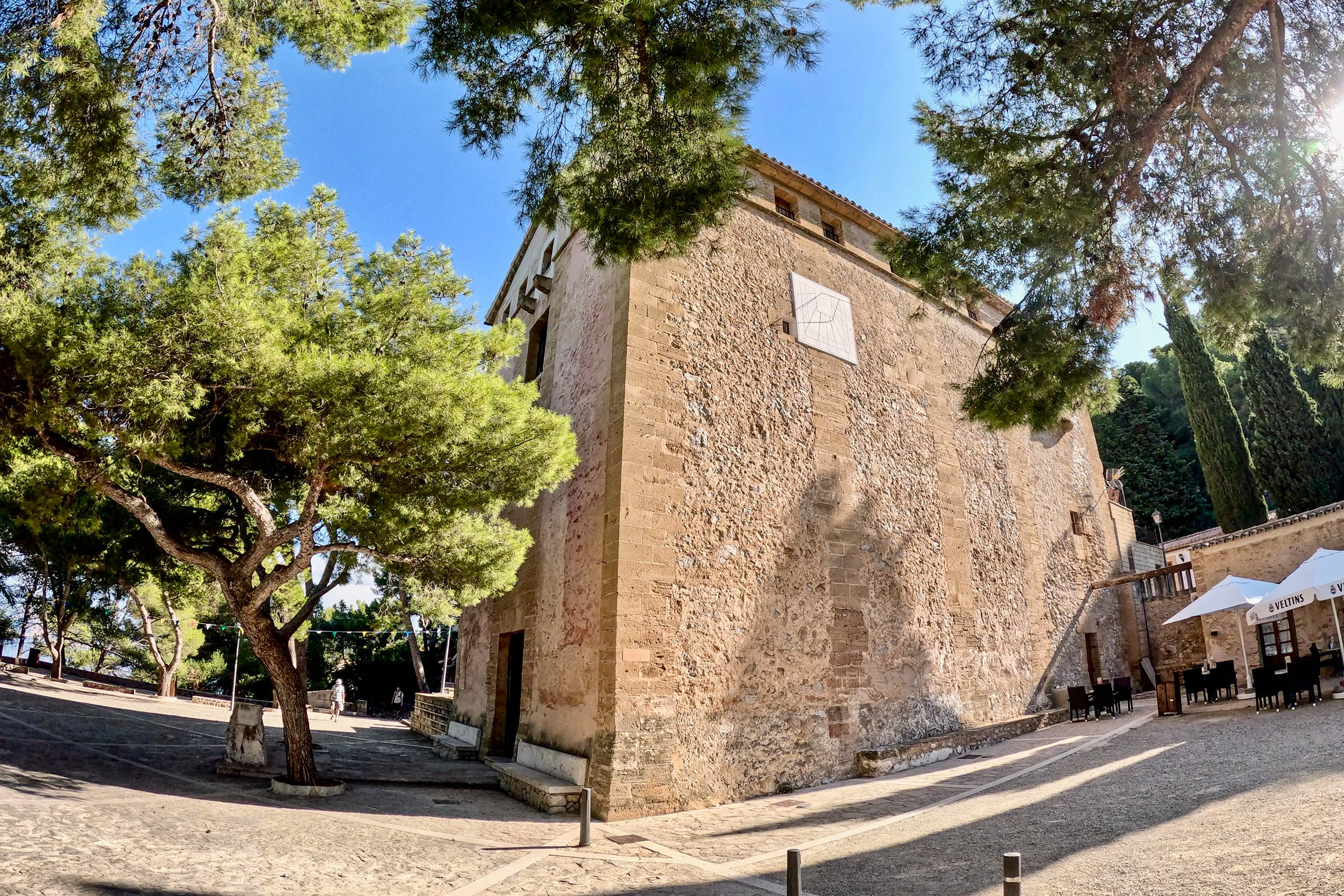
A pilgrimage church on the Victòria peninsula, seven kilometres north-east of Alcúdia. The road ends at a forecourt beneath pine trees, looking across Pollença bay towards Cap de Formentor. Documented since 1403, the church still shows its defensive character.
Ermita de la Victòria
Ermita de la Victòria in 30 seconds
The essentials at a glance
- Worth visiting for
- A short visit
- Best for
- You’d like a viewpoint where you can sit and stay a while.
- Best months
- January–June, September–December
- Time to allow
- An hour for the church and views; half a day with a walk.
- Without a car
- Hire car needed
- Parking
- A car park at the end of the road, with a few spaces on the slope before it. It fills by late morning in summer and at weekends. If there’s no space, don’t leave your car on the hillside; try again in the evening.
- Keep in mind
- Narrow mountain roads make you uncomfortable.
- Access
- Pushchairs: Suitable on the forecourt and terrace, but not on the walking trails. · Wheelchairs: The forecourt is accessible; steps lead into the church.
Get a feel for Mallorca. Find your kind of place.
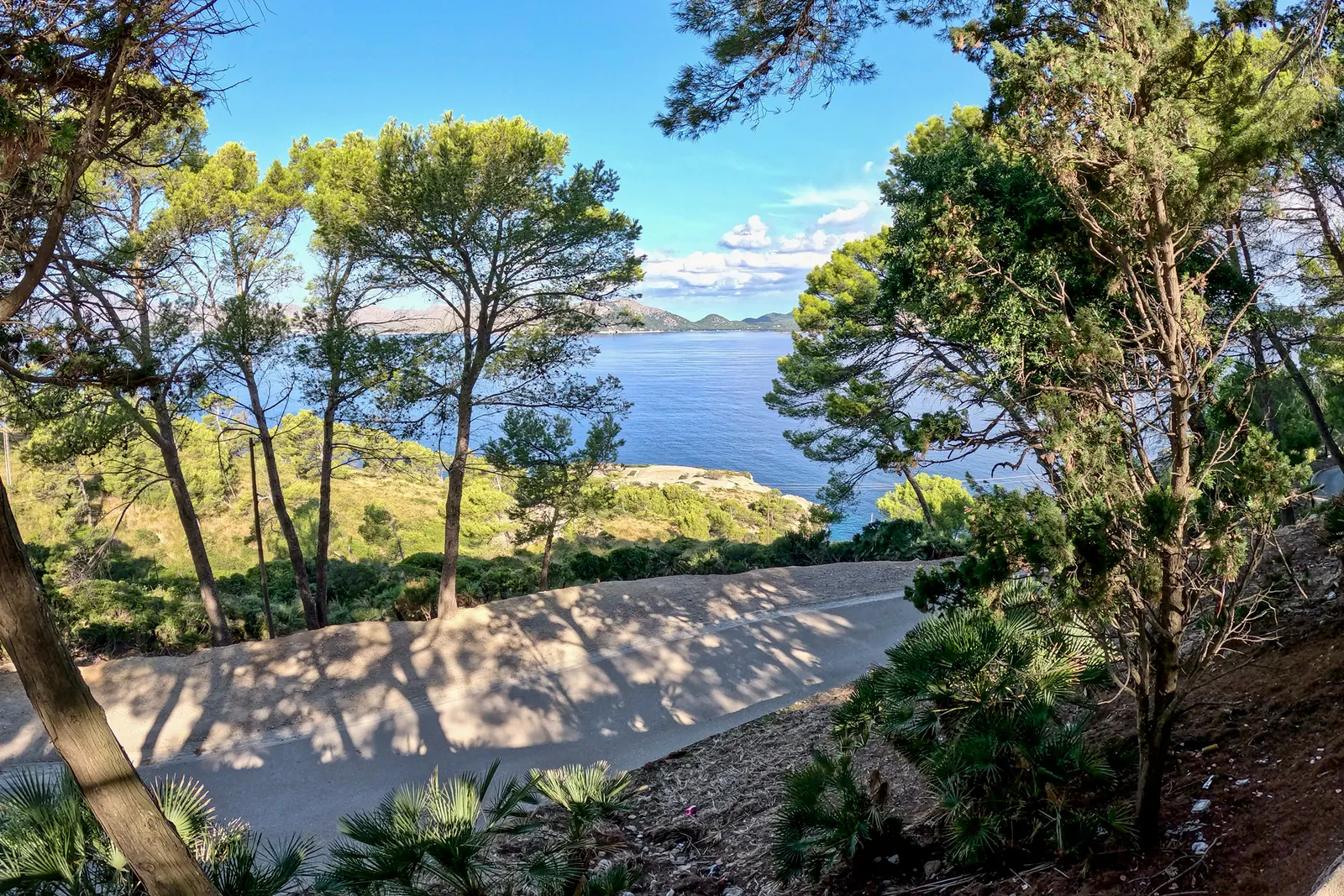
This is what you drive up for — the whole of Pollença bay and the mountains stretching towards Cap de Formentor.
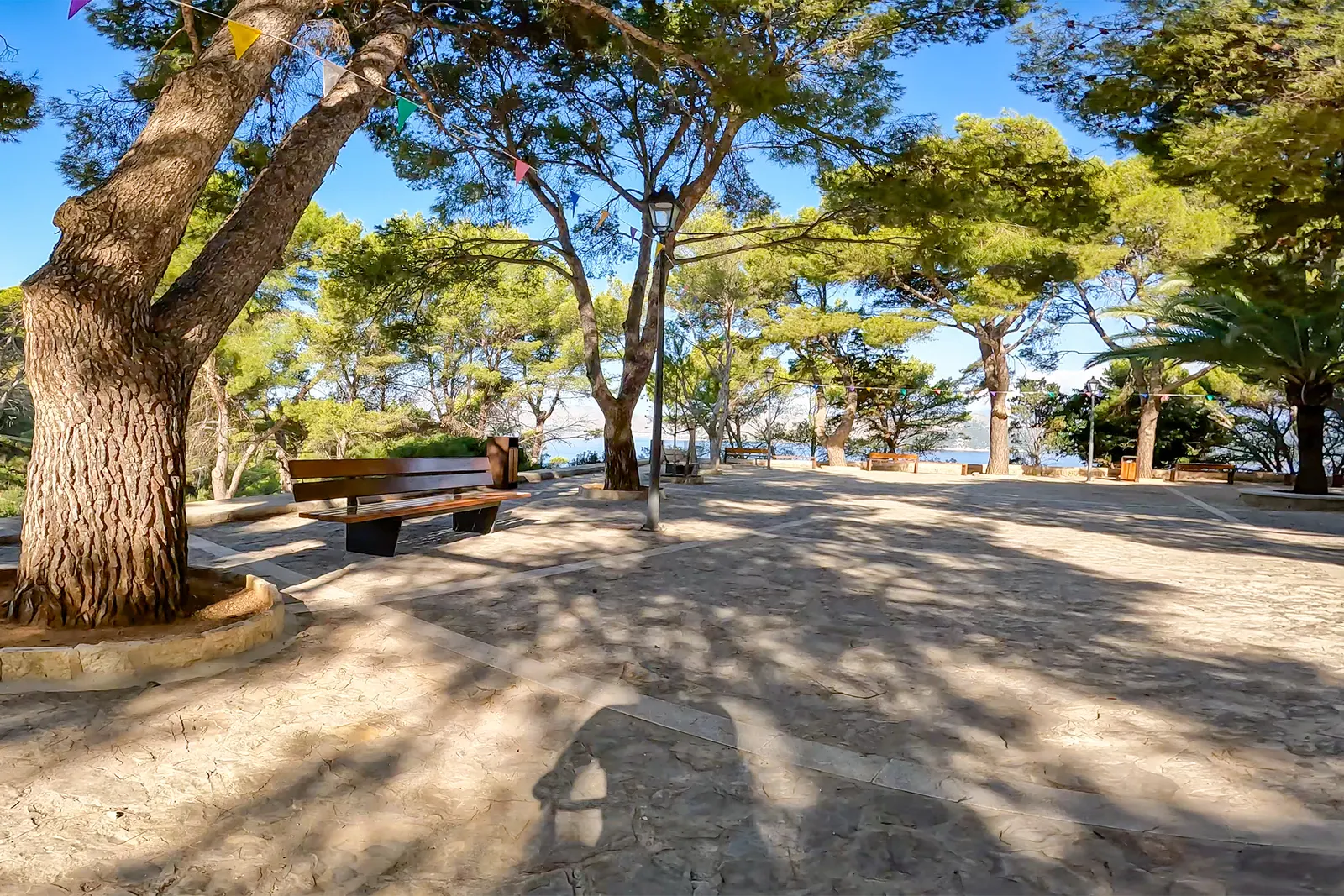
The forecourt is the place to linger. Shade, benches and the bay between the trees — it’s easy to stay longer than planned.
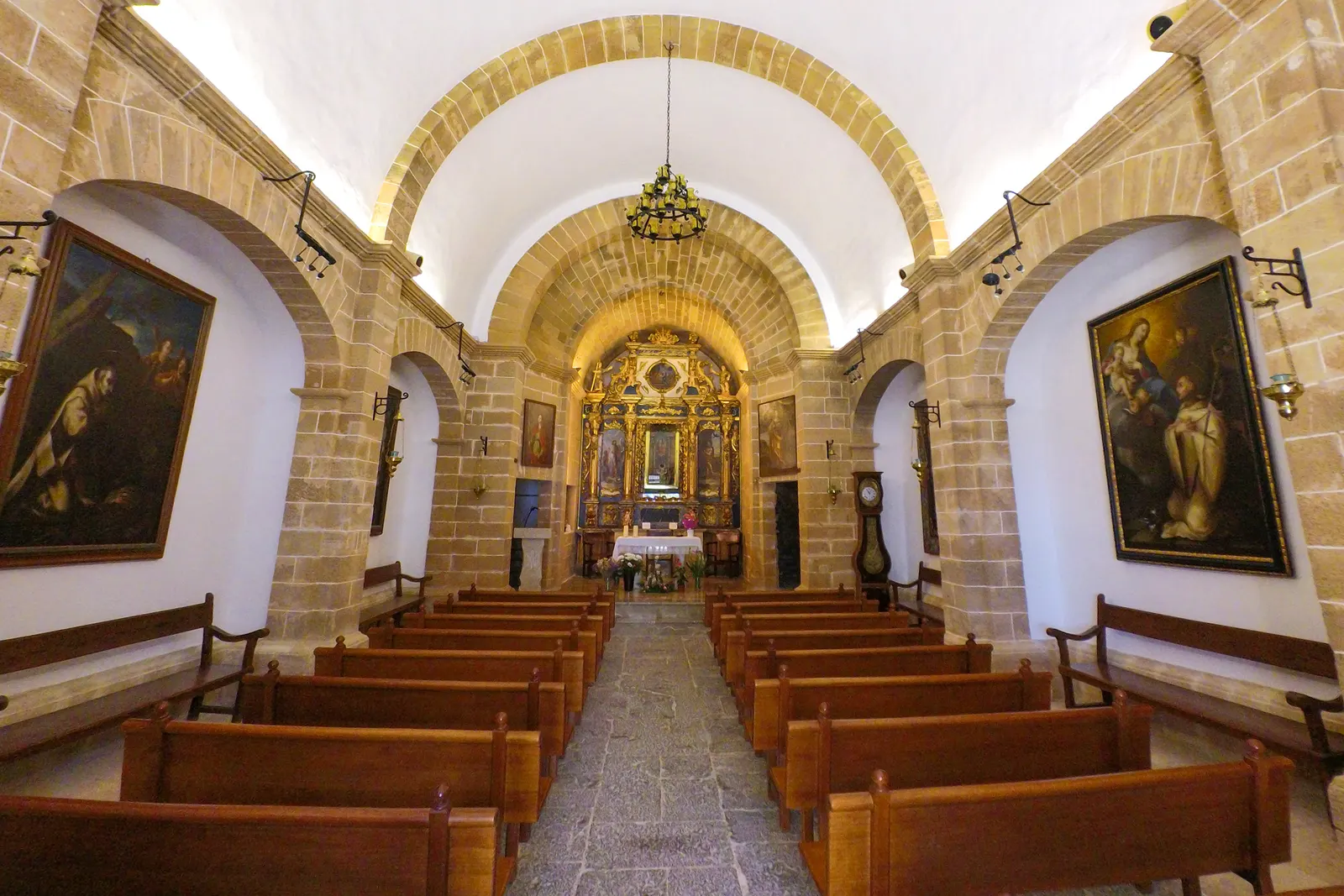
Inside it’s small, cool and simple, apart from the gilded altar at the end of the vault. The door isn’t always open, though.
Getting to know Ermita de la Victòria
Does Ermita de la Victòria suit your plans?
What to expect and what to know before you visit.
Who it suits
- You’d like a viewpoint where you can sit and stay a while.
- You enjoy walking — paths to Penya des Migdia and Talaia d’Alcúdia start here.
- You’re looking for a free evening outing.
- You’d like to see a Mallorcan pilgrimage church without going to Lluc.
Things to bear in mind
- Narrow mountain roads make you uncomfortable.
- You plan to arrive at midday in high summer — parking fills up and the church may be closed.
- You’re expecting a large church; this one is small and simple.
- You find walking difficult; there’s an uphill stretch from the car park.
Drive from the airport
65 minutes
62 km
Bus connections
No bus comes up here
Region
Raiguer
Nearest beach
Alcanada
4 km
Elevation
150 m
above sea level
Season guide for Ermita de la Victòria
November Worth a visit
Very quiet Open
Worth visiting in January, February, March, April, May, June, September, October, November and December. Less suitable in August.
Location
Location of Ermita de la Victòria
- Region
- Raiguer
- Municipality
- Alcúdia
- Elevation
- 150 m above sea level
- Airport
- 62 km , around 65 minutes
- Hire car
- needed
- Worth visiting for
- a brief stop
- Coordinates
- 39.8700,3.1700
Seven kilometres and six hundred years
Ermita de la Victòria lies seven kilometres beyond Alcúdia. There’s more history here than the town’s medieval walls: to the north-east, a wooded ridge reaches out into the sea, with a church halfway up its slope.
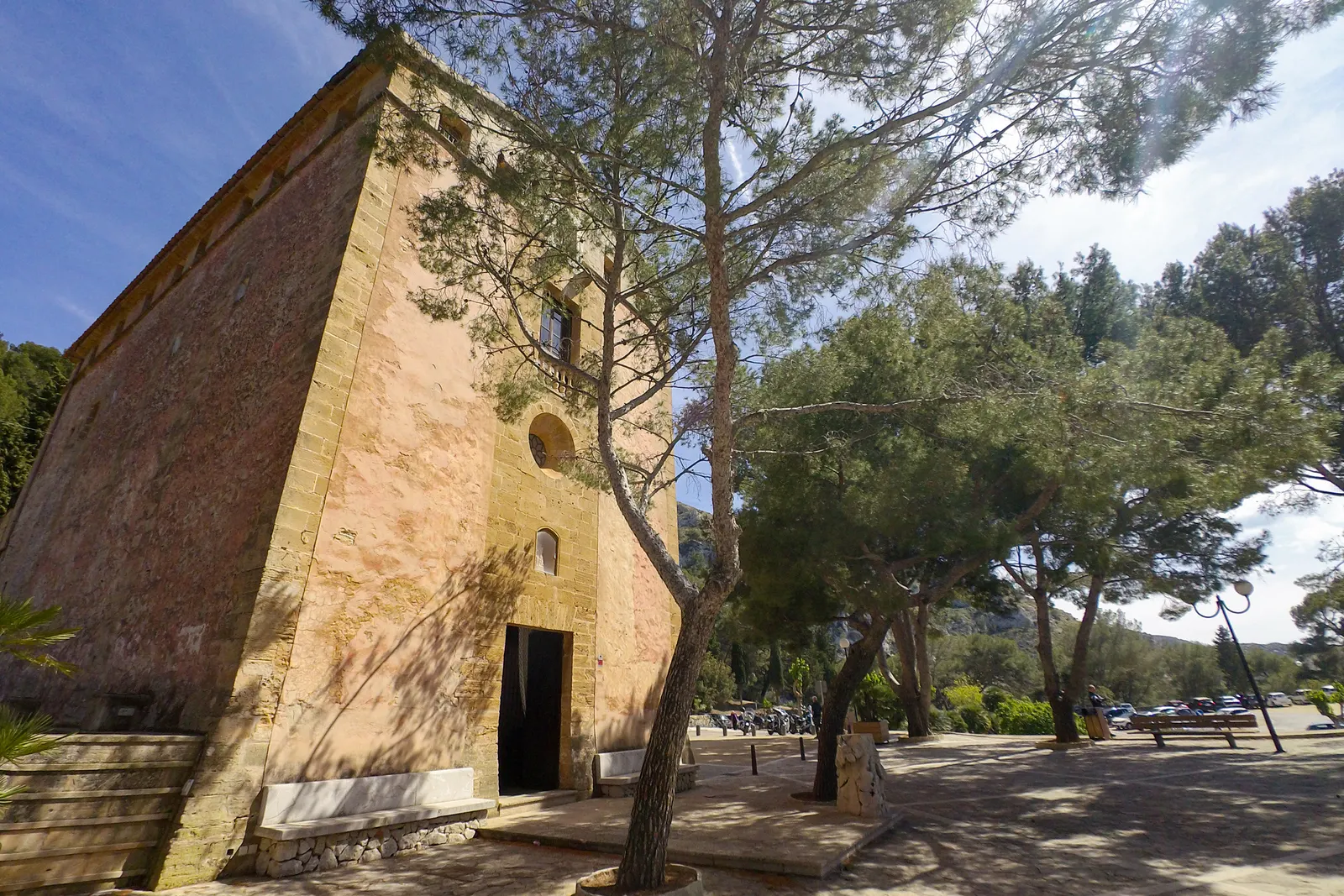
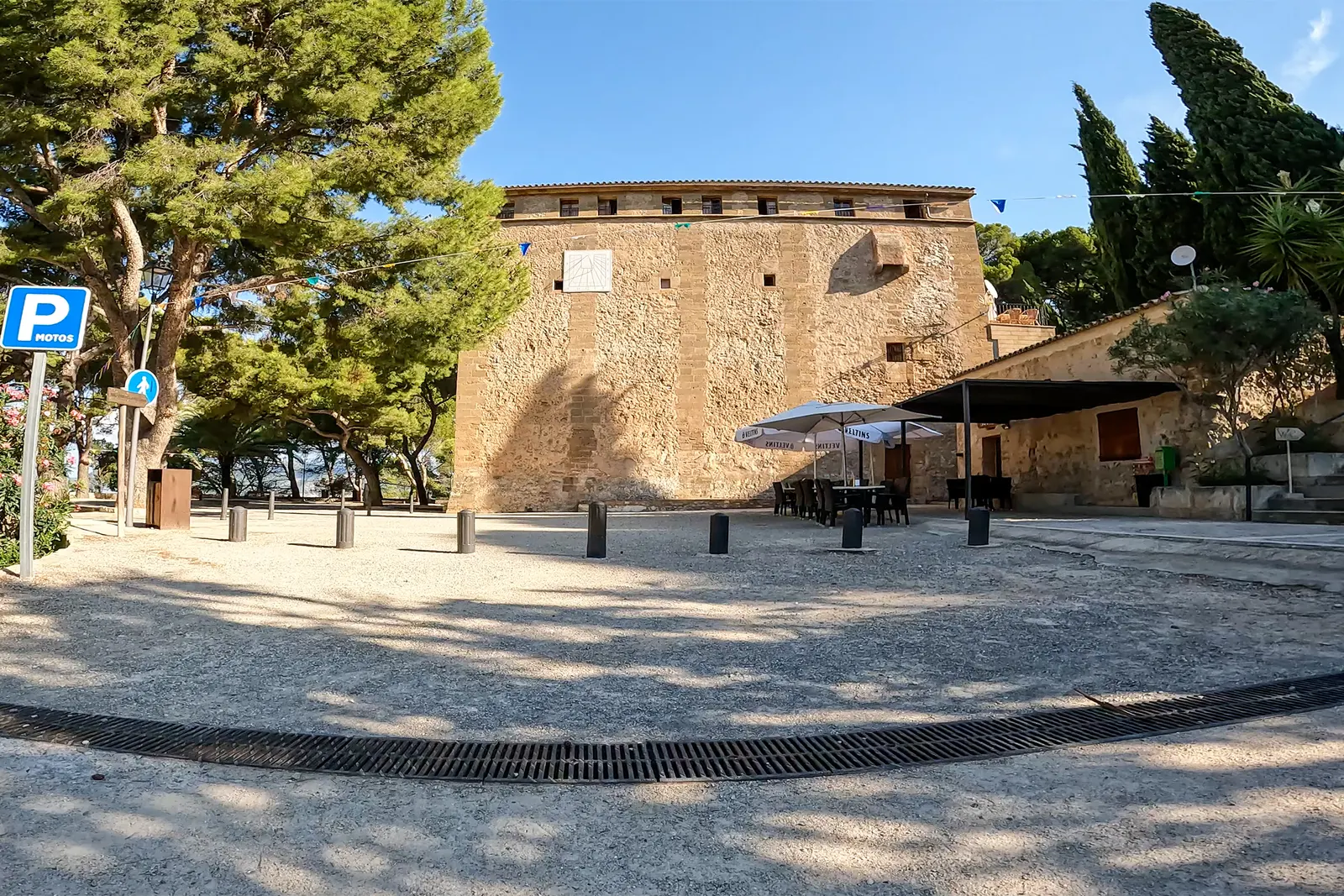
Hermits were living here as early as the 14th century. A document from 1403 permitted Mass at this spot — the earliest firm written evidence. Carmelites began enlarging the complex in 1482. Most of the building you see today dates from the 17th and 18th centuries. Its high, solid, windowless side walls make the other purpose clear. People living on this coast needed a refuge when unfamiliar sails appeared on the horizon.
What you’ll find at the top
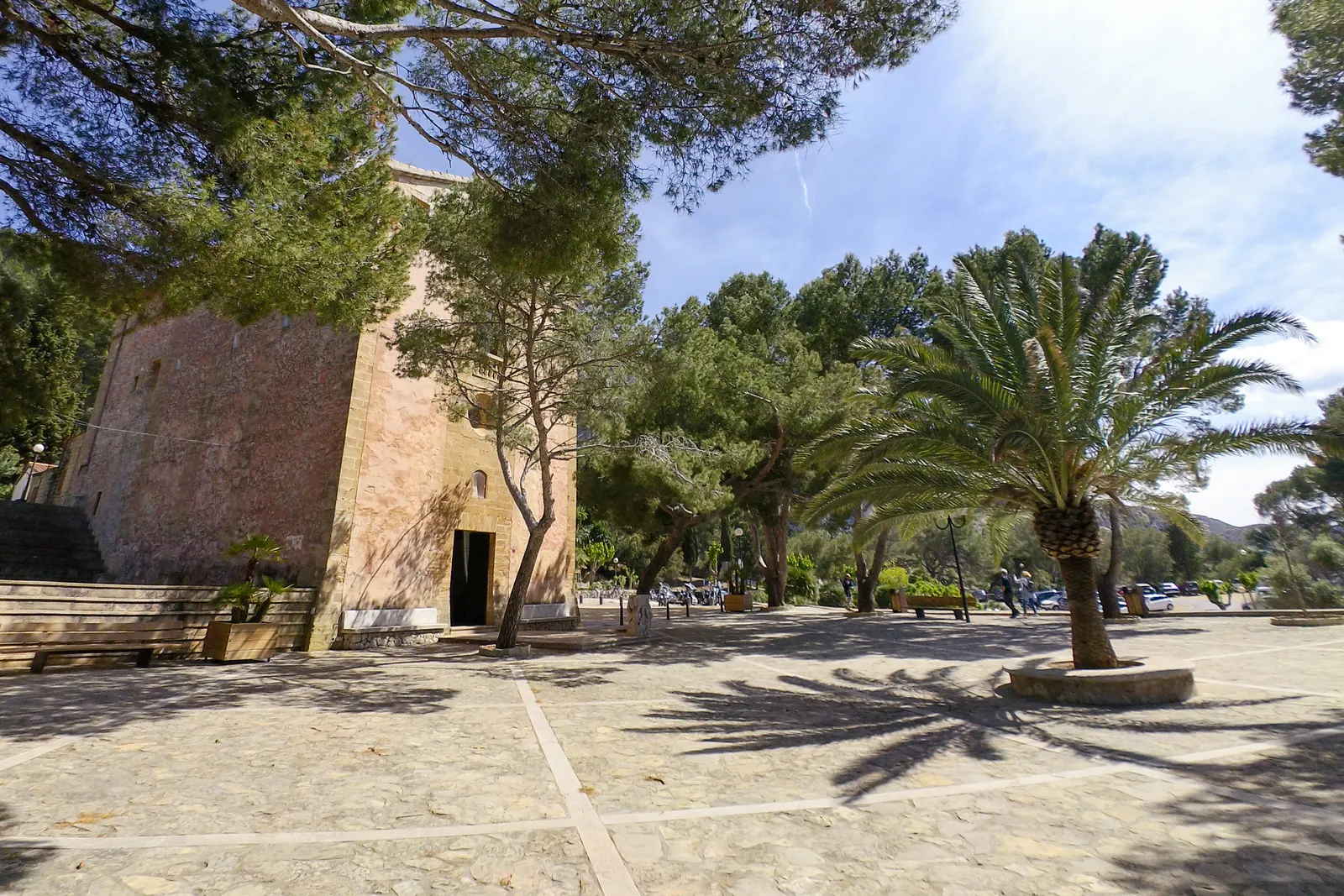
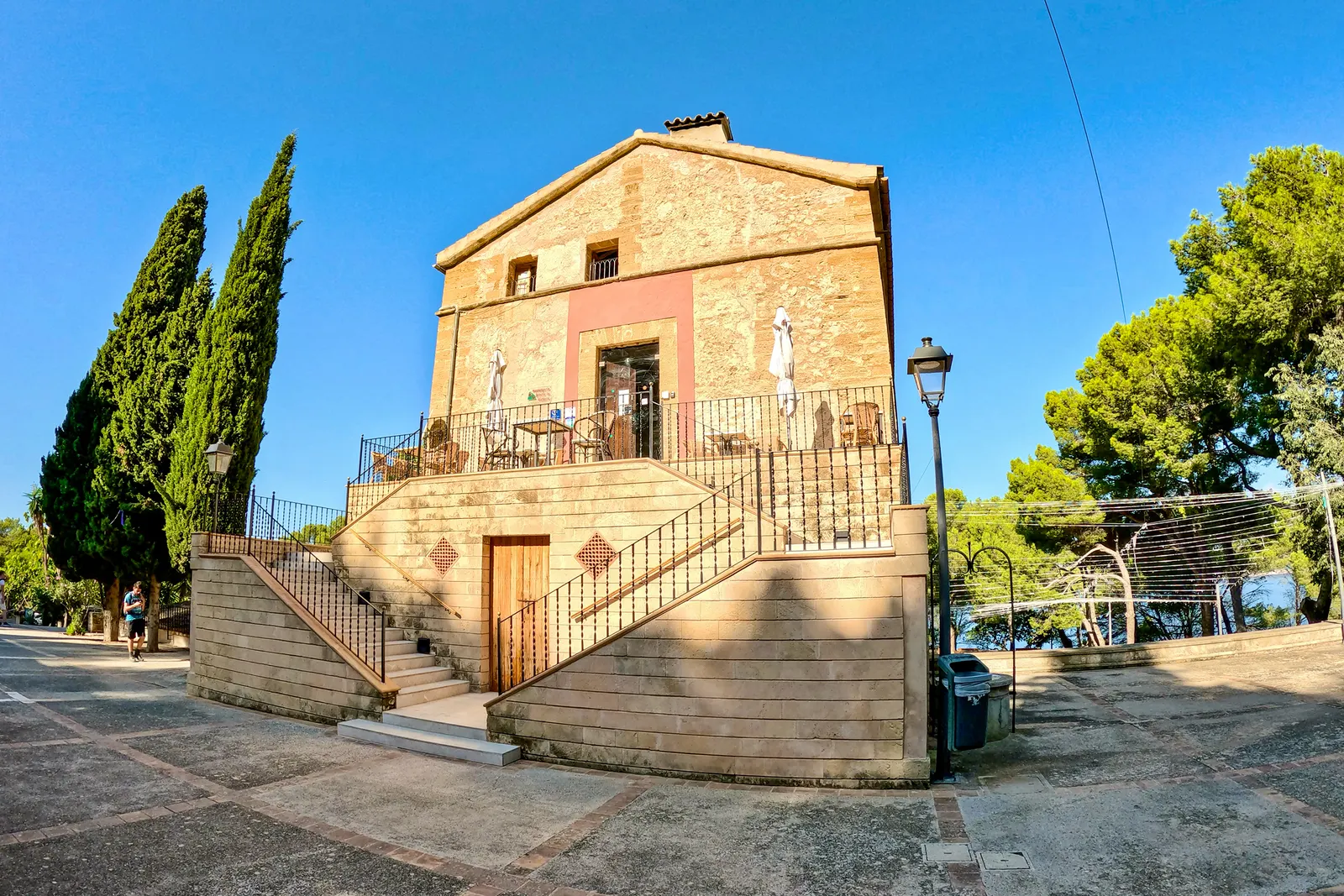
First, a car park — and in summer, a full one. Then a paved forecourt beneath old pine trees, with benches, lamps and bunting left over from a celebration. To the right is the church, with its large sundial on the south wall. Beside it stands a small café with a terrace, and above is the Hostatgeria, the former pilgrims’ house, now offering guest rooms and a restaurant.
Between the pine trunks, you can see Pollença bay.
That view is the main reason to come up, and this is somewhere you can easily stay longer than intended. Sit on a bench, look across the water towards the mountains, and an hour can pass before you realise it.
Inside the church
The church is small, with a single nave, a pale sandstone barrel vault, wooden pews and an iron chandelier. A gilded Baroque altar stands at the far end, all the more striking against the simple interior. Large dark paintings line the walls.
The church isn’t always open, which is the most common disappointment for visitors who drive up. You can always get onto the forecourt, but not necessarily inside. Mornings give you the best chance. If you want to see the interior, plan your visit accordingly.
The drive up
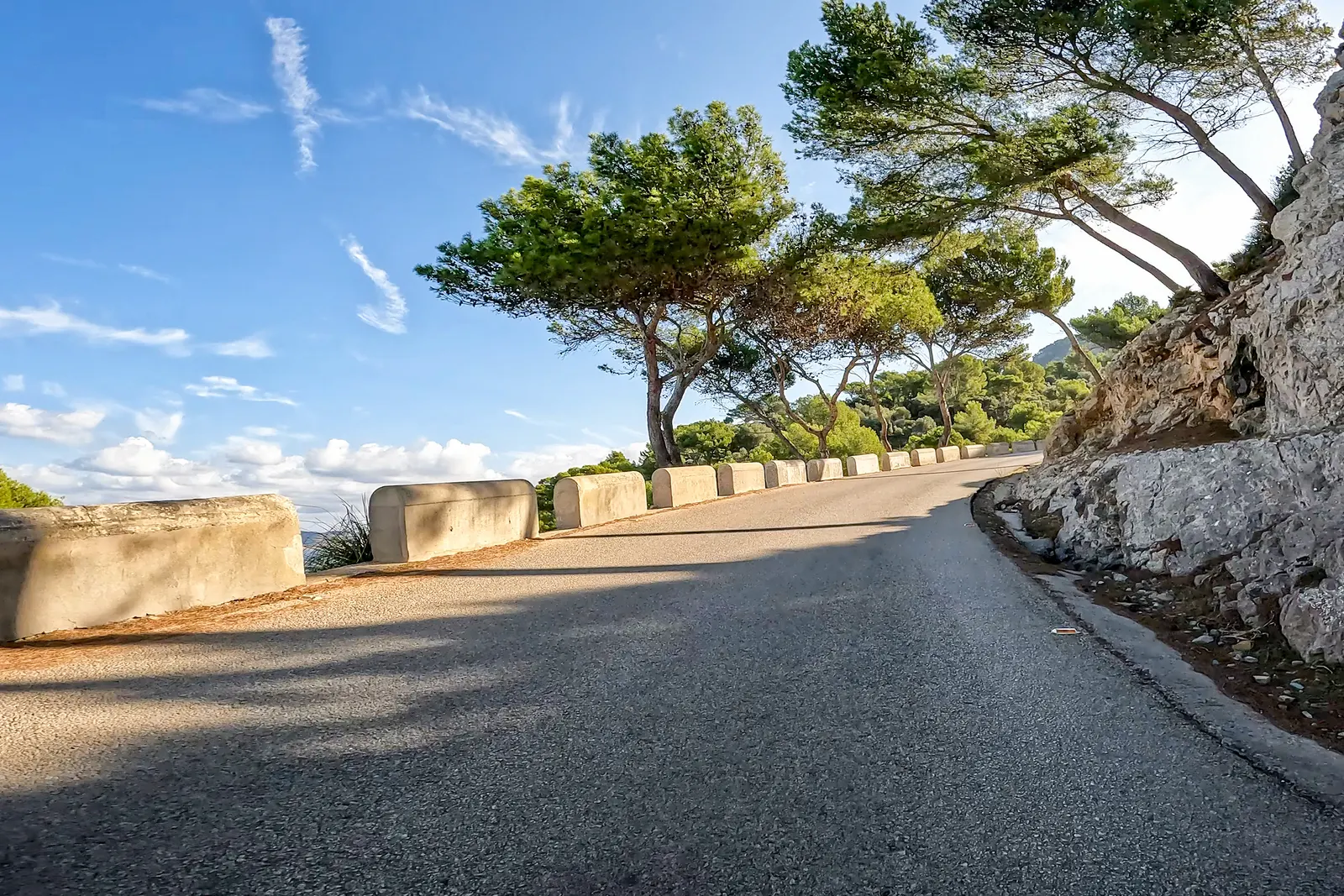
From Alcúdia, the route passes through Mal Pas and Bonaire onto the peninsula before the road narrows. It climbs steadily through pine woods, with bends and a few places where passing oncoming traffic is tight. The surface is good, though you can’t always see around the corners.
No bus runs up here. If you don’t have a car, cycling is another option. The gradient is steady and should be manageable for anyone already comfortable exploring Mallorca by bike.
Walks from the forecourt
Two marked routes start here. The shorter one leads to Penya des Migdia, overlooking the north coast. The longer walk climbs Talaia d’Alcúdia, the peninsula’s highest point. From the top you can see both bays: Alcúdia on one side and Pollença on the other.
Both paths are well marked but stony, and the final stretch has no shade. Wear sturdy shoes, bring water and don’t set out at midday in summer. May offers the best conditions.
When to come
March to May and October are good choices. The peninsula is green, the air clear, parking easier and temperatures comfortable for walking. Winter often brings the clearest views of all, although you can’t count on everything being open.
In July, stick to early morning or late afternoon. I’d avoid August: the narrow road struggles with the traffic, the car park fills and it’s too hot for walking. Come in September instead.
One thing to remember whatever the month: the Serra de Tramuntana lies to the west. The sun sets behind the mountains rather than into the sea. The hour beforehand is lovely, with the light behind you, warm colours across the bay and the opposite shore catching the sun.
Photographs
Ermita de la Victòria in Mallorca
How much time do you have?
Things to do in Ermita de la Victòria
Three hours
Drive up, visit the forecourt and church, have a coffee on the terrace, then follow the path towards Penya des Migdia until the views open out. Return via Mal Pas.
Half a day
Walk to Talaia d’Alcúdia, the peninsula’s highest point. The well-marked path starts at the forecourt, but it’s stony. Wear sturdy shoes, take water and avoid setting off at midday in summer.
On a rainy day
Choose somewhere else. The road becomes slippery in the rain, and the views you’ve come for will probably be hidden anyway.
Practical details
- Parking
- A car park at the end of the road, with a few spaces on the slope before it. It fills by late morning in summer and at weekends. If there’s no space, don’t leave your car on the hillside; try again in the evening.
- Public transport
- No bus service
- Time to allow
- An hour for the church and views; half a day with a walk.
- Good to know
- The church isn’t open all the time. The forecourt and views are freely accessible, but the interior isn’t always. For the best chance of seeing inside, come in the morning and avoid high summer.
- Bus
- No bus comes up here. From Alcúdia, travel by car, bike or on foot.
- Shops and services
- Supermarkets: None — the nearest is in Alcúdia. · Cash machines: None
- Access
- Paved forecourt; stony walking trails. · Pushchairs: Suitable on the forecourt and terrace, but not on the walking trails. · Wheelchairs: The forecourt is accessible; steps lead into the church. · Dogs: On a lead in the forecourt.
- What you will not find
- A bus service · Reliable church opening hours · Shade on the final stretch of the walking trail · A cash machine
- Coordinates
- 39.8700,3.1700 Google Maps Apple Maps
Within reach
Places to visit
Nearby

The remains of an important Roman town just outside Alcúdia. An urban centre developed here after the conquest of …

Mallorca’s best-known viewpoint stands 232 metres above the sea on the Formentor peninsula. A terrace occupies a …

Mallorca's north-eastern tip, reached along a rocky peninsula with a lighthouse at its end since 1863. The …
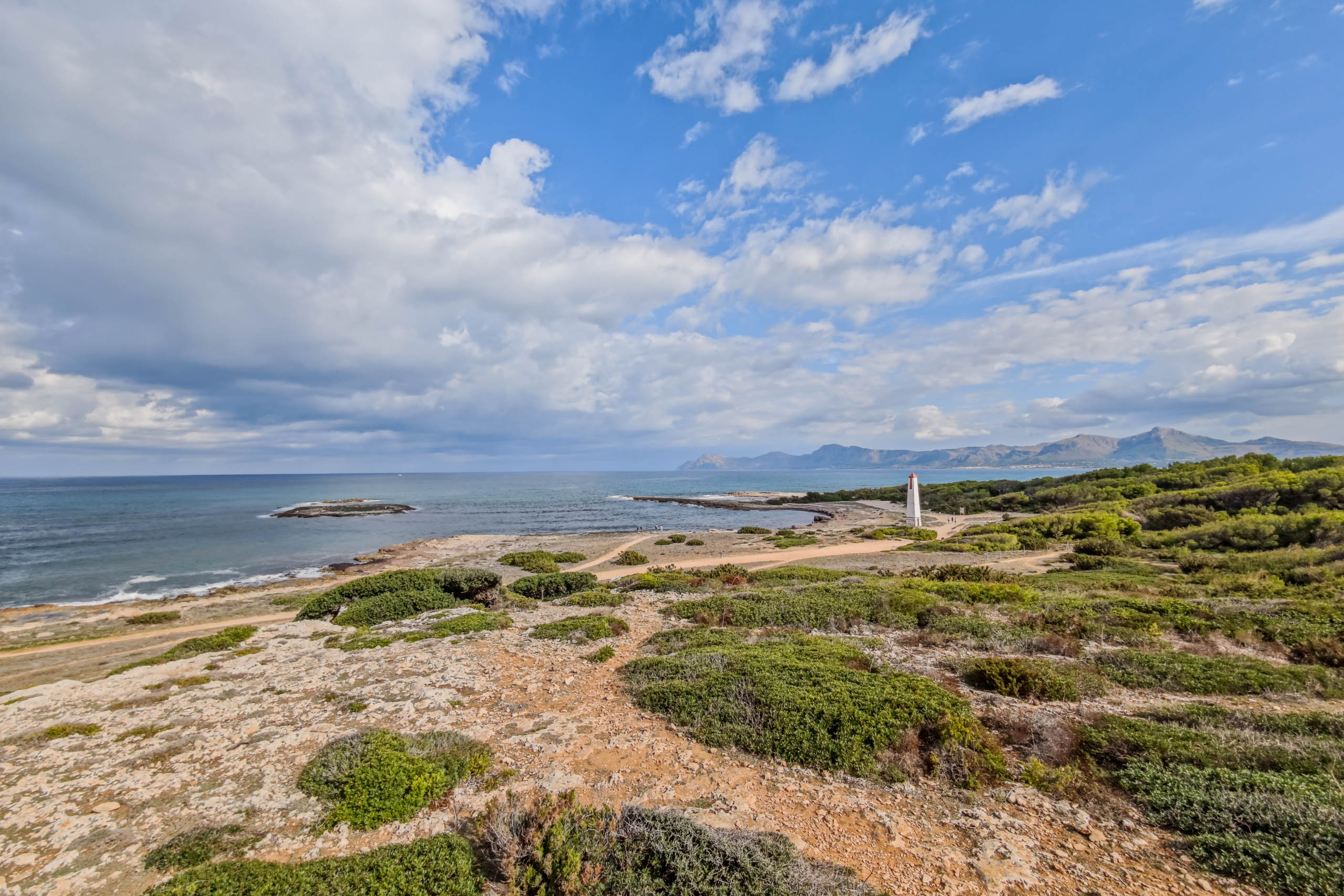
A few steps onto a wooden platform reveal the coast of Son Real. A dolmen lies beside the viewpoint, with the …

A Talayotic burial ground right beside the sea between Can Picafort and Son Serra de Marina. Around 110 tombs …

A church among the pines, beside the old Son Serra estate with its towers and farm buildings. A glimpse of the …
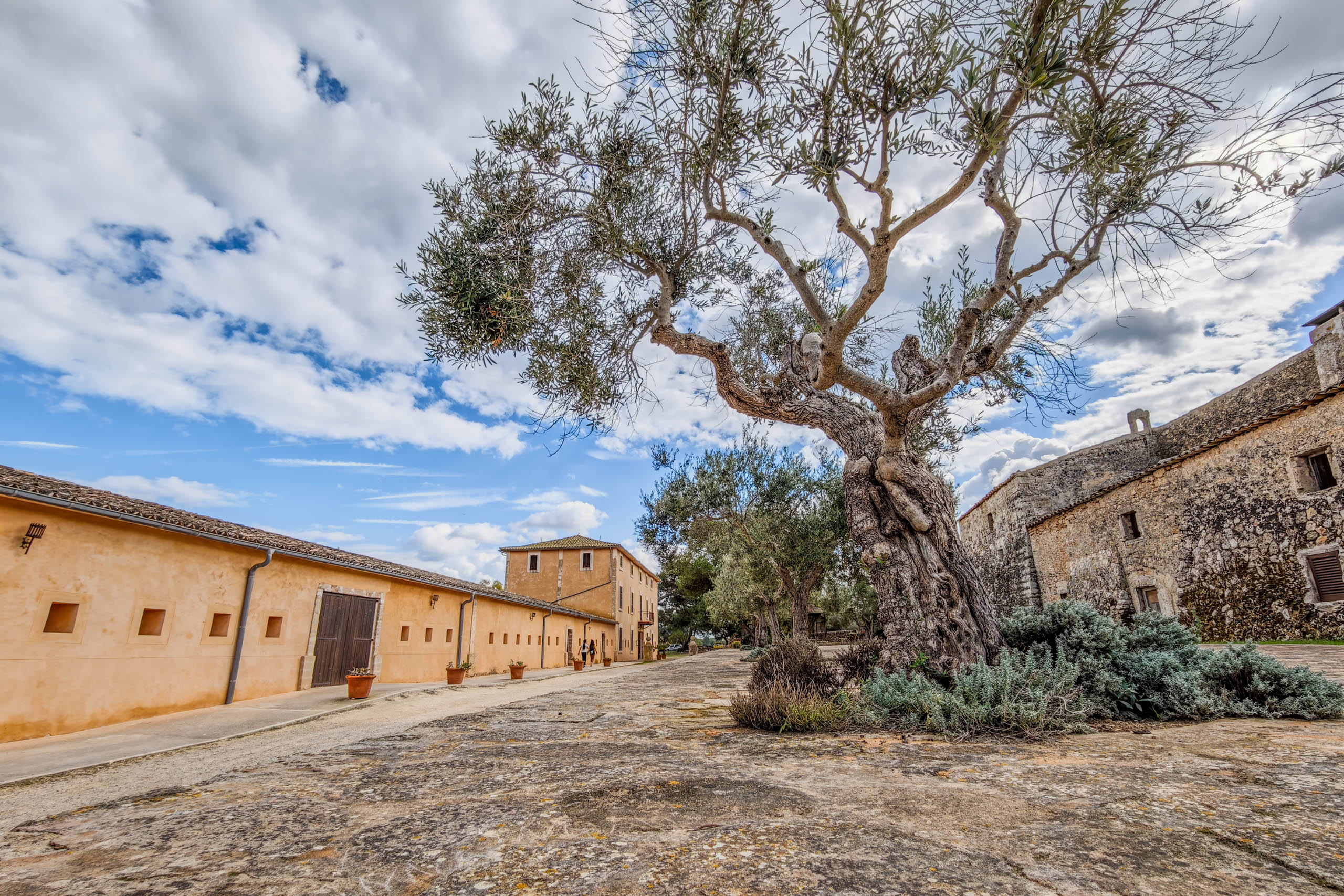
Old farm buildings, gnarled olive trees and a museum about earlier life on Mallorca. Son Real lies between Can …

A small pilgrimage chapel among pines near Sa Pobla, on the site of an older settlement. A paved path leads up to …
Distances without a driving time are measured in a straight line. The road journey can be much longer; known driving times are shown alongside.
Where to swim nearby
Beaches and swimming nearby

A quieter alternative to Port d’Alcúdia, 3 km to the east. Low villas sit among pines beside a pebbly, sandy shore …

Five kilometres of pale sand shelving gently into the sea, backed by hotels, bars and shops. A classic beach …

One of the north's best-known beaches: pale sand beneath old pines, the peninsula's mountains behind and water in …

A long sandy stretch of the Bay of Alcúdia, with protected dunes and pines at Es Comú rather than a continuous …
Places to stay within reach
Explore from here
Your questions answered
Your questions about Ermita de la Victòria
How do you get to Ermita de la Victòria?
From Alcúdia, head towards Mal Pas and Bonaire, then follow the narrow, winding mountain road to the car park at the end. It’s seven kilometres and about fifteen minutes by car. No bus goes up. Confident cyclists can ride there; the gradient is steady and manageable.
Can you stay overnight at Ermita de la Victòria?
Yes. The renovated Hostatgeria, the former pilgrims’ house in the upper part of the complex, now has guest rooms and a restaurant. Staying means you can enjoy the forecourt once the day visitors have left after sunset.
Is the church always open?
No — it’s the question visitors ask most often. The forecourt and views are always freely accessible, but the church interior isn’t. Your best chance is in the morning. If going inside matters to you, plan around that rather than simply hoping the door will be open.
How old is Ermita de la Victòria?
A document from 1403 permitted Mass to be celebrated here, and hermits had already lived on the peninsula in the 14th century. Carmelites enlarged the complex from 1482. Most of today’s building dates from the 17th and 18th centuries, and you can see that it also served as a refuge from pirate raids.
Which walks start at the Ermita?
There are two worthwhile routes. The shorter one leads to Penya des Migdia, overlooking the north coast. The longer one climbs Talaia d’Alcúdia, the peninsula’s highest point. Both are well marked, stony and partly unshaded. Wear sturdy shoes, take water and avoid a midday start in summer.
When is the best time to visit Ermita de la Victòria?
March to May and October, when the peninsula is green, the air clear and parking easier. Winter often brings the clearest views, although not everything will necessarily be open. In high summer, come early in the morning or in the evening.
What can you see from the Ermita?
The whole of Pollença bay, the nearby hills of the peninsula and, across the water, the ridge leading towards Cap de Formentor. The Serra de Tramuntana lies to the west, which is why the sun sets behind mountains here, not into the sea.
Practical questions
Is Ermita de la Victòria worth visiting in July and August?
July: worth considering with some reservations. Usually busy. The car park fills during the morning. Evenings are easier. August: another month may suit you better. Usually busy. Too busy for the narrow road. Come in September instead.
How far is Ermita de la Victòria from Palma airport?
About 62 km from Palma airport. Allow roughly 65 minutes by car. Seven kilometres from Alcúdia via Mal Pas and Bonaire, followed by a narrow, winding mountain road. Allow around fifteen minutes. Passing oncoming traffic can be tight in places; if in doubt, stop while you still have room.
Do I need a hire car for Ermita de la Victòria?
A car is needed No bus comes up here. From Alcúdia, travel by car, bike or on foot.
Where can I park in Ermita de la Victòria?
A car park at the end of the road, with a few spaces on the slope before it. It fills by late morning in summer and at weekends. If there’s no space, don’t leave your car on the hillside; try again in the evening.
Can I visit Ermita de la Victòria with a pushchair or wheelchair?
Paved forecourt; stony walking trails. Pushchairs: Suitable on the forecourt and terrace, but not on the walking trails. Wheelchairs: The forecourt is accessible; steps lead into the church.
Are dogs allowed at Ermita de la Victòria?
On a lead in the forecourt.
Ermita de la Victòria features in our Mallorca highlights
Words and photographs: Friedhelm Fischer. Exploring Mallorca since 2013 — by bike, on foot and with a camera.