Six monasteries and sanctuaries to visit on Mallorca
Quiet places in remarkable settings, often with far-reaching views.
Mallorca's monasteries and sanctuaries occupy remarkable places: rocky hills above the plain, a peninsula over the bay or a valley among mountains. Their settings are reason enough to make the journey.
These are six I return to. Some offer guest rooms, and staying overnight is my main suggestion: once the last day visitors leave, you experience a different kind of quiet.
Why visit a monastery on holiday?
Few places on Mallorca bring views, history and quiet together quite like its pilgrimage churches and hermitages. Their settings include hills, rocky spurs, peninsulas and mountain valleys, each worth the journey.
This selection runs from the west coast through the north and east to the island’s interior. Several offer rooms, and all have a setting that rewards the trip. Luxury isn’t the point.
Each entry explains location, access and opening. After an hour on mountain roads, finding a locked church is frustrating — and entirely possible at several of these places.
-
1. Monestir de Miramar
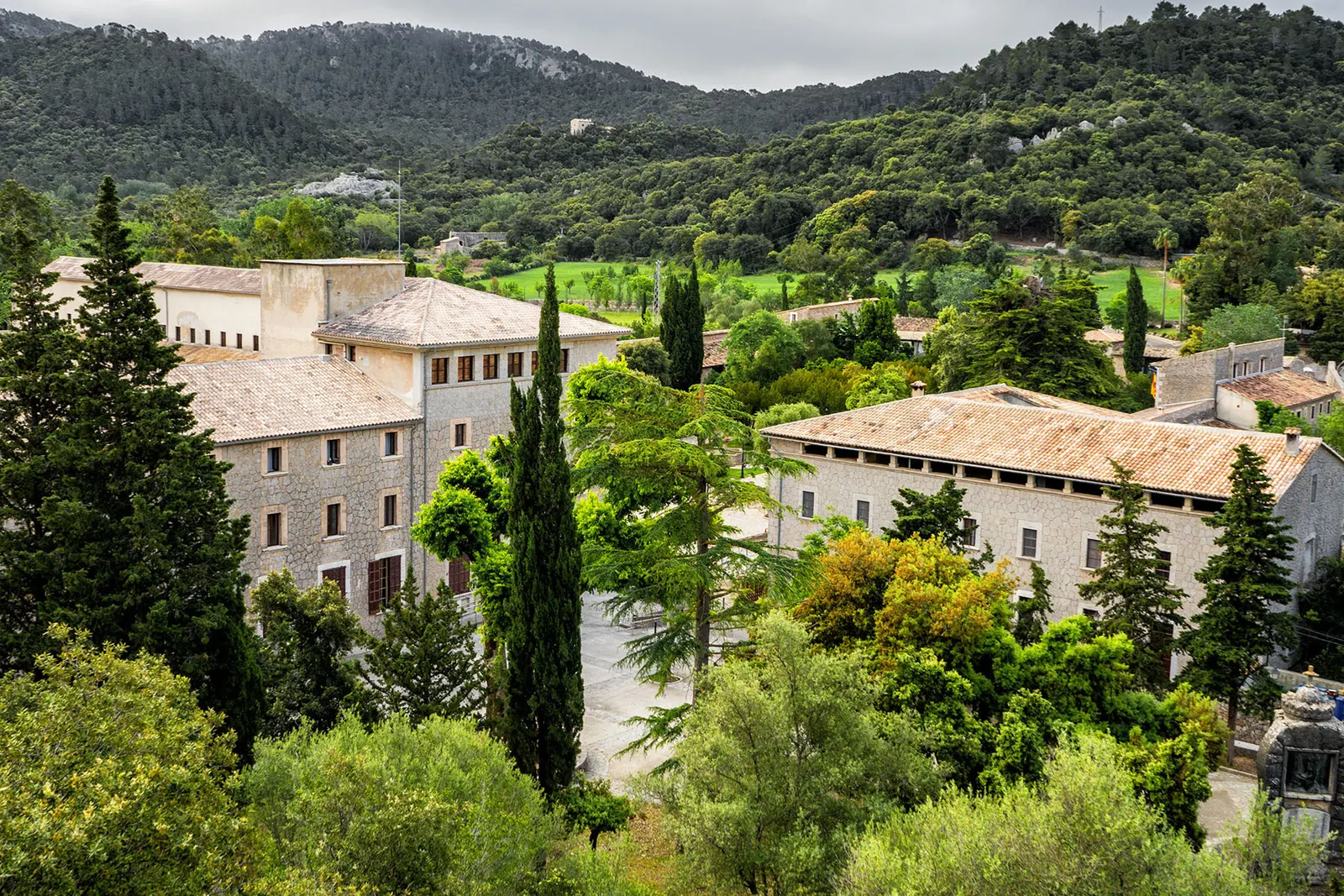
Behind trees on the coast road between Valldemossa and Deià lies an unassuming estate with two far-reaching stories. In 1276, Ramon Llull founded a school here where Franciscans were to learn Arabic, as part of his missionary work.
Six hundred years later, Archduke Ludwig Salvator bought the estate, restored its oratory and acquired neighbouring coastal properties to protect them from development. His work helped preserve the landscape that visitors see today. You can explore old olive presses, a hillside garden and walls high above the sea.
- Location
- Around 350 metres above the sea on the Ma-10 between Valldemossa and Deià
- Visiting
- Usually Monday to Saturday mornings with a small charge; check hours
- Good for
- History, gardens and a coast-road stop
-
2. Santuari de Lluc
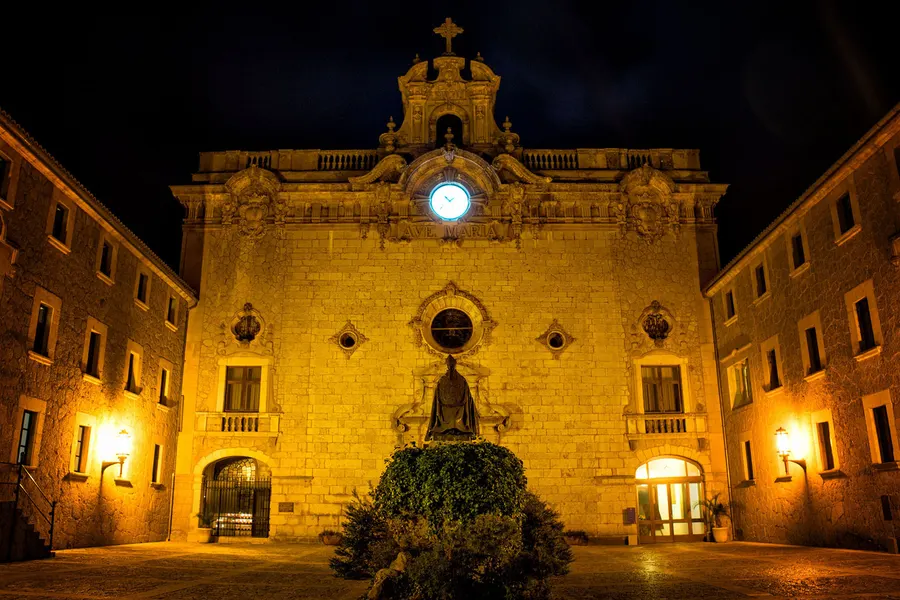
Mallorca's spiritual centre, at 525 metres in the Tramuntana, has been a pilgrimage destination since the 13th century. The Els Blauets choir sings here, and a rosary path climbs the hillside, with Gaudí involved in its design.
Most people visit the church, have a coffee and leave. Try staying in the former pilgrims' accommodation instead. After the last bus, the courtyard quietens down, the façade is lit and mountains surround you. For me, this is one of the island's most rewarding overnight stays.
- Location
- 525 metres above sea level in the Serra de Tramuntana
- Visiting
- Grounds freely accessible; rooms available in former pilgrims' accommodation
- Good for
- An overnight stay, walking and families
-
3. Ermita de la Victòria
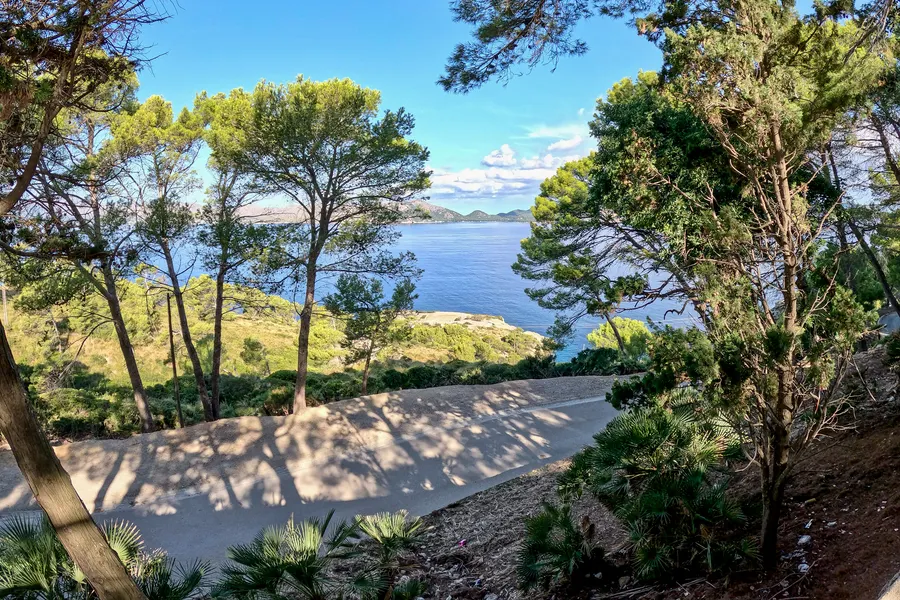
A pilgrimage church on the Victòria peninsula, seven kilometres north-east of Alcúdia. The road ends at a forecourt beneath tall pines, looking across the Bay of Pollença towards Cap de Formentor. The site is documented from 1403, and the church still looks defensive.
Come about an hour before sunset for the changing light across the bay. At midday in August, you are more likely to find a full car park and perhaps a locked door. The church is not always open, but the forecourt and view can still be enjoyed.
- Location
- 150 metres above the Bay of Pollença, seven kilometres from Alcúdia
- Visiting
- Forecourt freely accessible; church not continuously open
- Good for
- Evening views and walks on the peninsula
-
4. Ermita de Betlem
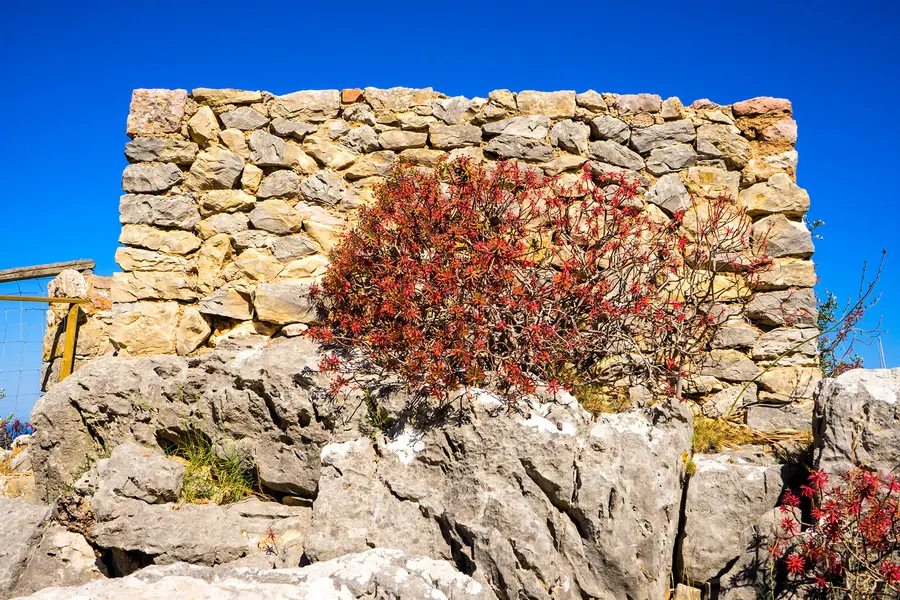
A hermitage founded in 1805 in the Massís d'Artà, reached by nine kilometres of narrow mountain road and repeated bends. Monks lived here until 2010; today it is quiet among the cypresses.
At Betlem, the journey matters as much as the destination. I come for half an hour of quiet rather than a list of sights. Walkers can approach on the GR 222, with narrow sections that need care. There are no supplies at the top, so bring water.
- Location
- At 280 metres in the Massís d’Artà, nine kilometres by mountain road from Artà
- Visiting
- Grounds accessible; no supplies, bring water
- Good for
- Walkers, road cyclists and a quiet half-hour
-
5. Santuari de Sant Salvador
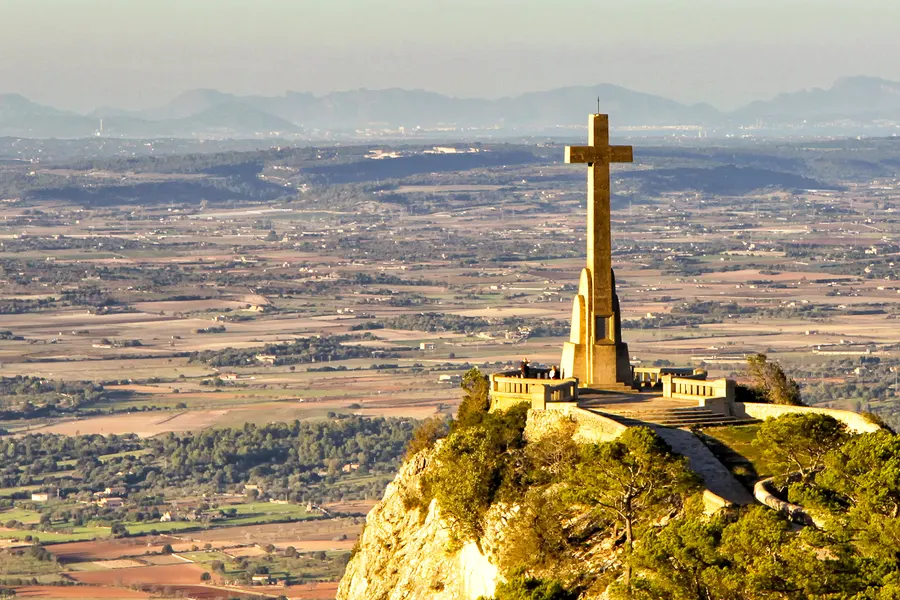
A pilgrimage church has stood on this 509-metre hill near Felanitx since 1348, at the southern end of the Serra de Llevant. Nearby, a stone cross rises from a viewing platform with broad views across eastern Mallorca on clear days.
Once the day visitors leave in the late afternoon, the square outside the church becomes quiet. Stay in one of the simple guest rooms and you can enjoy that change, eat at the restaurant and wake to the morning light. Check accommodation and restaurant arrangements before travelling.
- Location
- 509 metres above sea level near Felanitx; narrow hairpin road
- Visiting
- Grounds freely accessible; guest rooms and a restaurant
- Good for
- Sunset, an overnight stay and views across the east
-
6. Santuari de Cura
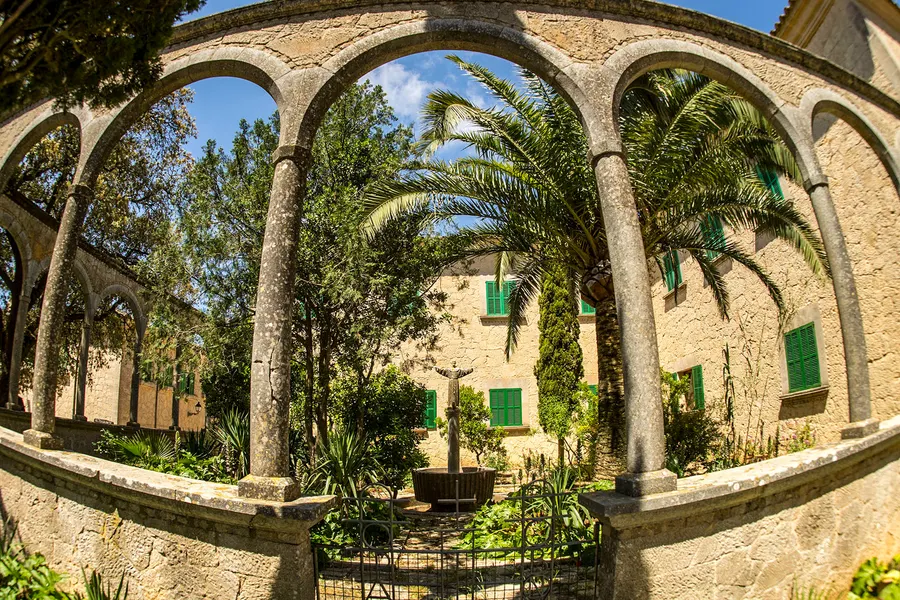
A sanctuary on Puig de Randa at 548 metres, associated with Ramon Llull's retreat in the 13th century. Today it has a palm-filled courtyard, a small museum, a restaurant terrace and far-reaching views.
The hill stands apart from the surrounding plain. Instead of the next mountainside, you see villages, fields and distant stretches of sea. It is a good place to understand how the different parts of Mallorca fit together.
- Location
- 548 metres on Puig de Randa, above the Pla de Mallorca
- Visiting
- Grounds, courtyard and church accessible; restaurant and rooms
- Good for
- Wide island views and relatively manageable courtyard access
Your questions about Mallorca's monasteries
Can I stay overnight in a monastery on Mallorca?
Yes. Lluc offers rooms in former pilgrims' accommodation, and Sant Salvador near Felanitx and Cura on Puig de Randa have simple guest rooms. Puig de Maria above Pollença also has accommodation. These stays are about the setting rather than luxury; check current availability and facilities.
Which sanctuary has the best view?
Cura on Puig de Randa has particularly broad views because the hill stands apart from the surrounding plain. For sea views, try Ermita de la Victòria above the Bay of Pollença; for eastern Mallorca, Sant Salvador near Felanitx.
Do the monasteries charge admission?
Usually not for the grounds. Lluc, Sant Salvador, Cura, Betlem and Ermita de la Victòria can generally be explored outside free. Miramar charges a small admission fee and has opening hours worth checking before travelling.
Are they suitable for pushchairs or wheelchairs?
Cura is relatively manageable, with mostly accessible courtyards and galleries but some steps. At Lluc and Sant Salvador, the main courtyards and churches are easier than hillside paths. Betlem and Miramar's sloping garden are more difficult. Check the specific access route before visiting.
When should I visit?
Late afternoon is often lovely, with softer light and fewer tour groups. At places with guest rooms, staying lets you enjoy the quiet after day visitors leave. High-summer car parks can fill by late morning.
Stay for the evening
You can look around a sanctuary in half an hour, but an overnight stay gives you something different. Once the day visitors leave, there is time to enjoy the setting and the quiet that drew people here long before tourism.
Every recommendation on this page comes from a personal visit. Words and photographs are by Friedhelm Fischer, who has been exploring Mallorca on foot, by bike and with his camera since 2013.