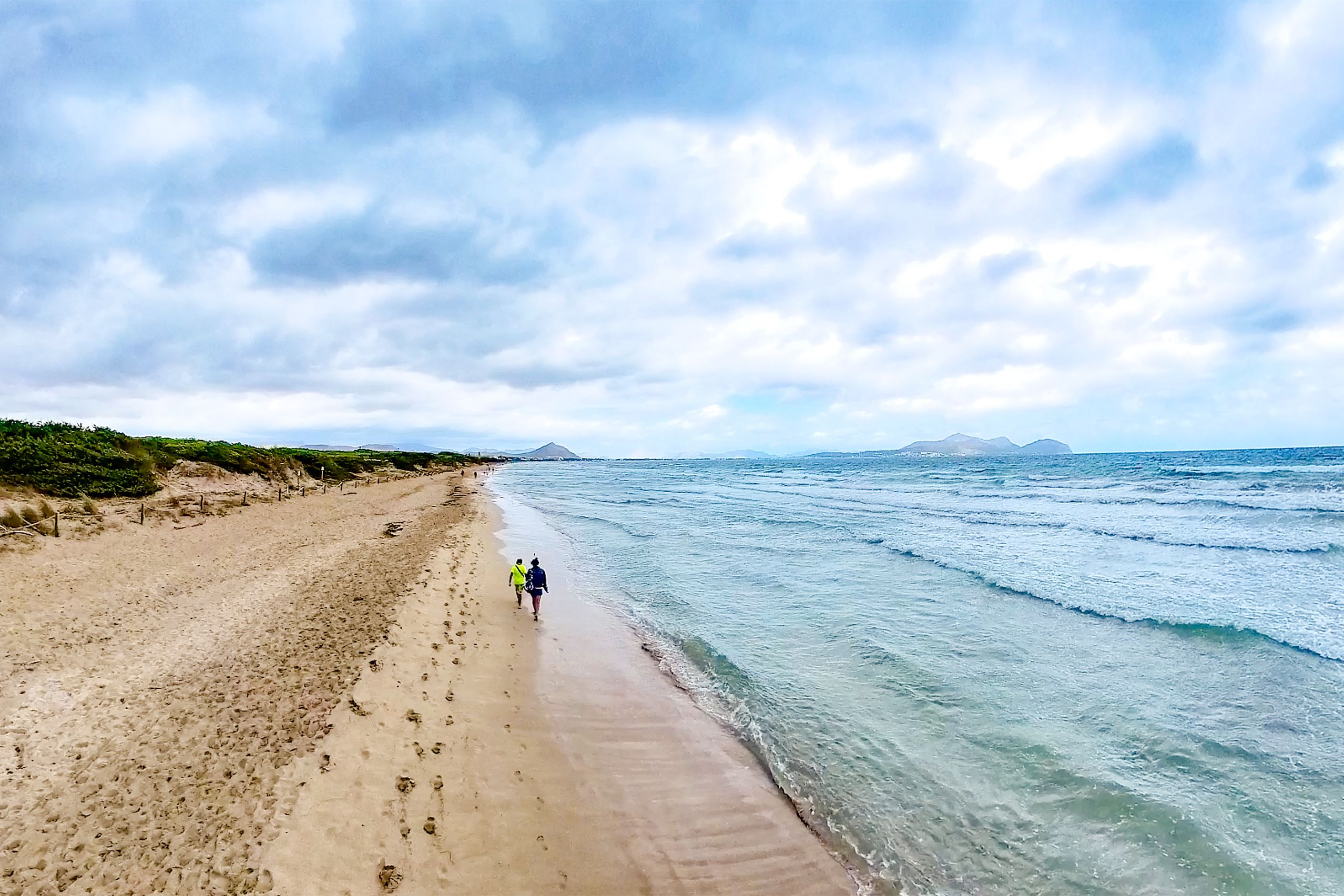
Platja de Muro
A long sandy stretch of the Bay of Alcúdia, with protected dunes and pines at Es Comú rather than a continuous hotel frontage. S'Albufera lies behind it, while near Can Picafort around 140 little holiday houses stand among sandy lanes.
Platja de Muro
Platja de Muro in 30 seconds
The essentials at a glance
- Worth visiting for
- A longer stay
- Best for
- You want a better chance of beach space in high summer
- Best months
- March–July, September–October
- Time to allow
- A week as a base, or a full beach day
- With children
- Very good in suitable conditions, with broad sand and some shade behind
- Without a car
- Easy enough
- Parking
- Along the coast road and in parking areas behind the dunes. Generally easier than in neighbouring resorts, but spaces become scarce by late morning in high summer.
- Getting into the water
- Broad and gently shelving, without a sudden drop
- Keep in mind
- You want nightlife beside the natural beach
- Access
- Pushchairs: Fine on boardwalks; difficult on sand · Wheelchairs: Boardwalks are usable, with timber paths towards the water at selected entrances
Get a feel for Mallorca. Find your kind of place.
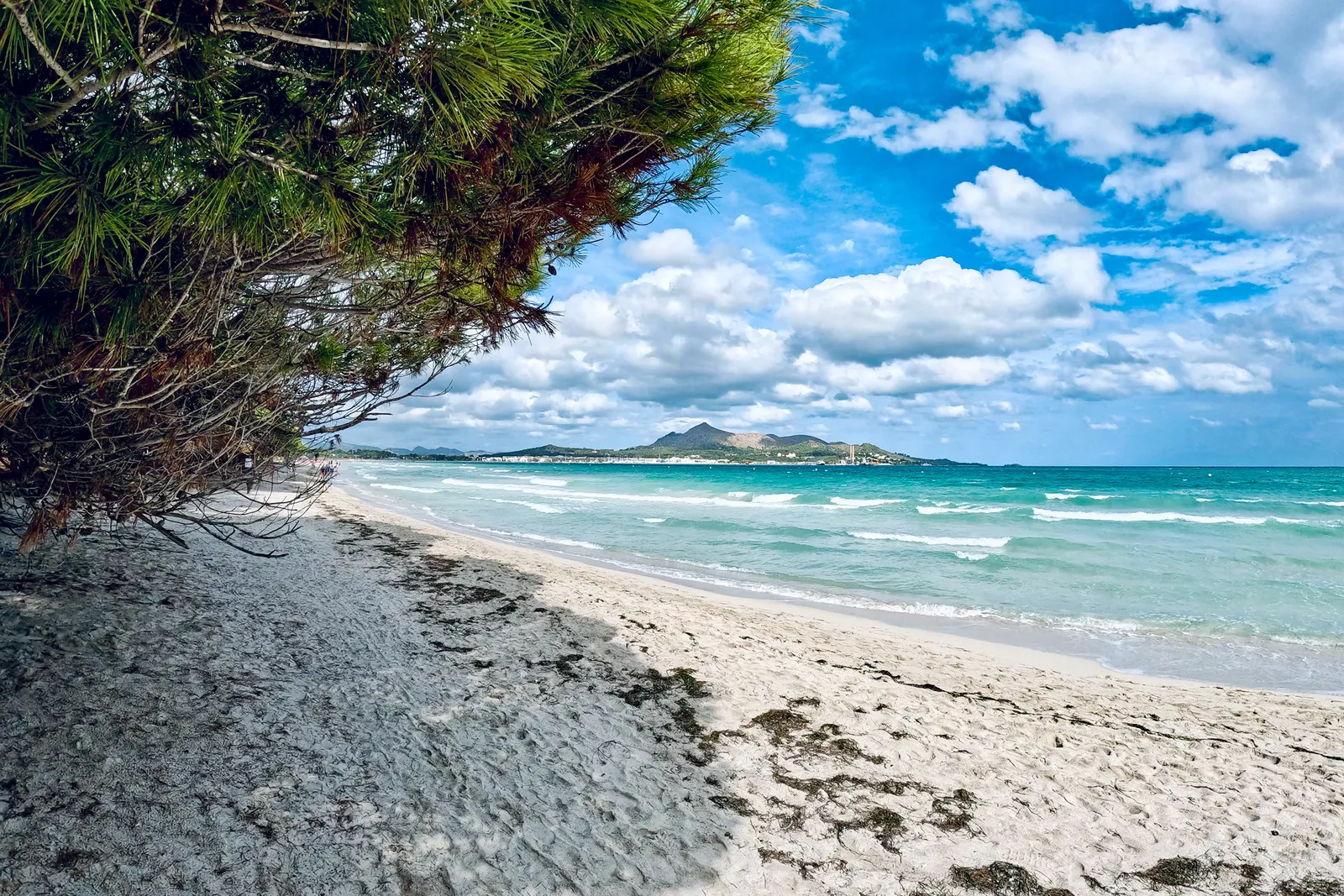
Pines close to the water provide welcome natural shade.
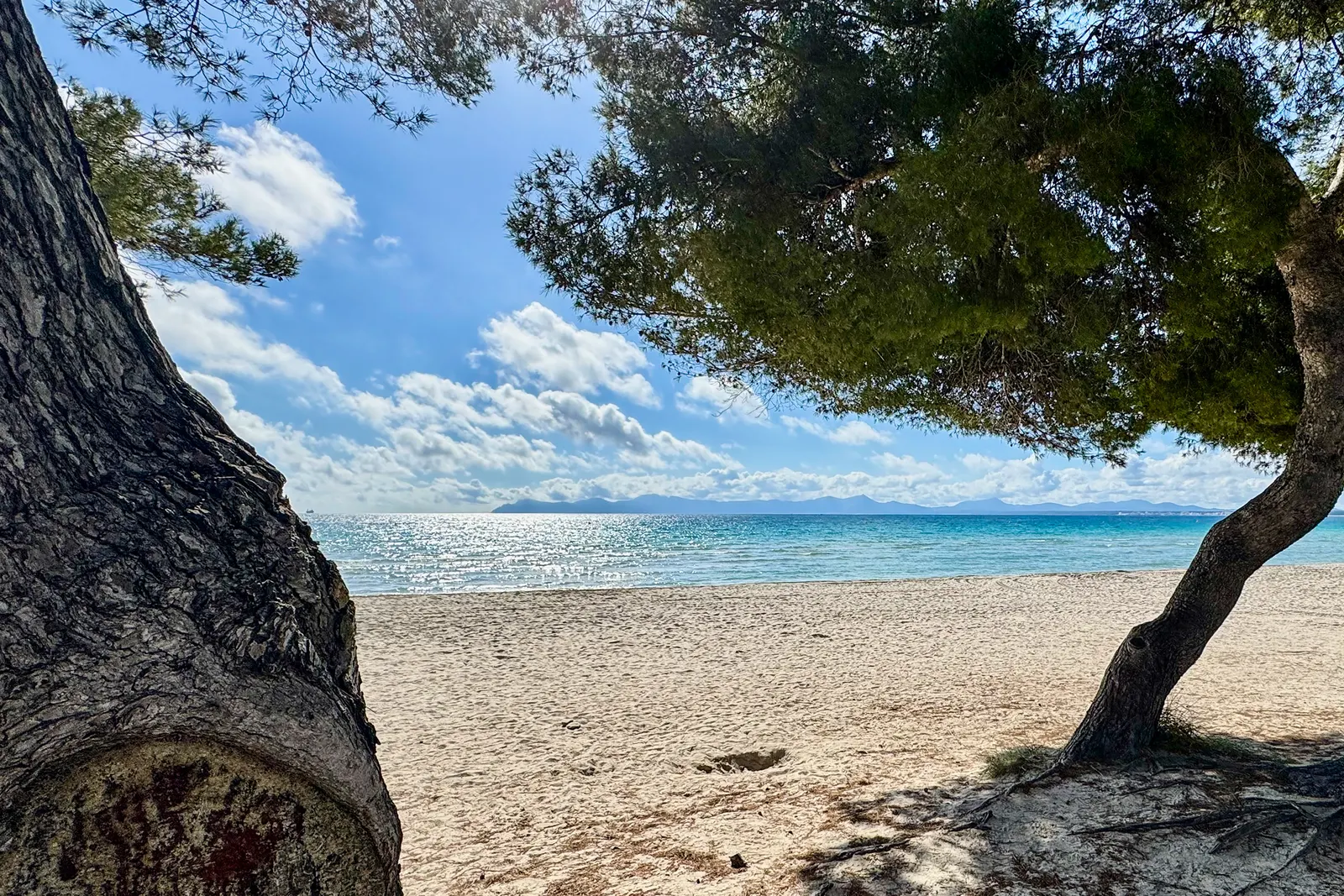
A spring morning, with mountains visible between the trunks.
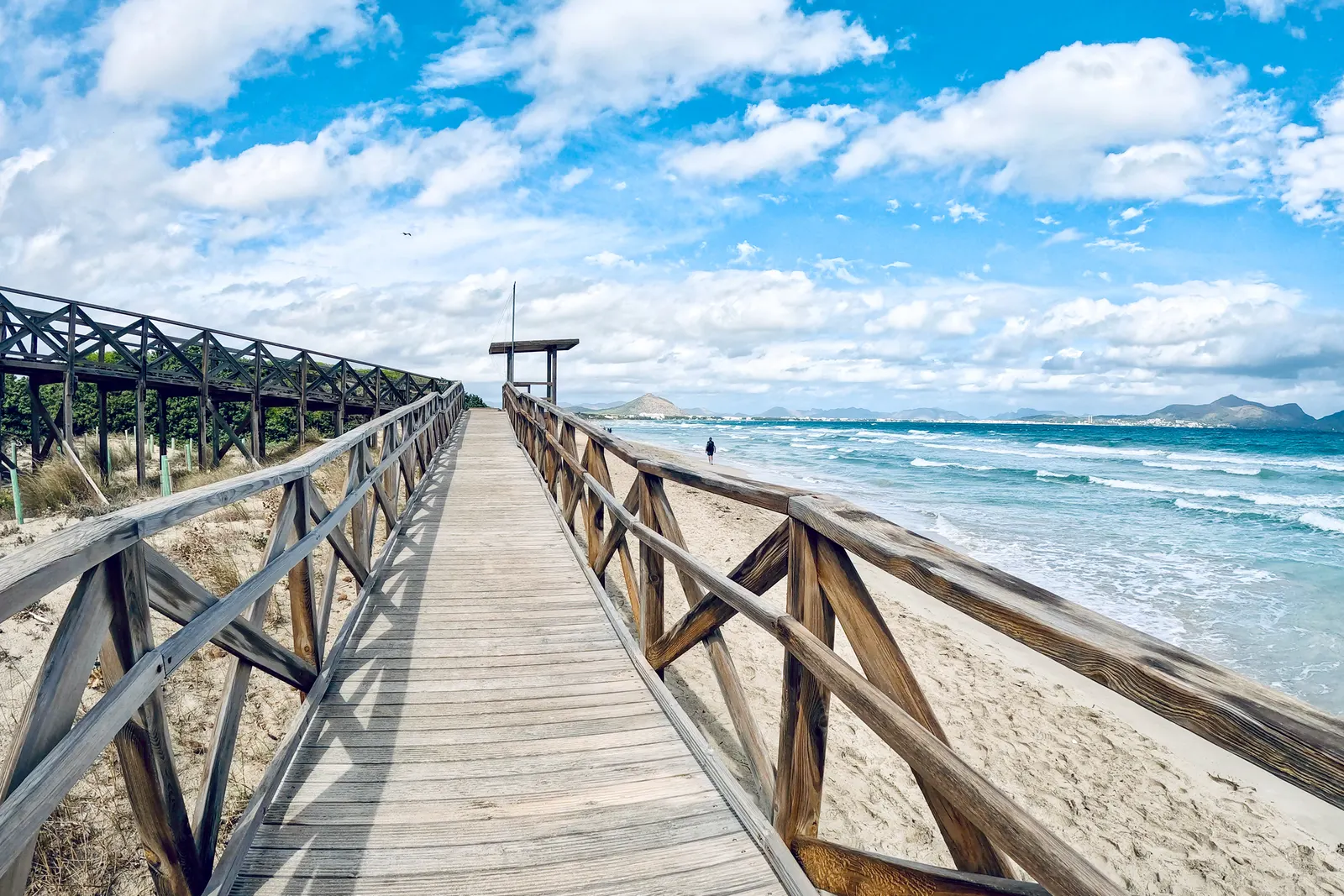
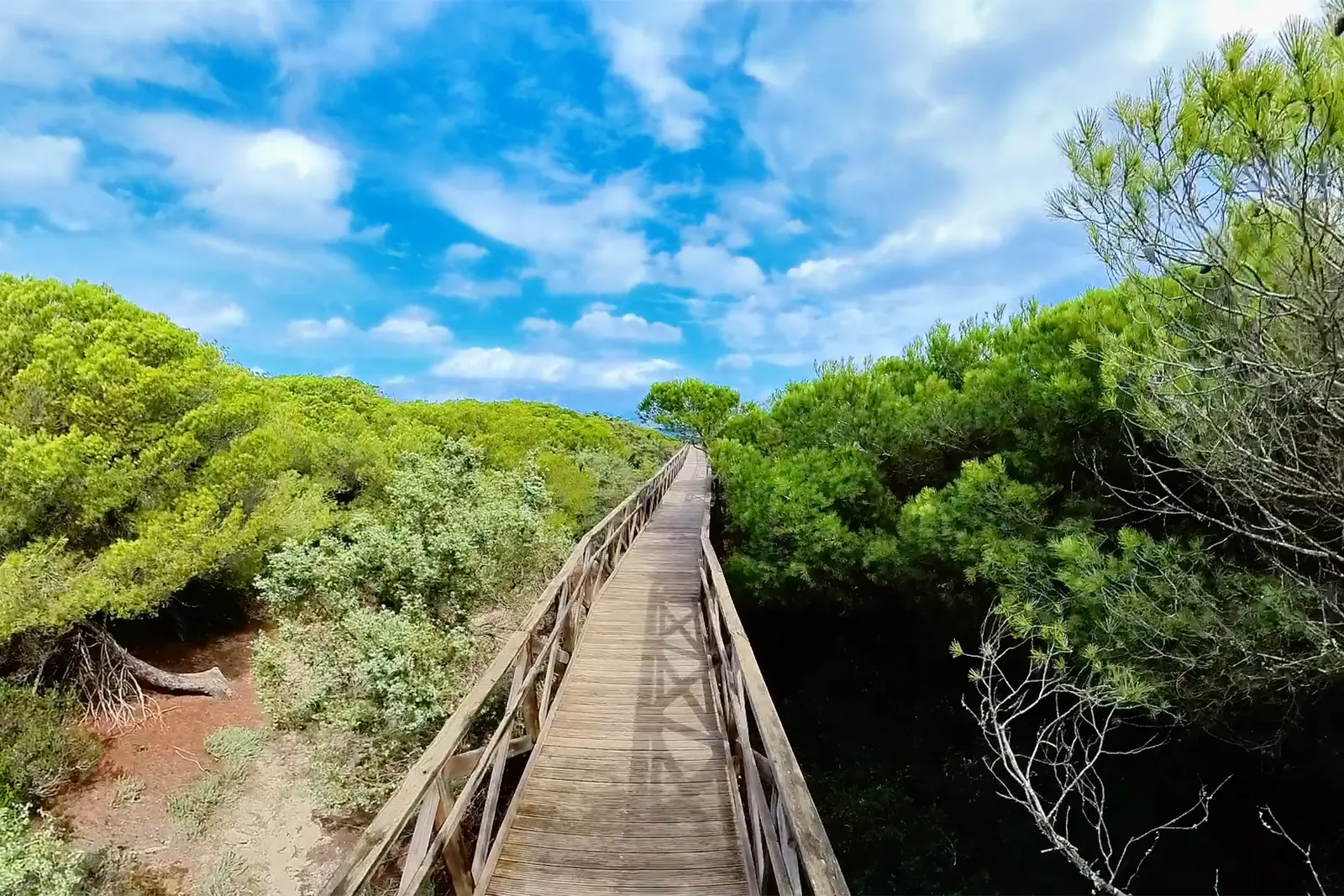
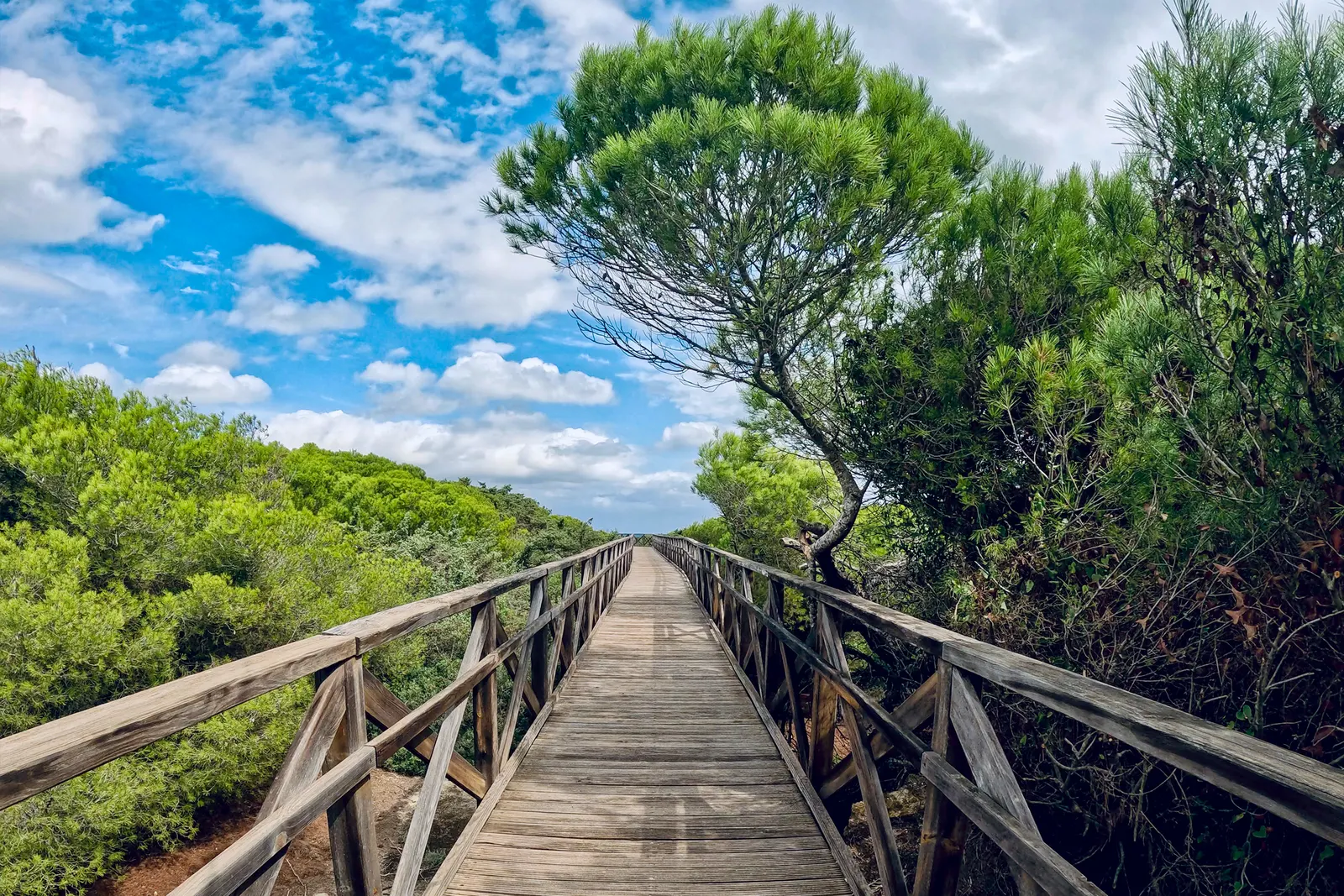
Boardwalks protect the dunes from trampling. A lifeguard tower stands near the end.
Getting to know Platja de Muro
Does Platja de Muro suit your plans?
What to expect and what to know before you visit.
Who it suits
- You want a better chance of beach space in high summer
- You prefer nature to a promenade; protected land lies behind Es Comú
- Families; the beach is broad and gently shelving
- Surfers and kitesurfers when the afternoon wind arrives
Things to bear in mind
- You want nightlife beside the natural beach
- You expect a shopping promenade
- You need dependable winter beach services
- You don't want to walk through dunes to the water
Drive from the airport
50 minutes
56 km
Bus connections
Route 302 between Can Picafort and Palma stops along the coast road
Region
Pla de Mallorca
Nearest beach
Alcanada
4 km
Elevation
2 m
above sea level
Season guide for Platja de Muro
November Worth considering
Very quiet Mostly closed
Worth visiting in March, April, May, June, July, September and October. Mostly closed in January, February, March, November and December.
Location
Location of Platja de Muro
- Region
- Pla de Mallorca
- Municipality
- Muro
- Elevation
- 2 m above sea level
- Airport
- 56 km , around 50 minutes
- Hire car
- not essential
- Worth visiting for
- a longer stay
- Coordinates
- 39.8134,3.1149
The stretch without a hotel frontage
The Bay of Alcúdia has roughly ten kilometres of continuous beach. The sand and sea are shared, yet different stretches feel quite different. At Es Comú de Muro, the reason lies behind the beach.
This section is protected from development. Es Comú de Muro belongs to S’Albufera Natural Park. Unlike the built-up parts of Can Picafort, Port d’Alcúdia and Platja de Muro itself, it has dunes, pine woodland and wetland behind the sand rather than rows of hotels.
That gives you a better chance of finding space even in July.
The beach
Platja de Muro extends for around six kilometres, with fine pale sand and a broad, gentle slope into the water. Boardwalks cross the dunes to protect them from trampling. Pines beside the dunes provide natural shade in places — valuable if you’ve ever searched for shade on the more developed beach sections by late morning.
Onshore winds often arrive in the afternoon and bring waves. Follow the flags at the lifeguard towers; the combination of shallow water and surf is easy to underestimate. For surfers and kitesurfers, the wind is part of the attraction.
Es Comú de Muro
Between beach and wetland lies protected dune and pine country, crossed by designated paths and sections of boardwalk. A short walk takes you away from parasols into scrub and trees, with wind, birds and glimpses of the bay between the trunks.
It is one of the northern coast’s places where you can leave the loungers for natural surroundings without getting in a car.
The Casetes des Capellans
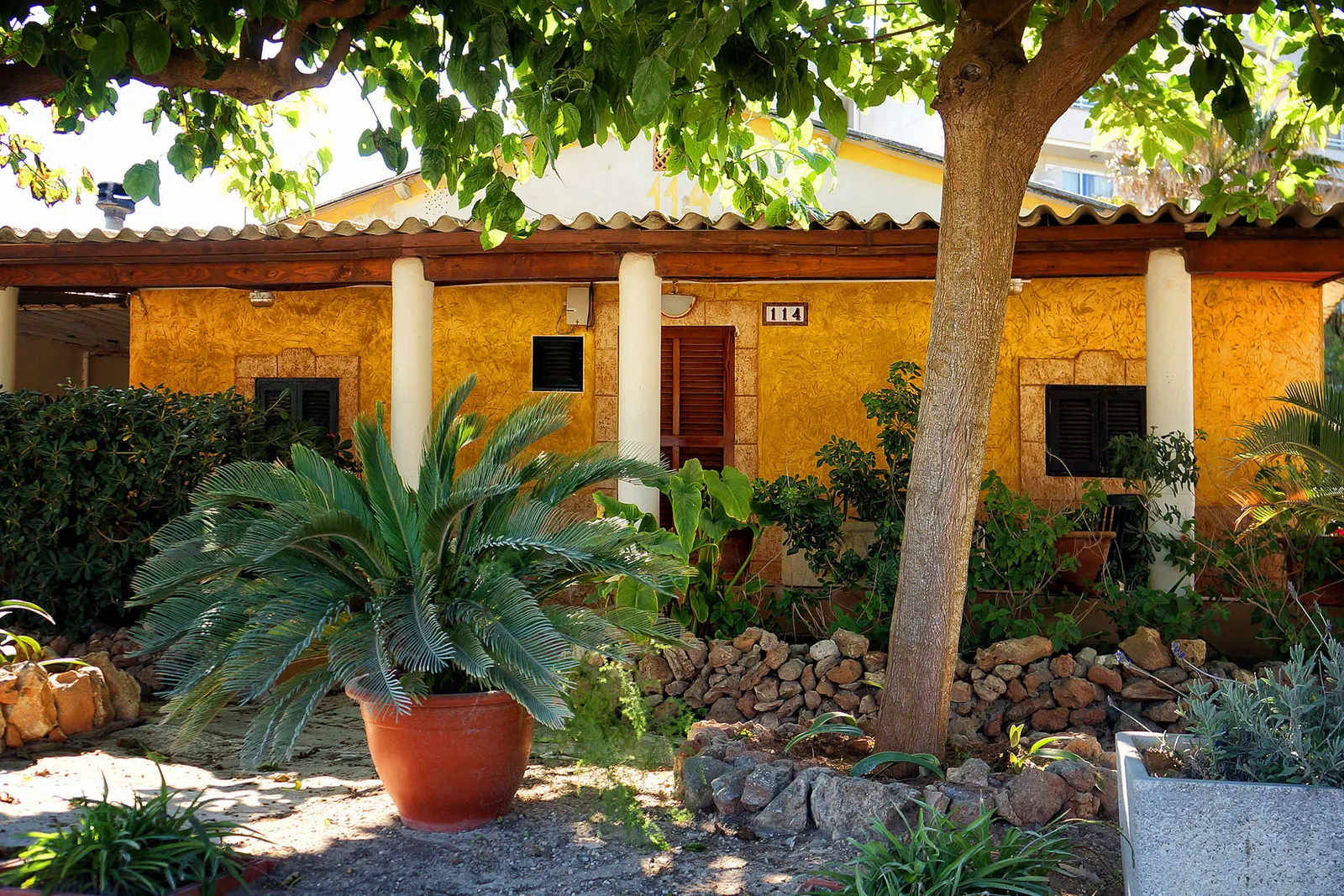
Near the eastern end, beside the pines and directly on the sand, around 140 small houses stand along sandy lanes. They lie at the municipal boundary between Muro and Santa Margalida, a few minutes from Can Picafort.
Ses Casetes des Capellans means “the priests’ little houses”. Initially there was a simple hut where Muro’s clergy spent summers. Other residents added shelters: first fabric, then reeds, and from the 1950s, permanent stone and concrete houses. This was not a settlement of wooden cabins.
In 1929, Muro municipality acquired around 885 hectares of the Son Sant Martí estate, including this coast, where the settlement developed.
The houses have passed down through Mallorcan families. Walk respectfully through the lanes and you see ochre walls, shutters, dry-stone walls and pots of cycads — a different kind of seaside holiday from the main resort promenades.
It also recalls the coast before large-scale hotel development, alongside land protected from further building.
The canal
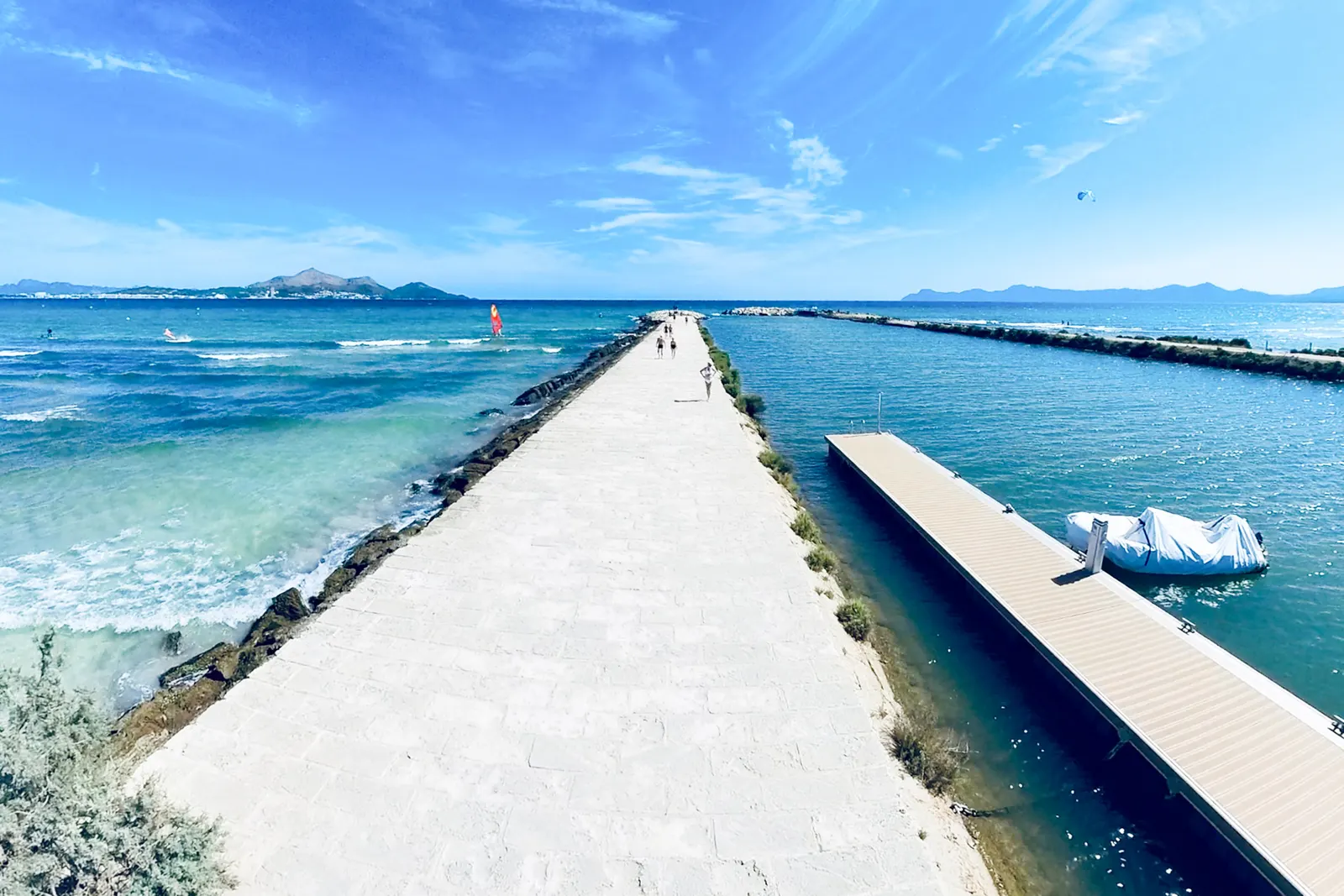
A canal carries water from S’Albufera to the sea between two long breakwaters. From one, you can see waves and surfers on the open-water side and a smooth canal on the other. It makes the close connection between wetland and coast easy to understand.
What to expect nearby
The natural section has no historic centre, shopping promenade or nightlife. For a broader choice of restaurants and evening activity, Can Picafort and Port d’Alcúdia are only a few minutes away.
Between November and March, don’t rely on loungers or beach bars here. The beach remains accessible, and March’s bird migration makes nearby S’Albufera particularly worthwhile. Bring what you need.
Places to visit from here
Muro lies inland and is quite different from the beach: a country town with a Sunday market and detached bell tower. S’Albufera Natural Park’s entrance is a few minutes away and convenient by bicycle. Alcúdia, with its walls and Roman excavations, is around fifteen minutes away.
Photographs
Platja de Muro in Mallorca
How much time do you have?
Things to do in Platja de Muro
Three hours
Cross a boardwalk to the beach and walk beyond the lounger sections, returning on designated paths through the pines.
Half a day
Beach in the morning, then cycle to S'Albufera's nearby entrance at lunchtime. Return in the afternoon as the wind brings sails onto the water.
A full day
Start early on the beach, then explore the marked routes through Es Comú's protected pines and dunes. Visit the canal mouth and breakwaters, then head to Alcúdia or Can Picafort for the evening.
On a rainy day
Little shelter on the natural stretch. Alcúdia or Sa Pobla are around twenty minutes away.
The beach at a glance
- Underfoot
- Fine, very pale sand without stones
- Getting into the water
- Broad and gently shelving, without a sudden drop
- Length
- Around six kilometres, continuing into the beaches of Can Picafort and Port d'Alcúdia
- Shade
- Pines beside the dunes provide natural shade in places
- Wind
- Onshore winds often develop in the afternoon, bringing waves. Check the flags at the lifeguard towers.
- With children
- Very good in suitable conditions, with broad sand and some shade behind
- Facilities
- Seasonal lifeguard towers and flags · Scattered beach bars, fewer along the natural stretch · Loungers and parasols in some sections · Boardwalks across the dunes at several access points
Practical details
- Parking
- Along the coast road and in parking areas behind the dunes. Generally easier than in neighbouring resorts, but spaces become scarce by late morning in high summer.
- Public transport
- Stops along the coast road
- Time to allow
- A week as a base, or a full beach day
- Good to know
- The beach remains accessible in winter, but services along the natural stretch are seasonal. Bring what you need between November and March.
- Bus
- Route 302 between Can Picafort and Palma stops along the coast road, with seasonal services including 315 from Sa Pobla, 324 towards Alcúdia and A32 to the airport.
- Shops and services
- Supermarkets: Smaller shops along the coast road; larger supermarkets in Can Picafort and Port d'Alcúdia · Pharmacy: In Can Picafort and Port d'Alcúdia · Medical care: Health centres in Muro or Alcúdia · Cash machines: Some along the coast road · Fuel: Towards Can Picafort
- Access
- Boardwalks across dunes, then sand · Pushchairs: Fine on boardwalks; difficult on sand · Wheelchairs: Boardwalks are usable, with timber paths towards the water at selected entrances · Dogs: Not allowed on the main beach in season
- What you will not find
- A shopping promenade along the natural stretch · Nightlife at Es Comú · A historic village centre · Dependable beach services from November to March
- Coordinates
- 39.8134,3.1149 Google Maps Apple Maps
Dates that change the town
When a race comes to town
Mallorca 312 Road cycling · 25 April 2026
Road closures begin in the morning. The affected roads and reopening times follow the organiser’s traffic plan. Allow extra time for transfers and day trips.
Ironman 70.3 Alcúdia-Mallorca Triathlon · 9 May 2026
Temporary closures and extra crowds affect the start, finish and race route. Check access to your accommodation and the course map, especially if you have an airport transfer.
The season guide describes whole months. A race weekend can transform a normally quiet town for a couple of days. Find the dates in our guide to Sporting events.
Choosing a stretch of the bay
| Stretch | Behind the beach | Space in high summer |
|---|---|---|
| Can Picafort | Hotels close to the sand | Limited |
| Platja de Muro – Es Comú | Dunes, pines and protected land | Generally more available |
| Port d'Alcúdia | Hotels and full services | Busy in the centre; varies along the beach |
These beaches share the same bay. Development behind each stretch makes a noticeable difference to how busy it feels.
Within reach
Places to visit
Nearby

The remains of an important Roman town just outside Alcúdia. An urban centre developed here after the conquest of …
In Alcúdia

A pilgrimage church on the Victòria peninsula, seven kilometres north-east of Alcúdia. The road ends at a …
Via Alcúdia, then a narrow mountain road
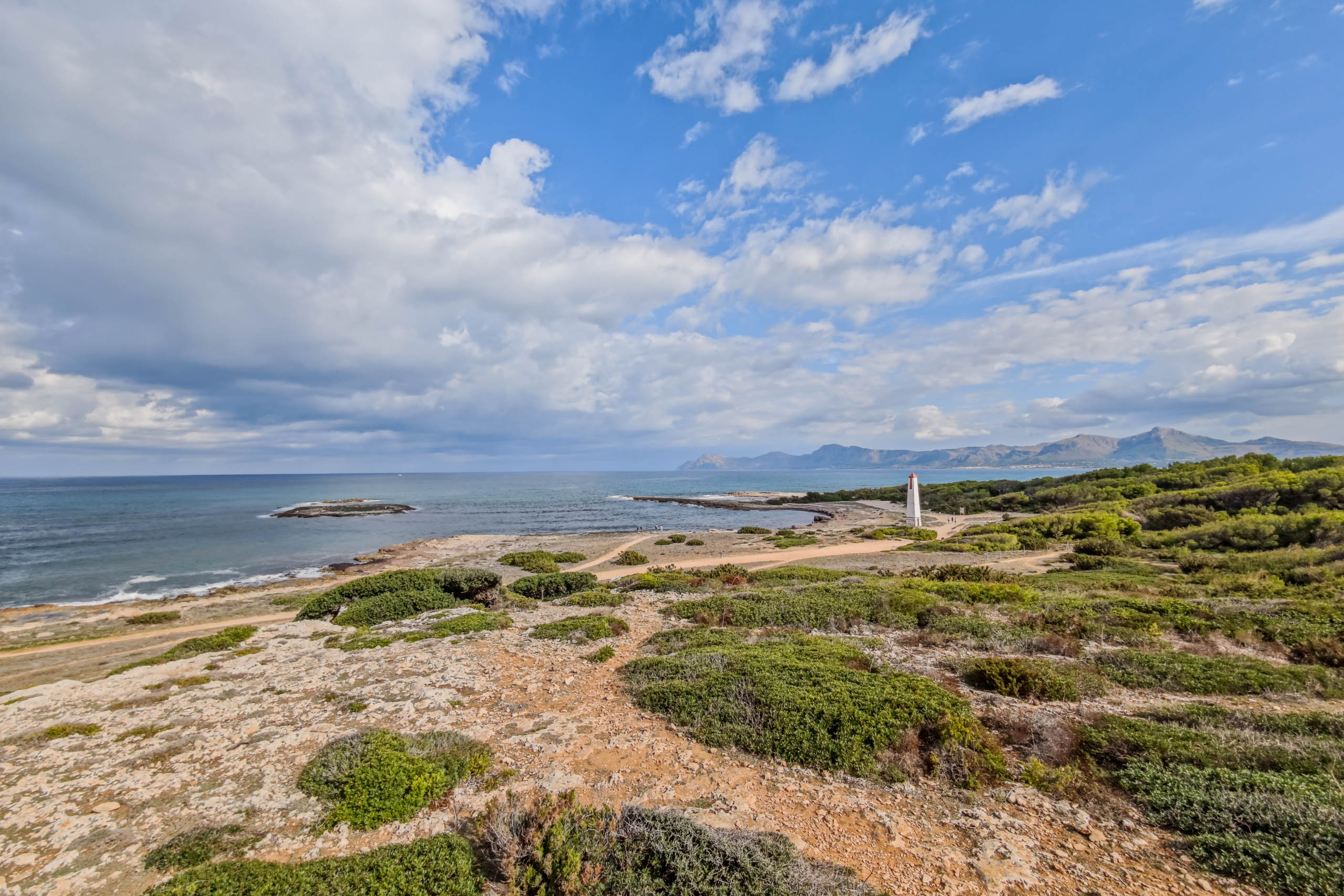
A few steps onto a wooden platform reveal the coast of Son Real. A dolmen lies beside the viewpoint, with the …

A Talayotic burial ground right beside the sea between Can Picafort and Son Serra de Marina. Around 110 tombs …

A small pilgrimage chapel among pines near Sa Pobla, on the site of an older settlement. A paved path leads up to …

A church among the pines, beside the old Son Serra estate with its towers and farm buildings. A glimpse of the …
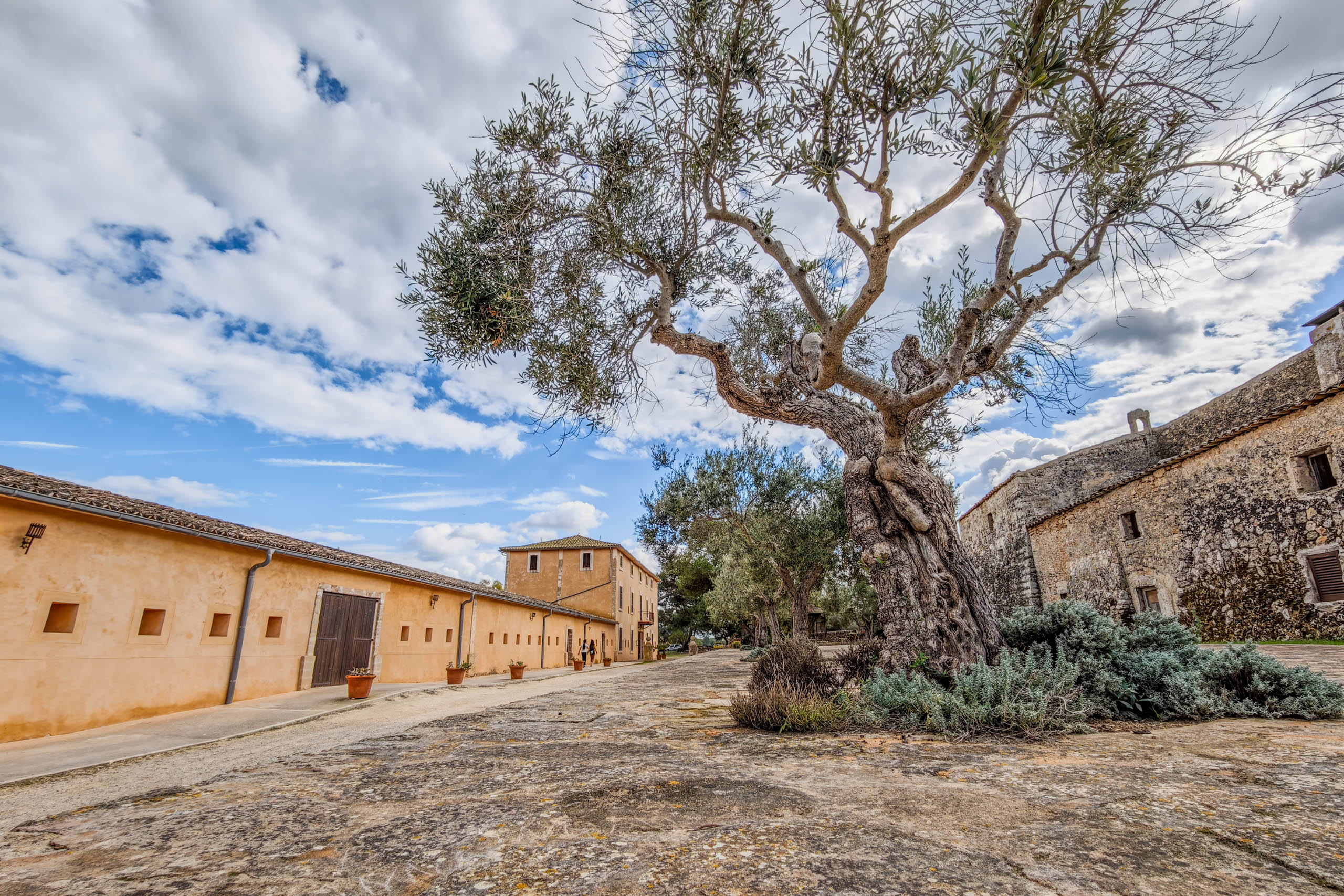
Old farm buildings, gnarled olive trees and a museum about earlier life on Mallorca. Son Real lies between Can …

A quieter cave visit near Campanet, with limestone formations rather than a boat ride or colourful show. Allow …
Distances without a driving time are measured in a straight line. The road journey can be much longer; known driving times are shown alongside.
Other beaches to consider
Beaches and swimming nearby

A quieter alternative to Port d’Alcúdia, 3 km to the east. Low villas sit among pines beside a pebbly, sandy shore …

Five kilometres of pale sand shelving gently into the sea, backed by hotels, bars and shops. A classic beach …

A small fishing settlement first recorded in 1860 has become a busy holiday resort. Come for the beach, the …

A quieter, more expensive neighbour to Alcúdia bay, with the waterfront Pine Walk, a royal yacht club and reliable …
Explore from here
Your questions answered
Your questions about Platja de Muro
Why is there more space on parts of Platja de Muro?
Es Comú de Muro is protected land within S'Albufera Natural Park, so dunes and pine woodland replace the hotel frontage found elsewhere along the bay. That means fewer holiday beds directly behind this stretch, and often more room on the sand even in July. Other parts of Platja de Muro do have hotels.
What are the Casetes des Capellans?
Around 140 small holiday houses among sandy lanes beside the pines, near the boundary between Muro and Santa Margalida, just before Can Picafort. The name means “priests' little houses”, recalling the clergy of Muro who first spent summers here. Houses have been passed down within local families. It is a residential area to walk through respectfully, not a visitor attraction with shops or bookings.
Is Platja de Muro suitable for children?
Yes, in suitable conditions. Fine sand, a gentle slope and room on the natural stretch suit families. Pines beside the dunes provide some shade. Afternoon winds can bring surf, so follow the lifeguard flags and remember that shallow water can still have waves.
Is Platja de Muro worth visiting in winter?
For a beach walk, yes; don't count on the natural stretch as a fully serviced resort. The beach stays accessible and quiet, and the dunes and pines are lovely without parasols. Bring supplies when seasonal bars and lounger services are closed. March also brings bird migration at S'Albufera.
What is Es Comú de Muro?
A protected area of dunes and pine woodland between the beach and S'Albufera, forming part of the natural park. Designated paths and boardwalks cross it, with views towards the bay. You can move from a serviced beach section to natural surroundings within a short walk.
Can I reach Platja de Muro without a car?
Route 302 between Can Picafort and Palma stops along the coast road, with additional seasonal services including 315 from Sa Pobla and 324 towards Alcúdia. This works well for a beach holiday. Cycling is also convenient for S'Albufera and Alcúdia.
Practical questions
When is the best time to visit Platja de Muro?
Recommended months: March, April, May, June, July, September, October. Access and opening are limited in January, February, March, November, December. See the visiting advice on this page. Bird migration in S'Albufera.
Is Platja de Muro worth visiting in July and August?
July: worth a visit. Usually busy. The natural stretch still offers a better chance of space. August: worth considering with some reservations. Usually busy.
How far is Platja de Muro from Palma airport?
About 56 km from Palma airport. Allow roughly 50 minutes by car. The road runs parallel to the shore, with boardwalks crossing the dunes. Muro village lies inland and has a separate guide.
Do I need a hire car for Platja de Muro?
Easy to manage without a car Route 302 between Can Picafort and Palma stops along the coast road, with seasonal services including 315 from Sa Pobla, 324 towards Alcúdia and A32 to the airport.
Where can I park in Platja de Muro?
Along the coast road and in parking areas behind the dunes. Generally easier than in neighbouring resorts, but spaces become scarce by late morning in high summer.
Can you swim at Platja de Muro?
Yes. Fine, very pale sand without stones Broad and gently shelving, without a sudden drop Around six kilometres, continuing into the beaches of Can Picafort and Port d'Alcúdia Pines beside the dunes provide natural shade in places Very good in suitable conditions, with broad sand and some shade behind
Can I visit Platja de Muro with a pushchair or wheelchair?
Boardwalks across dunes, then sand Pushchairs: Fine on boardwalks; difficult on sand Wheelchairs: Boardwalks are usable, with timber paths towards the water at selected entrances
Are dogs allowed at Platja de Muro?
Not allowed on the main beach in season
Platja de Muro features in our Mallorca highlights
Words and photographs: Friedhelm Fischer. Exploring Mallorca since 2013 — by bike, on foot and with a camera.