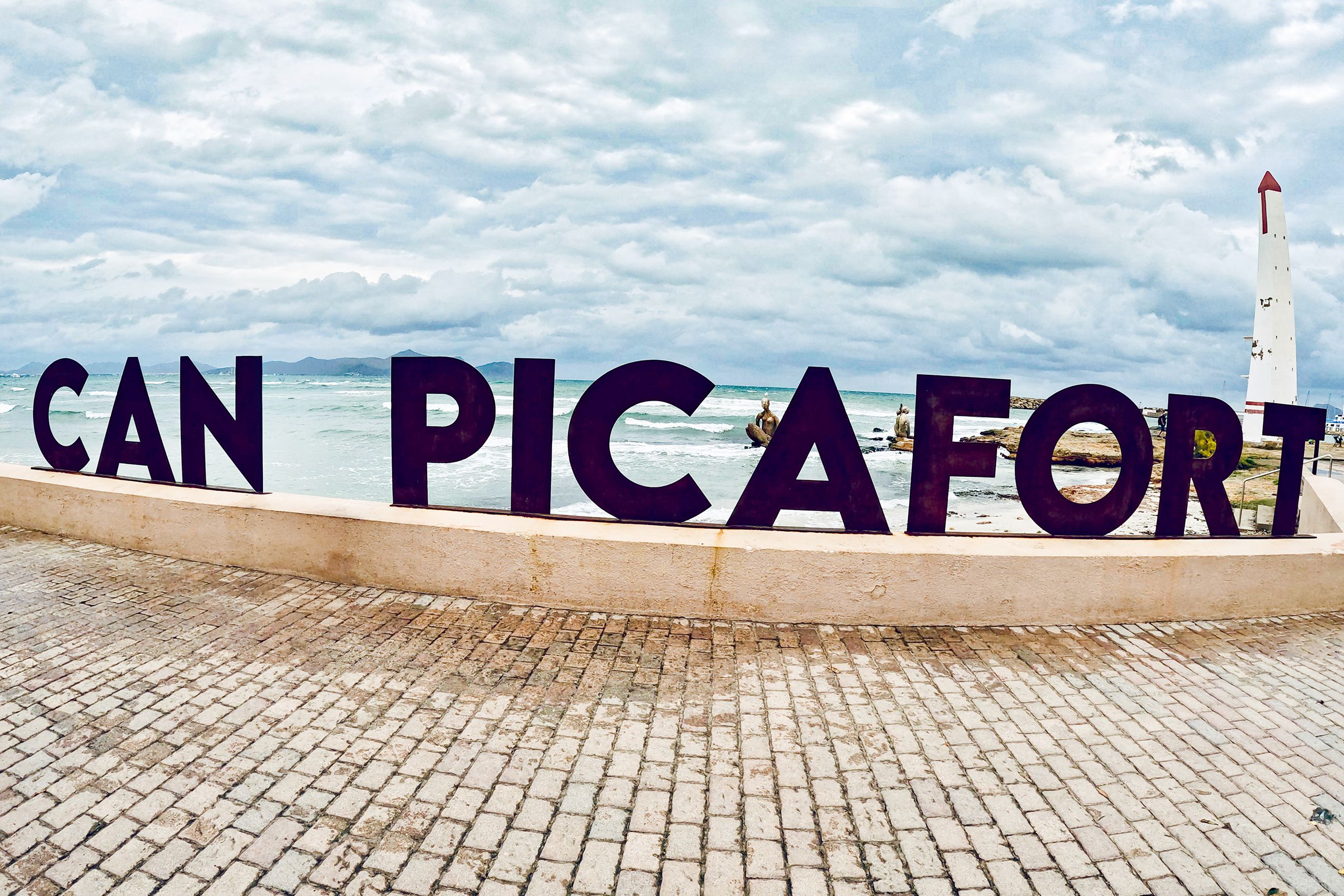
Can Picafort
A small fishing settlement first recorded in 1860 has become a busy holiday resort. Come for the beach, the promenade and everything within walking distance. For more space on the sand, head north towards Platja de Muro.
Can Picafort
Can Picafort in 30 seconds
The essentials at a glance
- Worth visiting for
- A longer stay
- Best for
- Looking for good-value accommodation compared with neighbouring resorts
- Best months
- May–June, September
- Time to allow
- A week as a holiday base, or a couple of hours for a visit
- With children
- Good for families, but crowded in high summer
- Without a car
- Easy enough
- Parking
- Look in the residential streets behind the seafront and check signs. Waterfront spaces fill early in summer.
- Getting into the water
- Shallow, though less gently shelving than further north
- Keep in mind
- Peace and quiet in the main season
- Access
- Pushchairs: Straightforward along the promenade · Wheelchairs: The promenade is accessible, with beach access points in several places
Get a feel for Mallorca. Find your kind of place.
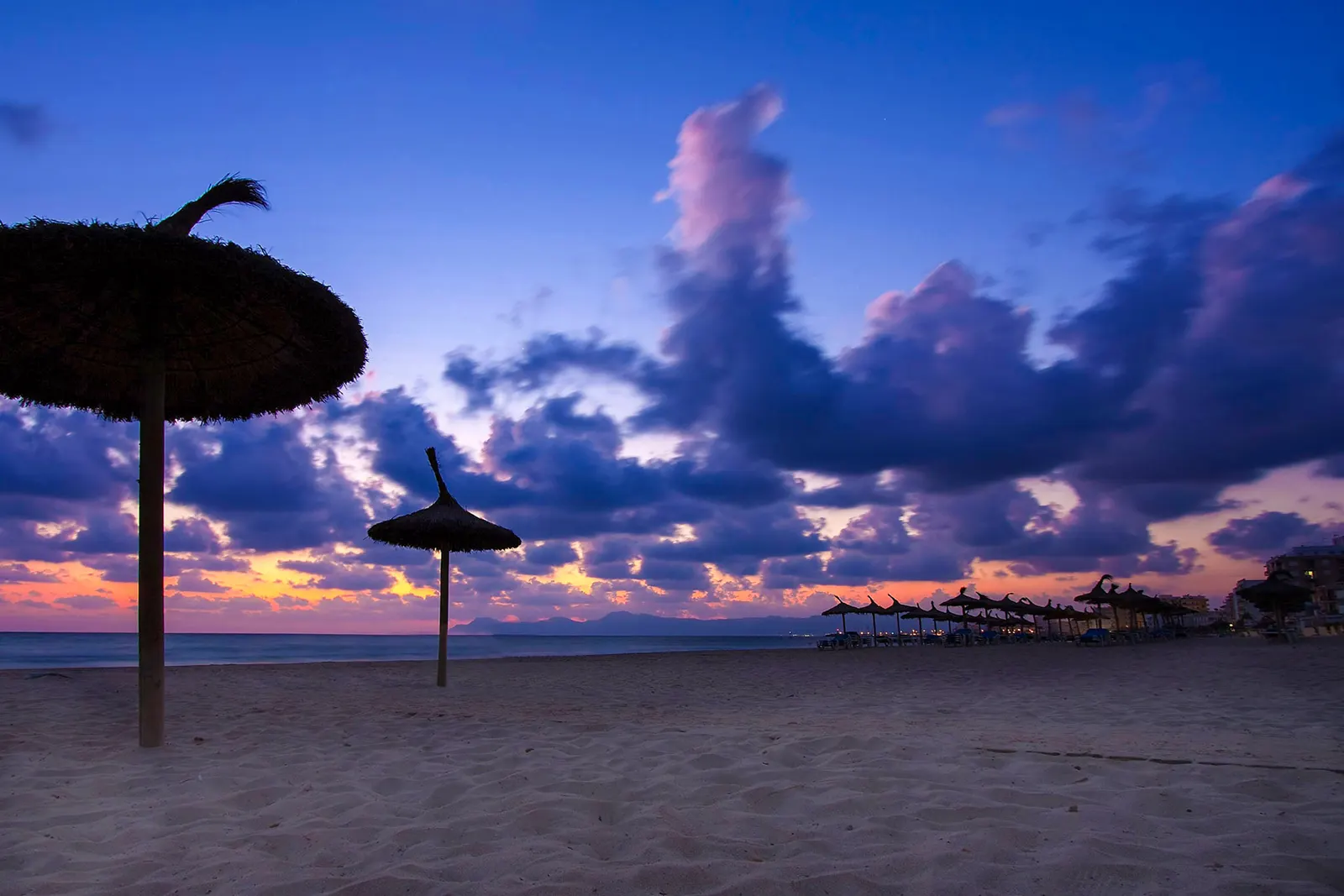
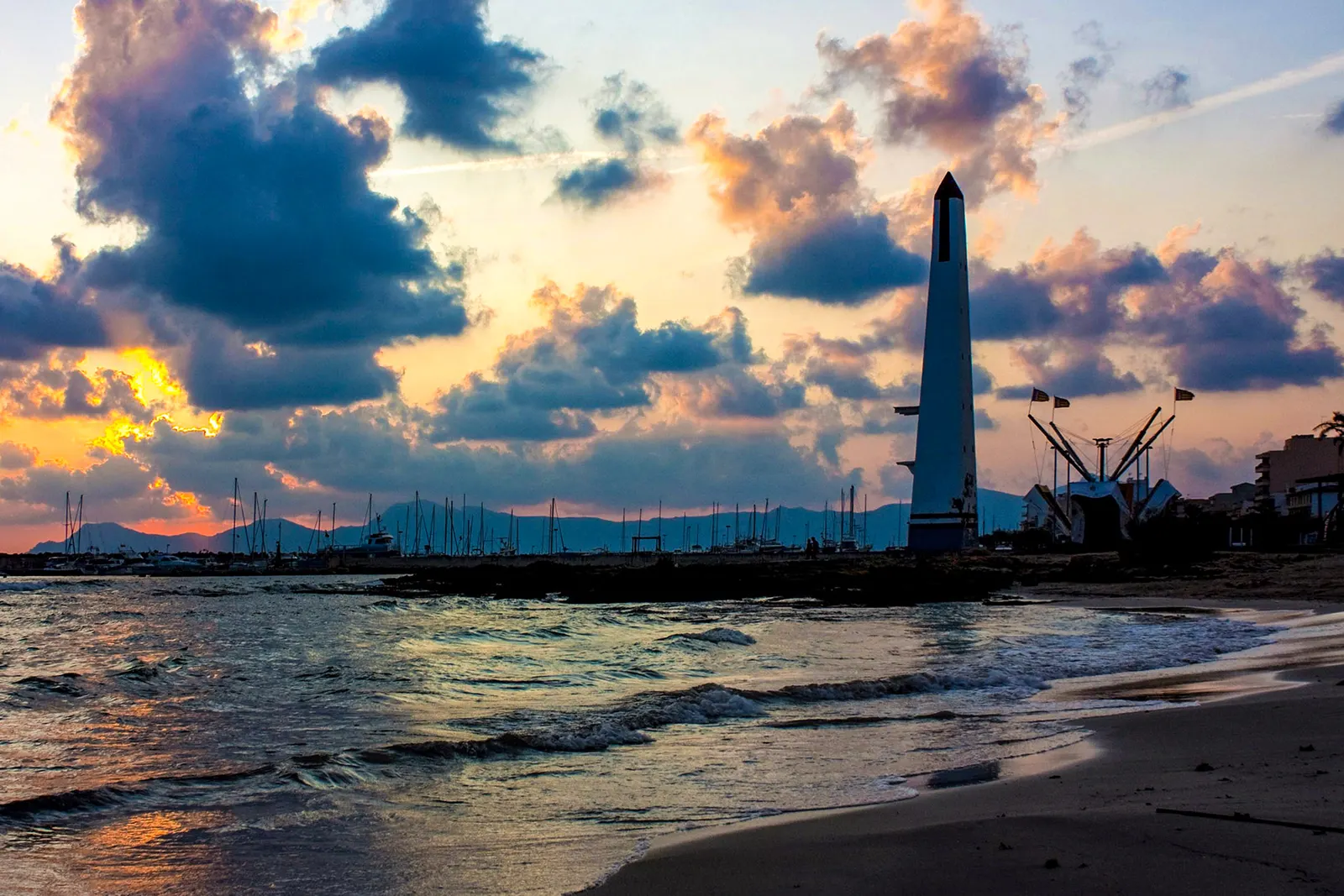
Evening light across the bay, with the sun sinking behind the mountains opposite.
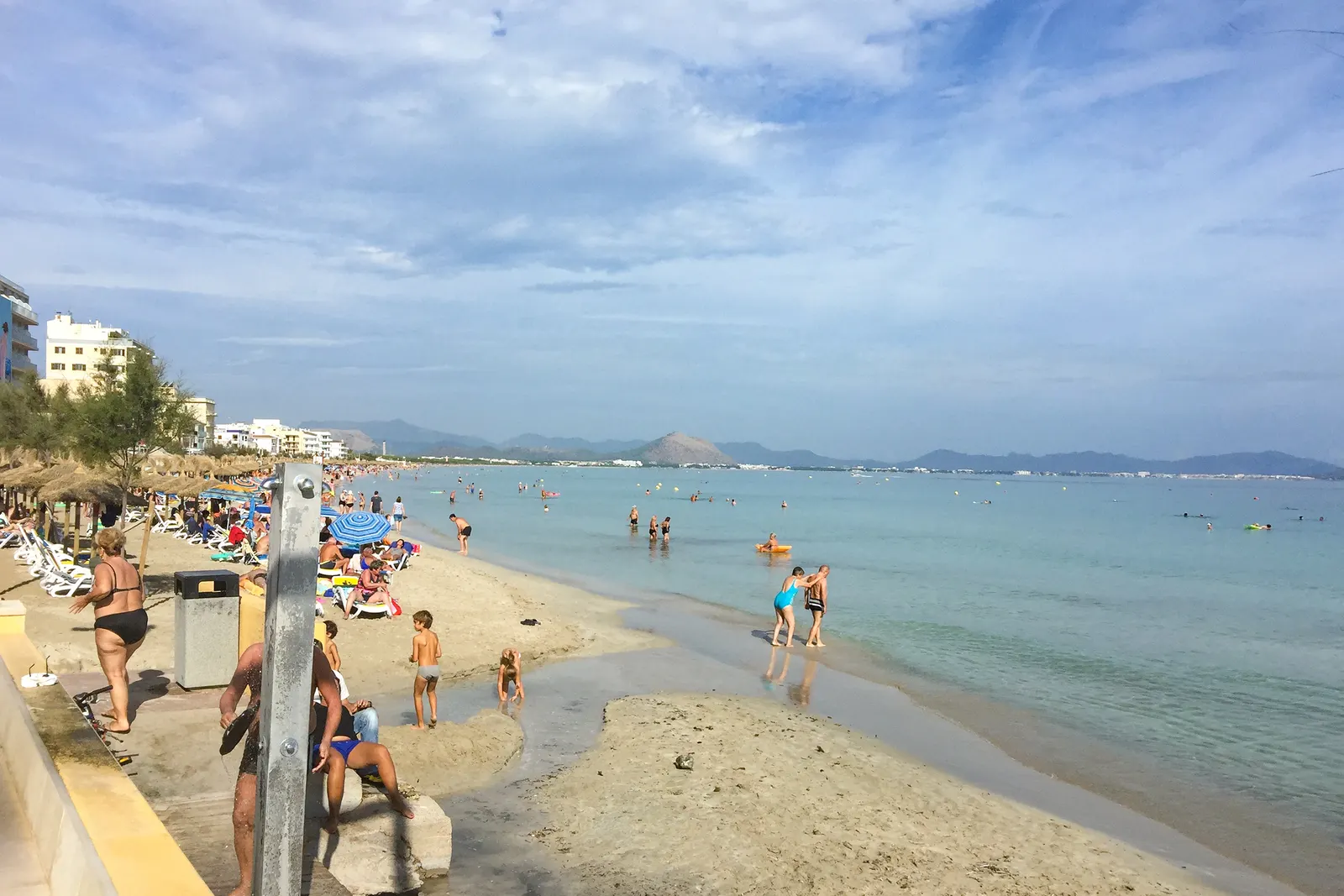
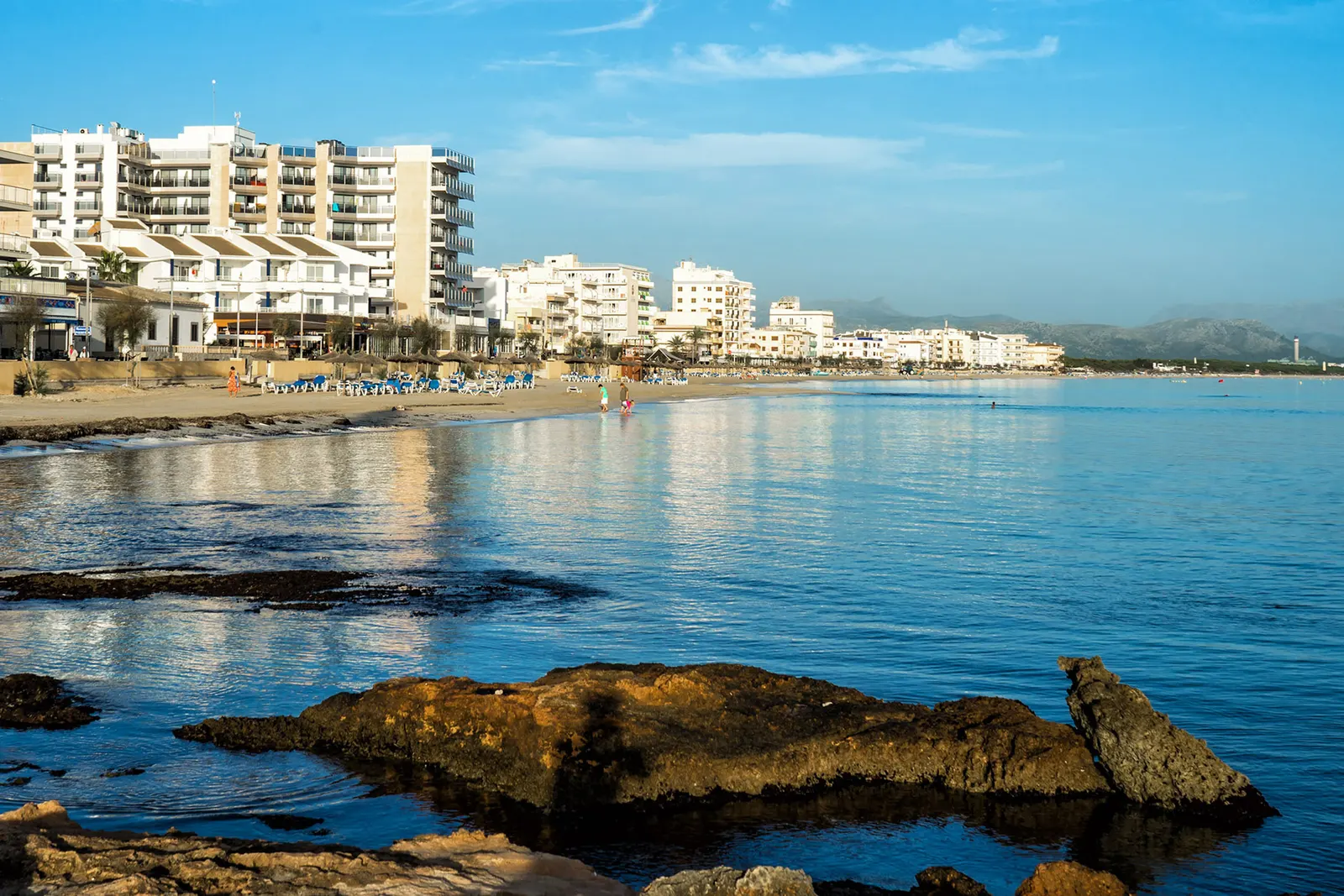
The central beach in high summer. Its narrow width is worth bearing in mind when choosing where to stay.
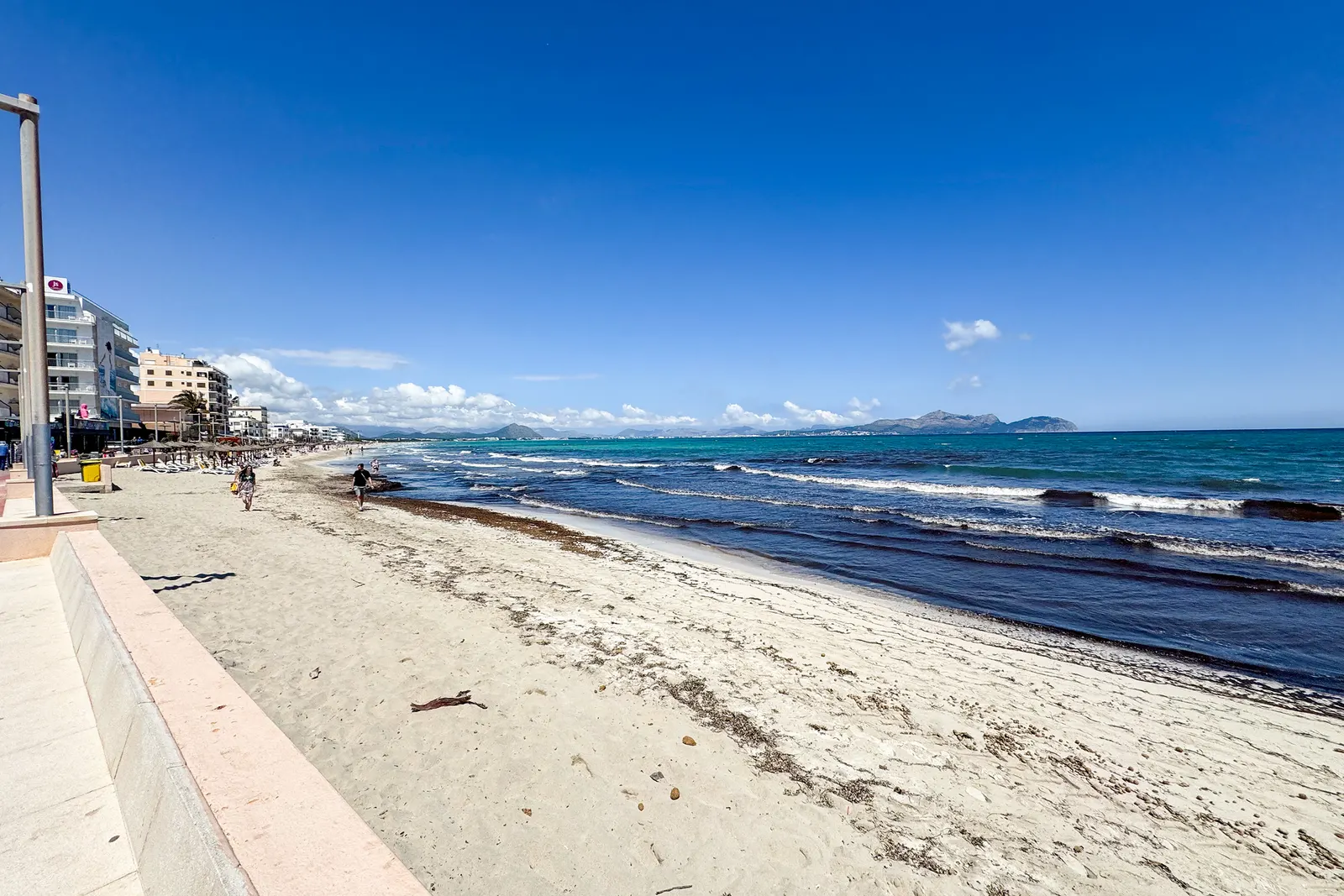
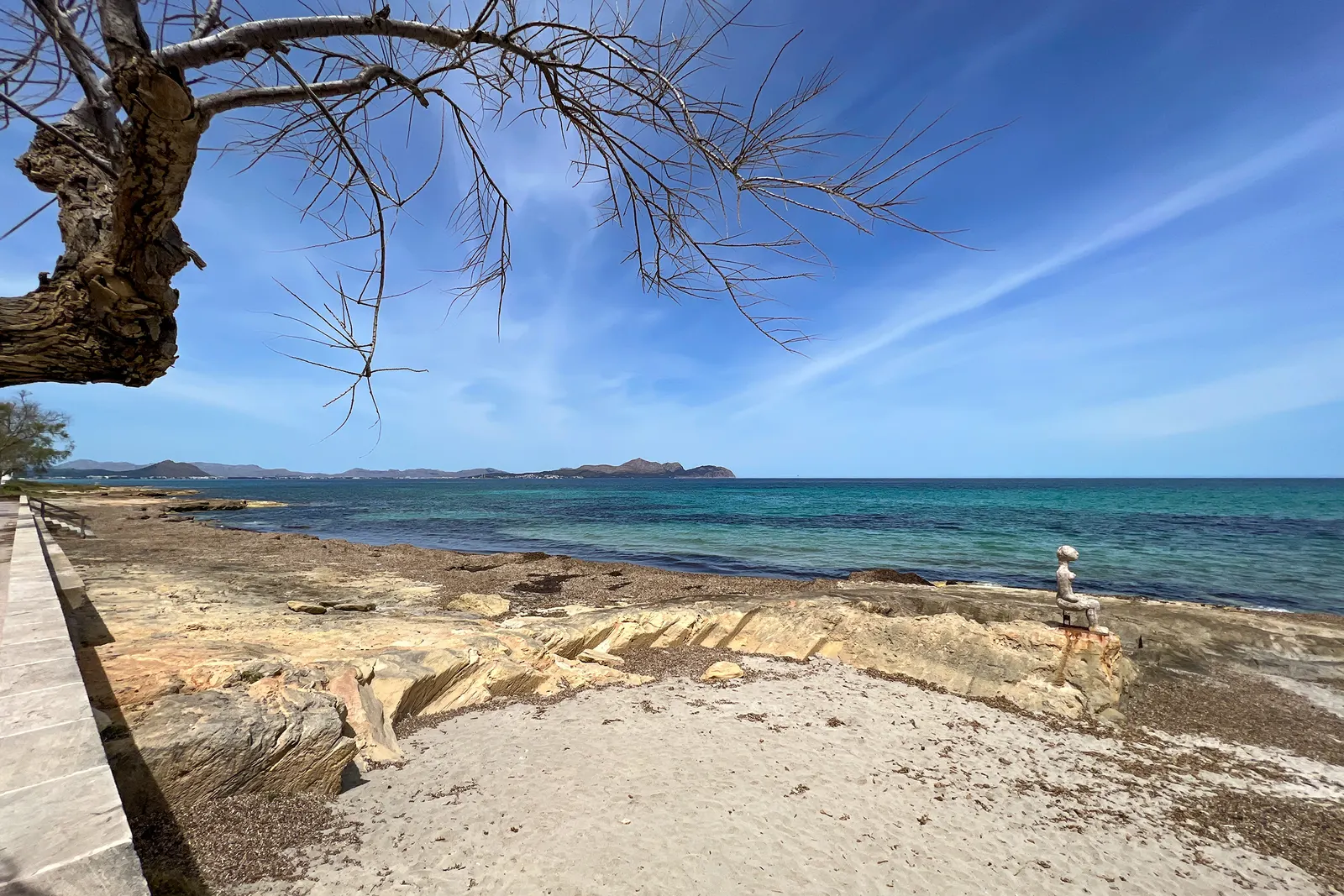
In spring, seagrass lines the shore and the beach is much quieter.
Getting to know Can Picafort
Does Can Picafort suit your plans?
What to expect and what to know before you visit.
Who it suits
- Looking for good-value accommodation compared with neighbouring resorts
- Families who want everything within walking distance
- Evenings with plenty of bars, restaurants and nightlife
- Long beach walks, with more space further from the centre
Things to bear in mind
- Peace and quiet in the main season
- Exploring a historic town centre
- A winter holiday with the full choice of holiday facilities
- Plenty of space on the central beach in high summer
Drive from the airport
50 minutes
55 km
Bus connections
Regular TIB services link the resort with Alcúdia
Region
Pla de Mallorca
Nearest beach
Platja de Muro
6 km
Elevation
4 m
above sea level
Season guide for Can Picafort
November Less suitable
Very quiet Mostly closed
Worth visiting in May, June and September. Less suitable in January, February, March, July, August, November and December. Mostly closed in January, February, March, November and December.
Location
Location of Can Picafort
- Region
- Pla de Mallorca
- Municipality
- Santa Margalida
- Elevation
- 4 m above sea level
- Airport
- 55 km , around 50 minutes
- Hire car
- not essential
- Worth visiting for
- a longer stay
- Coordinates
- 39.7647,3.1533
A straightforward holiday resort
Can Picafort was first recorded in 1860 as a small fishing settlement on the bay. Most of what you see today grew over a few decades around beach holidays, with accommodation, food and shops within easy walking distance.
That is its appeal. Come for a convenient seaside stay, often at a lower price than neighbouring resorts. If you want a historic old town or a working village market, plan a trip inland as well.
The beach and its drawback
The beach is the main attraction, but in the centre it is narrow. In July and August, it feels noticeably more crowded than the broader stretches at Port d’Alcúdia and Platja de Muro.
Walk north for more space. Beyond the centre, the sand opens out towards Platja de Muro, including undeveloped sections backed by dunes. The sandy coast continues towards Port d’Alcúdia for roughly ten kilometres. A longer walk gives you more choice, though even the quieter stretches attract people in August.
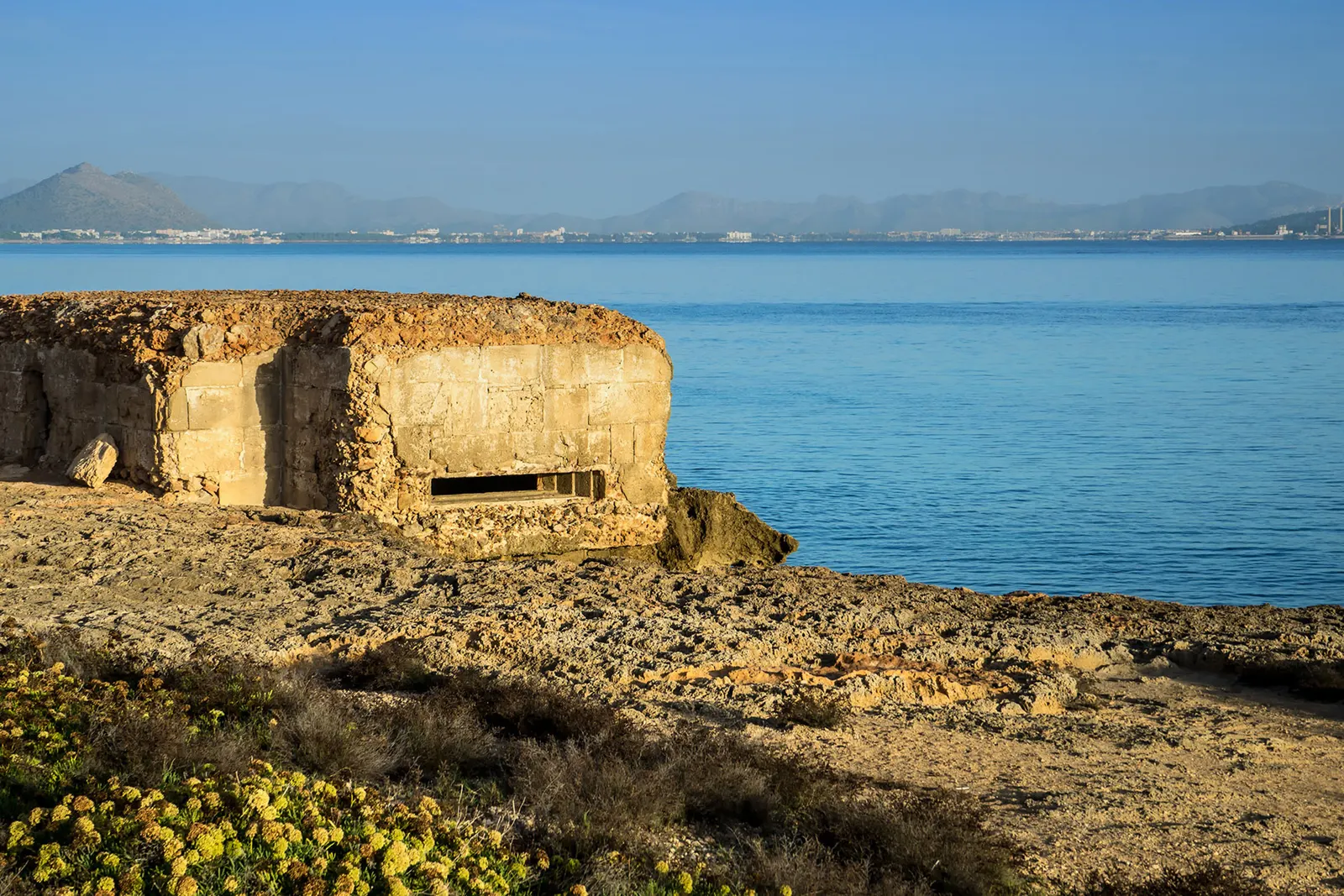
At the eastern edge, sand gives way to rock shelves, where you can also see an old coastal bunker.
The promenade
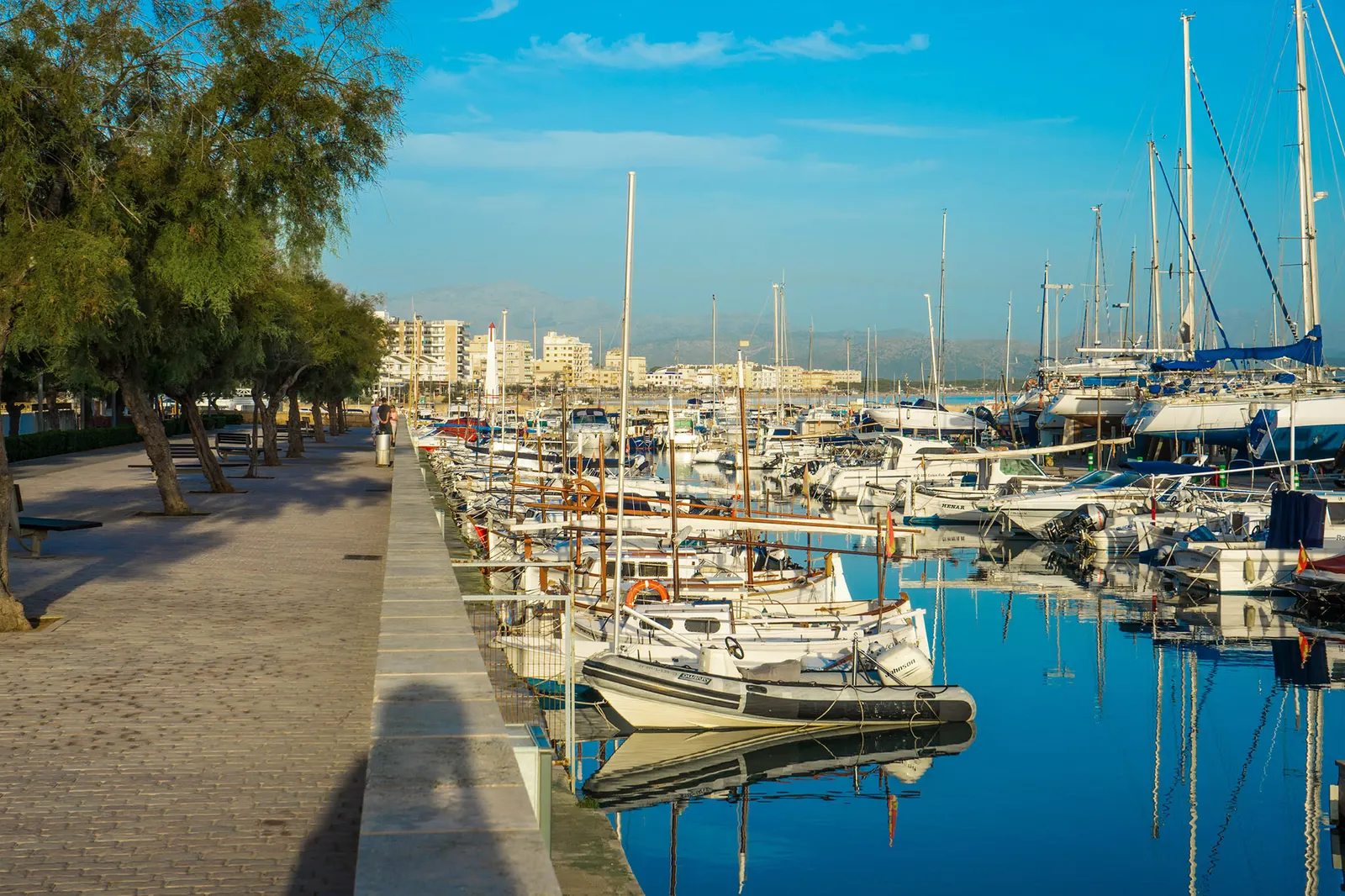
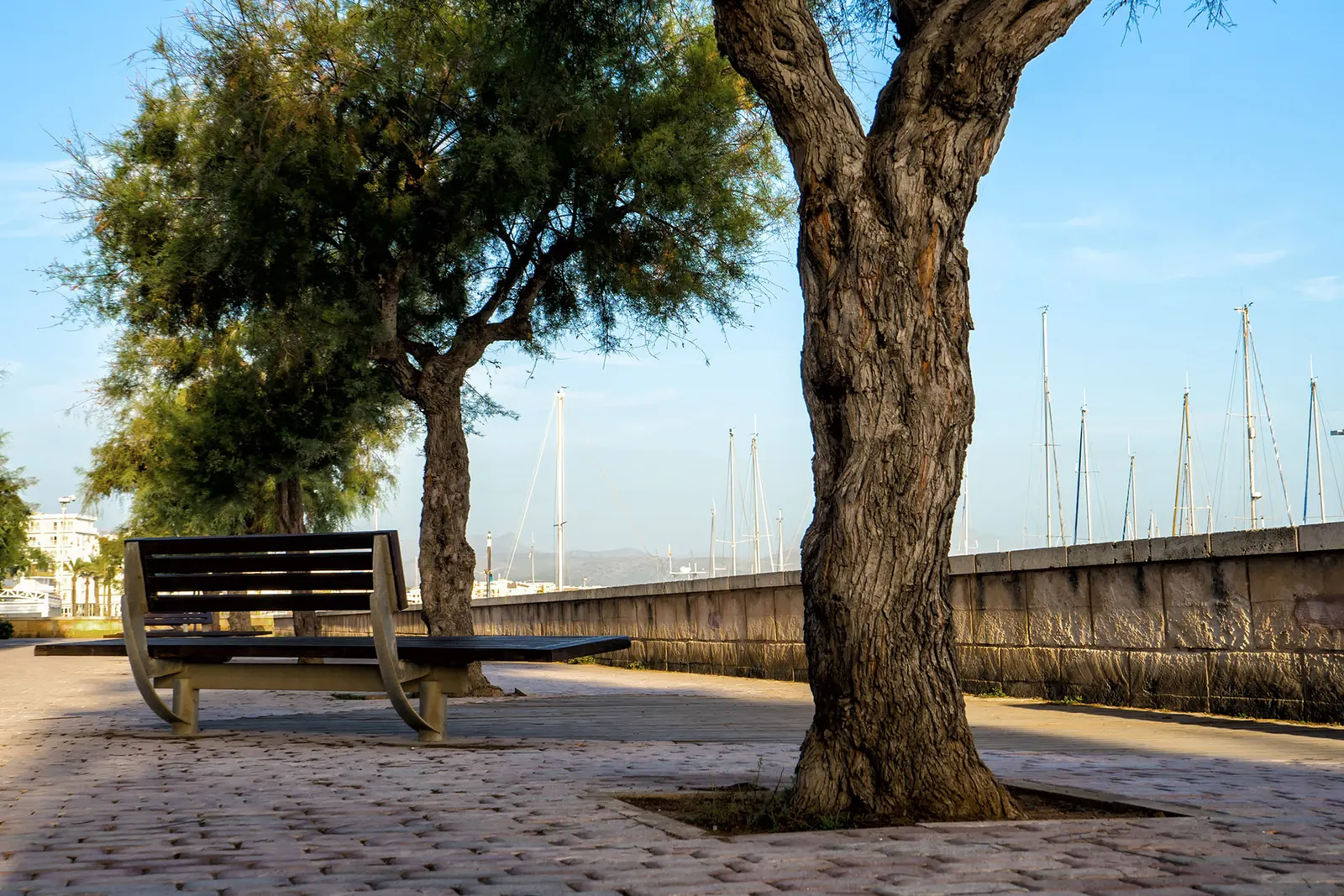
The broad paved promenade runs from the beach towards the marina, with old tamarisks and benches beneath them. The shady seats are understandably popular.
A few wooden llaüts, Mallorca’s traditional fishing boats, remain among the motorboats. Near the harbour entrance stands a white obelisk. In the evening, the view stretches across the bay towards the Tramuntana, with the sun setting behind the mountains rather than into open sea.
Things you might miss
The bunkers. Low concrete structures with narrow firing slits stand on rocks beside the sea. They are remnants of coastal defences and an interesting sight on a waterfront walk. Follow any access restrictions rather than assuming the interiors are safe to enter.
Necròpolis de Son Real. A few kilometres east, this prehistoric burial ground occupies a rocky headland beside the water. Its graves date from before the Roman conquest and make a rewarding change from a day on the beach.
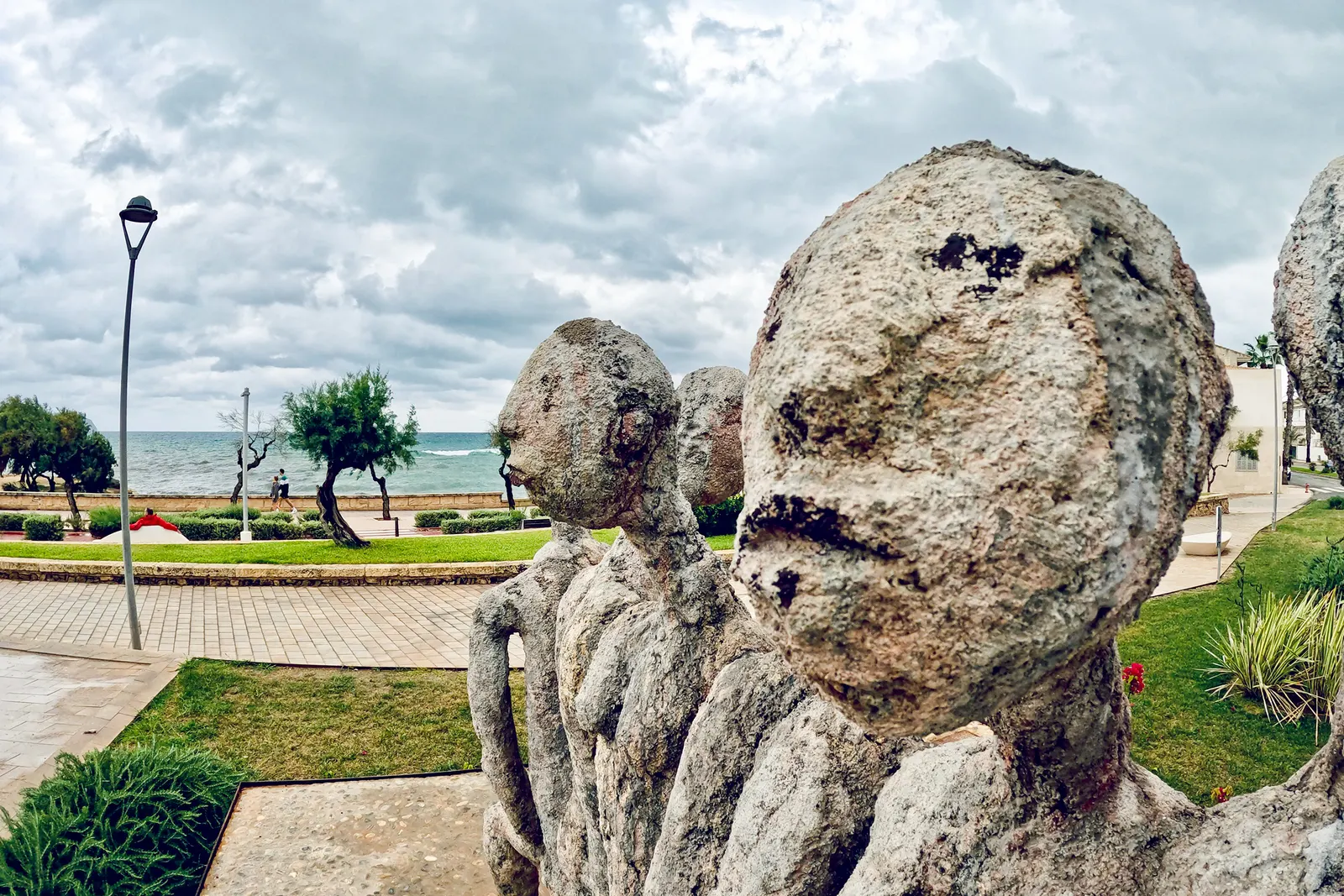
The stone figures. Roughly carved figures with round heads stand beside the promenade and on the rocks. They look quite different beneath a cloudy sky from how they do in bright sunshine.
Evenings
Bars, restaurants and nightlife are concentrated along the main road and the streets behind the seafront. In season, this is a lively place, which is exactly what many visitors want.
For a quieter evening, consider accommodation along Platja de Muro, checking the immediate surroundings before booking.
Winter
Many hotels, restaurants and other holiday businesses close between November and March. Seasonal supermarkets can close too, and parts of the resort reopen later than Port d’Alcúdia. For more year-round life on the north coast, consider Port de Pollença.
The beach remains accessible. In spring, with seagrass washed up along the water and sunbeds still stacked together, you can enjoy a much quieter walk. Just do not expect the full summer choice of places to eat and stay.
The white obelisks
Along the coast between Can Picafort and Son Serra de Marina stand white pillars with rectangular bases and pointed tops. They are alignment towers, or torres d’enfilació.
Built in pairs, they were used for military exercises involving ships and submarines during the mid-20th century. When the two towers appeared directly in line from the water, they marked a particular bearing. The towers in each pair stood roughly two hundred metres apart.
They no longer serve their original purpose, but remain useful landmarks on a coastal walk.
For a look at rural Mallorca, visit the Finca pública de Son Real on the road towards Son Serra de Marina. Old farm buildings, a museum and walking trails make it a worthwhile trip in its own right. A path of around 2.6 kilometres leads from the estate to the coastal burial ground.
Photographs
Can Picafort in Mallorca
How much time do you have?
Things to do in Can Picafort
Three hours
Spend the morning on the beach, then walk along the promenade to the marina and back. Continue to the coastal bunker on the rocks if you fancy a longer stroll.
Half a day
Beach first, then take a bus to Alcúdia for the town walls, lanes and Pollentia. Return to the water in the afternoon.
A full day
Walk north early towards the quieter stretches of Platja de Muro. Visit the prehistoric burial ground at Son Real in the cooler part of the day, then return for an evening in town.
On a rainy day
Try Alcúdia and its museum, or Artà and Sant Salvador. Check bus connections; the archaeological sites and hilltop walks are outdoors.
The beach at a glance
- Underfoot
- Fine pale sand, with rock shelves along some stretches of shore
- Getting into the water
- Shallow, though less gently shelving than further north
- Length
- The central beach is around a kilometre long and narrow; northwards, the sandy coast continues through Platja de Muro towards Port d'Alcúdia
- Shade
- Parasols for hire and tamarisks along parts of the promenade
- Wind
- Often calm; northerly winds can bring waves and washed-up seagrass
- With children
- Good for families, but crowded in high summer
- Facilities
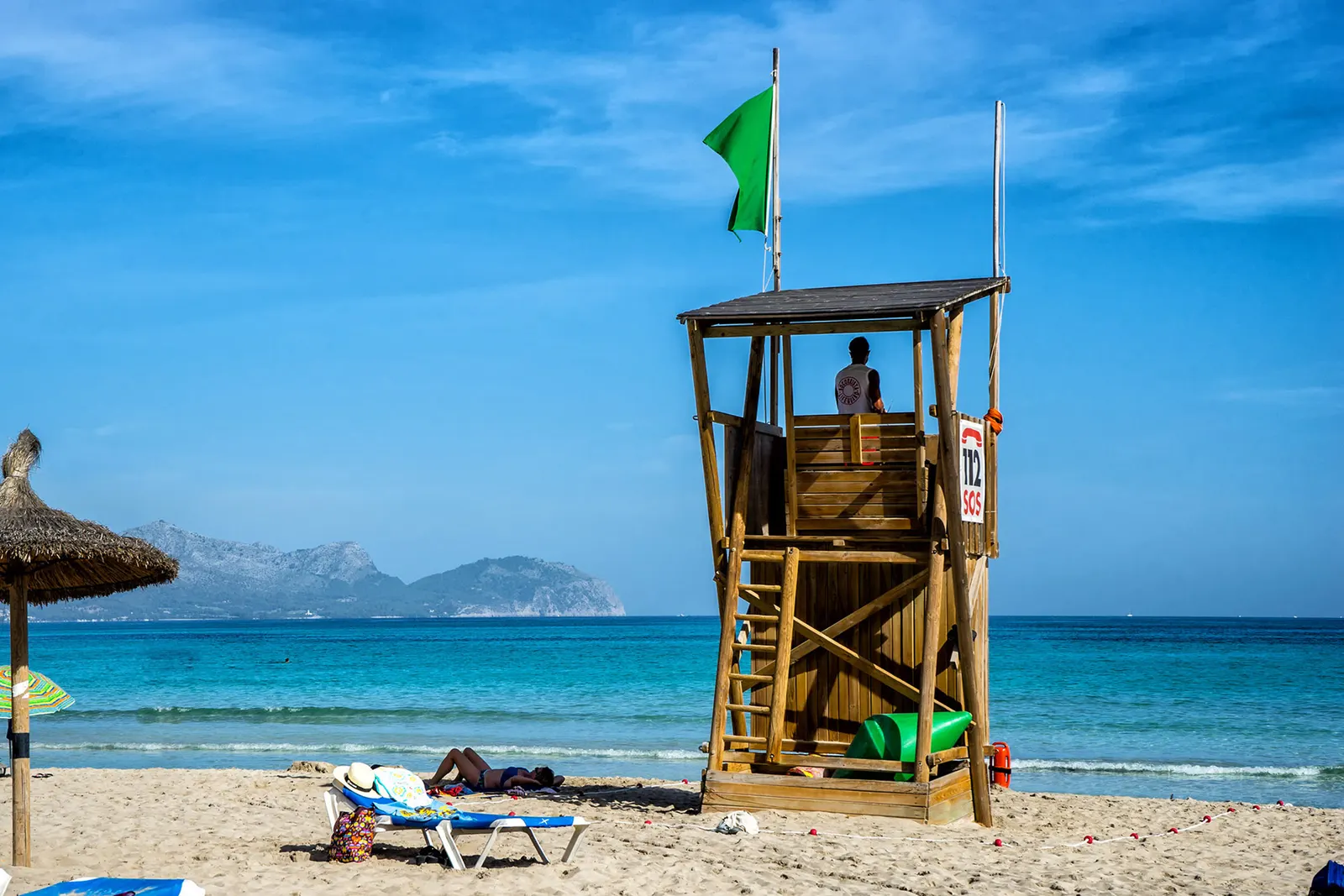
- Sunbeds and parasols for hire · Seasonal lifeguards and beach flags · Beach bars and water sports · Showers along the promenade
Practical details
- Parking
- Look in the residential streets behind the seafront and check signs. Waterfront spaces fill early in summer.
- Public transport
- Stops along the main road, with more frequent services in season
- Time to allow
- A week as a holiday base, or a couple of hours for a visit
- Good to know
- Friday morning is market time. Many holiday businesses close between November and March, so check what is open before booking a winter stay.
- Bus
- Regular TIB services link the resort with Alcúdia, Palma and inland towns; airport and coastal services vary by season. Check current timetables before travelling.
- Shops and services
- Supermarkets: Several supermarkets; some have seasonal opening · Pharmacy: Several on the main road · Medical care: Local health centre; further services in Santa Margalida · Cash machines: Plenty along the promenade and main road · Fuel: On the road towards Santa Margalida
- Access
- A level, paved promenade · Pushchairs: Straightforward along the promenade · Wheelchairs: The promenade is accessible, with beach access points in several places · Dogs: Check current dog restrictions at the town beach
- What you will not find
- A historic old town · Peace and quiet in the main season · The full range of holiday facilities from November to March · A wide beach in the town centre
- Coordinates
- 39.7647,3.1533 Google Maps Apple Maps
Dates that change the town
When a race comes to town
Mallorca 312 Road cycling · 25 April 2026
Road closures begin in the morning. The affected roads and reopening times follow the organiser’s traffic plan. Allow extra time for transfers and day trips.
Ironman 70.3 Alcúdia-Mallorca Triathlon · 9 May 2026
Temporary closures and extra crowds affect the start, finish and race route. Check access to your accommodation and the course map, especially if you have an airport transfer.
The season guide describes whole months. A race weekend can transform a normally quiet town for a couple of days. Find the dates in our guide to Sporting events.
Three places along the same sandy coast
| Place | Beach | Atmosphere | Price range |
|---|---|---|---|
| Can Picafort | Narrow and crowded in summer | Compact and lively with a strongly seasonal holiday trade | Budget to mid-range |
| Platja de Muro | Broad with undeveloped stretches | Pines and dunes with the nature reserve inland | Mid-range |
| Port d'Alcúdia | Very broad and gently shelving | Plenty of facilities and popular with families | Mid-range |
The sandy coastline runs for roughly ten kilometres. Walking along it reveals the differences: not just the sand, but the buildings, dunes and facilities behind it.
Within reach
Places to visit
Nearby
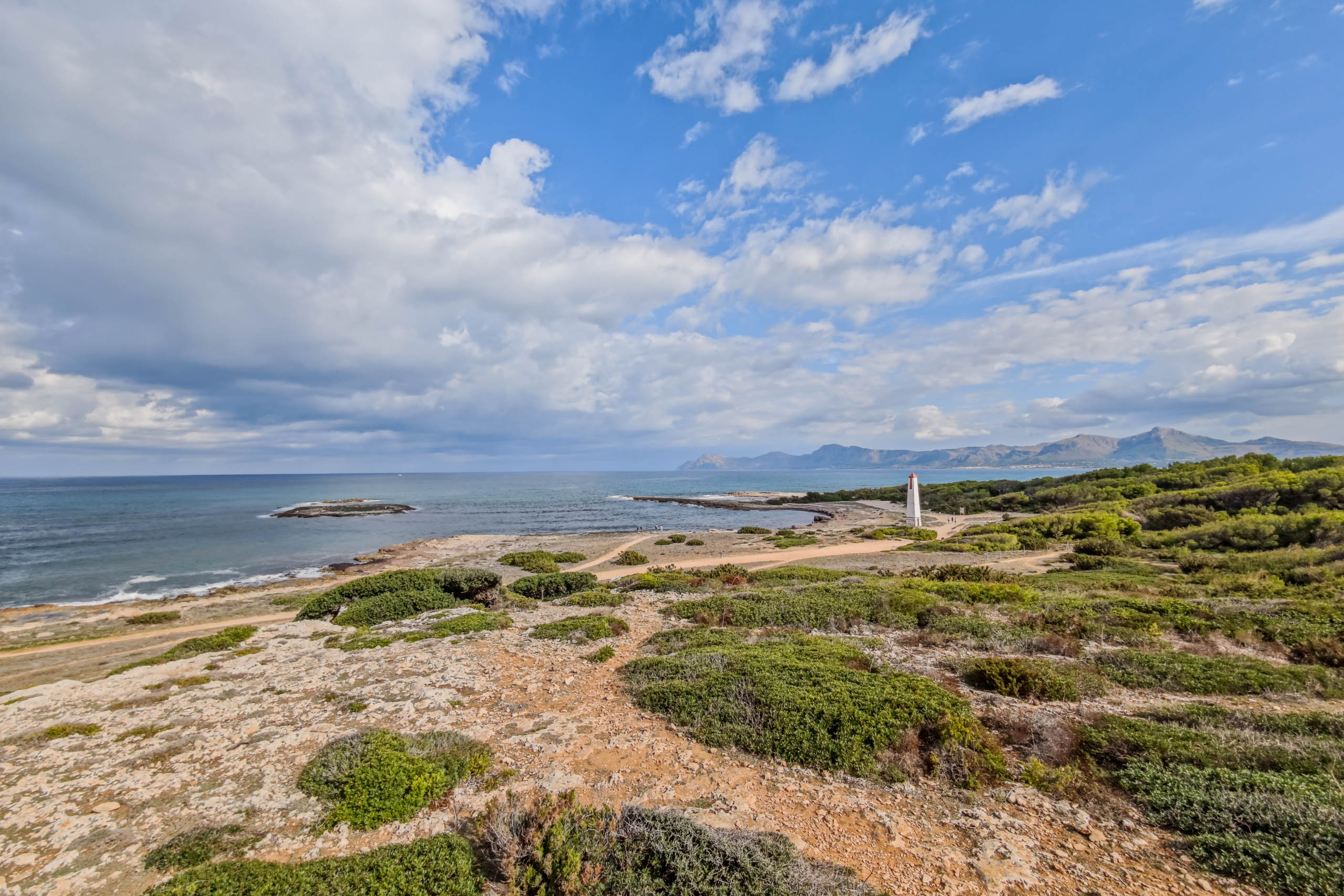
A few steps onto a wooden platform reveal the coast of Son Real. A dolmen lies beside the viewpoint, with the …

A Talayotic burial ground right beside the sea between Can Picafort and Son Serra de Marina. Around 110 tombs …

A church among the pines, beside the old Son Serra estate with its towers and farm buildings. A glimpse of the …
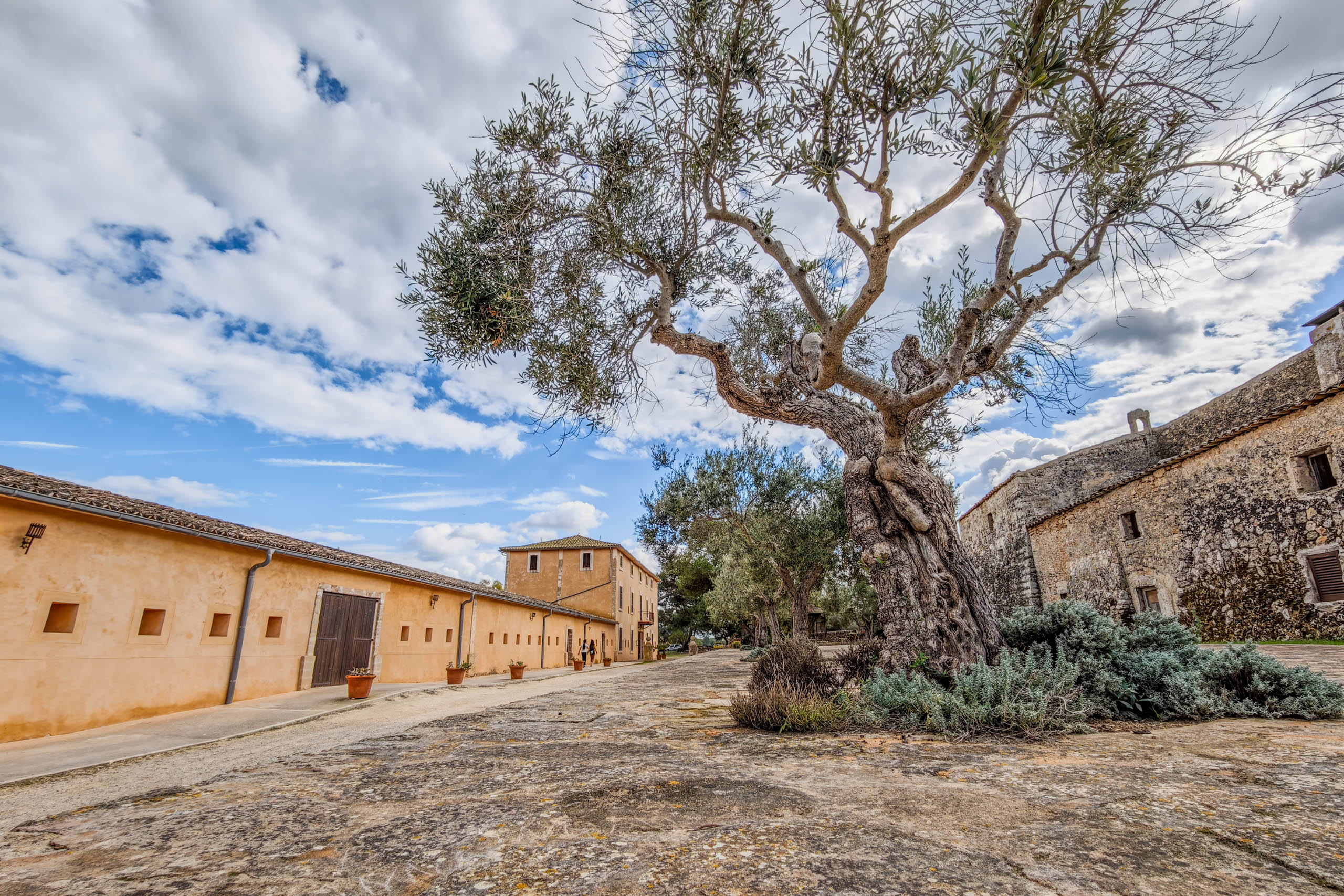
Old farm buildings, gnarled olive trees and a museum about earlier life on Mallorca. Son Real lies between Can …

The remains of an important Roman town just outside Alcúdia. An urban centre developed here after the conquest of …
In Alcúdia

A pilgrimage church on the Victòria peninsula, seven kilometres north-east of Alcúdia. The road ends at a …
Via Alcúdia, then a narrow mountain road

A small pilgrimage chapel among pines near Sa Pobla, on the site of an older settlement. A paved path leads up to …

A hermitage founded in 1805 in the hills of Artà, reached by a narrow, winding road. The last resident hermits …
Distances without a driving time are measured in a straight line. The road journey can be much longer; known driving times are shown alongside.
Other beaches to consider
Beaches and swimming nearby

A long sandy stretch of the Bay of Alcúdia, with protected dunes and pines at Es Comú rather than a continuous …

A planned village of grid-pattern streets, no hotels and houses no higher than two storeys. In front lies a long …

A quieter alternative to Port d’Alcúdia, 3 km to the east. Low villas sit among pines beside a pebbly, sandy shore …

Five kilometres of pale sand shelving gently into the sea, backed by hotels, bars and shops. A classic beach …
Explore from here
Your questions answered
Your questions about Can Picafort
Should I choose Can Picafort or Port d'Alcúdia?
They sit at different ends of the same long sandy coastline. Port d'Alcúdia has a wider, more gently shelving beach and good transport links. Can Picafort is compact, often good value and lively in the evenings. For small children and more room on the sand, Port d'Alcúdia has the advantage; for short walks between accommodation, restaurants and the beach, Can Picafort is convenient.
How wide is Can Picafort's beach?
The central stretch is narrow and gets crowded in high summer. Head north for more space. Beyond the centre, the beach opens out towards Platja de Muro, where there are also undeveloped stretches backed by dunes.
Is Can Picafort worth visiting in winter?
For a beach walk, yes; for a holiday with plenty of open restaurants and hotels, it is less suitable. Many seasonal businesses close between November and March. Port de Pollença offers more year-round life on the north coast.
When is the market in Can Picafort?
Friday morning. Expect plenty of clothing and souvenirs. For a different market atmosphere, try Santa Margalida on Saturday or Sa Pobla on Sunday.
What are the bunkers along the coast?
The low concrete structures on the shoreline are remains of Spain's coastal defences. You can see them on walks beside the rocks; respect any access restrictions and avoid entering unsafe structures.
Where can I go from Can Picafort?
Alcúdia, with its walls and Roman remains, is around twenty minutes away by car. S'Albufera nature reserve is closer. Eastwards are Son Serra de Marina and Artà. The prehistoric burial ground of Necròpolis de Son Real sits directly beside the sea a few kilometres outside the resort.
Practical questions
When is the best time to visit Can Picafort?
Recommended months: May, June, September. Access and opening are limited in January, February, March, November, December. See the visiting advice on this page.
Is Can Picafort worth visiting in July and August?
July: another month may suit you better. Usually very crowded. August: another month may suit you better. Usually very crowded.
How far is Can Picafort from Palma airport?
About 55 km from Palma airport. Allow roughly 50 minutes by car. You can manage a beach holiday by bus. For inland villages or the Tramuntana, a car can be useful, but you may only need one for a day or two.
Do I need a hire car for Can Picafort?
Easy to manage without a car Regular TIB services link the resort with Alcúdia, Palma and inland towns; airport and coastal services vary by season. Check current timetables before travelling.
Where can I park in Can Picafort?
Look in the residential streets behind the seafront and check signs. Waterfront spaces fill early in summer.
Can you swim at Can Picafort?
Yes. Fine pale sand, with rock shelves along some stretches of shore Shallow, though less gently shelving than further north The central beach is around a kilometre long and narrow; northwards, the sandy coast continues through Platja de Muro towards Port d'Alcúdia Parasols for hire and tamarisks along parts of the promenade Good for families, but crowded in high summer
Can I visit Can Picafort with a pushchair or wheelchair?
A level, paved promenade Pushchairs: Straightforward along the promenade Wheelchairs: The promenade is accessible, with beach access points in several places
Are dogs allowed at Can Picafort?
Check current dog restrictions at the town beach
Can Picafort features in our Mallorca highlights
Words and photographs: Friedhelm Fischer. Exploring Mallorca since 2013 — by bike, on foot and with a camera.