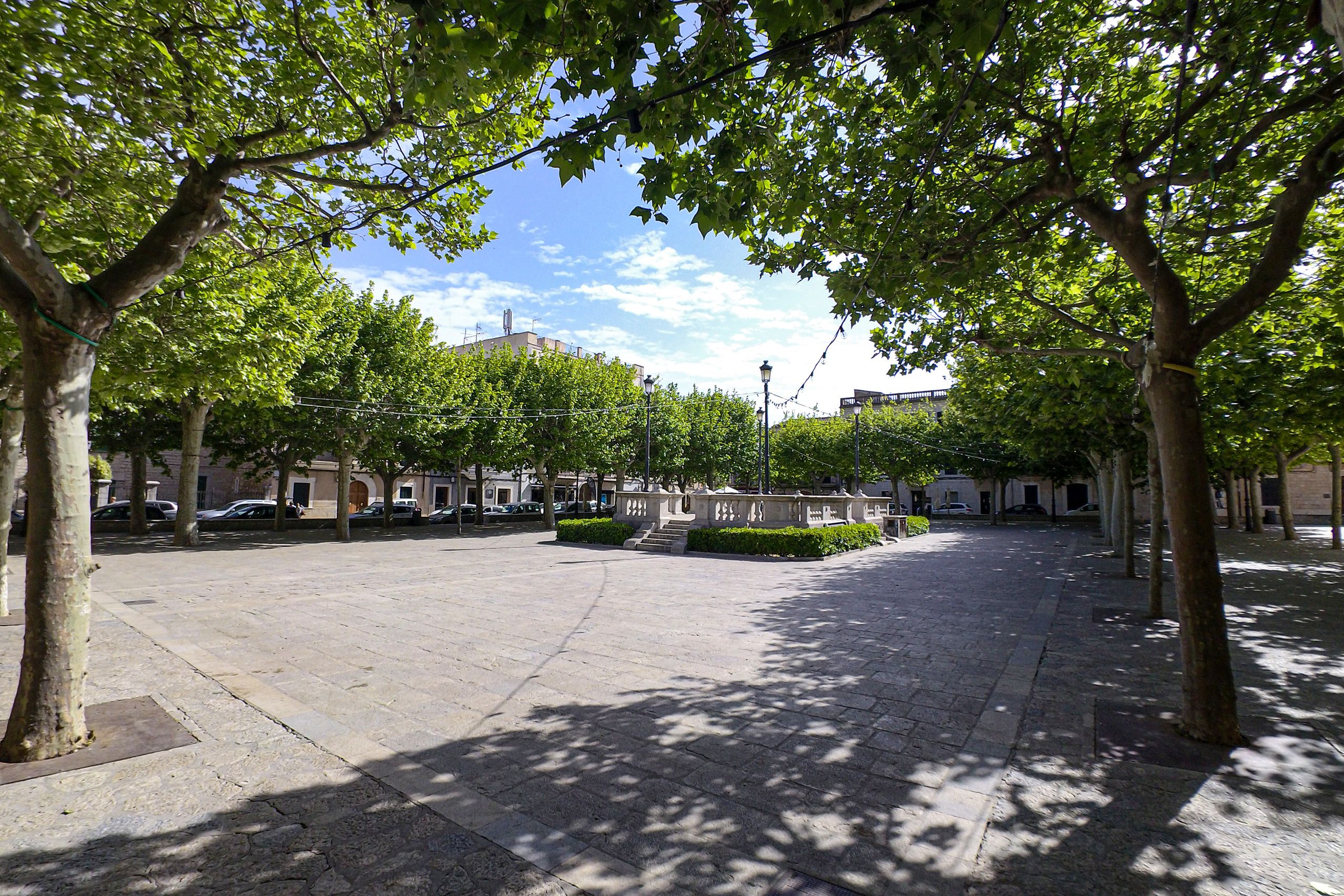
Mallorca’s wine town, at the heart of the Balearics’ first designated wine-growing area. Golden sandstone manor houses, a substantial church and September’s grape-harvest festival give you plenty of reasons to stop.
Binissalem
Binissalem in 30 seconds
The essentials at a glance
- Worth visiting for
- A short visit
- Best for
- You’d like to taste and buy Mallorcan wine.
- Best months
- January–May, September–December
- Time to allow
- Two hours, or half a day with a winery visit.
- Without a car
- Hire car recommended
- Parking
- Generally straightforward and free in town.
- Keep in mind
- Don’t assume you can visit a winery for a tasting without booking.
- Access
- Pushchairs: Straightforward. · Wheelchairs: Largely accessible.
Get a feel for Mallorca. Find your kind of place.
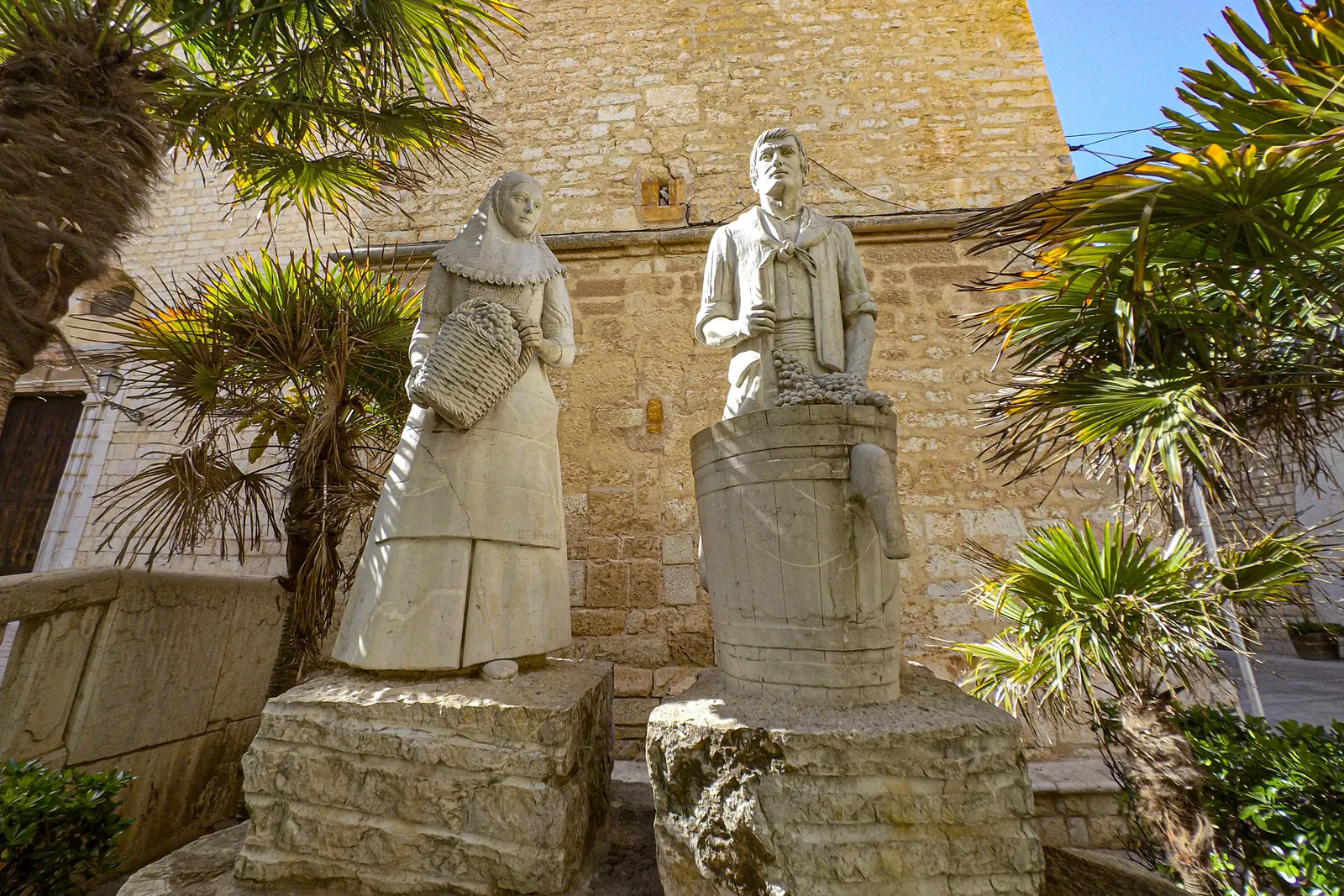
A woman with a basket and a man on a barrel commemorate the grape harvest.
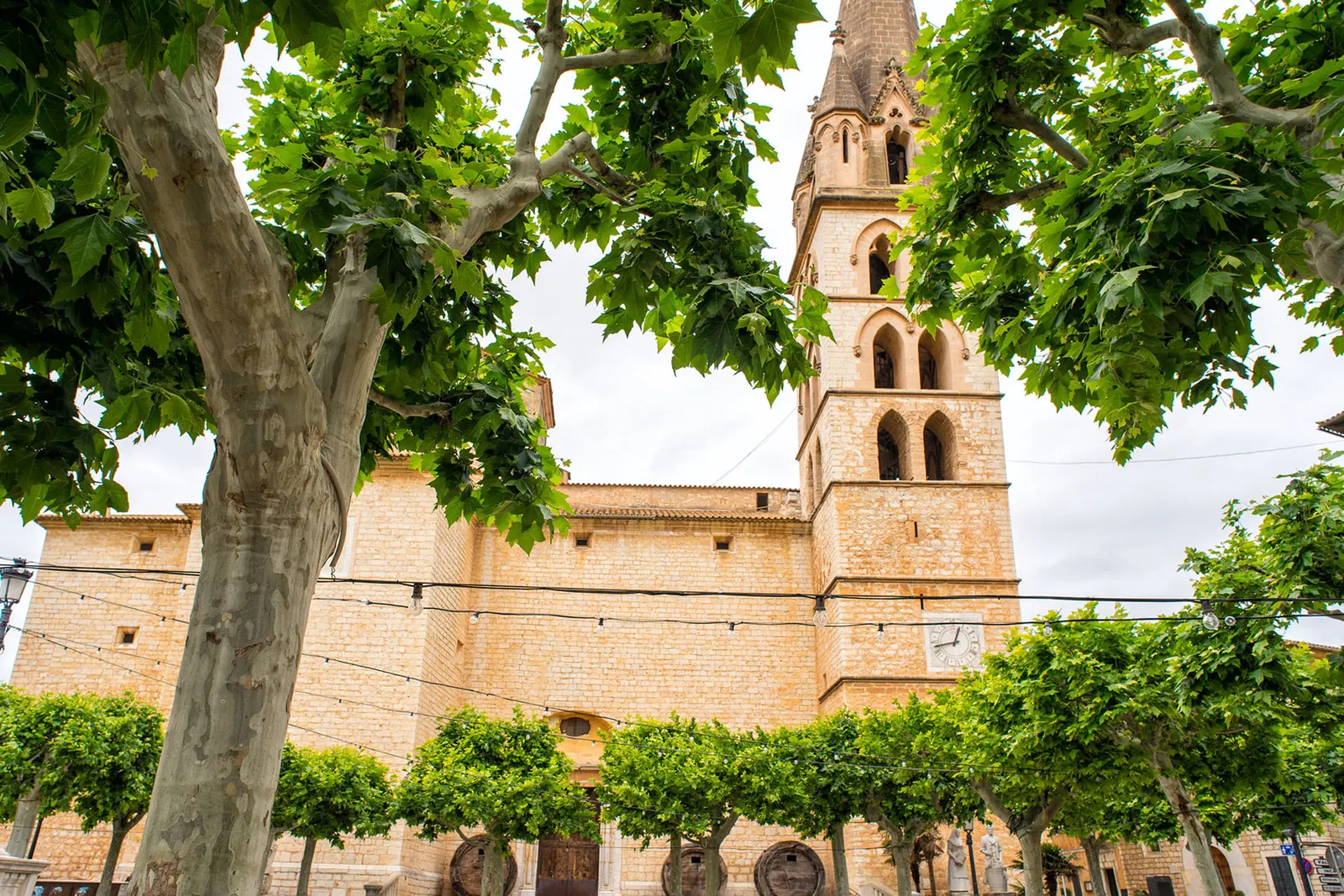
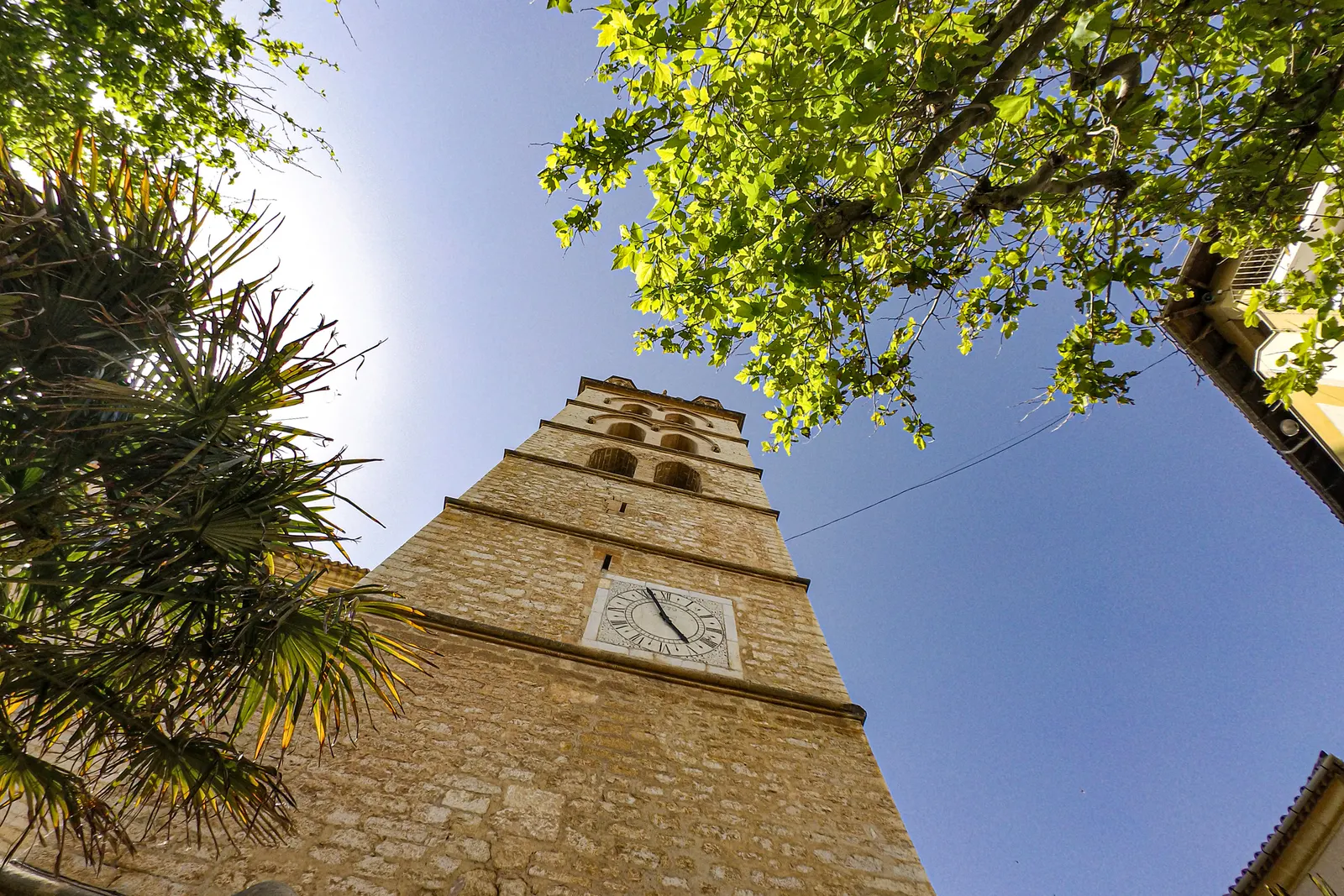
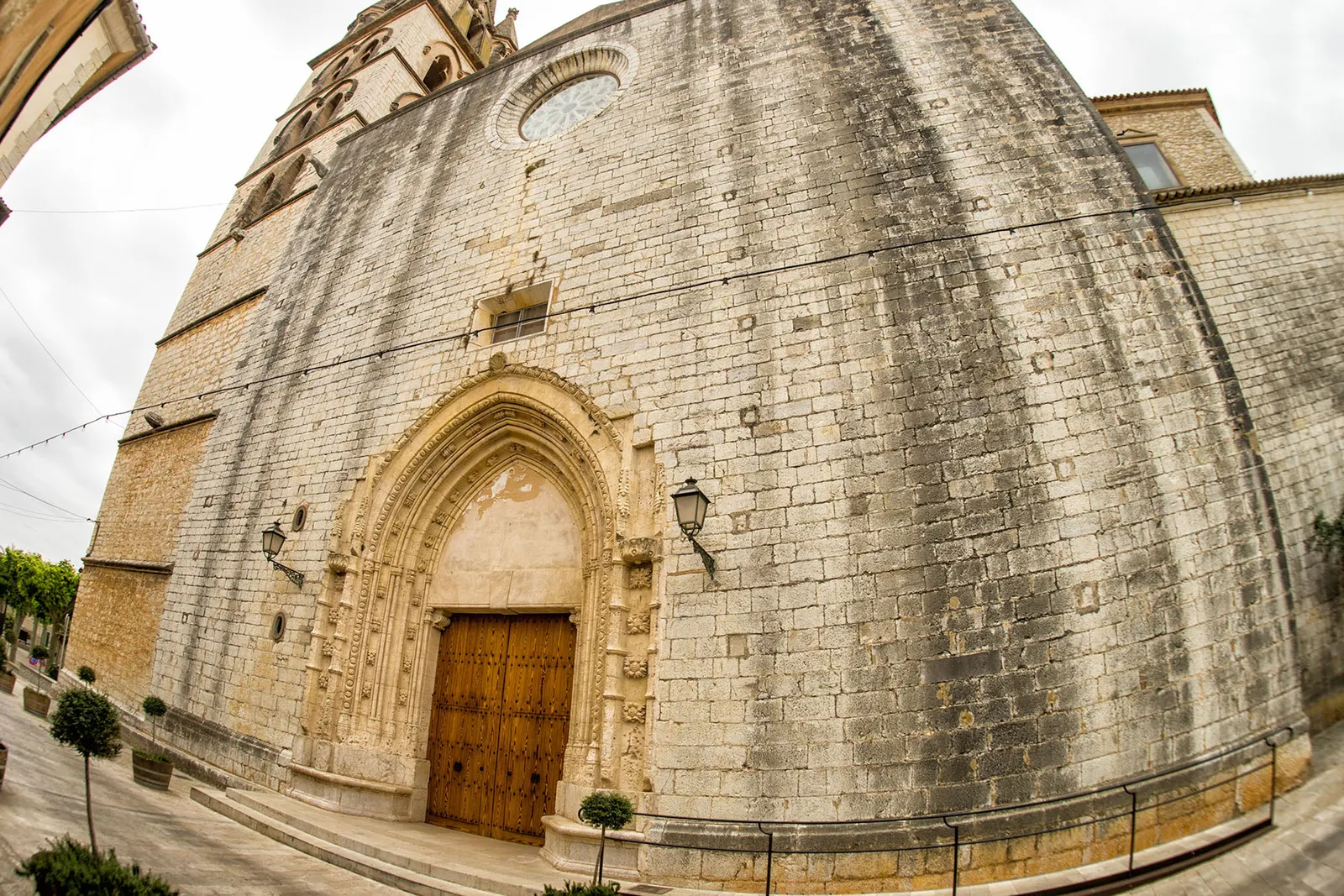
The tower can be seen from far away, marking one of the designation’s five wine-growing municipalities.
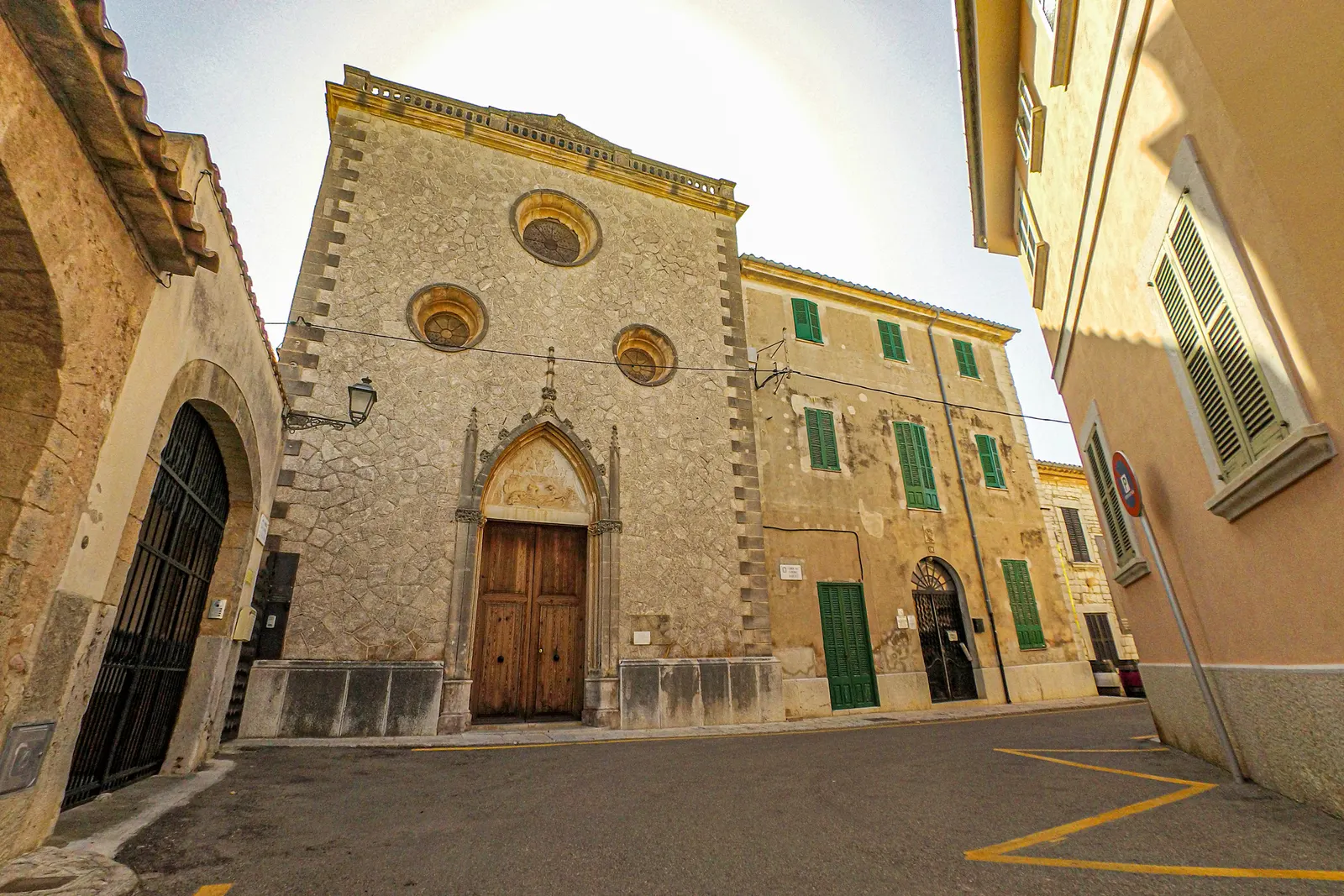
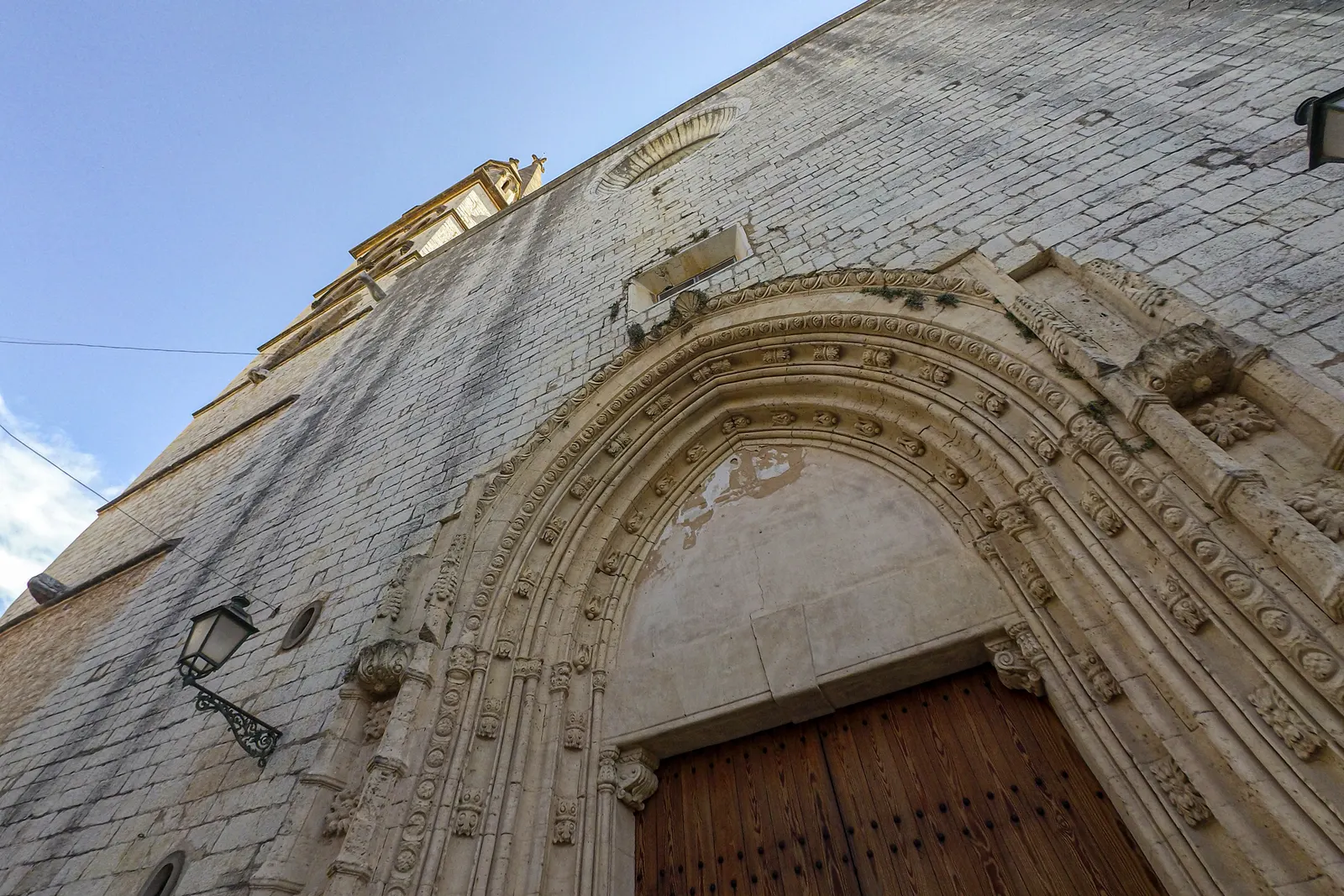
Three round windows above a pointed entrance. It’s a substantial church for a small town.
Getting to know Binissalem
Does Binissalem suit your plans?
What to expect and what to know before you visit.
Who it suits
- You’d like to taste and buy Mallorcan wine.
- You enjoy looking at grand sandstone houses.
- You want to experience Festa des Vermar in late September.
- You’re travelling without a car; trains from Palma towards Inca stop here.
Things to bear in mind
- Don’t assume you can visit a winery for a tasting without booking.
- There’s no coast or mountain walking in the town itself.
- High summer can be very hot on the plain.
- Don’t expect a busy evening scene.
Drive from the airport
30 minutes
32 km
Bus connections
Trains on the Palma–Inca route stop in Binissalem
Region
Raiguer
Elevation
140 m
above sea level
Season guide for Binissalem
November Worth a visit
Very quiet Open
Worth visiting in January, February, March, April, May, September, October, November and December. Less suitable in August.
Location
Location of Binissalem
- Region
- Raiguer
- Population
- 8,000
- Elevation
- 140 m above sea level
- Airport
- 32 km , around 30 minutes
- Hire car
- recommended
- Worth visiting for
- a brief stop
- Coordinates
- 39.6831,2.8333
The wine
In 1991, Binissalem became the Balearics’ first designated wine-growing area. DO Binissalem covers five municipalities: Binissalem, Santa Maria del Camí, Consell, Sencelles and Santa Eugènia.
Its red wines feature local varieties Manto Negro and Callet, grown on limestone and clay soils associated with their mineral character.
Winery visits usually need advance booking. If you arrive without plans, the town’s wine shops stock the same local bottles and can often help you choose.
The stone
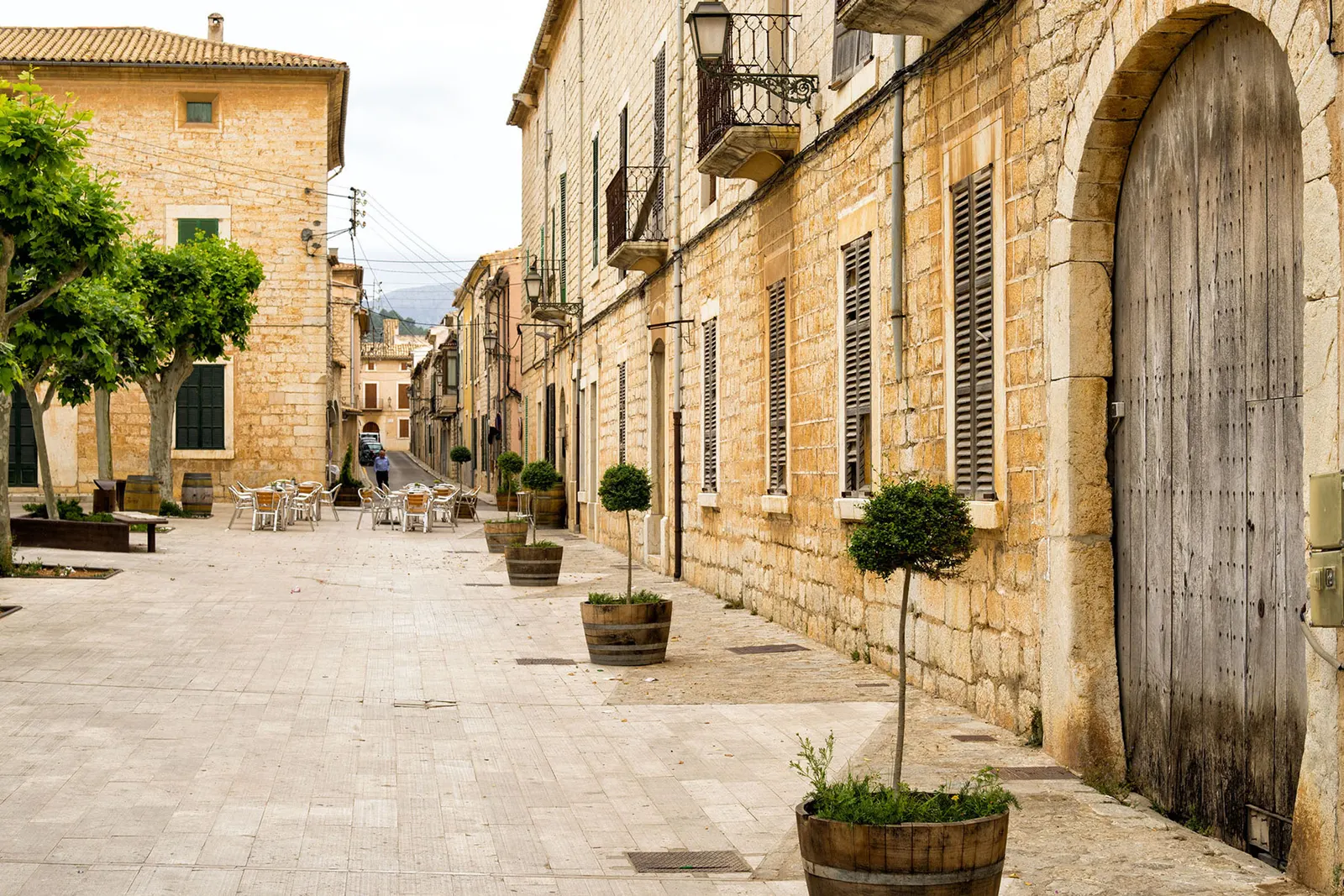
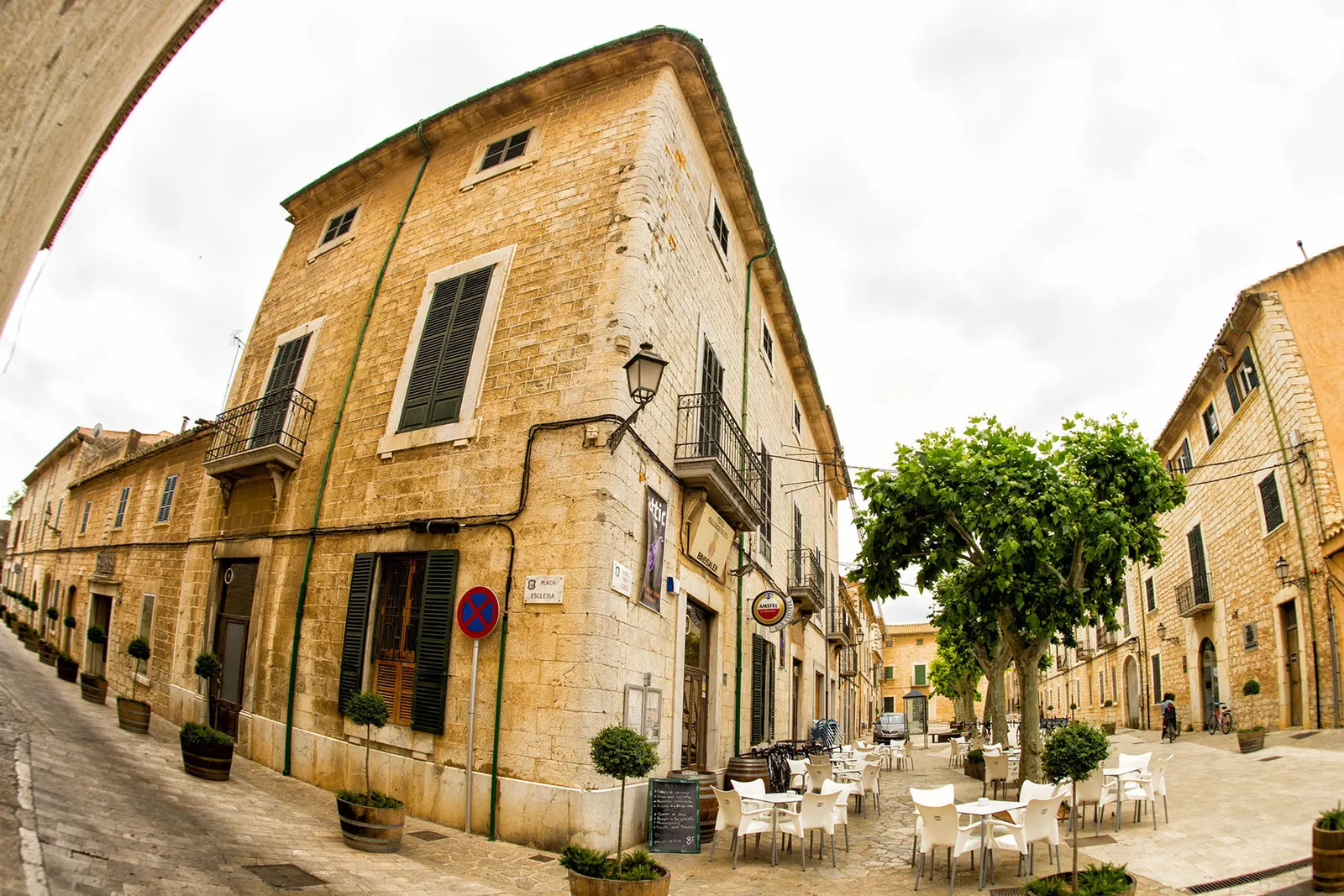
The golden sandstone comes from nearby quarries. Its quality, and the money earned by wine-growers, helped create the grand houses and entrances that line the streets.
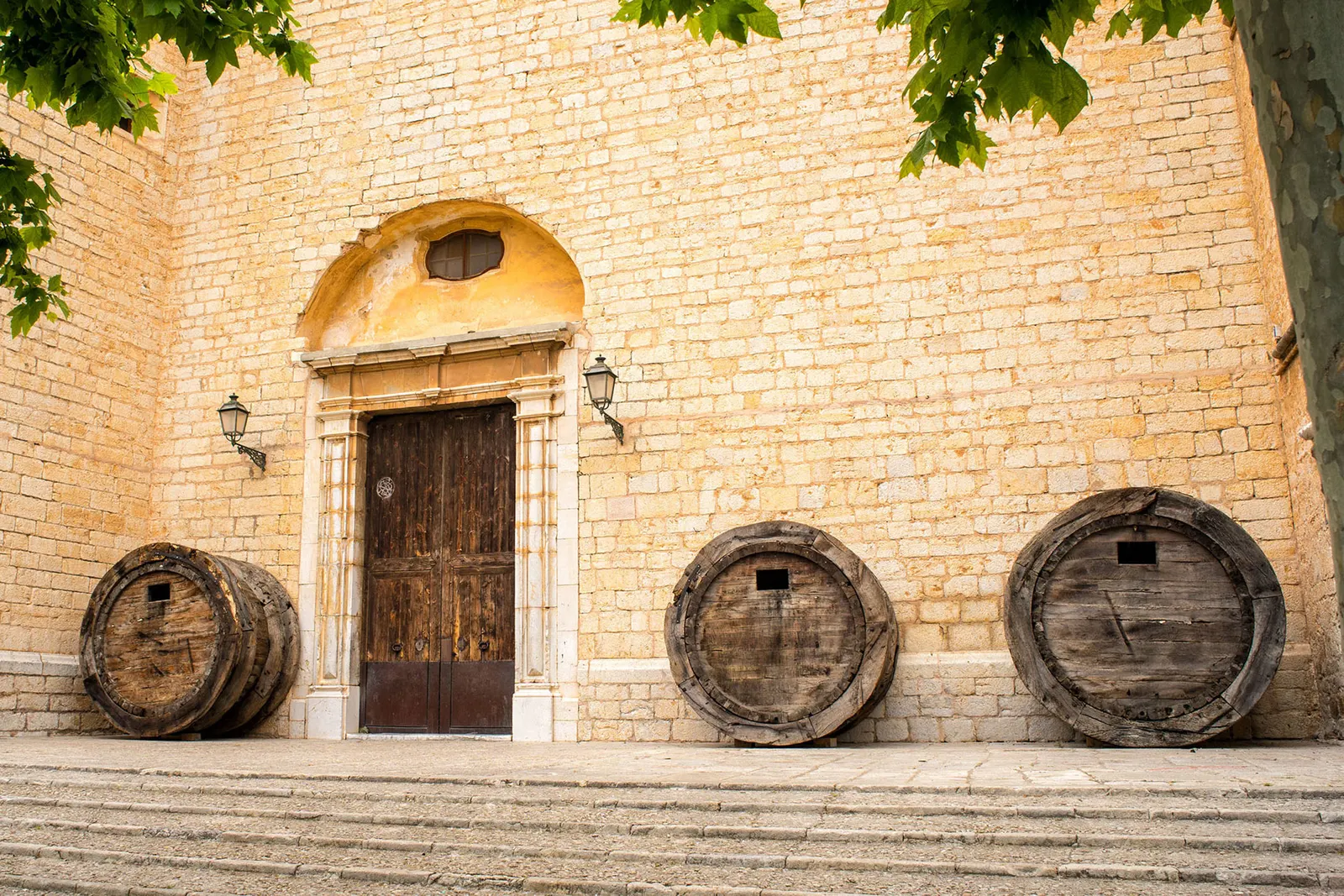
Outside the church, barrels stand against the wall. Two stone figures commemorate the harvest: a man on a barrel and a woman carrying a basket.
Festa des Vermar
The town celebrates the grape harvest in late September. It gets busy, and parking becomes much harder than usual.
When to come
October is a good choice, with the harvest finished and vineyard leaves changing colour. Come in late September for the festival or February for almond blossom among the vines.
In July and August, the Raiguer can be very hot without a sea breeze.
Getting here
Trains on the Palma–Inca route stop in Binissalem. Take one if you’re planning to taste wine.
Photographs
Binissalem in Mallorca
How much time do you have?
Things to do in Binissalem
Three hours
Walk through the old centre to the church and the squares shaded by plane and orange trees, then visit a winery on the outskirts.
Half a day
Add Santa Maria del Camí or Consell, both in the same wine-growing designation.
A full day
Combine the visit with Inca, Alaró and Castell d’Alaró.
On a rainy day
A guided winery visit is a good wet-weather option.
Practical details
- Parking
- Generally straightforward and free in town.
- Public transport
- Trains on the Palma–Inca route stop here.
- Time to allow
- Two hours, or half a day with a winery visit.
- Good to know
- Winery visits usually need booking. If you arrive without arrangements, the town’s wine shops stock local bottles and can often advise you.
- Bus
- Trains on the Palma–Inca route stop in Binissalem.
- Shops and services
- Supermarkets: Several in town · Pharmacy: In town · Medical care: Local health centre; hospital in Inca · Cash machines: Several · Fuel: On the Ma-13
- Access
- Level paved streets and squares. · Pushchairs: Straightforward. · Wheelchairs: Largely accessible. · Dogs: Straightforward.
- What you will not find
- The sea · Guaranteed walk-in wine tastings · Lively evenings · Mountains within walking distance
- Coordinates
- 39.6831,2.8333 Google Maps Apple Maps
Within reach
Places to visit
Nearby
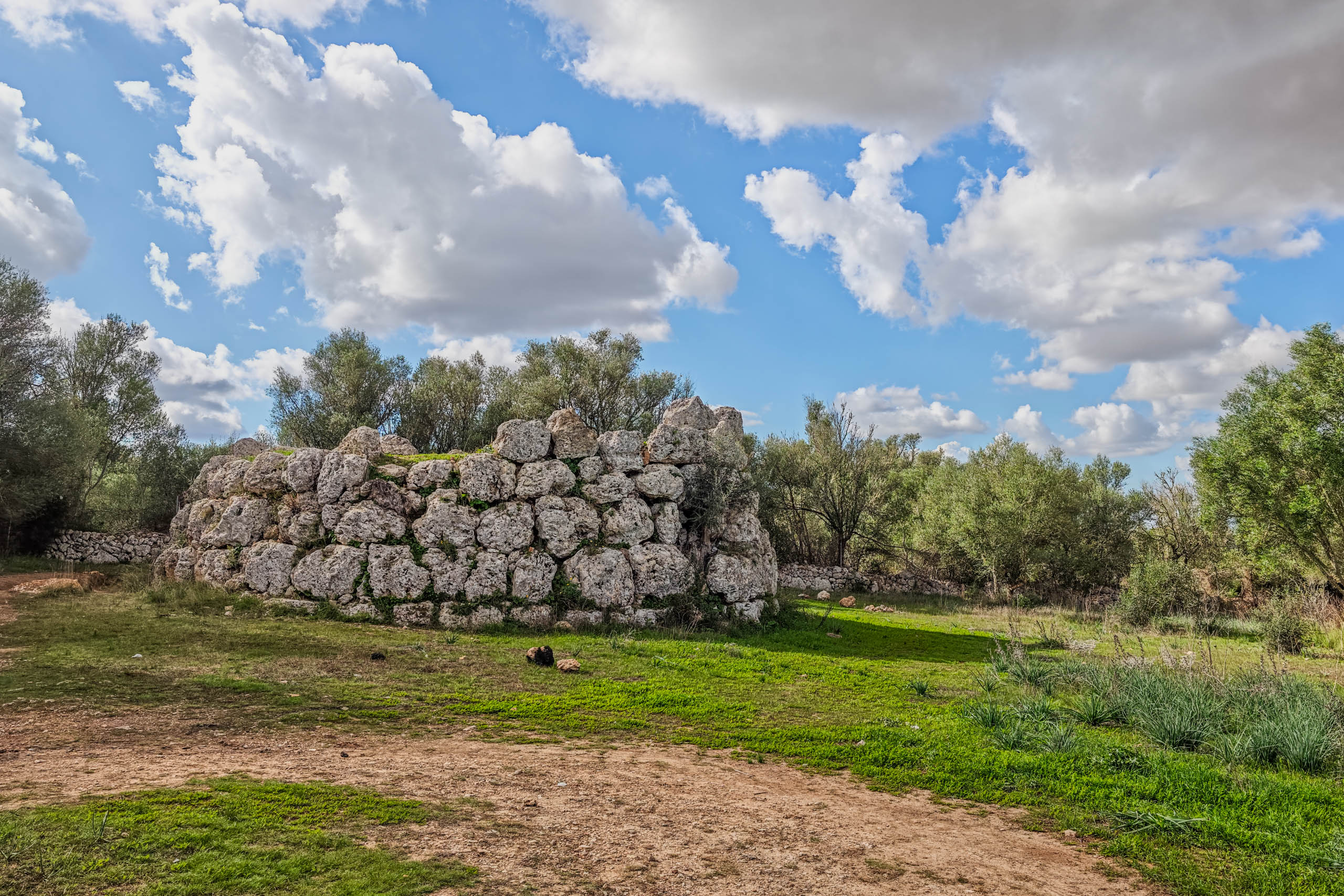
Son Fred is a well-preserved talayot near Sencelles, a round tower built from enormous stone blocks. Duck through …

A pilgrimage church on a rocky ledge above Mancor de la Vall, documented since 1275. The terrace looks across much …
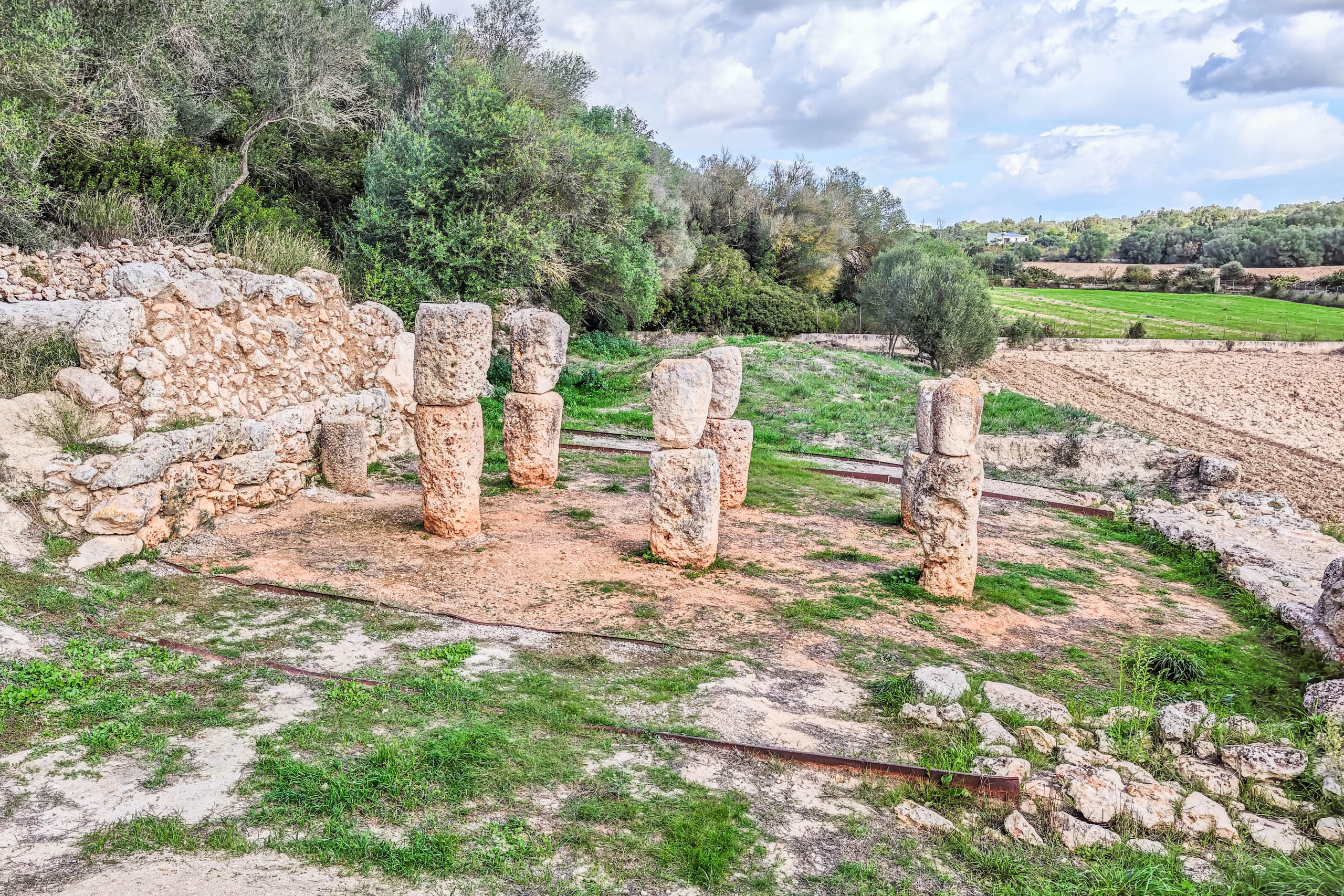
Son Corró is a small prehistoric sanctuary near Costitx. Six re-erected stone columns stand among low walls. The …

At the foot of the Sóller pass, this garden has irrigation rooted in Moorish times. Palm groves, a pergola with …
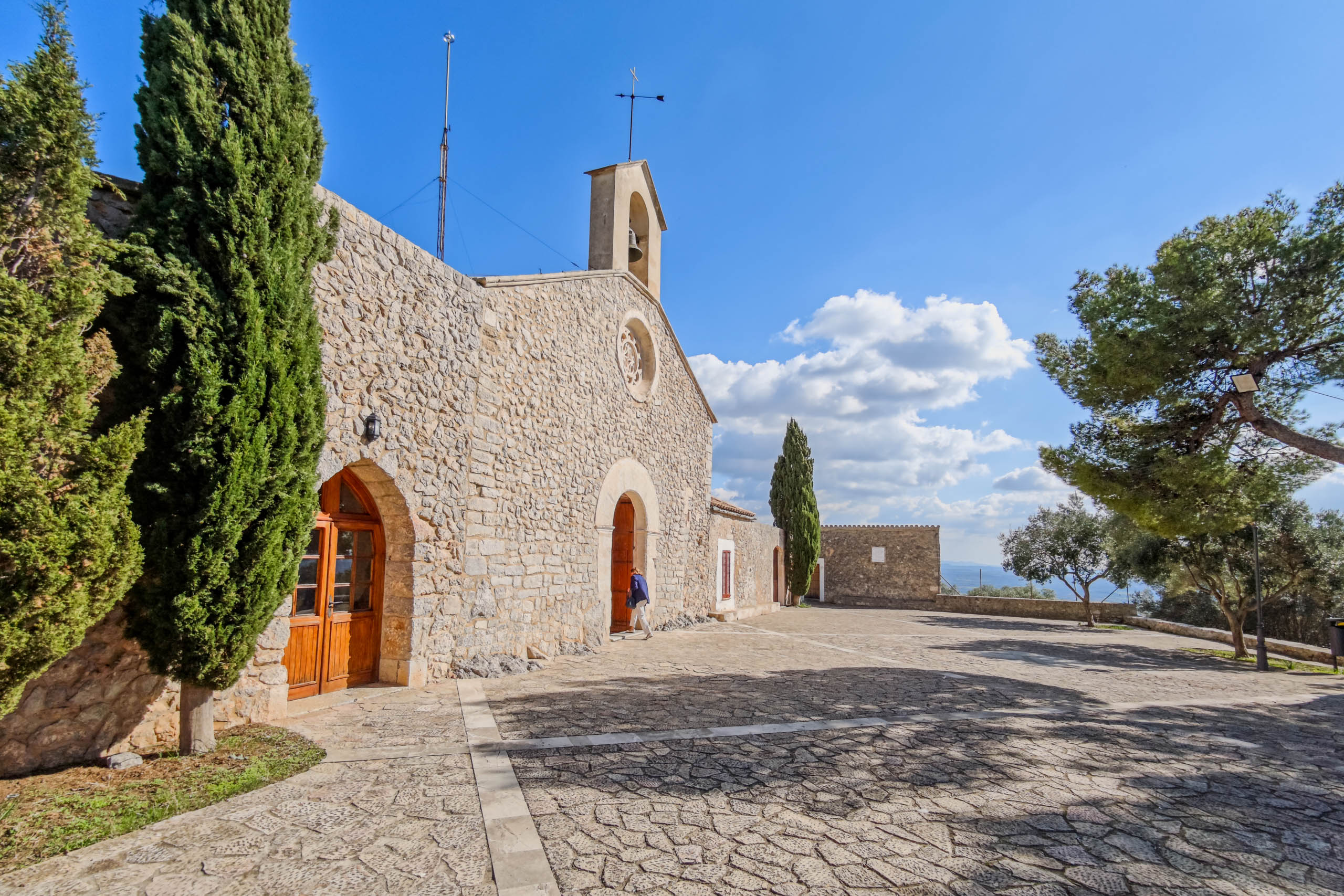
A small chapel and a wide view across Mallorca. Santa Magdalena stands on a hill near Inca. The winding climb is …

Mallorca’s largest reservoir sits in the heart of the Tramuntana beside the MA-10. Swimming is forbidden, there’s …

A country estate near Bunyola, transformed by an 18th-century cardinal into an Italian-style villa. A terraced …

A family glassworks dating back to 1719, beside the road to Manacor in a castle-like building. Watch glassblowers …
Distances without a driving time are measured in a straight line. The road journey can be much longer; known driving times are shown alongside.
Explore from here
Your questions answered
Your questions about Binissalem
Why is Binissalem known for wine?
The DO Binissalem became the Balearics’ first wine designation in 1991. It covers five municipalities — Binissalem, Santa Maria del Camí, Consell, Sencelles and Santa Eugènia. Local red wines feature the island’s Manto Negro and Callet grapes.
Can you visit the wineries?
Yes, but visits generally need booking. If you haven’t arranged one, try a wine shop in town, where you can buy local bottles and often get advice.
What is Festa des Vermar?
Binissalem’s grape-harvest festival, held in late September. The town fills up, and parking is much harder to find than during the rest of the year.
Where does the golden stone come from?
Nearby quarries. It gives the houses their distinctive appearance, with grand sandstone entrances more often associated with Palma.
Can you get here by train?
Yes. Trains on the Palma–Inca route stop in Binissalem, a particularly sensible option if you plan to taste wine.
Practical questions
When is the best time to visit Binissalem?
Recommended months: January, February, March, April, May, September, October, November, December. Bare vines and clear air. Wine shops remain open.
Is Binissalem worth visiting in July and August?
July: worth considering with some reservations. Usually very quiet. Without a sea breeze, the Raiguer gets very hot. August: another month may suit you better. Usually very quiet.
How far is Binissalem from Palma airport?
About 32 km from Palma airport. Allow roughly 30 minutes by car. Reach the town from the Ma-13 between Palma and Inca. The railway station is in town, making the train a sensible choice if you’re wine tasting. Parking is otherwise straightforward.
Do I need a hire car for Binissalem?
A car is useful Trains on the Palma–Inca route stop in Binissalem.
Where can I park in Binissalem?
Generally straightforward and free in town.
Can I visit Binissalem with a pushchair or wheelchair?
Level paved streets and squares. Pushchairs: Straightforward. Wheelchairs: Largely accessible.
Are dogs allowed at Binissalem?
Straightforward.
Words and photographs: Friedhelm Fischer. Exploring Mallorca since 2013 — by bike, on foot and with a camera.