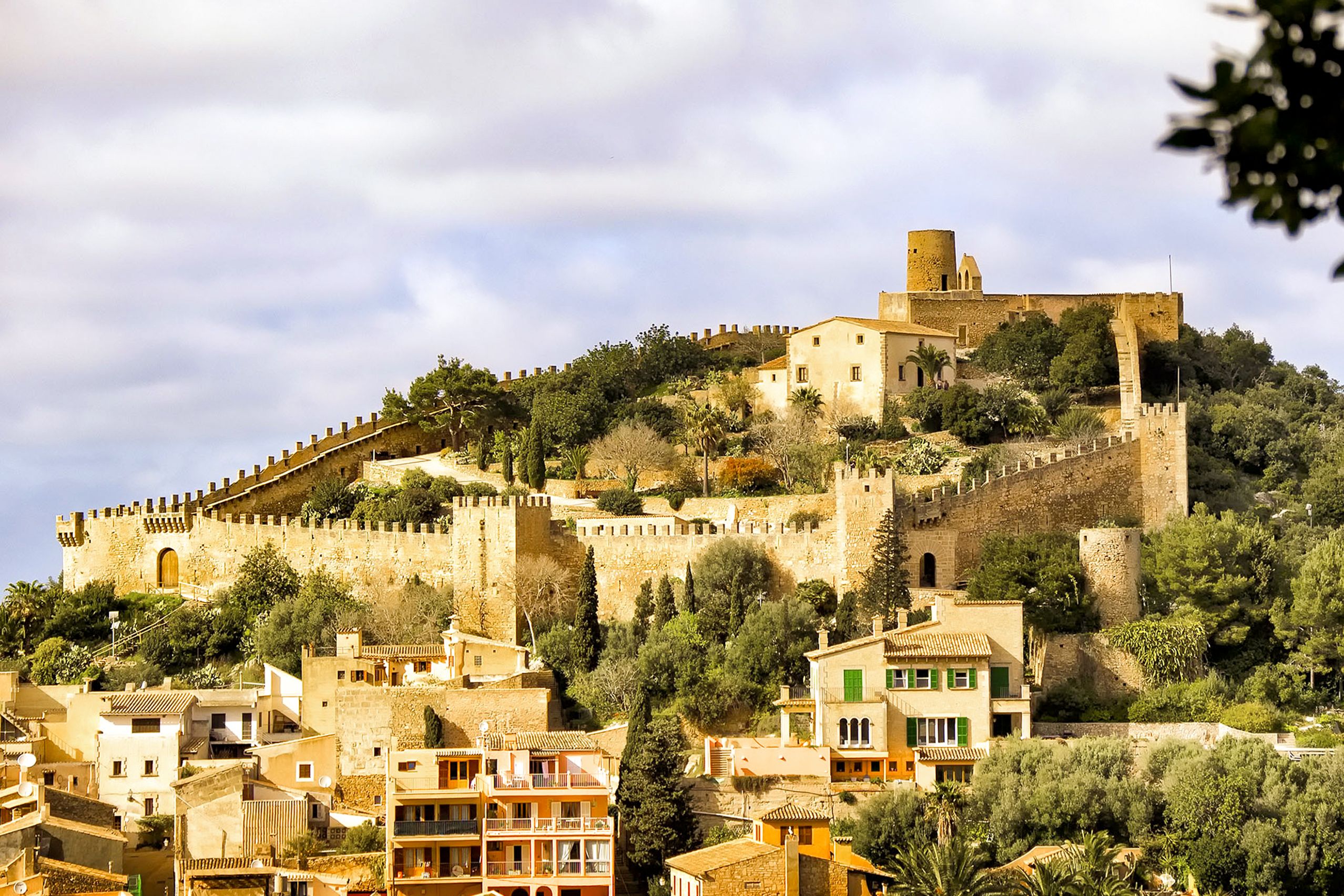
Founded by royal order in 1300, Capdepera rises beneath a large medieval fortress. Explore the stone lanes and walk the castle walls; in May, the Mercat Medieval fills the town.
Capdepera
Capdepera in 30 seconds
The essentials at a glance
- Worth visiting for
- A day trip
- Best for
- A quieter afternoon away from Cala Ratjada
- Best months
- January–June, September–December
- Time to allow
- Two to three hours for the town and fortress
- Without a car
- Hire car recommended
- Parking
- Look for signed parking on the outskirts and approach roads. The small area below the castle fills quickly.
- Keep in mind
- A beach day; the sea is a few kilometres away
- Access
- Pushchairs: Manageable in the lower streets; difficult inside the fortress · Wheelchairs: Limited access in town; the fortress has substantial barriers
Get a feel for Mallorca. Find your kind of place.
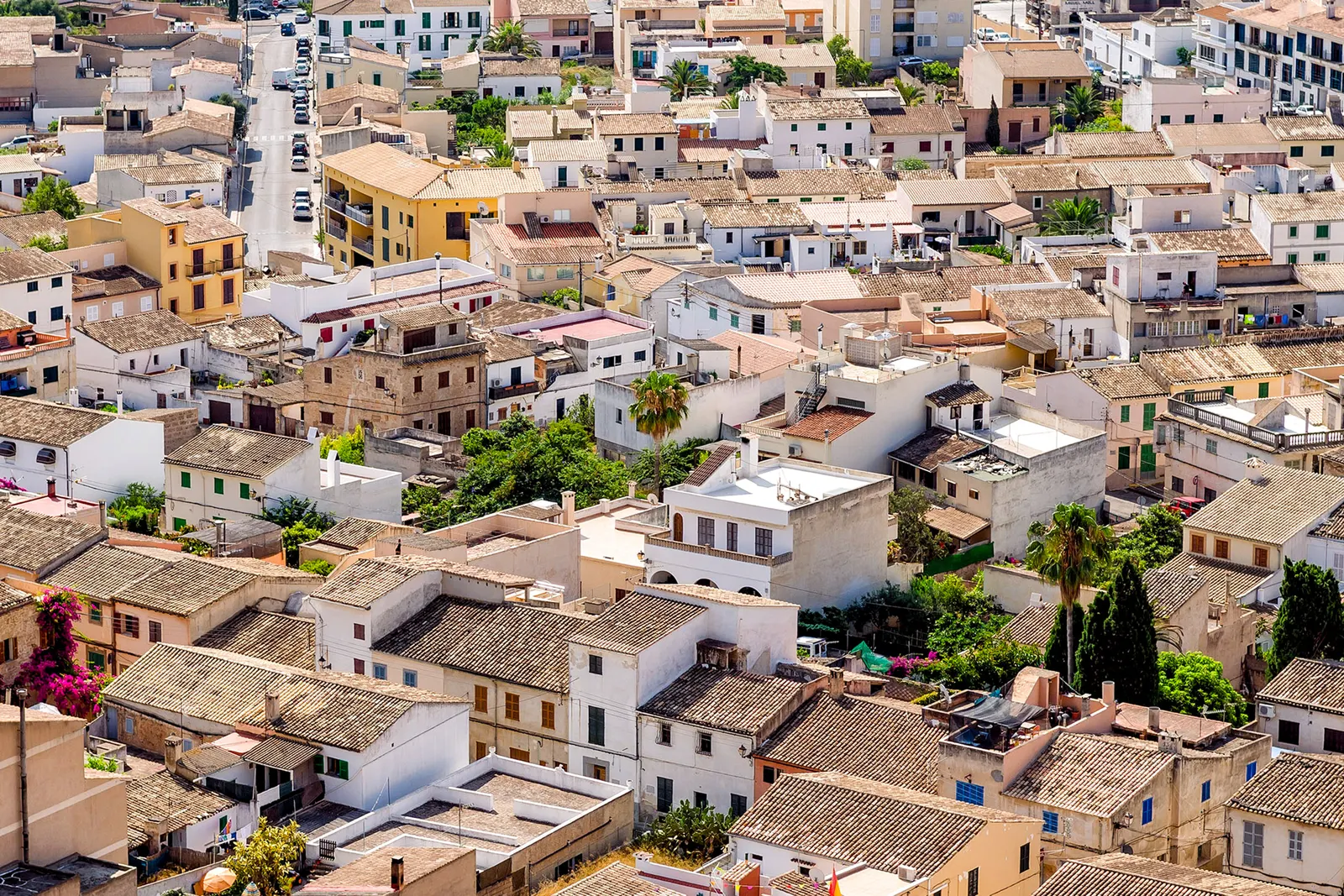
From the walls, you can see the green courtyards hidden among the houses.
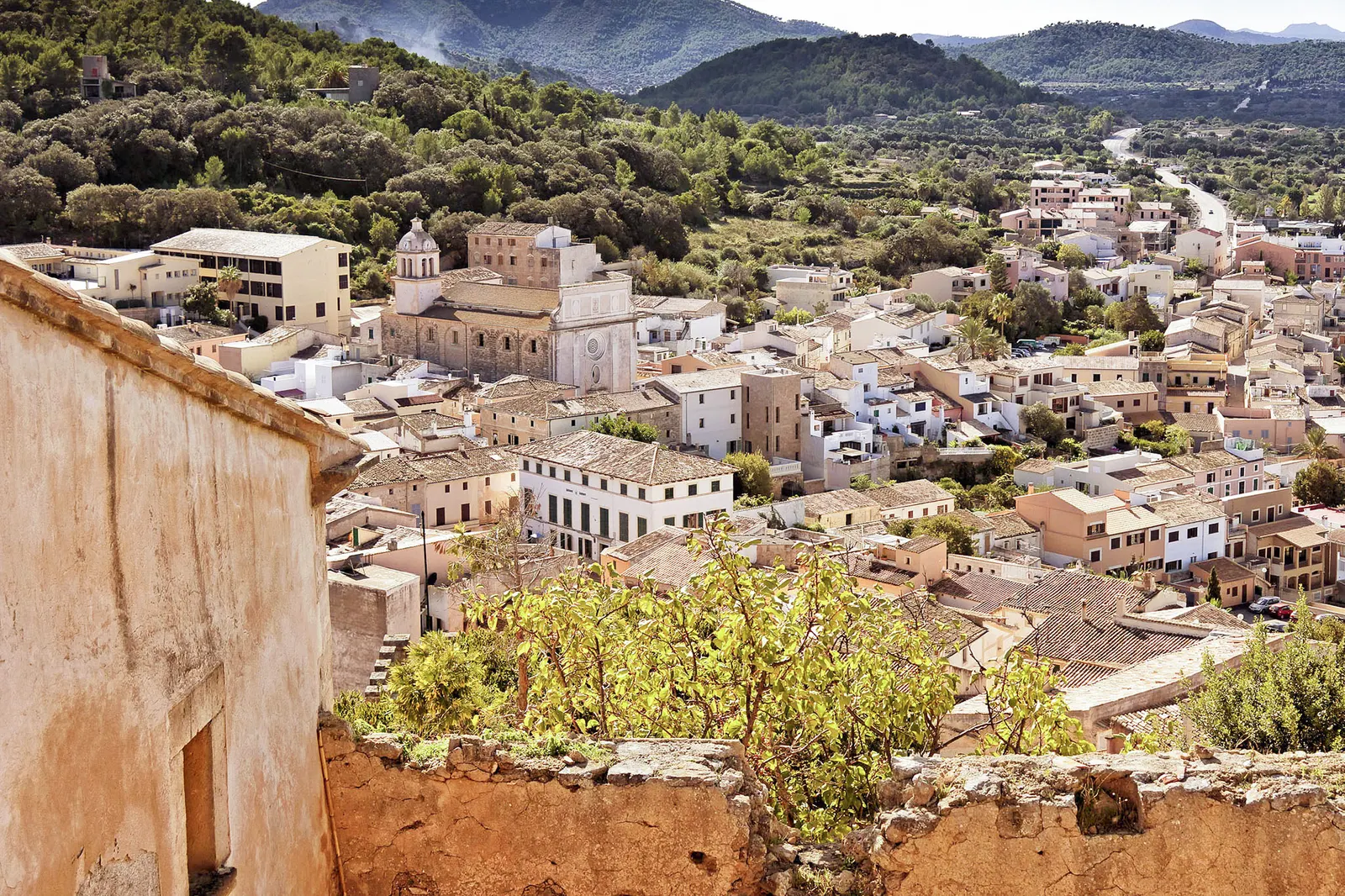
Beyond the town, wooded hills and countryside come into view.
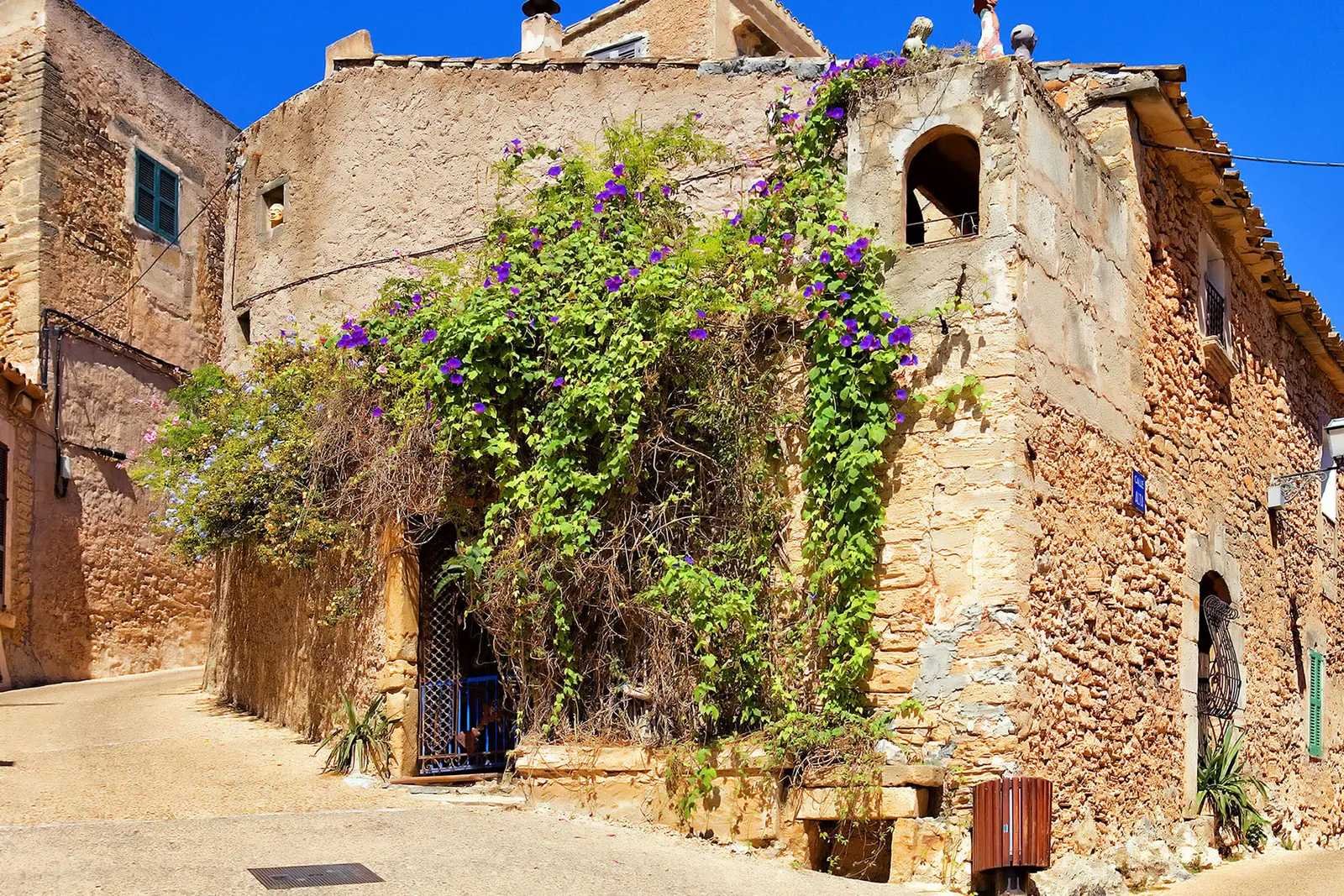
Stone walls, flowers and quiet corners make the lanes worth exploring too.
Getting to know Capdepera
Does Capdepera suit your plans?
What to expect and what to know before you visit.
Who it suits
- A quieter afternoon away from Cala Ratjada
- Exploring castle walls, towers and open courtyards
- Visiting the Mercat Medieval in May
- Wandering through stone-paved lanes
Things to bear in mind
- A beach day; the sea is a few kilometres away
- Anyone who finds steep walks difficult
- Lively nightlife
- A shady climb at midday in July
Drive from the airport
75 minutes
78 km
Bus connections
TIB services connect the area with nearby towns and Cala Ratjada
Region
Llevant
Nearest beach
Cala Ratjada
2 km
Elevation
70 m
above sea level
A glimpse of Capdepera
Season guide for Capdepera
November Worth a visit
Very quiet Open
Worth visiting in January, February, March, April, May, June, September, October, November and December.
Location
Location of Capdepera
- Region
- Llevant
- Population
- 12,200
- Elevation
- 70 m above sea level
- Airport
- 78 km , around 75 minutes
- Hire car
- recommended
- Worth visiting for
- a day trip
- Coordinates
- 39.7028,3.4353
A town founded by royal order
King Jaume II founded Capdepera in 1300, encouraging people from scattered farms to move into a new defended settlement with financial incentives.
The site was already occupied. An Islamic watchtower stood on the hill before the conquest, overlooking the channel between Mallorca and Menorca and the ships passing through it.
A chapel followed in the 14th century, and the fortifications continued to develop over the decades and centuries that followed. Repeated pirate raids made strong defences important.
Why the town sits below the castle
From the 17th century, as the threat of raids eased, houses spread outside the walls. The present town gradually developed down the hillside, while the upper enclosure became a military fortress. A garrison, including dragoons, remained there until 1854.
A visit takes in both the town below and the former walled settlement above. Read more about the Castell de Capdepera on its own page.
The old centre
Do not leave as soon as you come down from the castle. Narrow paved streets run between stone houses, with bougainvillea flowering along some façades in the warmer months. There are shops and places to eat, but the atmosphere is quieter than on the coast at Cala Ratjada.
Mercat Medieval
In May, the medieval market fills the streets and fortress with craftspeople, stalls, music and processions. Traditionally held around the third weekend, it is a busy occasion rather than a quiet day out. Check the year’s programme and arrive early if you are driving.
Nearby
Cala Ratjada is around eight minutes away by car, with Cala Agulla and Cala Mesquida roughly ten minutes away. The old Torre de Son Jaumell is reached by a separate hill walk and offers broad coastal views.
Artà and the Coves d’Artà are also easy trips from Capdepera. Allow around twenty minutes by car, depending on your destination and traffic.
Photographs
Capdepera in Mallorca
How much time do you have?
Things to do in Capdepera
Three hours
Park lower down, walk through the lanes to the castle, explore the walls and return to the square for a coffee.
Half a day
Add a separate walk towards the Torre de Son Jaumell for views across the north-eastern coast; allow time for the trail and return journey.
A full day
Visit the town and castle in the morning, then drive to Cala Agulla or Cala Mesquida for the afternoon.
On a rainy day
The exposed fortress is less enjoyable in rain. Consider the nearby Coves d'Artà instead.
Local celebrations
- May; check the annual dates — Mercat Medieval Medieval market with crafts, music and processions through the town and fortress.
- Mid-August — Sant Roc Patron saint celebrations with concerts and fireworks.
Practical details
- Parking
- Look for signed parking on the outskirts and approach roads. The small area below the castle fills quickly.
- Public transport
- Check current TIB services, including connections with Cala Ratjada
- Time to allow
- Two to three hours for the town and fortress
- Good to know
- There is an admission charge for the castle. Wear shoes with a good grip for the walls and uneven surfaces.
- Bus
- TIB services connect the area with nearby towns and Cala Ratjada; check current routes and timetables.
- Shops and services
- Supermarkets: Several year-round supermarkets · Pharmacy: Several · Medical care: Local health centre; hospital in Manacor · Cash machines: Several around the main square · Fuel: On the road towards Artà
- Access
- Steep cobbled streets, with steps and uneven rock inside the fortress · Pushchairs: Manageable in the lower streets; difficult inside the fortress · Wheelchairs: Limited access in town; the fortress has substantial barriers · Dogs: Keep dogs on a lead in town and check the castle's current admission rules
- What you will not find
- A beach · Extensive nightlife · Level routes throughout · Continuous shade on the climb to the castle
- Coordinates
- 39.7028,3.4353 Google Maps Apple Maps
Within reach
Places to visit
In the town

Nearby
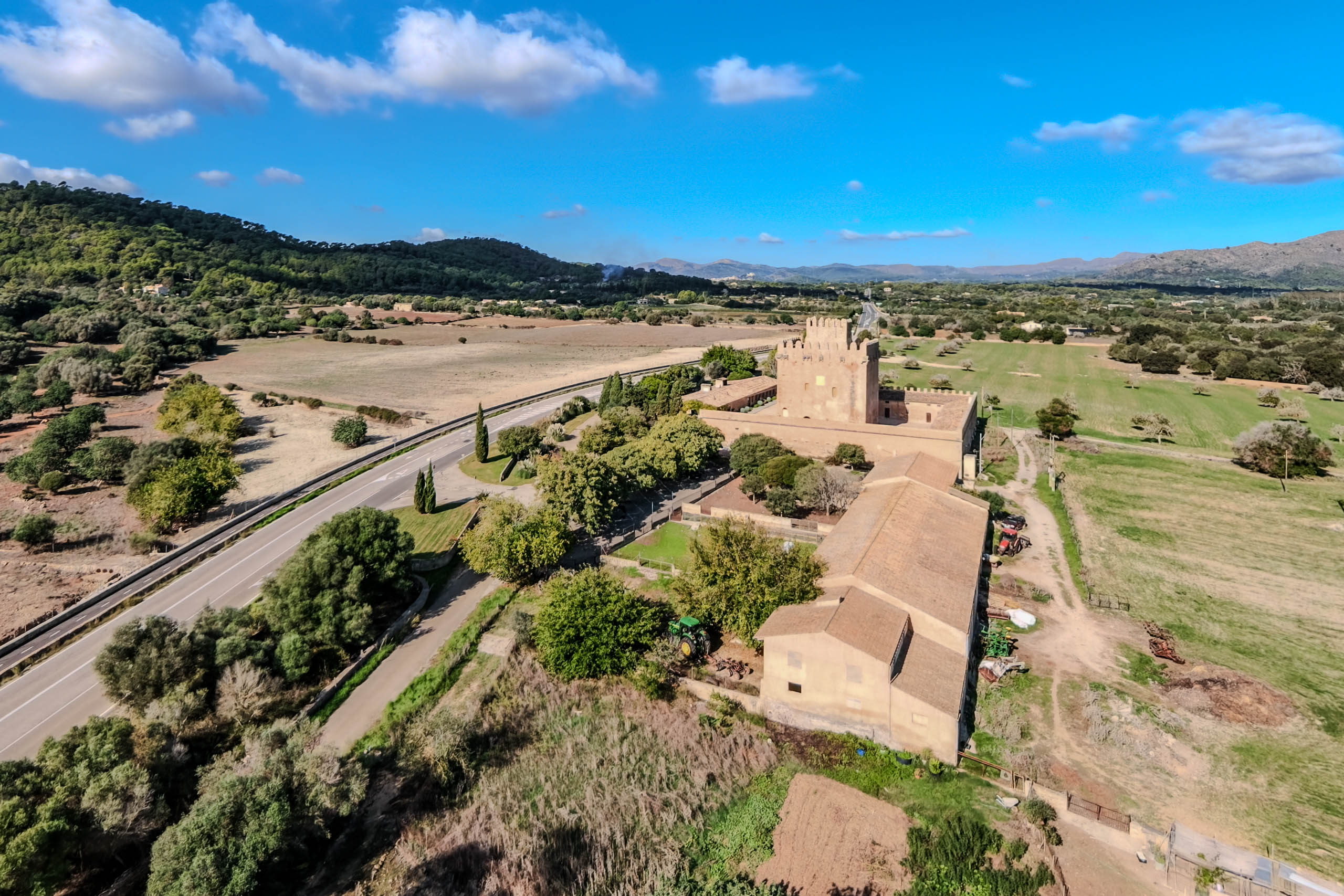
Torre de Canyamel stands in the valley beside the road to the coast. The imposing 13th-century defensive tower …

A watchtower dating from 1566 on the summit above Cala Agulla and Cala Mesquida, now a ruin. The walk up takes …

A limestone cave with a huge opening above the sea near Canyamel. Inside, a guided route climbs and descends steps …

A fortress with a church inside, high above Artà. Walls with nine towers surround a courtyard of palms, an old …
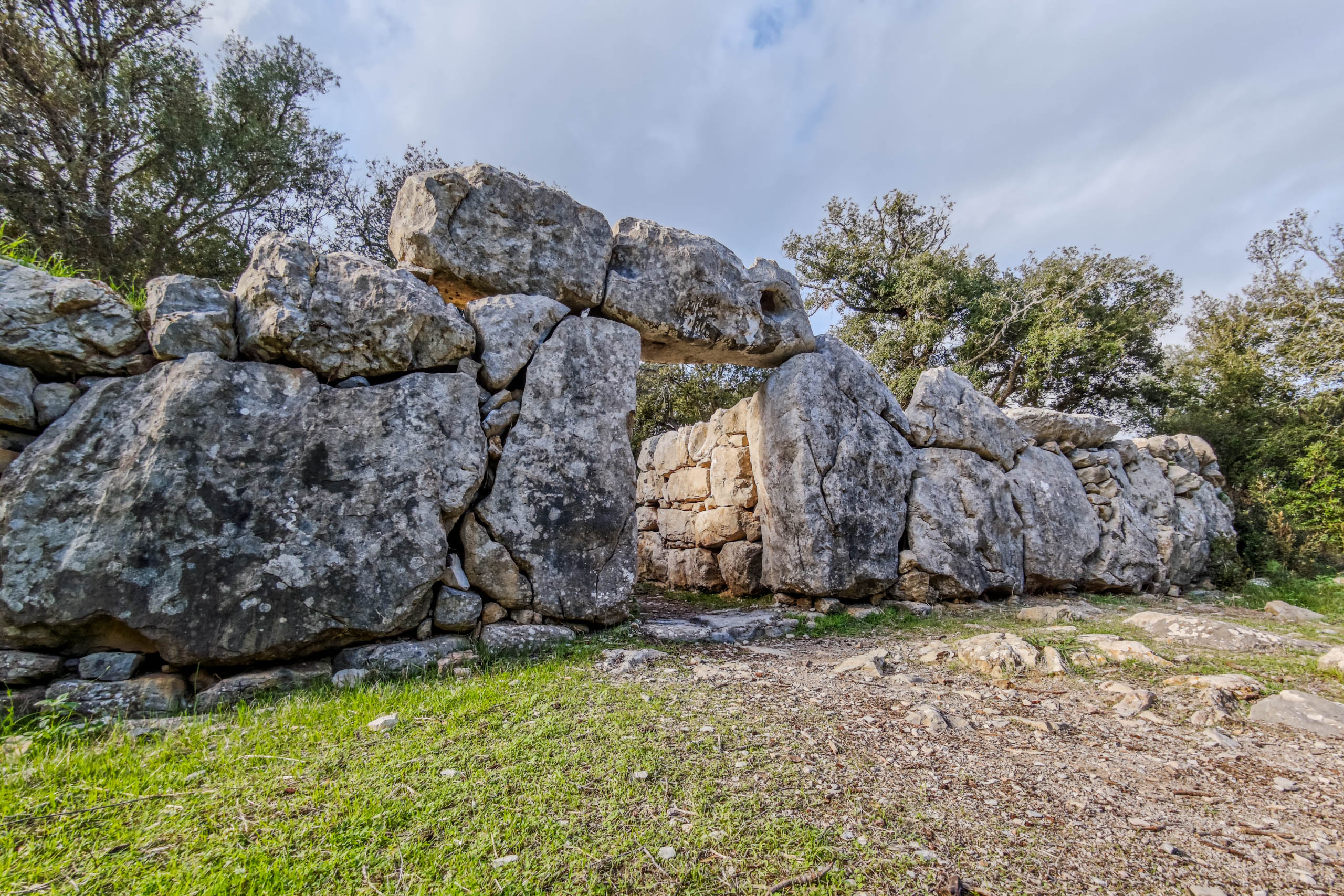
Behind a wall of enormous stone blocks on the edge of Artà lies a Talayotic settlement with around 3,000 years of …

A hermitage founded in 1805 in the hills of Artà, reached by a narrow, winding road. The last resident hermits …
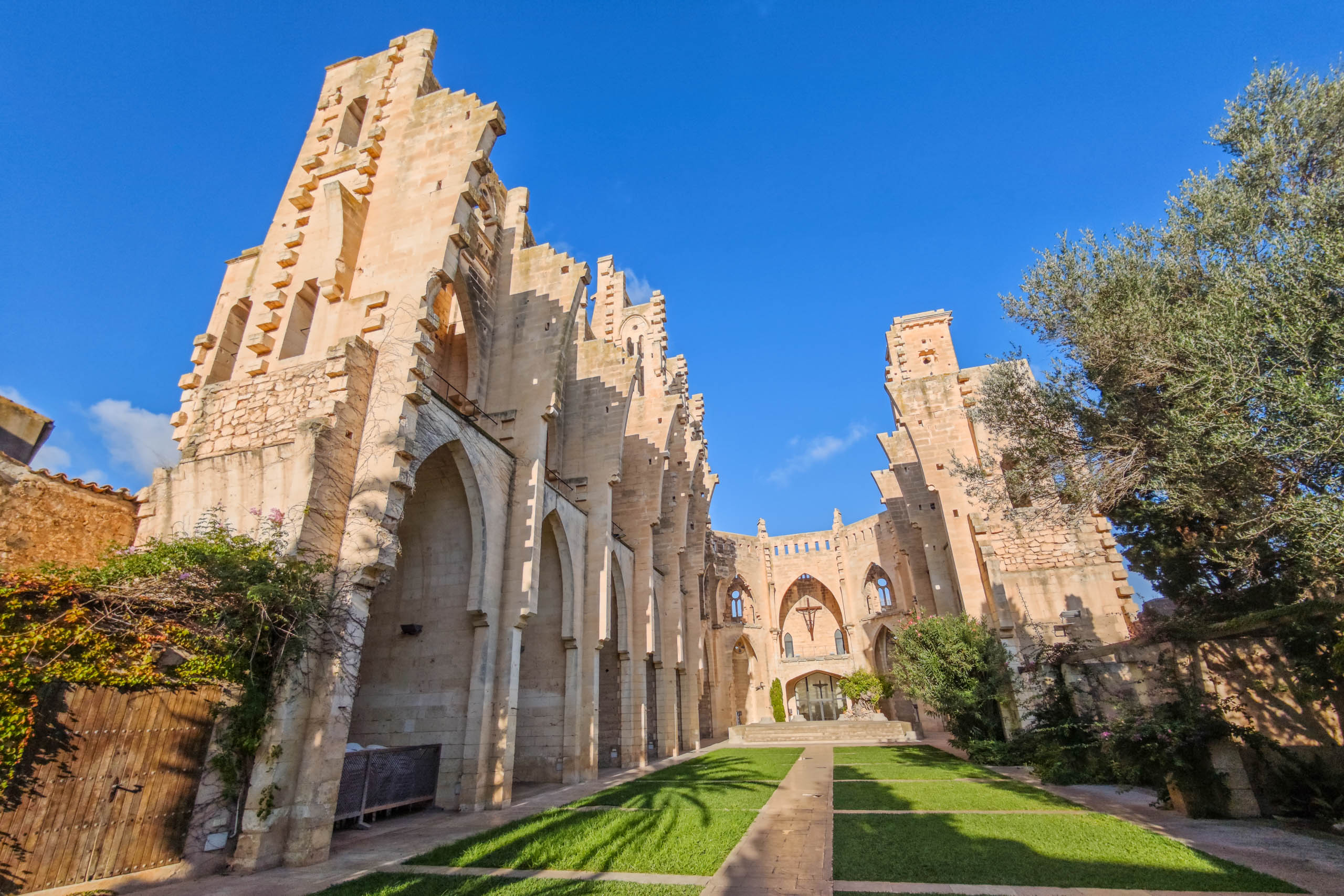
A church without a roof stands in the middle of Son Servera. Beyond Església Nova’s iron gate, garden paths pass …
Distances without a driving time are measured in a straight line. The road journey can be much longer; known driving times are shown alongside.
Where to swim nearby
Beaches and swimming nearby

A working fishing harbour and lively holiday resort on Mallorca's north-east coast. Three different beaches are …

A broad sandy bay north-west of Cala Ratjada, backed by pine woods and dunes. Pale sand fills the centre, with …

A small cove beyond Cala Agulla, reached by a ten-minute walk over rocky ground. There is a narrow strip of sand …

A broad stretch of pale sand with protected dunes behind it and a wooden boardwalk crossing them. Cala Mesquida …
Explore from here
Your questions answered
Your questions about Capdepera
What is there to see in Capdepera?
The Castell de Capdepera is the main attraction, with walls, the Miquel Nunis tower and the chapel of Nostra Senyora de l'Esperança. Below it are narrow cobbled streets and stone houses decorated with flowers. The old Torre de Son Jaumell stands on a hill to the north-east.
When is Capdepera's Mercat Medieval?
It takes place in May, traditionally around the third weekend. Check the annual programme for exact dates. Crafts, music and processions fill the town and castle. Arrive early, as parking is scarce during the event.
How old is Capdepera?
King Jaume II founded the settlement in 1300, although an Islamic watchtower already stood on the hill. The fortified settlement and its chapel developed during the following centuries.
Are Capdepera and Cala Ratjada the same place?
No. Capdepera is the historic inland town; Cala Ratjada is the coastal harbour and holiday resort a few kilometres away. Both belong to the same municipality.
Is Capdepera good for children?
The castle's walls, towers and battlements make an interesting visit. The climb through the streets is steep, and pushchairs are awkward inside. In high summer, avoid the midday heat and supervise children near steps and walls.
Practical questions
When is the best time to visit Capdepera?
Recommended months: January, February, March, April, May, June, September, October, November, December. Quiet lanes and clear views from the walls on fine days.
Is Capdepera worth visiting in July and August?
July: worth considering with some reservations. Usually busy. Day visitors arrive from Cala Ratjada. The climb is hot at midday with little shade. August: worth considering with some reservations. Usually busy.
How far is Capdepera from Palma airport?
About 78 km from Palma airport. Allow roughly 75 minutes by car. A narrow street climbs towards a small parking area below the fortress. Parking lower down lets you enjoy the lanes on the walk up.
Do I need a hire car for Capdepera?
A car is useful TIB services connect the area with nearby towns and Cala Ratjada; check current routes and timetables.
Where can I park in Capdepera?
Look for signed parking on the outskirts and approach roads. The small area below the castle fills quickly.
Can you swim at Capdepera?
There is no beach here. See the nearby swimming options on this page.
Can I visit Capdepera with a pushchair or wheelchair?
Steep cobbled streets, with steps and uneven rock inside the fortress Pushchairs: Manageable in the lower streets; difficult inside the fortress Wheelchairs: Limited access in town; the fortress has substantial barriers
Are dogs allowed at Capdepera?
Keep dogs on a lead in town and check the castle's current admission rules
Words and photographs: Friedhelm Fischer. Exploring Mallorca since 2013 — by bike, on foot and with a camera.