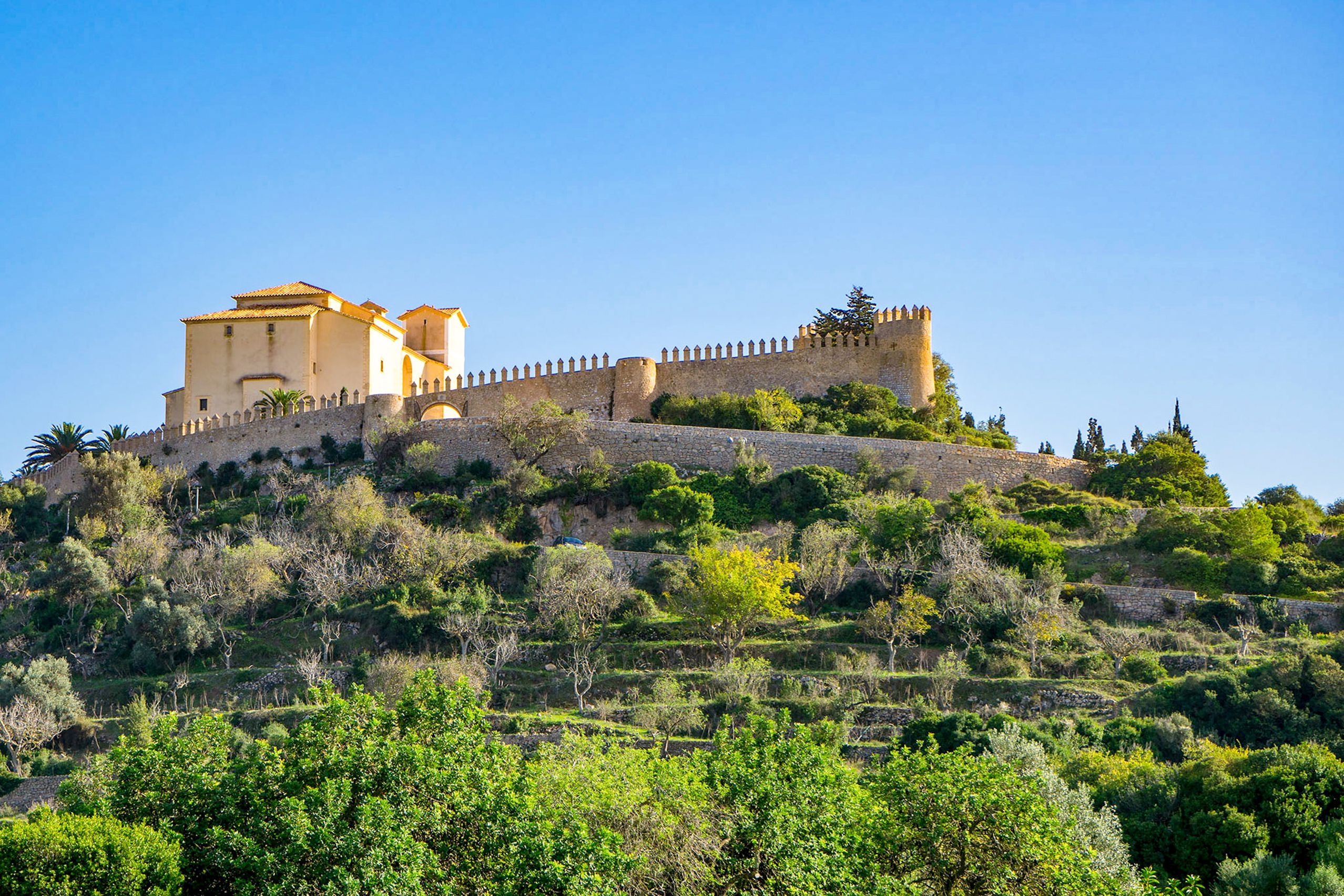
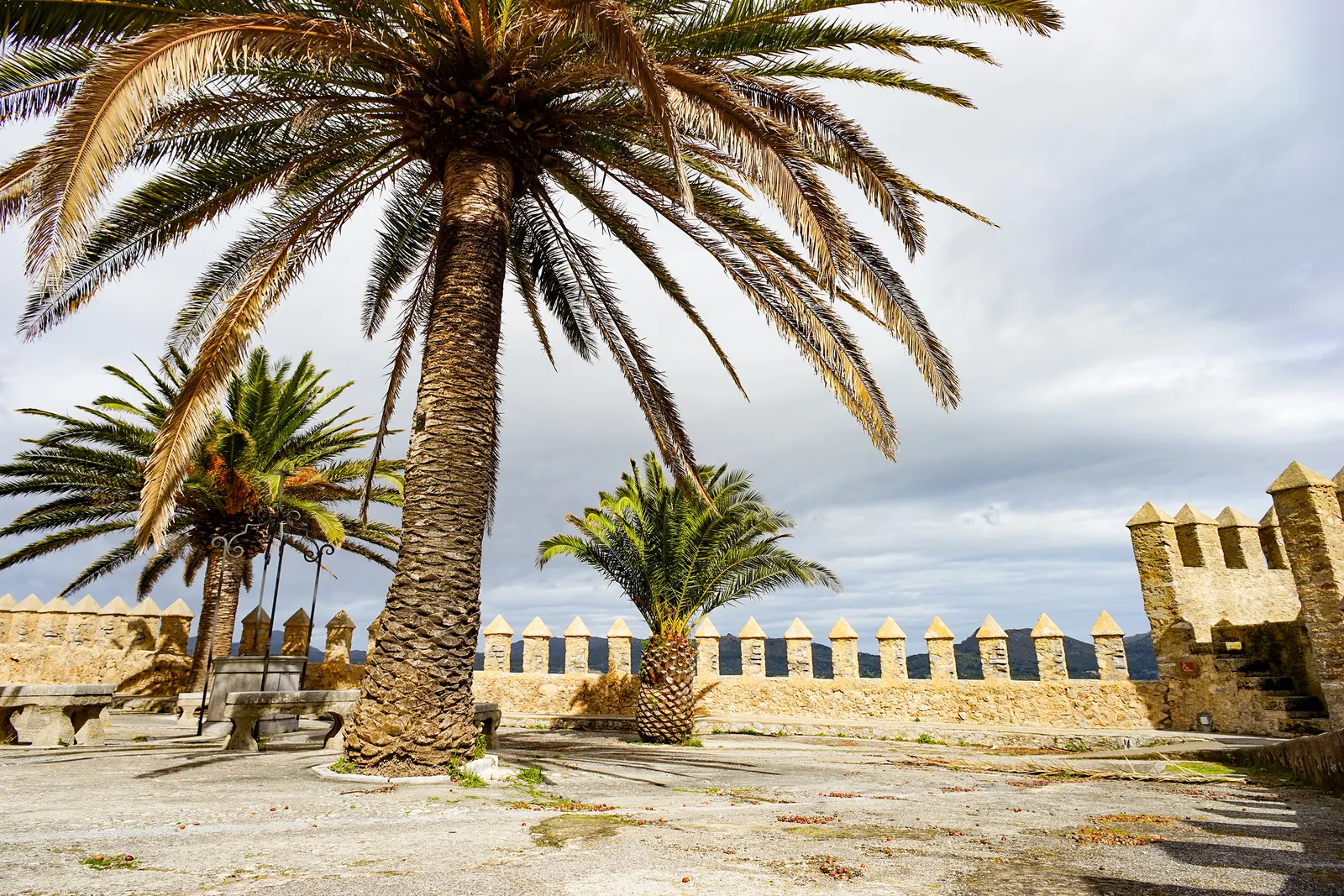
A fortress with a church inside, high above Artà. Walls with nine towers surround a courtyard of palms, an old well and the pilgrimage church. The climb up has 180 steps.
Santuari de Sant Salvador (Artà)
Santuari de Sant Salvador (Artà) in 30 seconds
The essentials at a glance
- Worth visiting for
- A short visit
- Best for
- A pilgrimage church, defensive walls and views
- Best months
- January–May, September–December
- Time to allow
- Around 45 minutes for the climb, circuit of the walls and descent. Allow an hour including the church.
- Without a car
- Hire car recommended
- Parking
- A few spaces at the top of the access road. If walking up the steps, park on the edge of Artà.
- Highlight
- The fortified church courtyard above Artà
- Keep in mind
- A step-free climb from the town
- Access
- Pushchairs: Not suitable on the steps; limited access via the road · Wheelchairs: Access only via the road, then level as far as the courtyard
Get a feel for Mallorca. Find your kind of place.
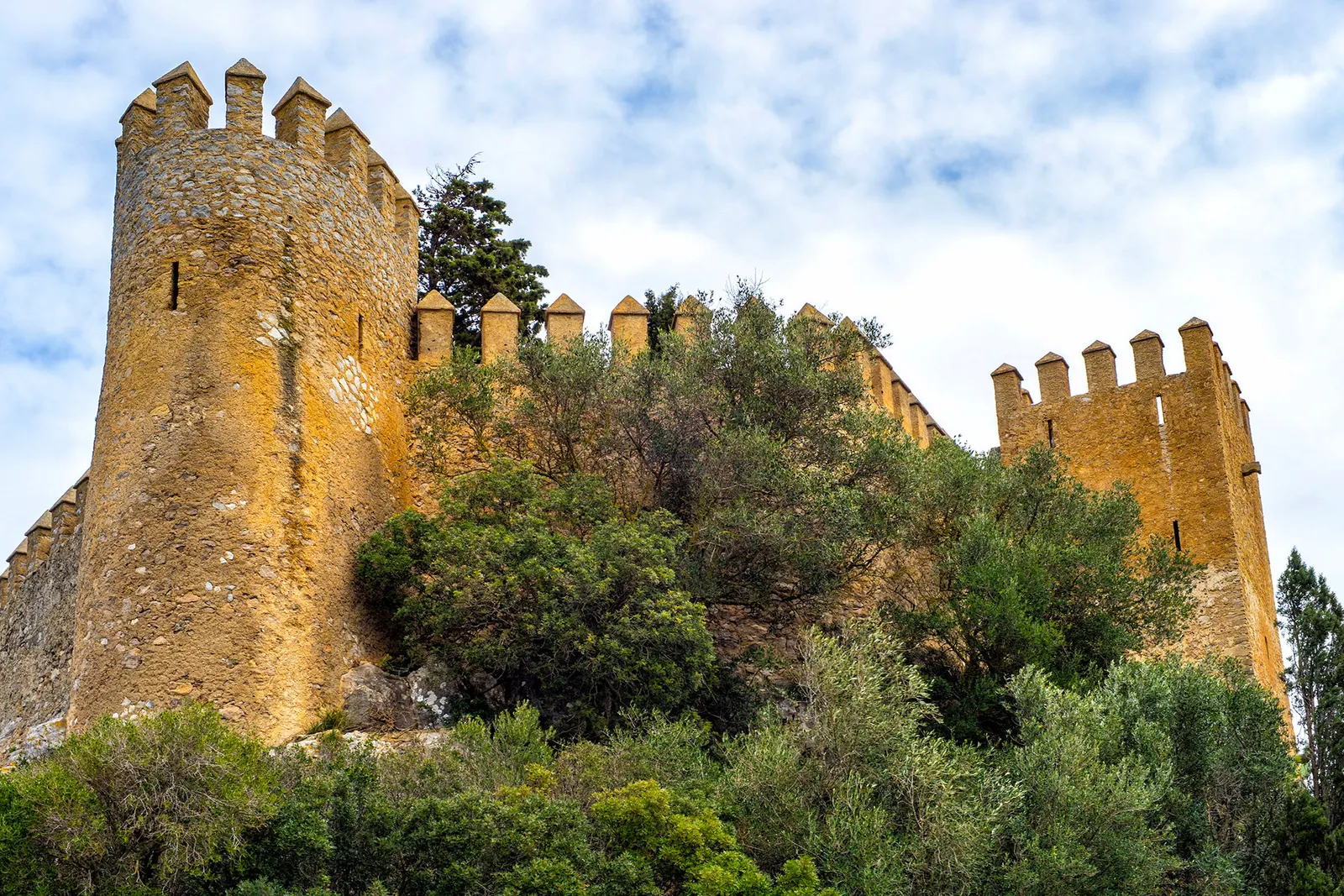
Nine towers stand in the walls. Sant Miquel is the largest.
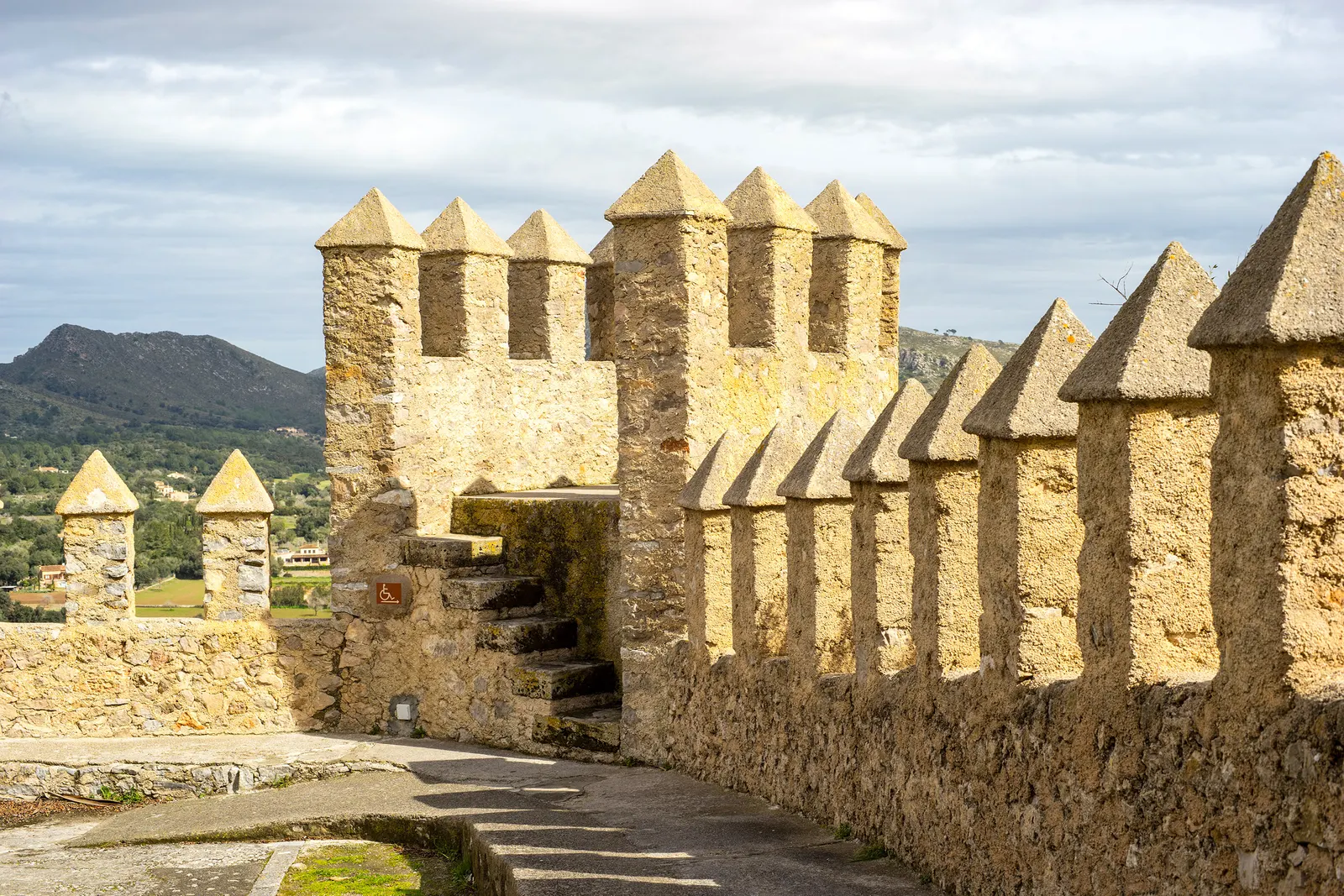
The battlements were reconstructed; the core of the wall below is older.
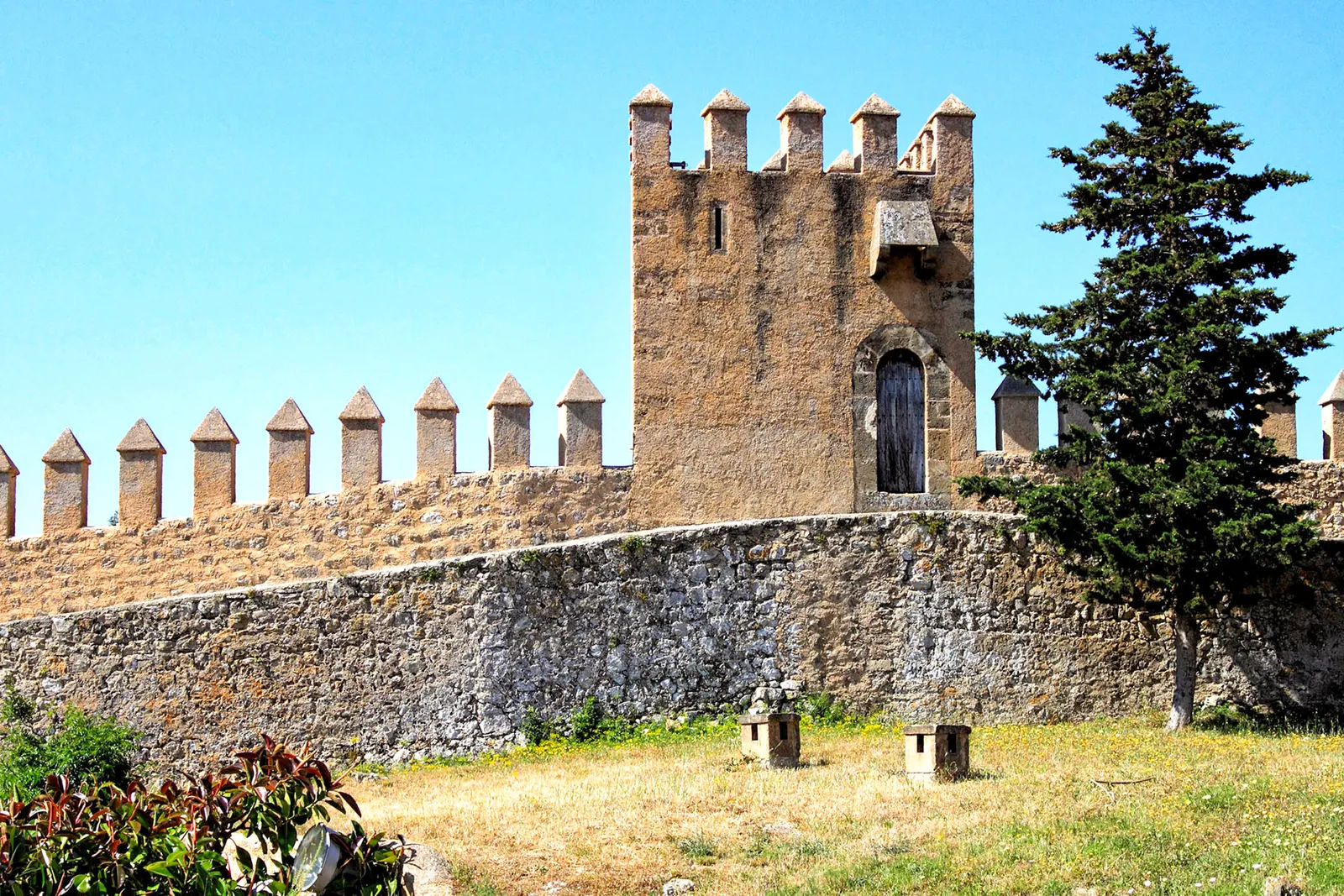
A solid fortress from outside, with a garden-like courtyard within.
Drive from the airport
70 minutes
72 km
Bus connections
Routes 411 and 412 to Artà
Region
Llevant
Nearest beach
Colònia de Sant Pere
8 km
Elevation
182 m
above sea level
A glimpse of Santuari de Sant Salvador (Artà)
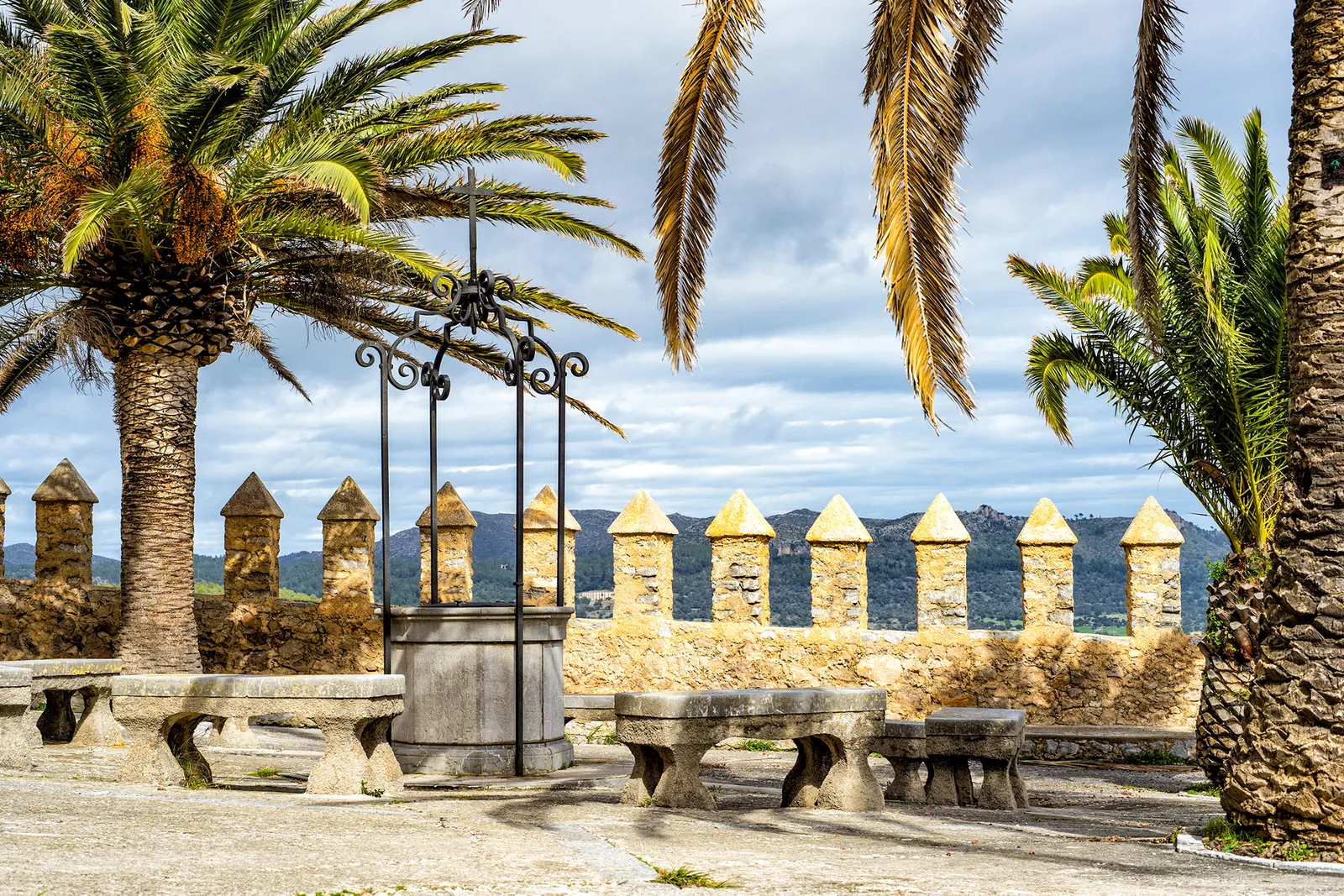
Season guide for Santuari de Sant Salvador (Artà)
November Worth a visit
Very quiet Open
Worth visiting in January, February, March, April, May, September, October, November and December. Less suitable in August.
Location
Location of Santuari de Sant Salvador (Artà)
- Region
- Llevant
- Municipality
- Artà
- Elevation
- 182 m above sea level
- Airport
- 72 km , around 70 minutes
- Hire car
- recommended
- Worth visiting for
- a brief stop
- Coordinates
- 39.6960,3.3494
Sant Salvador: a fortress before a church
The hill above Artà was fortified long before its pilgrimage church was built. In Muslim times, the stronghold was called the Almudaina, the same word used for Palma’s royal palace, meaning a citadel or fortress. After Mallorca’s conquest in 1229, the mosque on the hill was converted into a Christian church.
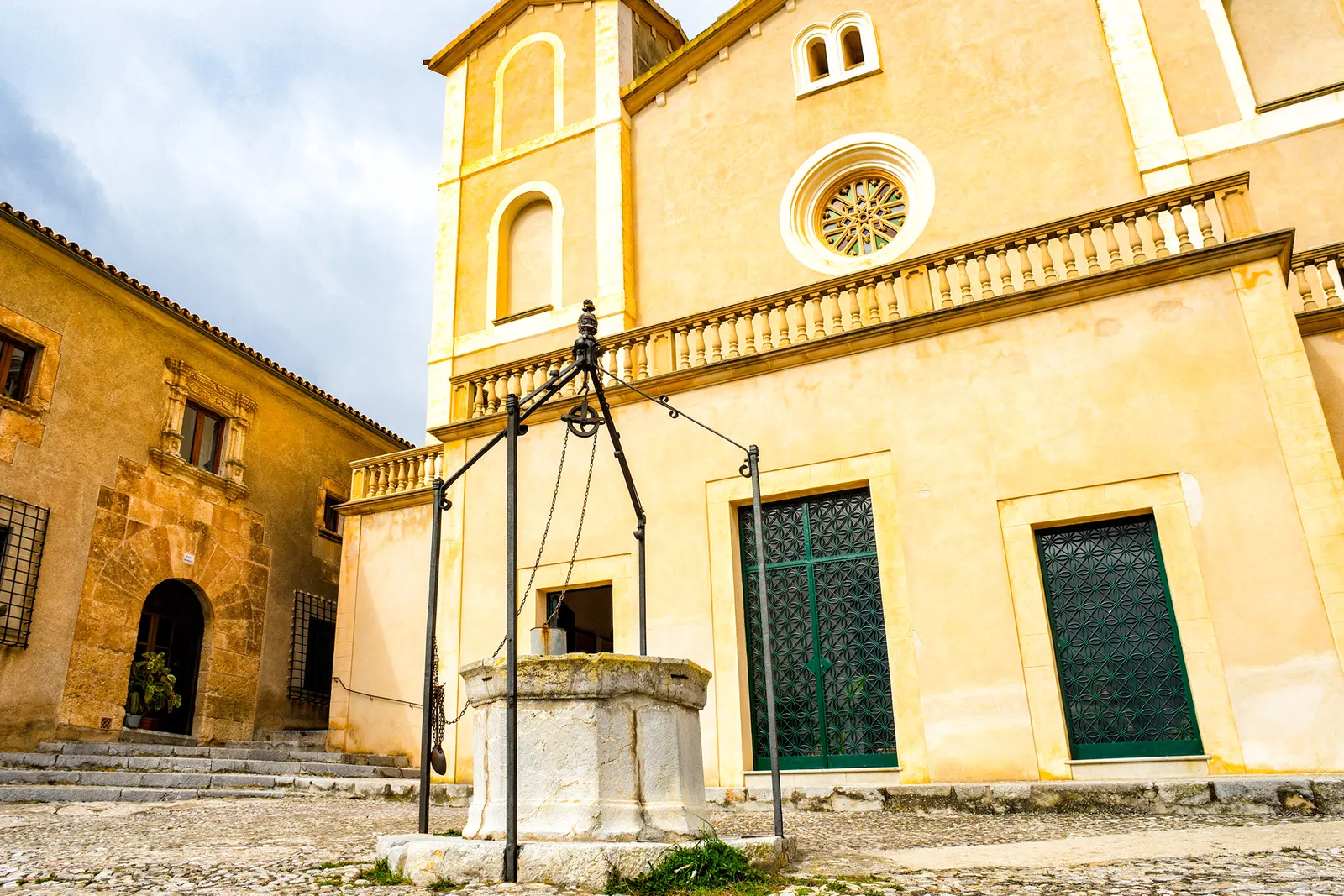
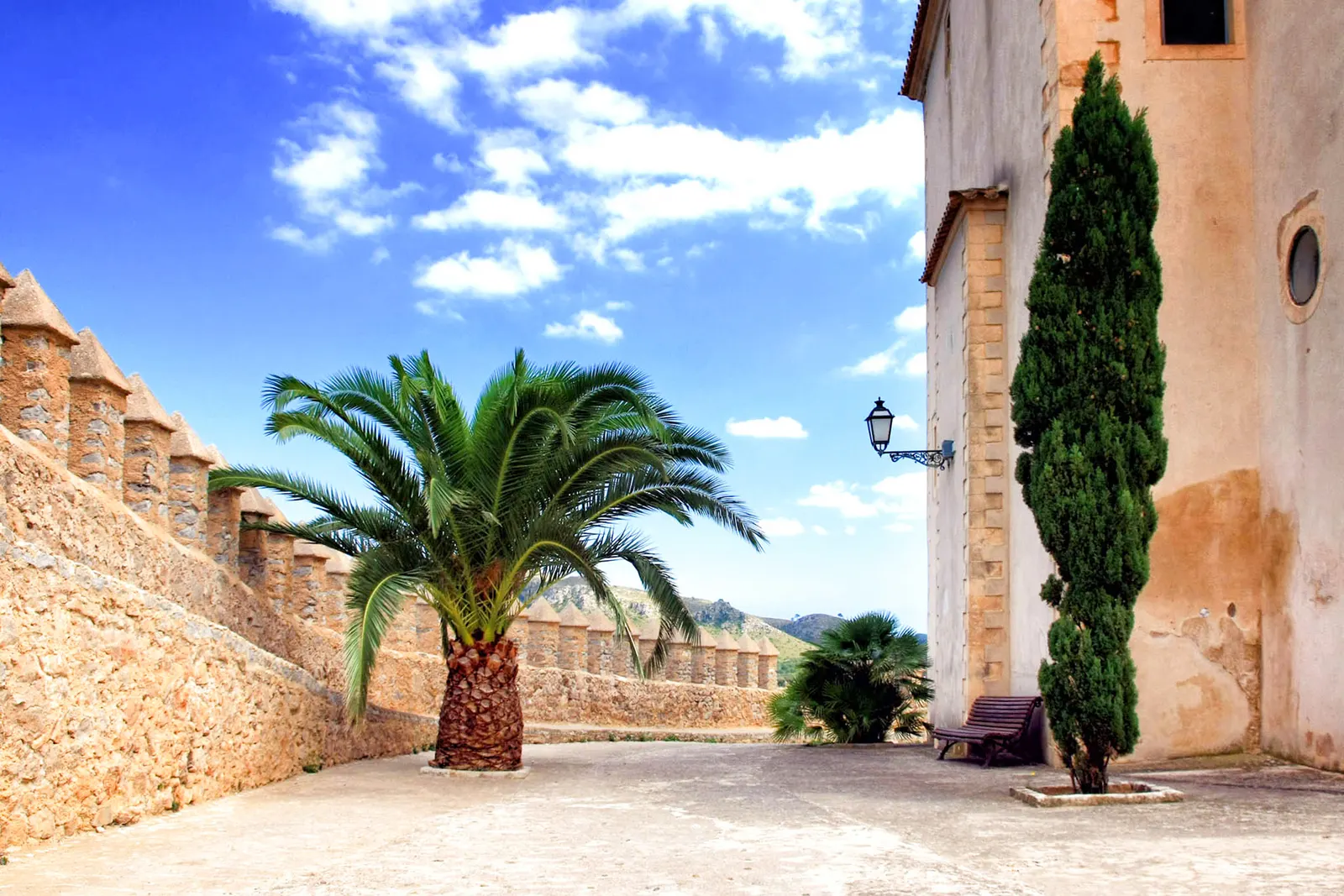
Today, a defensive wall with nine towers surrounds the hilltop, reaching a metre thick in places. The largest tower is Sant Miquel. The enclosed area forms an oval roughly 93 by 24 metres. The church is the newest part: construction began in 1825, and it was consecrated in 1832.
Why the battlements are younger than they look
If the neatly regular battlements make you wonder whether they have always looked this way, you are right to ask.
The site has been rebuilt several times. In the 16th century, it was adapted as a refuge for Artà’s residents during corsair attacks. A long period of decline followed.
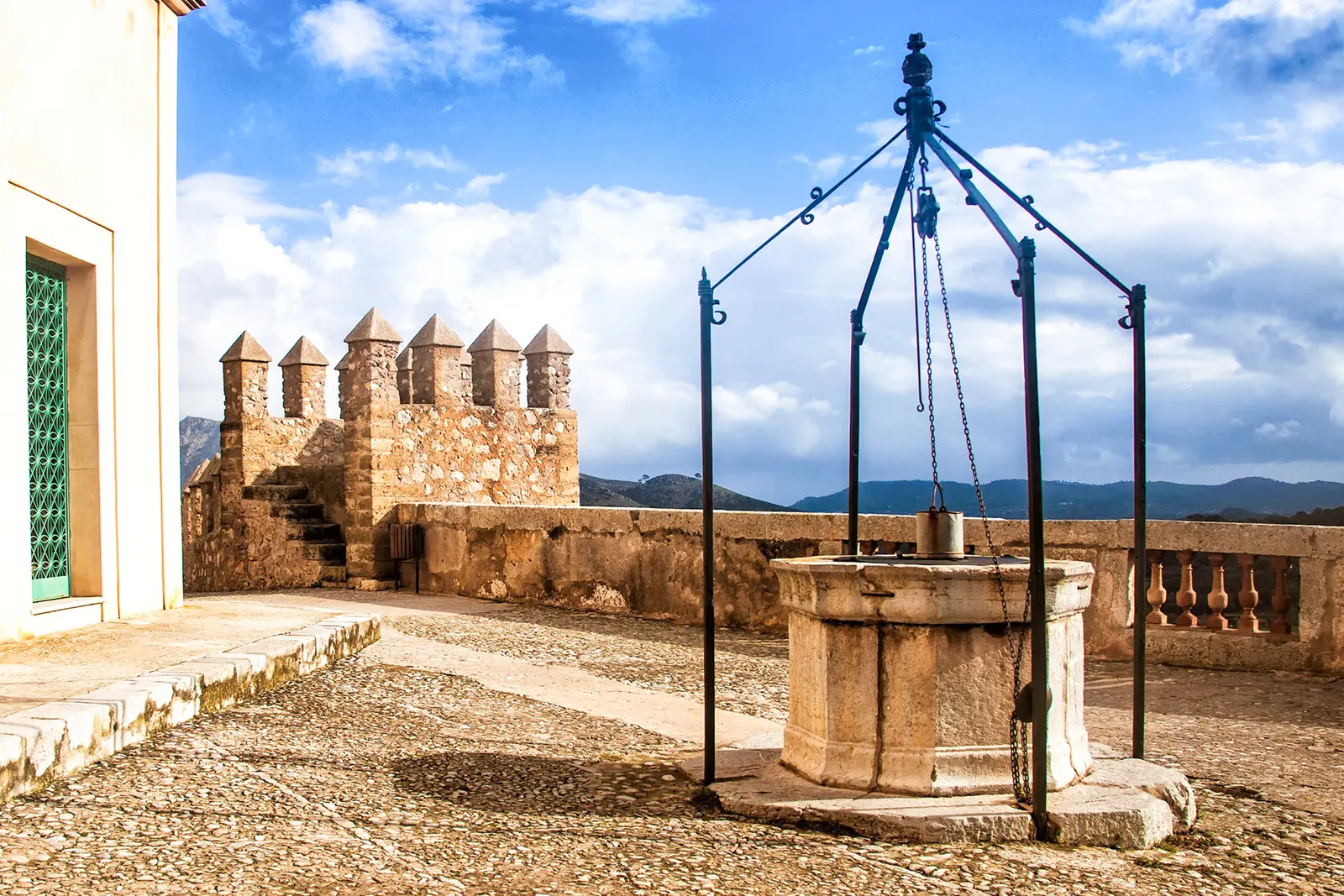
Much of its present appearance comes from the 20th century. The church was refurbished around 1900, with new floors completed in 1922. In 1967, the entire circuit of walls was restored at the instigation of the Sociedad de Amigos de los Castillos. The continuous battlements largely date from that work, rather than surviving unchanged from medieval times.
It remains a rewarding place to visit, with that history in mind.
The 180 steps
The usual walking route starts at Transfiguració del Senyor parish church in Artà. From there, the Calvari staircase climbs 180 steps between cypresses and Stations of the Cross to the 182-metre-high hill. At an easy pace, allow ten to twenty minutes.
There is little shade. In July and August, climb early in the morning or late in the afternoon — or save it for October.
If the steps are too much, a narrow tarmac road leads up to a few parking spaces.
At the top
Beyond the gate is a courtyard with palms, stone benches and an old well, somewhere to sit quietly for a while. You can follow the wall walk around the entire site, with views changing from Artà’s rooftops to the plain and then the hills of the Massís d’Artà.
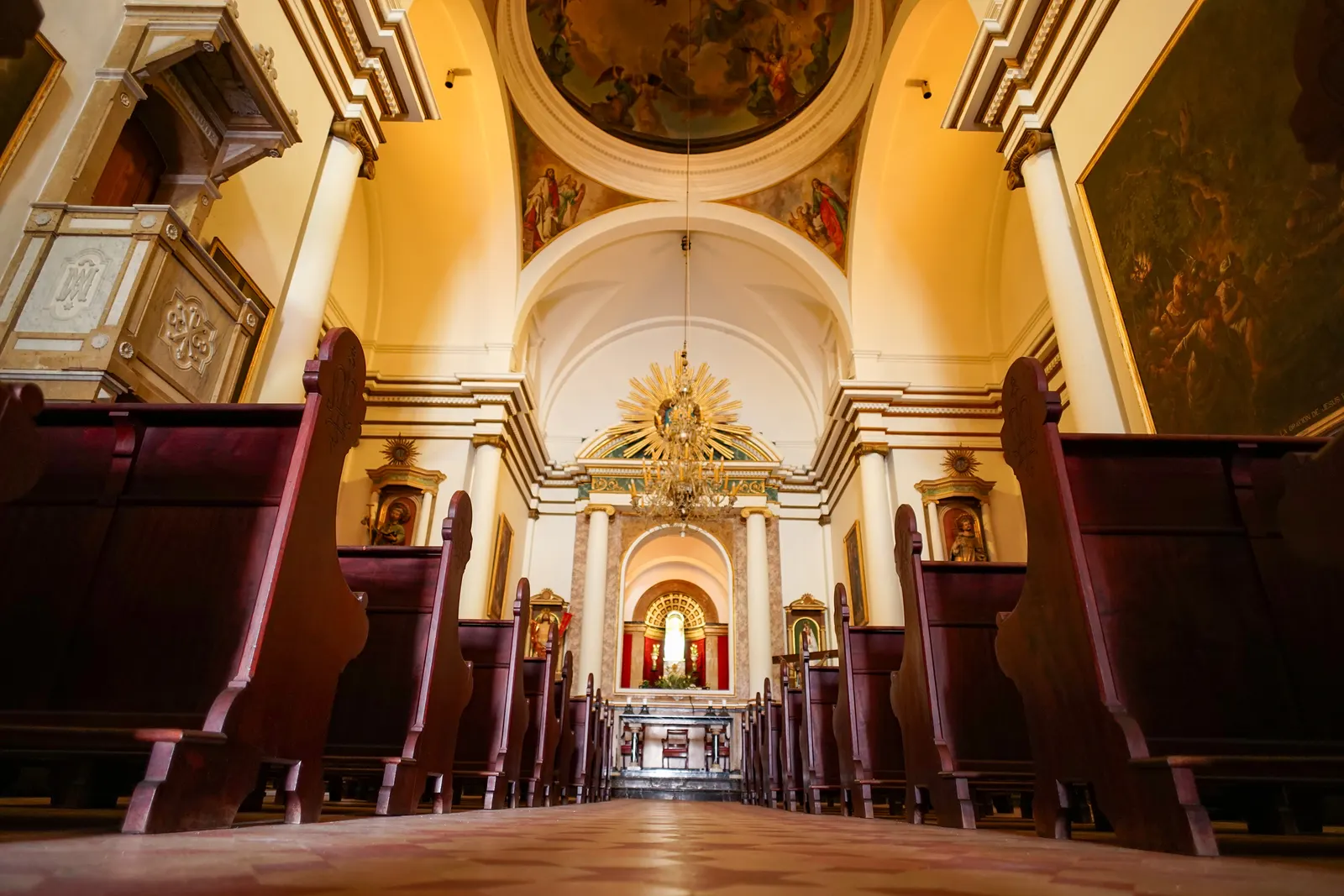
The church opens during the day and is considerably more ornate inside than its exterior suggests, with a barrel vault, ceiling frescoes and a brightly decorated sanctuary.
Admission is free.
Photographs
Santuari de Sant Salvador (Artà) in Mallorca
Practical details
- Parking
- A few spaces at the top of the access road. If walking up the steps, park on the edge of Artà.
- Time to allow
- Around 45 minutes for the climb, circuit of the walls and descent. Allow an hour including the church.
- Good to know
- Entry is free. Avoid midday if you want to see inside the church.
- Bus
- Routes 411 and 412 to Artà, then walk through the town from the bus stop
- Access
- 180 steps or a narrow access road; gravel and stone paving at the top · Pushchairs: Not suitable on the steps; limited access via the road · Wheelchairs: Access only via the road, then level as far as the courtyard · Dogs: Keep on a lead
- What you will not find
- Places to eat at the top · Shade on the staircase · A ticket office · A step-free walking route up from town
- Coordinates
- 39.6960,3.3494 Google Maps Apple Maps
Within reach
Places to visit
Nearby
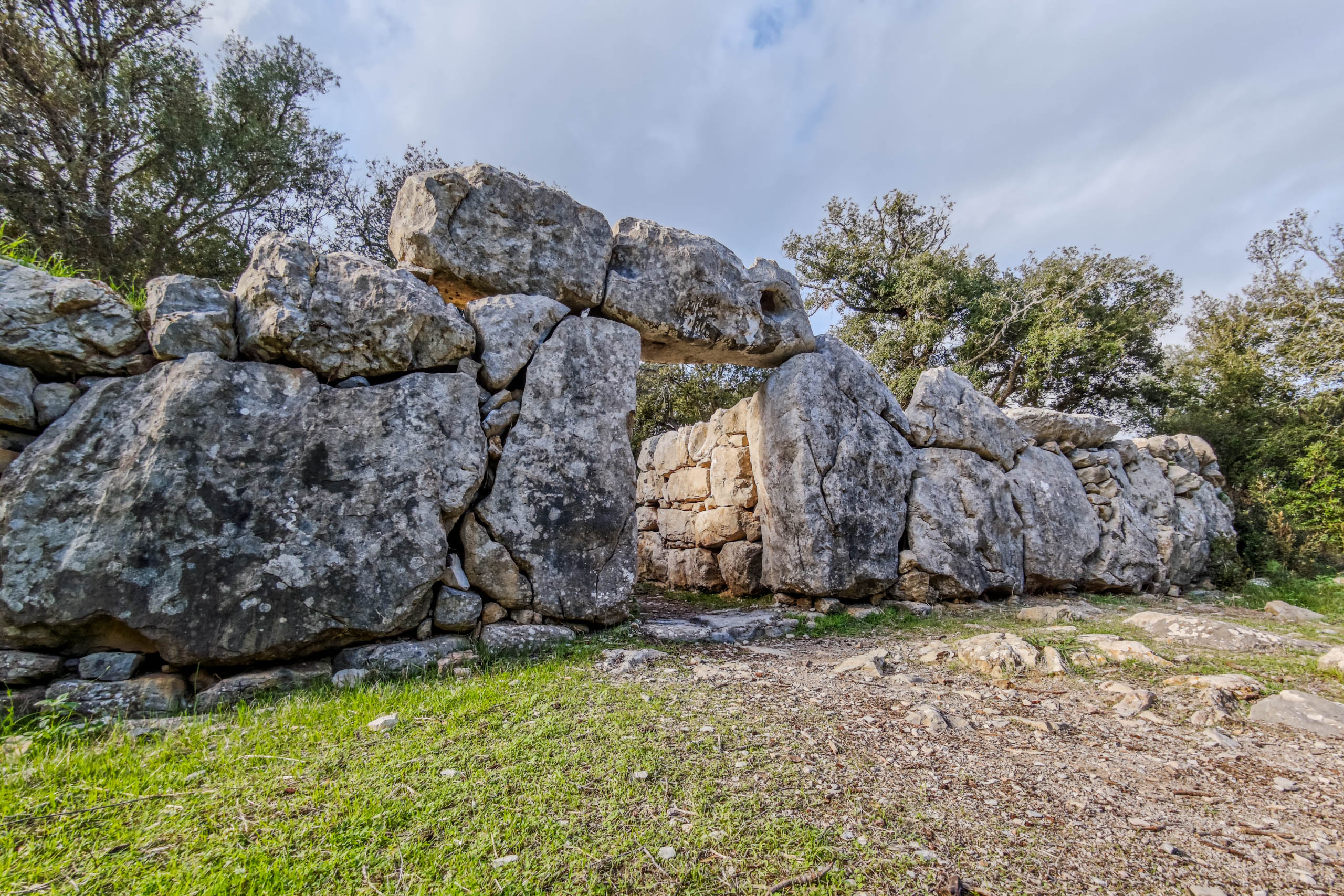
Behind a wall of enormous stone blocks on the edge of Artà lies a Talayotic settlement with around 3,000 years of …

A hermitage founded in 1805 in the hills of Artà, reached by a narrow, winding road. The last resident hermits …
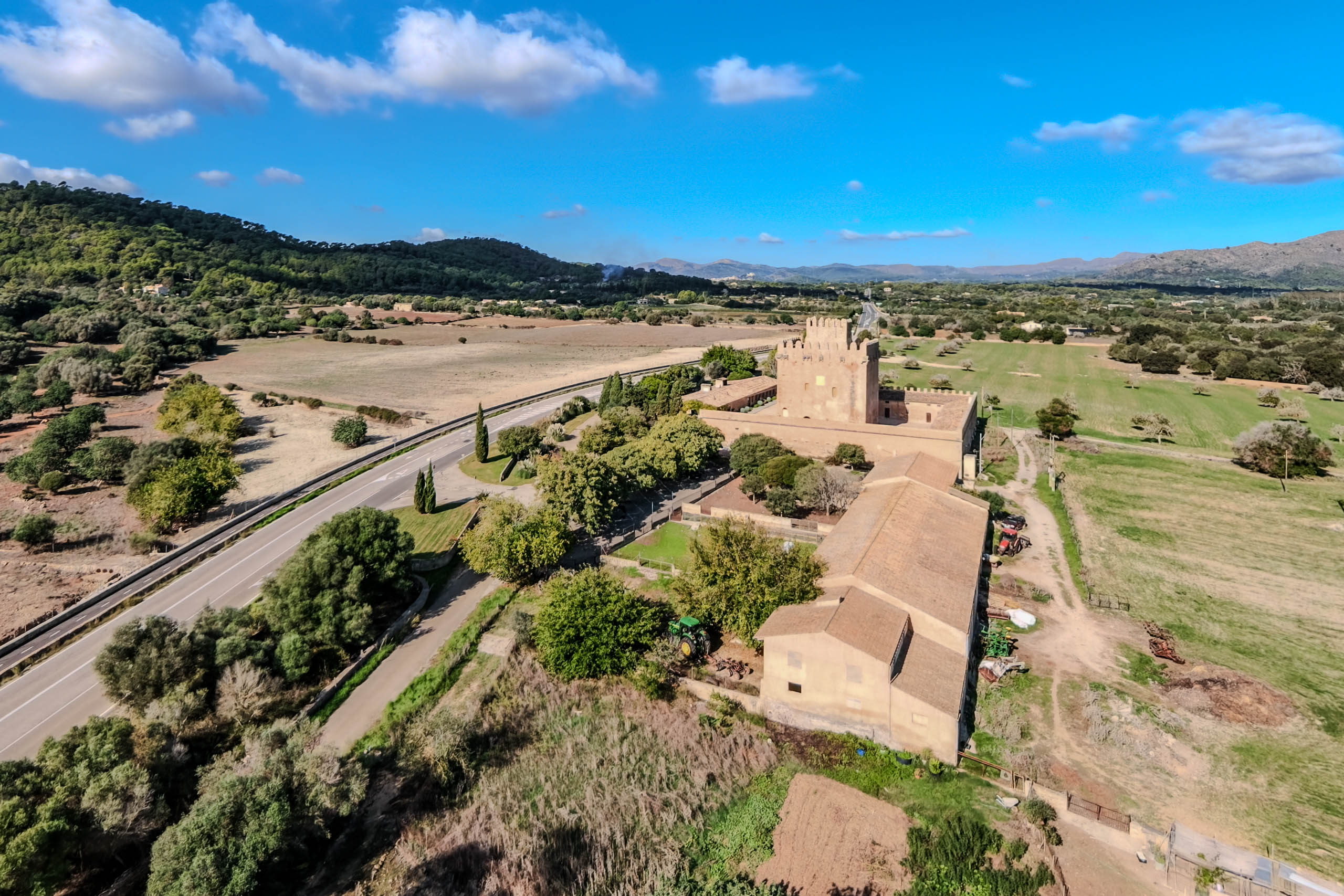
Torre de Canyamel stands in the valley beside the road to the coast. The imposing 13th-century defensive tower …

Above Capdepera stands a former walled settlement, with walkable defensive walls, the Miquel Nunis tower and a …
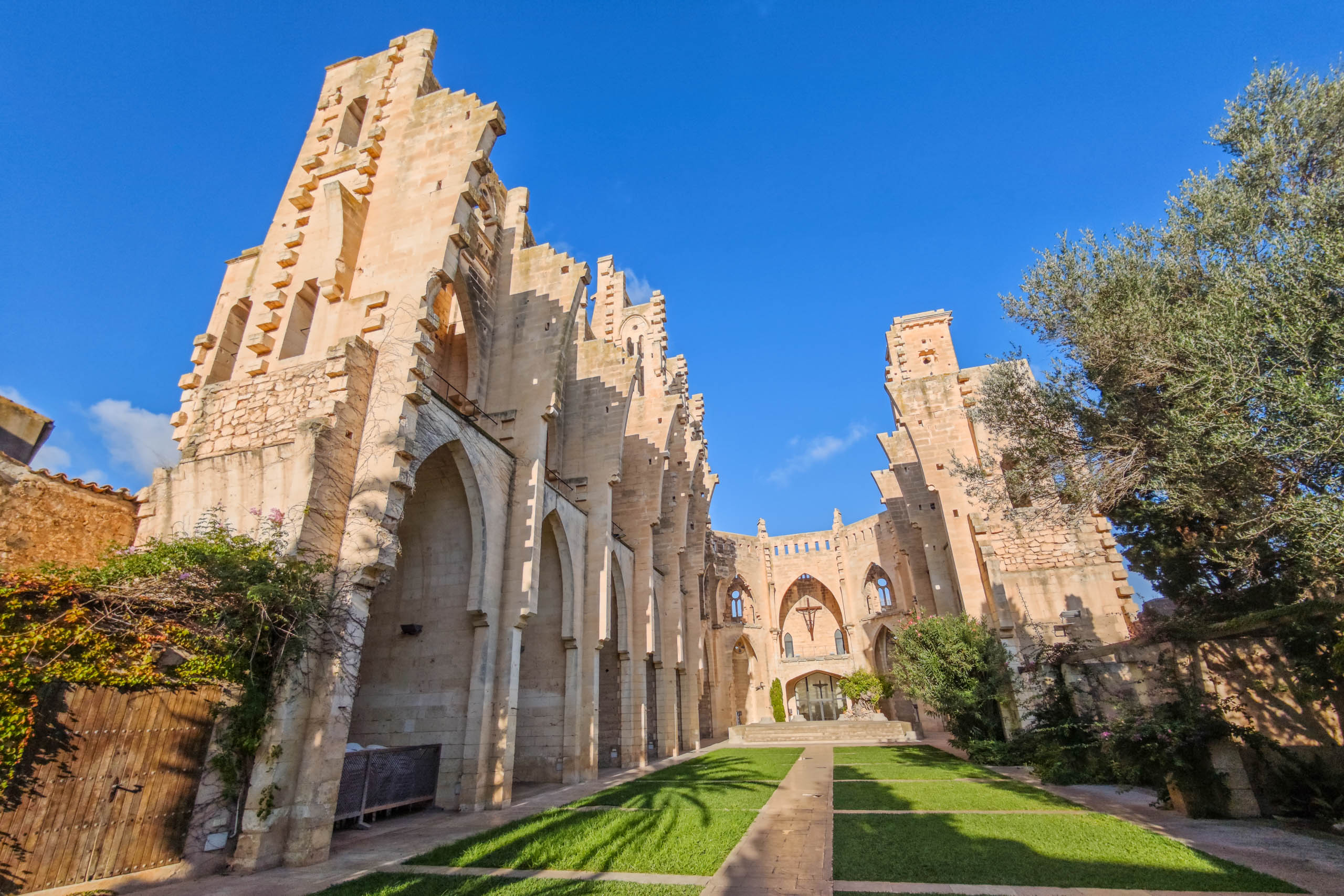
A church without a roof stands in the middle of Son Servera. Beyond Església Nova’s iron gate, garden paths pass …

A watchtower dating from 1566 on the summit above Cala Agulla and Cala Mesquida, now a ruin. The walk up takes …

A limestone cave with a huge opening above the sea near Canyamel. Inside, a guided route climbs and descends steps …
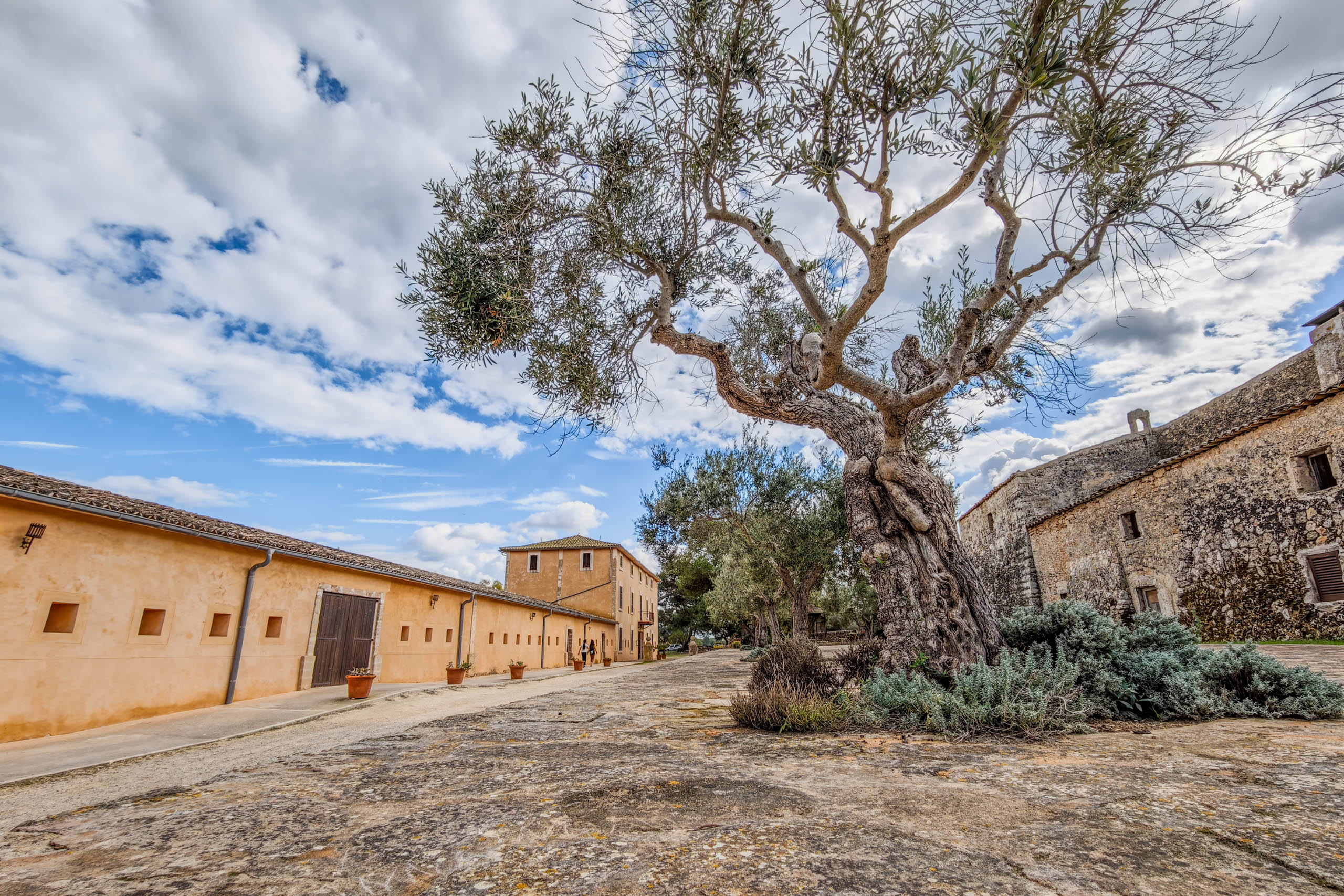
Old farm buildings, gnarled olive trees and a museum about earlier life on Mallorca. Son Real lies between Can …
Distances without a driving time are measured in a straight line. The road journey can be much longer; known driving times are shown alongside.
Where to swim nearby
Beaches and swimming nearby

Founded in 1880, this small coastal town has a harbour, a short beach and a promenade with a handful of …

A broad sandy bay north-west of Cala Ratjada, backed by pine woods and dunes. Pale sand fills the centre, with …

A broad stretch of pale sand with protected dunes behind it and a wooden boardwalk crossing them. Cala Mesquida …

A sandy bay backed by pine-covered slopes, a handful of hotels and a golf course. Canyamel is one of the quieter …
Places to stay within reach
Explore from here
Your questions answered
Your questions about Santuari de Sant Salvador (Artà)
How do you reach Sant Salvador sanctuary in Artà?
Take the Calvari staircase, which starts beside Transfiguració del Senyor parish church and climbs 180 steps between cypresses. Allow ten to twenty minutes. Alternatively, drive up the narrow tarmac road to a small number of parking spaces.
Is there an admission charge for Sant Salvador?
No. The site and the walk around the defensive walls are free. The church opens during the day but is often closed around lunchtime.
What can you see from Sant Salvador?
Artà directly below the walls, then the fields of the north-east and the hills of the Massís d'Artà. In clear air, the view reaches the Bay of Alcúdia and the Serra de Tramuntana on the horizon.
How old is the site?
The hill was fortified in Muslim times, when it was known as the Almudaina. After the conquest in 1229, its mosque became a Christian church. The present church was built from 1825 and consecrated in 1832. The defensive walls and their nine towers, including Sant Miquel, are older.
Is the climb worthwhile with children?
Yes, but avoid the midday heat. Children can manage the 180 steps, and the walls, towers, courtyard and well make a rewarding destination. With a pushchair, use the road instead of the steps.
Practical questions
When is the best time to visit Santuari de Sant Salvador (Artà)?
Recommended months: January, February, March, April, May, September, October, November, December. Clear air and long views — the best of the year when it is not raining.
Is Santuari de Sant Salvador (Artà) worth visiting in July and August?
July: worth considering with some reservations. Usually lively. Come early in the morning or late afternoon. There is little shade on the steps. August: another month may suit you better. Usually lively. Too hot for the climb, and the stone courtyard heats up fiercely at midday.
How far is Santuari de Sant Salvador (Artà) from Palma airport?
About 72 km from Palma airport. Allow roughly 70 minutes by car. Walk up the 180 Calvari steps beside the parish church. Alternatively, a narrow tarmac road leads up to a handful of parking spaces.
Do I need a hire car for Santuari de Sant Salvador (Artà)?
A car is useful Routes 411 and 412 to Artà, then walk through the town from the bus stop
Where can I park in Santuari de Sant Salvador (Artà)?
A few spaces at the top of the access road. If walking up the steps, park on the edge of Artà.
Can I visit Santuari de Sant Salvador (Artà) with a pushchair or wheelchair?
180 steps or a narrow access road; gravel and stone paving at the top Pushchairs: Not suitable on the steps; limited access via the road Wheelchairs: Access only via the road, then level as far as the courtyard
Are dogs allowed at Santuari de Sant Salvador (Artà)?
Keep on a lead
Words and photographs: Friedhelm Fischer. Exploring Mallorca since 2013 — by bike, on foot and with a camera.