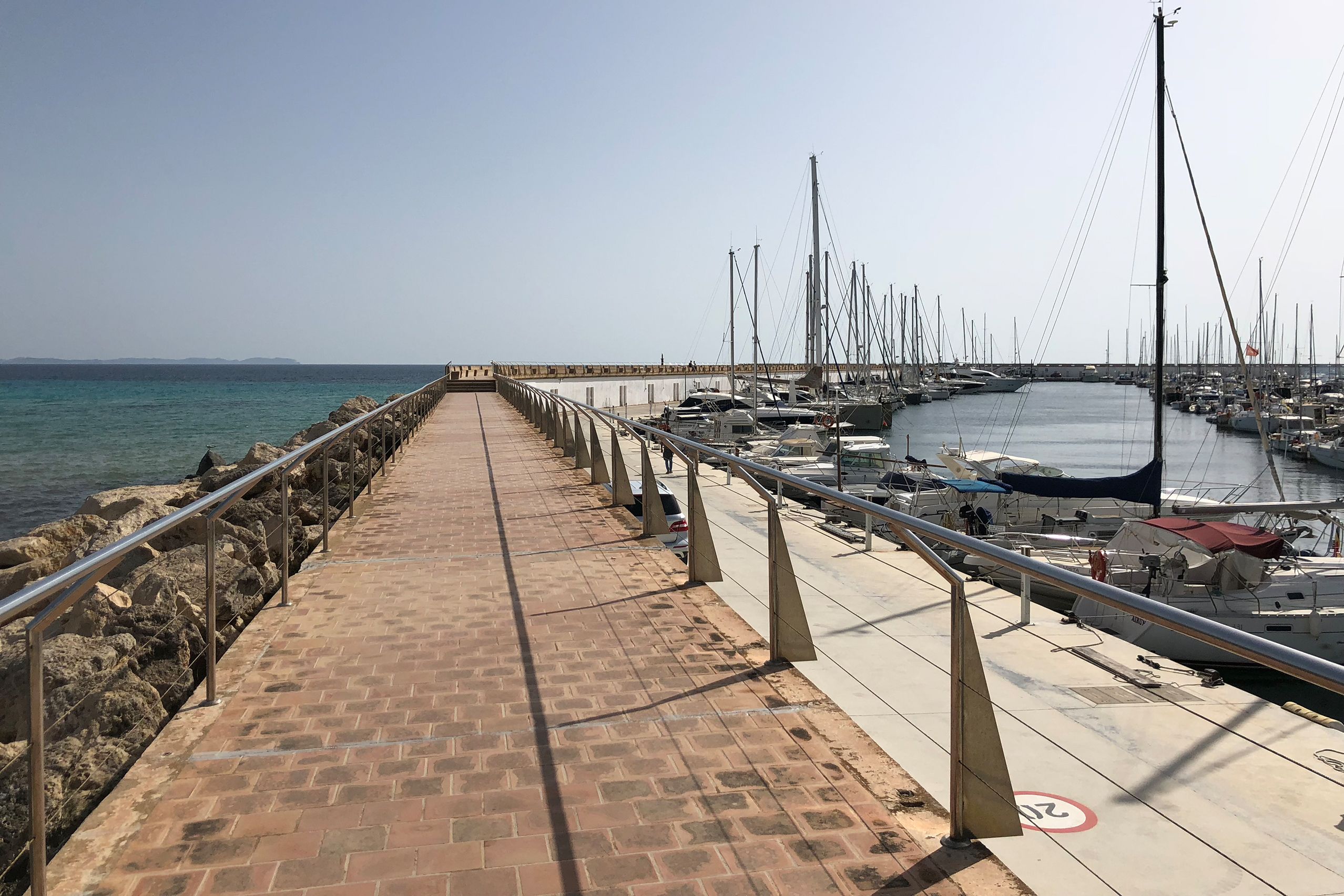
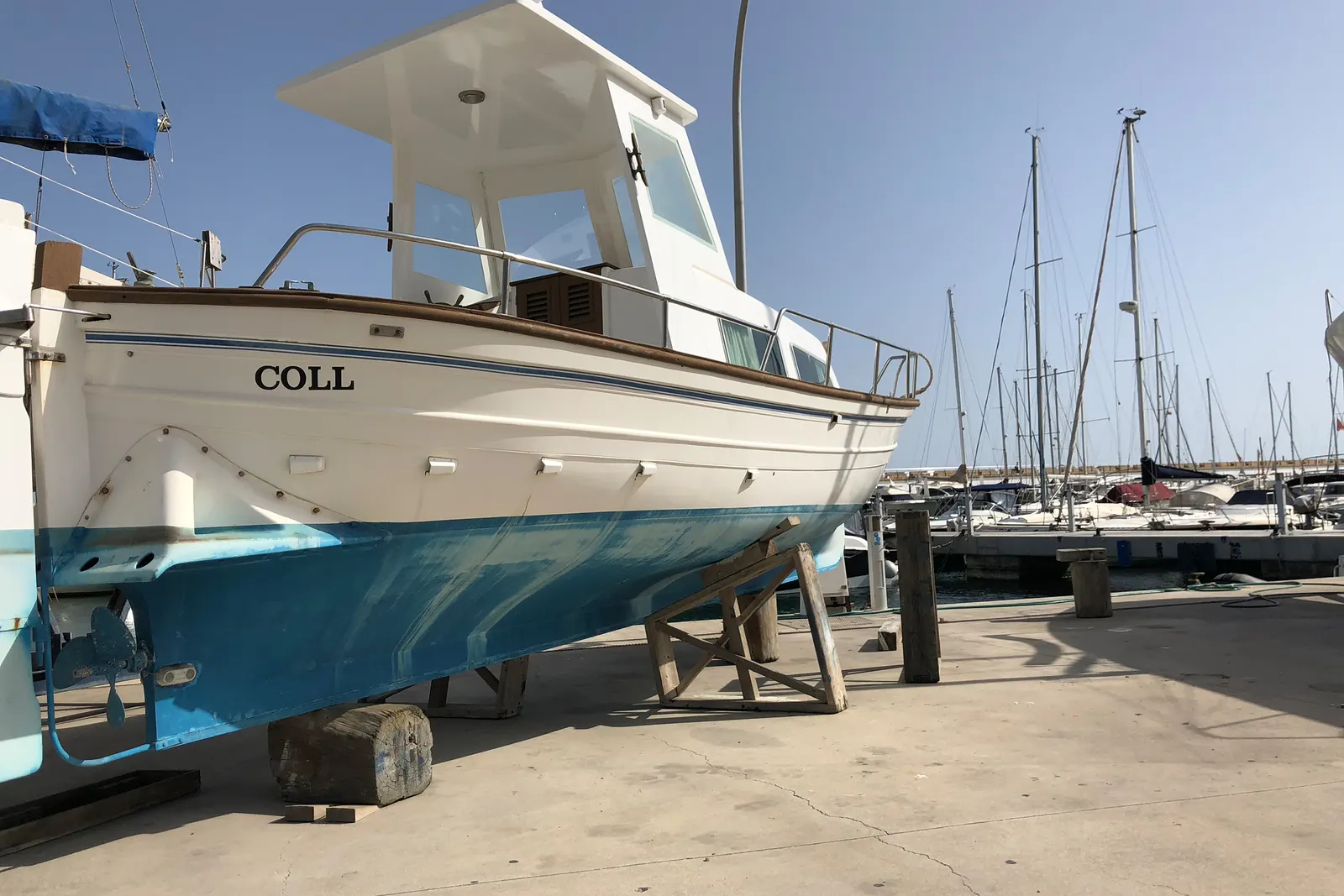
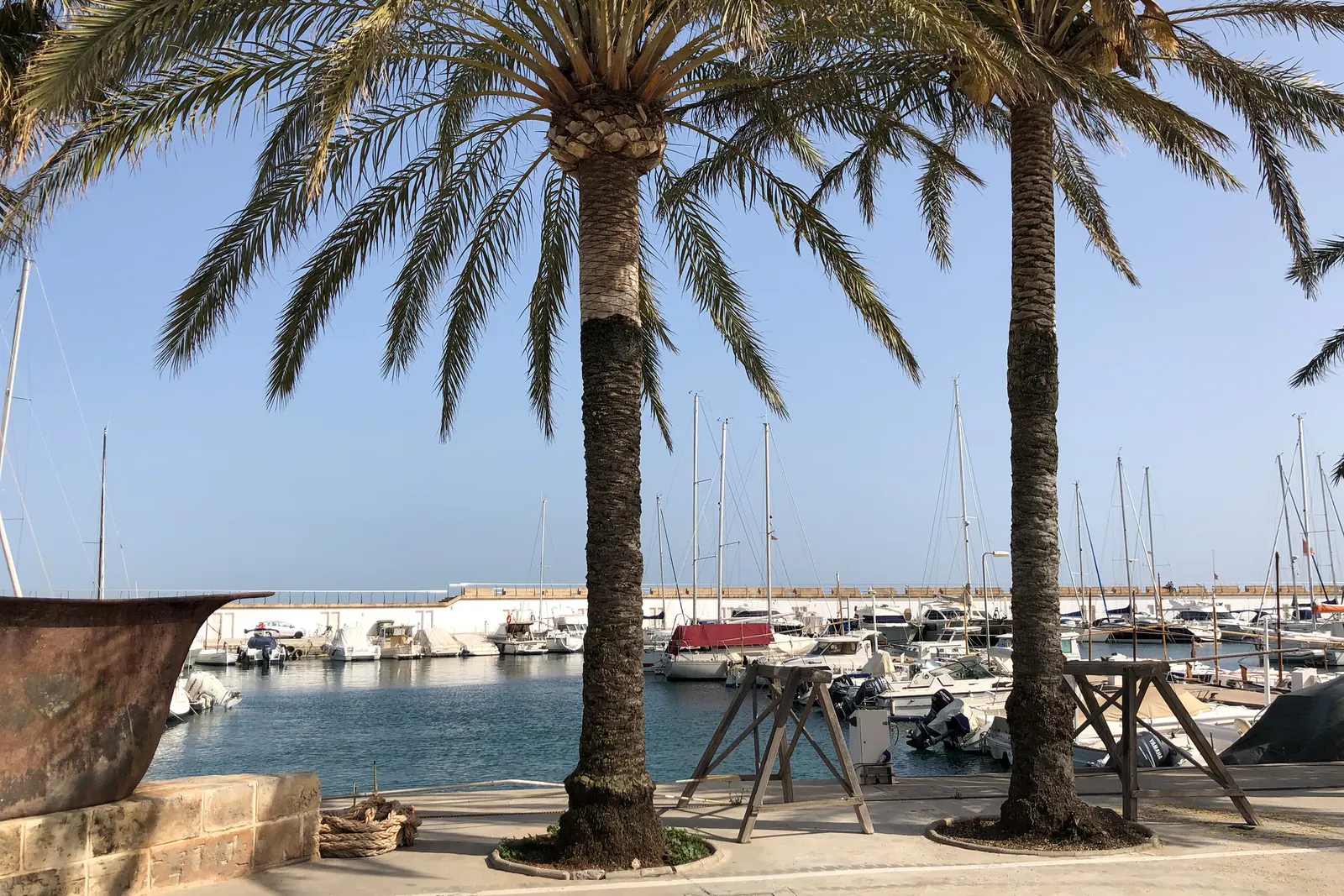
A marina on the flat south coast, with an old watchtower and a beach strewn with seagrass rather than loungers. From here, you can walk along the shore to Es Trenc.
Sa Ràpita
Sa Ràpita in 30 seconds
The essentials at a glance
- Worth visiting for
- A short visit
- Best for
- Walking to Es Trenc without using its paid car parks
- Best months
- April–June, September–October
- Time to allow
- Two to three hours
- With children
- Good shallow water in calm conditions, without a southerly wind
- Without a car
- Hire car needed
- Parking
- By the harbour and on the streets; limited space in high season
- Getting into the water
- Very gently shelving over a long distance
- Keep in mind
- Expecting a groomed beach lined with loungers
- Access
- Pushchairs: Straightforward by the harbour, more difficult on the beach · Wheelchairs: Harbour area accessible; beach access is not continuous throughout
Get a feel for Mallorca. Find your kind of place.
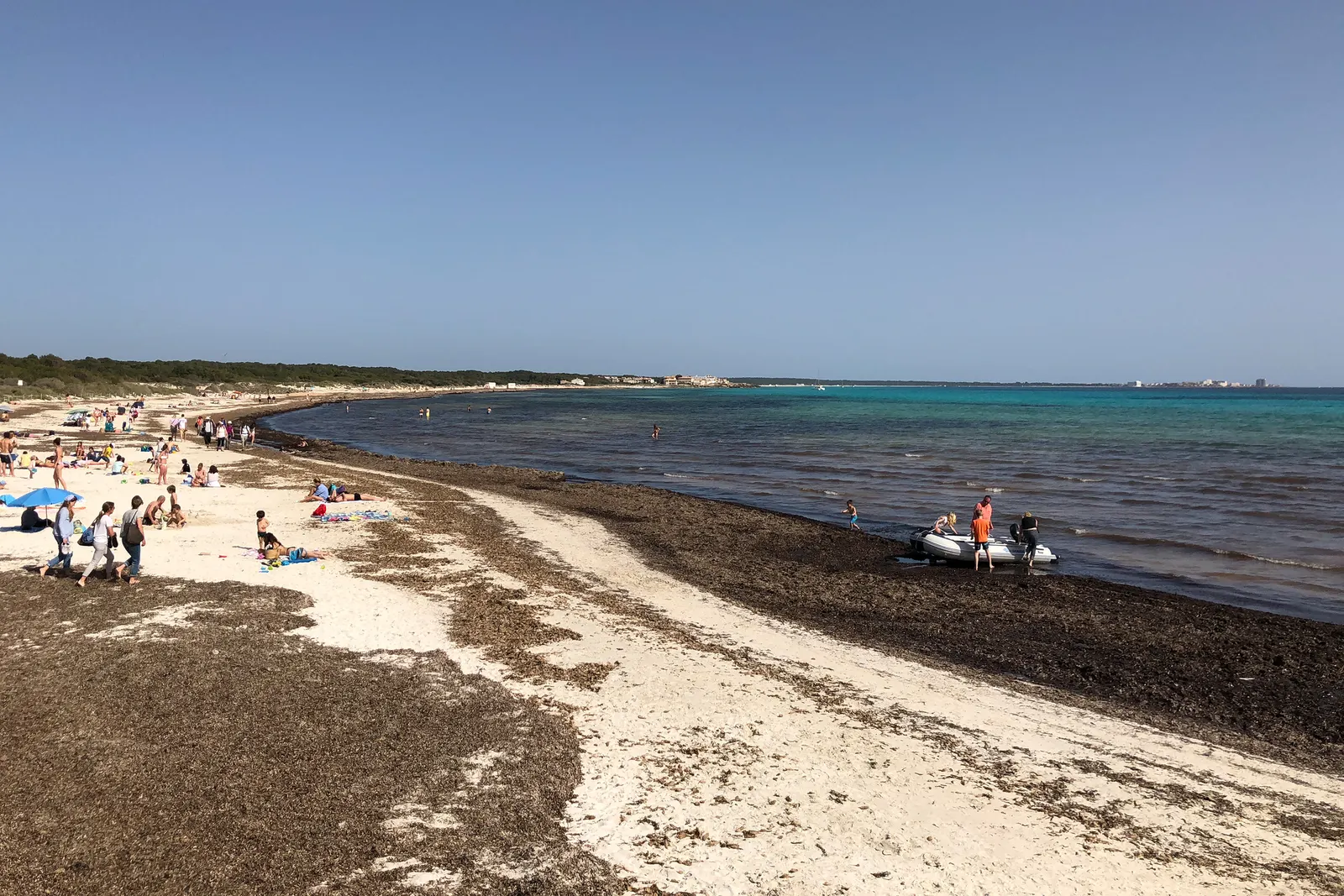
Seagrass is left in place to help retain the sand; living meadows offshore contribute to the water's clarity.
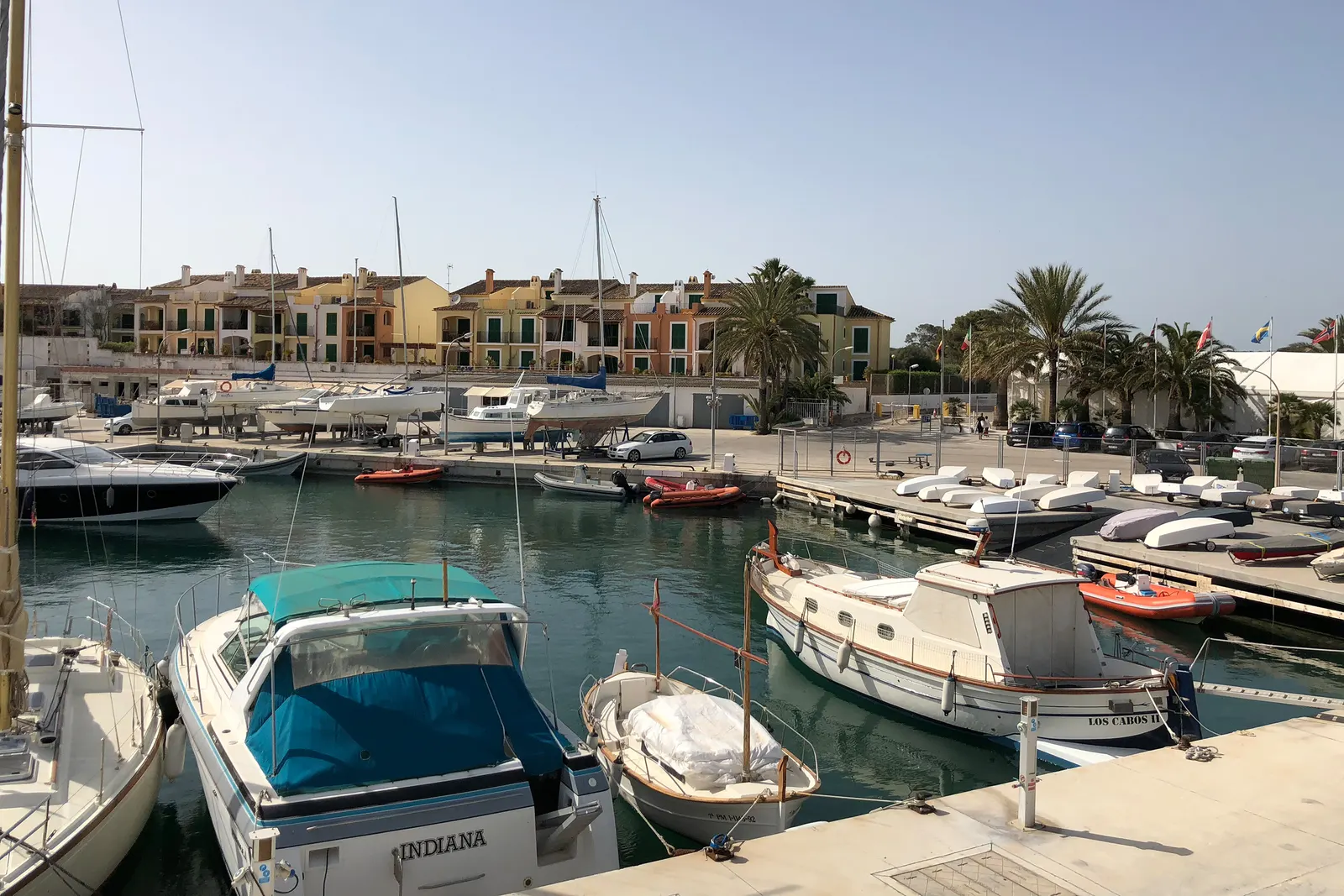
Fishing and leisure boats share this working harbour.
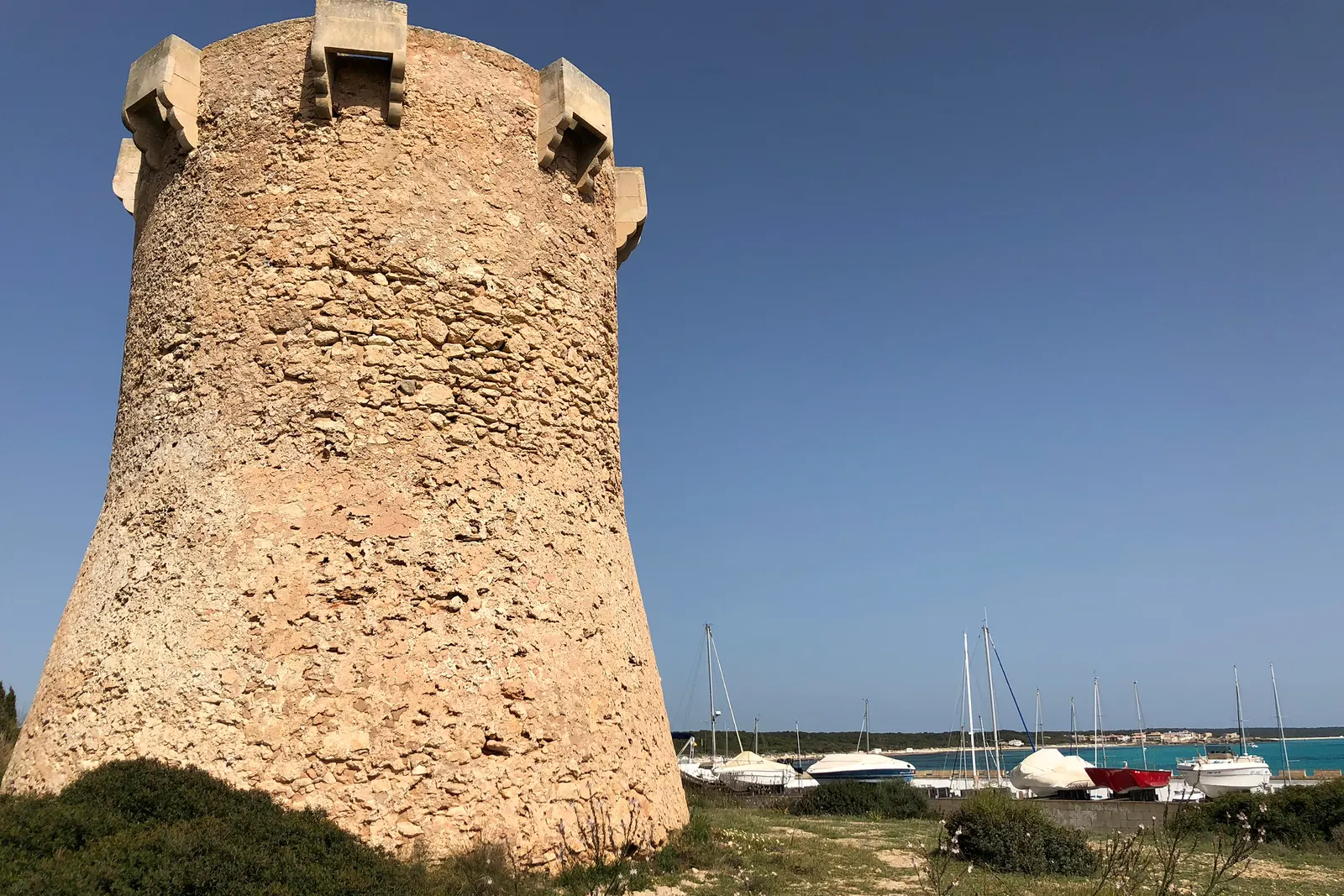
The watchtower predates the marina, built to watch over a vulnerable southern coastline.
Getting to know Sa Ràpita
Does Sa Ràpita suit your plans?
What to expect and what to know before you visit.
Who it suits
- Walking to Es Trenc without using its paid car parks
- A quiet harbour rather than a busy promenade
- Sailing, with one of the south coast's larger marinas
- Clear, shallow water
Things to bear in mind
- Expecting a groomed beach lined with loungers
- Looking for busy shops or nightlife
- Visiting in winter, when almost everything is closed
- Needing plenty of shade
Drive from the airport
40 minutes
40 km
Bus connections
Occasional services from Campos
Region
Migjorn
Nearest beach
S'Estanyol de Migjorn
2 km
Elevation
5 m
above sea level
Season guide for Sa Ràpita
November Less suitable
Very quiet Mostly closed
Worth visiting in April, May, June, September and October. Less suitable in January, February, November and December. Mostly closed in January, February, November and December.
Location
Location of Sa Ràpita
- Region
- Migjorn
- Municipality
- Campos
- Population
- 800
- Elevation
- 5 m above sea level
- Airport
- 40 km , around 40 minutes
- Hire car
- needed
- Worth visiting for
- a brief stop
- Coordinates
- 39.3647,2.9408
Getting to know Sa Ràpita
A small coastal village in Campos municipality on Mallorca’s flat south coast, with around 800 residents. It has a marina, an old watchtower above the water, rows of holiday homes and little else.
The seagrass
In winter and spring, broad banks of washed-up Posidonia seagrass lie on the beach. Resort beaches often clear it away because it looks untidy. Here, it is left in place.
The material helps stop sand washing away, while living seagrass meadows offshore support the clear turquoise water for which the south coast is known. Those meadows are protected.
Come expecting a natural beach rather than neatly raked sand.
The walk to Es Trenc
One of Sa Ràpita’s main attractions is the walk along the shore to Es Trenc, taking around half an hour. It avoids the paid car parks and the busiest main entrance.
When to visit
May is a lovely month, with warming water and a quiet beach. In September, the sea retains its summer warmth.
Between November and February, almost everything is closed. The coastal walk can still be worthwhile in clear weather, with very few people around.
Photographs
Sa Ràpita in Mallorca
How much time do you have?
Things to do in Sa Ràpita
Three hours
Walk around the harbour to the watchtower, then visit the beach and follow the shore for a while.
Half a day
Walk to Es Trenc along the chain of beaches.
A full day
Combine it with Campos and Ses Salines or Colònia de Sant Jordi.
On a rainy day
Little to do here. Head to Campos or Palma instead.
The beach at a glance
- Underfoot
- Fine pale sand, with seagrass meadows offshore
- Getting into the water
- Very gently shelving over a long distance
- Length
- Several sections, some with banks of washed-up seagrass
- Shade
- Very little
- Wind
- Open to the south; southerly winds bring waves
- With children
- Good shallow water in calm conditions, without a southerly wind
- Facilities
- A few beach bars, with no large-scale lounger hire · Places to eat by the harbour · Not all sections have lifeguards
Practical details
- Parking
- By the harbour and on the streets; limited space in high season
- Public transport
- Occasional services from Campos
- Time to allow
- Two to three hours
- Good to know
- Washed-up seagrass is left on the beach. It helps hold the sand in place, while living seagrass meadows support the clear water offshore. Expect a natural shoreline rather than a raked beach.
- Bus
- Occasional services from Campos
- Shops and services
- Supermarkets: Small village shop; larger supermarkets in Campos · Pharmacy: In Campos · Medical care: In Campos · Cash machines: By the harbour · Fuel: In Campos
- Access
- Level harbour promenade, then sand on the beach · Pushchairs: Straightforward by the harbour, more difficult on the beach · Wheelchairs: Harbour area accessible; beach access is not continuous throughout · Dogs: Not allowed on the beach in season
- What you will not find
- A freshly raked beach · Lifeguards throughout · Much shade · Lively winter activity
- Coordinates
- 39.3647,2.9408 Google Maps Apple Maps
Within reach
Places to visit
Nearby

Around 170 hectares of salt pans between Campos and the coast produce roughly ten thousand tonnes of sea salt each …

A Talayotic settlement beside the south-coast road, with five massive dry-stone towers and the outlines of …

Mallorca’s southernmost point has a lighthouse built in 1863, flat coastal rocks and open sea, with the …

A freestanding rock arch in the sea, one of the south-east coast’s best-known views. The viewpoint lies between …

A small 15th-century sanctuary on a 205-metre hill near S'Alqueria Blanca, rarely busy and with views over the …

A monastery estate on the highest point of the Pla, 548 metres above the plain. Ramon Llull retreated here in the …
Distances without a driving time are measured in a straight line. The road journey can be much longer; known driving times are shown alongside.
Other beaches to consider
Beaches and swimming nearby

A small coastal settlement between Sa Ràpita and Palma bay, without hotels or a sandy beach. There is a marina …

A small coastal settlement at the western end of Es Trenc, giving access to the natural beach. The unfinished …

Pale sand, dunes and turquoise water: Es Trenc lies on Mallorca’s south coast between Ses Covetes and Colònia de …

A former fishing harbour in southern Mallorca, now a holiday resort with several beaches close by. Boats leave for …
Explore from here
Your questions answered
Your questions about Sa Ràpita
Can you walk from Sa Ràpita to Es Trenc?
Yes. Follow the beaches along the water for around half an hour. Walking avoids the charges at Es Trenc's official car parks and the crowds around the main entrance.
Why is there so much seagrass on the beach?
Washed-up Posidonia is deliberately left in place. It helps retain sand and protect the coast, while the living meadows offshore contribute to the south coast's clear turquoise water. This natural material is not a sign that the beach has been neglected.
What is there besides the beach?
A marina with places to eat, an old watchtower above the water and rows of holiday houses. There is little shopping, nightlife or organised sightseeing.
Is Sa Ràpita worth visiting in winter?
Not for a beach holiday, as almost everything closes between November and February. In clear weather, however, the coastal walk towards Es Trenc can be wonderfully quiet.
Practical questions
When is the best time to visit Sa Ràpita?
Recommended months: April, May, June, September, October. Access and opening are limited in January, February, November, December. See the visiting advice on this page.
Is Sa Ràpita worth visiting in July and August?
July: worth considering with some reservations. Usually busy. Parking fills early, with little shade on the beach. August: worth considering with some reservations. Usually busy.
How far is Sa Ràpita from Palma airport?
About 40 km from Palma airport. Allow roughly 40 minutes by car. Follow the Ma-6030 from Campos for around ten kilometres. Parking is available by the harbour and on the streets, but fills in high season.
Do I need a hire car for Sa Ràpita?
A car is needed Occasional services from Campos
Where can I park in Sa Ràpita?
By the harbour and on the streets; limited space in high season
Can you swim at Sa Ràpita?
Yes. Fine pale sand, with seagrass meadows offshore Very gently shelving over a long distance Several sections, some with banks of washed-up seagrass Very little Good shallow water in calm conditions, without a southerly wind
Can I visit Sa Ràpita with a pushchair or wheelchair?
Level harbour promenade, then sand on the beach Pushchairs: Straightforward by the harbour, more difficult on the beach Wheelchairs: Harbour area accessible; beach access is not continuous throughout
Are dogs allowed at Sa Ràpita?
Not allowed on the beach in season
Words and photographs: Friedhelm Fischer. Exploring Mallorca since 2013 — by bike, on foot and with a camera.