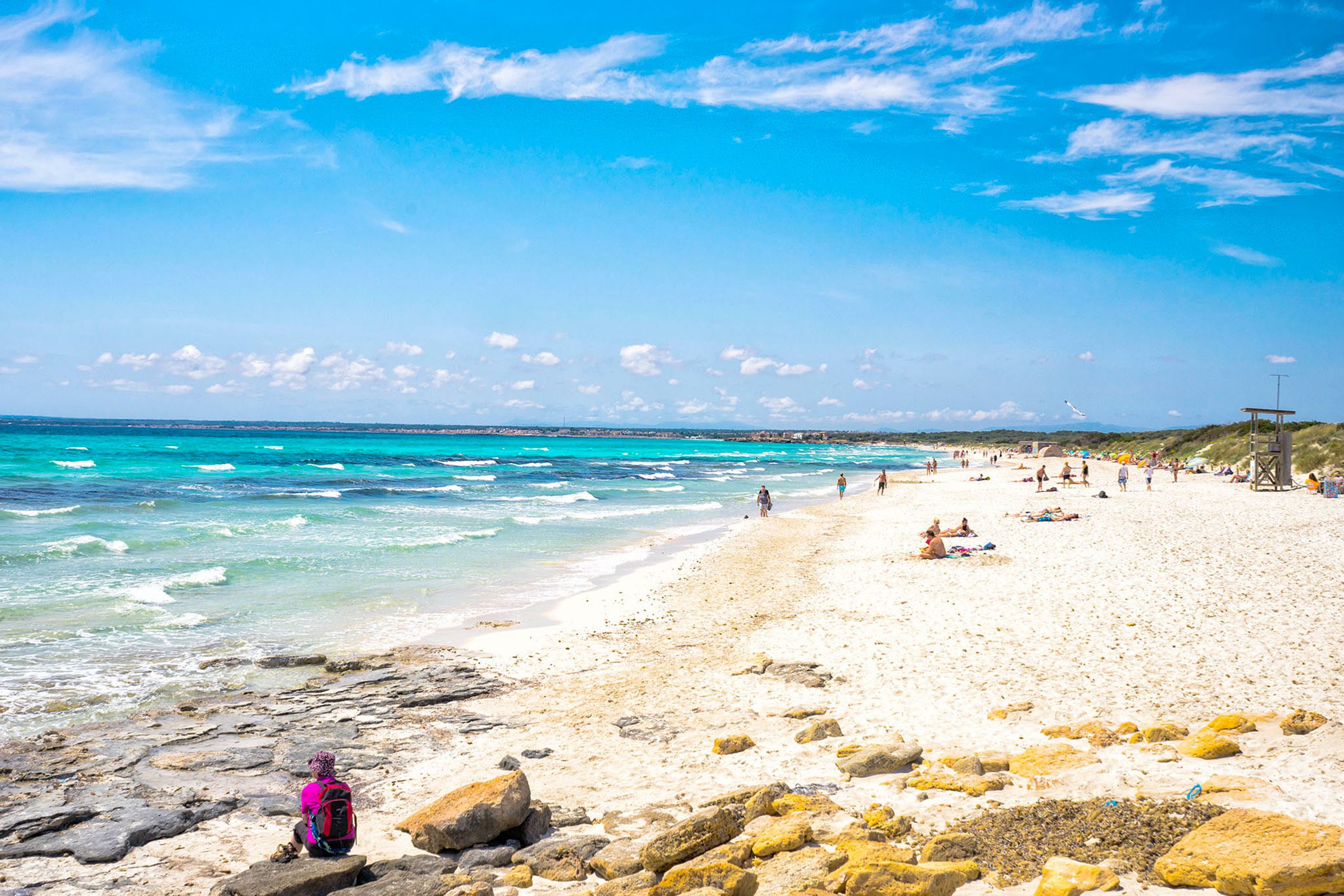
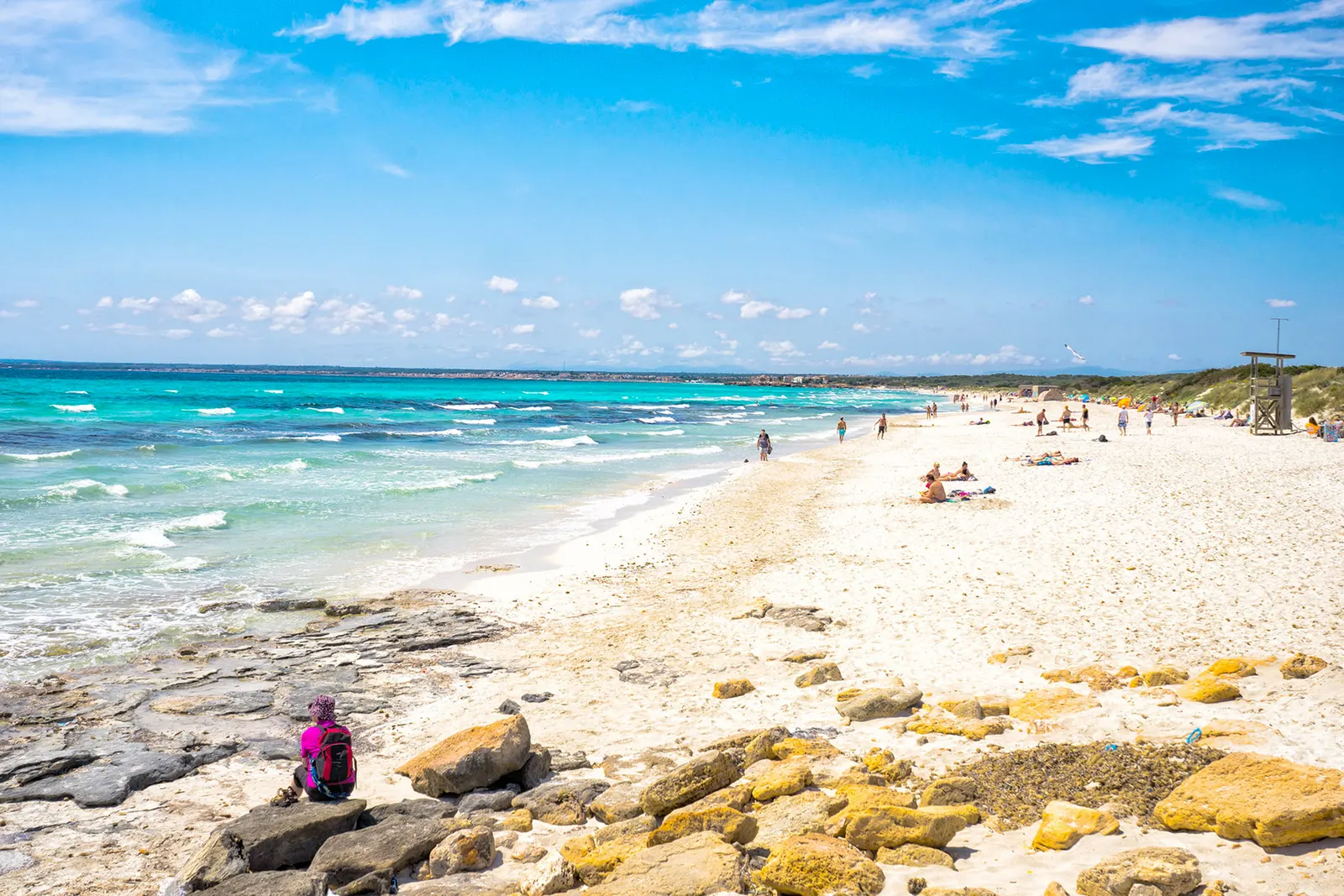
Pale sand, dunes and turquoise water: Es Trenc lies on Mallorca’s south coast between Ses Covetes and Colònia de Sant Jordi. Behind the beach are the Salobrar de Campos wetlands and salt pans. The landscape has been part of a natural park since 2017.
Es Trenc
Es Trenc in 30 seconds
The essentials at a glance
- Worth visiting for
- A short visit
- Best for
- You want to see a beach without buildings behind it.
- Best months
- March–June, September–November
- Time to allow
- Half a day to a full day; longer if you include the coastal path to Colònia de Sant Jordi.
- Without a car
- Hire car recommended
- Parking
- Use signposted parking at your chosen access point, such as na Tirapel. Charges, availability and walking distances vary. Don’t park on dunes or access roads.
- Keep in mind
- You’re arriving in high summer without planning ahead.
- Access
- Pushchairs: Difficult; routes from the car parks are long and sandy. · Wheelchairs: Not suitable.
Get a feel for Mallorca. Find your kind of place.
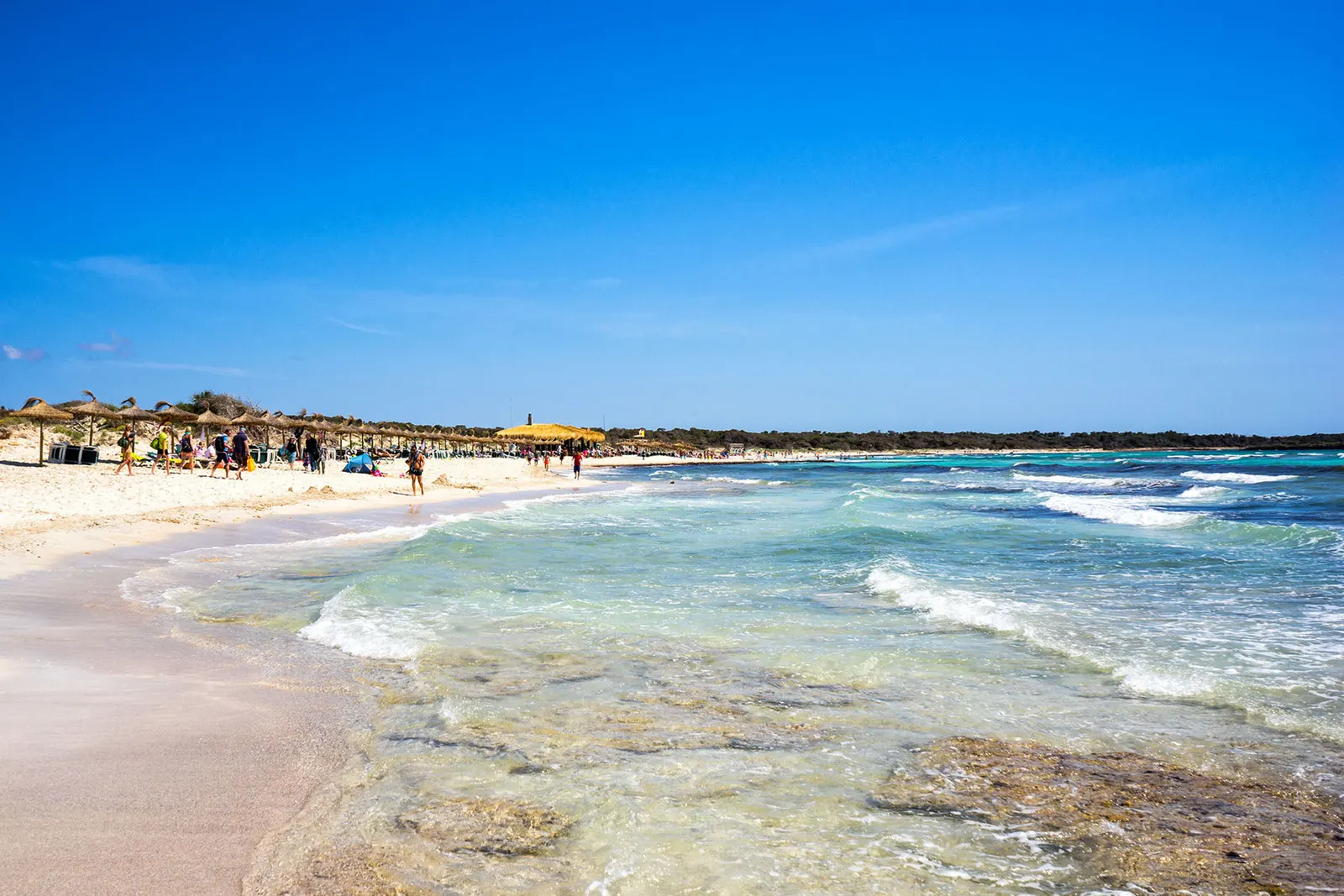
An archive photograph of a serviced beach section. Seasonal facilities and their locations can change.
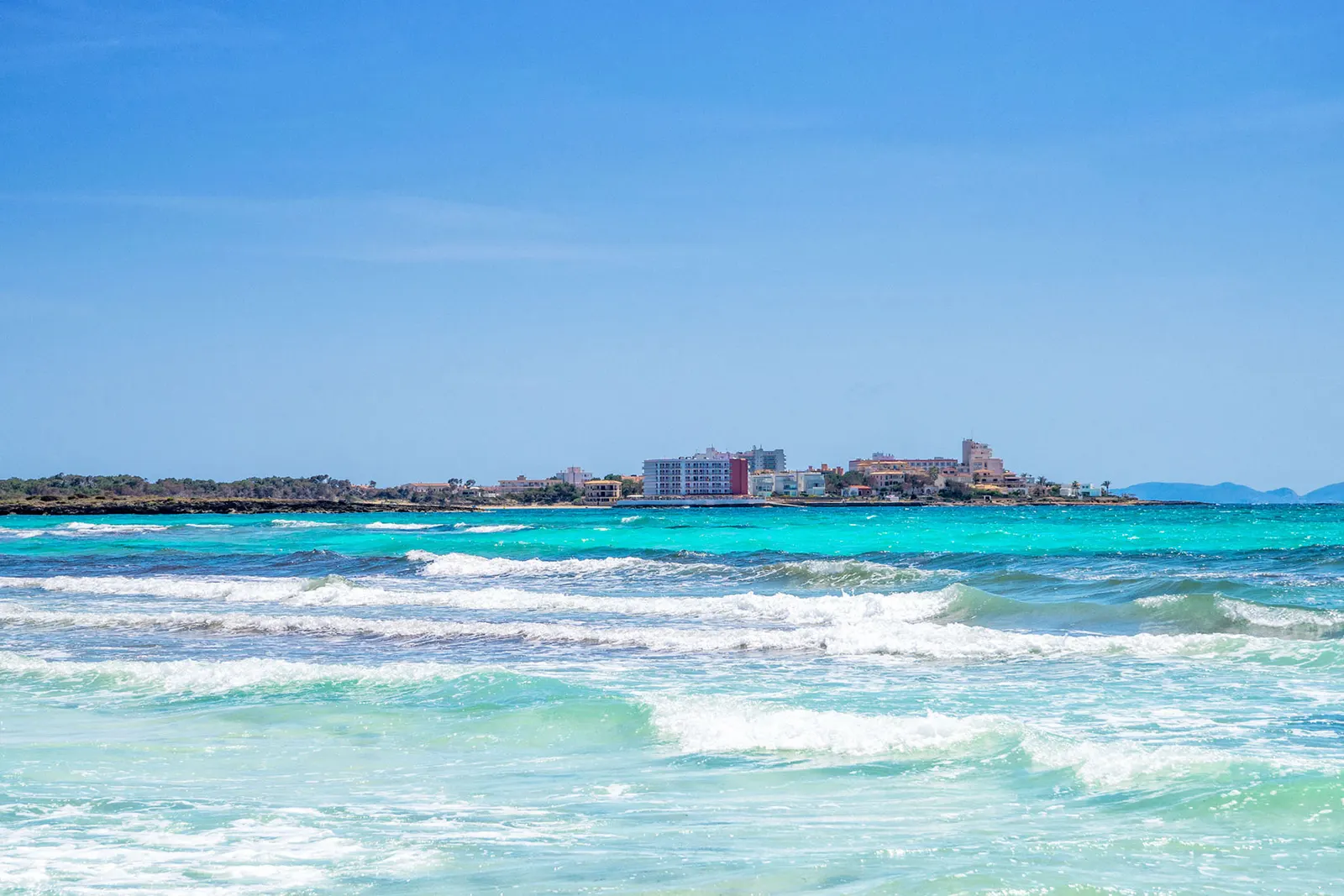
Colònia de Sant Jordi is on the horizon. The coastal walk there is longer than a glance across the bay might suggest.
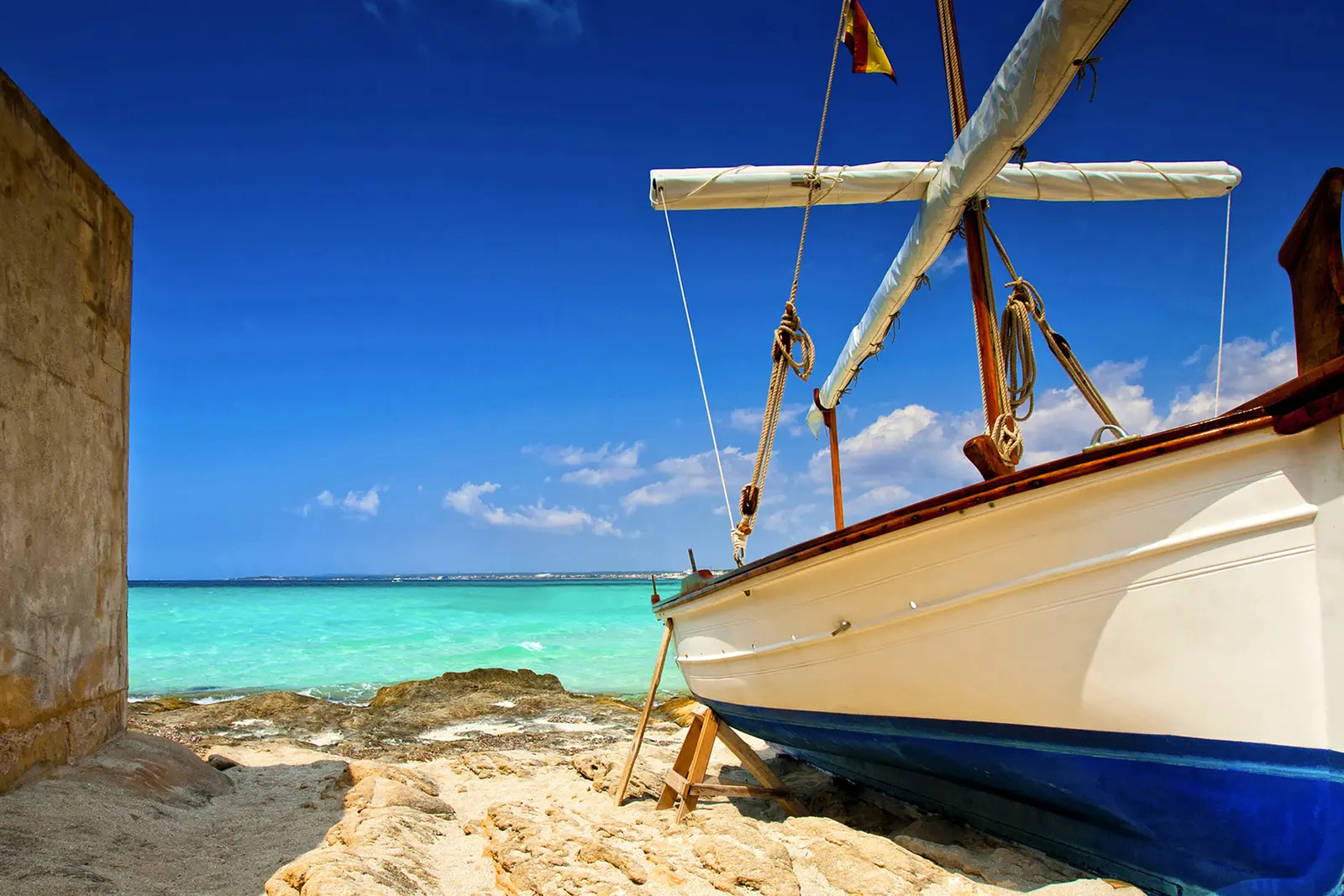
A traditional llaüt beside the rocky shore. These boats are part of Mallorca’s maritime history.
Getting to know Es Trenc
Does Es Trenc suit your plans?
What to expect and what to know before you visit.
Who it suits
- You want to see a beach without buildings behind it.
- You’re visiting in spring or autumn.
- You enjoy birdwatching; the Salobrar wetlands are just inland.
- You like long walks along the sand.
Things to bear in mind
- You’re arriving in high summer without planning ahead.
- You need shade by the water.
- You expect a short walk from the car.
- You want a promenade with facilities all along it.
Drive from the airport
45 minutes
45 km
Bus connections
TIB services to Sa Ràpita or Colònia de Sant Jordi
Region
Migjorn
Nearest beach
Ses Covetes
1 km
Elevation
0 m
above sea level
A glimpse of Es Trenc
Season guide for Es Trenc
November Worth a visit
The beach remains accessible, but summer facilities take a break.
Very quiet Some places closed
Worth visiting in March, April, May, June, September, October and November. Less suitable in August.
Location
Location of Es Trenc
- Region
- Migjorn
- Municipality
- Campos
- Elevation
- 0 m above sea level
- Airport
- 45 km , around 45 minutes
- Hire car
- recommended
- Worth visiting for
- a brief stop
- Coordinates
- 39.3456,2.9833
A natural beach with a contested history
Es Trenc is one of the best-known natural beaches on Mallorca’s south coast. Its lack of a continuous line of beachfront hotels owes much to a long campaign to protect the landscape. Since 2017, this coast has been part of the Parc Natural Marítimoterrestre es Trenc–Salobrar de Campos.
The illegally built apartment blocks at Ses Covetes were demolished in 2013, and the land was subsequently restored. A separate change followed in 2017, when Es Trenc’s six permanent beach bars were removed. These were two different demolition projects. Older photographs of buildings or beach bars therefore don’t necessarily show what you’ll find today.
The salt pans
Behind the dunes lies Salobrar de Campos, a wetland with salt flats and working salt pans. It’s also a habitat and resting place for birds. A beach walk doesn’t give you permission to wander through the salt ponds or private land. Those areas have their own access arrangements.
The sand and dunes
The pale sand contains calcium-rich remains of marine organisms. Together with the shallow water, it gives the beach its colours. The dunes are fragile habitats: use the designated entrances and don’t cut across the plants. Posidonia leaves washed onto the shore belong here too, helping to protect the beach against erosion.
What to bring
Sun protection and water. There’s no natural shade on the open beach, so pack a parasol, a hat and enough to drink. The protected ground behind the dunes isn’t somewhere to move for your midday break.
Choose an access point that suits your plans: Ses Covetes, Sa Ràpita, Colònia de Sant Jordi or na Tirapel car park. Some routes involve a substantial walk. Wear suitable shoes for the coastal path, where sand alternates with rocky stretches. Take your rubbish away; the natural park has no public bins.
The natural park’s visitor information explains accessible areas, seasonal facilities and the rules for dogs.
Photographs
Es Trenc in Mallorca
How much time do you have?
Things to do in Es Trenc
Three hours
Walk from the car park through the fringe of pines to the beach, follow the water for a while, then return.
Half a day
Walk along the beach towards Ses Covetes and stop for a swim. The former unfinished apartment blocks there were demolished in 2013.
A full day
Add the coastal path to Colònia de Sant Jordi and the Campos salt pans.
On a rainy day
Not a good choice in the rain; there’s nowhere indoors to retreat to.
Practical details
- Parking
- Use signposted parking at your chosen access point, such as na Tirapel. Charges, availability and walking distances vary. Don’t park on dunes or access roads.
- Public transport
- Take TIB to Sa Ràpita or Colònia de Sant Jordi, then continue on foot along the coast. Check the stop, walking route and return service in the current timetable.
- Time to allow
- Half a day to a full day; longer if you include the coastal path to Colònia de Sant Jordi.
- Good to know
- Bring sun protection and water. Use designated access routes, stay off the dunes and out of closed areas, and take your rubbish away.
- Bus
- TIB services to Sa Ràpita or Colònia de Sant Jordi, followed by a longer walk along the coast.
- Access
- Sand and paths through the dunes, soft in places. · Pushchairs: Difficult; routes from the car parks are long and sandy. · Wheelchairs: Not suitable. · Dogs: Dogs are not allowed on the beach from March to October; from November to February they must be on a lead.
- What you will not find
- Natural shade by the water · A short walk from the car park · A continuous beach promenade · A bus directly to the beach
- Coordinates
- 39.3456,2.9833 Google Maps Apple Maps
Within reach
Places to visit
Nearby

Around 170 hectares of salt pans between Campos and the coast produce roughly ten thousand tonnes of sea salt each …

Mallorca’s southernmost point has a lighthouse built in 1863, flat coastal rocks and open sea, with the …

A freestanding rock arch in the sea, one of the south-east coast’s best-known views. The viewpoint lies between …

A Talayotic settlement beside the south-coast road, with five massive dry-stone towers and the outlines of …

A small 15th-century sanctuary on a 205-metre hill near S'Alqueria Blanca, rarely busy and with views over the …
Distances without a driving time are measured in a straight line. The road journey can be much longer; known driving times are shown alongside.
Where to swim nearby
Beaches and swimming nearby

A small coastal settlement at the western end of Es Trenc, giving access to the natural beach. The unfinished …

A former fishing harbour in southern Mallorca, now a holiday resort with several beaches close by. Boats leave for …

A marina on the flat south coast, with an old watchtower and a beach strewn with seagrass rather than loungers …

A strip of white sand between Colònia de Sant Jordi and Mallorca's southern tip, reached on foot or by boat. The …
Explore from here
Your questions answered
Your questions about Es Trenc
Why is Es Trenc undeveloped?
The coast was protected from large-scale development and has been part of a natural park since 2017. The illegally built apartment blocks at Ses Covetes were demolished in 2013. They are no longer there.
Where can you park?
It depends on your approach. One access route starts at na Tirapel car park; others come from Ses Covetes, Sa Ràpita and Colònia de Sant Jordi. Follow local parking signs and check charges. Walking distances differ between access points.
Is there any shade?
There’s very little natural shade on the open beach. Bring a parasol and plenty of water. Cutting through the dunes to the pines isn’t permitted; stick to authorised paths and respect barriers.
What is Salobrar de Campos?
The wetland behind the beach includes salt flats and habitats for waterbirds. Part is used for salt production. Not every area is publicly accessible; follow the natural park’s visitor guidance.
Practical questions
When is the best time to visit Es Trenc?
Recommended months: March, April, May, June, September, October, November. A beach for walkers at this time of year. Sea temperature around 15°C.
Is Es Trenc worth visiting in July and August?
July: worth considering with some reservations. Usually busy. Allow extra time for the drive and parking in the main season. There’s no natural shade by the water. August: another month may suit you better. Usually very crowded. Less suitable for a quiet beach day. Bring water and sun protection, and have another plan if the car parks are full.
How far is Es Trenc from Palma airport?
About 45 km from Palma airport. Allow roughly 45 minutes by car. Choose your access point before setting off. Paths enter the natural park from Sa Ràpita, Ses Covetes, Colònia de Sant Jordi and the na Tirapel car park. Use signposted parking only. Charges and walking distances depend on your chosen route.
Do I need a hire car for Es Trenc?
A car is useful TIB services to Sa Ràpita or Colònia de Sant Jordi, followed by a longer walk along the coast.
Where can I park in Es Trenc?
Use signposted parking at your chosen access point, such as na Tirapel. Charges, availability and walking distances vary. Don’t park on dunes or access roads.
Can you swim at Es Trenc?
Es Trenc is a swimming cove. See the beach and access information above.
Can I visit Es Trenc with a pushchair or wheelchair?
Sand and paths through the dunes, soft in places. Pushchairs: Difficult; routes from the car parks are long and sandy. Wheelchairs: Not suitable.
Are dogs allowed at Es Trenc?
Dogs are not allowed on the beach from March to October; from November to February they must be on a lead.
Es Trenc features in our Mallorca highlights
Words and photographs: Friedhelm Fischer. Exploring Mallorca since 2013 — by bike, on foot and with a camera.