Cala Fornells
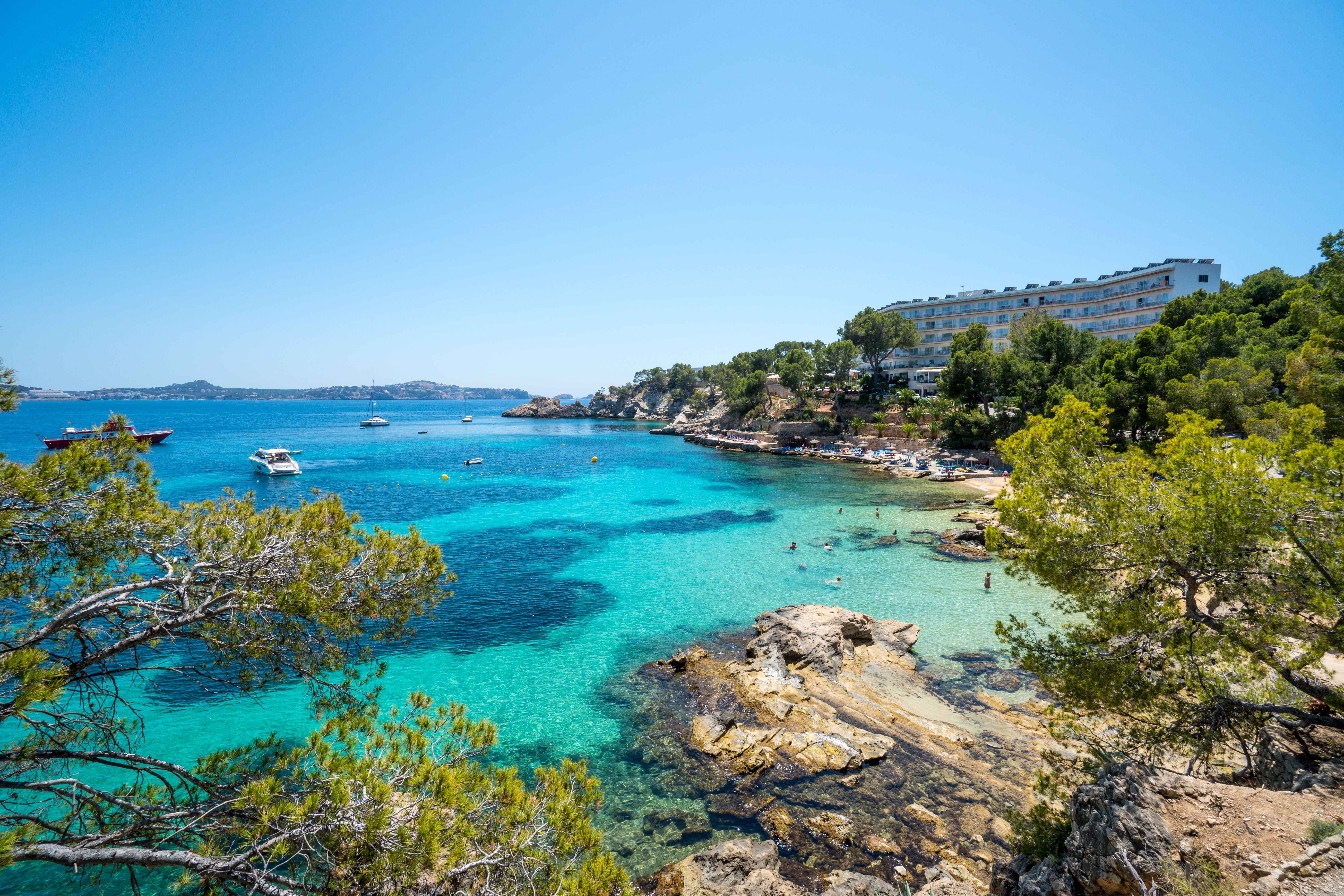
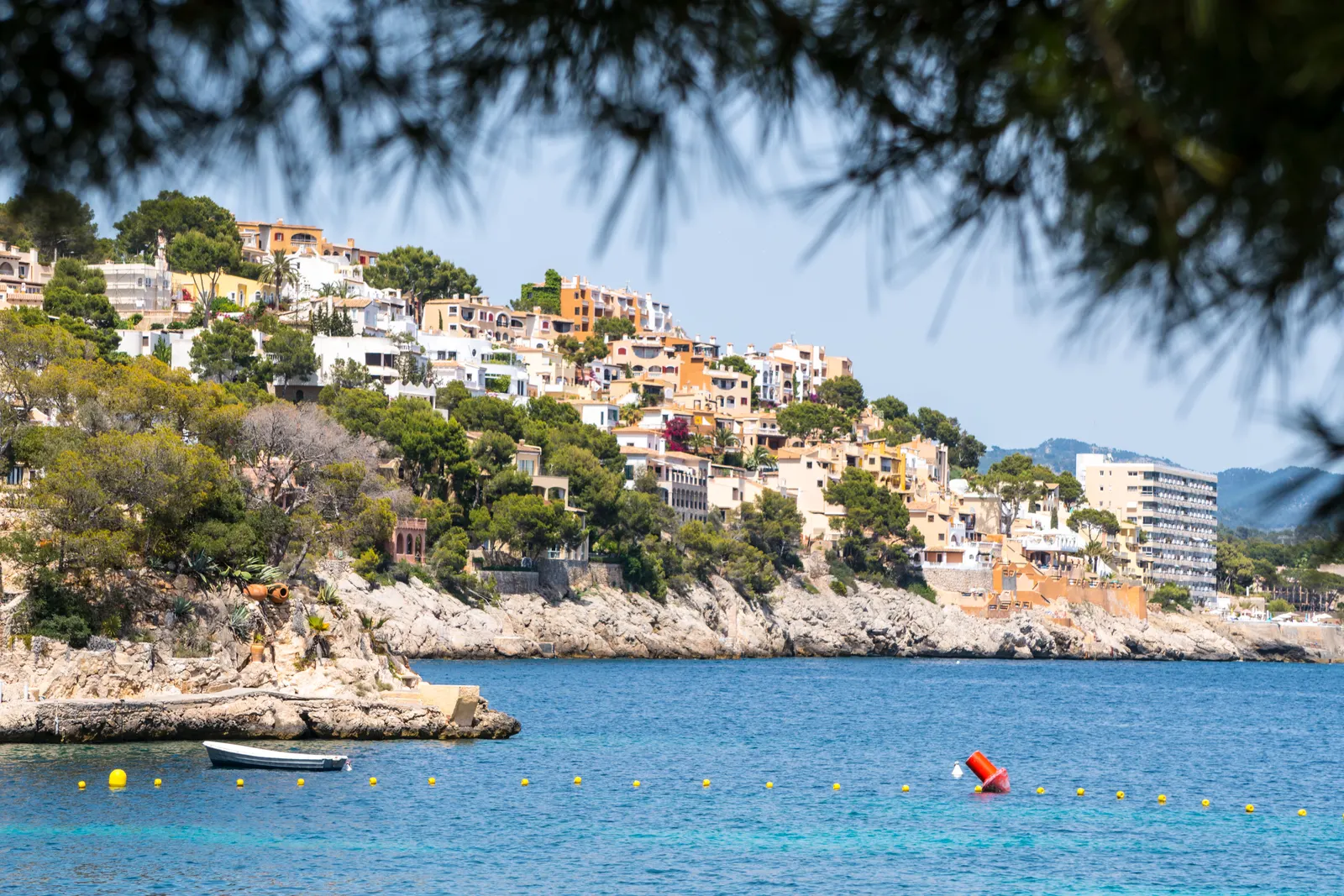
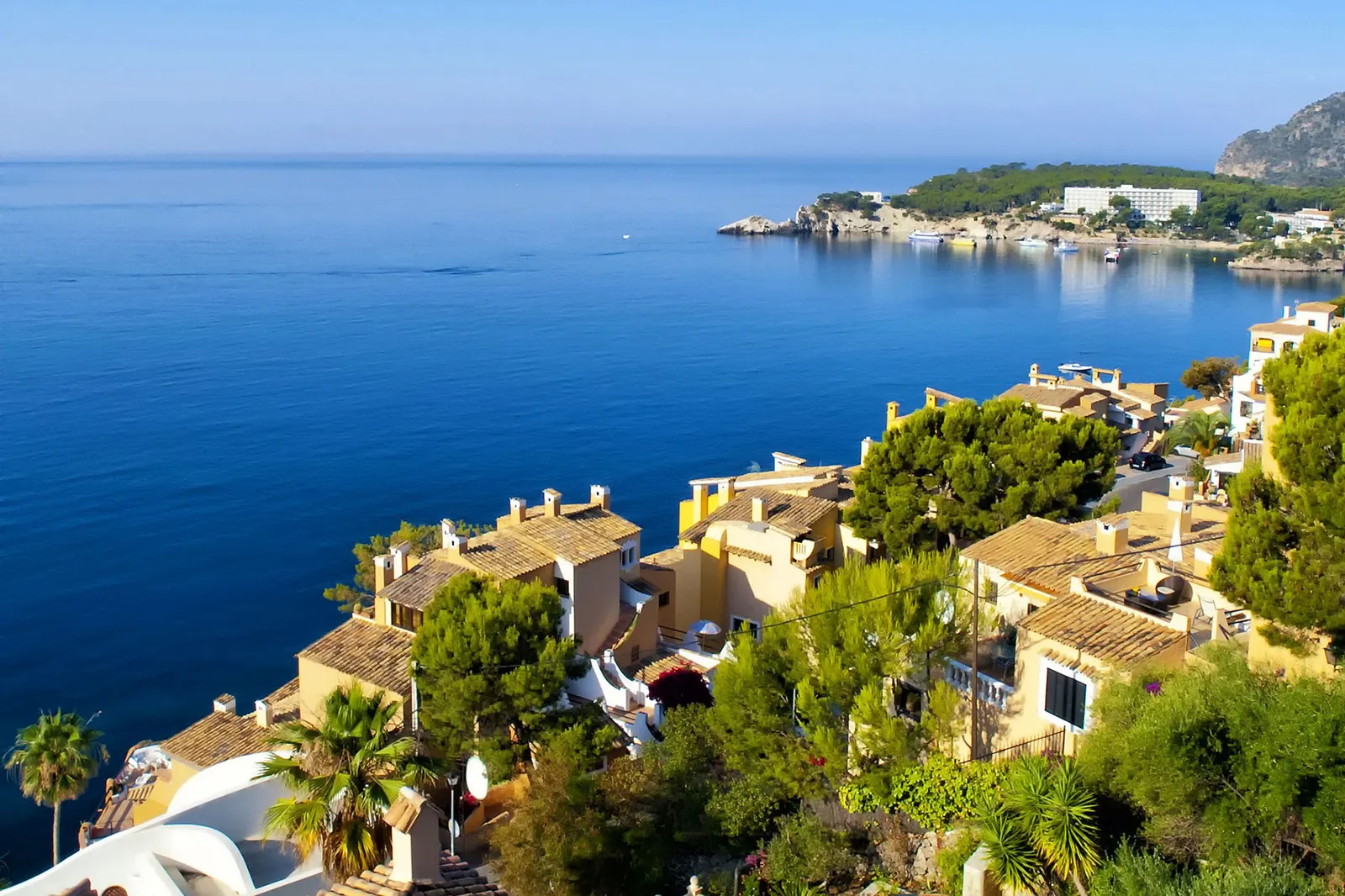
Around two kilometres from Paguera, Cala Fornells feels quite different. Rocky shores and small patches of coarse sand meet turquoise water, with terraced houses climbing the hillside. Bring a snorkel as well as a towel.
Cala Fornells
Cala Fornells in 30 seconds
The essentials at a glance
- Worth visiting for
- A short visit
- Best for
- Snorkelling and diving in calm, clear water
- Best months
- March–June, September–October
- Time to allow
- Half a day
- With children
- Depends on the spot; rocky access makes some sections difficult
- Without a car
- Easy enough
- Parking
- Some free parking near the bay, taken early in high season
- Getting into the water
- Rocky access and steps at several spots; choose your entry carefully
- Keep in mind
- Expecting a broad sandy beach
- Access
- Pushchairs: You can reach some restaurants, but many paths down to the water are difficult · Wheelchairs: Limited
Get a feel for Mallorca. Find your kind of place.
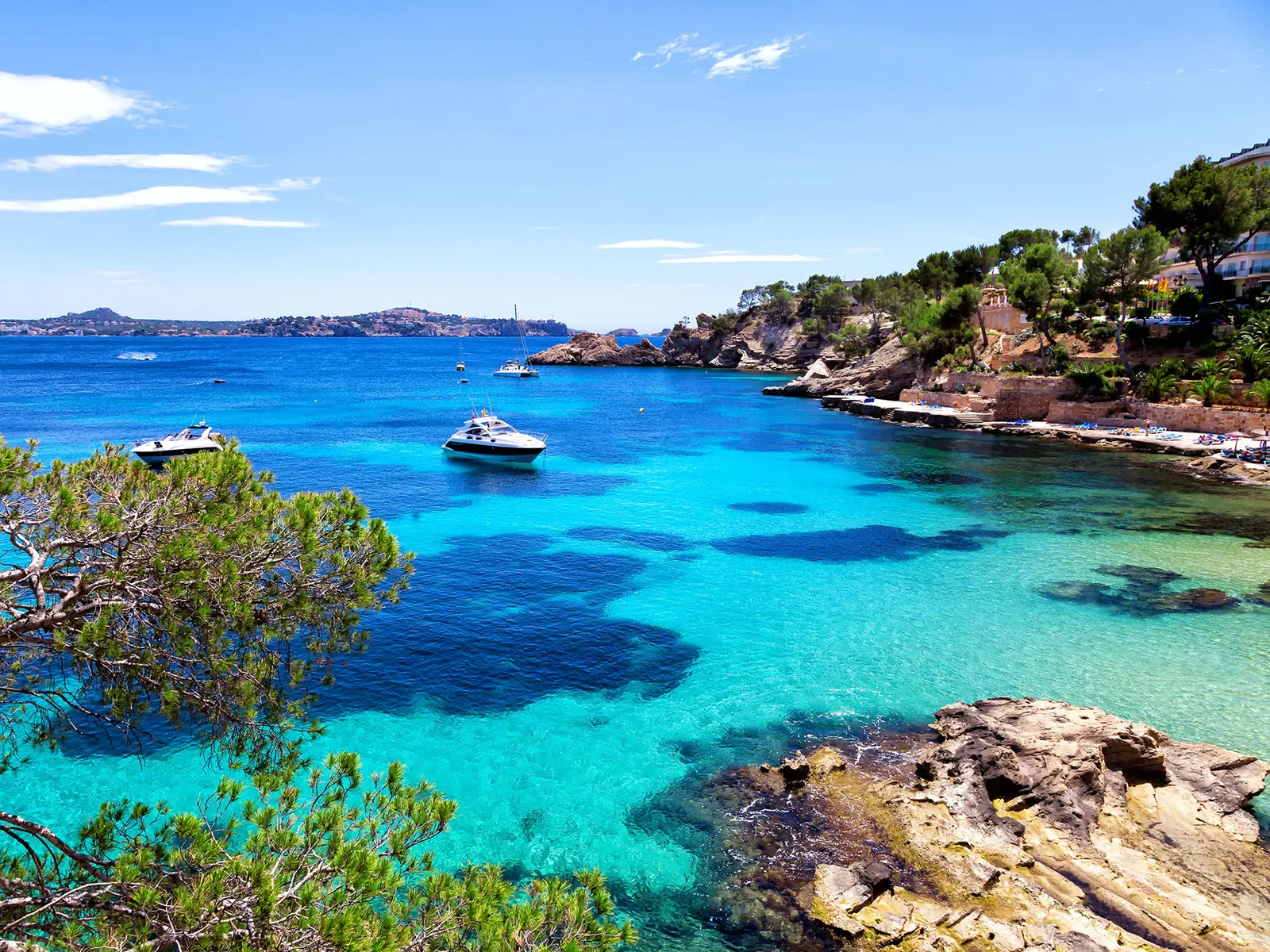
At the rocky entry points, water shoes help protect your feet.
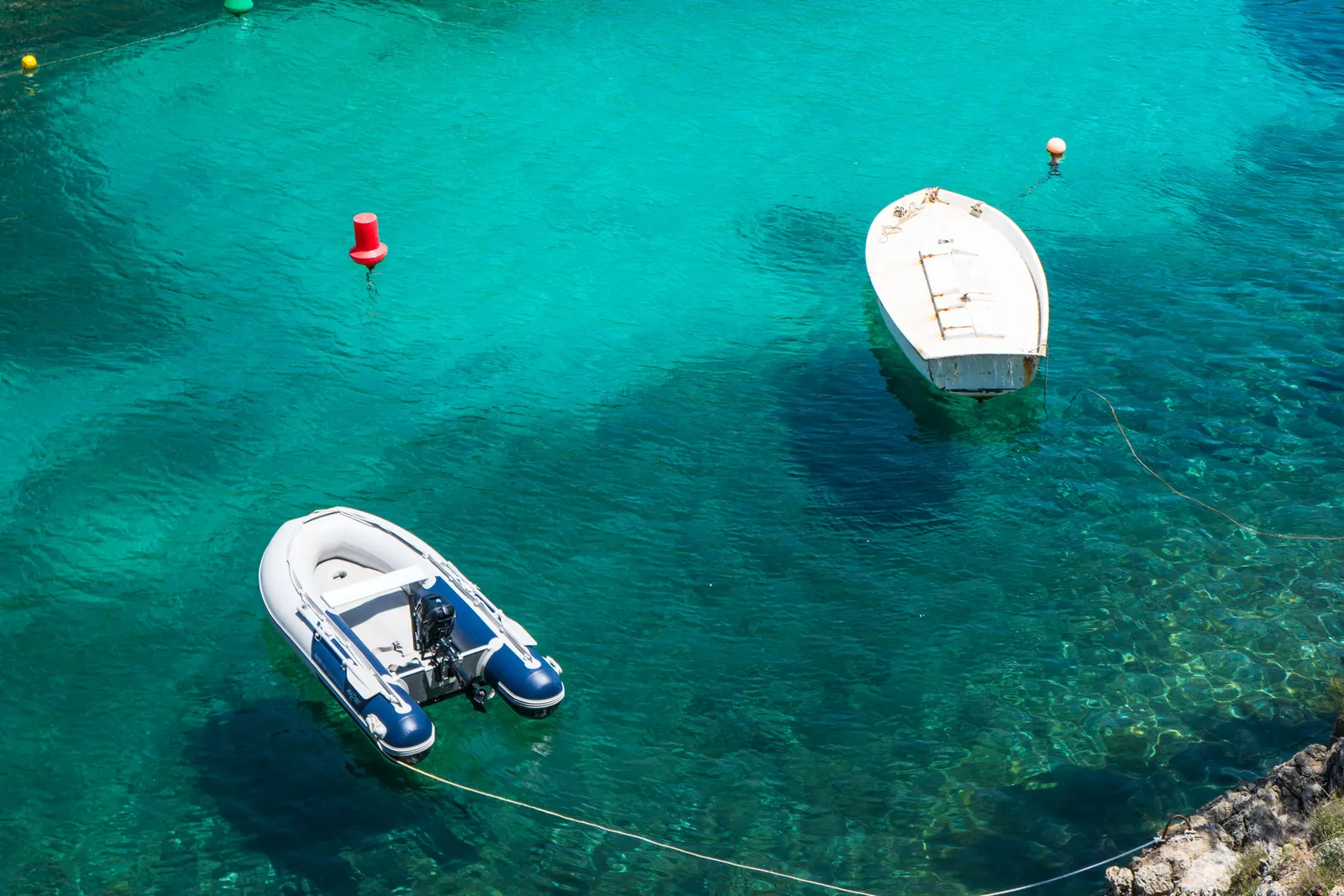
Boats lie offshore in the bay's sheltered anchorage.
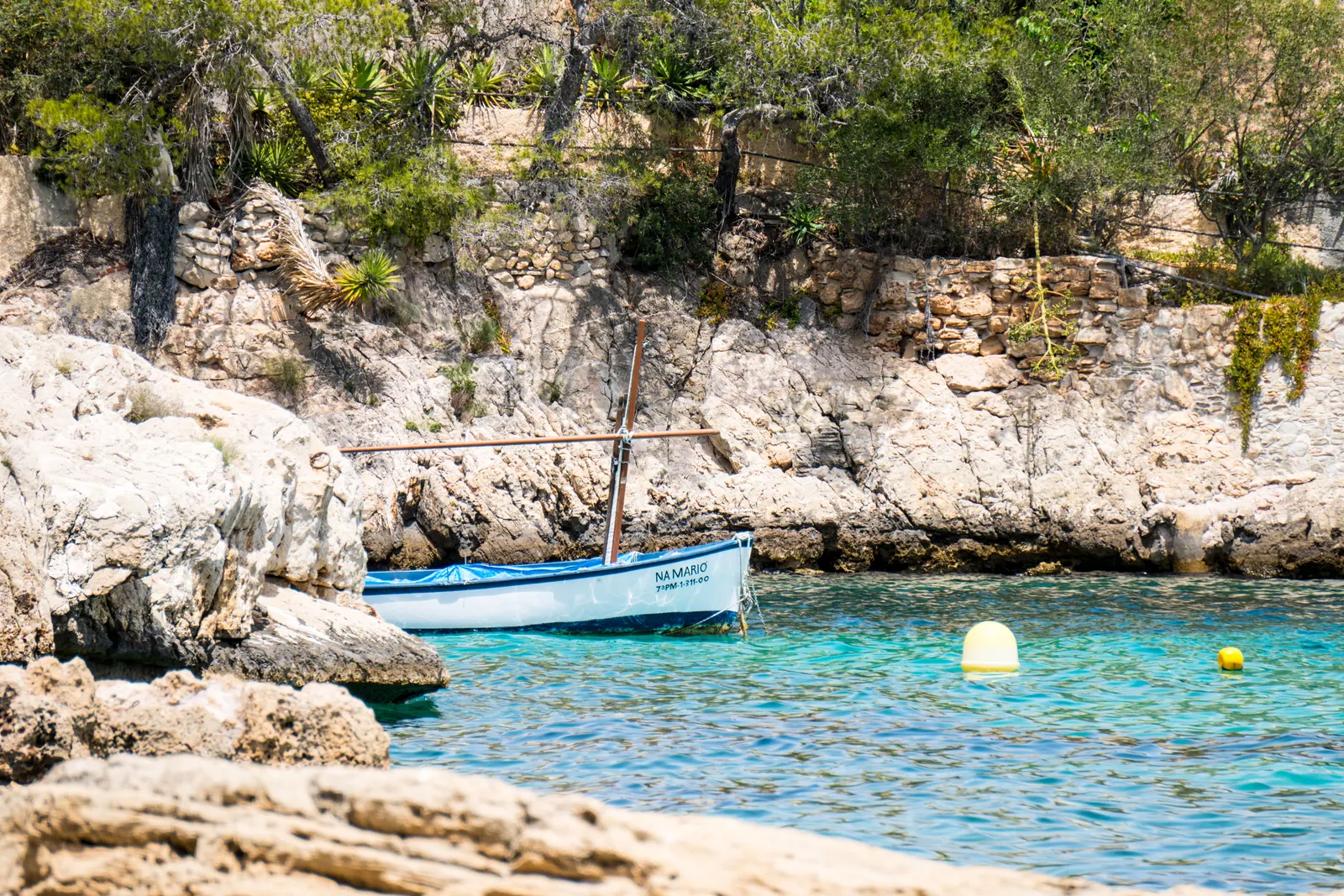
A small boat sits in one of the bay's rocky inlets.
Getting to know Cala Fornells
Does Cala Fornells suit your plans?
What to expect and what to know before you visit.
Who it suits
- Snorkelling and diving in calm, clear water
- A change of scene while staying in Paguera
- Arriving by public transport, with a stop nearby
- Looking for available free parking
Things to bear in mind
- Expecting a broad sandy beach
- Families needing easy, sandy water access everywhere
- Guaranteed quiet in high summer
- Relying on full visitor services in winter
Drive from the airport
35 minutes
32 km
Bus connections
A stop is near the bay
Region
Serra de Tramuntana
Nearest beach
Peguera
1 km
Elevation
15 m
above sea level
Season guide for Cala Fornells
November Worth considering
Very quiet Mostly closed
Worth visiting in March, April, May, June, September and October. Less suitable in August. Mostly closed in January, February, November and December.
Location
Location of Cala Fornells
- Region
- Serra de Tramuntana
- Municipality
- Calvià
- Elevation
- 15 m above sea level
- Airport
- 32 km , around 35 minutes
- Hire car
- not essential
- Worth visiting for
- a brief stop
- Coordinates
- 39.5319,2.4377
Around the bay
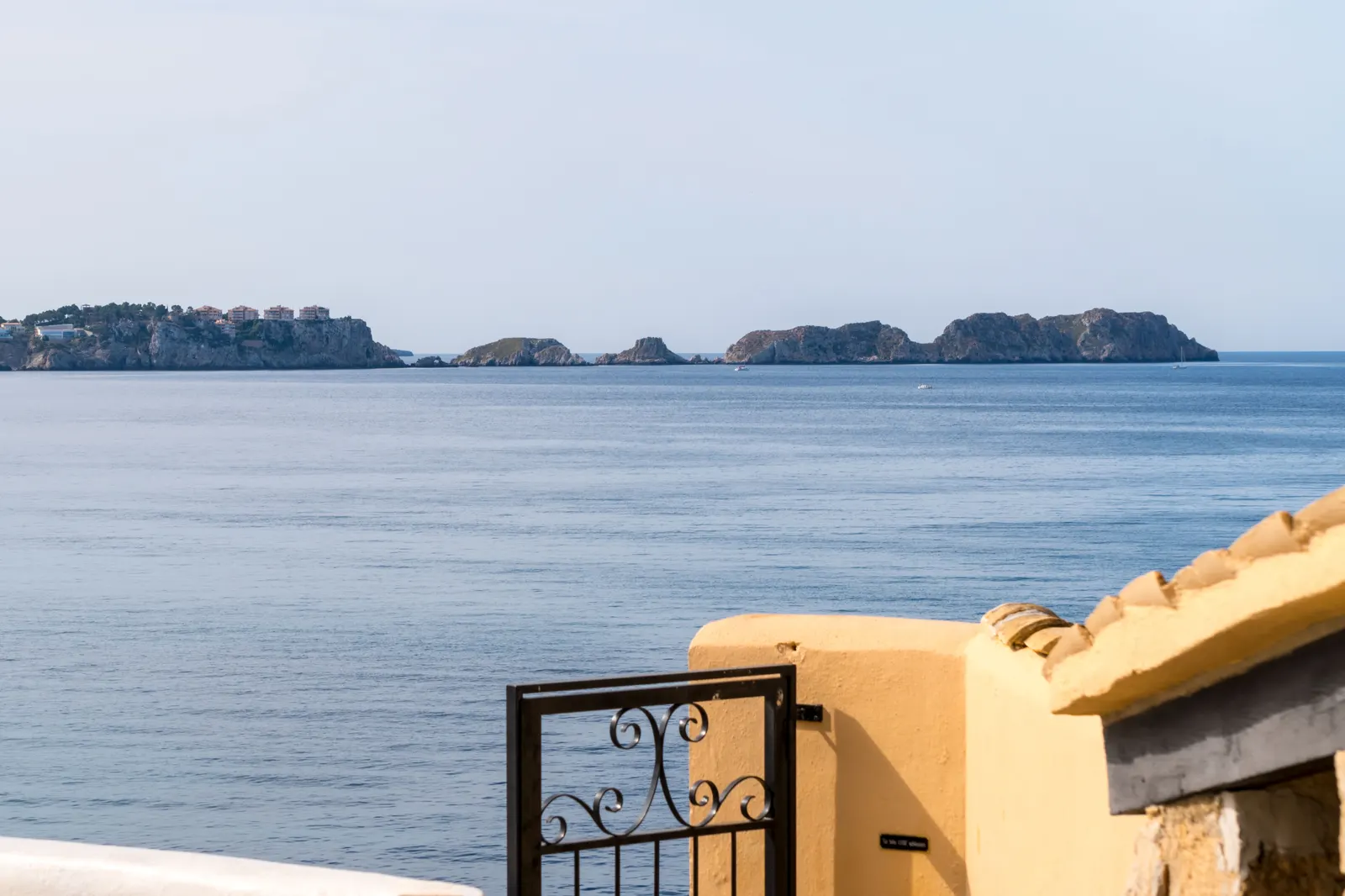
Cala Fornells is around two kilometres from Paguera, on Mallorca’s south-west coast. The smaller Cala de ses Llises is close by, and the Malgrats Islands lie offshore in this part of the coast.
Expect rocky shores and small areas of coarse sand, rather than a wide sandy beach. Several swimming spots involve steps or rocks, but in calm weather the water can be beautifully clear and turquoise.
Bring water shoes and a mask and snorkel if you want to explore the rocky edges.
The anchorage
The offshore anchorage has a royal connection. Don Juan de Borbón, Count of Barcelona and father of King Juan Carlos I, visited this area aboard his yacht Giralda.
The hillside buildings
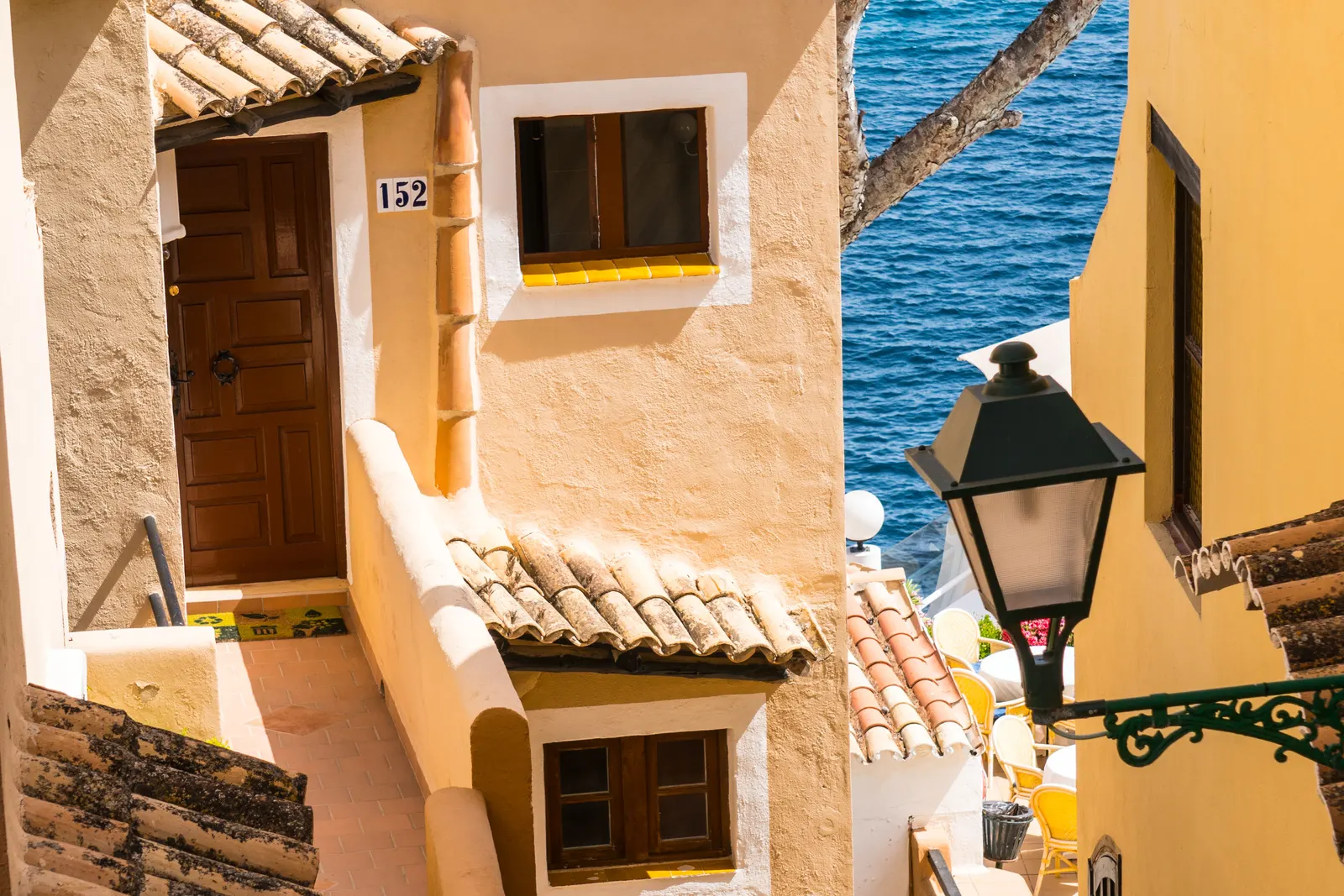
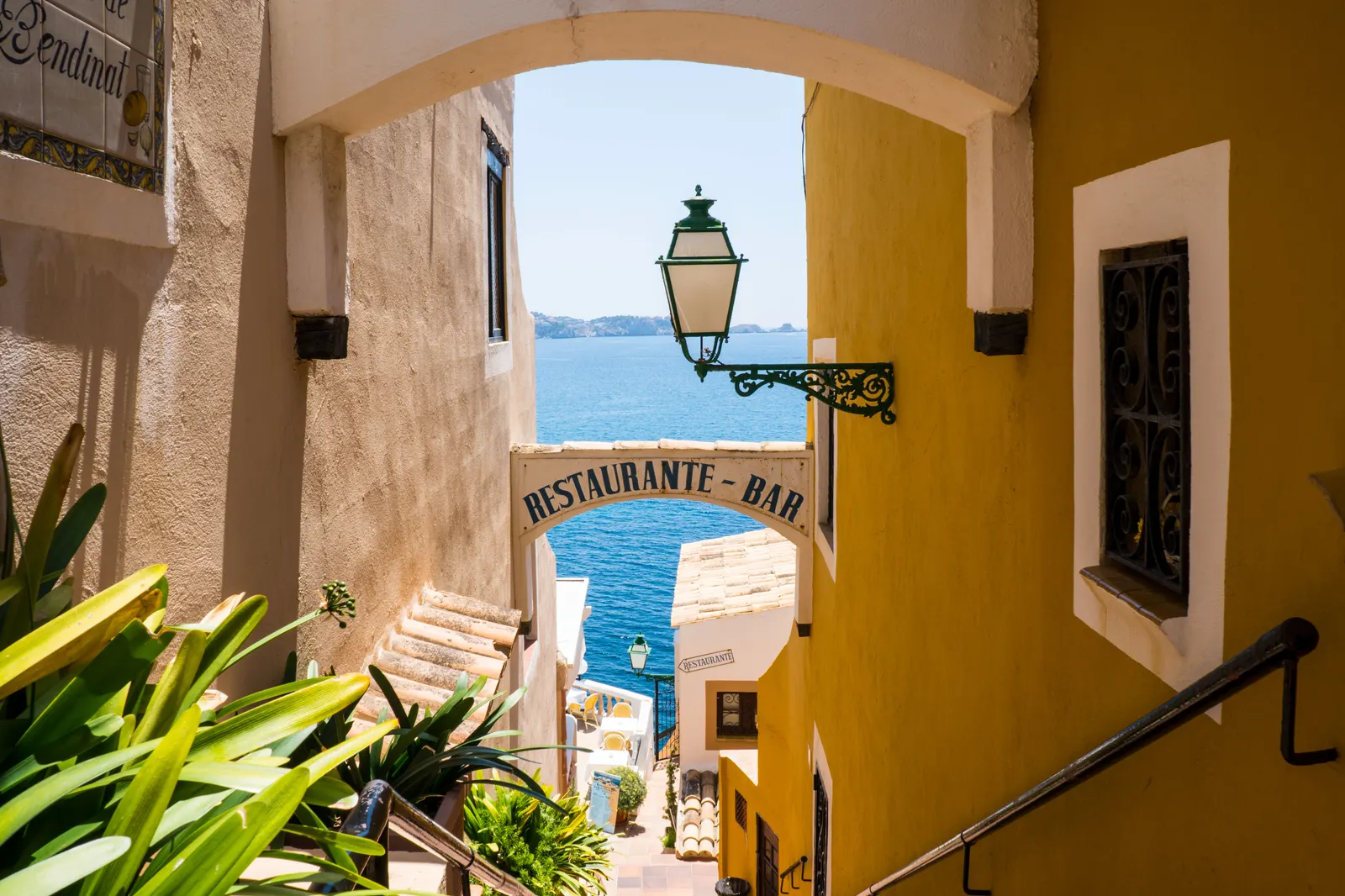
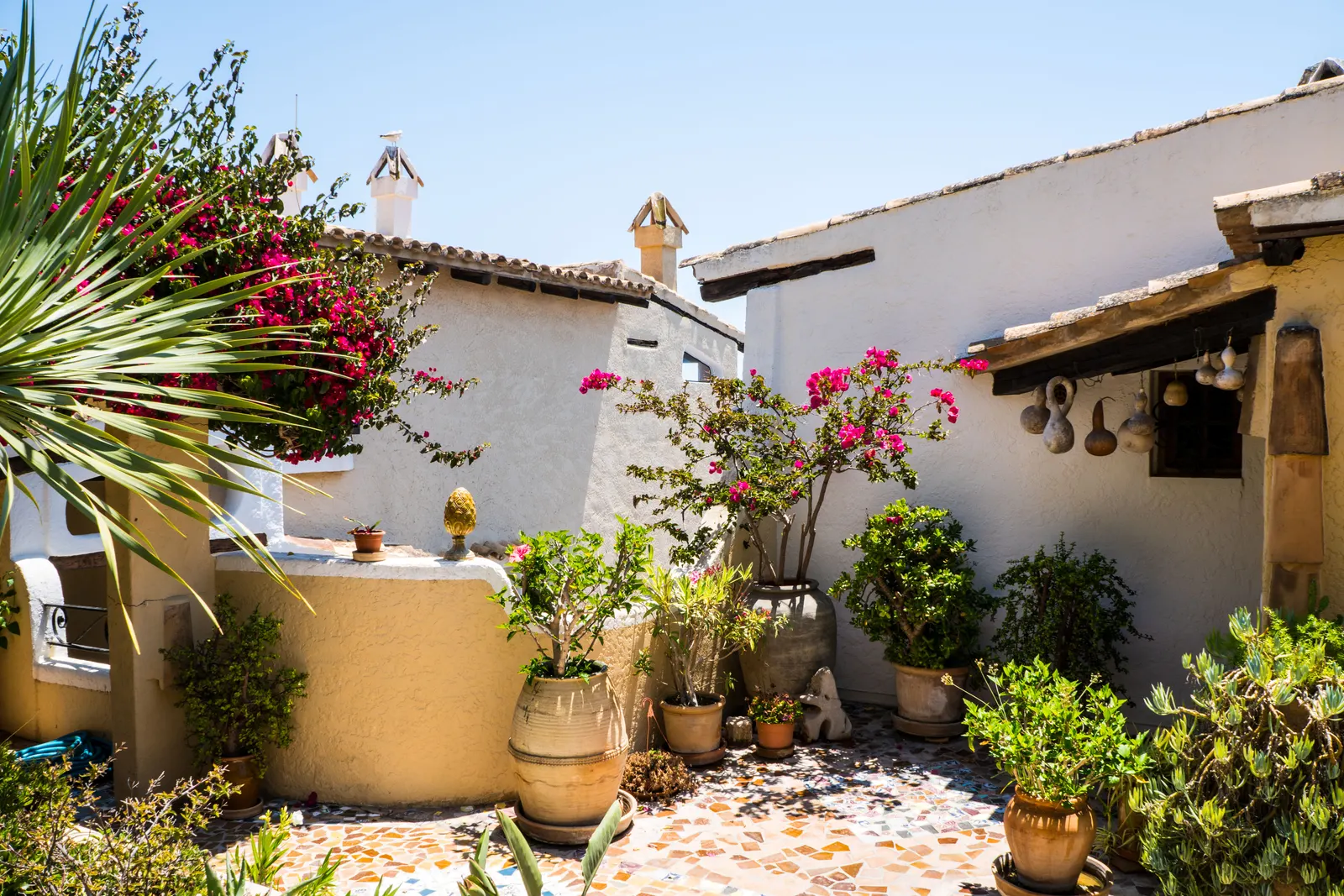
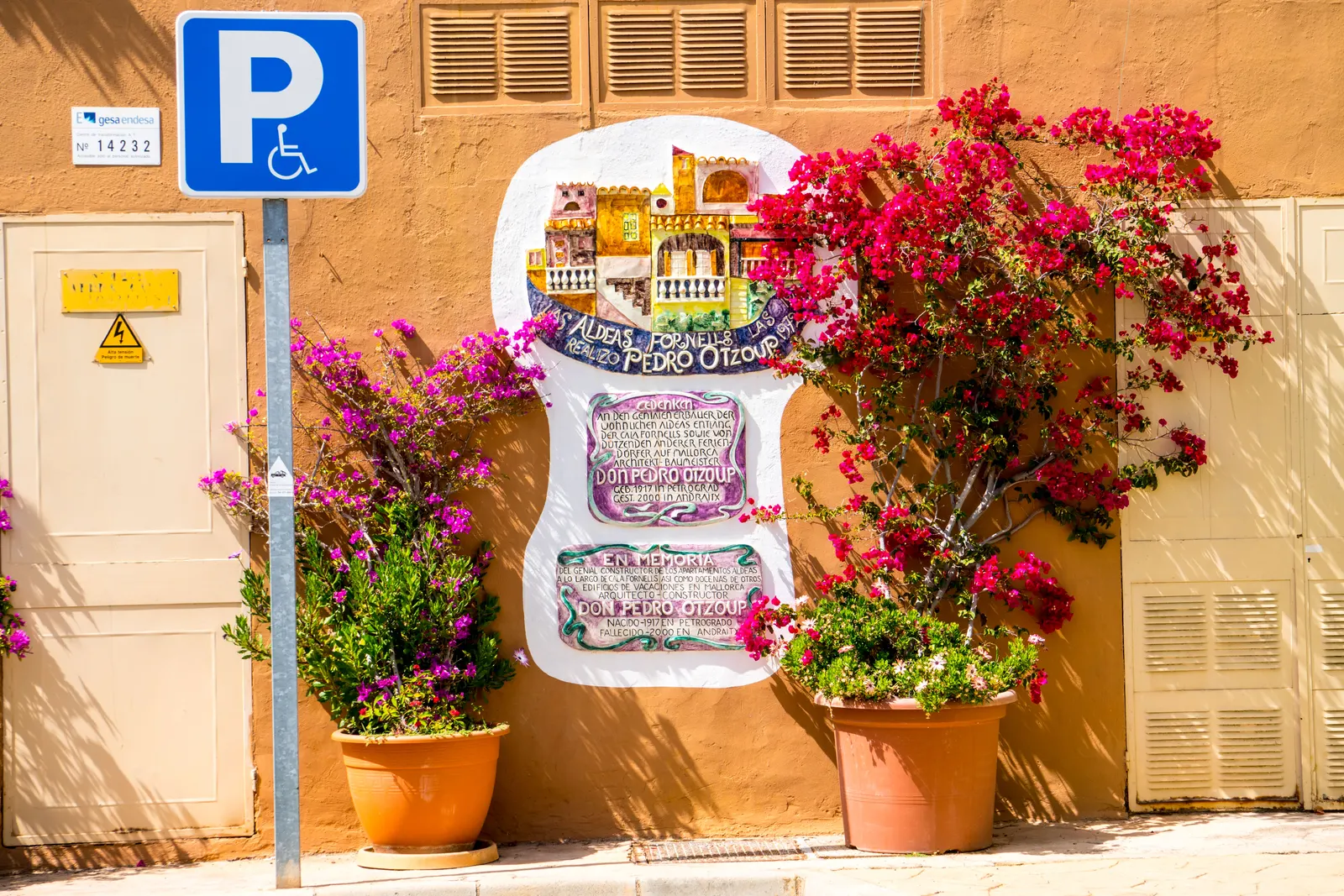
Apartment complexes, restaurants and private houses surround the bay. Many step up the hillside, with trees helping them blend into the slope when viewed from the water.
Steps and narrow lanes thread between the buildings. These can be enjoyable to explore, but they make some routes awkward with a pushchair.
Practical details
There is some free parking and a bus stop nearby. Spaces fill early in high season, so have another way of getting here in mind.
For supermarkets, a pharmacy or medical services, head to Paguera. Around the bay itself, the main services are restaurants.
When to come
May and October are pleasant months. In September, the sea still holds its summer warmth, though underwater visibility depends on wind and waves. August is busy, and the limited space on the rocky shores fills quickly.
Photographs
Cala Fornells in Mallorca
How much time do you have?
Things to do in Cala Fornells
Three hours
Choose a suitable swimming spot, snorkel along the shore in calm conditions, then stop for a drink overlooking the bay.
Half a day
Add neighbouring Cala de ses Llises and a walk through the lanes and steps between the terraced houses.
A full day
Spend part of the day here and part on Paguera's sandy beach, depending on who is with you.
On a rainy day
There is little to do here in rain. Palma is just over half an hour away.
The beach at a glance
- Underfoot
- Rock and coarse sand
- Getting into the water
- Rocky access and steps at several spots; choose your entry carefully
- Length
- Several small sections rather than one long beach
- Shade
- Trees beside the shore and parasols at the restaurants
- Wind
- Often sheltered, though local sea conditions still need checking
- With children
- Depends on the spot; rocky access makes some sections difficult
- Facilities
- Restaurants overlooking the bay · Some free parking · A nearby bus stop · No sunlounger or parasol hire on the rocky shelves
Practical details
- Parking
- Some free parking near the bay, taken early in high season
- Public transport
- A stop nearby; check connections from Paguera
- Time to allow
- Half a day
- Good to know
- Several swimming spots have rocky access. Water shoes are useful, and a mask is worth bringing for calm conditions.
- Bus
- A stop is near the bay; check current connections from Paguera and Palma
- Shops and services
- Supermarkets: In Paguera, around two kilometres away · Pharmacy: In Paguera · Medical care: In Paguera · Cash machines: In Paguera · Fuel: In Paguera
- Access
- Tarmac roads, then steps and rock at several water access points · Pushchairs: You can reach some restaurants, but many paths down to the water are difficult · Wheelchairs: Limited · Dogs: Not permitted at the bathing spots during the season
- What you will not find
- A broad continuous sandy beach · Sunloungers and parasols on the rocky swimming shelves · A supermarket beside the bay · Lively nightlife
- Coordinates
- 39.5319,2.4377 Google Maps Apple Maps
Within reach
Places to visit
Nearby

The south-west's marina, with 670 berths, rows of white boats and a white tower by the quay. You come here to look …

The first major viewpoint on the west-coast road after Andratx. Stone steps climb from beside a road tunnel to a …

A striking circular Gothic castle, built above Palma between 1300 and 1311. Inside is a two-storey round …

A round 16th-century watchtower on an isolated rocky outcrop above the west coast. Climb the stone steps to the …

Sant Pere bastion, built in the late 16th century on the western edge of Palma’s old town, became home to a …

A historic country estate near Esporles, with a manor house and gardens. Public access hasn’t been confirmed, so …

Palma’s cathedral was begun in 1230 and built over several centuries. Its Gothic buttresses rise above the water …

The royal palace beside Palma cathedral began as a Moorish alcázar, later converted into a residence for …
Distances without a driving time are measured in a straight line. The road journey can be much longer; known driving times are shown alongside.
Other beaches to consider
Beaches and swimming nearby

Three sandy bays in a row, separated by pine-covered rocky headlands, with a plane-tree-lined boulevard behind …

A compact sandy bay in the municipality of Andratx, surrounded by pine-covered slopes. A wooden footbridge leads …

A large resort in the south-west with a broad sandy beach, marina and offshore islands. Jaume I landed here in …

An upmarket natural harbour in a deep, sheltered bay, with fishing boats on one side, yachts on the other and …
Explore from here
Your questions answered
Your questions about Cala Fornells
Is there a sandy beach at Cala Fornells?
There are small areas of coarse sand among the rocky shores, rather than a broad sandy beach. Several swimming spots involve steps or rocks. For a larger, easier sandy beach, head to nearby Paguera.
Can you park free at Cala Fornells?
Some free spaces are available near the bay, but they fill early in high season. A bus stop nearby offers another option; check the current timetable.
Is Cala Fornells good for snorkelling?
Yes, the rocky shores are worth exploring when the sea is calm and clear. Water shoes help with the entry. Visibility varies with wind and waves.
Where is Cala Fornells?
On Mallorca's south-west coast, in the municipality of Calvià, around two kilometres from Paguera. The Malgrats Islands lie offshore in this part of the coast, and smaller Cala de ses Llises is nearby.
Is Cala Fornells suitable for children?
It depends on which part you choose. Rocky entries and steps make some spots difficult with small children. Paguera's larger sandy beaches are usually more practical for families, while older children who swim and snorkel may enjoy the rocky edges here.
Practical questions
When is the best time to visit Cala Fornells?
Recommended months: March, April, May, June, September, October. Access and opening are limited in January, February, November, December. See the visiting advice on this page. A quieter bay, with water still cool for swimming.
Is Cala Fornells worth visiting in July and August?
July: worth considering with some reservations. Usually busy. Space is limited, and the rocky spots fill during the morning. August: another month may suit you better. Usually very crowded.
How far is Cala Fornells from Palma airport?
About 32 km from Palma airport. Allow roughly 35 minutes by car. Around two kilometres from Paguera. Some parking is free, but spaces are scarce in high summer.
Do I need a hire car for Cala Fornells?
Easy to manage without a car A stop is near the bay; check current connections from Paguera and Palma
Where can I park in Cala Fornells?
Some free parking near the bay, taken early in high season
Can you swim at Cala Fornells?
Yes. Rock and coarse sand Rocky access and steps at several spots; choose your entry carefully Several small sections rather than one long beach Trees beside the shore and parasols at the restaurants Depends on the spot; rocky access makes some sections difficult
Can I visit Cala Fornells with a pushchair or wheelchair?
Tarmac roads, then steps and rock at several water access points Pushchairs: You can reach some restaurants, but many paths down to the water are difficult Wheelchairs: Limited
Are dogs allowed at Cala Fornells?
Not permitted at the bathing spots during the season
Cala Fornells features in our Mallorca highlights
Words and photographs: Friedhelm Fischer. Exploring Mallorca since 2013 — by bike, on foot and with a camera.