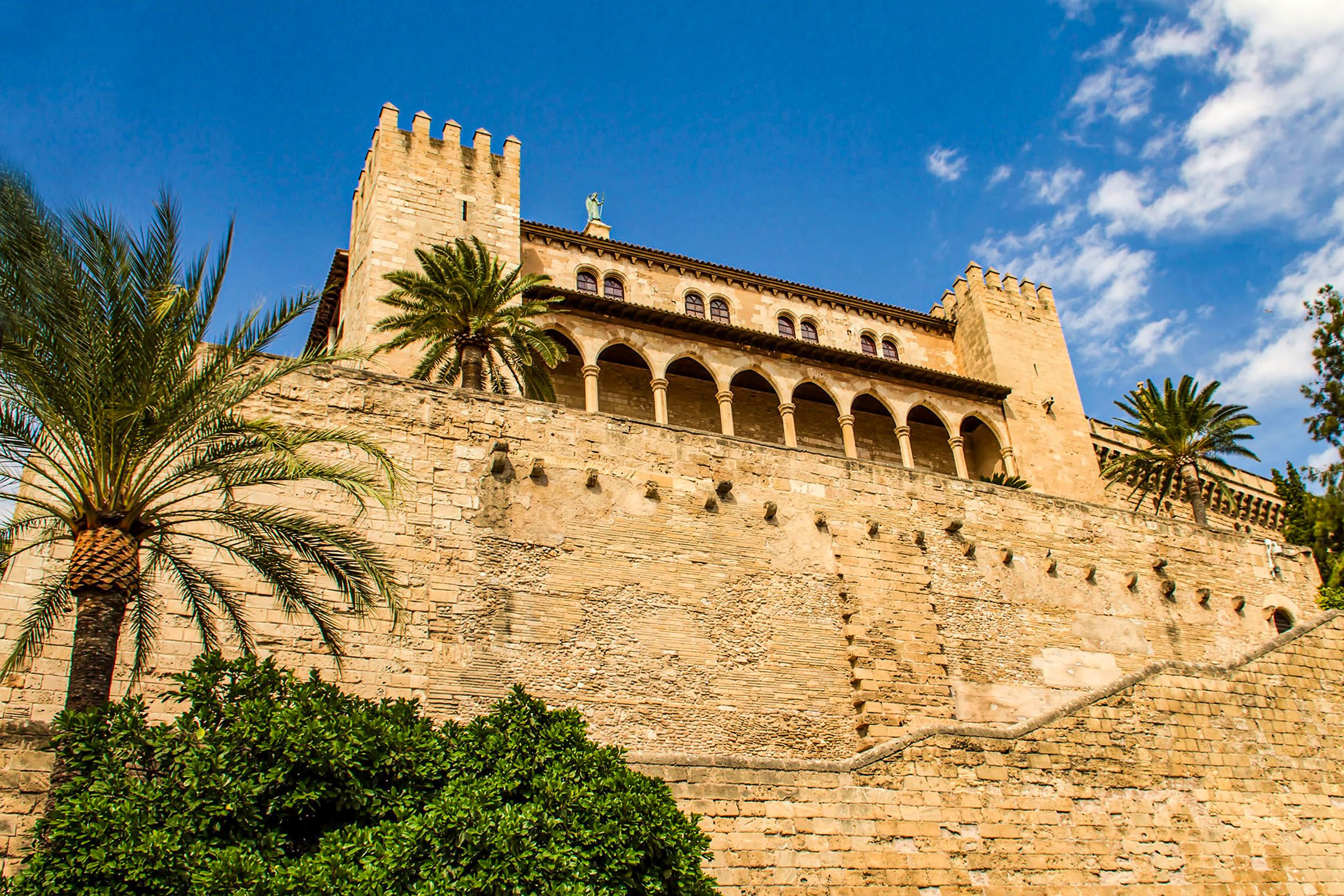
The royal palace beside Palma cathedral began as a Moorish alcázar, later converted into a residence for Mallorca’s kings by Jaume II. Reopened on 29 July 2026, it has a new visitor route and access to the Queen’s Palace for the first time.
Palau de l'Almudaina
Palau de l'Almudaina in 30 seconds
The essentials at a glance
- Worth visiting for
- A short visit
- Best for
- You’re visiting the cathedral and have another hour.
- Best months
- January–June, September–December
- Time to allow
- An hour.
- Without a car
- Better without a car
- Parking
- Paid car parks at Parc de la Mar.
- Keep in mind
- You expect grandeur on the scale of Versailles.
- Access
- Pushchairs: Limited access. · Wheelchairs: Partly accessible.
Get a feel for Mallorca. Find your kind of place.
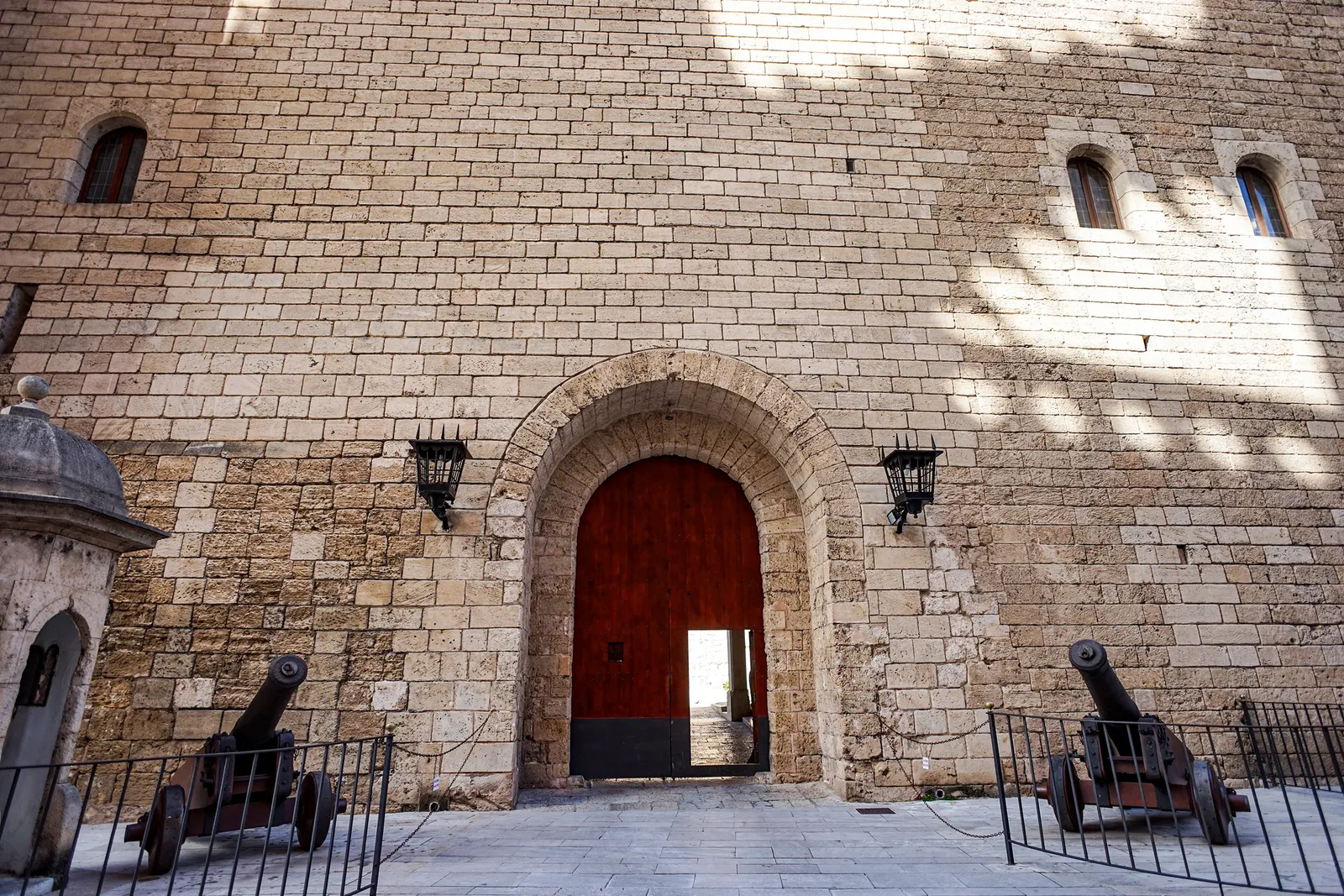
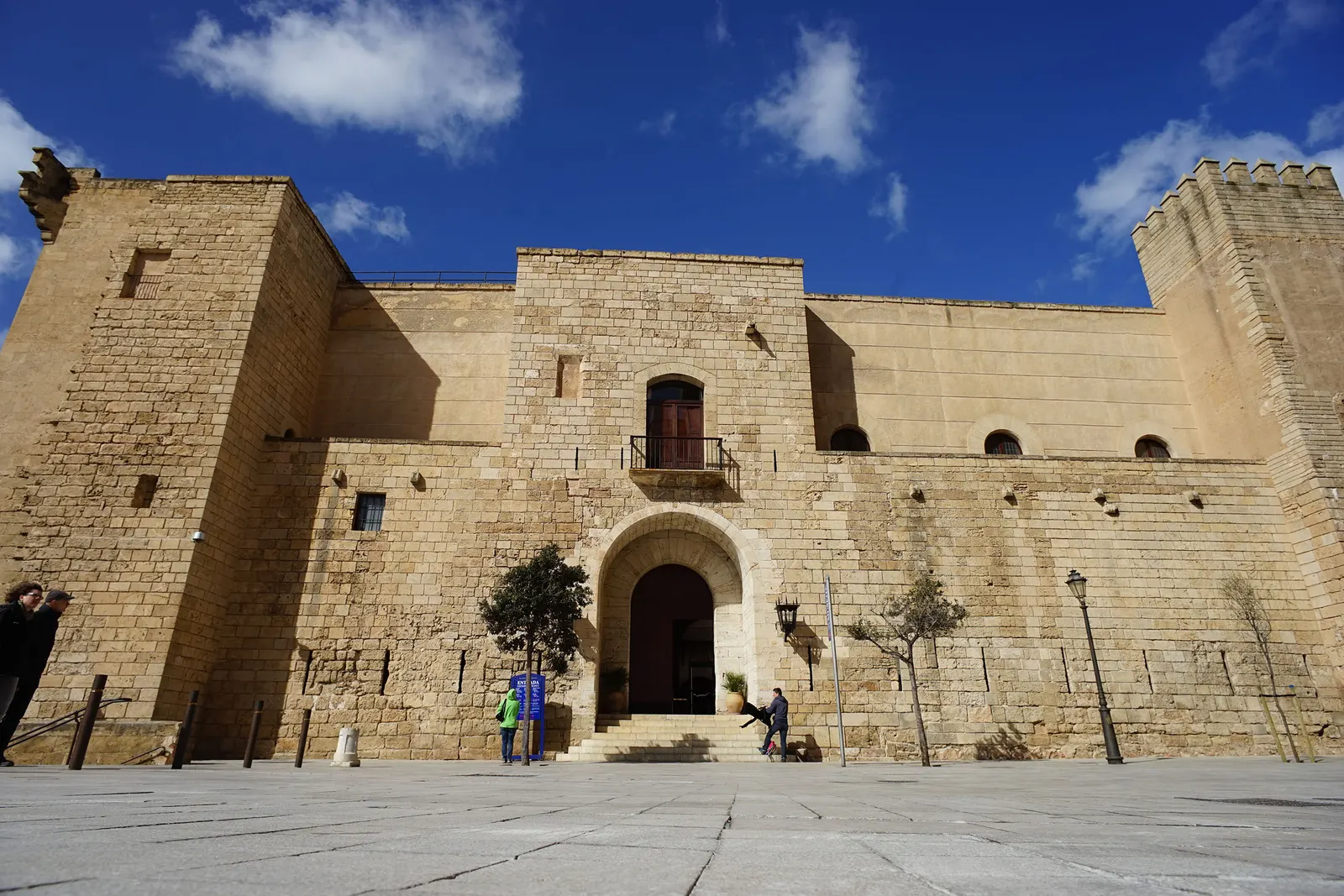
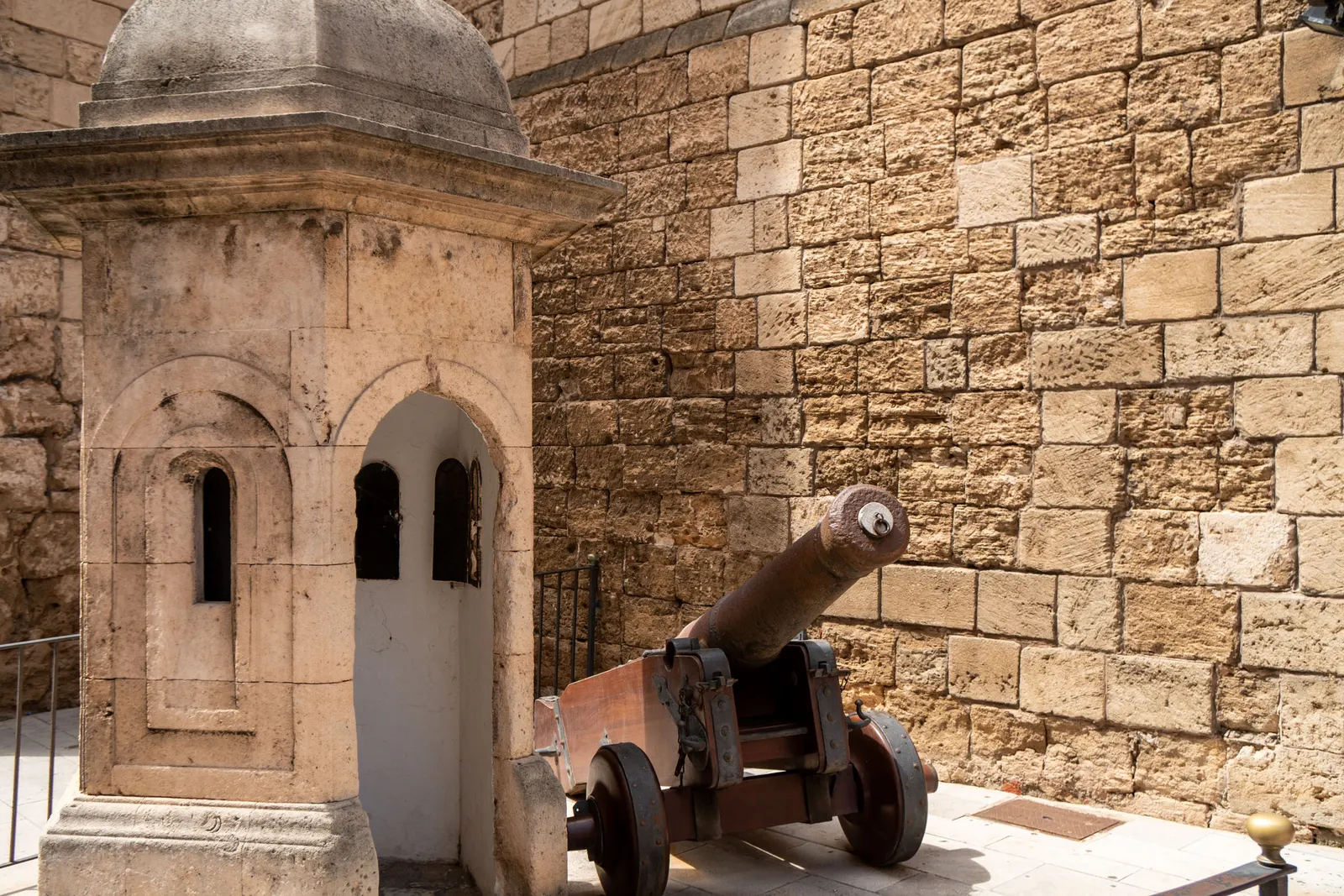
Two cannons beside the gate recall the palace’s military past.
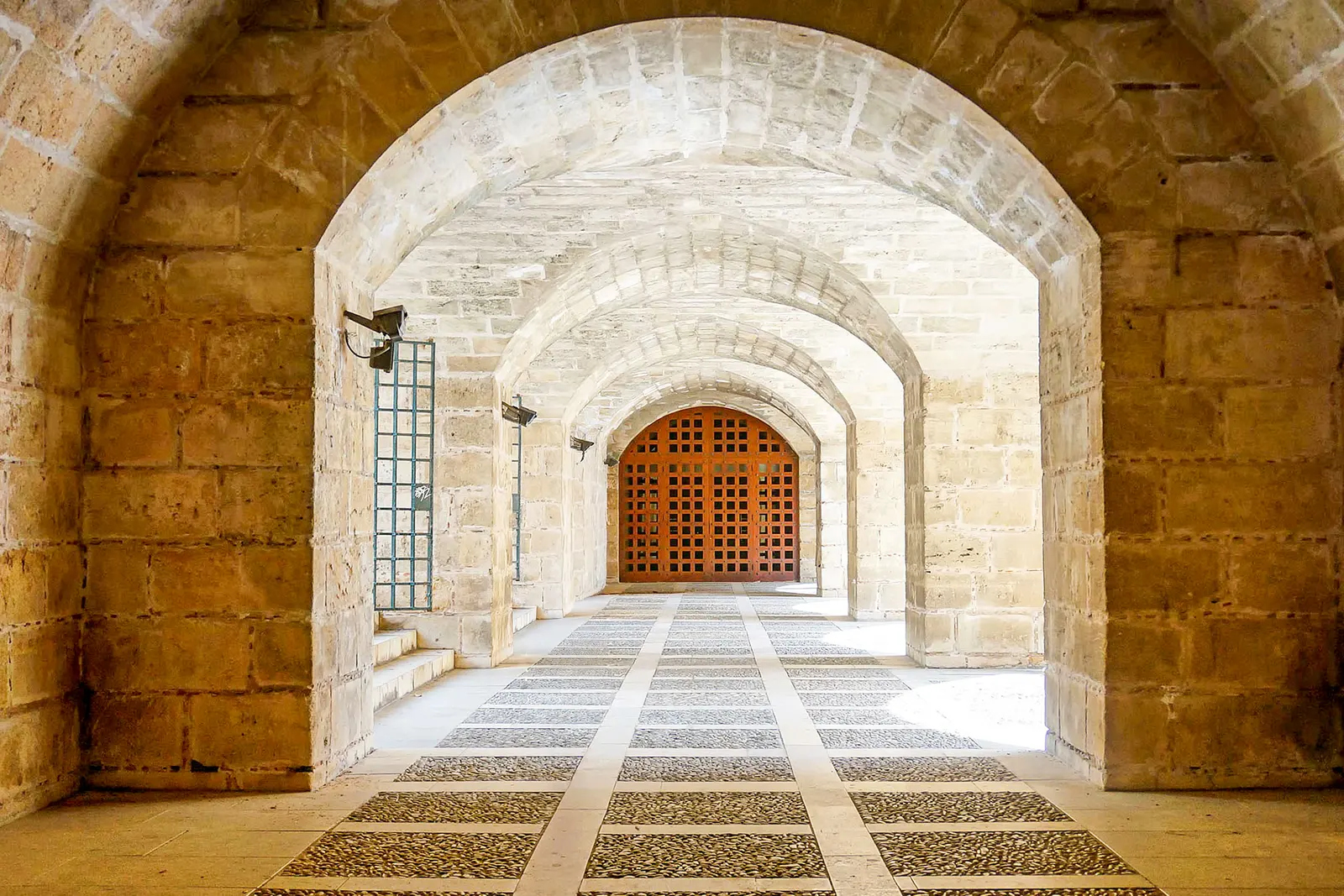
This passage runs through the building and stays pleasantly cool in summer.
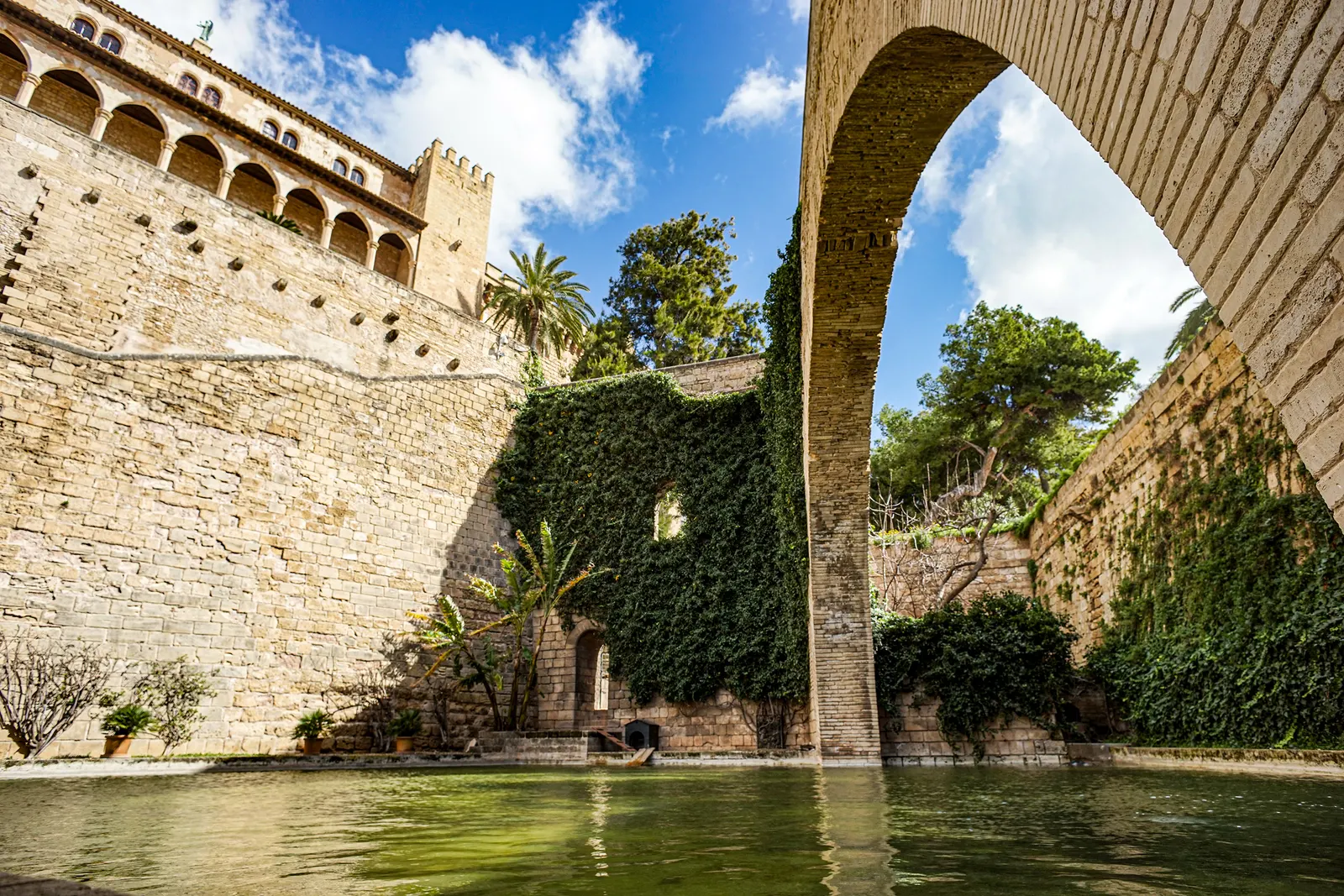
Still water beneath the arch, with the city above.
Getting to know Palau de l'Almudaina
Does Palau de l'Almudaina suit your plans?
What to expect and what to know before you visit.
Who it suits
- You’re visiting the cathedral and have another hour.
- You’d like to see how a fortress became a palace.
- You’re interested in a guided visit; German-language tours run Tuesday to Friday at 12.30pm.
- You want shade and water in the gardens on a hot day.
Things to bear in mind
- You expect grandeur on the scale of Versailles.
- You’re in Palma on Monday, when it’s closed.
- Architectural history doesn’t interest you.
- You’re very short of time; prioritise the cathedral then.
Drive from the airport
20 minutes
10 km
Bus connections
EMT services
Region
Palma
Nearest beach
Can Pastilla
7 km
Elevation
15 m
above sea level
Season guide for Palau de l'Almudaina
November Worth a visit
Very quiet Open
Worth visiting in January, February, March, April, May, June, September, October, November and December.
Location
Location of Palau de l'Almudaina
- Region
- Palma
- Municipality
- Palma
- Elevation
- 15 m above sea level
- Airport
- 10 km , around 20 minutes
- Hire car
- more hindrance than help
- Worth visiting for
- a brief stop
- Coordinates
- 39.5675,2.6472
About Palau de l’Almudaina
Palma’s royal palace stands beside the cathedral. It belongs to Patrimonio Nacional, the state body responsible for Spanish royal properties, and remains an official royal residence. The royal family’s Mallorcan summer residence, however, is Marivent, a few kilometres west.
Its name comes from Arabic al-mudayna, “the little city”, referring to the fortified district where the rulers lived.
The angel on the tower
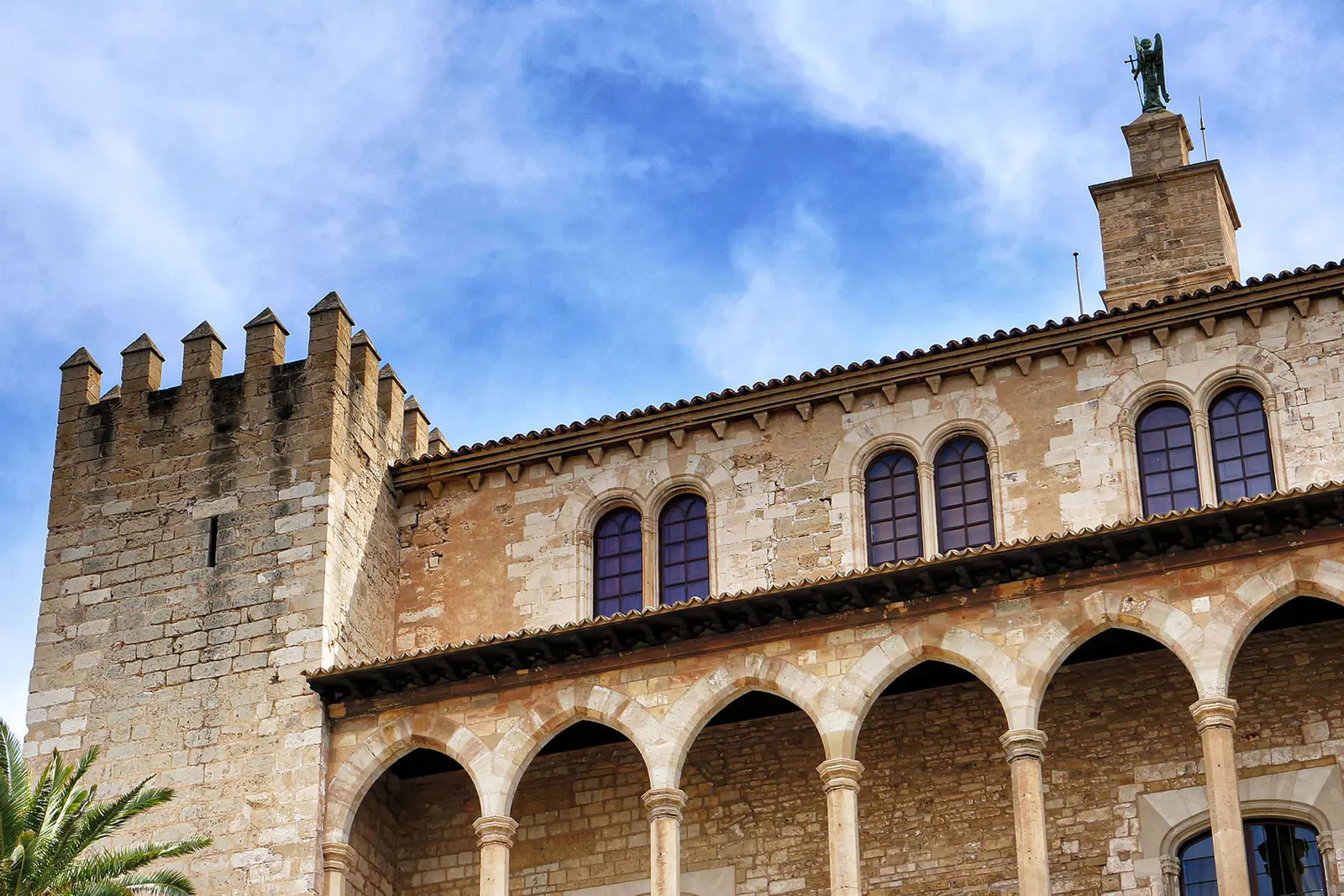
The figure on the highest tower is a weather vane. Its outstretched right arm and finger turn into the wind, once providing useful information for ships in the harbour.
Jaume II commissioned it from Roussillon sculptor Antoni de Camprodon, and it was completed in 1310. The angel holds a trefoil cross in its left hand and wears a shield inscribed “Et Verbum caro factum est”, “And the Word was made flesh”.
Its identity remains debated: either the Archangel Gabriel or the guardian angel who was long Palma’s patron. The tower is named Torre de l’Àngel after it.
Originally made with a wooden core covered in copper sheet, the figure is now entirely metal. It was restored and returned to the tower in 1977.
From alcázar to royal residence
Remains of Roman fortifications lie beneath the palace. The Moors built their alcázar above them, known as the Zuda at the time of the conquest and serving as the governor’s seat in Madina Mayurqa.
In 1298, Jaume II launched a city-wide building programme, with the palace conversion its largest project. Main work took place between 1309 and 1314, continuing under Sanç and Jaume III until 1343. The model was the palace of Mallorca’s kings in Perpignan, the kingdom’s second capital.
With the independent kingdom’s end in 1349, the palace lost its role as the seat of Mallorca’s kings. Charles V added the upper floor in the first half of the 16th century. Philip II converted the great Tinell hall into the Real Audiencia, the highest court, and installed the islands’ captaincy general elsewhere. The palace became an administrative building for centuries.
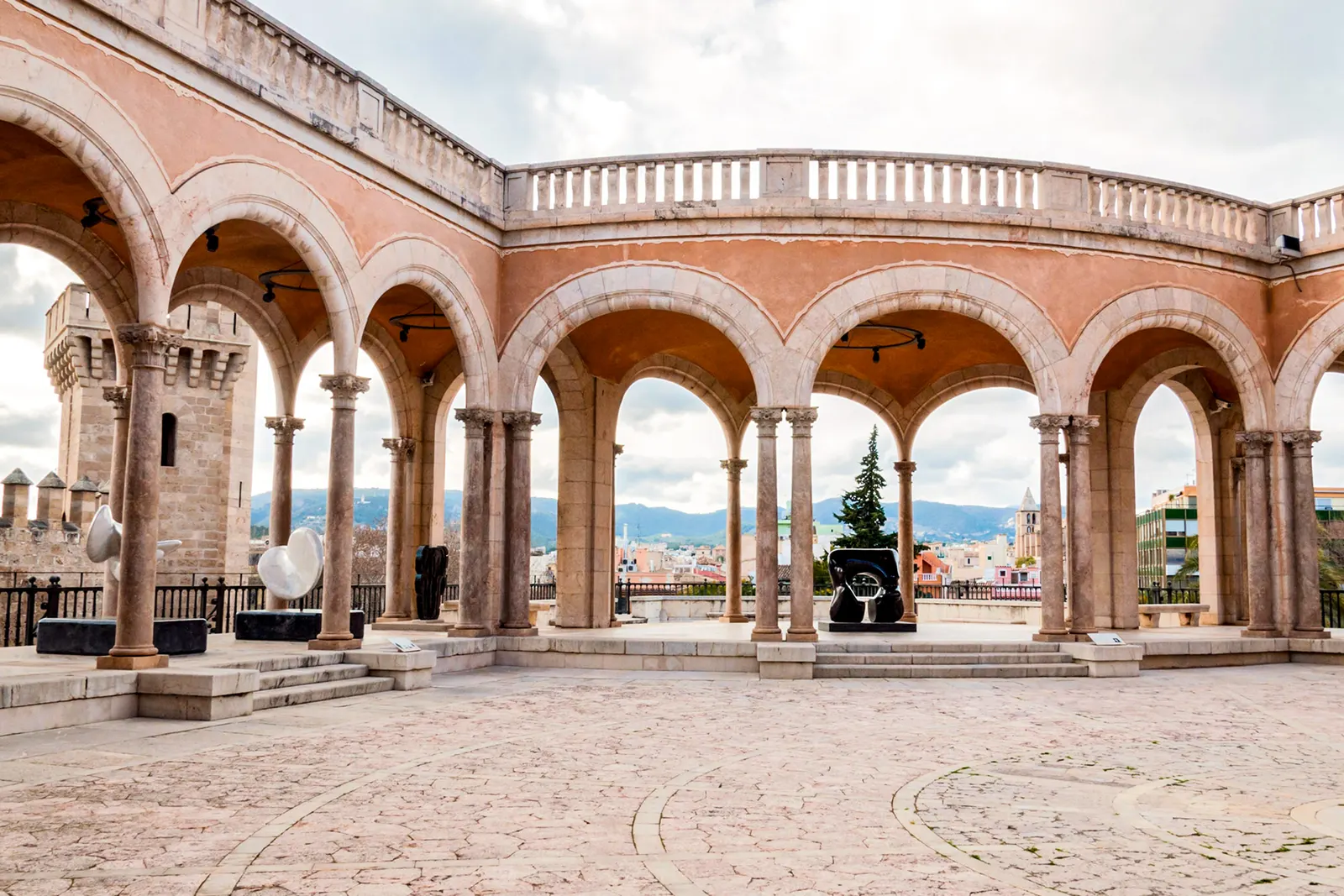
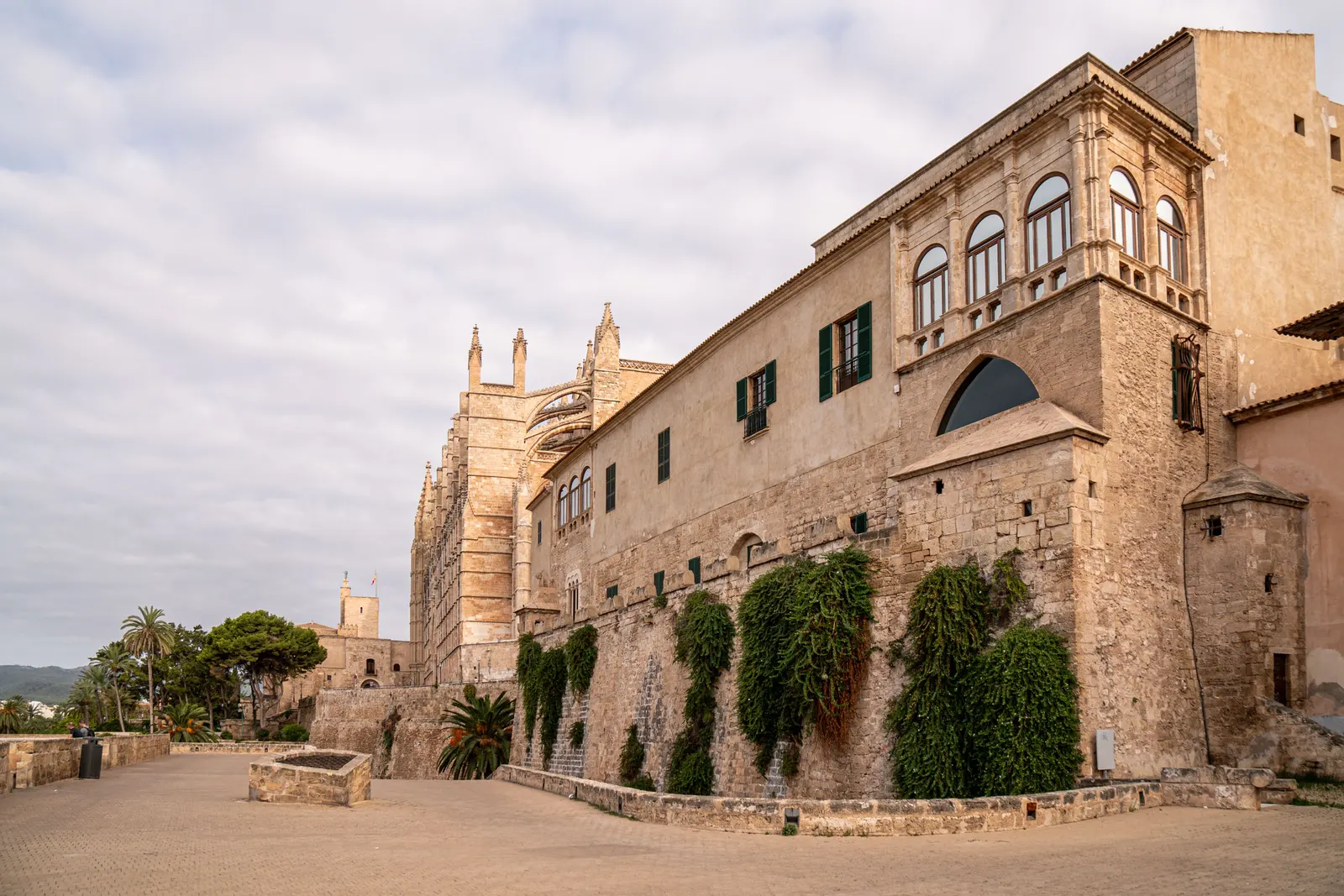
Its fabric reveals these layers, with massive, sparsely windowed walls below and loggias and arcades above.
Inside the palace
The building has two apartments, Palau del Rei and Palau de la Reina, the King’s Palace and Queen’s Palace.
Between them is Saló del Tinell, the great ceremonial hall, divided horizontally into two storeys in the 16th century.
The Capella de Santa Anna is particularly beautiful, an early-14th-century Gothic chapel. Sculptures on its tympanum, corbels and vault bosses came from Pierre de Guines and the Camprodon workshop, also responsible for the angel.
There are also Arab baths: three small rooms between Torre del Bany and Torre de l’Homenatge, shared by the two apartments. Older than the Christian rebuilding, they continued in use afterwards.
The new route, opened in July 2026
The palace closed from 12 January to late July 2026. Patrimonio Nacional spent €2,573,000 of EU funding renewing the visitor route, displays and lighting, reopening on 29 July 2026.
The route now follows a chronology, from the Roman site through Muslim Madina Mayurqa, the Kingdom of Mallorca, the Crown of Aragón and the Bourbons. It ends in the throne room, furnished as in Alfonso XIII’s time.
The Queen’s Palace is newly open to the general public, with displays about Isabella II’s visit to the Balearics in 1860.
Look closely at three particular objects:
- A 10th-century marble lion, once a fountain spout in the royal gardens and now in the room covering Islamic history.
- A 12th-century bronze tap with a lion’s-head spout.
- The Coronation of the Virgin tympanum from the late 13th century, originally above Santa Anna chapel’s entrance.
Roman coins from Patrimonio Nacional’s collection appear alongside pottery and amphorae on long-term loan from the Museu de Mallorca.
S’Hort del Rei gardens
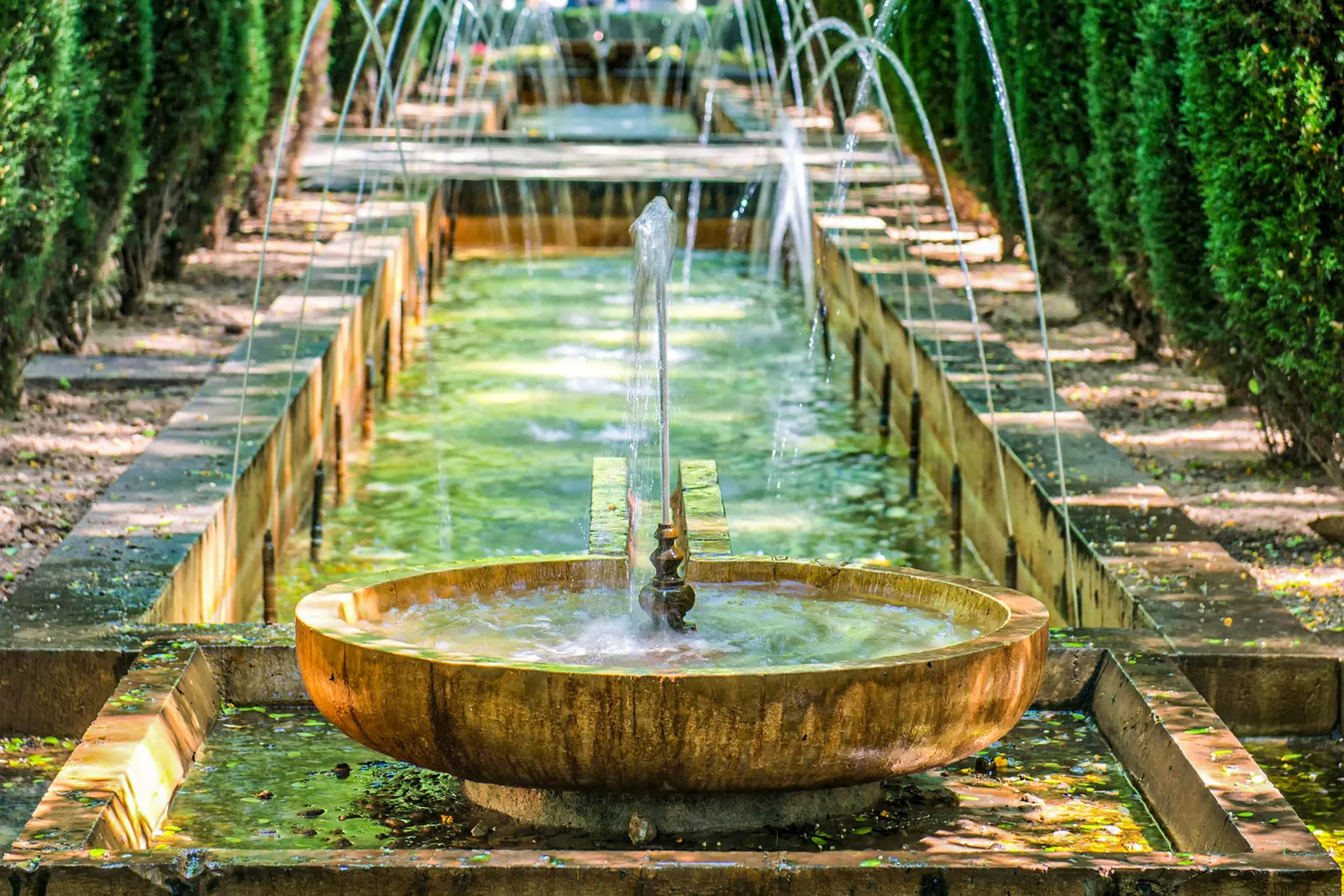
Below the wall, S’Hort del Rei has long water channels and fountains between tall hedges. Admission is free, and it offers some of central Palma’s best shade.
The marble lion now inside the palace came from one of these pools.
Planning a visit
Open Tuesday to Sunday, 10am–7pm from April to September and 10am–6pm from October to March. The ticket office closes an hour earlier. Closed Mondays.
Admission is €8, reduced €5, with a guided tour costing €8 extra, as of August 2026. EU citizens enter free after 3pm on Wednesdays and Sundays, through the ticket office only and without a tour.
German-language tours run Tuesday to Friday at 12.30pm and last an hour. Photography without flash is permitted; tripods and selfie sticks aren’t.
Bus 15 stops at Palau Reial. State occasions can cause short-notice closures, so check Patrimonio Nacional before travelling.
When to come
March and October are good choices. In winter, you may have much of the palace to yourself. In high summer, the first hours after opening are quietest. If coming later, finish with the gardens below.
Photographs
Palau de l'Almudaina in Mallorca
How much time do you have?
Things to do in Palau de l'Almudaina
Three hours
Visit the cathedral and Almudaina, then go down to the royal gardens.
Half a day
Add Banys Àrabs and a walk through the old town.
A full day
Explore Palma’s old town, cathedral, Almudaina, Santa Catalina and harbour.
On a rainy day
A good choice. Most of the visit is indoors.
Practical details
- Parking
- Paid car parks at Parc de la Mar.
- Public transport
- EMT route 15 stops at Palau Reial.
- Time to allow
- An hour.
- Good to know
- Open Tuesday to Sunday, 10am–7pm April to September and 10am–6pm October to March. The ticket office closes an hour earlier. Closed Mondays. Admission €8, reduced €5, as of August 2026. EU citizens have free entry from 3pm on Wednesdays and Sundays, available at the ticket office only and without a guided tour. State occasions may cause short-notice closures. S’Hort del Rei gardens below are freely accessible.
- Bus
- EMT services, with stops at Parc de la Mar.
- Access
- Stone floors and stairs between levels. · Pushchairs: Limited access. · Wheelchairs: Partly accessible. · Dogs: Not allowed.
- What you will not find
- Monday opening · Numerous lavishly furnished state rooms · Guaranteed opening during state visits · Shade on the forecourt
- Coordinates
- 39.5675,2.6472 Google Maps Apple Maps
Within reach
Places to visit
Nearby

An 11th-century brick chamber in an old-town garden, with twelve columns, horseshoe arches and a dome pierced by …

Palma’s cathedral was begun in 1230 and built over several centuries. Its Gothic buttresses rise above the water …

The March family's city palace between the cathedral and the Almudaina: a terrace filled with 20th-century …

The Balearics' largest harbour sits in the city, in front of the old town. Cargo quays, cruise terminals, marinas …

Palma's grand promenade between Plaça de la Reina and Plaça del Rei Joan Carles I. It follows the bed of a torrent …

Sant Pere bastion, built in the late 16th century on the western edge of Palma’s old town, became home to a …

A striking circular Gothic castle, built above Palma between 1300 and 1311. Inside is a two-storey round …

A large aquarium on Playa de Palma, with Europe's deepest shark tank. Open all year, it is a reliable option for a …
Distances without a driving time are measured in a straight line. The road journey can be much longer; known driving times are shown alongside.
Where to swim nearby
Beaches and swimming nearby

At the western end of Playa de Palma, ten minutes from the airport by car: a marina, a rocky waterfront promenade …

Broad sandy bays with pale, shallow water, right beside Magaluf but with a different feel. The quieter neighbour …
Places to stay within reach
Explore from here
Your questions answered
Your questions about Palau de l'Almudaina
What is the figure on top of the tower?
An angel-shaped weather vane made in 1310 by Antoni de Camprodon for Jaume II. Its outstretched right arm points into the wind, once useful information for sailors in the harbour. In its left hand it holds a trefoil cross, with a shield on its chest reading “Et Verbum caro factum est”, meaning “And the Word was made flesh”. Whether it represents the Archangel Gabriel or Palma’s former patron guardian angel remains disputed. The tower is named Torre de l’Àngel after it.
Was the palace recently closed?
Yes, from 12 January to late July 2026. Patrimonio Nacional used €2,573,000 of EU funding to renew the visitor route, museum displays and lighting. The palace reopened on 29 July 2026.
What is new about the visitor route?
It now follows a chronology from the Roman site through Muslim Madina Mayurqa and the Kingdom of Mallorca to the Bourbon era, ending in the throne room as furnished in Alfonso XIII’s time. The newly accessible Queen’s Palace covers Isabella II’s Balearic visit in 1860. There’s also a visitor centre and objects not previously displayed.
What does admission cost, and when is it free?
Admission is €8, reduced €5, with guided tours costing an extra €8, as of August 2026. EU citizens enter free from 3pm on Wednesdays and Sundays, only through the ticket office and without a tour. German-language tours run Tuesday to Friday at 12.30pm and last an hour.
What is S’Hort del Rei?
The royal gardens below the palace wall, with water channels and fountains. They’re free to enter and offer some of central Palma’s best shade. A 10th-century marble lion now displayed inside the palace came from one of their pools.
Is the palace worth visiting as well as the cathedral?
Yes, if you have another hour. It’s considerably quieter, and the building shows how a Moorish fortress became a Christian royal residence.
Practical questions
When is the best time to visit Palau de l'Almudaina?
Recommended months: January, February, March, April, May, June, September, October, November, December. Very few visitors; cool but dry indoors.
Is Palau de l'Almudaina worth visiting in July and August?
July: worth considering with some reservations. Usually busy. Hot at midday; the royal gardens below offer welcome relief. August: worth considering with some reservations. Usually busy.
How far is Palau de l'Almudaina from Palma airport?
About 10 km from Palma airport. Allow roughly 20 minutes by car. Immediately beside the cathedral. Driving is awkward; the paid car parks at Parc de la Mar fill in summer.
Do I need a hire car for Palau de l'Almudaina?
A car can be more trouble than it’s worth EMT services, with stops at Parc de la Mar.
Where can I park in Palau de l'Almudaina?
Paid car parks at Parc de la Mar.
Can I visit Palau de l'Almudaina with a pushchair or wheelchair?
Stone floors and stairs between levels. Pushchairs: Limited access. Wheelchairs: Partly accessible.
Are dogs allowed at Palau de l'Almudaina?
Not allowed.
Words and photographs: Friedhelm Fischer. Exploring Mallorca since 2013 — by bike, on foot and with a camera.