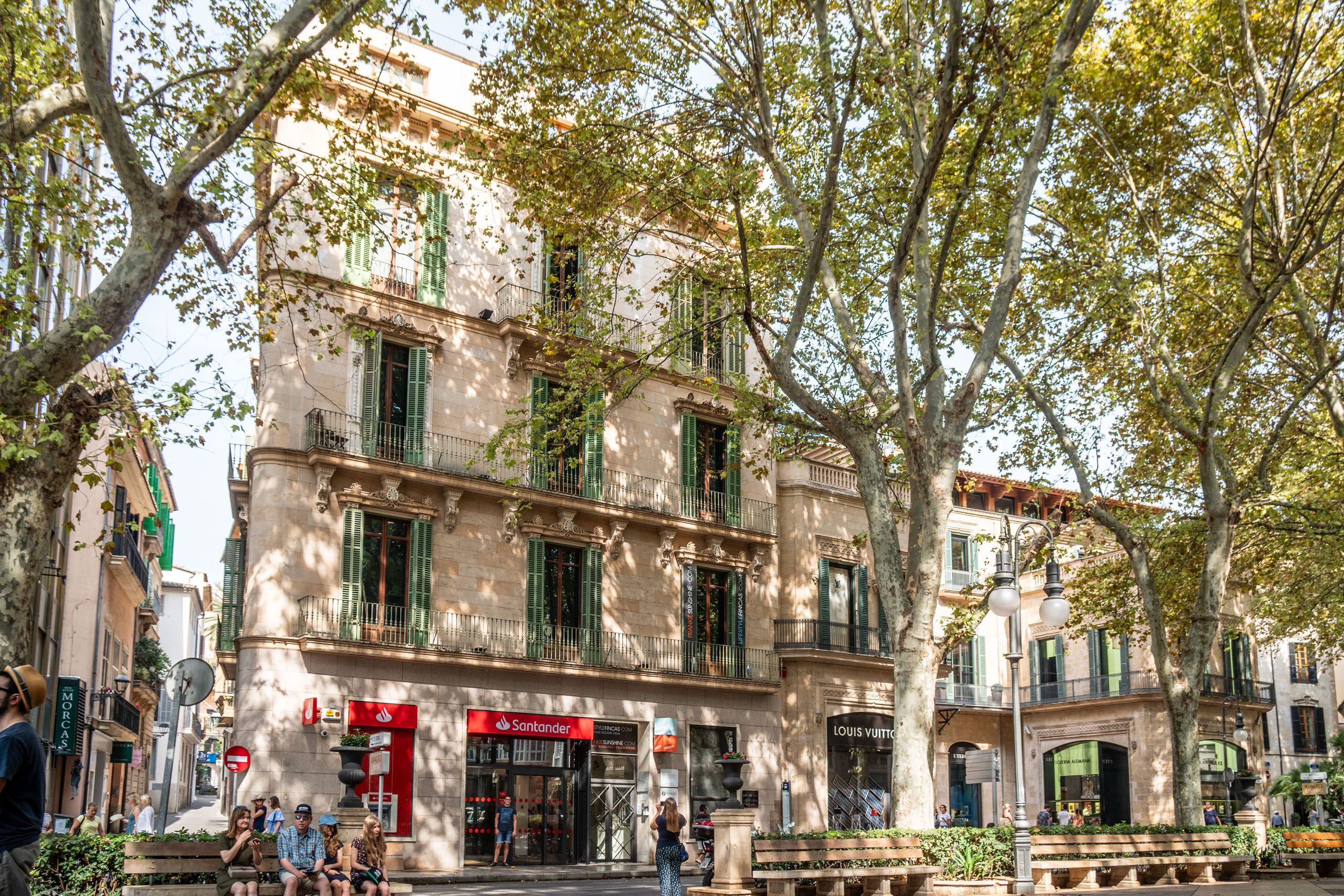
Palma's grand promenade between Plaça de la Reina and Plaça del Rei Joan Carles I. It follows the bed of a torrent diverted out of the city in 1613, takes its name from the tournaments once held here and is now a leading shopping street.
Passeig del Born
Passeig del Born in 30 seconds
The essentials at a glance
- Worth visiting for
- A short visit
- Best for
- City walks, shopping and architecture
- Best months
- January–June, September–December
- Time to allow
- Twenty minutes for a stroll, or half a day with Casal Solleric and the side streets.
- Without a car
- Better without a car
- Parking
- Underground parking at Plaça Major, Parc de la Mar or Via Roma. No parking on the Born itself.
- Highlight
- The tree-lined central promenade
- Keep in mind
- Somewhere remote and free of city bustle
- Access
- Pushchairs: Good · Wheelchairs: Good; the central promenade is step-free
Get a feel for Mallorca. Find your kind of place.
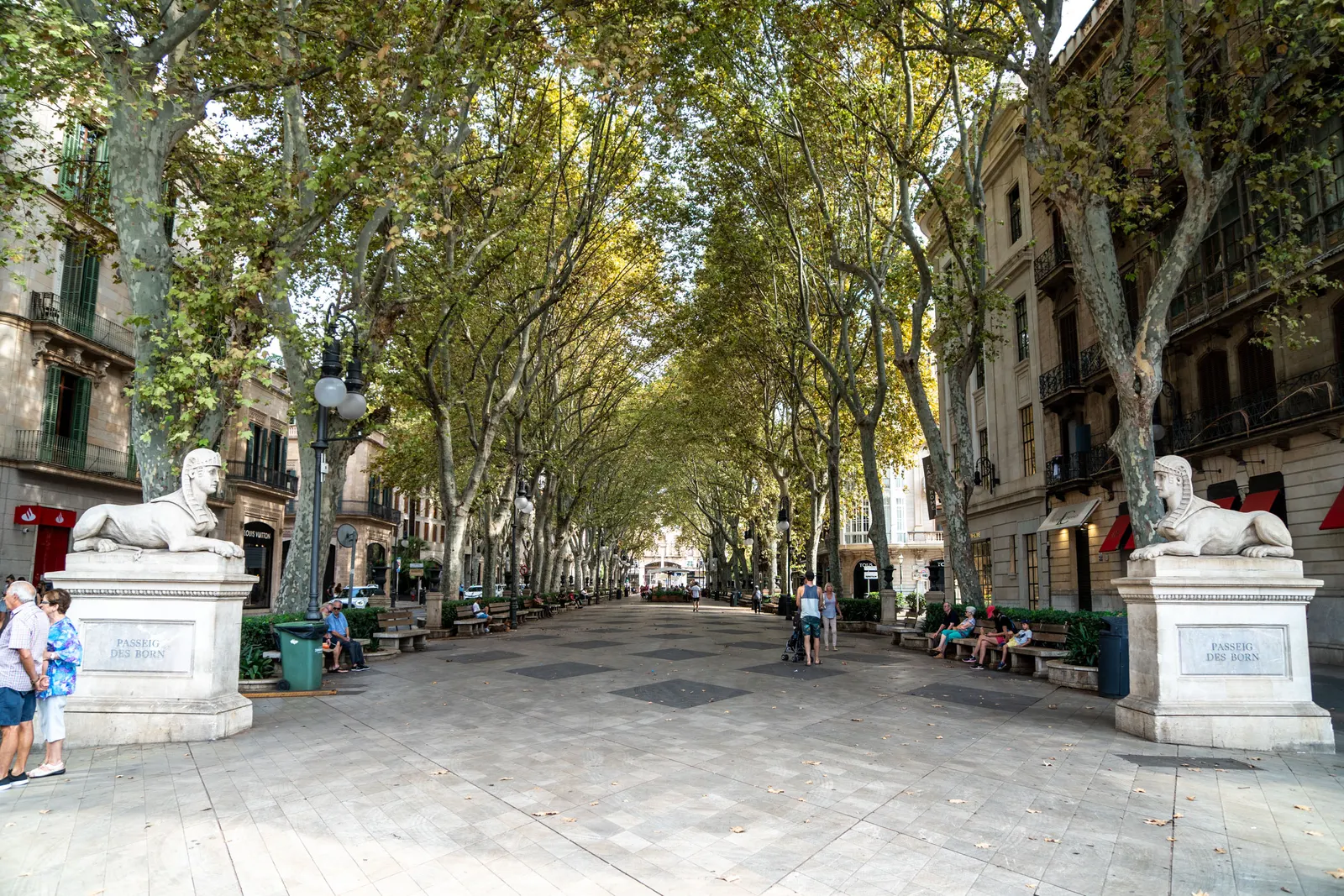
Two of the four sphinxes guard one end of the promenade.
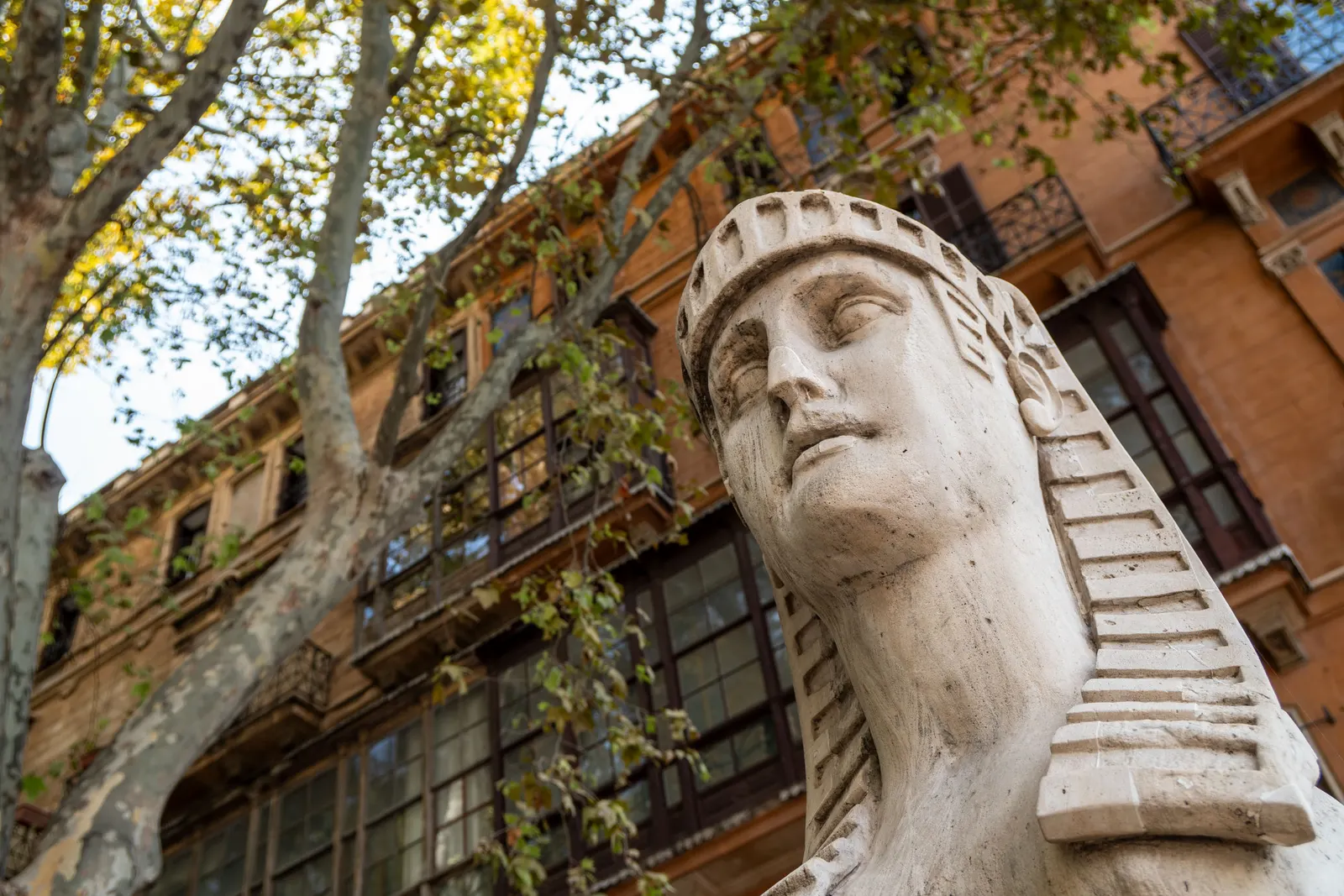
Up close, you can see the fine carving of the head. Most people walk straight past.
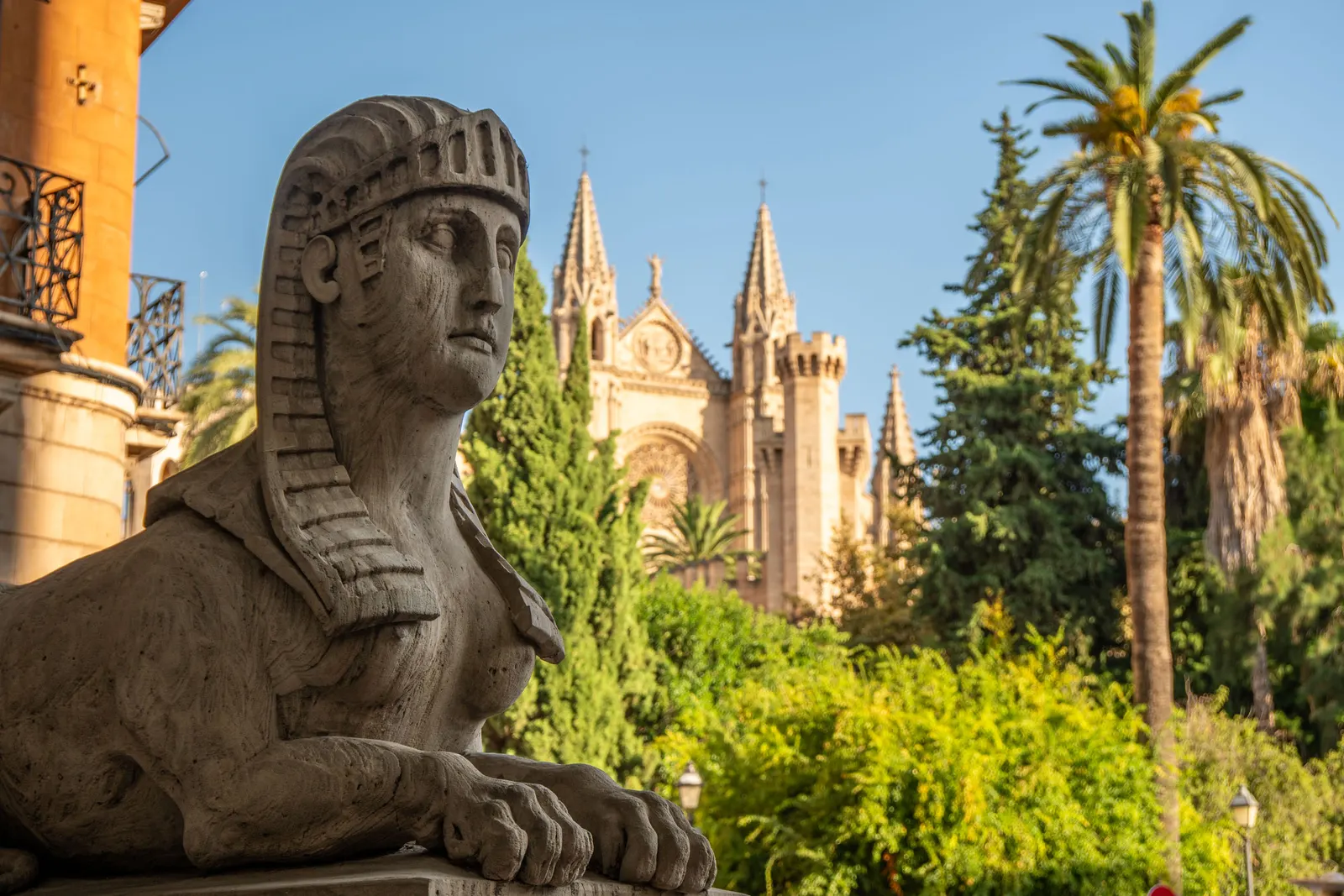
From the lower end of the promenade, the cathedral comes into view.
Drive from the airport
20 minutes
10 km
Bus connections
EMT services at Plaça de la Reina and Avinguda Jaume III
Region
Palma
Nearest beach
Can Pastilla
7 km
Elevation
8 m
above sea level
Season guide for Passeig del Born
November Worth a visit
Quiet Open
Worth visiting in January, February, March, April, May, June, September, October, November and December.
Location
Location of Passeig del Born
- Region
- Palma
- Municipality
- Palma
- Elevation
- 8 m above sea level
- Airport
- 10 km , around 20 minutes
- Hire car
- more hindrance than help
- Worth visiting for
- a brief stop
- Coordinates
- 39.5693,2.6465
What is Passeig del Born?
A main route through Palma’s old town, linking Plaça de la Reina in the south with Plaça del Rei Joan Carles I in the north. A broad central footway has stone benches beneath old plane trees. The roadway along one side has also been given over to pedestrians.
You are likely to find yourself here sooner or later. The southern end leads towards the cathedral and harbour; the northern end towards Avinguda Jaume III and, along Carrer Unió, La Rambla.
The torrent beneath it
Until the early 17th century, Torrent de Sa Riera flowed through the city here. It regularly flooded low-lying streets, with standing water between floods. In 1613, the city diverted it outside the walls, where it still runs beside Passeig Mallorca. The filled-in channel provided the broad space that later became the Born and La Rambla.
Where the name comes from
A born is a tournament ground. Jousts and parades were held here for coronations, victories and other major occasions, and the name stuck. Under Franco, the avenue officially carried the dictator’s name, but people continued to call it the Born.
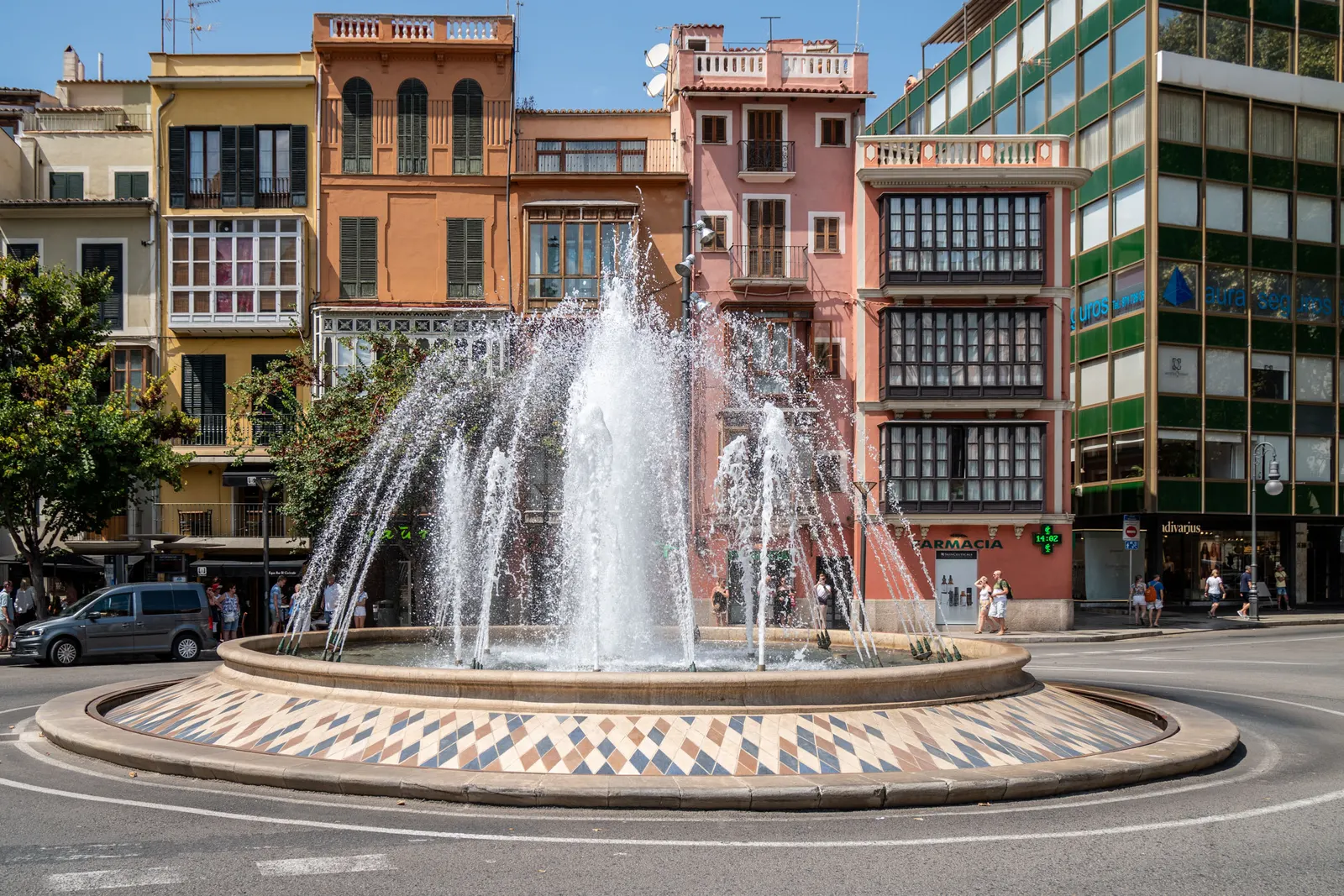
The promenade today
The Born gained its formal Neoclassical layout in the 19th century. Madrid architect Isidro González Velázquez (1765–1840), who fled the French to Palma in 1810, designed it in the spirit of Madrid’s Paseo del Prado.
Four sphinxes mark the ends of the promenade, part of its historic decoration.
Casal Solleric
About halfway along stands Casal Solleric, an 18th-century Mallorcan town palace with a courtyard and outdoor staircase. The city uses it for exhibitions, with a bookshop and café on the ground floor. You can enter simply to look at the courtyard.
Shopping
The Born and adjoining Avinguda Jaume III are among the island’s main shopping streets. A fashion chain now occupies the former Born cinema, which closed in the 1980s. Smaller shops fill the side streets — a more interesting direction if you want something beyond the familiar chains.
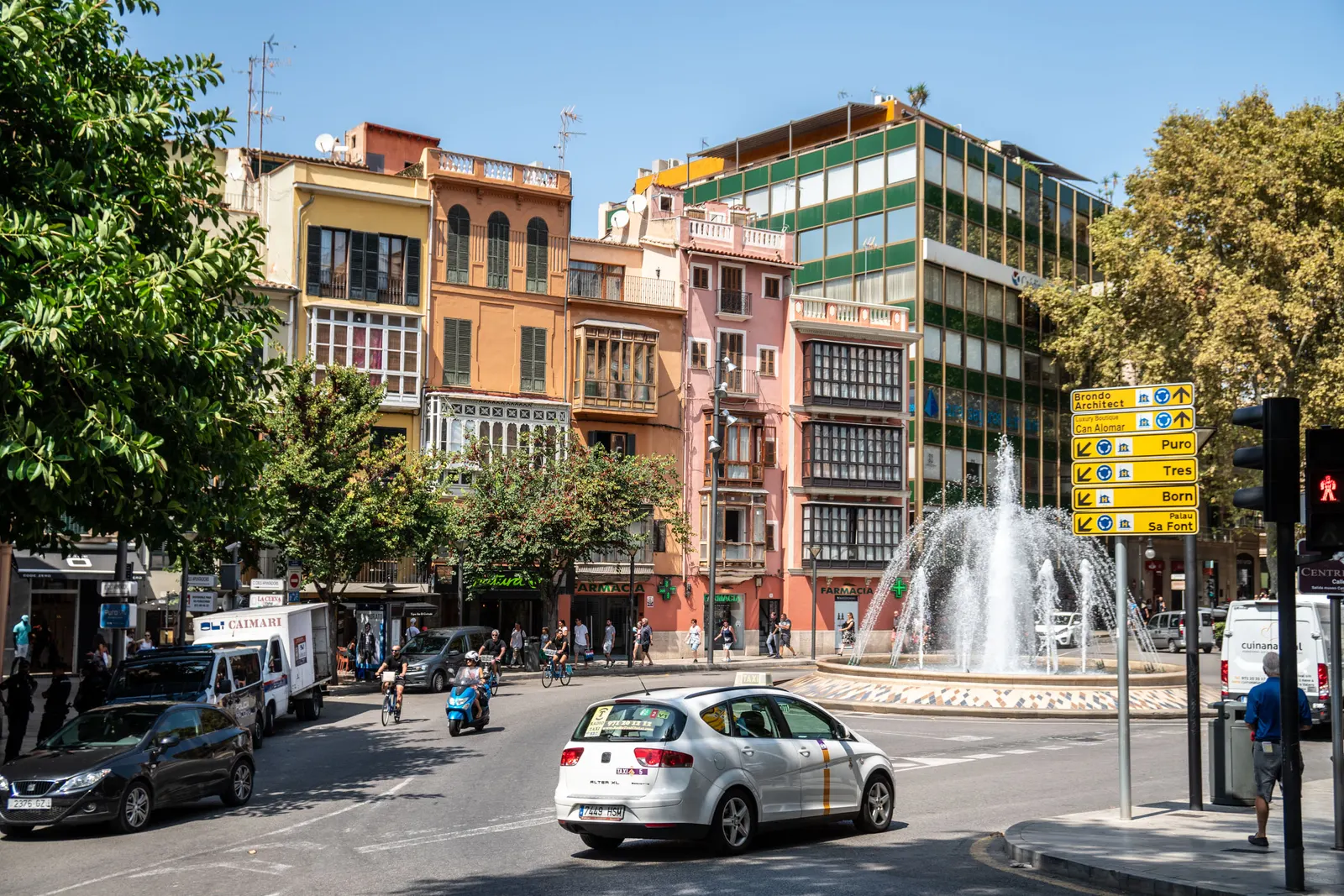
The two squares
At the southern end is Plaça de la Reina, with its fountain. From here, steps lead towards Jardins de s’Hort del Rei, while Avinguda d’Antoni Maura runs down to the water.
At the northern end is Plaça del Rei Joan Carles I, known locally as Plaça de les Tortugues, or Turtle Square, because its obelisk stands on four bronze turtles.
When to go
Late afternoon, when the light falls low through the plane trees. In December, Christmas lights bring evening crowds; in August, midday is too hot. As anywhere crowded, keep your bag close and in front of you.
Photographs
Passeig del Born in Mallorca
How much time do you have?
Things to do in Passeig del Born
Three hours
Walk from the Born to the cathedral, returning through Casc Antic's lanes.
Half a day
The Born, Casal Solleric, Avinguda Jaume III and on via La Rambla to Plaça Major.
Practical details
- Parking
- Underground parking at Plaça Major, Parc de la Mar or Via Roma. No parking on the Born itself.
- Public transport
- EMT services stop at Plaça de la Reina and Avinguda Jaume III, at either end of the promenade.
- Time to allow
- Twenty minutes for a stroll, or half a day with Casal Solleric and the side streets.
- Good to know
- Watch for pickpockets, especially in evening crowds.
- Bus
- EMT services at Plaça de la Reina and Avinguda Jaume III
- Access
- Smooth, level paving · Pushchairs: Good · Wheelchairs: Good; the central promenade is step-free · Dogs: Allowed on a lead
- Coordinates
- 39.5693,2.6465 Google Maps Apple Maps
What lies at each end?
| End | Square | Where it leads |
|---|---|---|
| South | Plaça de la Reina | Avinguda d’Antoni Maura, harbour, cathedral and Almudaina |
| North | Plaça del Rei Joan Carles I | Avinguda Jaume III and Carrer Unió towards La Rambla |
Within reach
Places to visit
Nearby

An 11th-century brick chamber in an old-town garden, with twelve columns, horseshoe arches and a dome pierced by …

Sant Pere bastion, built in the late 16th century on the western edge of Palma’s old town, became home to a …

Palma’s cathedral was begun in 1230 and built over several centuries. Its Gothic buttresses rise above the water …

The royal palace beside Palma cathedral began as a Moorish alcázar, later converted into a residence for …

The March family's city palace between the cathedral and the Almudaina: a terrace filled with 20th-century …

The Balearics' largest harbour sits in the city, in front of the old town. Cargo quays, cruise terminals, marinas …

A striking circular Gothic castle, built above Palma between 1300 and 1311. Inside is a two-storey round …

A large aquarium on Playa de Palma, with Europe's deepest shark tank. Open all year, it is a reliable option for a …
Distances without a driving time are measured in a straight line. The road journey can be much longer; known driving times are shown alongside.
Where to swim nearby
Beaches and swimming nearby

At the western end of Playa de Palma, ten minutes from the airport by car: a marina, a rocky waterfront promenade …

Broad sandy bays with pale, shallow water, right beside Magaluf but with a different feel. The quieter neighbour …
Places to stay within reach
Explore from here
Your questions answered
Your questions about Passeig del Born
What is Passeig del Born in Palma?
The old town's central promenade, linking Plaça de la Reina in the south with Plaça del Rei Joan Carles I to the north. It has a broad central footway and follows the former bed of the Sa Riera torrent.
Where does the name Born come from?
A born is a tournament ground. Jousts and celebrations were held here for coronations and military victories. It had a different official name during Franco's rule, but people continued calling it the Born.
Why is the Born on an old riverbed?
Until the early 17th century, the Sa Riera torrent flowed through Palma. After repeated floods, the city diverted it outside the walls in 1613. It still follows Passeig Mallorca. The filled-in channel became the Born and La Rambla.
What can I see on Passeig del Born?
Four sphinxes, stone benches beneath plane trees and Casal Solleric, an 18th-century Mallorcan town palace now used for city exhibitions. At the northern end, an obelisk rests on four bronze turtles on Plaça del Rei Joan Carles I, hence its nickname Plaça de les Tortugues.
Can I shop on the Born in Palma?
Yes. The Born and adjoining Avinguda Jaume III are major shopping streets, with international chains and luxury brands. The former Born cinema, which closed in the 1980s, now houses a fashion shop.
Practical questions
When is the best time to visit Passeig del Born?
Recommended months: January, February, March, April, May, June, September, October, November, December. During Sant Sebastià in mid-January, music brings the city out in the evening.
Is Passeig del Born worth visiting in July and August?
July: worth considering with some reservations. Usually busy. Hot at midday despite the trees. Mornings and evenings are much more pleasant. August: worth considering with some reservations. Usually busy. Some shops and restaurants take a summer break.
How far is Passeig del Born from Palma airport?
About 10 km from Palma airport. Allow roughly 20 minutes by car.
Do I need a hire car for Passeig del Born?
A car can be more trouble than it’s worth EMT services at Plaça de la Reina and Avinguda Jaume III
Where can I park in Passeig del Born?
Underground parking at Plaça Major, Parc de la Mar or Via Roma. No parking on the Born itself.
Can I visit Passeig del Born with a pushchair or wheelchair?
Smooth, level paving Pushchairs: Good Wheelchairs: Good; the central promenade is step-free
Are dogs allowed at Passeig del Born?
Allowed on a lead
Words and photographs: Friedhelm Fischer. Exploring Mallorca since 2013 — by bike, on foot and with a camera.