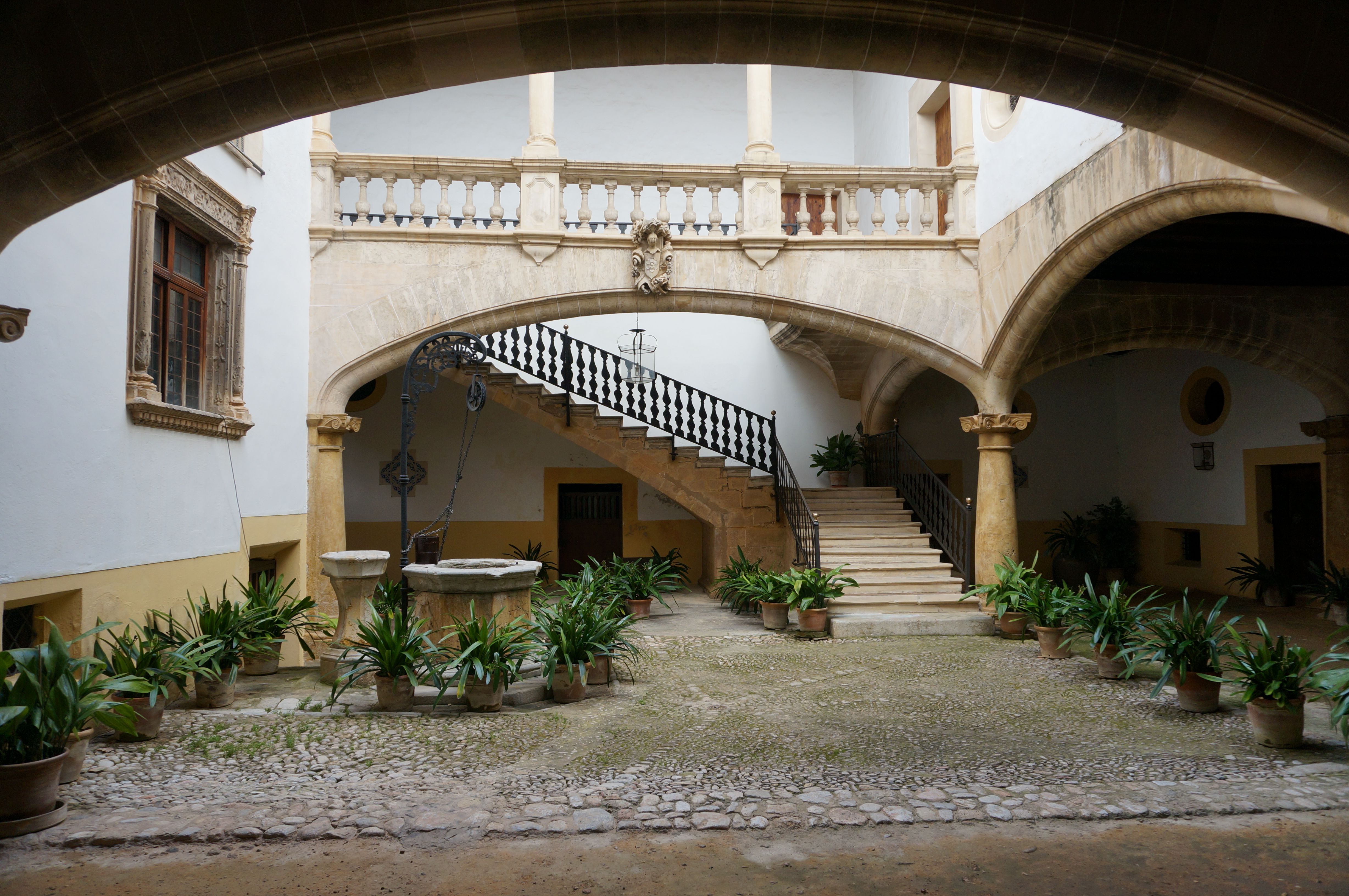
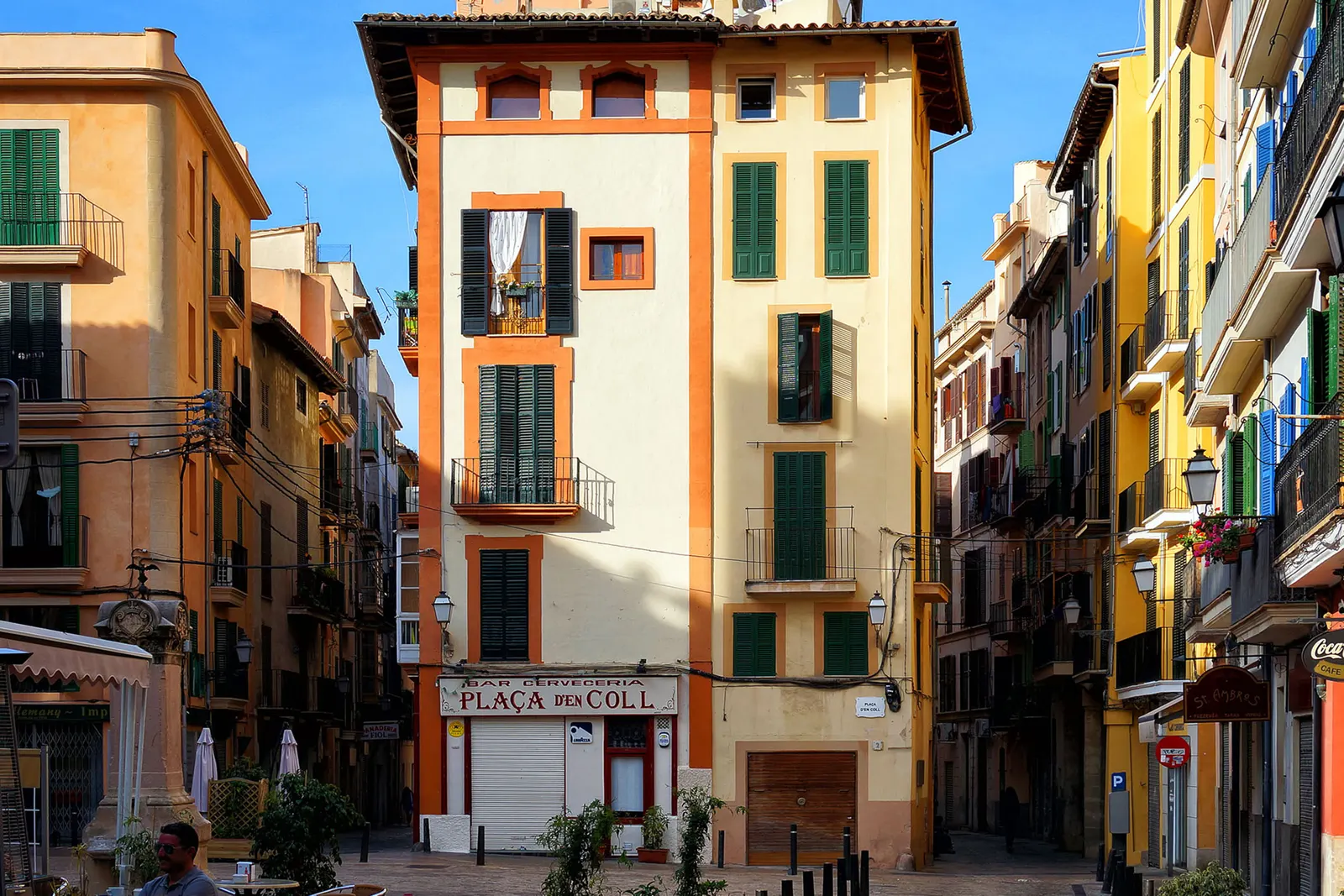
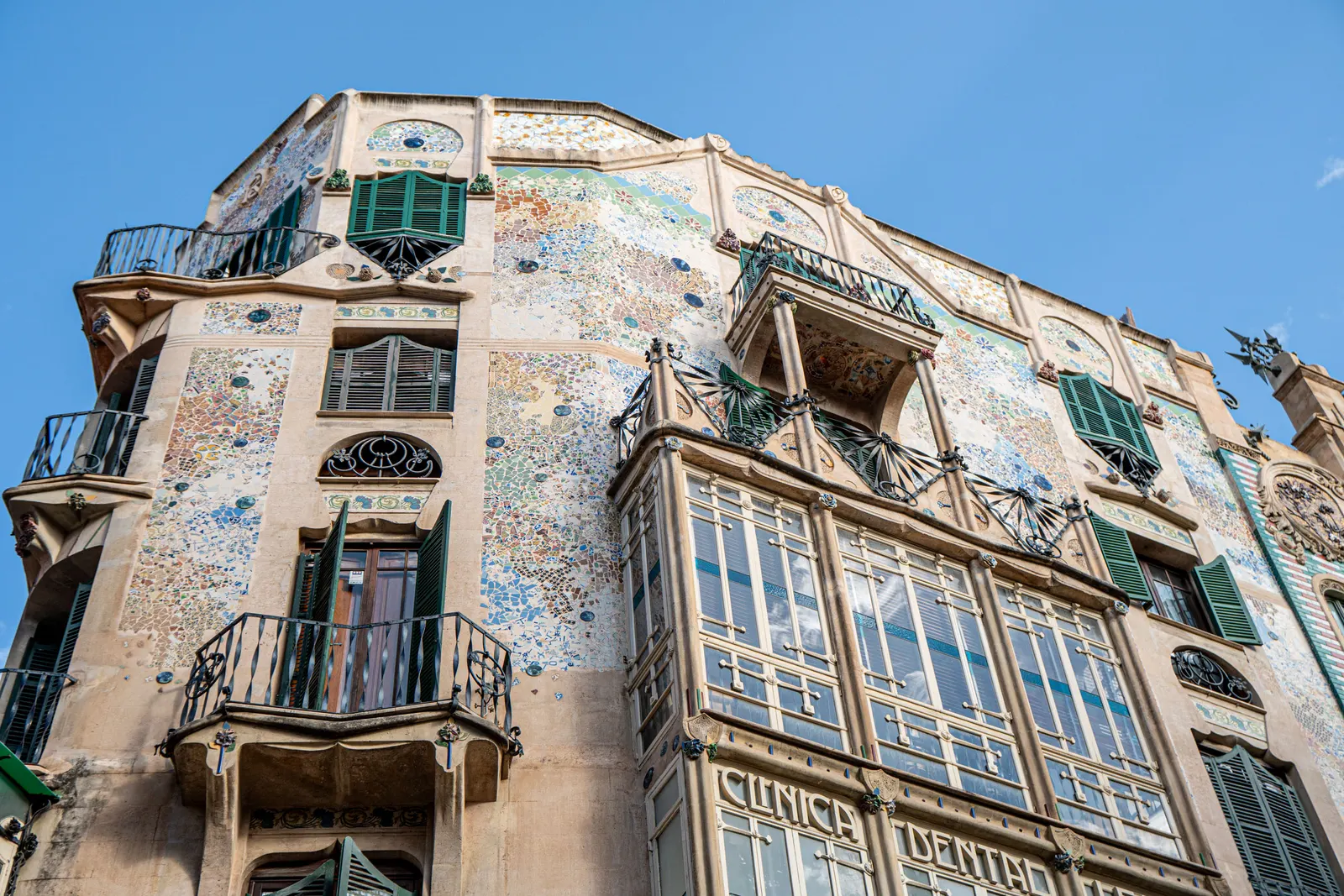
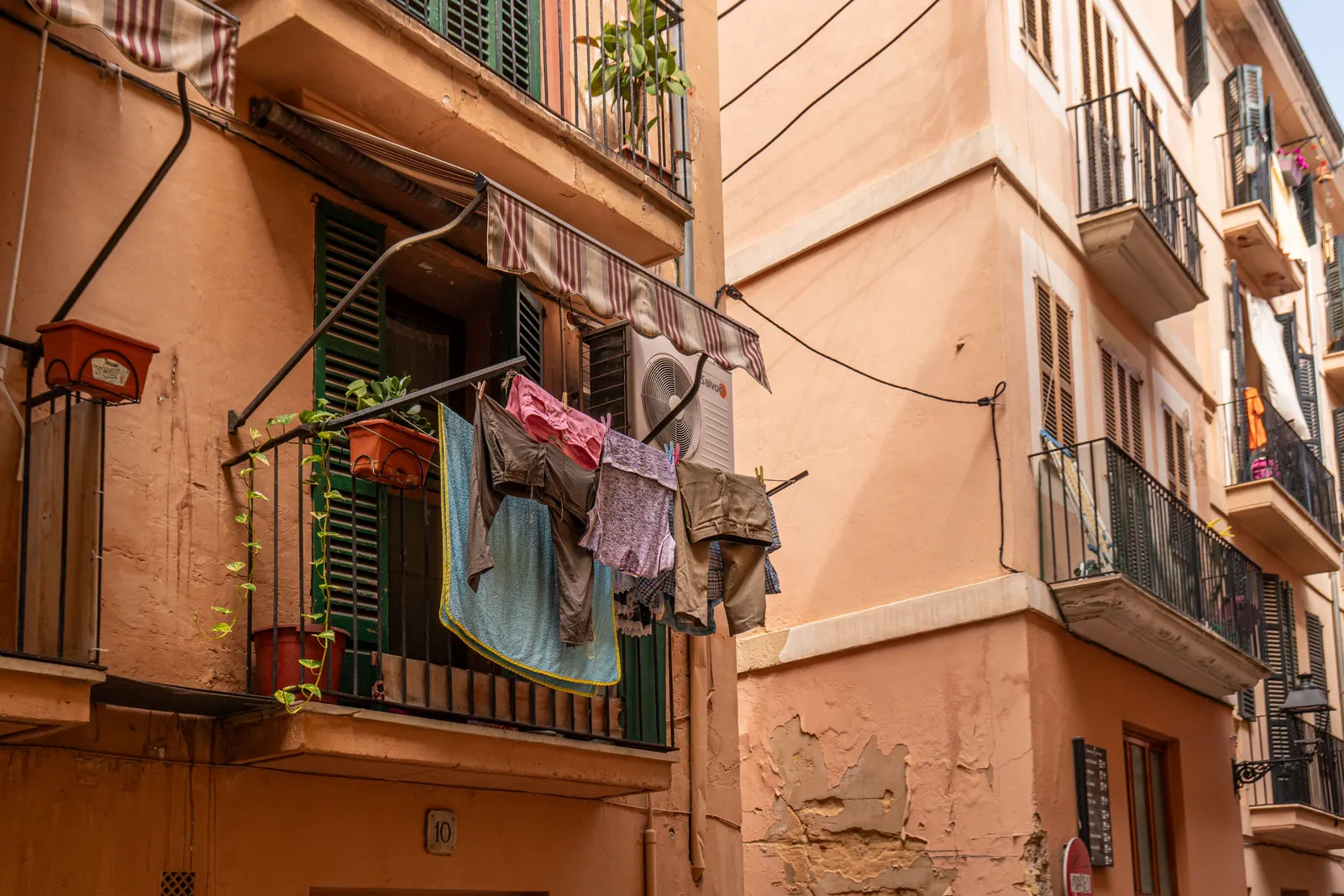
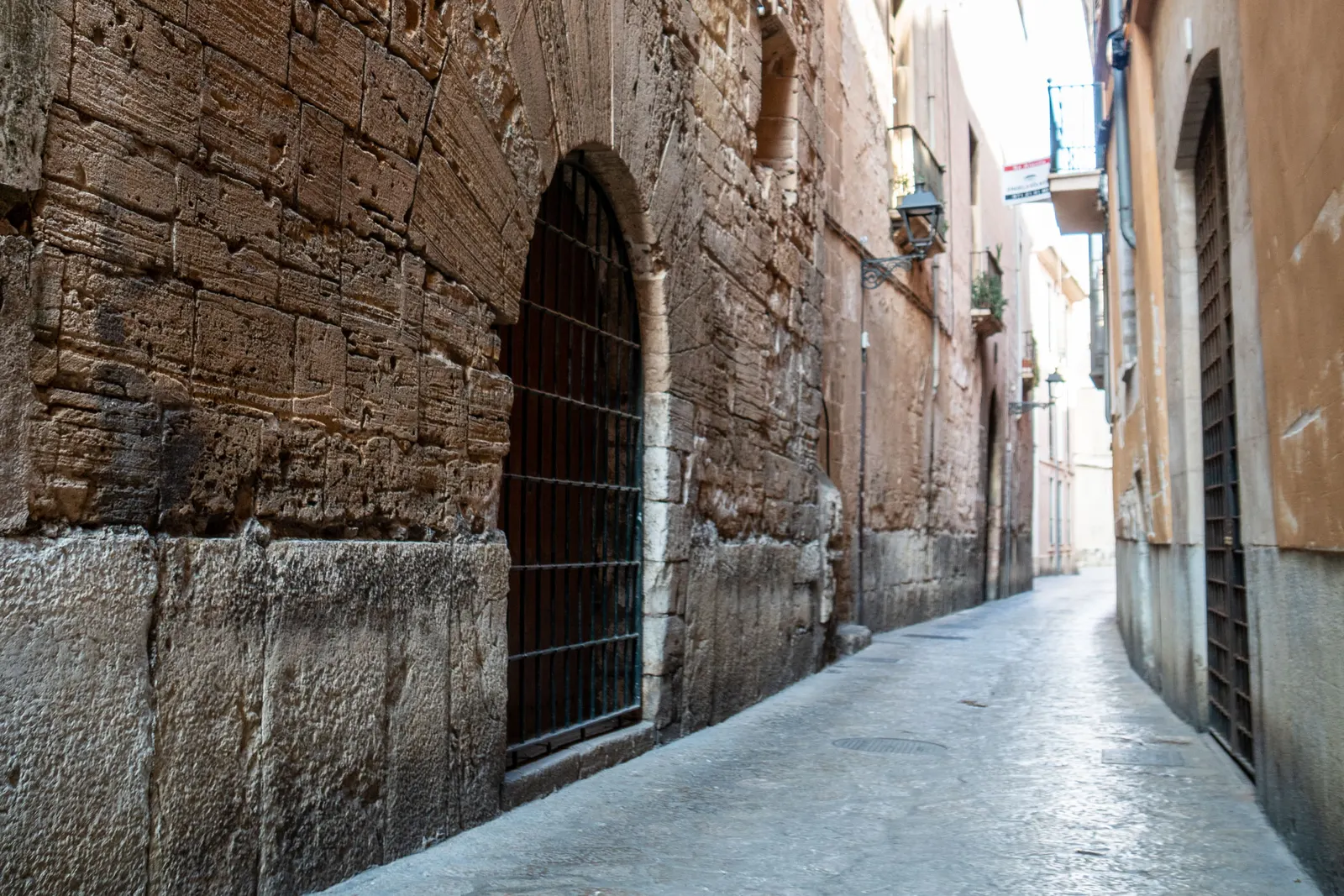
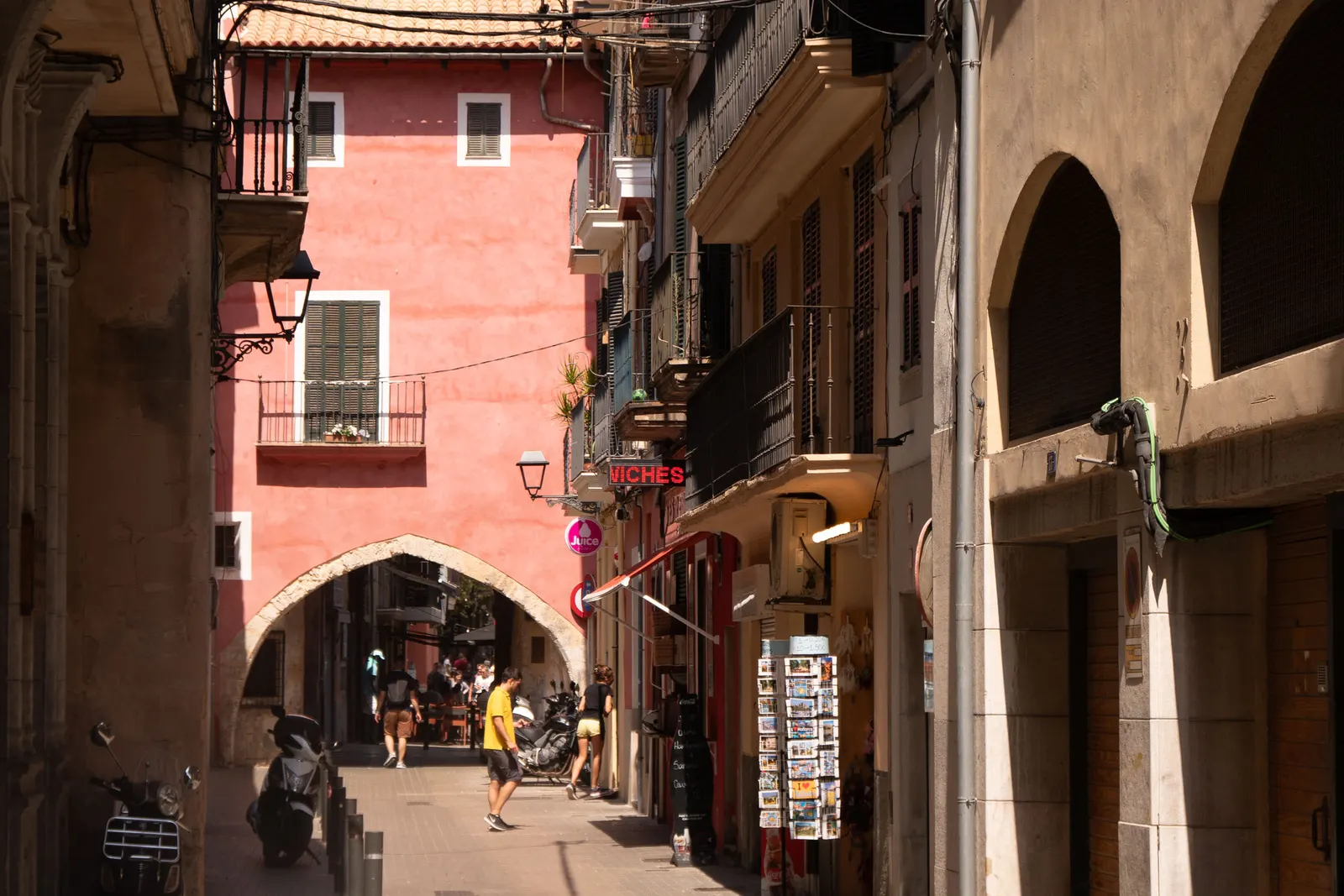
Palma's old town between the cathedral, Plaça Major and the old city walls: a Moorish street plan, major Gothic buildings, Renaissance courtyards and Art Nouveau around the edges. Six architectural periods within a square kilometre. This is postcard Palma, yet only a small part of the city.
Casc Antic
Casc Antic in 30 seconds
The essentials at a glance
- Worth visiting for
- A longer stay
- Best for
- History, architecture and museums
- Best months
- January–April, September–December
- Time to allow
- A full day for the cathedral, Almudaina and lanes. Two days with museums.
- Without a car
- Better without a car
- Parking
- Don't try the lanes. Use the Parc de la Mar car park on the southern edge, then walk up to the cathedral.
- Highlight
- Cathedral, courtyards and old town lanes
- Keep in mind
- An easy visit by car through the narrow streets
- Access
- Slopes and cobbles vary by route; plan step-free options ahead
Get a feel for Mallorca. Find your kind of place.
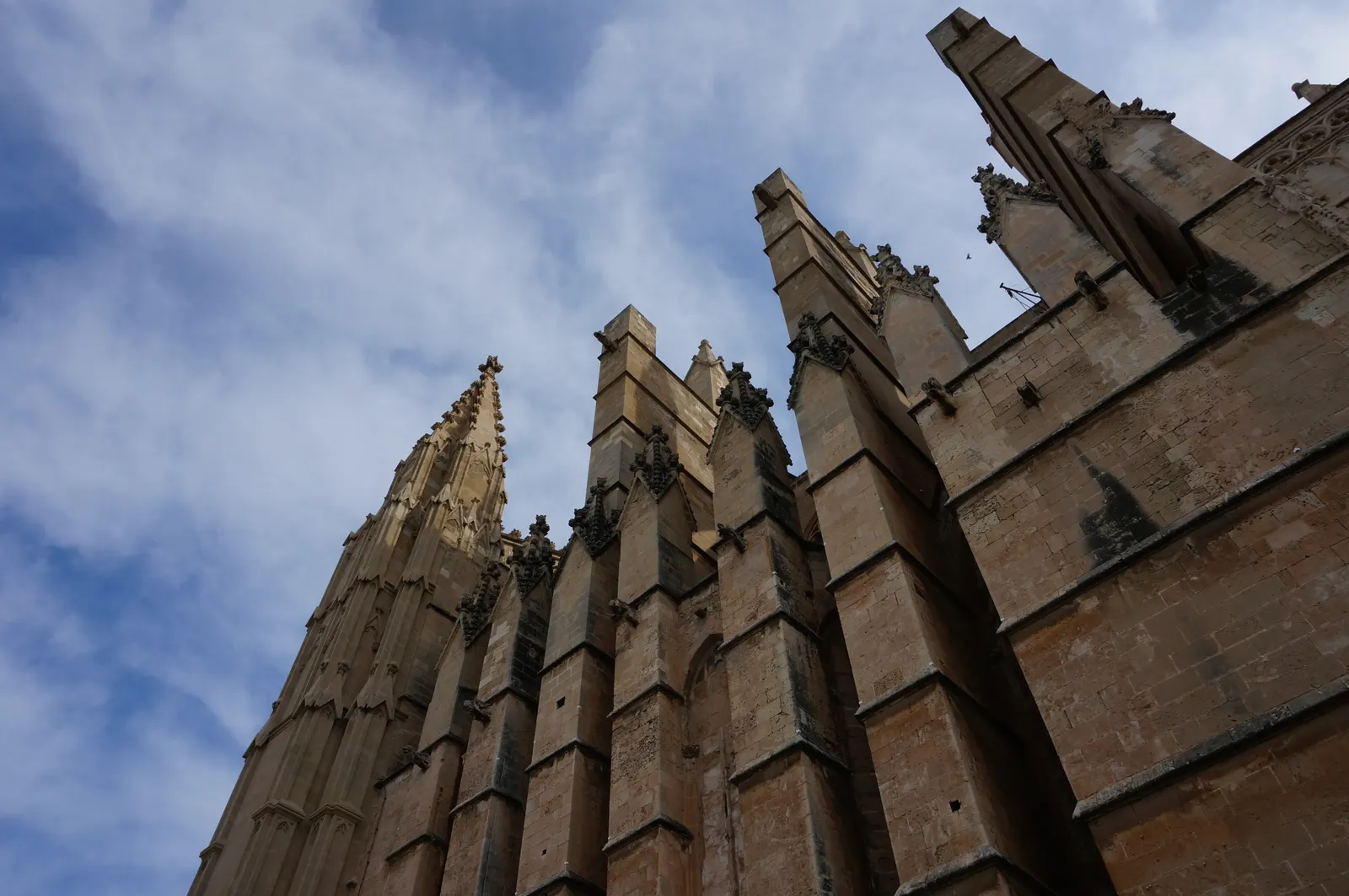
The buttresses support one of Europe's tallest Gothic naves.
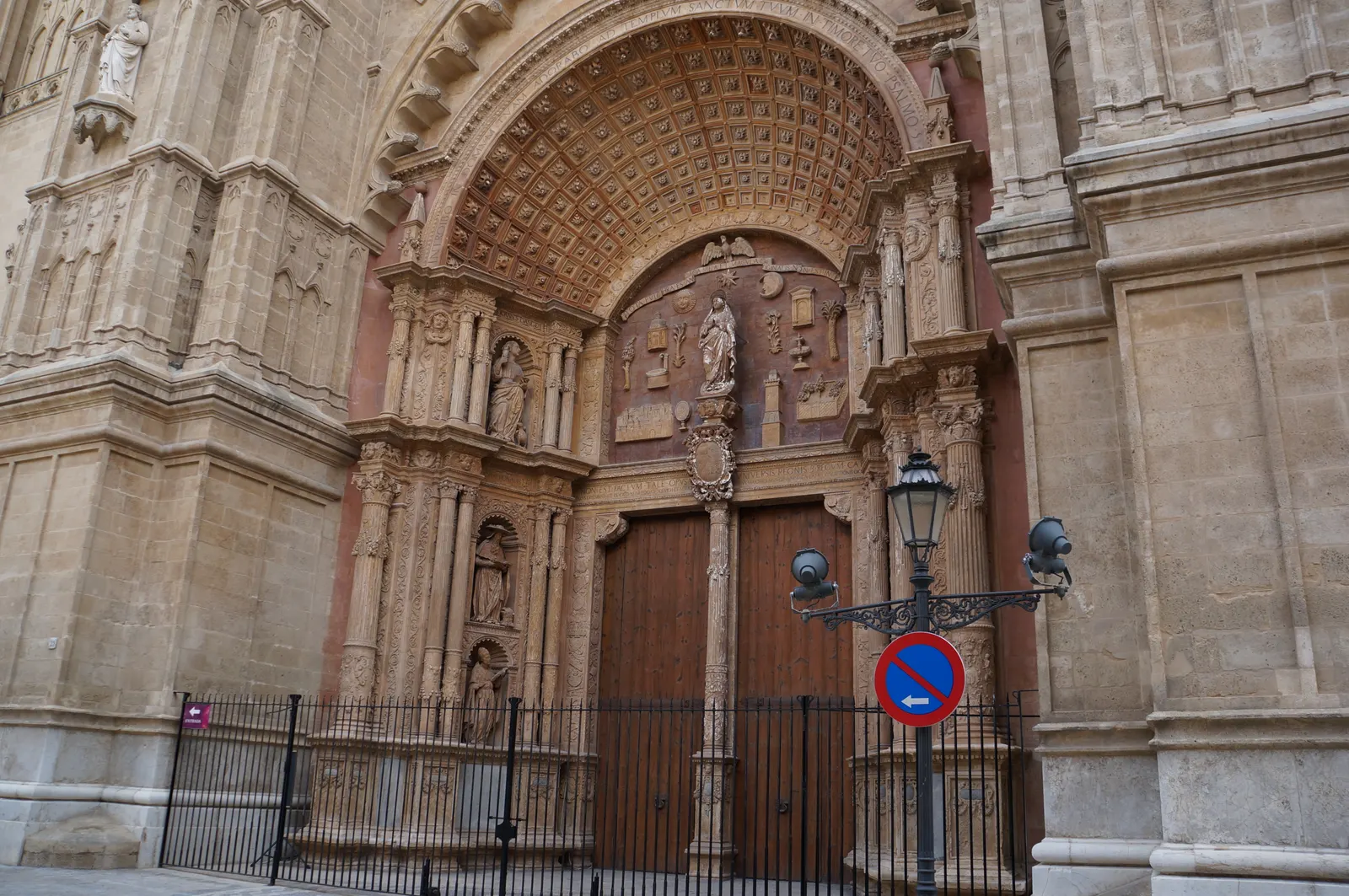
The cathedral's main doorway — Renaissance decoration on a Gothic building.
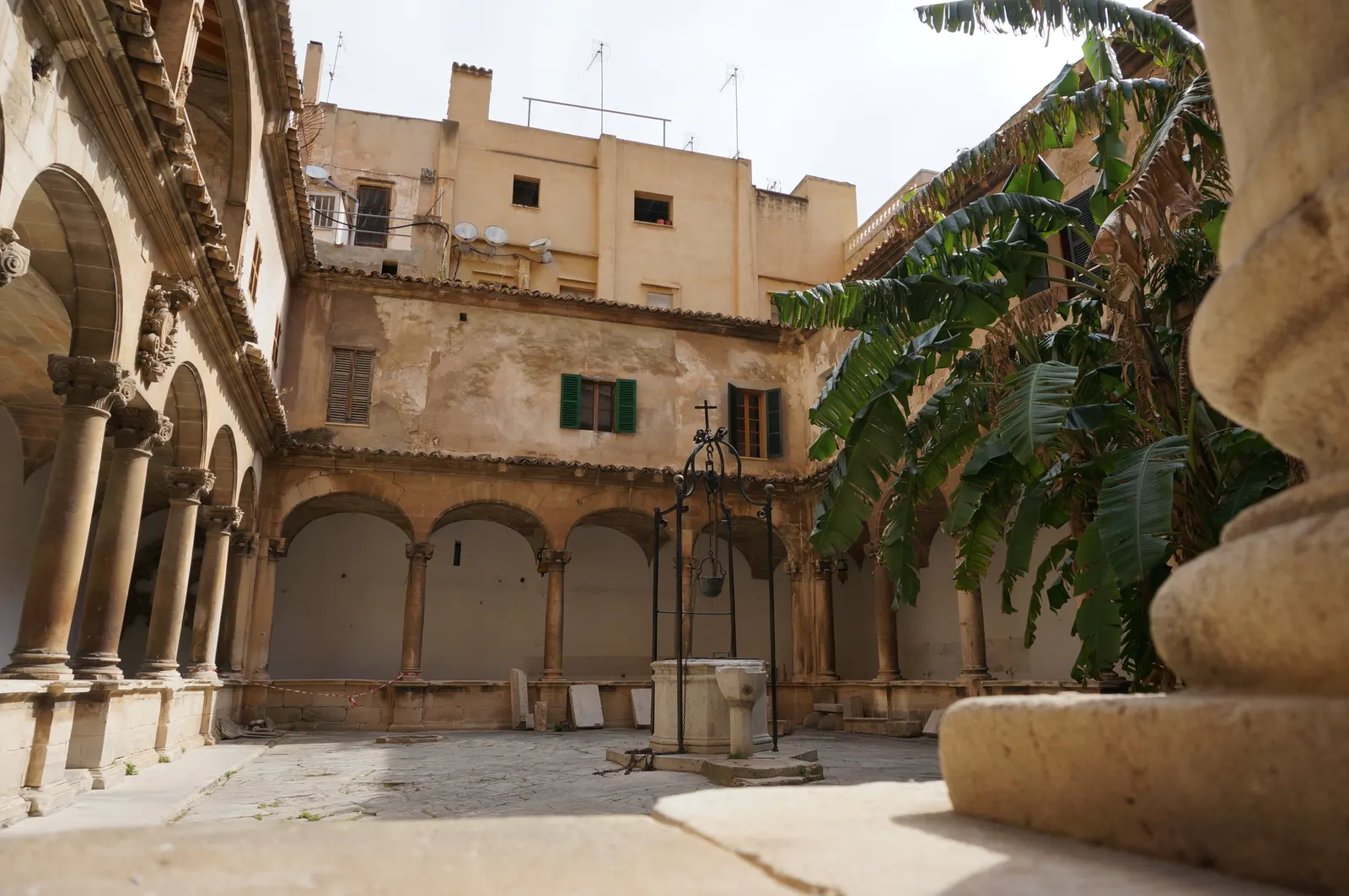
The cathedral cloister, with arcades on slender columns and a well in the middle.
Drive from the airport
20 minutes
10 km
Bus connections
EMT buses and the A1 airport bus
Region
Palma
Nearest beach
Can Pastilla
7 km
Elevation
13 m
above sea level
Season guide for Casc Antic
November Worth a visit
The cathedral's light display returns around 11 November.
Quiet Open
Worth visiting in January, February, March, April, September, October, November and December. Less suitable in July and August.
Location
Location of Casc Antic
- Region
- Palma
- Municipality
- Palma
- Population
- 8,200
- Elevation
- 13 m above sea level
- Airport
- 10 km , around 20 minutes
- Hire car
- more hindrance than help
- Worth visiting for
- a longer stay
- Coordinates
- 39.5679,2.6497
La Seu
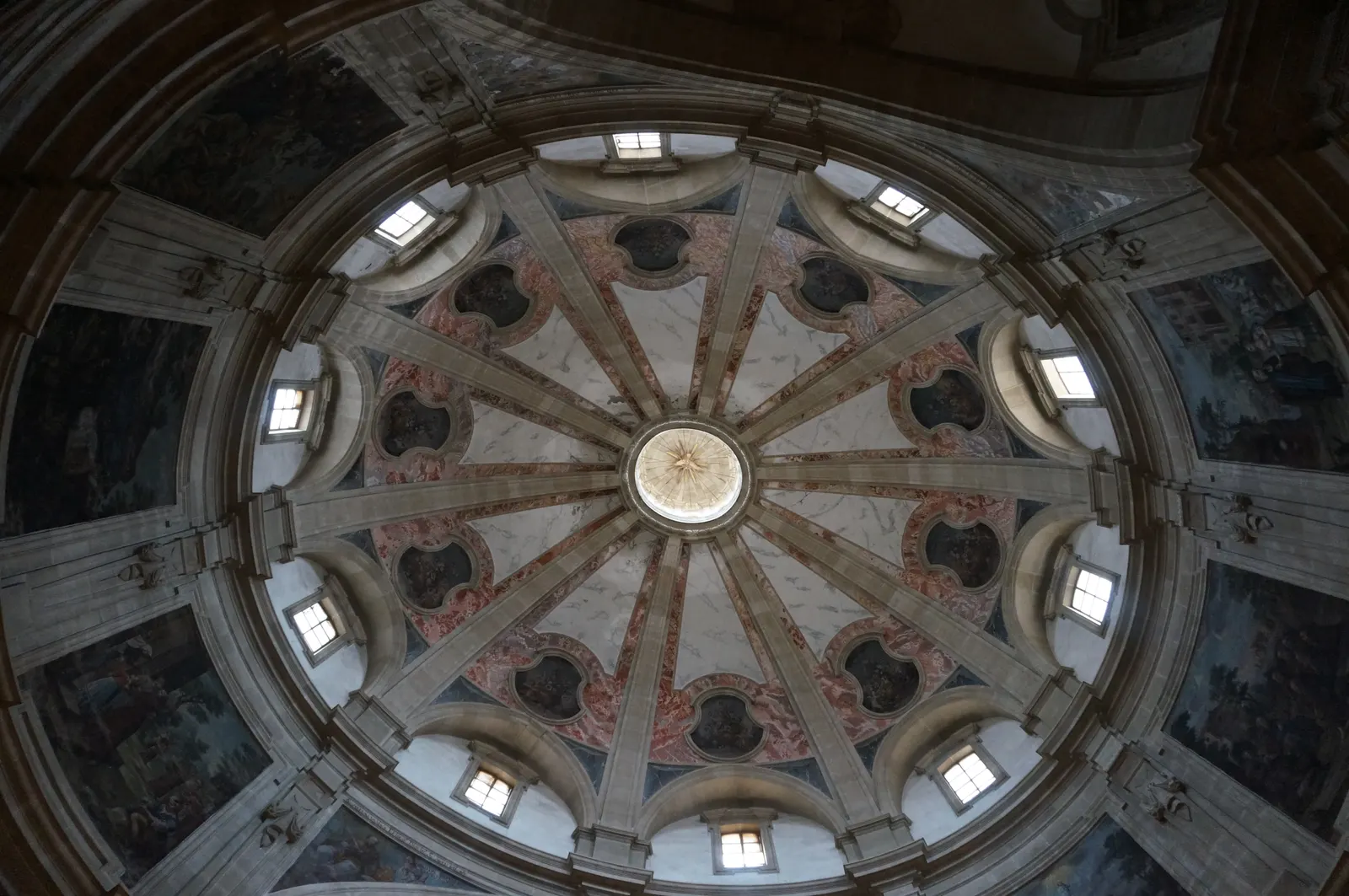
The cathedral is Casc Antic’s landmark. Its history as a Christian cathedral began after the Catalan conquest in 1229, and the building was largely completed in 1601. Its nave is among the tallest in European Gothic architecture, and the great rose window, almost 14 metres across, is among the largest. It occupies the site of the main Islamic mosque, in a part of the city with Roman origins.
Two later interventions shape the interior. Antoni Gaudí moved the choir between 1901 and 1914, opening the view towards the altar and hanging the canopy that still looks unfinished; he left following a disagreement. From 2001 to 2007, Miquel Barceló covered the Sant Pere chapel with a ceramic wall of fish, loaves and cracking earth — both controversial and much visited.
Twice a year, around 2 February and 11 November, sunlight projects the image of one rose window directly beneath the other. The display lasts just a few minutes. Check arrangements well ahead if you hope to see it.
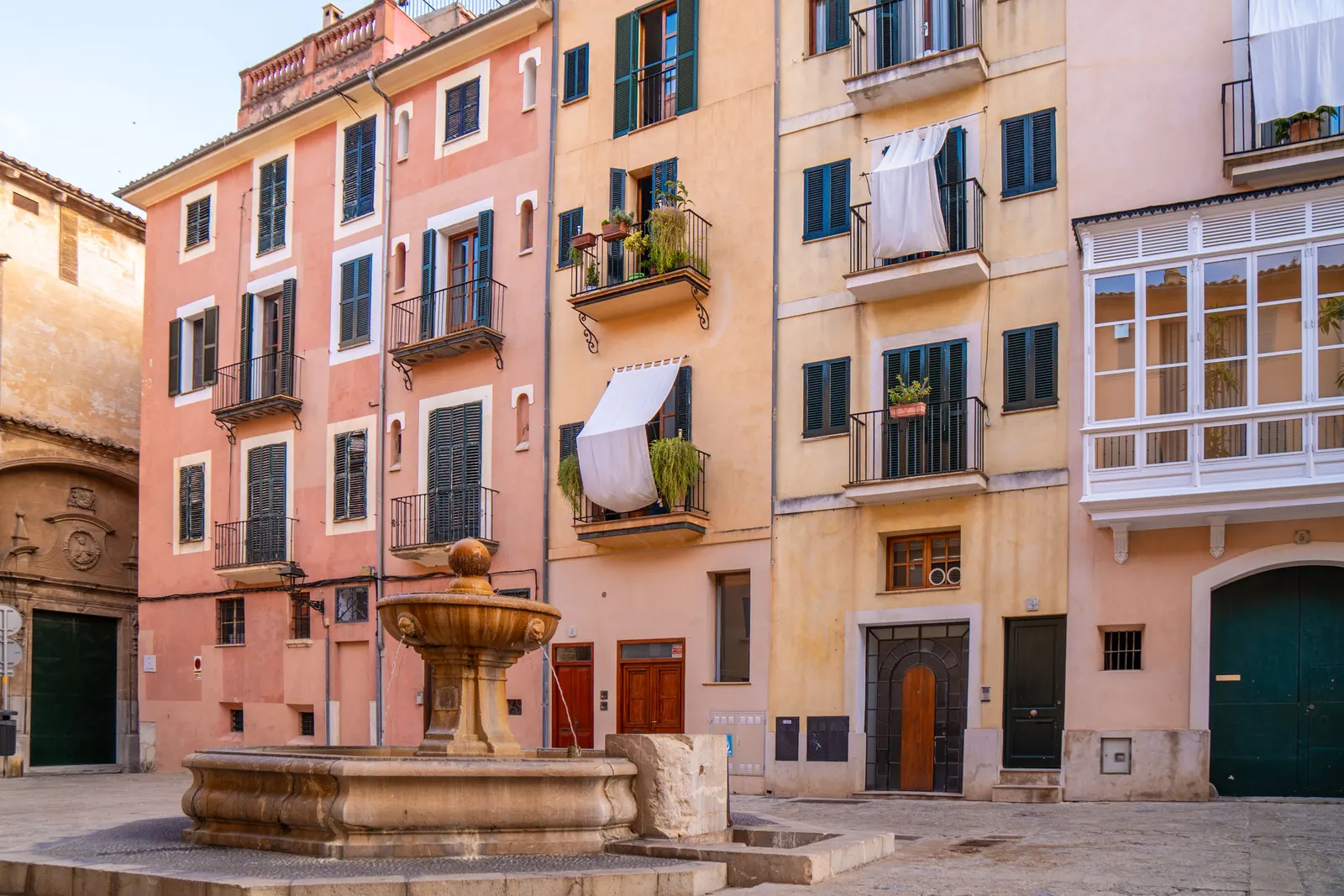
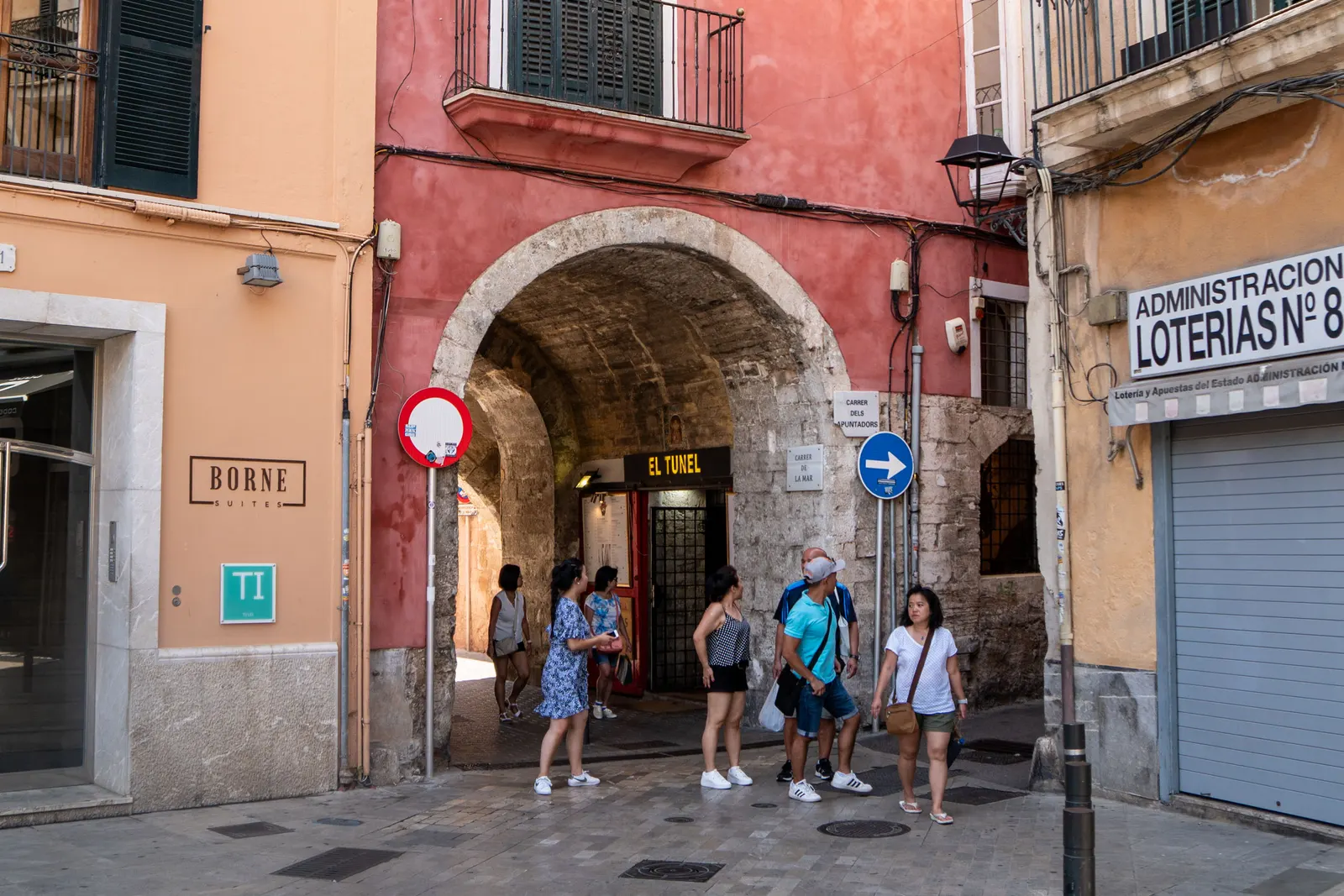
The Moorish street plan
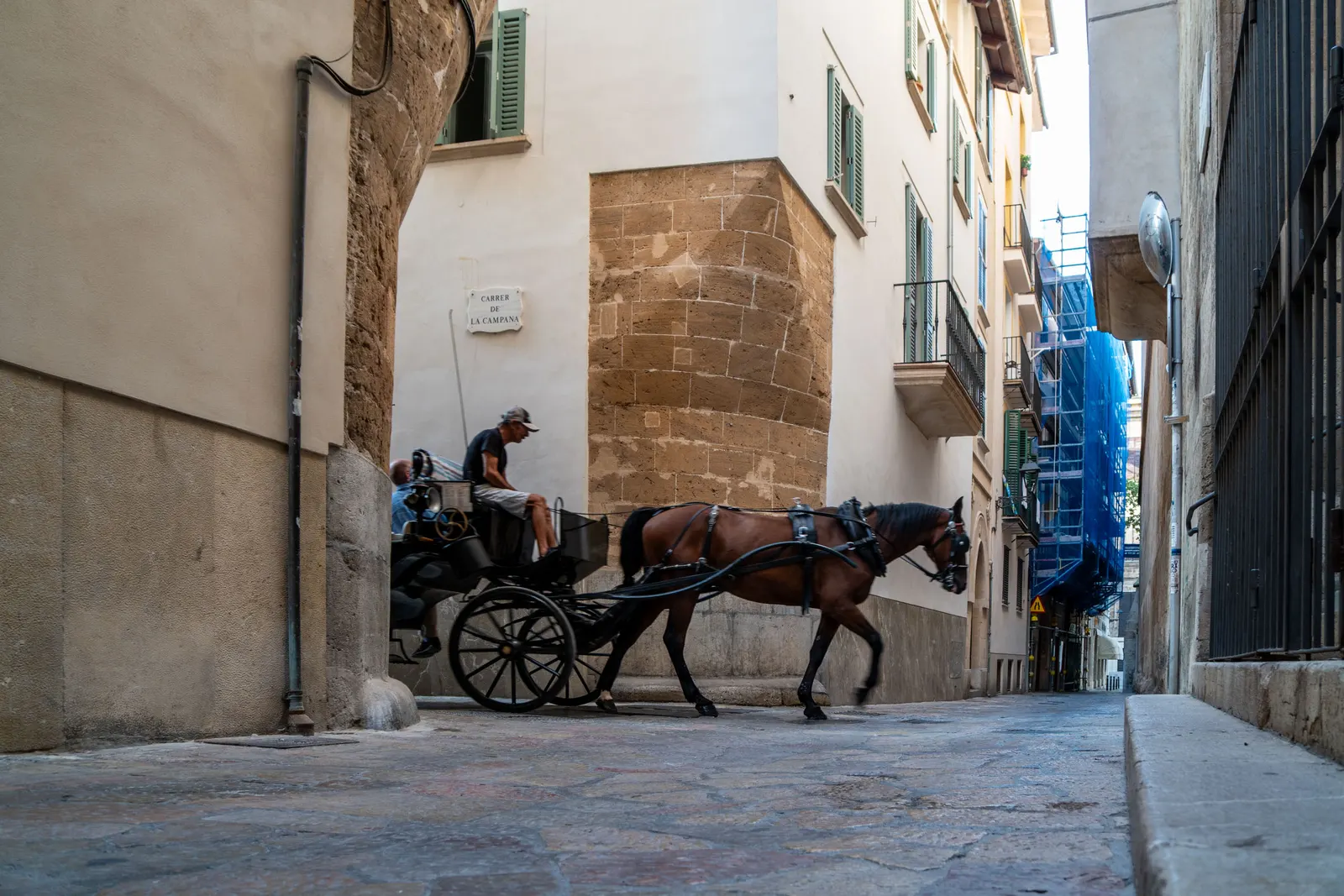
From 903 to 1229, Palma was Madina Mayurqa. The old town still retains its Islamic street pattern: narrow winding lanes, dead ends and courtyards rather than front gardens. The Banys Àrabs on Carrer Can Serra are a rare surviving building from that period: a small domed bathhouse with reused columns, standing in a garden and often surprisingly quiet.
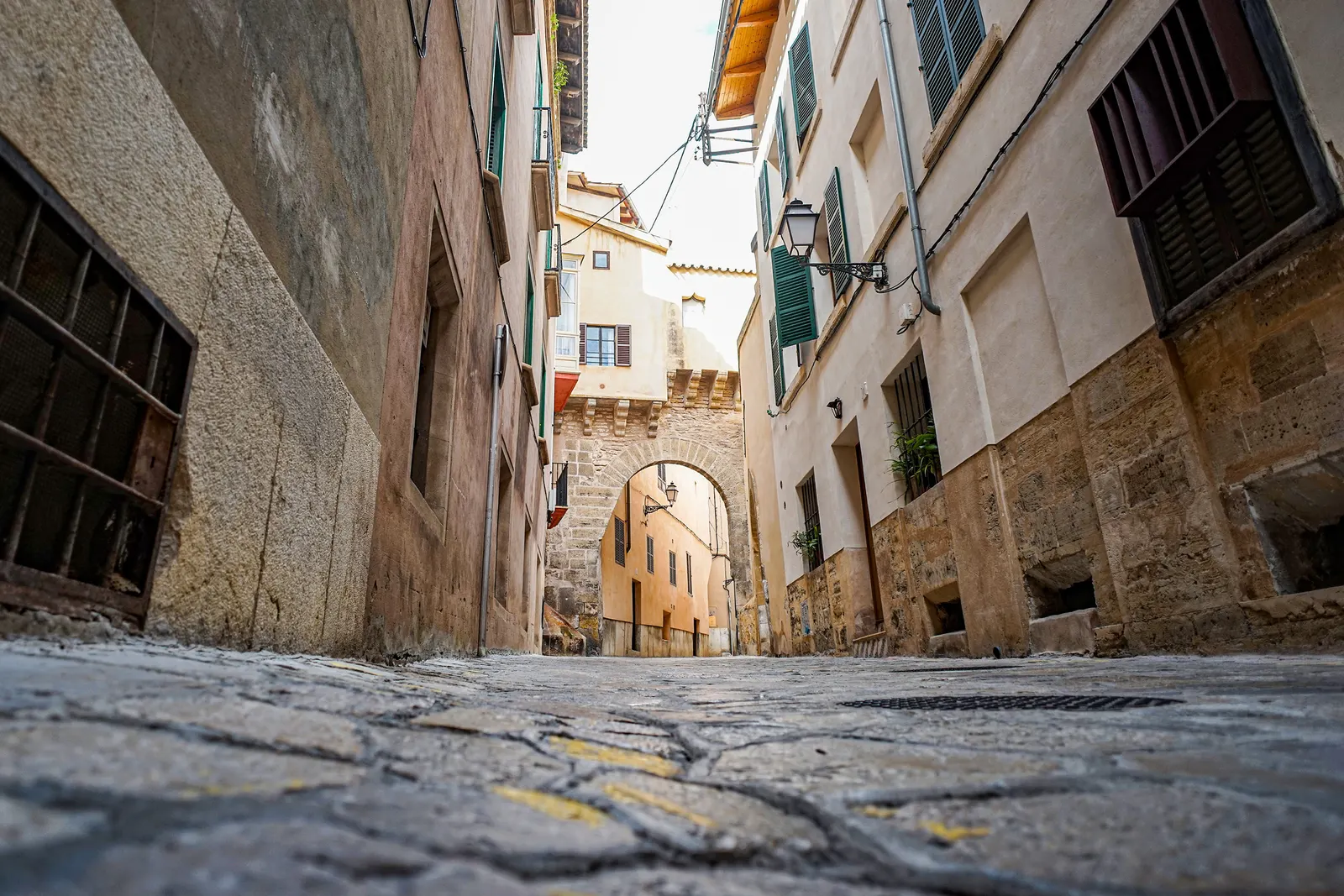
The patios
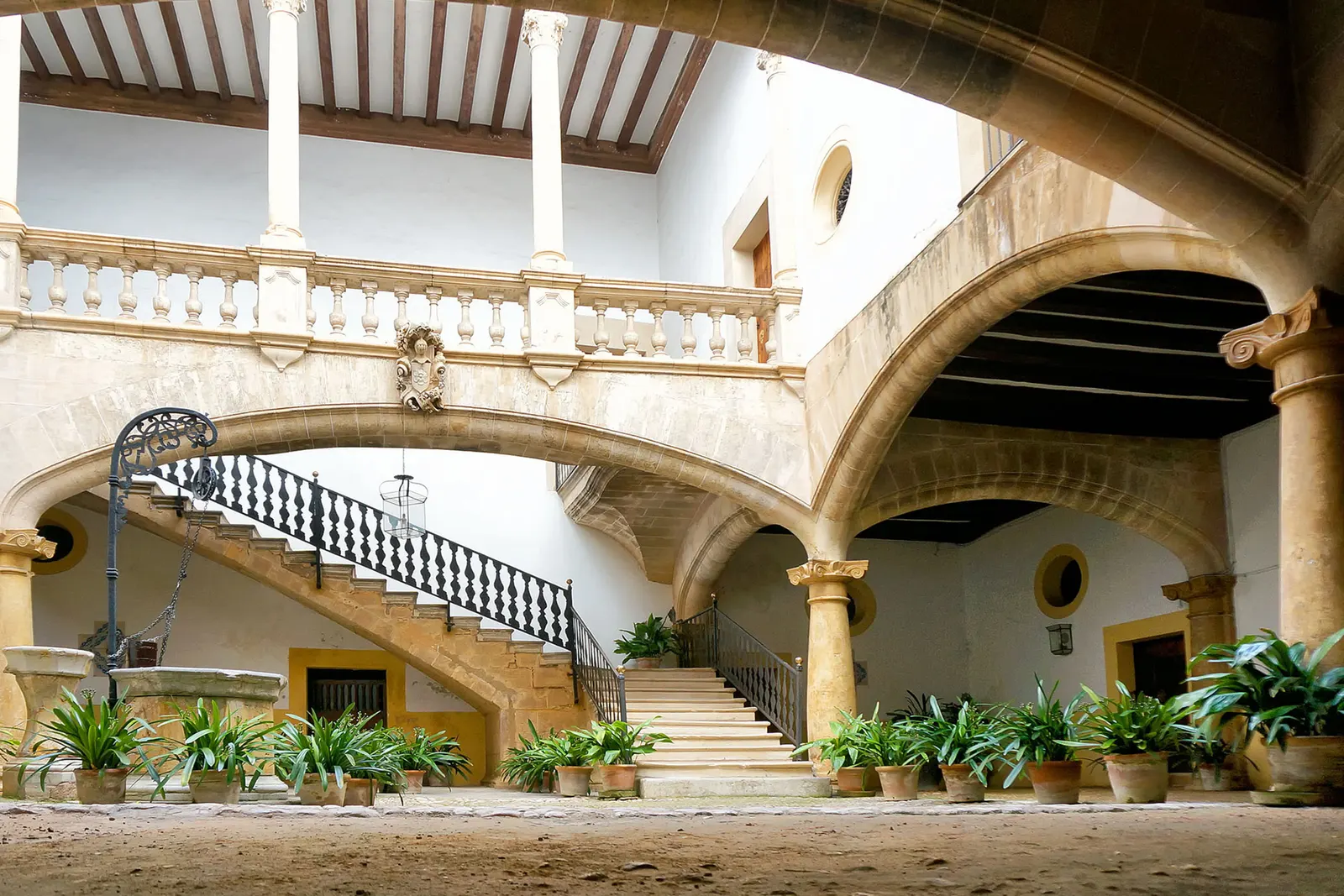
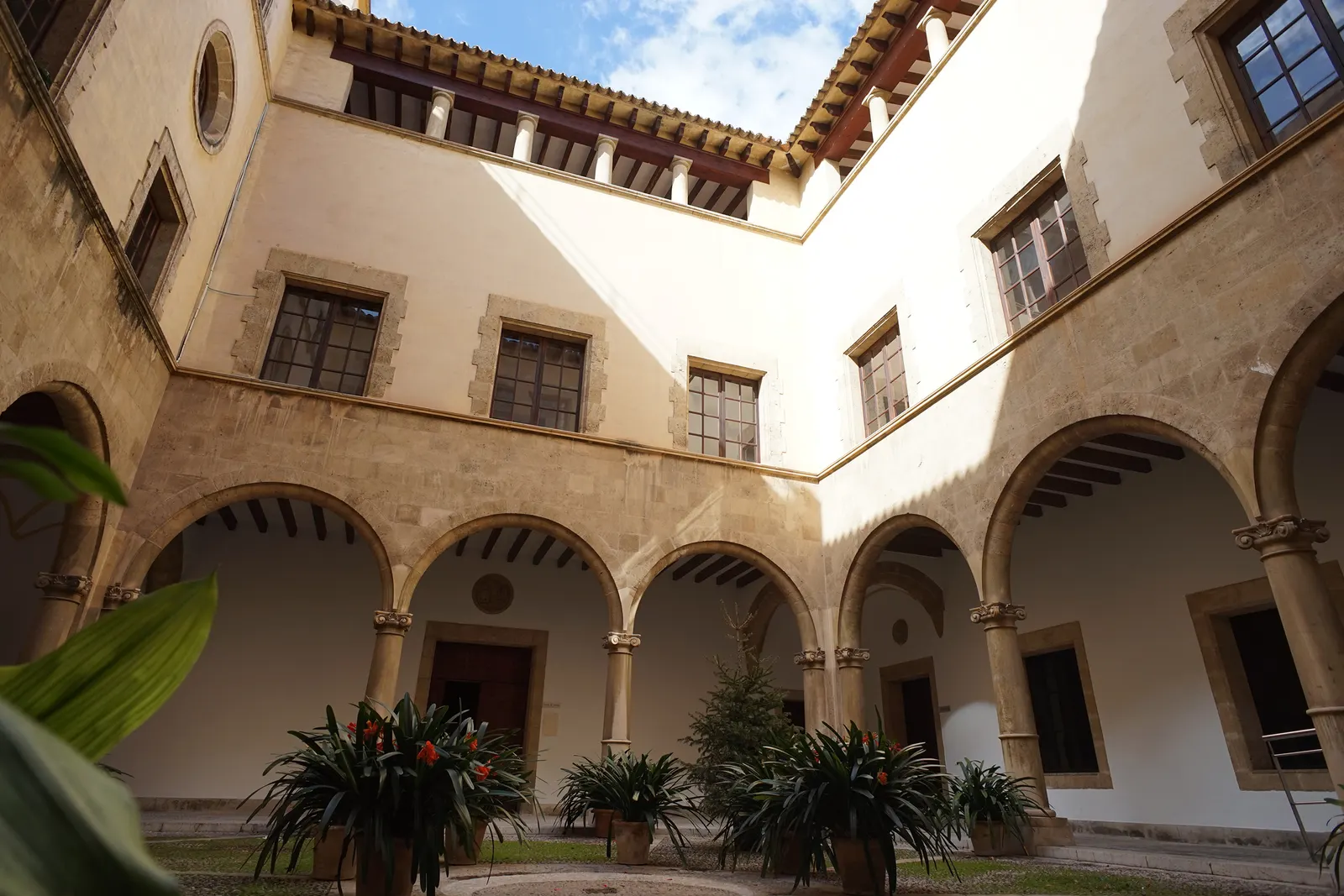
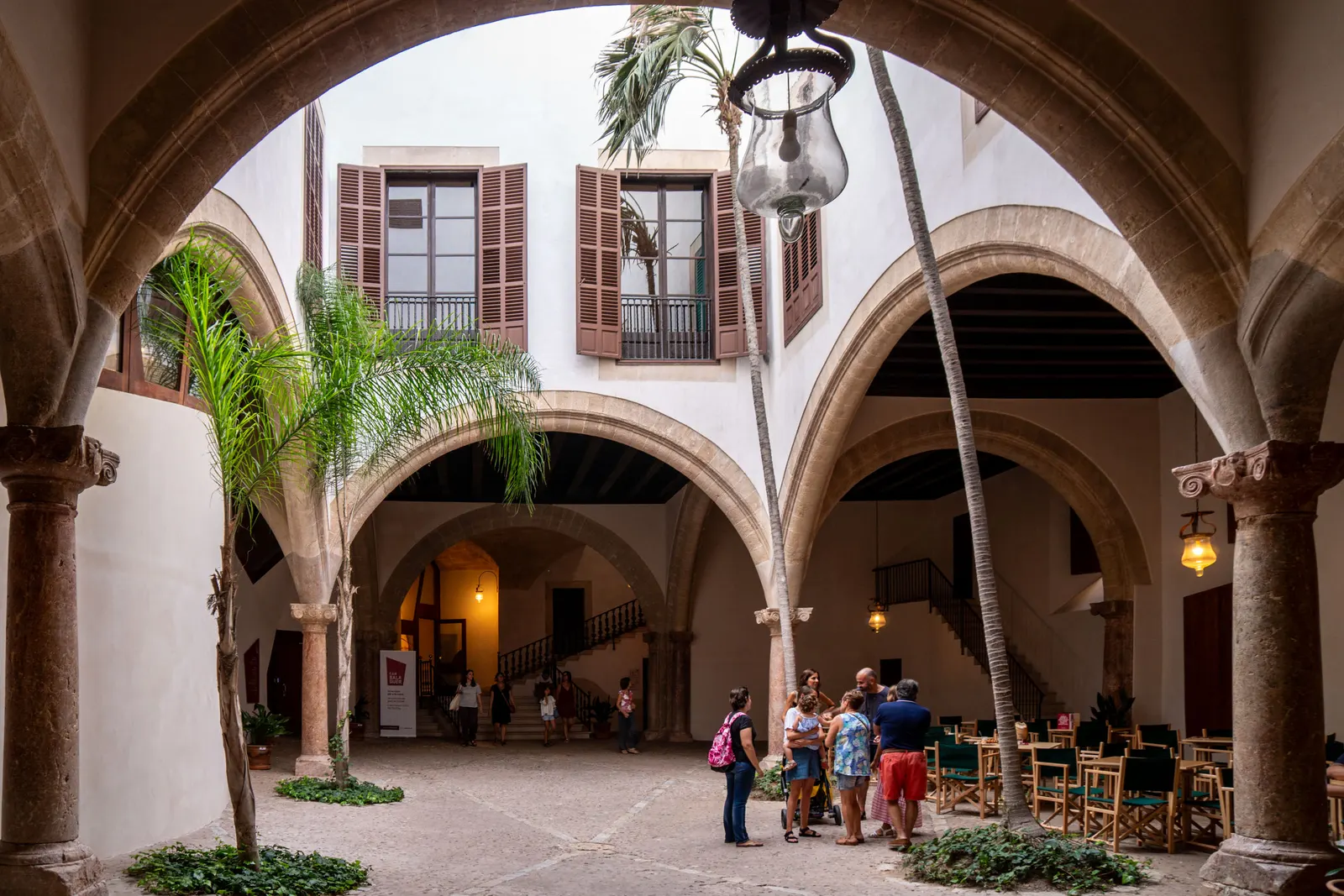
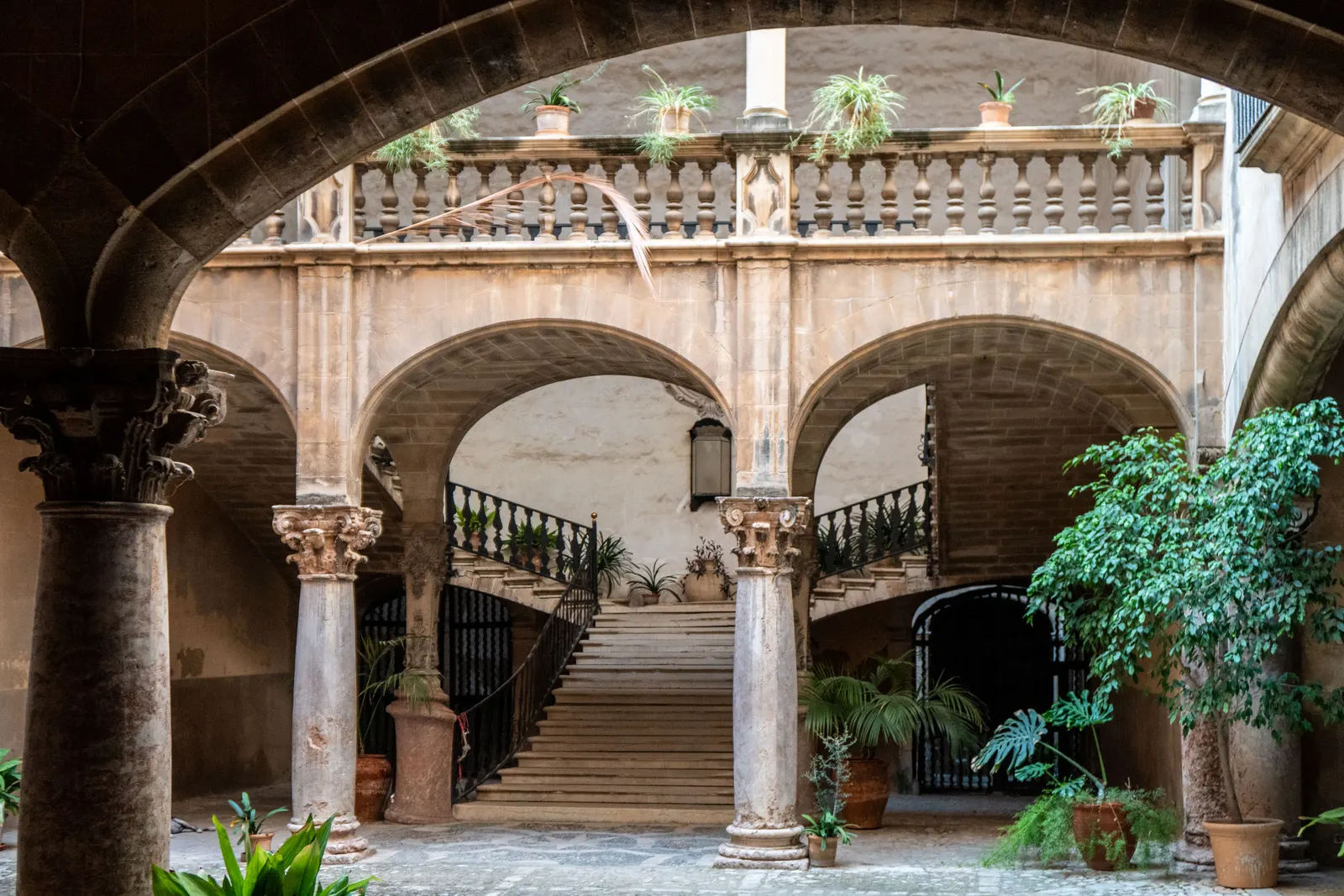
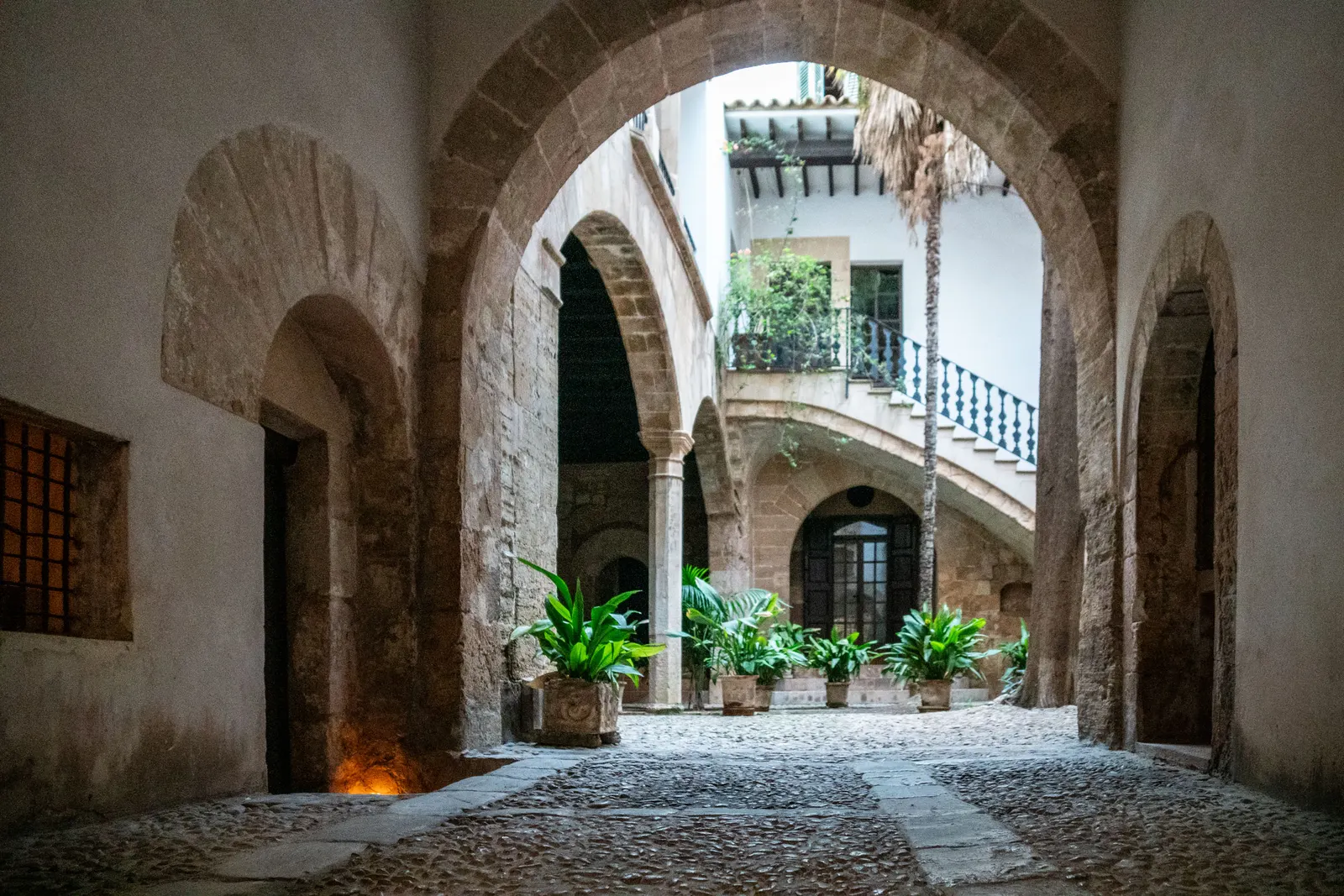
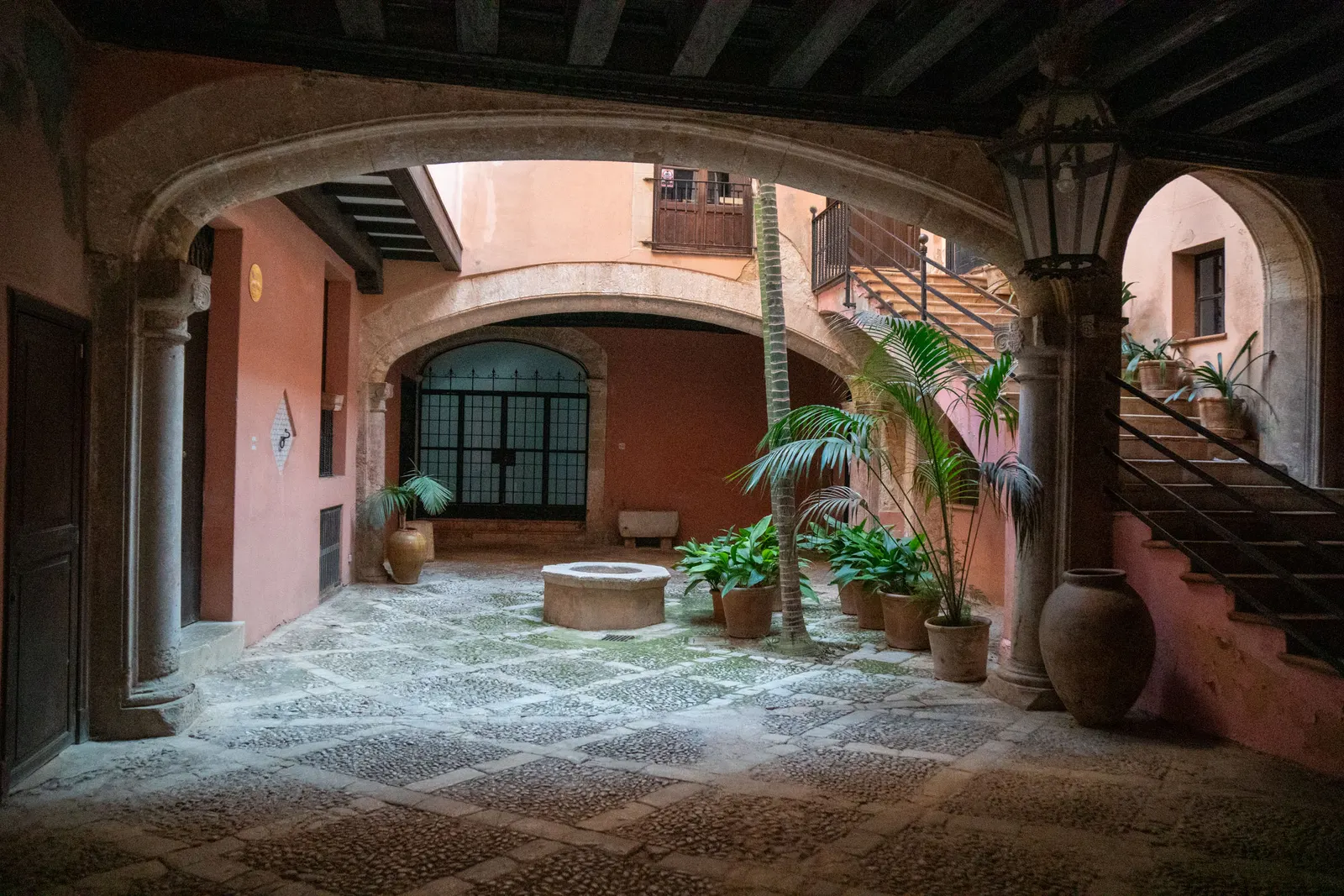
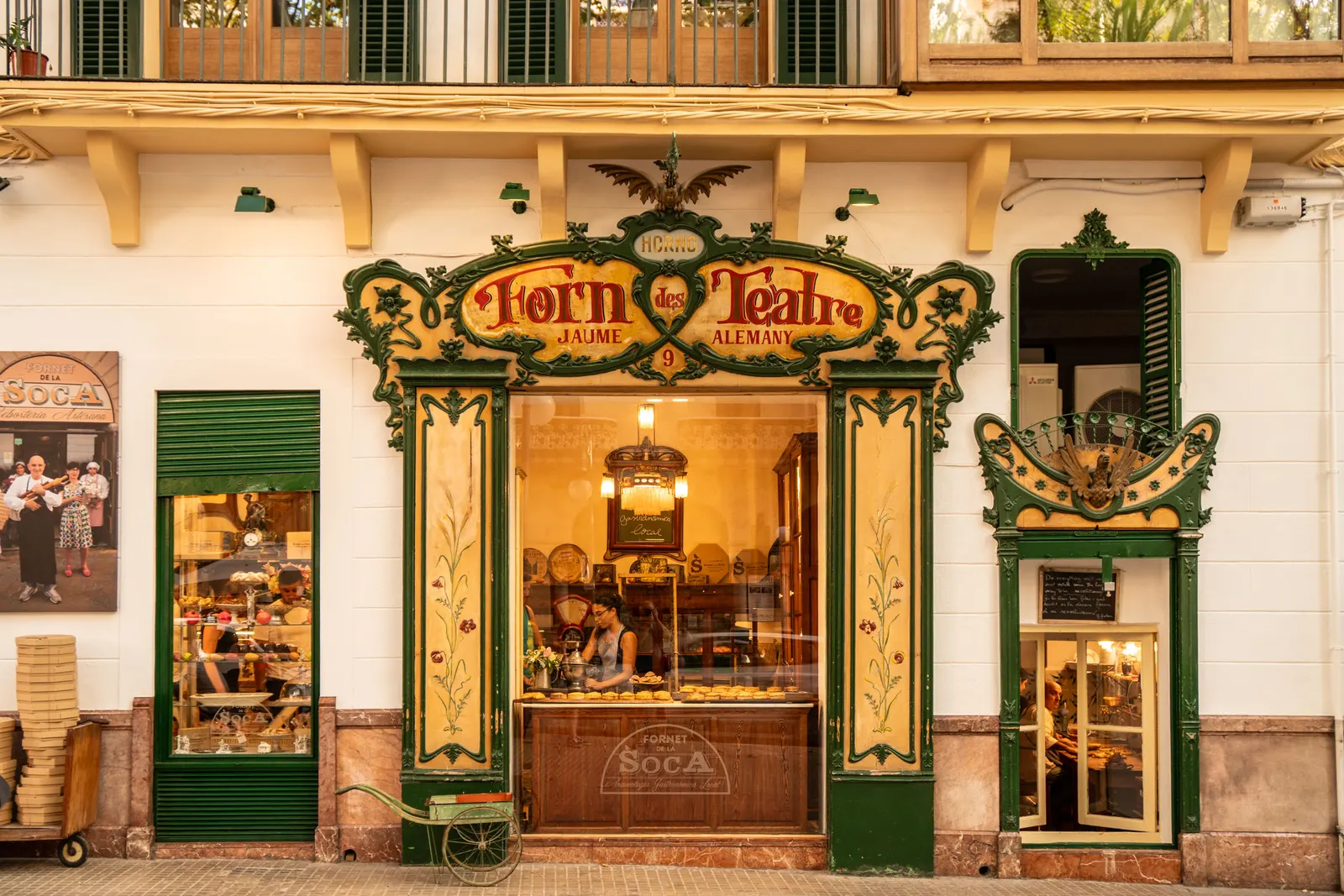
The neighbourhood’s particular attraction is its patis: courtyards of town palaces from the 15th to 18th centuries, usually with arcades, outdoor stone staircases and cisterns. Around 150 survive, and many gates open during the day. You can spend an afternoon looking in without paying a single entrance fee.
They are most concentrated along Carrer de Morey, Carrer de Can Savellà and Carrer de Sa Portella, in the triangle between the cathedral, Museu de Mallorca and Plaça de Cort.
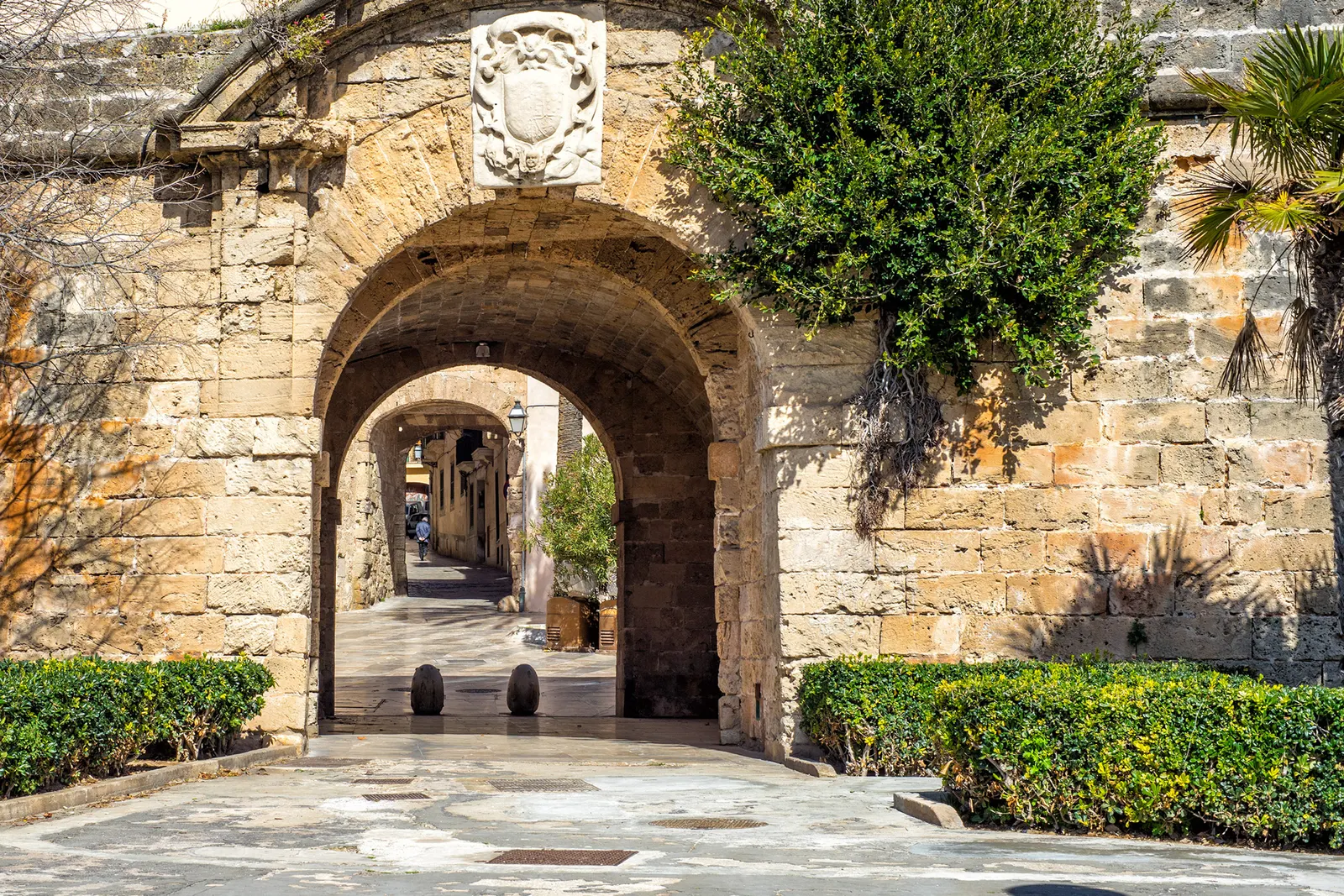
Churches beyond the cathedral
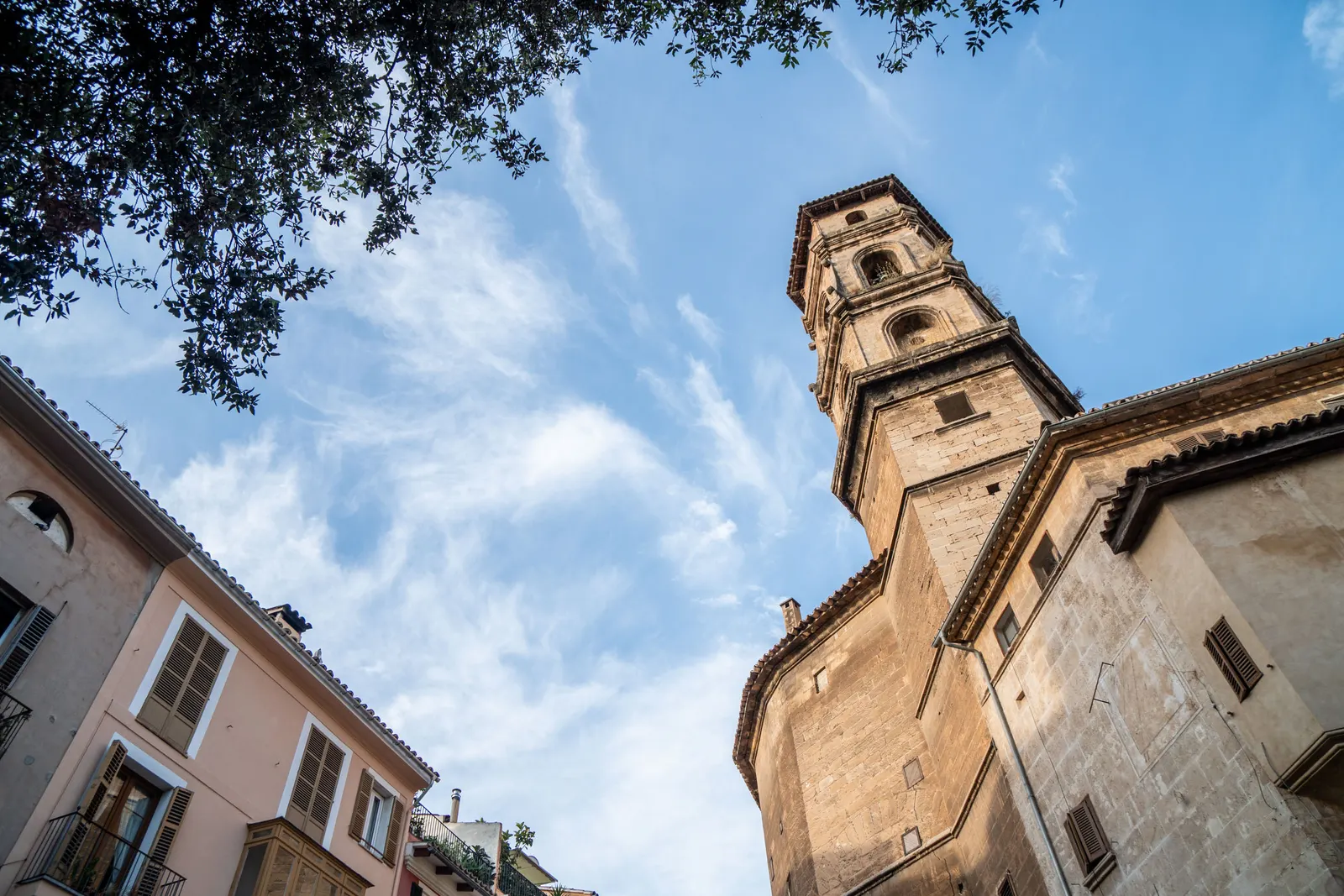
The 13th-century Basílica de Sant Francesc has one of the island’s finest Gothic cloisters. Ramon Llull, Mallorca’s leading medieval thinker, is buried here. Santa Eulàlia and Sant Miquel both stand on former mosque sites. All three are rarely overcrowded.
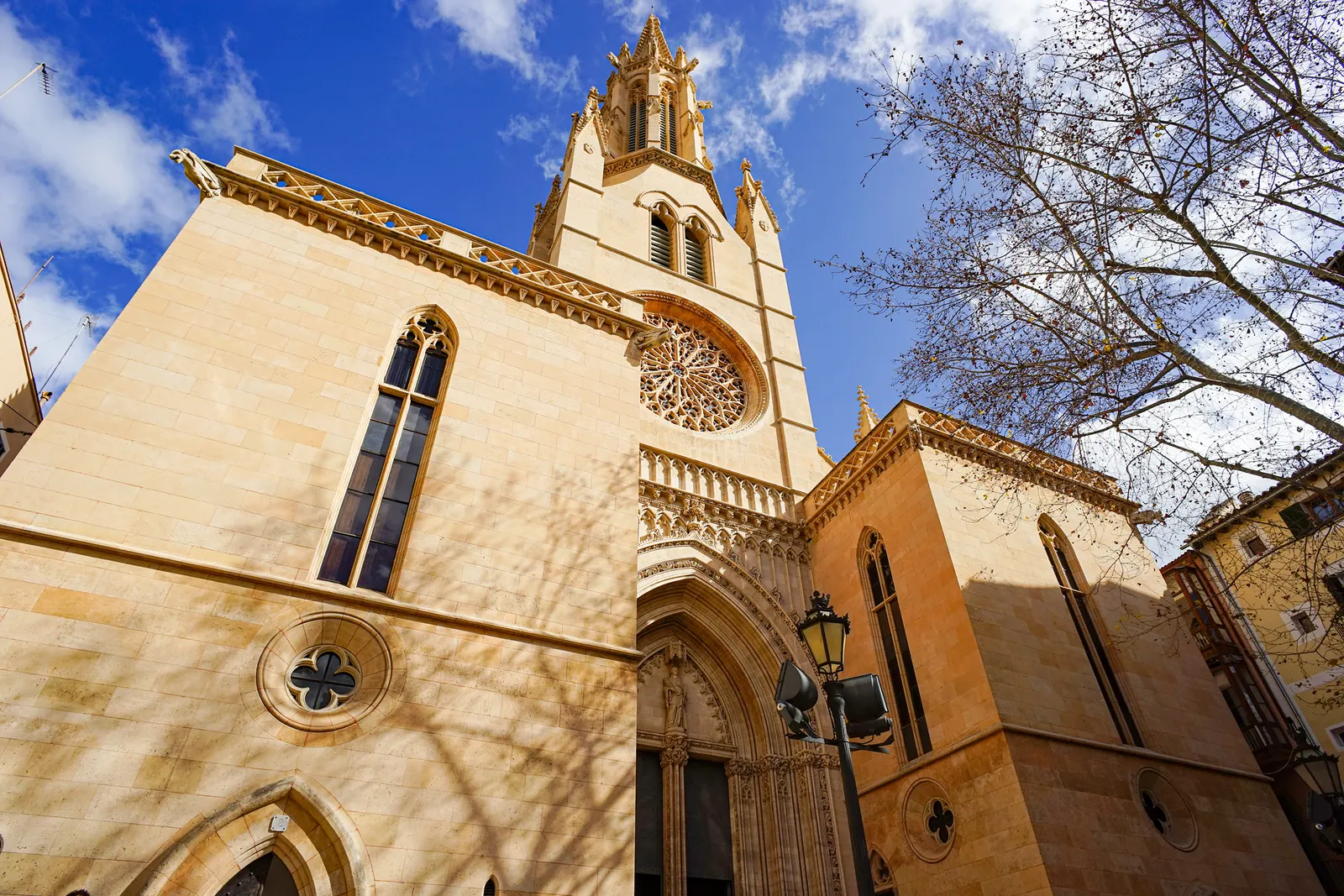
The squares
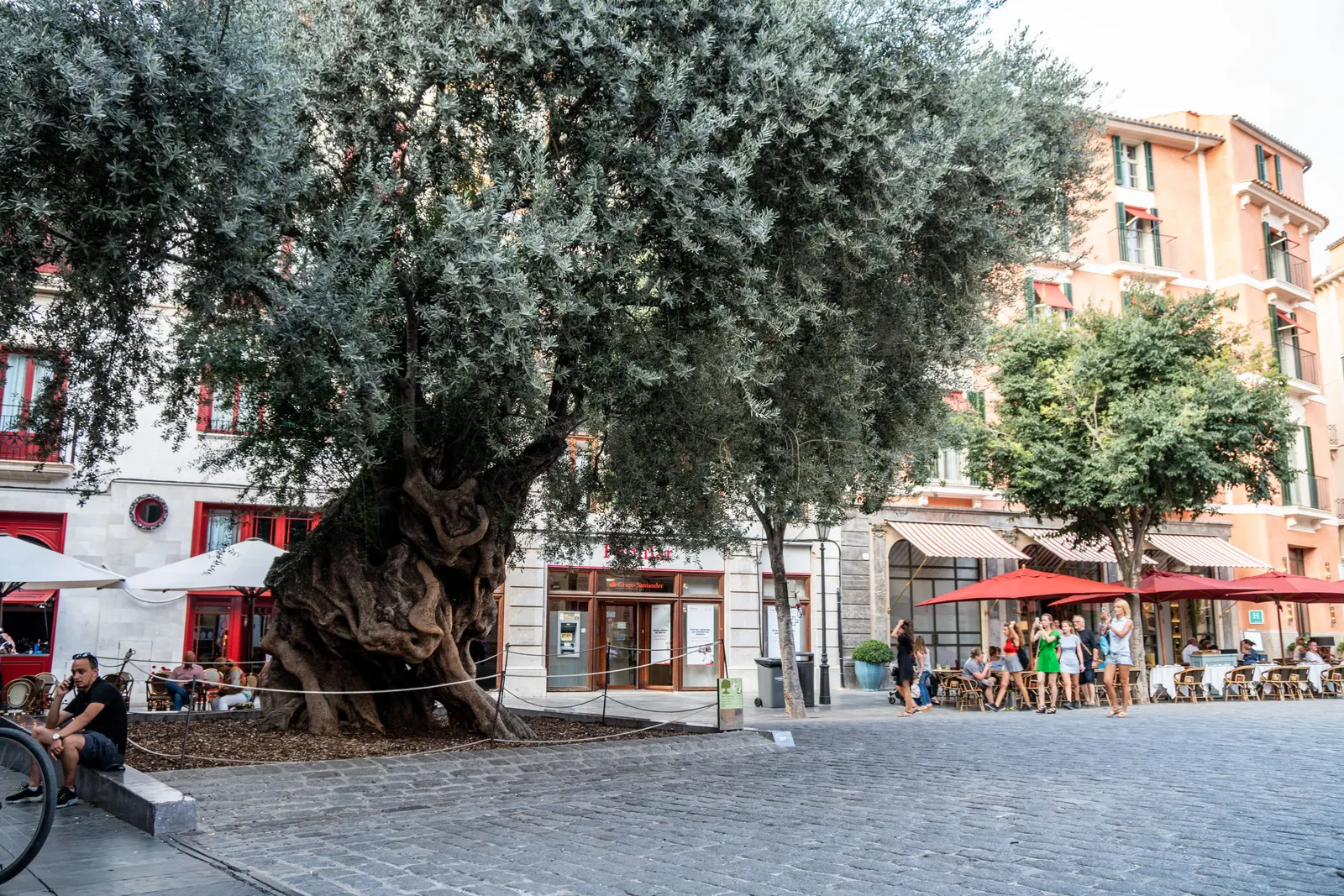
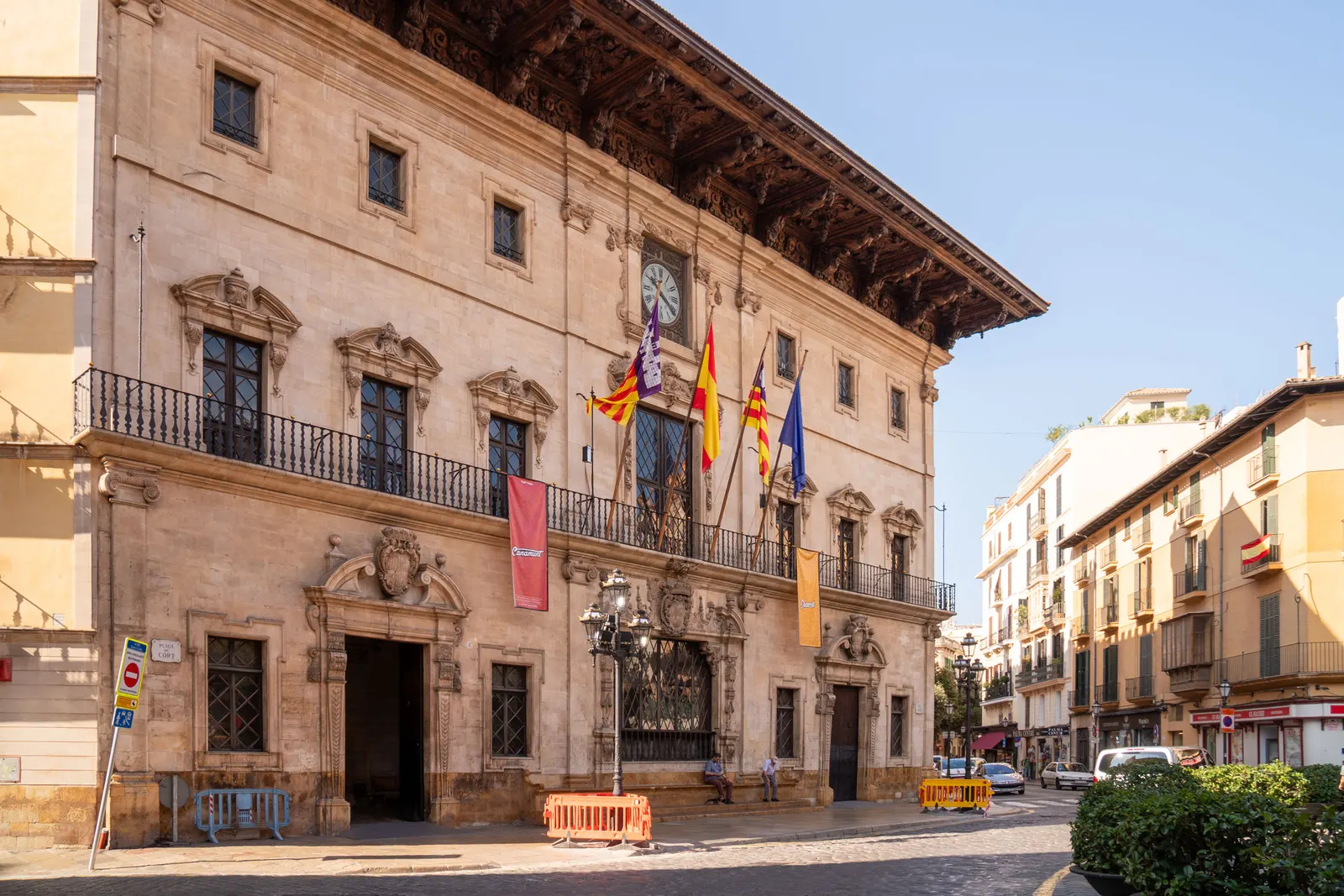
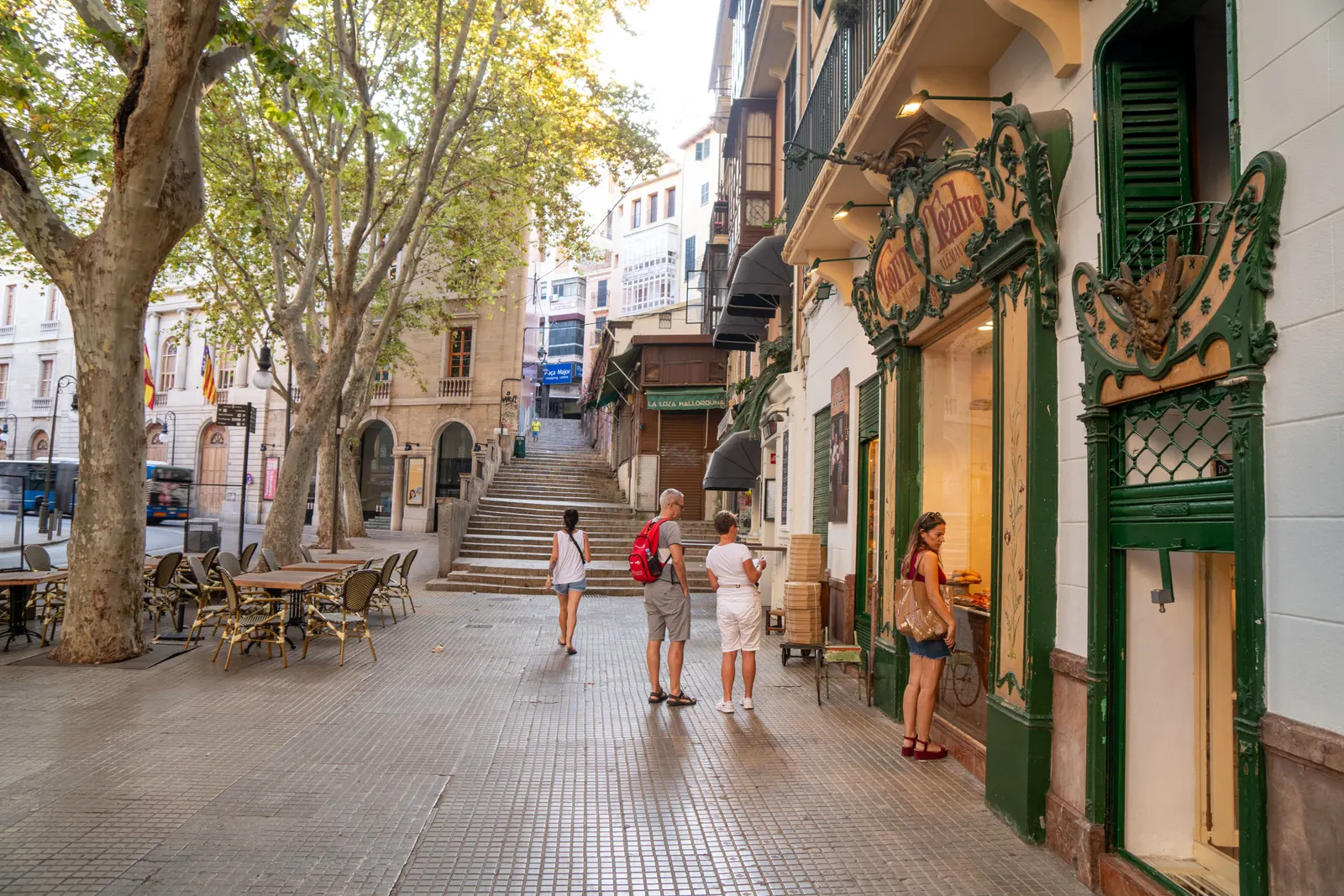
Plaça de Cort, with the town hall and an ancient olive tree, is the city’s symbolic centre. Plaça Major occupies the site of the former Inquisition building and is now a square of cafés and street performers. Passeig del Born, the grand avenue between the old and newer city, follows a former torrent bed.
When to go
Before 10am or after 6pm. In between, particularly when several cruise ships are in port, the cathedral–Born–Plaça Major route gets extremely busy. In winter that is much less of an issue, and local life comes to the fore again.
Photographs
Casc Antic in Mallorca
Practical details
- Parking
- Don't try the lanes. Use the Parc de la Mar car park on the southern edge, then walk up to the cathedral.
- Public transport
- EMT services stop around the old town's edges, particularly at Plaça d'Espanya and Avinguda d'Antoni Maura. Explore the interior on foot.
- Time to allow
- A full day for the cathedral, Almudaina and lanes. Two days with museums.
- Good to know
- The Banys Àrabs on Carrer Can Serra are a rare surviving building from the Islamic city — a small domed bathhouse in a garden, easily missed and rarely crowded.
- Bus
- EMT buses and the A1 airport bus
- Coordinates
- 39.5679,2.6497 Google Maps Apple Maps
The main sights at a glance
| Sight | What it is | Time to allow | Admission |
|---|---|---|---|
| La Seu | Gothic cathedral, with work by Gaudí and Barceló | 60–90 minutes | Paid |
| Palau de l'Almudaina | Moorish fortress and later royal palace | 45–60 minutes | Paid |
| Banys Àrabs | Domed Islamic bathhouse with a garden | 15–20 minutes | Paid |
| Basílica de Sant Francesc | Gothic monastery church and cloister | 30 minutes | Paid |
| Museu de Mallorca | Island history in the Can Aiamans palace | 60–90 minutes | Paid |
| Patios | Around 150 courtyards visible from the lanes | 1–2 hours | Free |
| Plaça Major / Plaça de Cort | The old town's central squares | As you pass | Free |
Admission prices and opening hours change regularly, so check before visiting. Several venues have set free-entry days.
Within reach
Places to visit
Nearby

An 11th-century brick chamber in an old-town garden, with twelve columns, horseshoe arches and a dome pierced by …

Palma’s cathedral was begun in 1230 and built over several centuries. Its Gothic buttresses rise above the water …

The royal palace beside Palma cathedral began as a Moorish alcázar, later converted into a residence for …

The March family's city palace between the cathedral and the Almudaina: a terrace filled with 20th-century …

Palma's grand promenade between Plaça de la Reina and Plaça del Rei Joan Carles I. It follows the bed of a torrent …

Sant Pere bastion, built in the late 16th century on the western edge of Palma’s old town, became home to a …

The Balearics' largest harbour sits in the city, in front of the old town. Cargo quays, cruise terminals, marinas …

A striking circular Gothic castle, built above Palma between 1300 and 1311. Inside is a two-storey round …
Distances without a driving time are measured in a straight line. The road journey can be much longer; known driving times are shown alongside.
Where to swim nearby
Beaches and swimming nearby

At the western end of Playa de Palma, ten minutes from the airport by car: a marina, a rocky waterfront promenade …

Broad sandy bays with pale, shallow water, right beside Magaluf but with a different feel. The quieter neighbour …
Explore from here
Your questions answered
Your questions about Casc Antic
How long do I need for Palma's old town?
Allow a full day for the cathedral, Almudaina and a walk through the lanes. Add museums such as Museu de Mallorca or Es Baluard and you'll need two days. A walk focusing on lanes and patios takes two to three hours.
What are Palma's patios?
Courtyards of town palaces dating from the 15th to 18th centuries, usually with arcades, an outdoor staircase and a cistern. Around 150 survive. Many gates are open during the day, letting you look in from the street without a ticket, tour or booking. The greatest concentration is around Carrer de Morey, Carrer de Can Savellà and Carrer de Sa Portella.
What did Gaudí do in Palma cathedral?
Between 1901 and 1914, Antoni Gaudí remodelled the interior, moving the choir out of the nave to open the view towards the altar, reopening windows and hanging a canopy above the altar. It still has a provisional feel — Gaudí left after a disagreement before the work was finished.
What is Miquel Barceló's chapel?
A remodelling of the cathedral's Sant Pere chapel, carried out between 2001 and 2007 by Mallorcan artist Miquel Barceló. His ceramic wall covering shows fish, loaves and cracking earth. It remains controversial and is also one of the church's most visited sections.
When is the light display in Palma cathedral?
Twice a year, around 2 February and 11 November, sunlight through the large rose window projects its image directly below the opposite rose window. It lasts a few minutes in the early morning. Check the cathedral's arrangements well ahead.
Is Palma's old town accessible?
Only partly. Much of the paving is cobbled, many lanes slope, and the old town rises between the cathedral and Plaça Major. Main routes such as Passeig del Born and the squares are easier to negotiate; smaller lanes are much harder.
Practical questions
When is the best time to visit Casc Antic?
Recommended months: January, February, March, April, September, October, November, December. Sant Sebastià on 19–20 January: street fires and concerts in old town squares, with a largely local crowd.
Is Casc Antic worth visiting in July and August?
July: another month may suit you better. Usually busy. Above 33°C between stone walls that hold the heat. Before 10am is more manageable. August: another month may suit you better. Usually busy. Large cruise crowds and many independent shops taking their summer break. The least appealing month.
How far is Casc Antic from Palma airport?
About 10 km from Palma airport. Allow roughly 20 minutes by car.
Do I need a hire car for Casc Antic?
A car can be more trouble than it’s worth EMT buses and the A1 airport bus
Where can I park in Casc Antic?
Don't try the lanes. Use the Parc de la Mar car park on the southern edge, then walk up to the cathedral.
Words and photographs: Friedhelm Fischer. Exploring Mallorca since 2013 — by bike, on foot and with a camera.