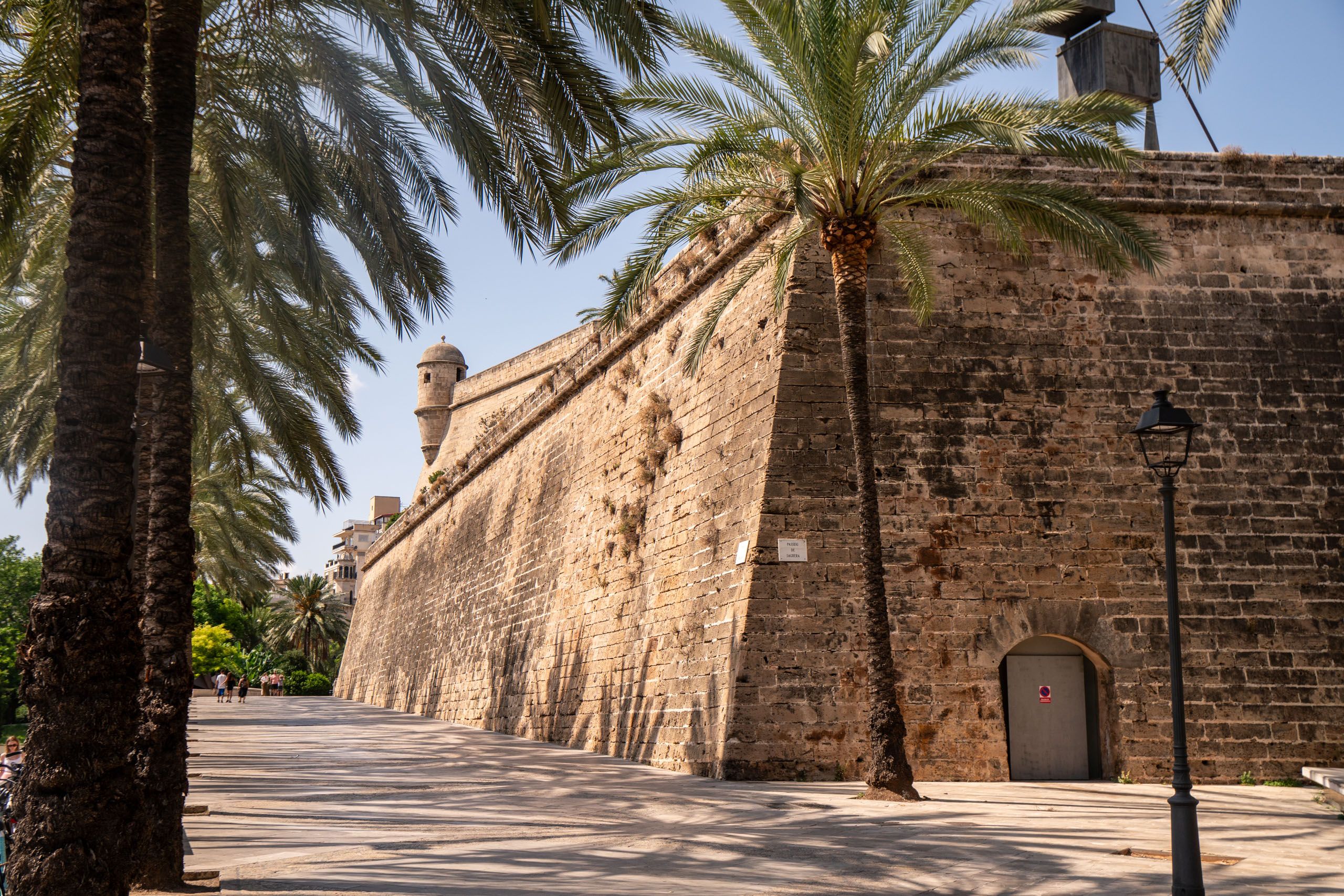
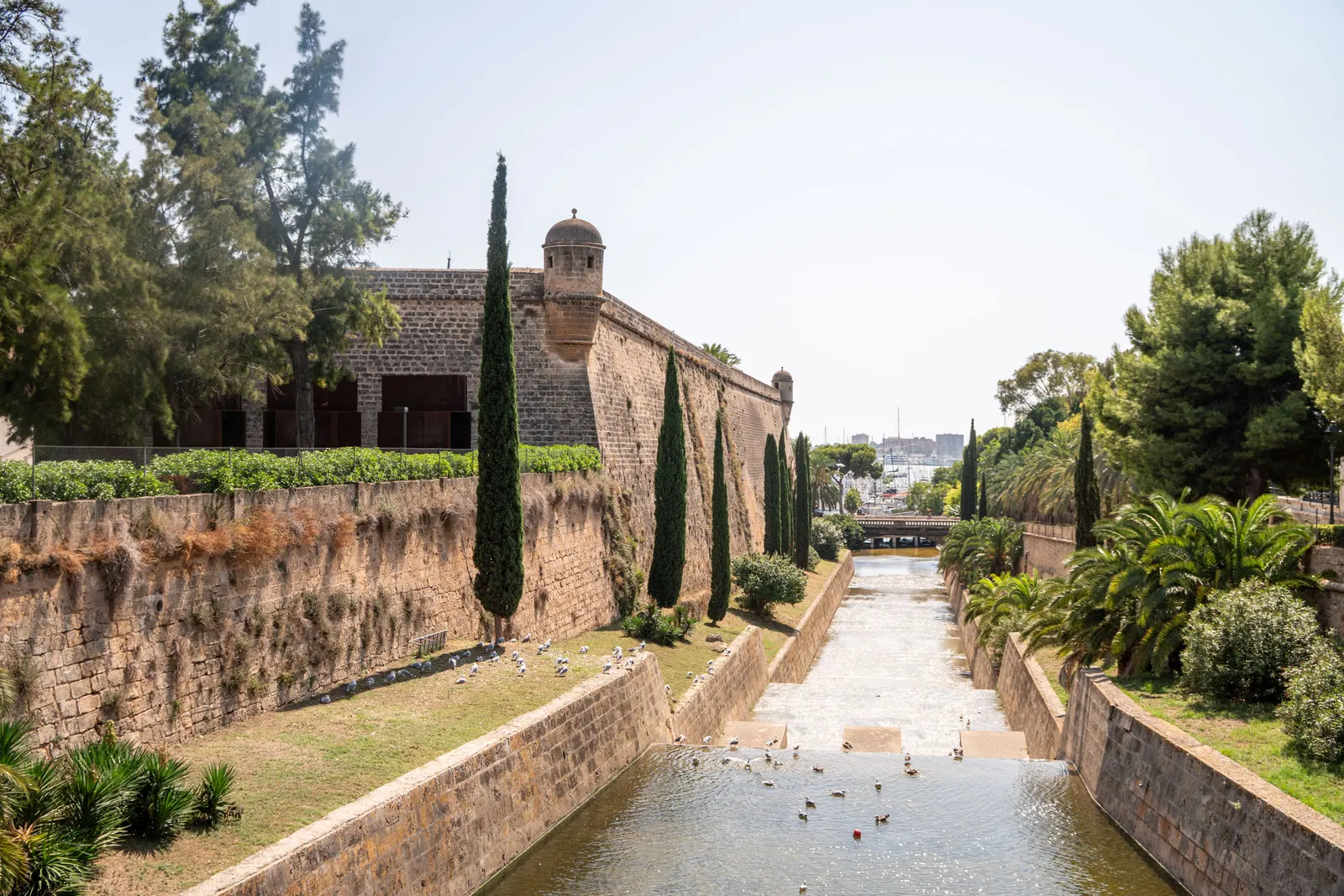
Sant Pere bastion, built in the late 16th century on the western edge of Palma’s old town, became home to a contemporary art museum in 2004. Concrete and glass sit within the Renaissance fortifications, with a free wall-top walk overlooking the harbour and cathedral.
Es Baluard
Es Baluard in 30 seconds
The essentials at a glance
- Worth visiting for
- A short visit
- Best for
- Contemporary art and architecture
- Best months
- January–June, September–December
- Time to allow
- An hour for the exhibitions, plus half an hour for the walls and terraces.
- Without a car
- Better without a car
- Parking
- Passeig Mallorca car park is a two-minute walk away; Via Roma is five minutes and Parc de la Mar ten.
- Highlight
- A museum inside a historic bastion
- Keep in mind
- A beach-only outing
- Access
- Pushchairs: Straightforward inside; ramps provide access to the bastion. · Wheelchairs: The museum is accessible, with ramps serving most of the outdoor grounds.
Get a feel for Mallorca. Find your kind of place.
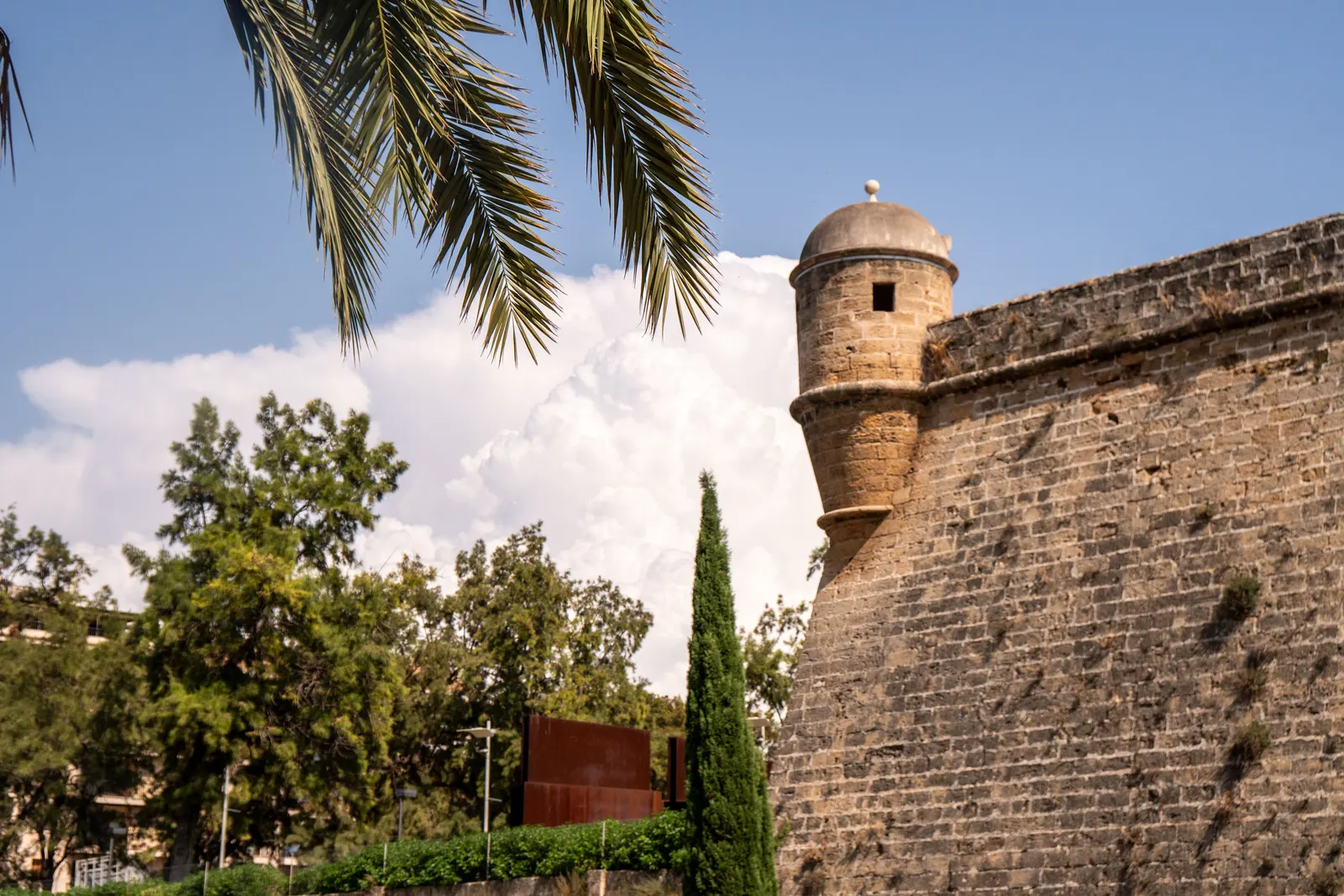
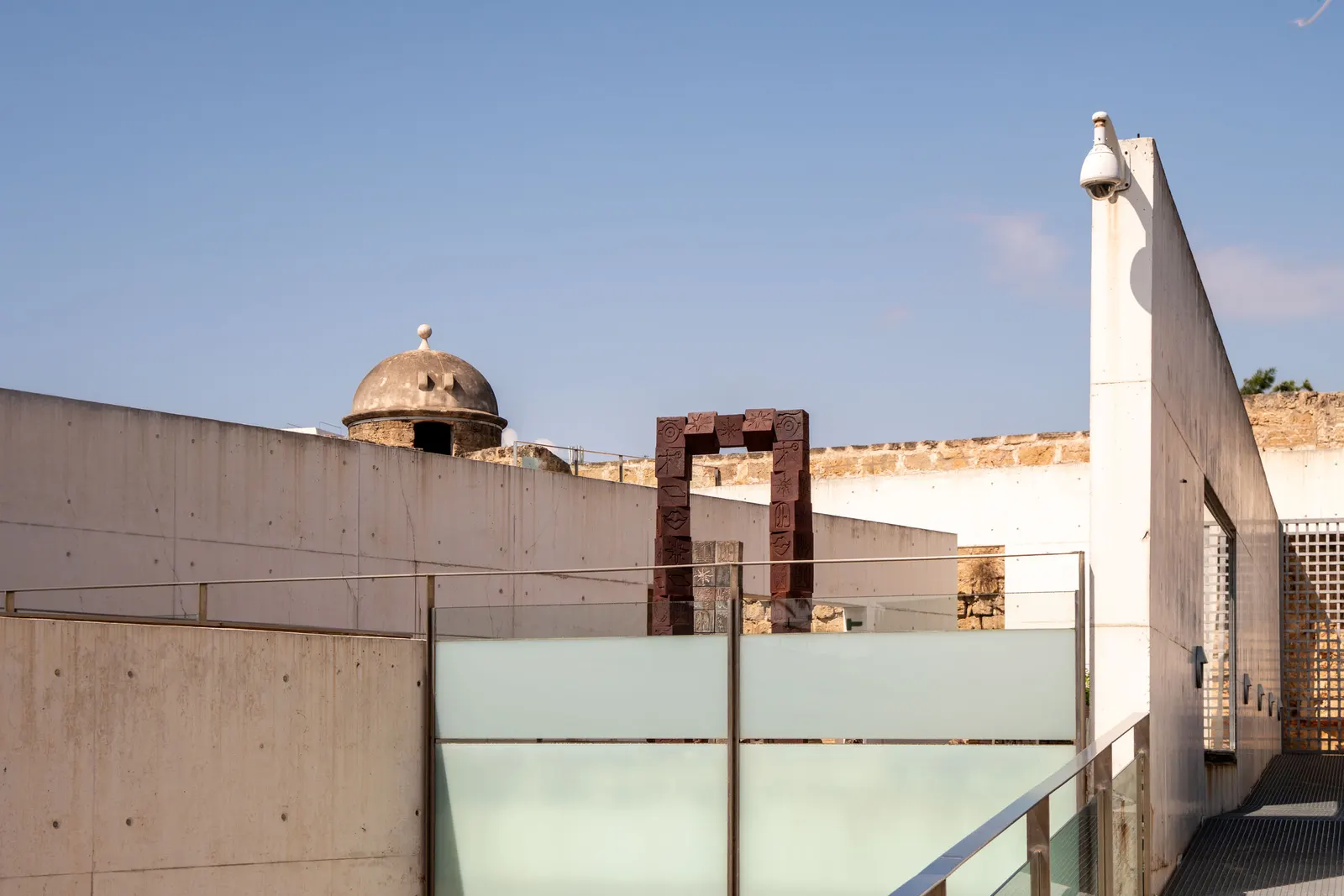
The garita on the corner of the wall, once a lookout across the bay.
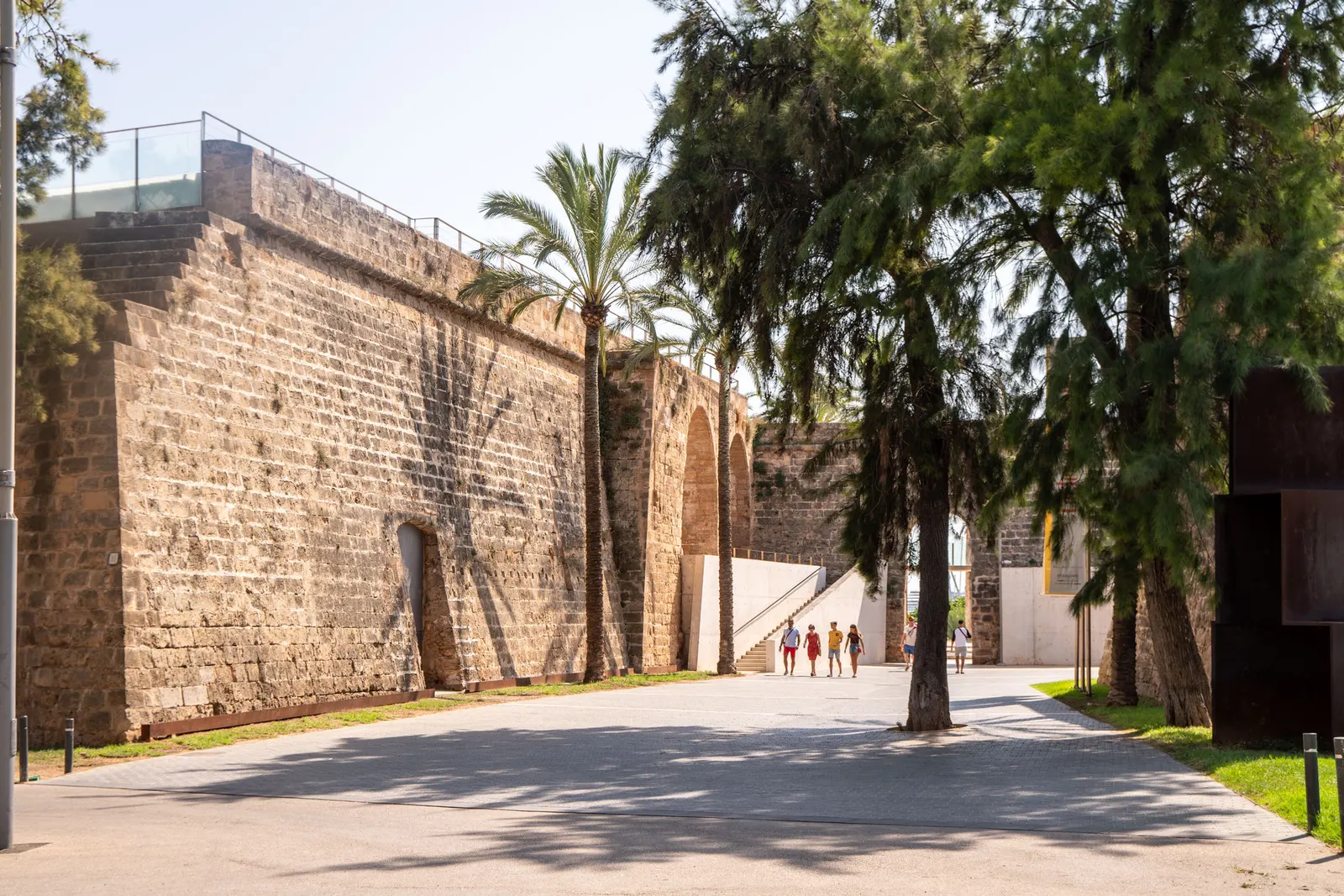
The path beside the wall is public. You don’t need a museum ticket to walk here.
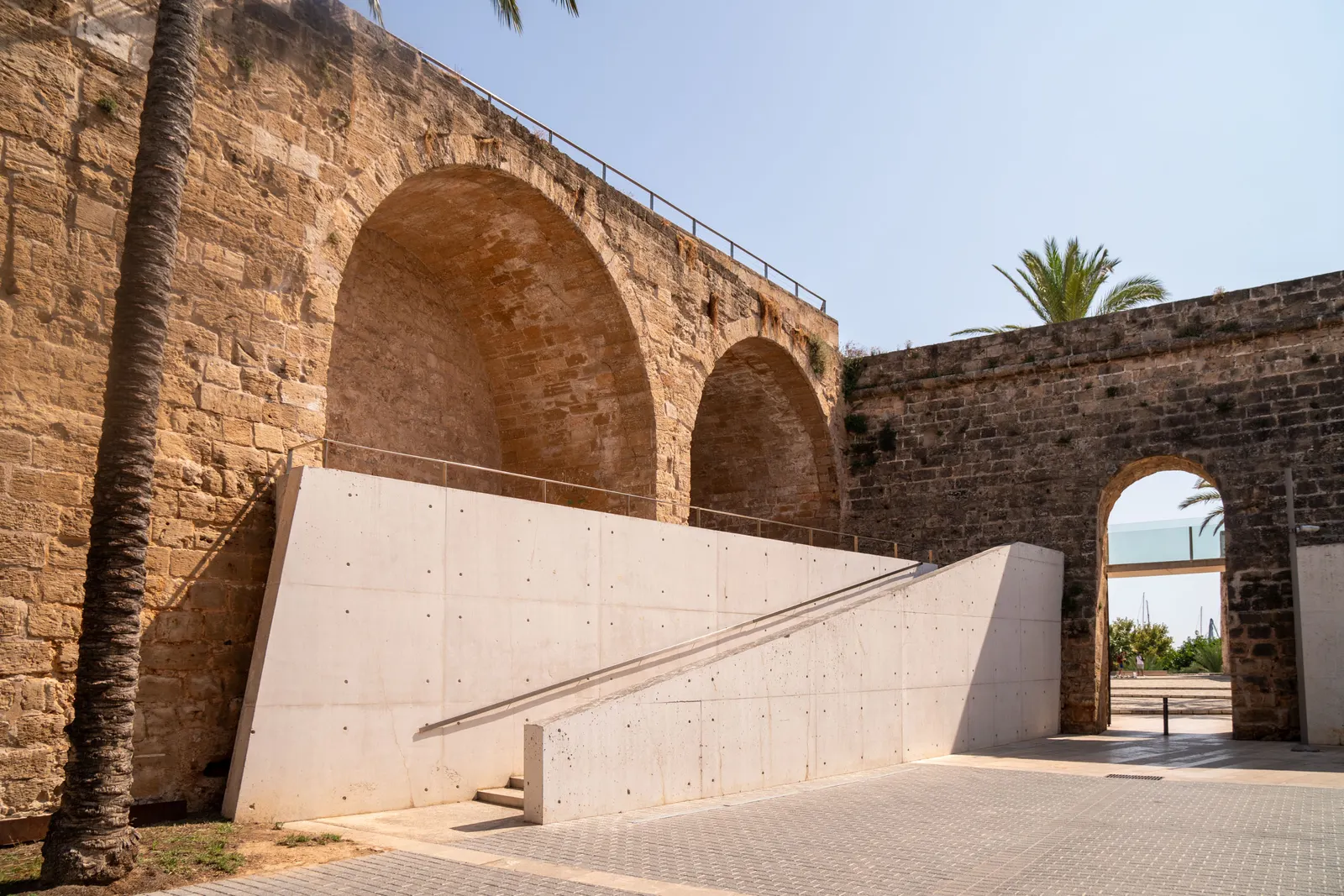
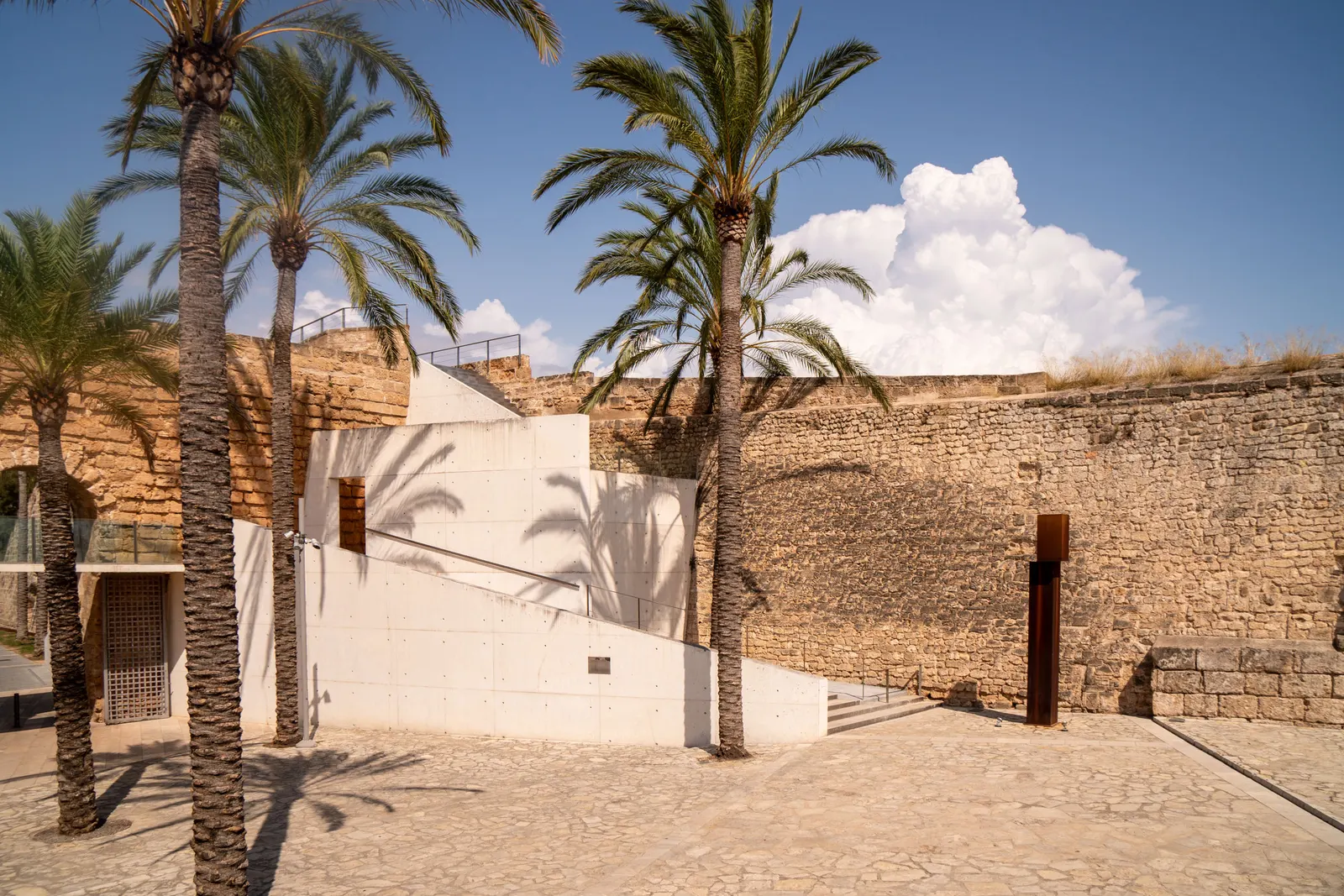
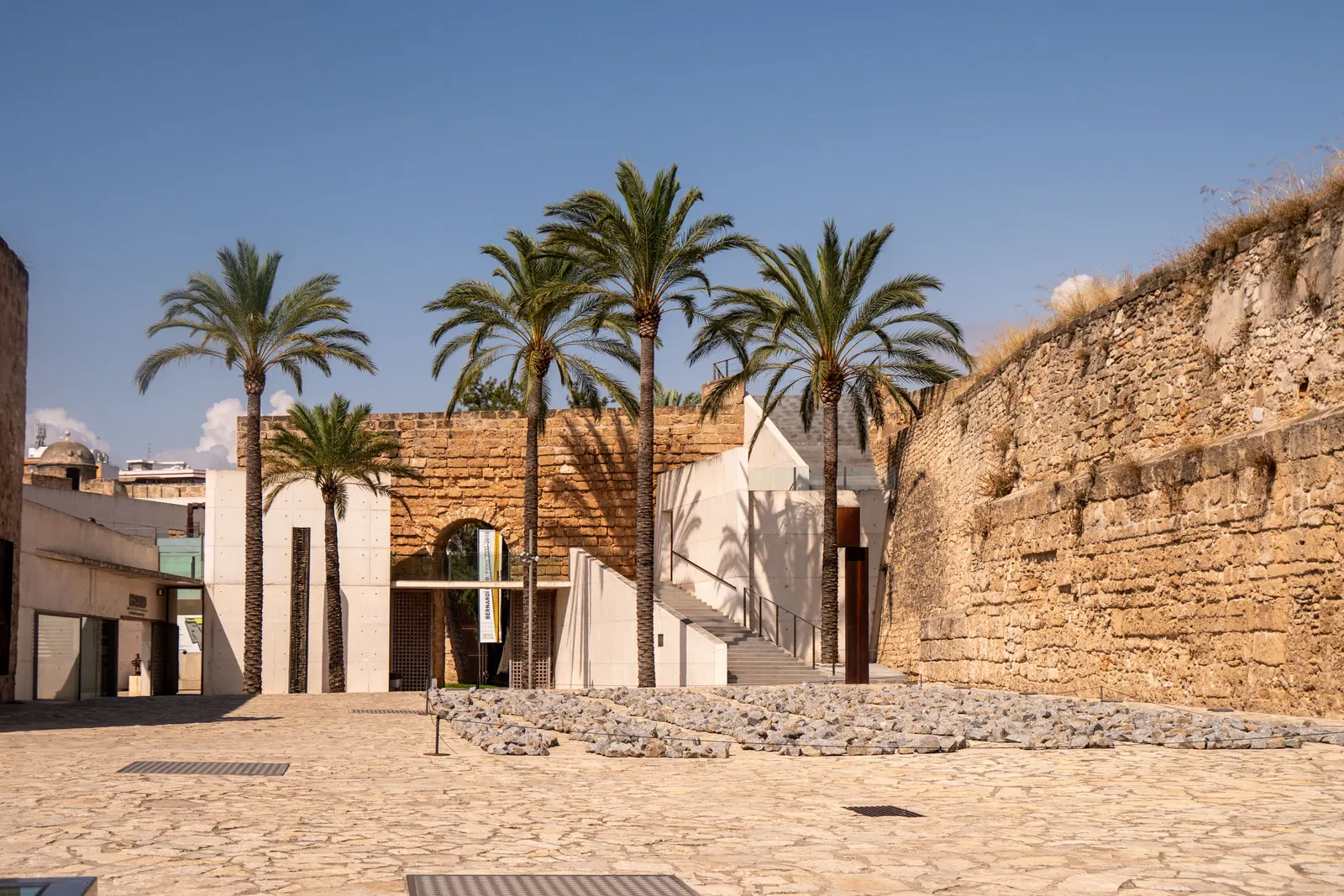
Concrete beneath sandstone — the new building makes no secret of its age.
Drive from the airport
25 minutes
11 km
Bus connections
EMT routes 1
Region
Palma
Nearest beach
Can Pastilla
8 km
Elevation
18 m
above sea level
Season guide for Es Baluard
November Worth a visit
Quiet Open
Worth visiting in January, February, March, April, May, June, September, October, November and December.
Location
Location of Es Baluard
- Region
- Palma
- Municipality
- Palma
- Elevation
- 18 m above sea level
- Airport
- 11 km , around 25 minutes
- Hire car
- more hindrance than help
- Worth visiting for
- a brief stop
- Coordinates
- 39.5708,2.6417
What is Es Baluard?
A contemporary art museum in a fortress — and both are worth exploring. The building occupies Sant Pere bastion, the western corner of the Renaissance walls that surrounded Palma until the early 20th century.
The address is Plaça de la Porta de Santa Catalina 10, beside the old city gate. From the Born, walk along Passeig Mallorca and you’ll be there in around ten minutes.
The bastion
It was built in the last quarter of the 16th century, when the old medieval walls were reinforced with a new defensive ring designed by Italian engineer Giacomo Palearo, known as Fratín. Sant Pere stood out for its size and position, and one of Europe’s most respected artillery schools was established here.
The complex took on its present shape in the 18th century. Military use ended in 1952, after more than three hundred years, and it passed into private ownership. The new owners wanted to develop the whole site. In 1963, they tried to demolish the wall using lime bombs. Palma’s residents opposed the destruction. The bastion was protected as a historic ensemble, and reconstruction began in 1965.
The site was secured for public use in the late 1980s. In 1997, Palma’s council made it available for the museum.
The modern building
Lluís García-Ruiz, Jaume García-Ruiz, Vicente Tomás and Ángel Sánchez Cantalejo designed the museum in 2003. Its 5,027 square metres include 2,500 square metres of exhibition space across three levels. Ramps, skylights and large internal balconies connect the floors and the outside spaces. The idea was to create something like a street through the interior.
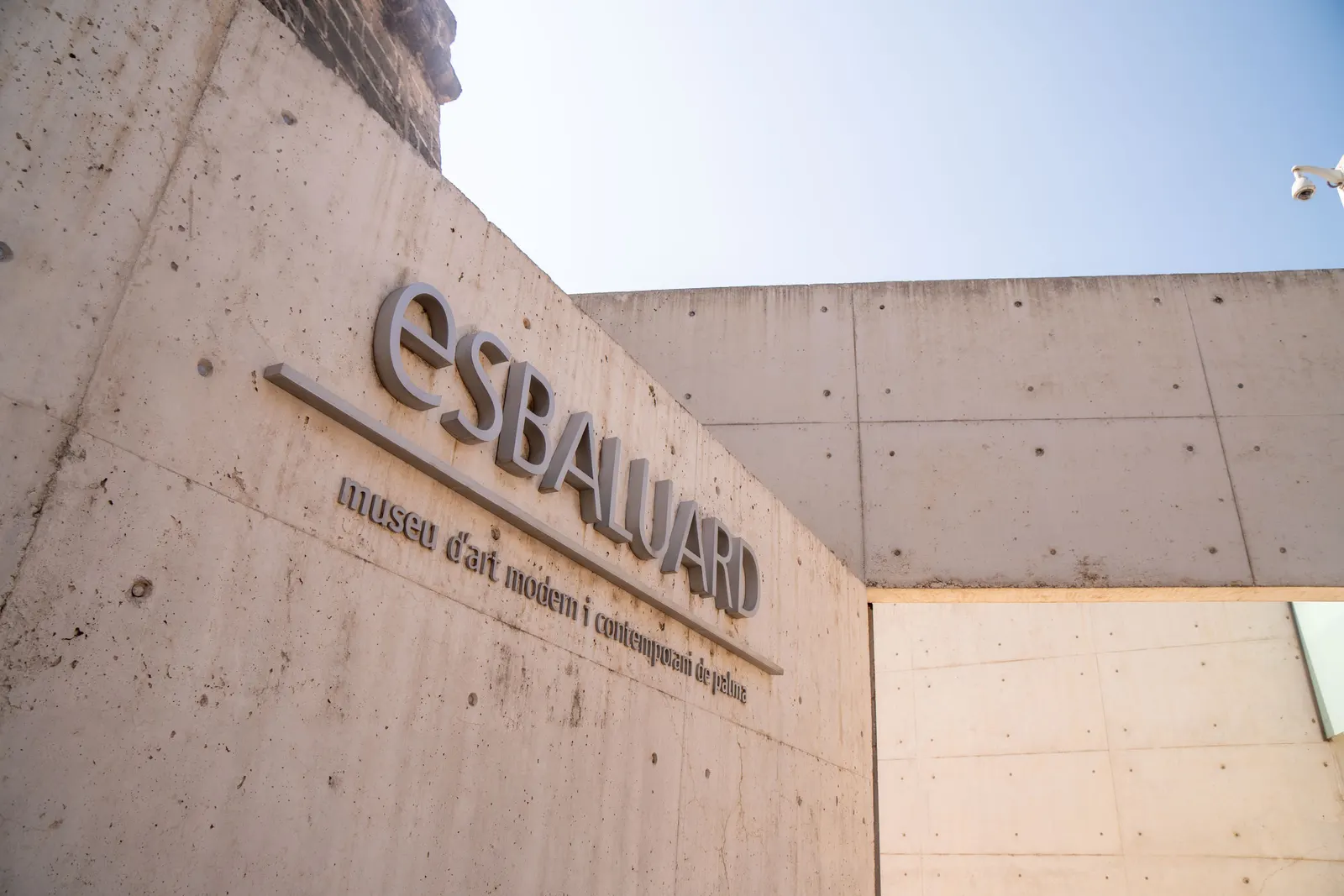
Concrete and glass deliberately contrast with the sandstone walls. You can always tell what’s old and what’s new. The museum opened on 30 January 2004.
The Aljub
Beneath the site is a freshwater cistern completed in the 1640s. Rectangular and covering 353 square metres, it has a shallow barrel vault and ventilation openings. Water came from a spring near Esporles, supplying the Puig de Sant Pere neighbourhood and ships entering the harbour. Today, the Aljub is an exhibition space.
Outside the museum
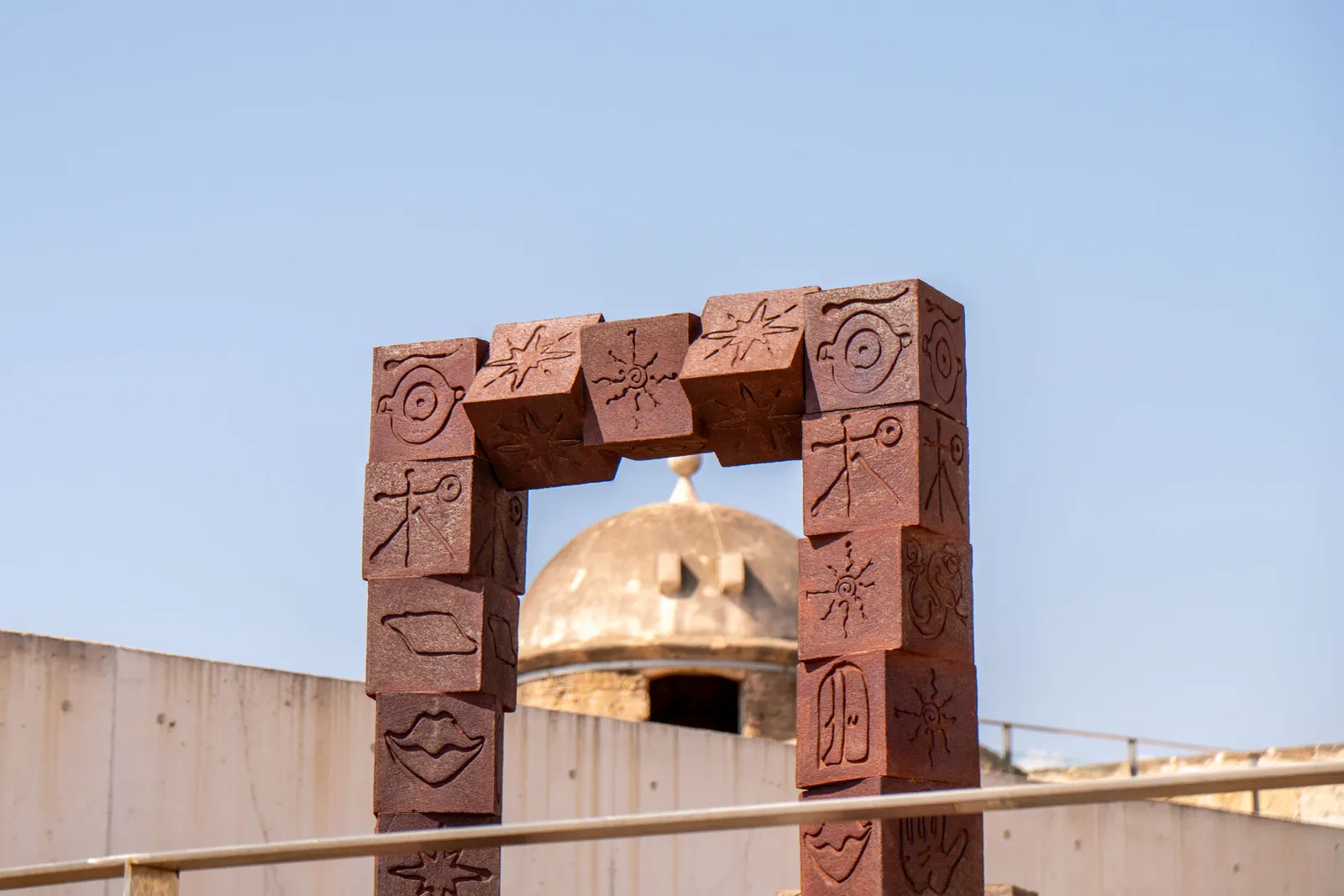
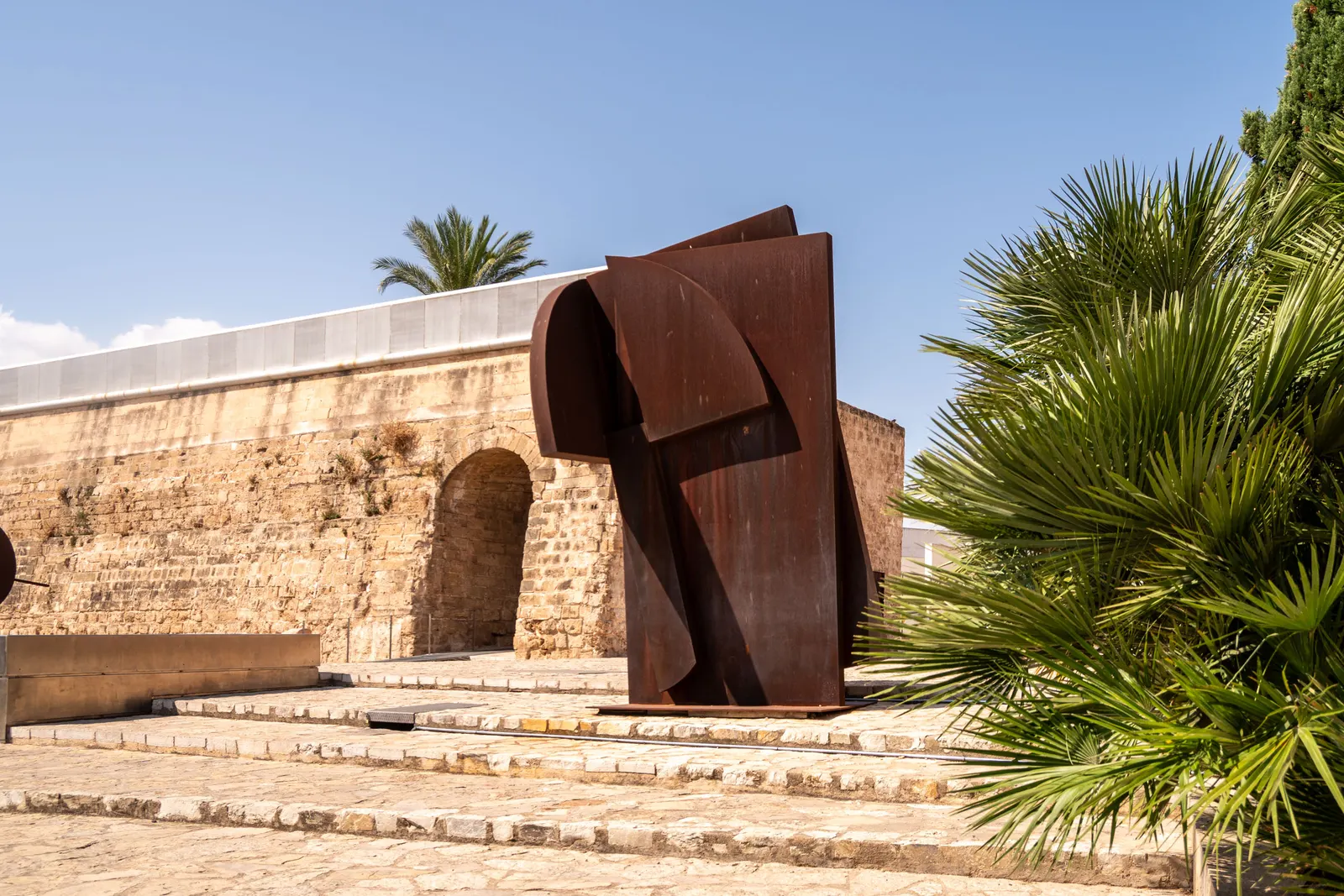
Courtyards, terraces and the wall-top path make a worthwhile circuit in their own right. They’re free to enter daily from 8am until midnight. Sculptures stand outside, including Rafael Canogar’s large Corten steel head, Cabeza.
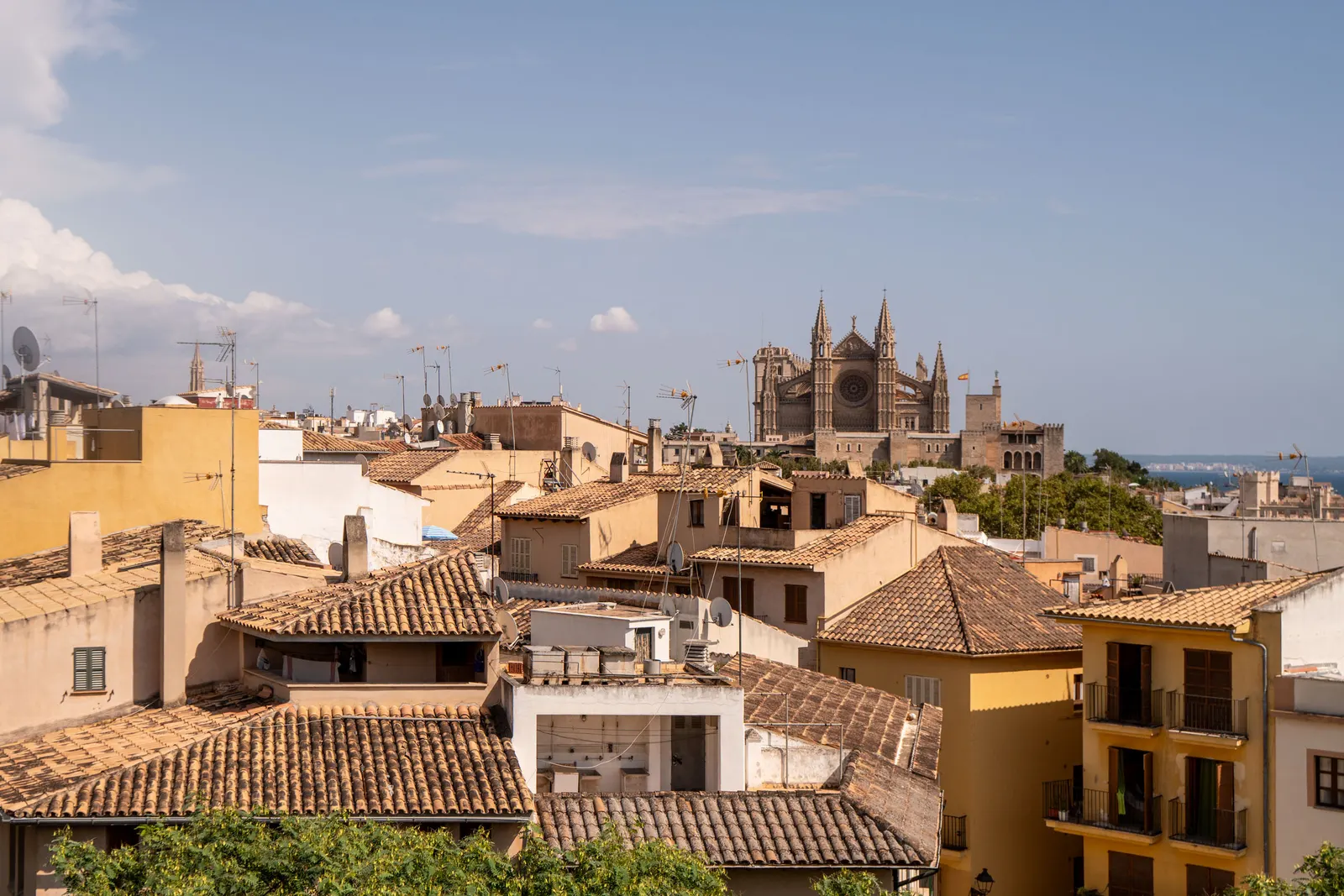
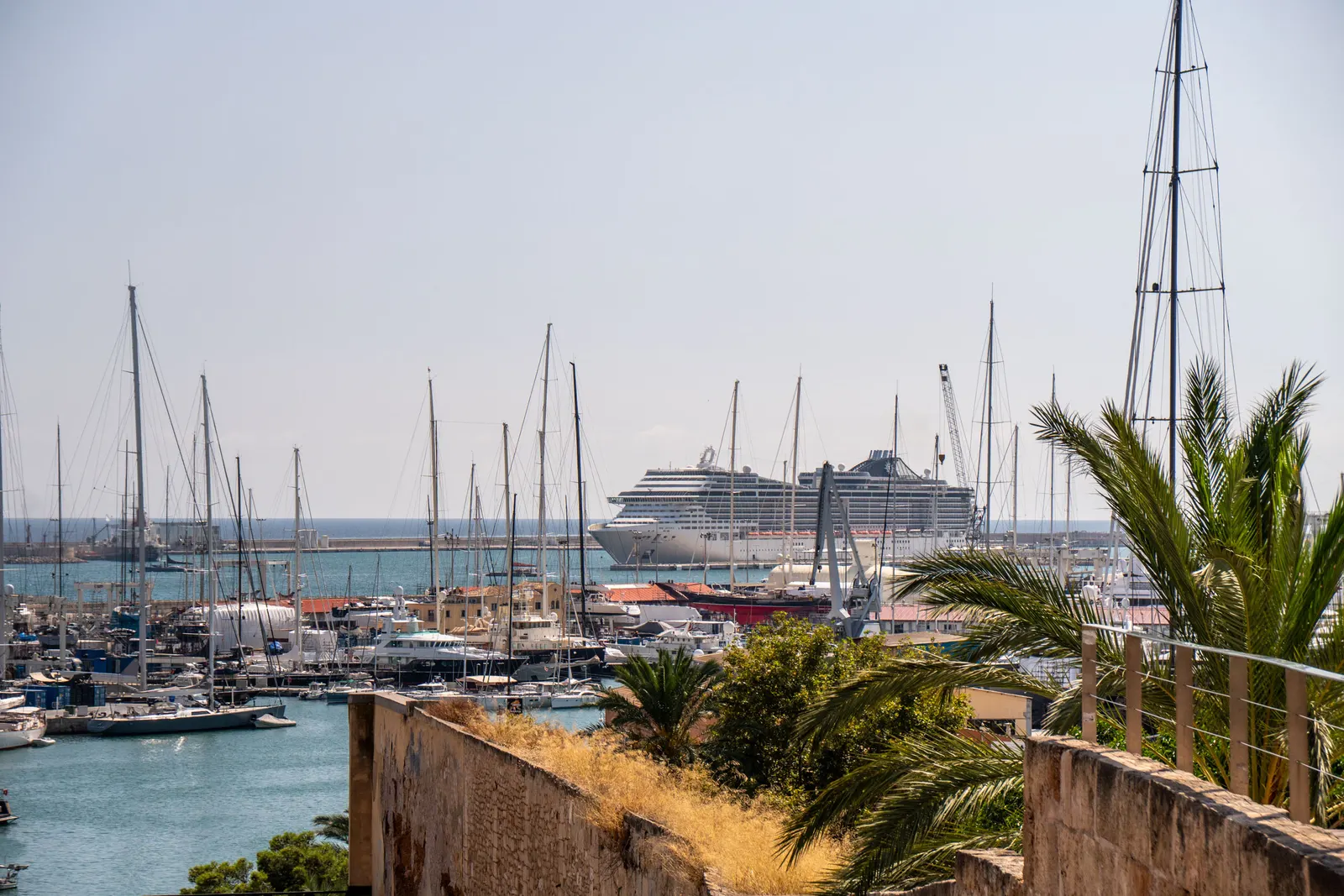
Many local people come up simply for the view. To the east are the old-town roofs and cathedral; to the south and west lies the harbour. There’s a café-restaurant on the terrace.
The collection
The collection holds more than 700 works connected with the Balearic Islands and international art. It begins with modern landscape painters including Joaquim Mir, Santiago Rusiñol and Hermen Anglada-Camarasa, then moves through Miró, Picasso and Tàpies to Miquel Barceló and contemporary artists. Temporary exhibitions occupy the larger part of the museum.
When to visit
Mornings tend to be quietest. In high summer, the largely unshaded walls become very hot, so come early or during the final hour before closing. Friday afternoons are busier because visitors can choose their admission price.
Photographs
Es Baluard in Mallorca
How much time do you have?
Things to do in Es Baluard
Three hours
Visit the museum, then walk down Passeig Mallorca towards Santa Catalina and its market.
On a rainy day
Three floors of exhibitions, a bookshop and a café make this a good place to spend a wet morning.
Practical details
- Parking
- Passeig Mallorca car park is a two-minute walk away; Via Roma is five minutes and Parc de la Mar ten.
- Public transport
- EMT routes 1, 3, 4, 5, 7, 20, 40, 46 and 47, plus the A1 airport bus, stop within walking distance.
- Time to allow
- An hour for the exhibitions, plus half an hour for the walls and terraces.
- Good to know
- The museum closes on Mondays, but the outdoor grounds remain open. The ticket office closes half an hour before the museum.
- Bus
- EMT routes 1, 3, 4, 5, 7, 20, 40, 46, 47, A1 and CC.
- Access
- Cobbles and ramps outside; smooth floors inside the museum. · Pushchairs: Straightforward inside; ramps provide access to the bastion. · Wheelchairs: The museum is accessible, with ramps serving most of the outdoor grounds.
- Price guide
- Admission €8 standard admission, €5.50 concessions. On Fridays, pay what you choose from €0.10. Arrive by bike: €2. (as of 2026)
- Coordinates
- 39.5708,2.6417 Google Maps Apple Maps
Admission and opening times
| What | Details |
|---|---|
| Museum | Tue–Sat 10am–8pm; Sun 10am–3pm; closed Mon |
| Outdoor grounds | Daily 8am–midnight |
| Standard admission | €8 |
| Concessions | €5.50 |
| Fridays | Pay what you choose, from €0.10 |
| Arriving by bike | €2 |
Prices supplied by the museum, 2026.
Within reach
Places to visit
Nearby

Palma's grand promenade between Plaça de la Reina and Plaça del Rei Joan Carles I. It follows the bed of a torrent …

An 11th-century brick chamber in an old-town garden, with twelve columns, horseshoe arches and a dome pierced by …

Palma’s cathedral was begun in 1230 and built over several centuries. Its Gothic buttresses rise above the water …

The royal palace beside Palma cathedral began as a Moorish alcázar, later converted into a residence for …

The March family's city palace between the cathedral and the Almudaina: a terrace filled with 20th-century …

The Balearics' largest harbour sits in the city, in front of the old town. Cargo quays, cruise terminals, marinas …

A striking circular Gothic castle, built above Palma between 1300 and 1311. Inside is a two-storey round …

The south-west's marina, with 670 berths, rows of white boats and a white tower by the quay. You come here to look …
Distances without a driving time are measured in a straight line. The road journey can be much longer; known driving times are shown alongside.
Where to swim nearby
Beaches and swimming nearby

At the western end of Playa de Palma, ten minutes from the airport by car: a marina, a rocky waterfront promenade …

Broad sandy bays with pale, shallow water, right beside Magaluf but with a different feel. The quieter neighbour …
Places to stay within reach
Explore from here
Your questions answered
Your questions about Es Baluard
What is Es Baluard in Palma?
A modern and contemporary art museum built into Sant Pere bastion, part of Palma’s Renaissance city walls. It opened on 30 January 2004 and focuses on 20th- and 21st-century art connected with the Balearic Islands and the Mediterranean.
How much does Es Baluard cost?
Standard admission is €8 and concessions €5.50 (2026 prices). On Fridays you choose what to pay, starting at €0.10. Visitors arriving by bicycle pay €2. Admission is free on several special dates throughout the year.
When is Es Baluard open?
Tuesday to Saturday, 10am–8pm; Sunday, 10am–3pm; closed on Mondays. The ticket office closes half an hour before the museum. It also closes on 1 January and 25 December. Outdoor courtyards and terraces open daily from 8am until midnight.
Can you walk along the walls at Es Baluard for free?
Yes. The bastion walk, courtyards and terraces are part of the cultural complex and don’t require a ticket. You only pay to enter the indoor exhibition rooms.
How do you get to Es Baluard?
It’s about a ten-minute walk from Passeig del Born via Passeig Mallorca. EMT routes 1, 3, 4, 5, 7, 20, 40, 46 and 47, plus the A1 airport bus, stop within walking distance. The nearest car park is at Passeig Mallorca, two minutes away.
Practical questions
When is the best time to visit Es Baluard?
Recommended months: January, February, March, April, May, June, September, October, November, December. Free admission on 20 January for Sant Sebastià, and from 30 January to 1 February for the museum’s anniversary.
Is Es Baluard worth visiting in July and August?
July: worth considering with some reservations. Usually busy. Little shade on the walls. Visit in the morning or towards evening. August: worth considering with some reservations. Usually busy. Cool inside, very hot outside.
How far is Es Baluard from Palma airport?
About 11 km from Palma airport. Allow roughly 25 minutes by car.
Do I need a hire car for Es Baluard?
A car can be more trouble than it’s worth EMT routes 1, 3, 4, 5, 7, 20, 40, 46, 47, A1 and CC.
Where can I park in Es Baluard?
Passeig Mallorca car park is a two-minute walk away; Via Roma is five minutes and Parc de la Mar ten.
Can I visit Es Baluard with a pushchair or wheelchair?
Cobbles and ramps outside; smooth floors inside the museum. Pushchairs: Straightforward inside; ramps provide access to the bastion. Wheelchairs: The museum is accessible, with ramps serving most of the outdoor grounds.
Words and photographs: Friedhelm Fischer. Exploring Mallorca since 2013 — by bike, on foot and with a camera.