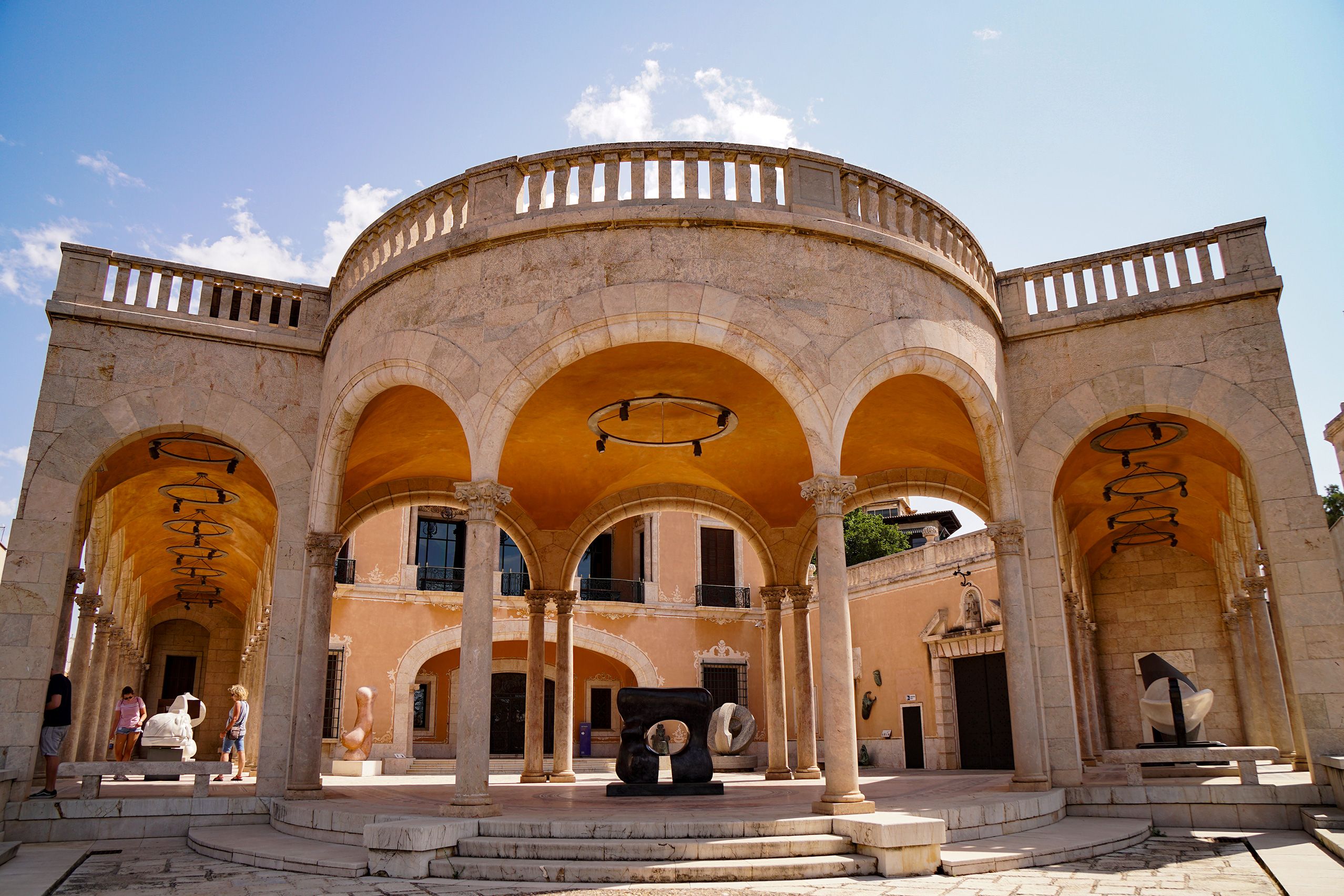
The March family's city palace between the cathedral and the Almudaina: a terrace filled with 20th-century sculpture, historic living rooms and an 18th-century Neapolitan nativity scene with more than a thousand figures.
Palau March
Palau March in 30 seconds
The essentials at a glance
- Worth visiting for
- A short visit
- Best for
- You have another hour after the cathedral and Almudaina and fancy somewhere quieter
- Best months
- January–June, September–December
- Time to allow
- A good hour, considerably longer if you linger over the nativity scene
- Without a car
- Better without a car
- Parking
- No parking on site; use the car parks at Parc de la Mar or Plaça Major
- Keep in mind
- You are in Palma on a Sunday, when it is closed
- Access
- Pushchairs: Limited access · Wheelchairs: Partial access
Get a feel for Mallorca. Find your kind of place.
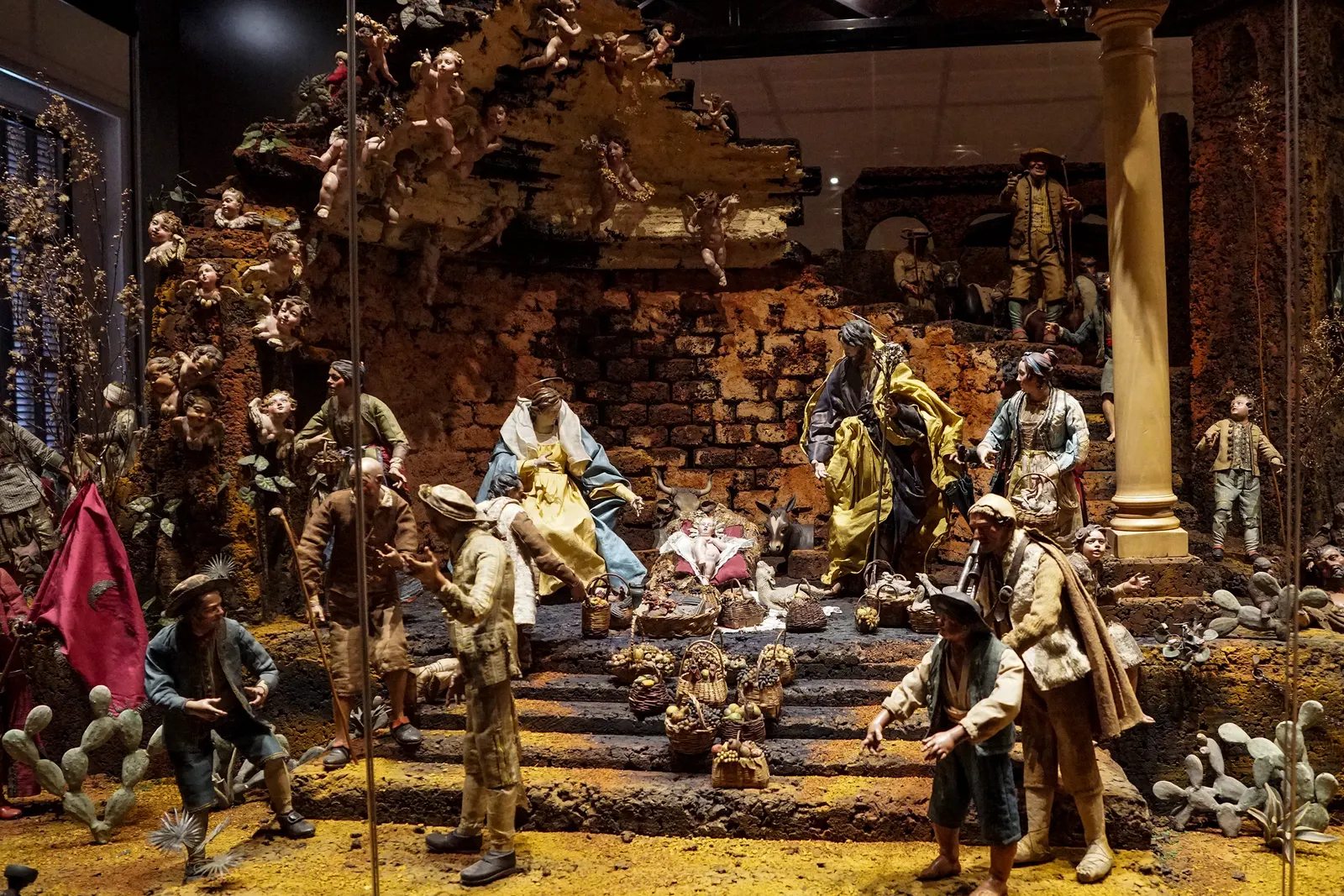
More than a thousand figures, all painted and dressed. There is something to discover in every corner.

Each face is individually modelled. This is the one I spent longest looking at.
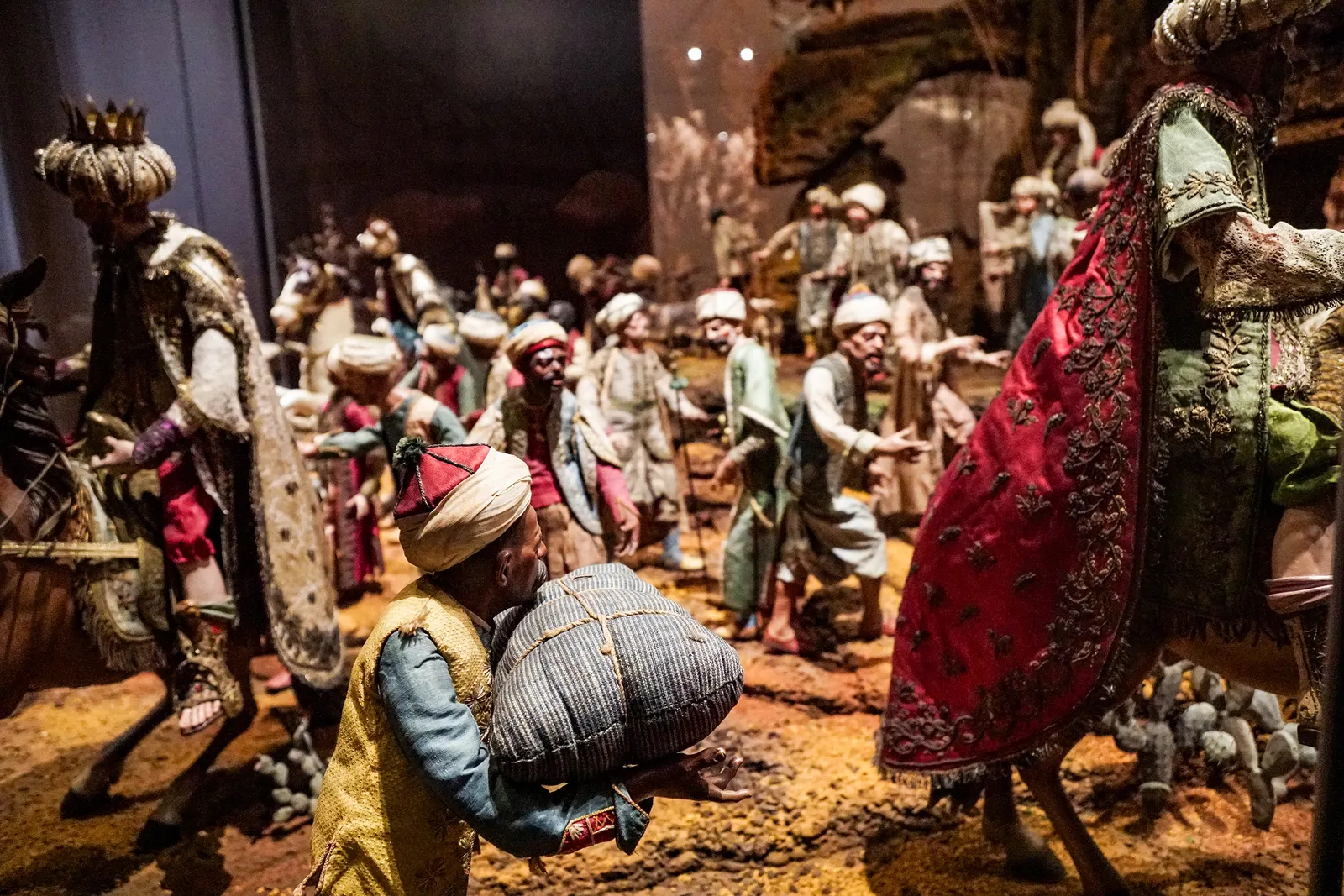
The procession of the kings. The fabrics are stitched, not painted.
Getting to know Palau March
Does Palau March suit your plans?
What to expect and what to know before you visit.
Who it suits
- You have another hour after the cathedral and Almudaina and fancy somewhere quieter
- You enjoy 20th-century sculpture — here it stands outdoors rather than in a gallery
- You love looking at small details; the nativity scene rewards a closer look
- You need somewhere partly covered on a hot day
- Photography — the terrace looks over the old town, often against the light
Things to bear in mind
- You are in Palma on a Sunday, when it is closed
- You are setting out late; on Saturdays it closes at 2pm
- You expect a large collection of paintings
- You only want to spend time outdoors
Drive from the airport
20 minutes
10 km
Bus connections
EMT services to Parc de la Mar or Plaça de la Reina
Region
Palma
Nearest beach
Can Pastilla
7 km
Elevation
22 m
above sea level
Season guide for Palau March
November Worth a visit
Very quiet Open
Worth visiting in January, February, March, April, May, June, September, October, November and December.
Location
Location of Palau March
- Region
- Palma
- Municipality
- Palma
- Elevation
- 22 m above sea level
- Airport
- 10 km , around 20 minutes
- Hire car
- more hindrance than help
- Worth visiting for
- a brief stop
- Coordinates
- 39.5684,2.6479
What is Palau March?
The March family’s former city palace in Palma, now the headquarters and museum of the Fundación Bartolomé March Servera. It stands on Carrer del Palau Reial between the cathedral and Palau de l’Almudaina — three buildings around the same square, less than five minutes apart on foot.
The story of the house
It is younger than it looks. Built between 1939 and 1945 as the home of financier Juan March Ordinas, it was designed by Madrid architect Luis Gutiérrez Soto, with Gabriel Alomar Esteve supervising construction.
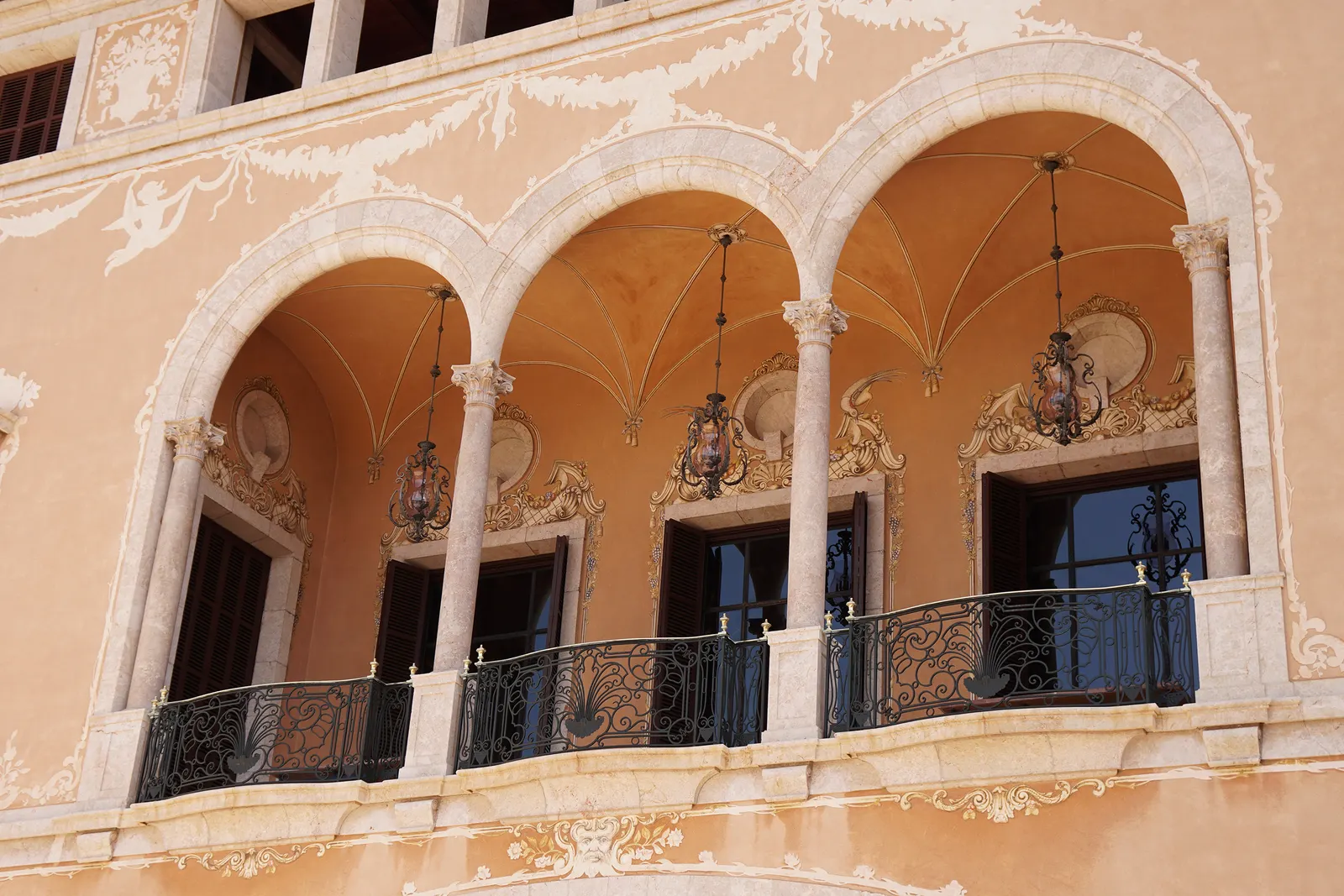
The deliberately historic style draws on Mallorcan and Italian Baroque palaces. Its setting was no accident: this is the oldest part of the city, within sight of the cathedral, Almudaina and what is now the parliament building.
The terrace
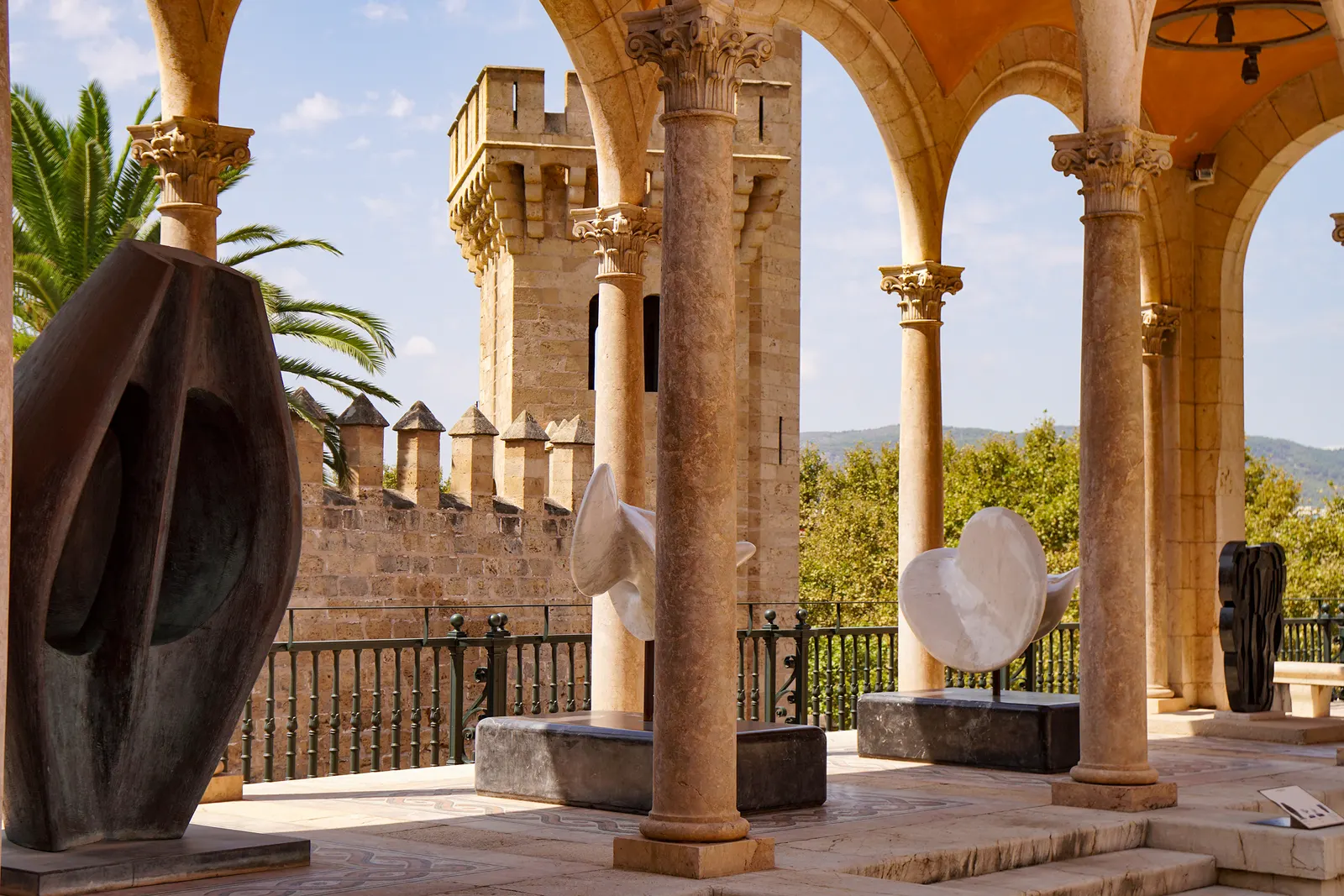
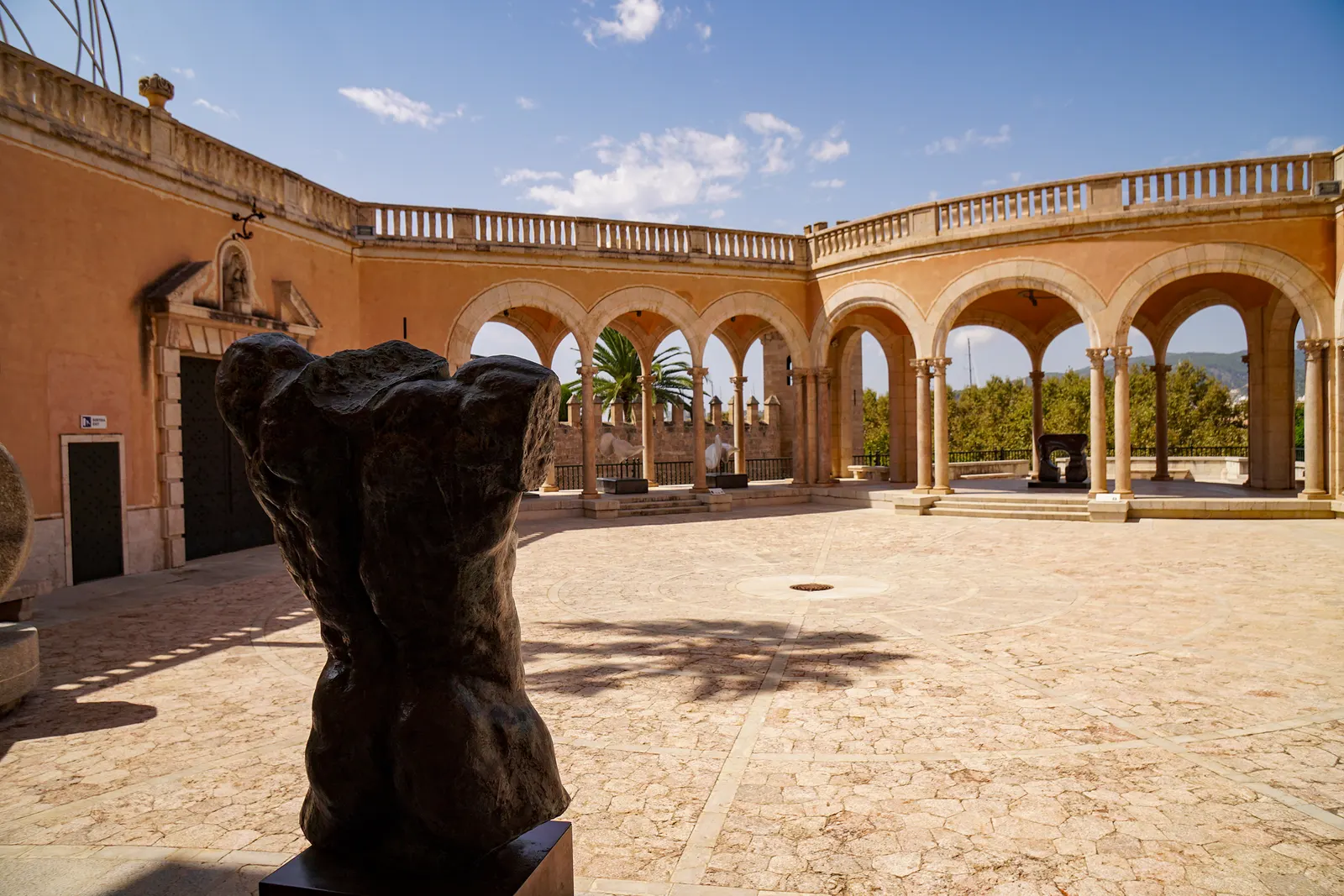
This is the part I would come back for. A semicircular arcade of pale natural stone opens onto a broad paved courtyard with a balustrade — and 20th-century sculptures standing outdoors, without glass cases or barriers.
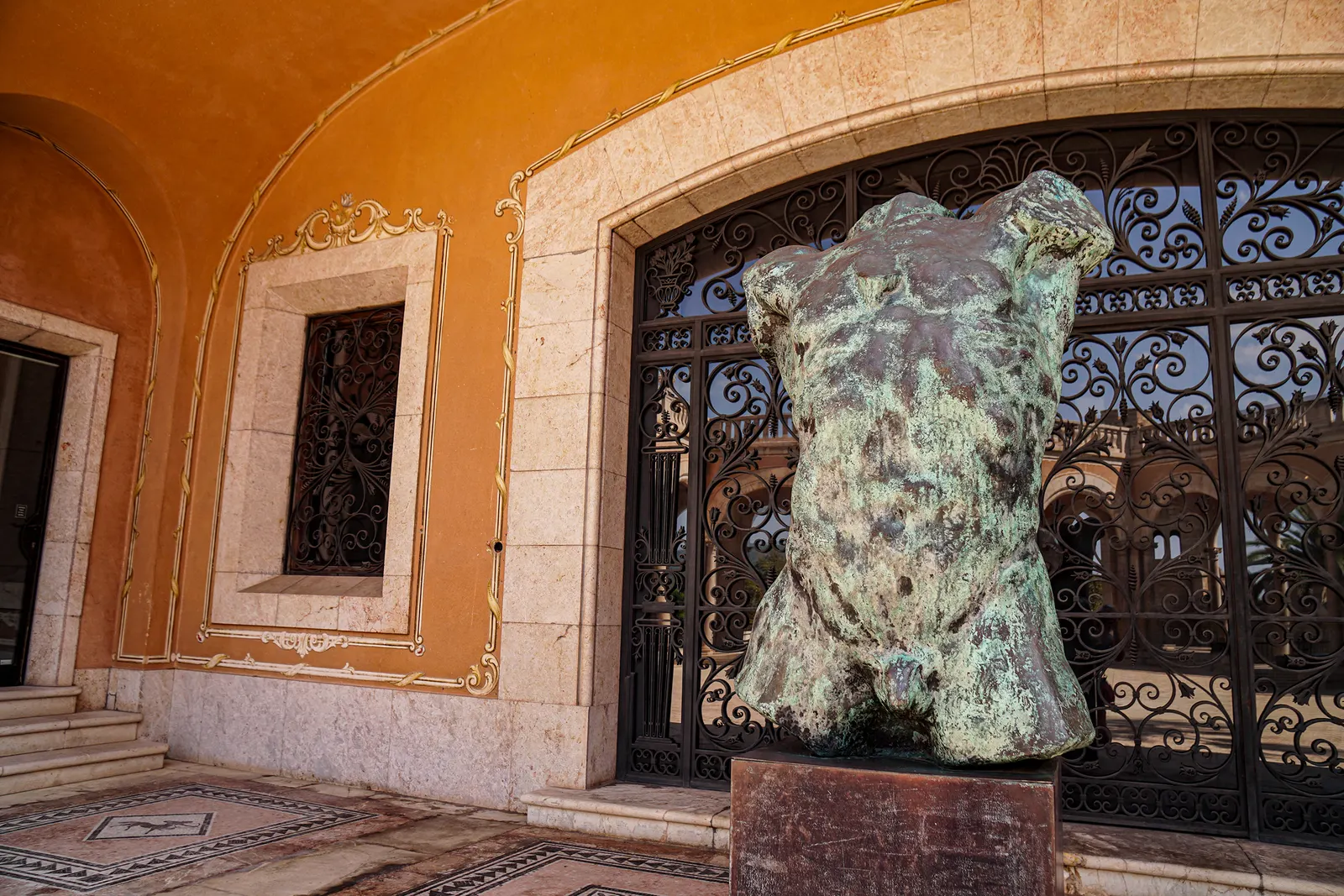
Artists represented include Auguste Rodin, Henry Moore, Barbara Hepworth and Eduardo Chillida. Modern bronze and marble in front of the Almudaina’s medieval defensive walls make for a combination you won’t find elsewhere in the city.
The nativity scene
My second reason to visit, and for many people the first. A room of its own holds an 18th-century Neapolitan nativity scene. The foundation lists more than a thousand painted and dressed figures; counts that include animals, buildings and accessories put the entire ensemble at more than two thousand pieces.
What matters is the work in every figure: individually modelled faces and clothes that are stitched rather than painted. Take your time and, alongside the Holy Family, you will find a whole market, a procession of kings, shepherds, beggars and animals.
It stays on display all year.
What else is there?
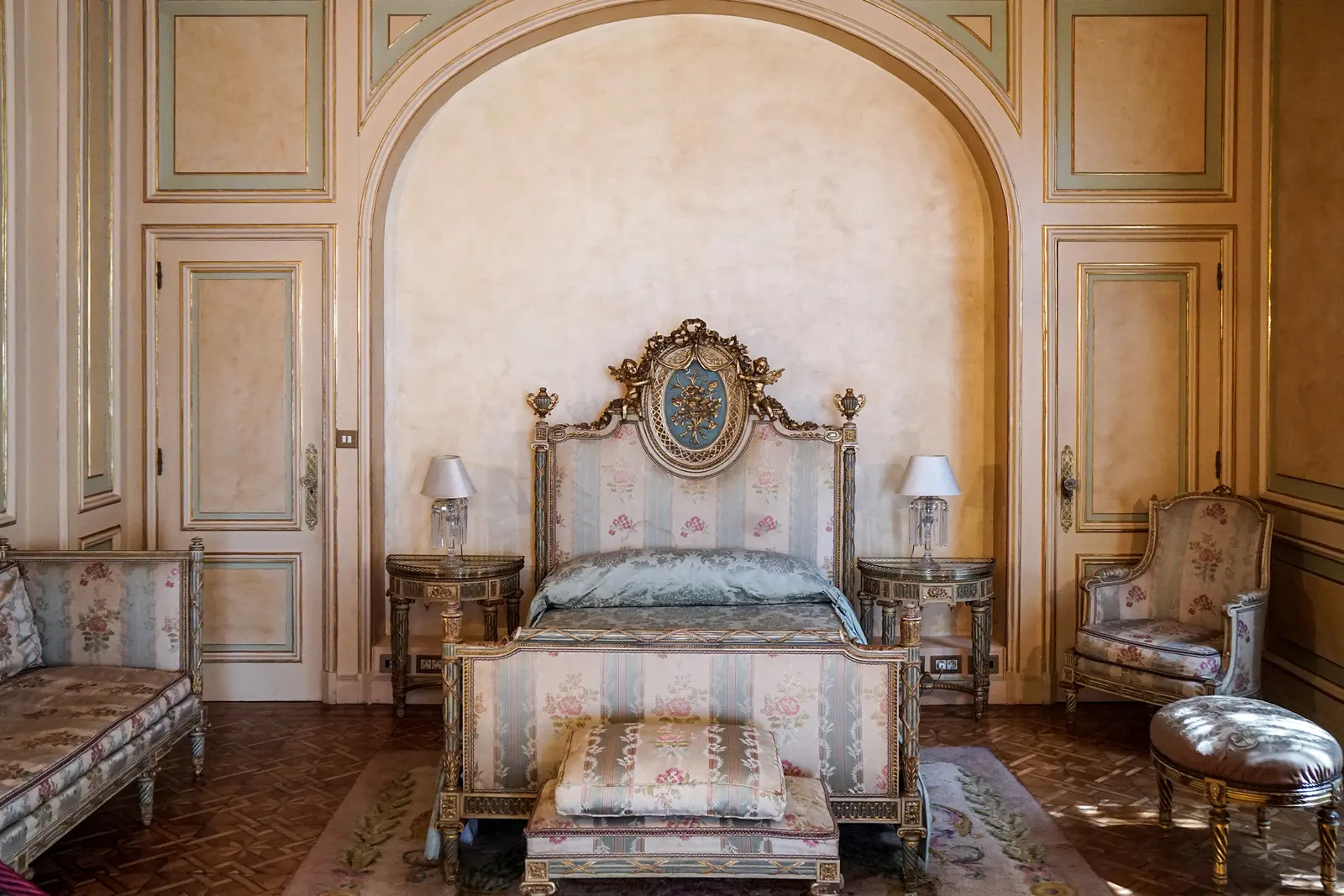
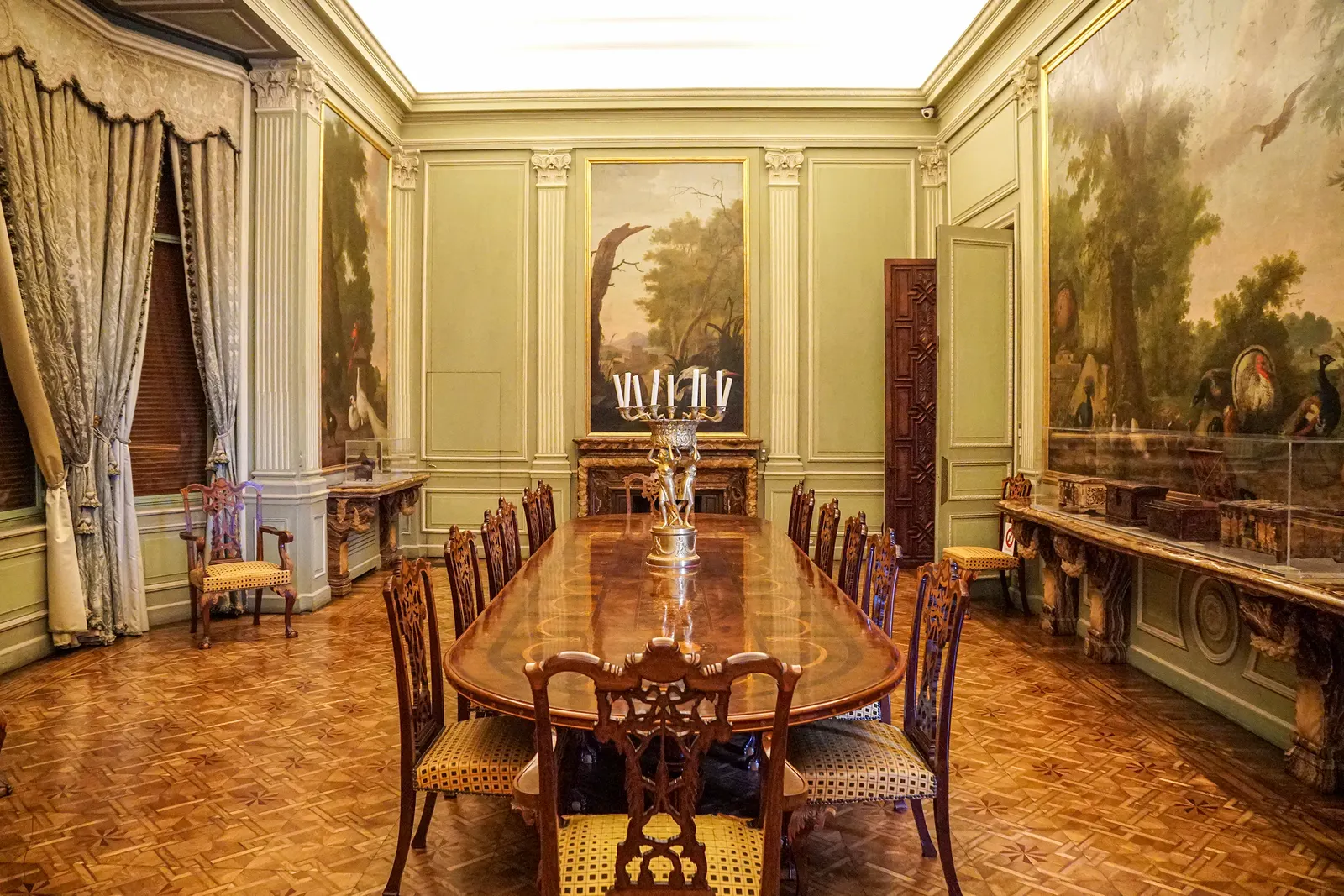
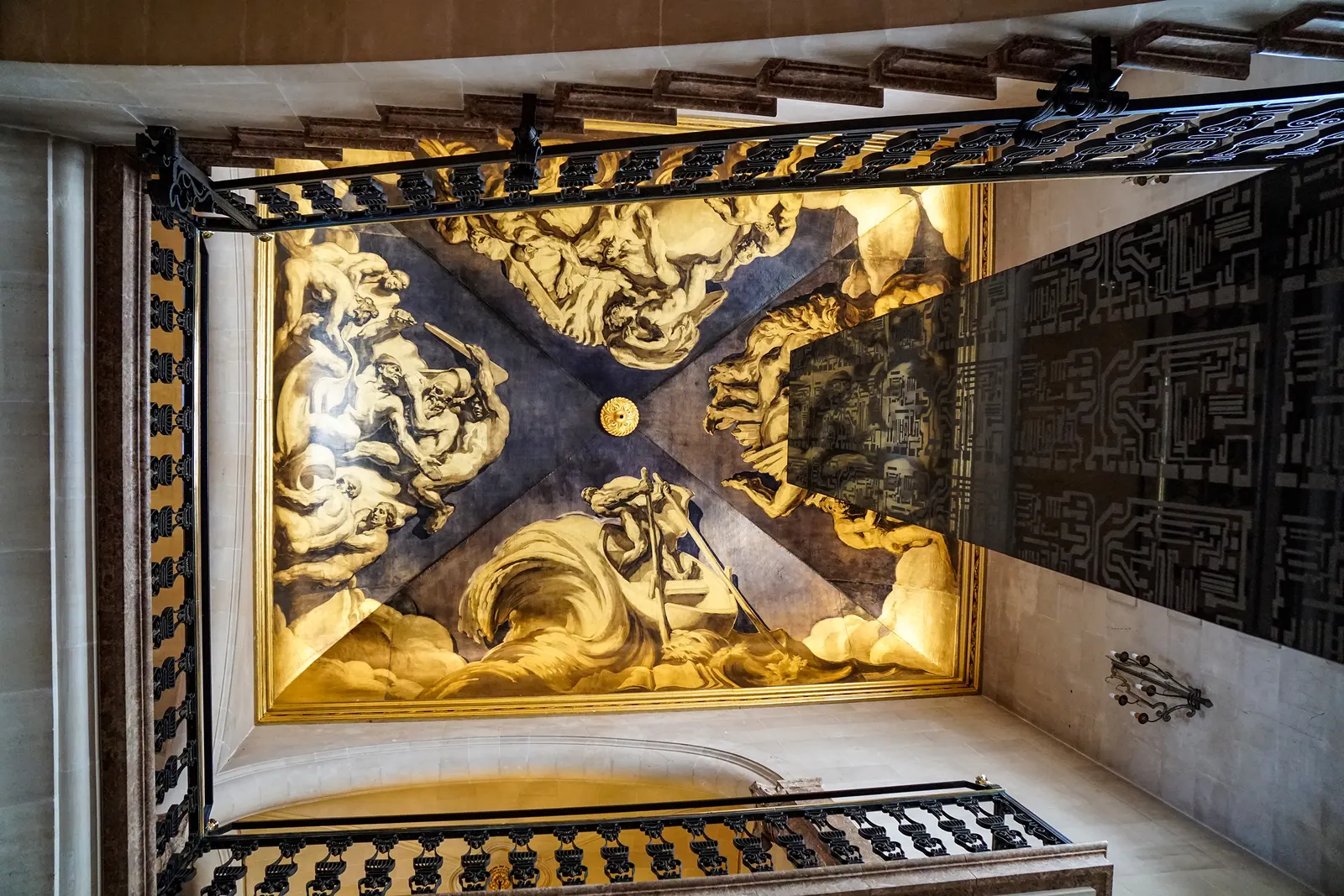
The historic living rooms retain their furnishings rather than being cleared for displays: a dining room with a long table, bedrooms and drawing rooms. A large painting covers the ceiling above the staircase. The murals are by Josep Maria Sert, whose Palma commission was among his last works.
There is also the library room, with manuscripts, early printed books and nautical charts from the 14th and 15th centuries.
Planning your visit
Allow a good hour for the house, or two if you enjoy studying the nativity scene.
It is closed on Sundays and public holidays, with shorter hours on Saturdays. Weekday opening is longer but differs between summer and winter. Check the Fundación Bartolomé March website before making firm plans.
Driving to the narrow street is impractical. There are car parks at Parc de la Mar.
When to go
October and March bring warm light on the terrace and fewer visitors. In high summer, the courtyard is exposed to the midday sun, so arrive at opening time instead.
In January, the nativity scene feels particularly fitting, although it is on display throughout the year.
Photographs
Palau March in Mallorca
How much time do you have?
Things to do in Palau March
Three hours
Cathedral, Almudaina and Palau March — all three stand around the same square, less than five minutes apart on foot.
Half a day
Add the Banys Àrabs, Sa Llotja and a walk through the old town lanes towards the harbour.
A full day
Explore Palma for the day.
On a rainy day
Yes. The living rooms and nativity scene are indoors; only the terrace is open, and half of that is covered.
Practical details
- Parking
- No parking on site; use the car parks at Parc de la Mar or Plaça Major
- Public transport
- EMT services to Parc de la Mar or Plaça de la Reina
- Time to allow
- A good hour, considerably longer if you linger over the nativity scene
- Good to know
- Closed on Sundays and public holidays, with shorter Saturday hours. Check the Fundación Bartolomé March website before making firm plans, as summer and winter opening hours differ.
- Bus
- EMT services to Parc de la Mar or Plaça de la Reina
- Access
- Stone floors and stairs between levels · Pushchairs: Limited access · Wheelchairs: Partial access · Dogs: Not allowed
- What you will not find
- Sunday or public holiday opening · Saturday afternoon visits · A large collection of paintings · On-site parking
- Coordinates
- 39.5684,2.6479 Google Maps Apple Maps
Within reach
Places to visit
Nearby

An 11th-century brick chamber in an old-town garden, with twelve columns, horseshoe arches and a dome pierced by …

Palma’s cathedral was begun in 1230 and built over several centuries. Its Gothic buttresses rise above the water …

The royal palace beside Palma cathedral began as a Moorish alcázar, later converted into a residence for …

The Balearics' largest harbour sits in the city, in front of the old town. Cargo quays, cruise terminals, marinas …

Palma's grand promenade between Plaça de la Reina and Plaça del Rei Joan Carles I. It follows the bed of a torrent …

Sant Pere bastion, built in the late 16th century on the western edge of Palma’s old town, became home to a …

A striking circular Gothic castle, built above Palma between 1300 and 1311. Inside is a two-storey round …

A large aquarium on Playa de Palma, with Europe's deepest shark tank. Open all year, it is a reliable option for a …
Distances without a driving time are measured in a straight line. The road journey can be much longer; known driving times are shown alongside.
Where to swim nearby
Beaches and swimming nearby

At the western end of Playa de Palma, ten minutes from the airport by car: a marina, a rocky waterfront promenade …

Broad sandy bays with pale, shallow water, right beside Magaluf but with a different feel. The quieter neighbour …
Places to stay within reach
Explore from here
Your questions answered
Your questions about Palau March
How old is the building?
Younger than it looks. Built between 1939 and 1945 as the March family's home, it was designed by Madrid architect Luis Gutiérrez Soto. Its deliberately historic style draws on Mallorcan and Italian Baroque palaces.
How many figures are in the nativity scene?
The Fundación Bartolomé March describes more than a thousand painted and dressed figures in this 18th-century Neapolitan nativity scene. Other counts include the animals, buildings and accessories and put the whole ensemble at over two thousand pieces.
Which sculptures are on the terrace?
Works by 20th-century sculptors including Auguste Rodin, Henry Moore, Barbara Hepworth and Eduardo Chillida. They stand outdoors between the arcades, overlooking the Almudaina.
How long should I allow?
A good hour for the house. Allow two if you enjoy studying the nativity scene — the figures reward a close look.
When is it closed?
Sundays and public holidays. Saturday hours are shorter, while weekday opening is longer and varies between summer and winter.
Practical questions
When is the best time to visit Palau March?
Recommended months: January, February, March, April, May, June, September, October, November, December. The nativity scene stays up all year, but feels particularly appropriate in January.
Is Palau March worth visiting in July and August?
July: worth considering with some reservations. Usually busy. The terrace is exposed to the midday sun. August: worth considering with some reservations. Usually busy.
How far is Palau March from Palma airport?
About 10 km from Palma airport. Allow roughly 20 minutes by car. Carrer del Palau Reial 18, directly opposite the Almudaina and a few steps from the cathedral. Driving here makes little sense — the old town streets are narrow and some are restricted.
Do I need a hire car for Palau March?
A car can be more trouble than it’s worth EMT services to Parc de la Mar or Plaça de la Reina
Where can I park in Palau March?
No parking on site; use the car parks at Parc de la Mar or Plaça Major
Can I visit Palau March with a pushchair or wheelchair?
Stone floors and stairs between levels Pushchairs: Limited access Wheelchairs: Partial access
Are dogs allowed at Palau March?
Not allowed
Words and photographs: Friedhelm Fischer. Exploring Mallorca since 2013 — by bike, on foot and with a camera.