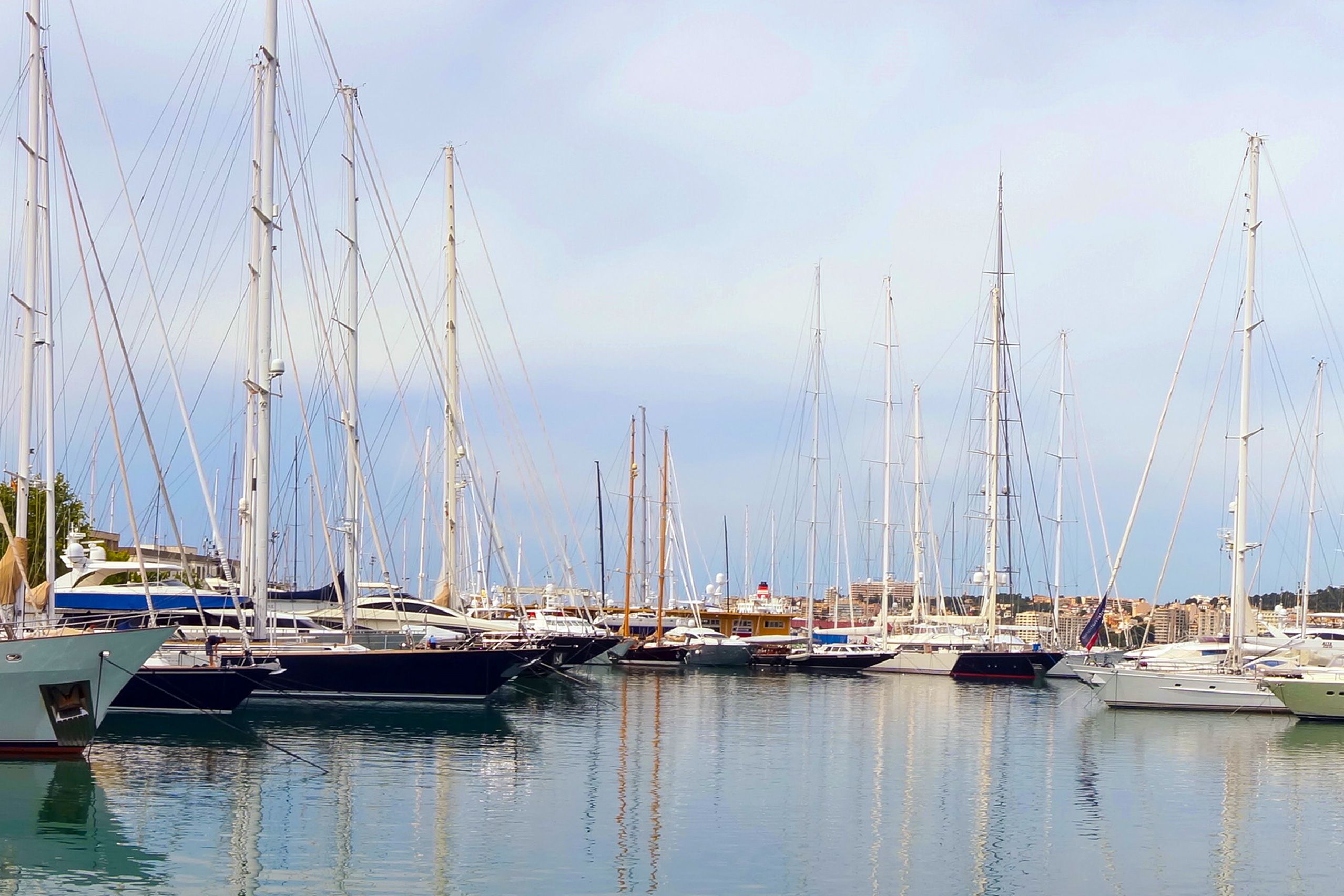
The Balearics' largest harbour sits in the city, in front of the old town. Cargo quays, cruise terminals, marinas and fishing boats share the waterfront, linked by a promenade built on land reclaimed from the sea in the 1960s.
Hafen von Palma
Hafen von Palma in 30 seconds
The essentials at a glance
- Worth visiting for
- A short visit
- Best for
- Waterfront walks and watching boats
- Best months
- January–June, September–December
- Time to allow
- Allow an hour from Moll Vell to Es Jonquet, or two with stops.
- Without a car
- Better without a car
- Parking
- Car parks at Parc de la Mar and Estació Marítima. Spaces beside the quays are limited.
- Highlight
- Marinas against the old town skyline
- Keep in mind
- A short walk from the cruise terminal to the old town
- Access
- Pushchairs: Good; the waterfront promenade is wide and step-free · Wheelchairs: Largely accessible
Get a feel for Mallorca. Find your kind of place.
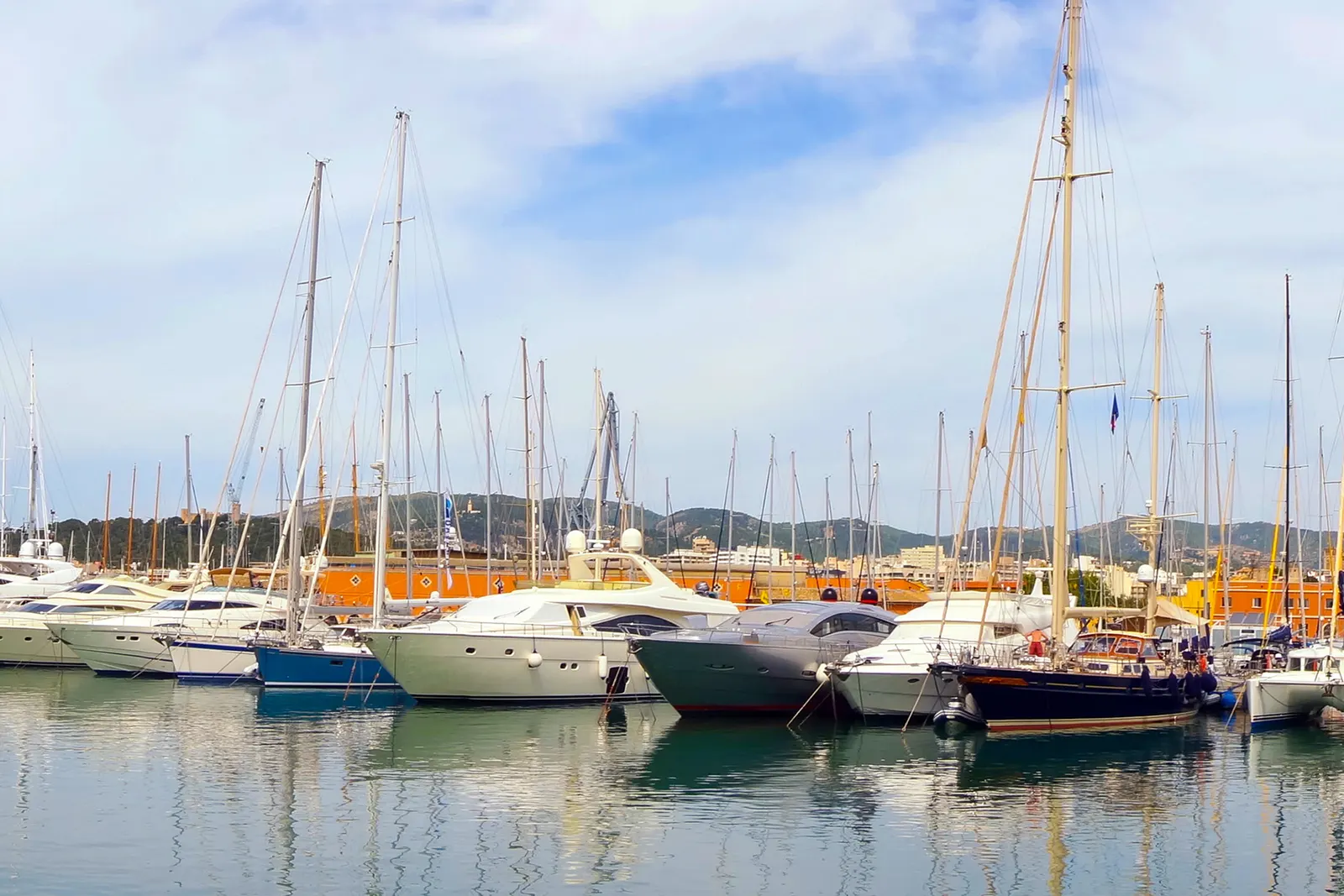
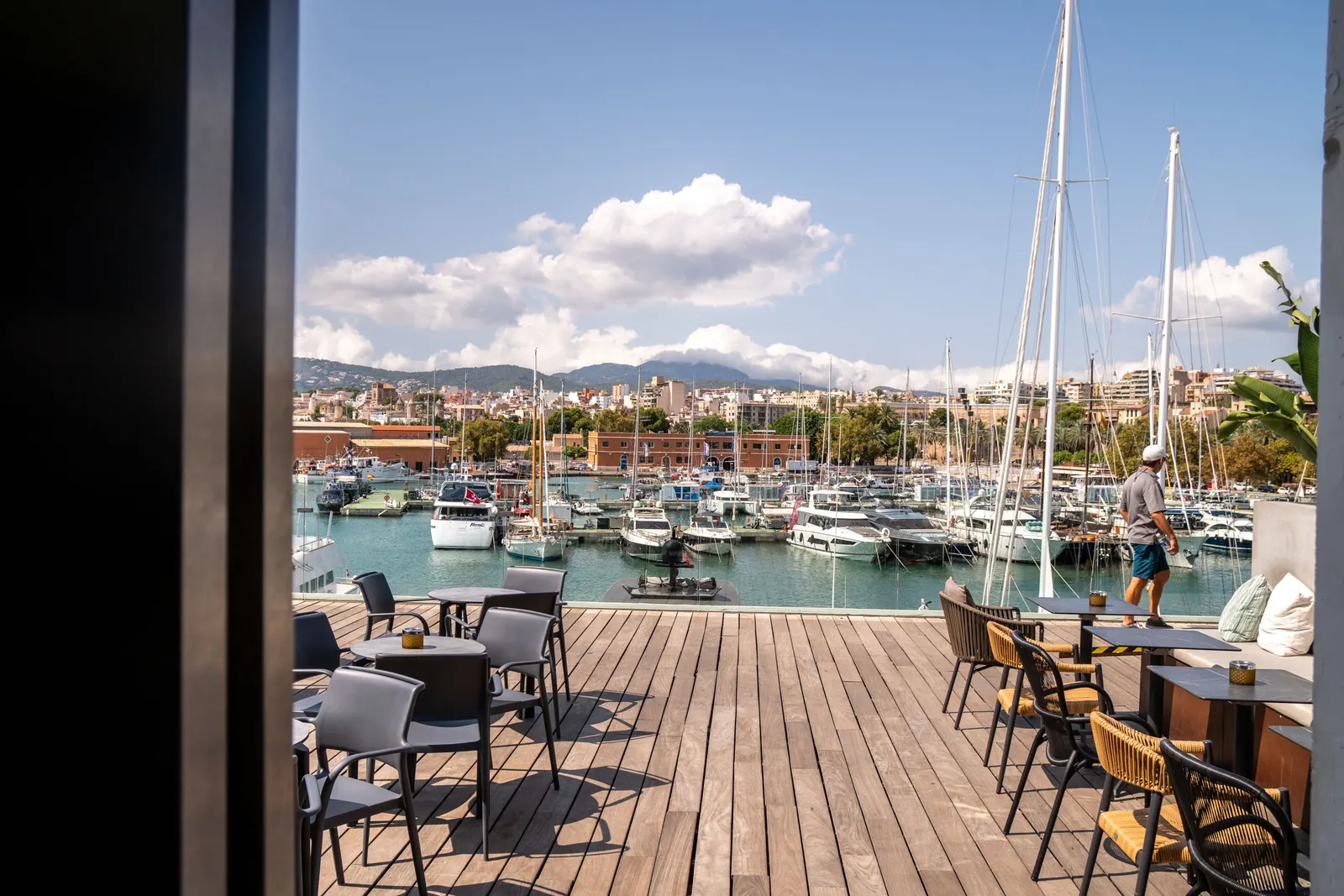
Boats of every size share the basin. Berths are in short supply.
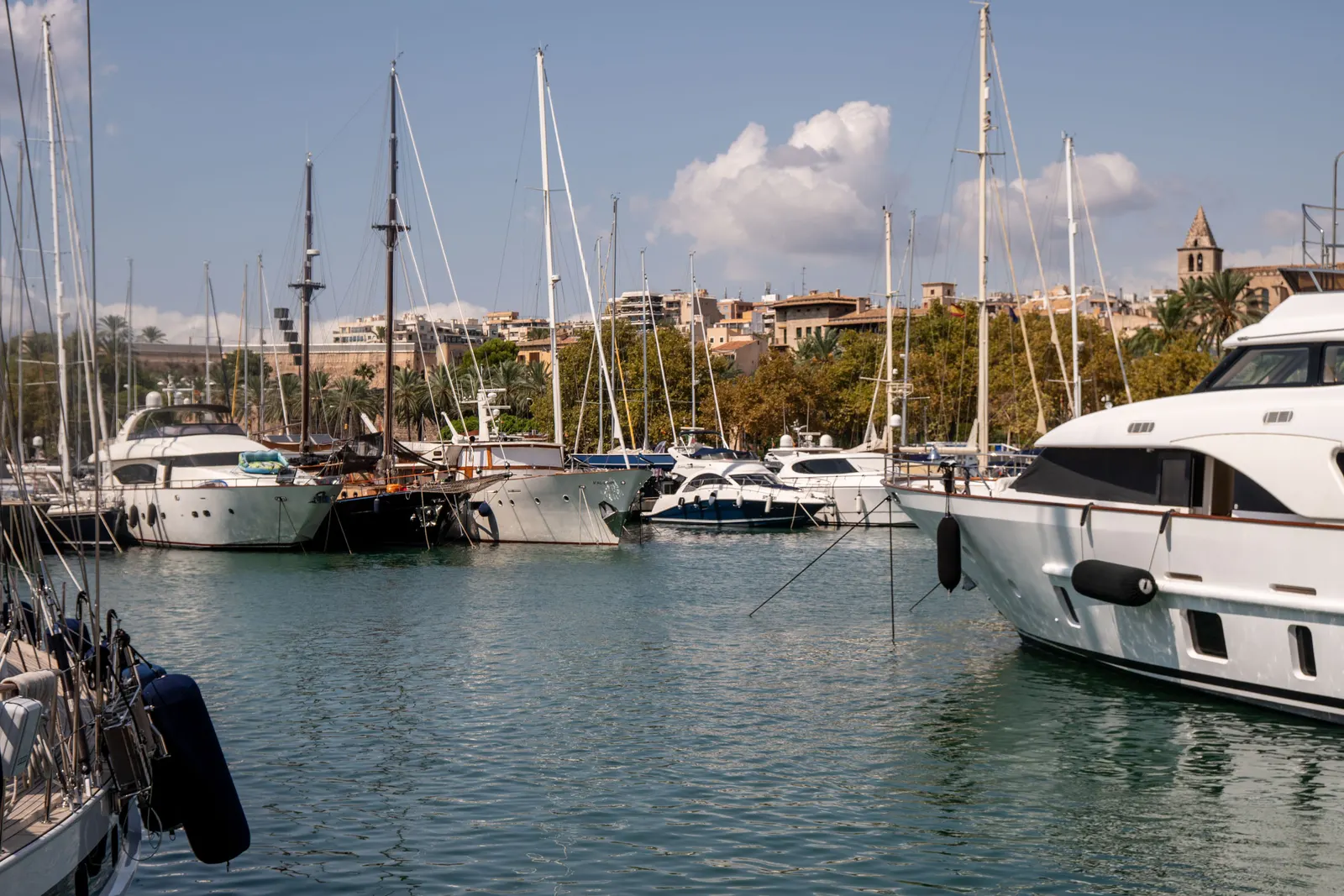
The city starts behind the masts, with just the road between the waterfront and the first houses.
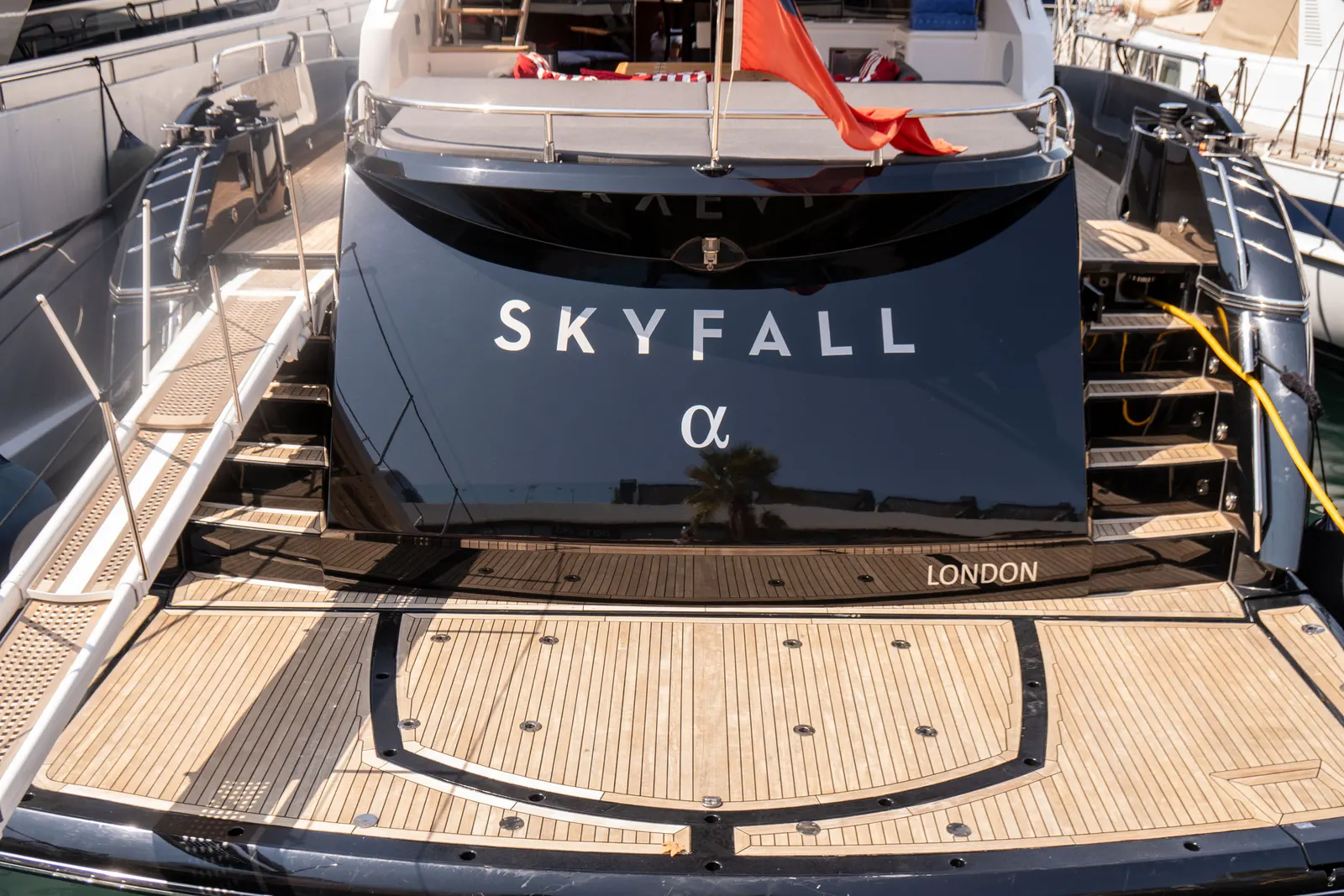
Palma is one of the Mediterranean's major centres for large yachts.
Drive from the airport
20 minutes
9 km
Bus connections
EMT buses on Passeig Marítim
Region
Palma
Nearest beach
Can Pastilla
7 km
Elevation
2 m
above sea level
Season guide for Hafen von Palma
November Worth a visit
Quiet Open
Worth visiting in January, February, March, April, May, June, September, October, November and December.
Location
Location of Hafen von Palma
- Region
- Palma
- Municipality
- Palma
- Elevation
- 2 m above sea level
- Airport
- 9 km , around 20 minutes
- Hire car
- more hindrance than help
- Worth visiting for
- a brief stop
- Coordinates
- 39.5664,2.6438
What is Palma harbour?
The largest of the five ports operated by the Balearic Port Authority, and a major Mediterranean harbour beside the city itself. The old town’s lanes begin just beyond the quays.
It has four main areas: the cargo quays, Muelles de Poniente with ferry and cruise terminals, the marinas and Dique del Oeste, the western breakwater. A waterfront promenade links them.
The promenade
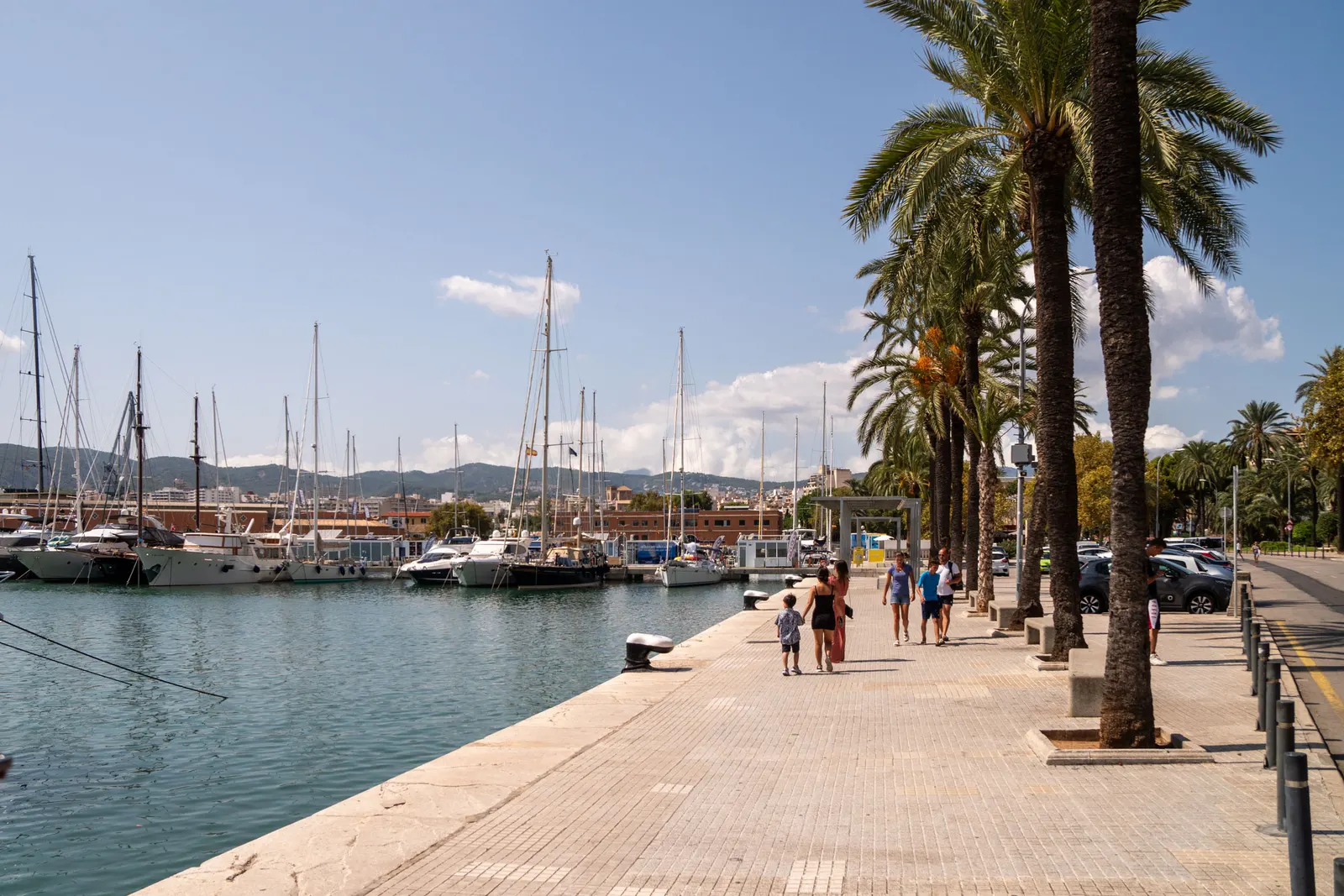
For visitors, this is the part to enjoy. It is younger than it looks: the strip was reclaimed from the sea in the 1960s. Today you can walk from Moll Vell towards Es Jonquet beside the water, with the city on your right.
The scene changes every few hundred metres: fishing boats, charter yachts, shipyard cranes and ferry terminals. Shade is patchy, so in high summer come early or in the evening.
How old is the harbour?
Shipping in Palma predates Muslim rule (902–1229). There were two landing areas: Portopí and a bay called La Cala, now filled in, which extended from today’s Passeig del Born towards the law courts and Gran Hotel. The Moll Vell, or Old Quay, appears in orders issued under Jaume I in 1273.
The facilities changed little until the early 19th century. Construction has continued ever since.
Cruise ships
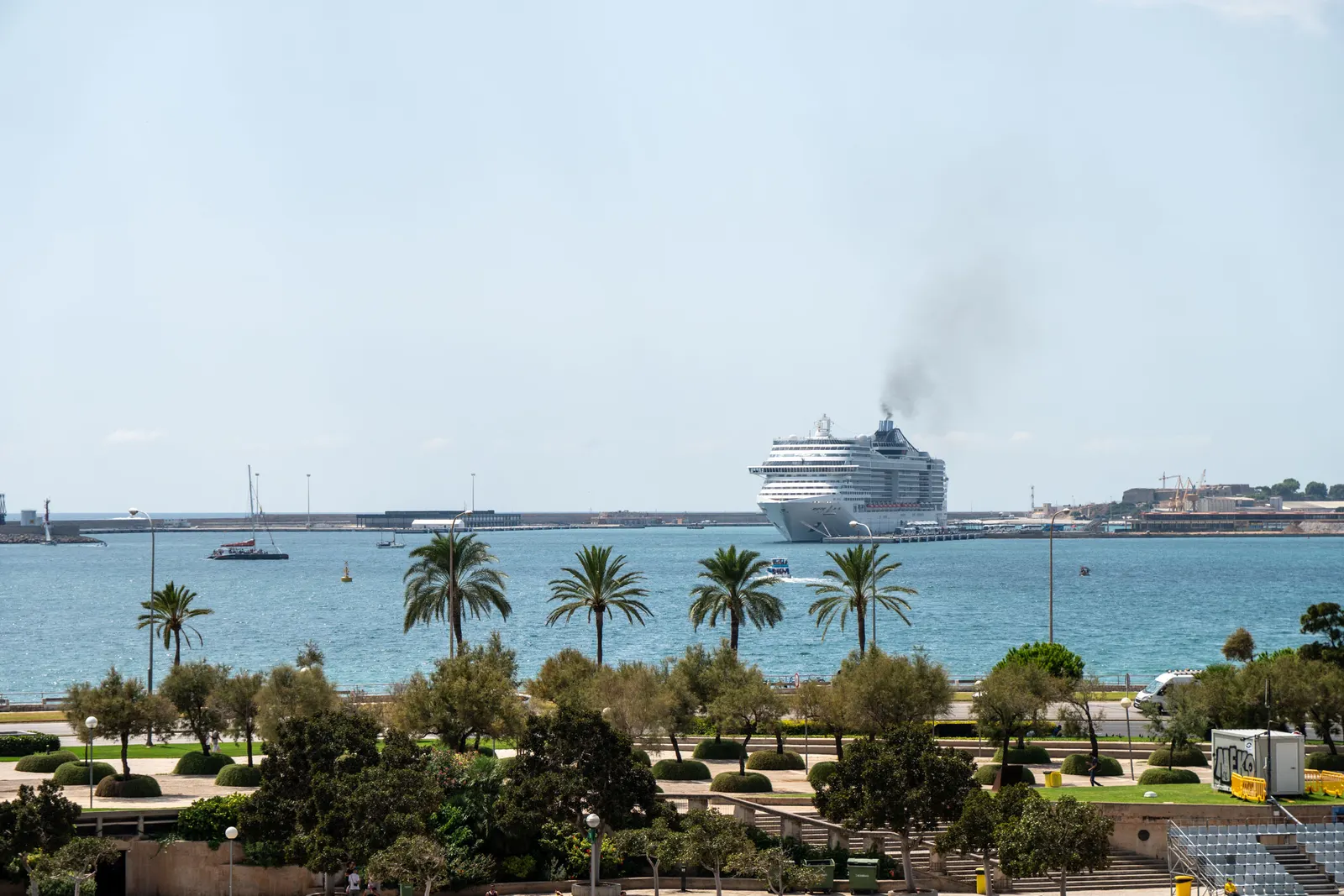
Palma is one of the Mediterranean’s major cruise ports, a status that generates considerable debate on the island. Under an agreement between the Balearic government and cruise association CLIA, three ships a day may dock, including at most one with over 5,000 passengers. The agreement was tightened in 2026: average daily capacity between June and September is due to fall gradually from 8,500 to 7,500 passengers over 2027–2029.
For passengers, the practical point is distance: Muelles de Poniente is around four kilometres from the old town, and Dique del Oeste about six. A shuttle, bus or taxi makes sense.
Sailing
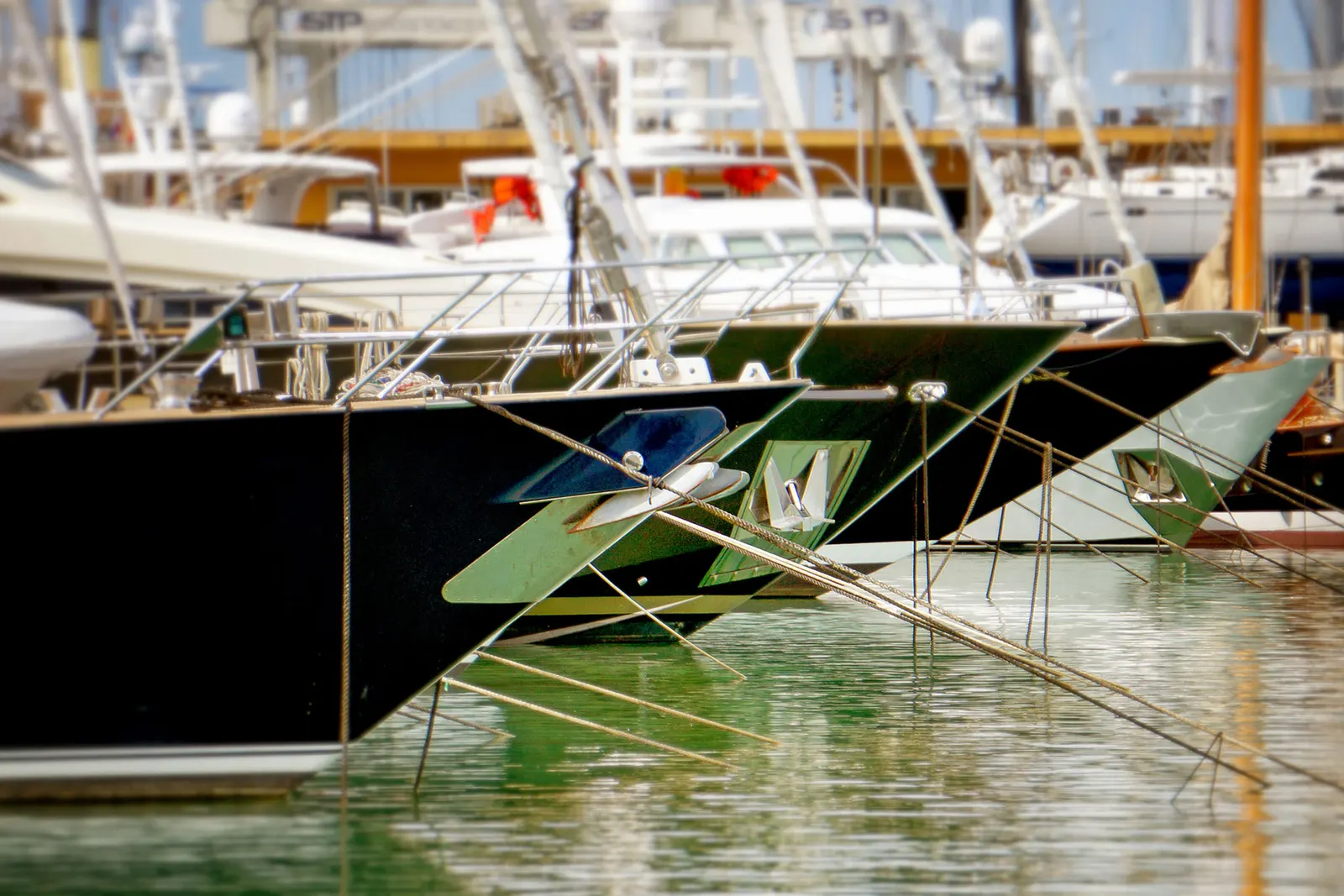
The bay is regarded as one of the Mediterranean’s best regatta venues. Two events stand out: the Trofeo Princesa Sofía around Easter and the Copa del Rey in early August. Racing yachts fill the basins, and you can watch them heading out from the quayside.
Year-round, Palma is also a centre for building, maintaining and chartering large yachts. Shipyard cranes are part of the view.
Fishing
A working fishing fleet remains among the yachts. Arrive early enough and you’ll see nets drying and boats unloading. Traditional wooden Mallorcan llaüts lie close together in the basin.
Where to enjoy the view
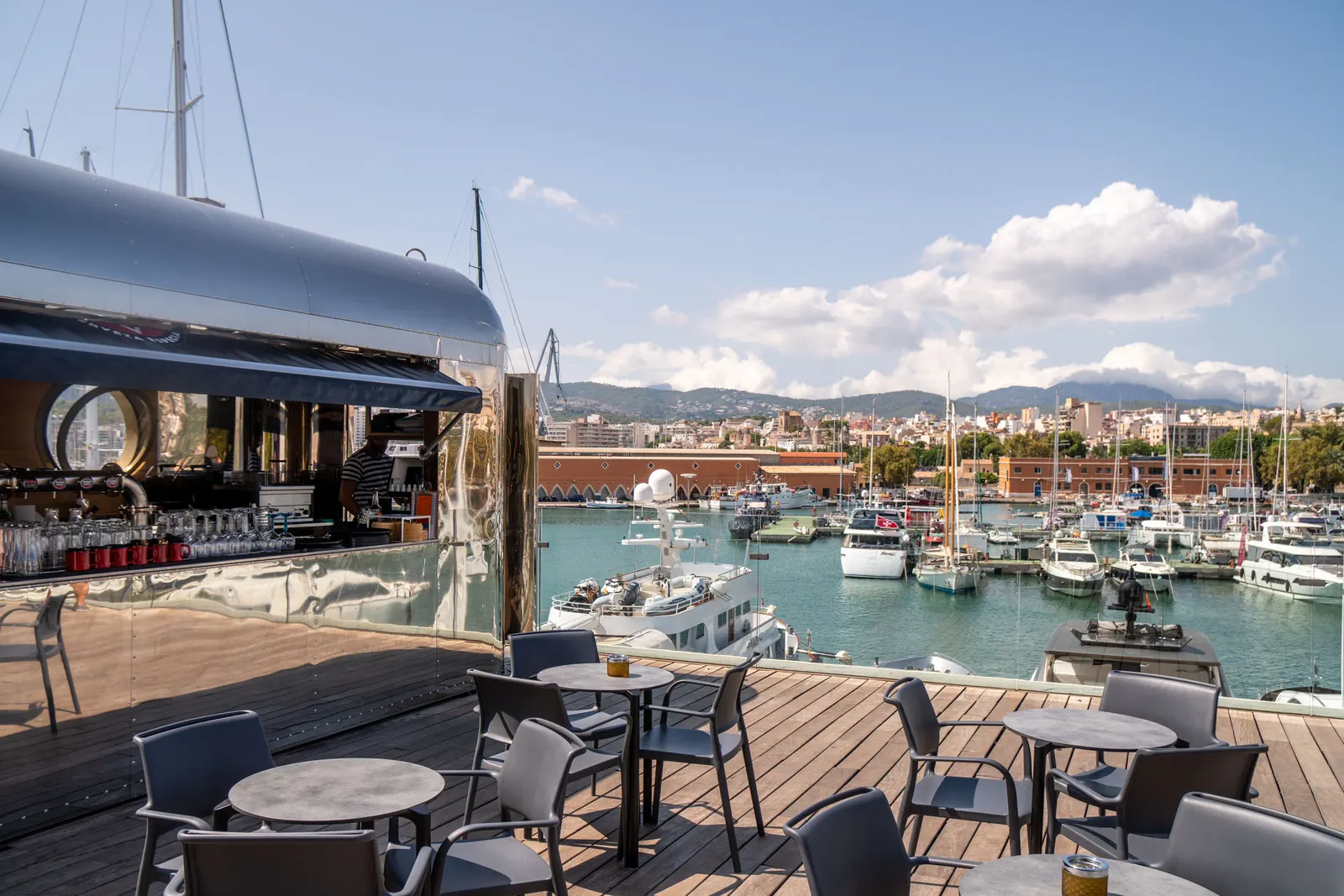
From above, try the Es Baluard bastion or the Castell de Bellver terrace. At Parc de la Mar, the cathedral is reflected in the pool.
At water level, start at Moll Vell, where quay walls, masts and cathedral line up.
Photographs
Hafen von Palma in Mallorca
How much time do you have?
Things to do in Hafen von Palma
Three hours
Walk beside the water from Moll Vell to Es Jonquet, returning through Santa Catalina.
Half a day
The promenade, Es Baluard above the harbour and Santa Catalina's market hall.
Practical details
- Parking
- Car parks at Parc de la Mar and Estació Marítima. Spaces beside the quays are limited.
- Public transport
- EMT services run along Passeig Marítim, with port buses serving the cruise terminals.
- Time to allow
- Allow an hour from Moll Vell to Es Jonquet, or two with stops.
- Good to know
- The old town is roughly four kilometres from the Muelles de Poniente cruise terminals and six from Dique del Oeste. For a short shore visit, take a shuttle, bus or taxi rather than walking.
- Bus
- EMT buses on Passeig Marítim; A1 airport bus to Plaça d'Espanya
- Access
- Paved promenade throughout, mostly level · Pushchairs: Good; the waterfront promenade is wide and step-free · Wheelchairs: Largely accessible · Dogs: Allowed on a lead
- Coordinates
- 39.5664,2.6438 Google Maps Apple Maps
The harbour's four areas
| Area | What you'll find |
|---|---|
| Cargo quays | Freight and island supplies |
| Muelles de Poniente | Ferry terminals and cruise berths |
| Marinas | Leisure boats, charter yachts and boatyards |
| Dique del Oeste | Western breakwater and berths for large ships |
Areas as described by the Balearic Port Authority.
Within reach
Places to visit
Nearby

Palma’s cathedral was begun in 1230 and built over several centuries. Its Gothic buttresses rise above the water …

The royal palace beside Palma cathedral began as a Moorish alcázar, later converted into a residence for …

The March family's city palace between the cathedral and the Almudaina: a terrace filled with 20th-century …

Palma's grand promenade between Plaça de la Reina and Plaça del Rei Joan Carles I. It follows the bed of a torrent …

An 11th-century brick chamber in an old-town garden, with twelve columns, horseshoe arches and a dome pierced by …

Sant Pere bastion, built in the late 16th century on the western edge of Palma’s old town, became home to a …

A striking circular Gothic castle, built above Palma between 1300 and 1311. Inside is a two-storey round …

A large aquarium on Playa de Palma, with Europe's deepest shark tank. Open all year, it is a reliable option for a …
Distances without a driving time are measured in a straight line. The road journey can be much longer; known driving times are shown alongside.
Where to swim nearby
Beaches and swimming nearby

At the western end of Playa de Palma, ten minutes from the airport by car: a marina, a rocky waterfront promenade …

Broad sandy bays with pale, shallow water, right beside Magaluf but with a different feel. The quieter neighbour …
Places to stay within reach
Explore from here
Your questions answered
Your questions about Hafen von Palma
How do I get from Palma's cruise terminal to the old town?
The distance is around four kilometres from Muelles de Poniente and six from Dique del Oeste. Cruise lines run shuttles, and city buses and taxis are available. Walking takes too long for a short shore visit.
How many cruise ships can dock in Palma each day?
Under the Balearic government's agreement with cruise association CLIA, three ships a day are allowed, including at most one carrying more than 5,000 passengers. The agreement was renewed in 2026, with average daily capacity between June and September due to fall gradually from 8,500 to 7,500 passengers over 2027–2029.
What are the different parts of Palma harbour?
Four main areas — the cargo quays, Muelles de Poniente with ferry terminals and cruise berths, the marinas and Dique del Oeste, the western breakwater. Palma is the largest of the five ports operated by the Balearic Port Authority.
Can I walk along Palma harbour?
Yes. The public waterfront promenade links the length of the harbour. It was built on reclaimed land in the 1960s. Allow around an hour from Moll Vell to Es Jonquet.
Which sailing regattas take place in Palma?
The Bay of Palma hosts two major Mediterranean regattas — the Trofeo Princesa Sofía around Easter and the Copa del Rey in early August. Racing yachts fill the marinas during those weeks.
Practical questions
When is the best time to visit Hafen von Palma?
Recommended months: January, February, March, April, May, June, September, October, November, December. Clear air and good views over the bay, with fewer cruise ships.
Is Hafen von Palma worth visiting in July and August?
July: worth considering with some reservations. Usually busy. Parts of the promenade have no shade. August: worth considering with some reservations. Usually busy. The Copa del Rey arrives in early August — worth seeing, but the city is busy.
How far is Hafen von Palma from Palma airport?
About 9 km from Palma airport. Allow roughly 20 minutes by car.
Do I need a hire car for Hafen von Palma?
A car can be more trouble than it’s worth EMT buses on Passeig Marítim; A1 airport bus to Plaça d'Espanya
Where can I park in Hafen von Palma?
Car parks at Parc de la Mar and Estació Marítima. Spaces beside the quays are limited.
Can I visit Hafen von Palma with a pushchair or wheelchair?
Paved promenade throughout, mostly level Pushchairs: Good; the waterfront promenade is wide and step-free Wheelchairs: Largely accessible
Are dogs allowed at Hafen von Palma?
Allowed on a lead
Words and photographs: Friedhelm Fischer. Exploring Mallorca since 2013 — by bike, on foot and with a camera.