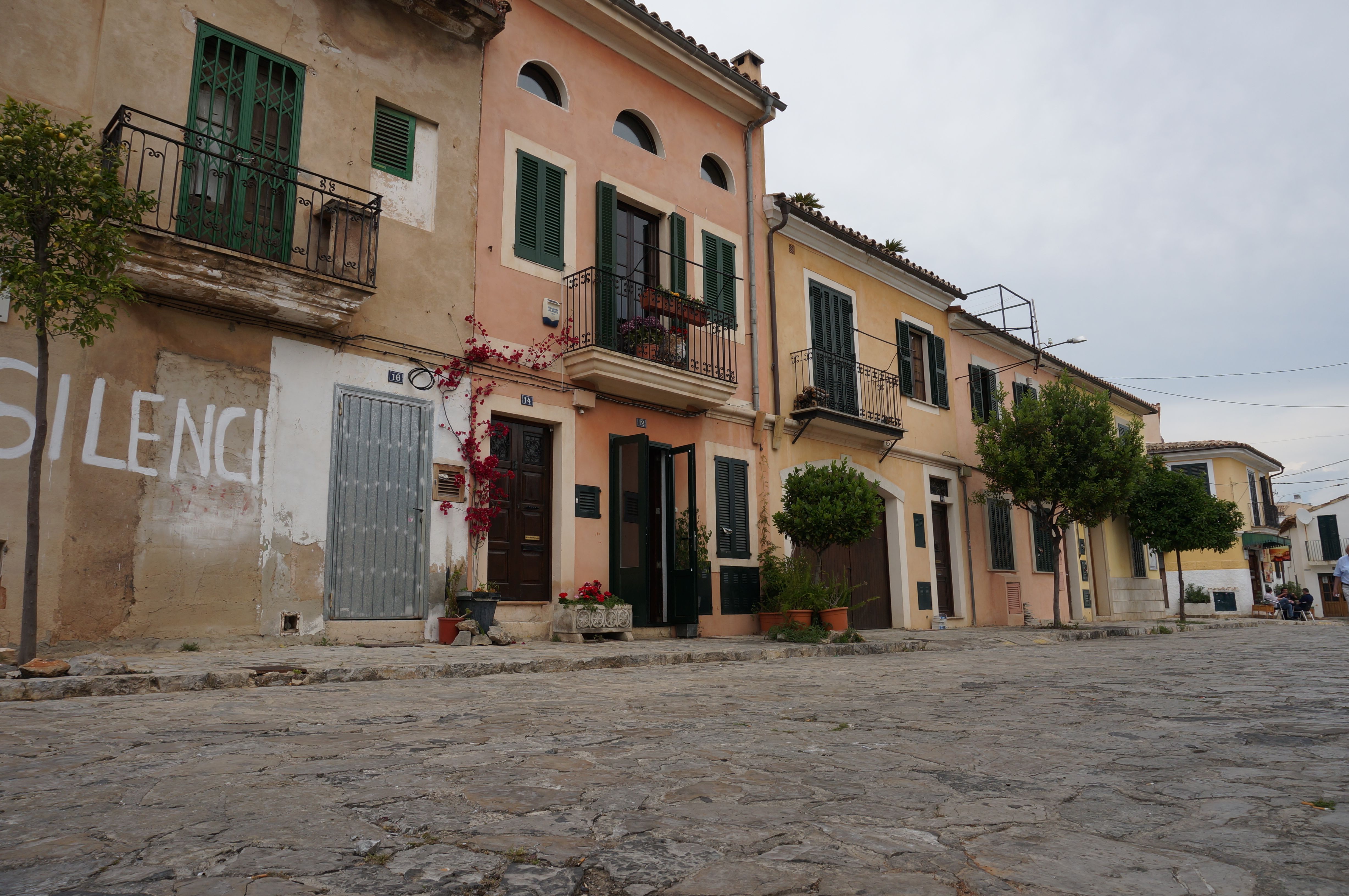
Palma's smallest and most distinctive neighbourhood: a rocky spur above the harbour with five surviving windmills and a handful of low fishermen's houses. A twenty-minute walk gives you one of the best free views of the harbour.
Es Jonquet
Es Jonquet in 30 seconds
The essentials at a glance
- Worth visiting for
- A short visit
- Best for
- Windmills, fishermen's houses and harbour views
- Best months
- January–May, September–December
- Time to allow
- Twenty to thirty minutes. Easy to combine with neighbouring Santa Catalina.
- Without a car
- Better without a car
- Parking
- Very little in the neighbourhood itself. Park by the harbour and walk up the steps.
- Highlight
- Windmills above the harbour
- Keep in mind
- A long visit with lots of interiors to explore
- Access
- Steps climb from the harbour; check the approach through Santa Catalina
Get a feel for Mallorca. Find your kind of place.
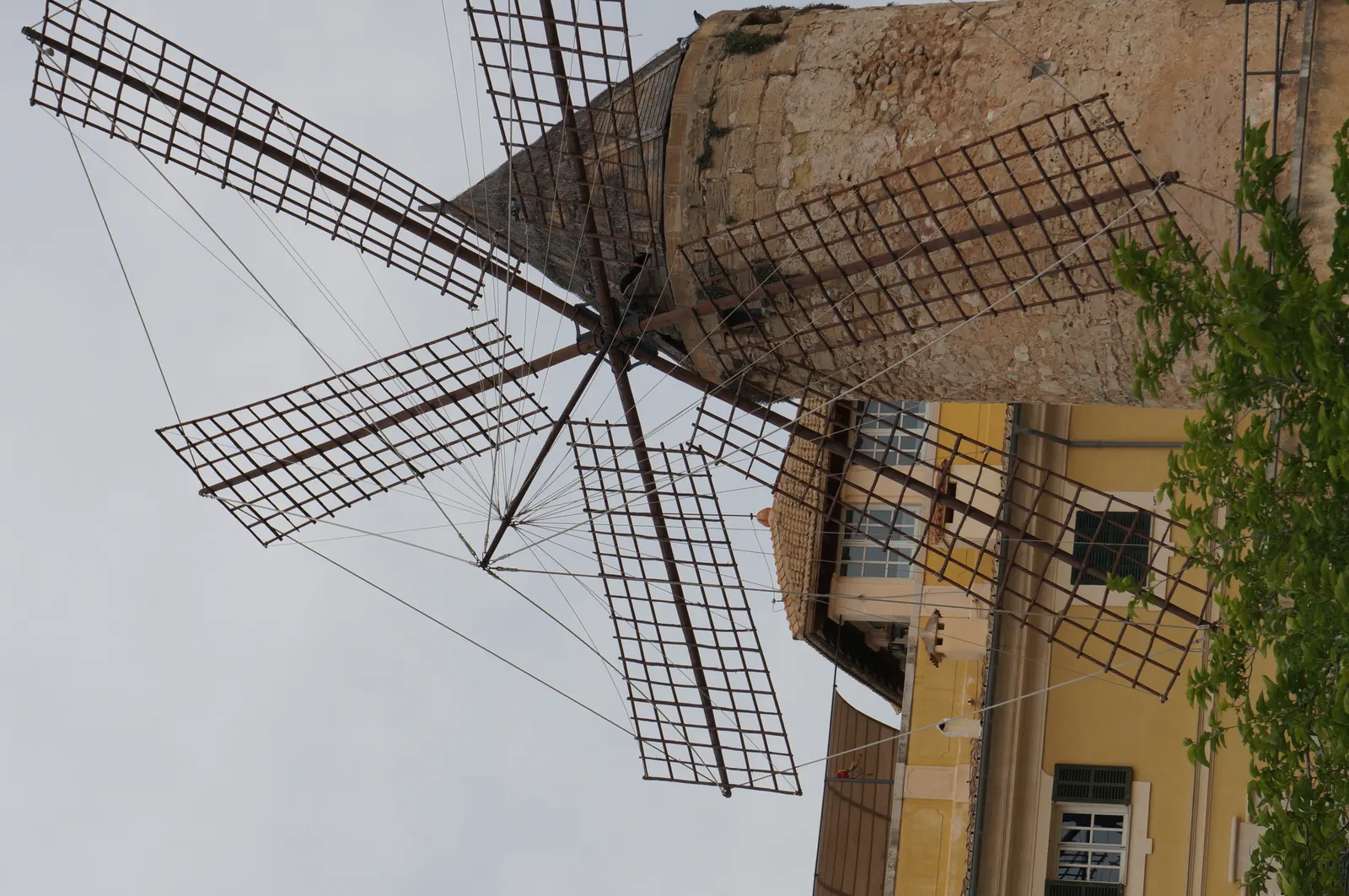
One of five surviving grain mills on the rocky spur above the harbour.
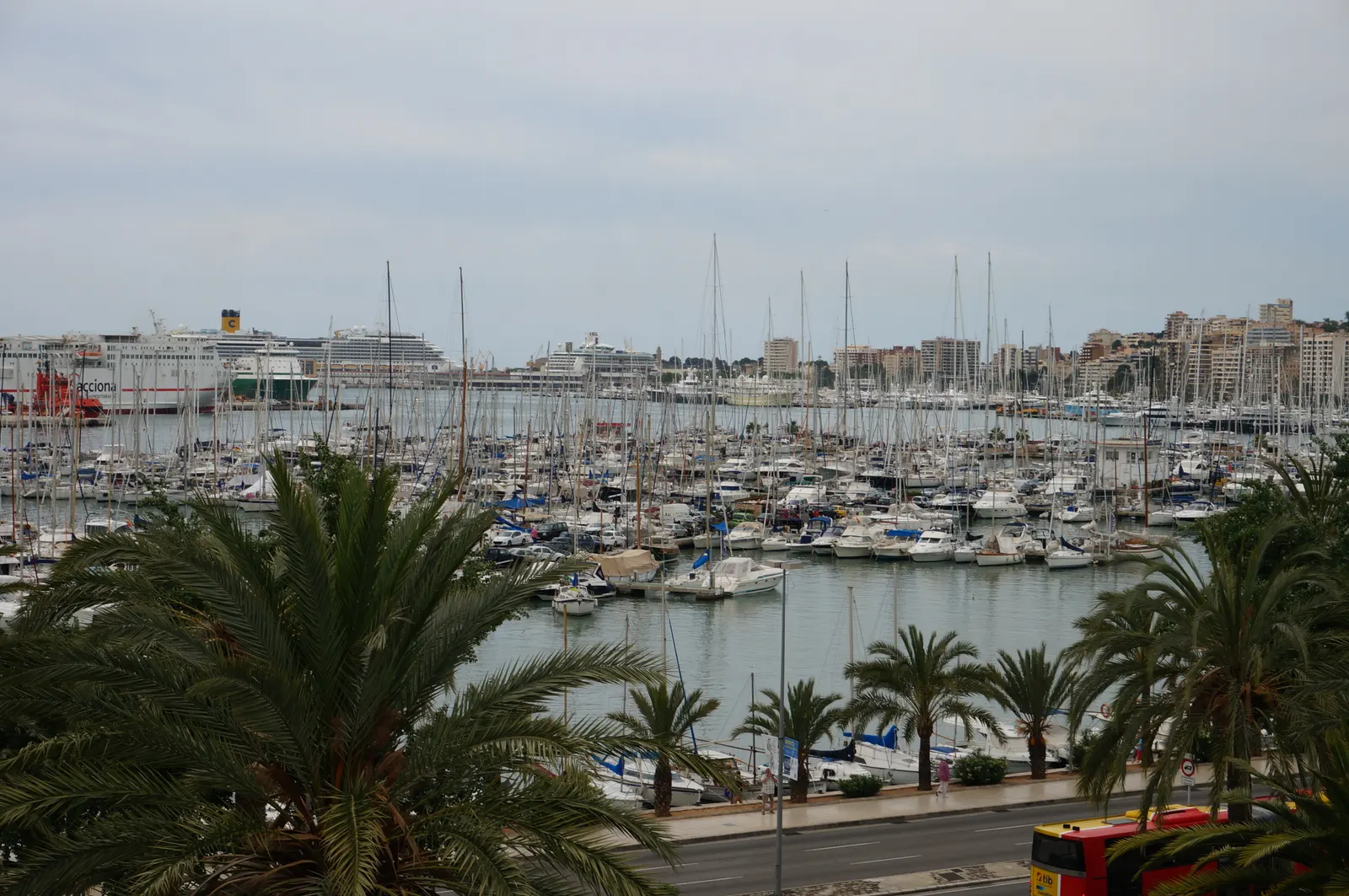
The view over the marina makes the climb worthwhile.
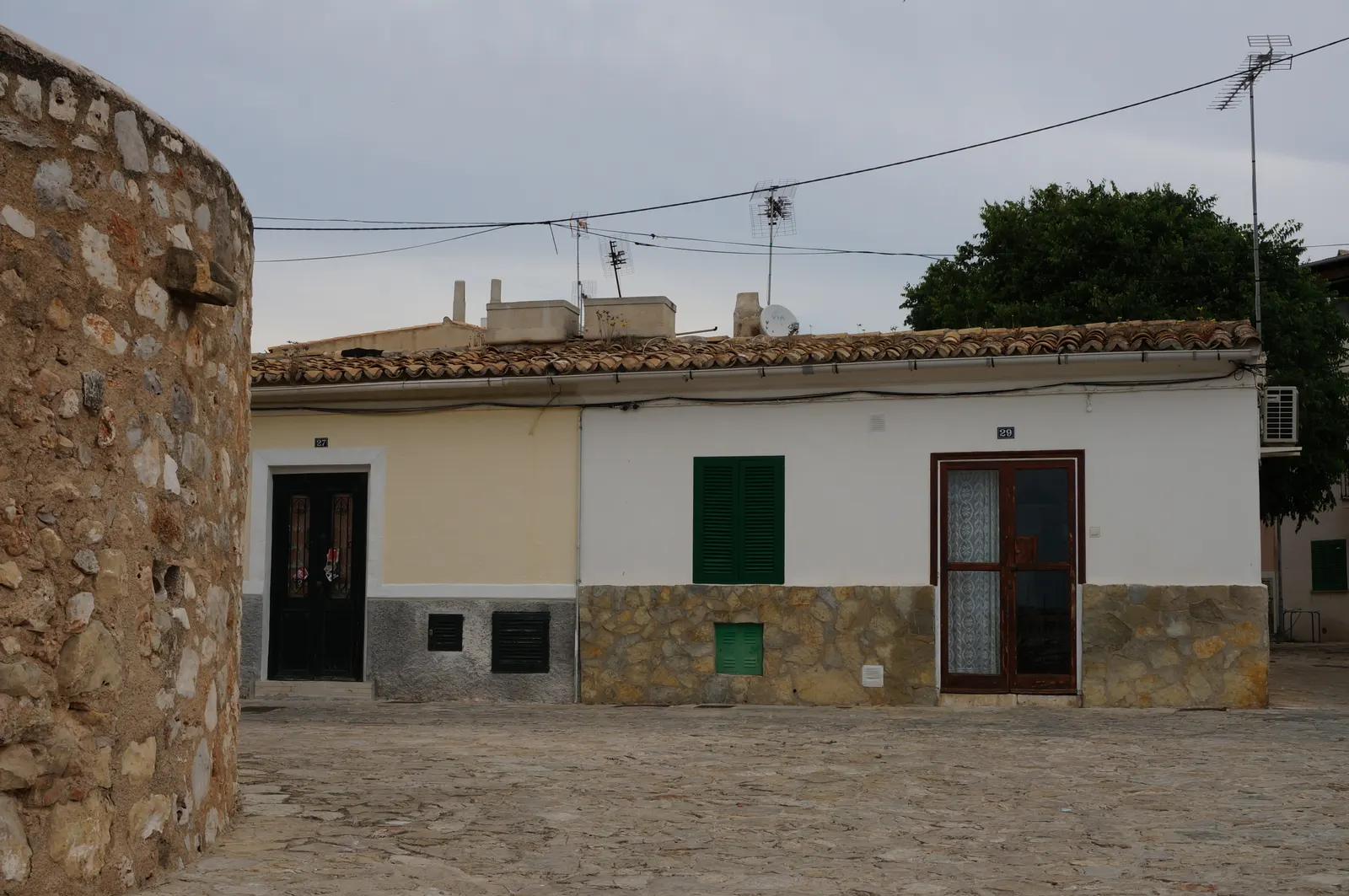
The house and windmill tower join into one building.
Drive from the airport
20 minutes
11 km
Bus connections
EMT buses on Passeig Marítim
Region
Palma
Nearest beach
Can Pastilla
8 km
Elevation
25 m
above sea level
A glimpse of Es Jonquet
Season guide for Es Jonquet
November Worth a visit
Very quiet Open
Worth visiting in January, February, March, April, May, September, October, November and December. Less suitable in August.
Location
Location of Es Jonquet
- Region
- Palma
- Municipality
- Palma
- Population
- 900
- Elevation
- 25 m above sea level
- Airport
- 11 km , around 20 minutes
- Hire car
- more hindrance than help
- Worth visiting for
- a brief stop
- Coordinates
- 39.5698,2.6339
What is Es Jonquet?
Palma’s old fishermen’s and millers’ neighbourhood, on a rocky spur above the marina, west of the old town and immediately beside Santa Catalina. Old street names still reflect the people who made their living from the water.
You can recognise it from a distance by the five windmills along its edge.
Five mills on a rocky spur
The row is called Molinar de Ponent, the western mill district. Between the 17th and 18th centuries, part of the neighbourhood was divided into plots and seven grain mills were built. The position was ideal: dependable wind on the spur, with grain arriving at the harbour directly below.
Five remain: Molí d’en Garleta, Molí del Nom de Déu, Molí d’en Carreres, Molí de sa Garriguera and Molí d’en Celos.
These were grain mills, not water-pumping windmills. The latter, familiar from fields across the Pla, raised water; these ground grain.
Molí d’en Garleta
The best known takes its name from the nickname of its last milling family. The family line is documented from 1881 and ended with Gaspar Flexes i Balaguer, known as Garleta. In 1993, the city bought the mill from him and restored it.
It now contains the small Museu dels Molins, explaining how the sails were covered, how power reached the millstones and how finely the flour was ground.
Conservation remains important: in 2025, the city and Consell de Mallorca agreed on further restoration of Garleta. The neighbourhood, including the mills, is protected as a Conjunt històric, a historic ensemble.
The neighbourhood
Between and below the mills are a handful of 19th-century single-storey houses once occupied by fishermen, millers and dock workers. Narrow lanes, cobbles, no front gardens: the houses sit directly on the rock.
In the 1960s and 1970s, demolition to make way for high-rises was proposed. Its survival was far from certain. This is the last remnant of this kind of housing beside Palma’s harbour.
The view
From the edge you look across the whole marina and harbour breakwater, and in clear weather towards the Tramuntana foothills. The last hour before sunset is best, when the light falls low across the water.
Planning your visit
Es Jonquet directly adjoins Santa Catalina. A good combination is to come up here for the view, then head into the neighbouring district for something to eat.
Photographs
Es Jonquet in Mallorca
Practical details
- Parking
- Very little in the neighbourhood itself. Park by the harbour and walk up the steps.
- Public transport
- EMT buses on Passeig Marítim, followed by a few minutes uphill on foot.
- Time to allow
- Twenty to thirty minutes. Easy to combine with neighbouring Santa Catalina.
- Good to know
- View the windmills from outside; interior access is limited and irregular. The last hour before sunset is particularly lovely, with low light across the harbour.
- Bus
- EMT buses on Passeig Marítim
- Coordinates
- 39.5698,2.6339 Google Maps Apple Maps
Within reach
Places to visit
Nearby

A striking circular Gothic castle, built above Palma between 1300 and 1311. Inside is a two-storey round …

Sant Pere bastion, built in the late 16th century on the western edge of Palma’s old town, became home to a …

Palma’s cathedral was begun in 1230 and built over several centuries. Its Gothic buttresses rise above the water …

The royal palace beside Palma cathedral began as a Moorish alcázar, later converted into a residence for …

The March family's city palace between the cathedral and the Almudaina: a terrace filled with 20th-century …

The Balearics' largest harbour sits in the city, in front of the old town. Cargo quays, cruise terminals, marinas …

Palma's grand promenade between Plaça de la Reina and Plaça del Rei Joan Carles I. It follows the bed of a torrent …

An 11th-century brick chamber in an old-town garden, with twelve columns, horseshoe arches and a dome pierced by …
Distances without a driving time are measured in a straight line. The road journey can be much longer; known driving times are shown alongside.
Where to swim nearby
Beaches and swimming nearby

At the western end of Playa de Palma, ten minutes from the airport by car: a marina, a rocky waterfront promenade …

Broad sandy bays with pale, shallow water, right beside Magaluf but with a different feel. The quieter neighbour …
Explore from here
Your questions answered
Your questions about Es Jonquet
Where are Palma's windmills?
In Es Jonquet, on a rocky spur between Passeig Marítim and Santa Catalina. Five survive and can be viewed free from outside. Steps lead up from the waterfront promenade.
What were Es Jonquet's windmills used for?
They ground grain rather than pumping water. Their position on the spur caught the wind above the city. Most date from the 18th century and worked until the early 20th century.
Is Es Jonquet worth a short visit?
Yes. A circuit takes twenty to thirty minutes, costs nothing and combines easily with neighbouring Santa Catalina. The marina view is one of the city's best.
Practical questions
When is the best time to visit Es Jonquet?
Recommended months: January, February, March, April, May, September, October, November, December. Clear winter air and open views across the bay towards the Tramuntana.
Is Es Jonquet worth visiting in July and August?
July: worth considering with some reservations. Usually quiet. August: another month may suit you better. Usually quiet. The rocky spur heats up and has no trees. Come early or in the evening, or leave it for another day.
How far is Es Jonquet from Palma airport?
About 11 km from Palma airport. Allow roughly 20 minutes by car.
Do I need a hire car for Es Jonquet?
A car can be more trouble than it’s worth EMT buses on Passeig Marítim
Where can I park in Es Jonquet?
Very little in the neighbourhood itself. Park by the harbour and walk up the steps.
Words and photographs: Friedhelm Fischer. Exploring Mallorca since 2013 — by bike, on foot and with a camera.