The Vandals and Byzantines on Mallorca
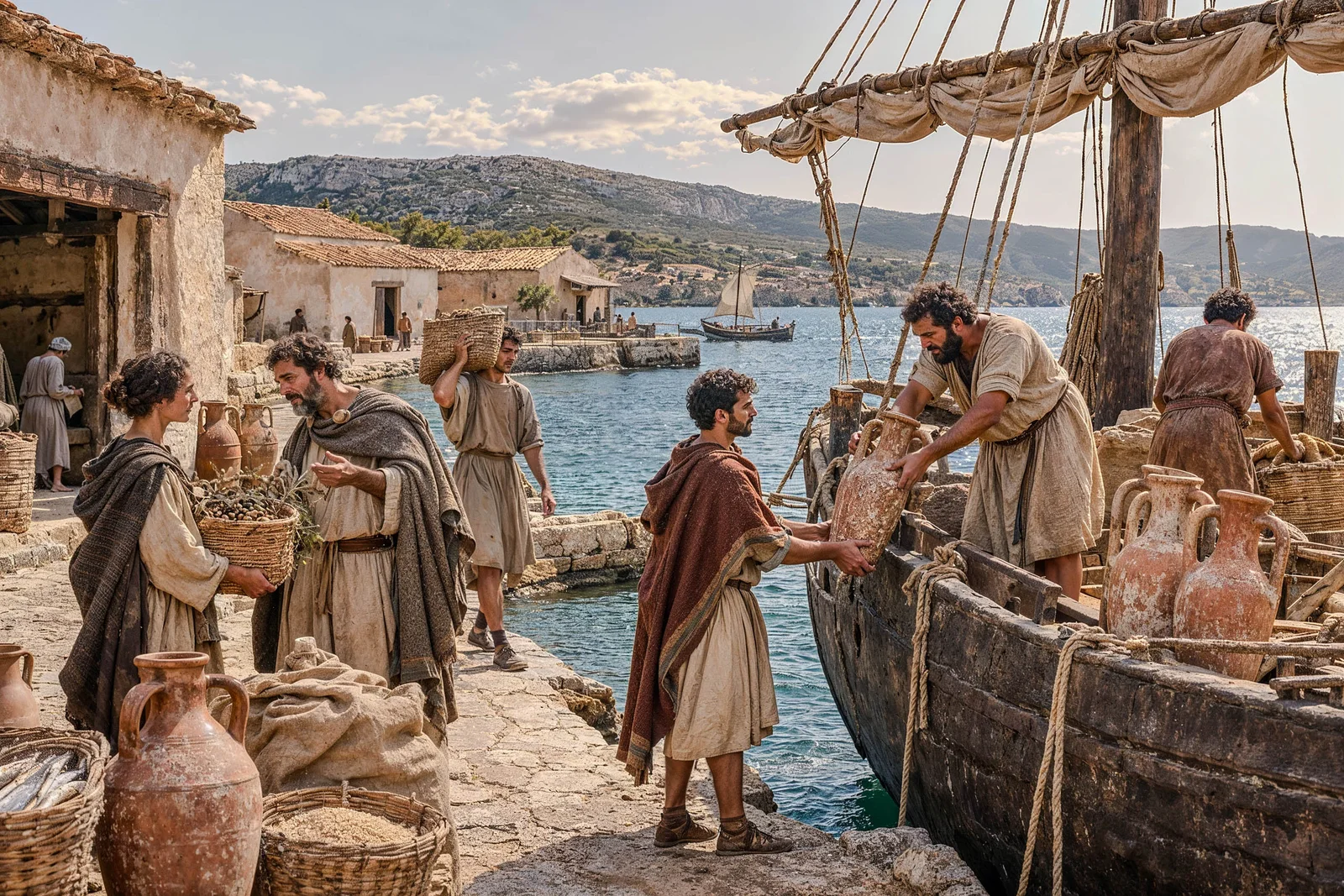
Mediterranean trade during the Vandal period
For around eighty years, Mallorca belonged to the Vandal kingdom centred on Carthage. Eastern Roman rule followed. Discover how island life changed and where you can explore this history today.
Around 455–534
Mallorca under Vandal rule
By the middle of the 5th century, Mallorca and the other Balearic Islands had come under Vandal rule, usually dated to around 455. Their king ruled from Carthage, on the coast of present-day Tunisia. For roughly eighty years, Mallorca belonged to a kingdom centred in North Africa.
The Vandals were a Germanic people who had travelled through the Iberian Peninsula to North Africa. They crossed into Africa in 429 and captured Carthage in 439. From there, they extended their power across islands in the western Mediterranean.
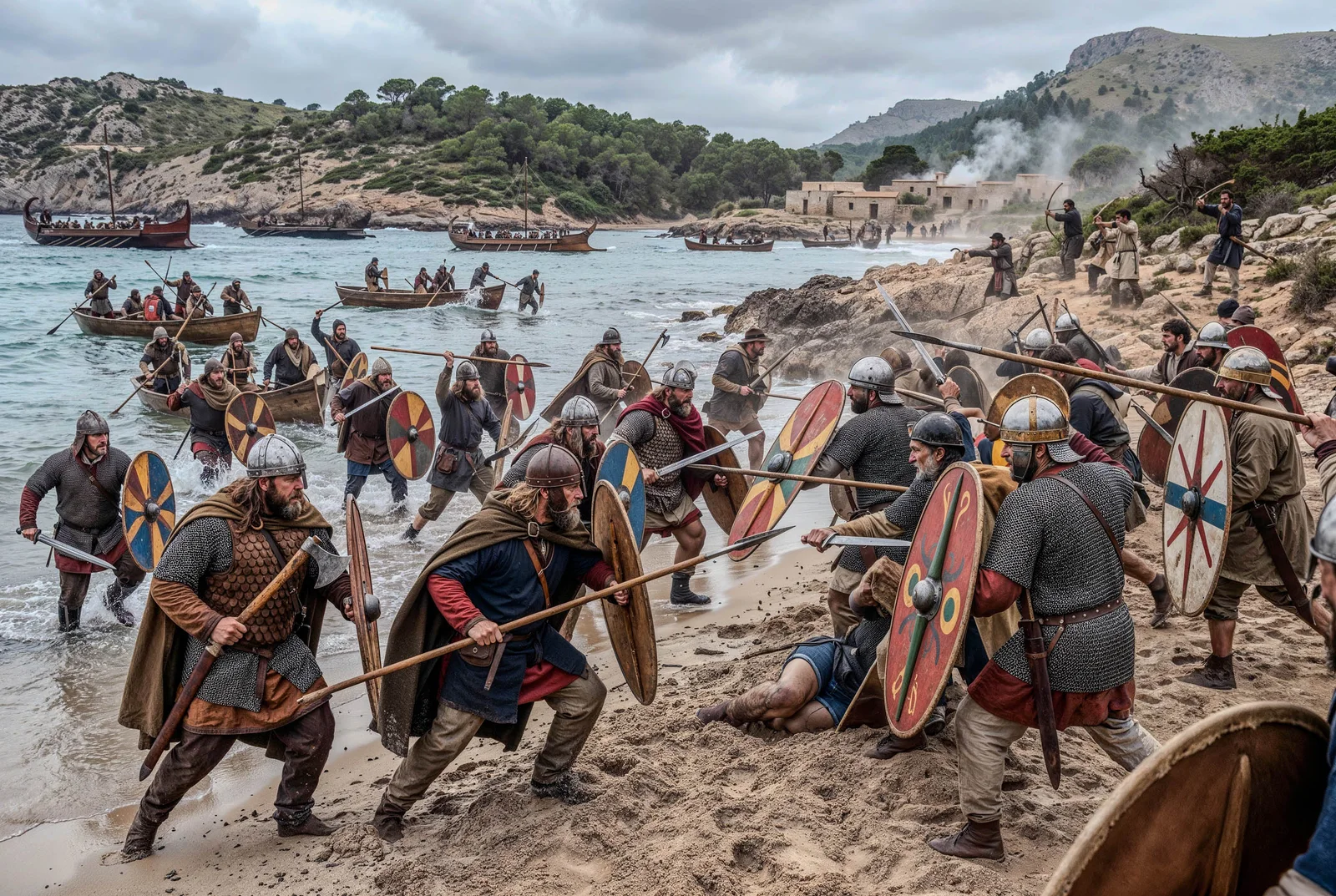
The Balearics lay between North Africa, Italy and the Iberian Peninsula. Controlling them provided bases for a fleet, while their harbours continued to serve trading ships.
Vandal raids on the Balearics are recorded as early as 425, but lasting rule began later. No detailed account of Mallorca's takeover survives.
 AI
People and trade
How did island life continue?
Mallorca's population had lived with Roman language and customs for centuries. We do not know how many Vandals settled on the island, and there is no evidence that the existing population was entirely replaced.
Goods continued to arrive by sea. North African tableware and amphorae dating from around 450–475 have been found in Palma, alongside products from Ibiza and the eastern Mediterranean. Trade did not simply stop when the rulers changed.
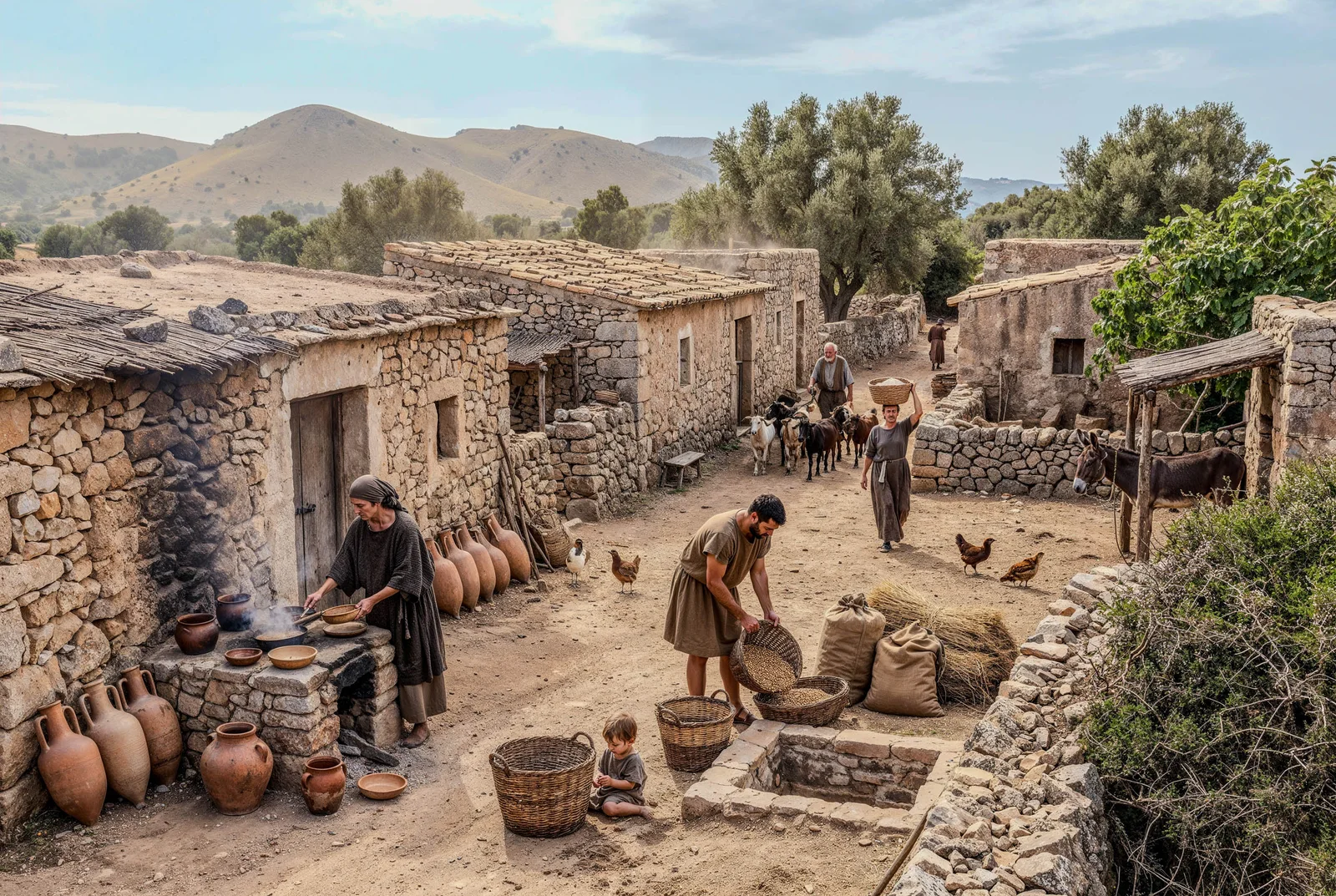
Excavations near Manacor offer further clues to everyday life in the following centuries of Late Antiquity. At Son Peretó, people lived in simple single-storey houses with a few rooms. They cooked indoors and stored cereals and pulses in pits. They farmed and kept animals, while amphora fragments show that wine and oil were also imported.
 AI
A bishop from Mallorca
Christian communities and religious disputes
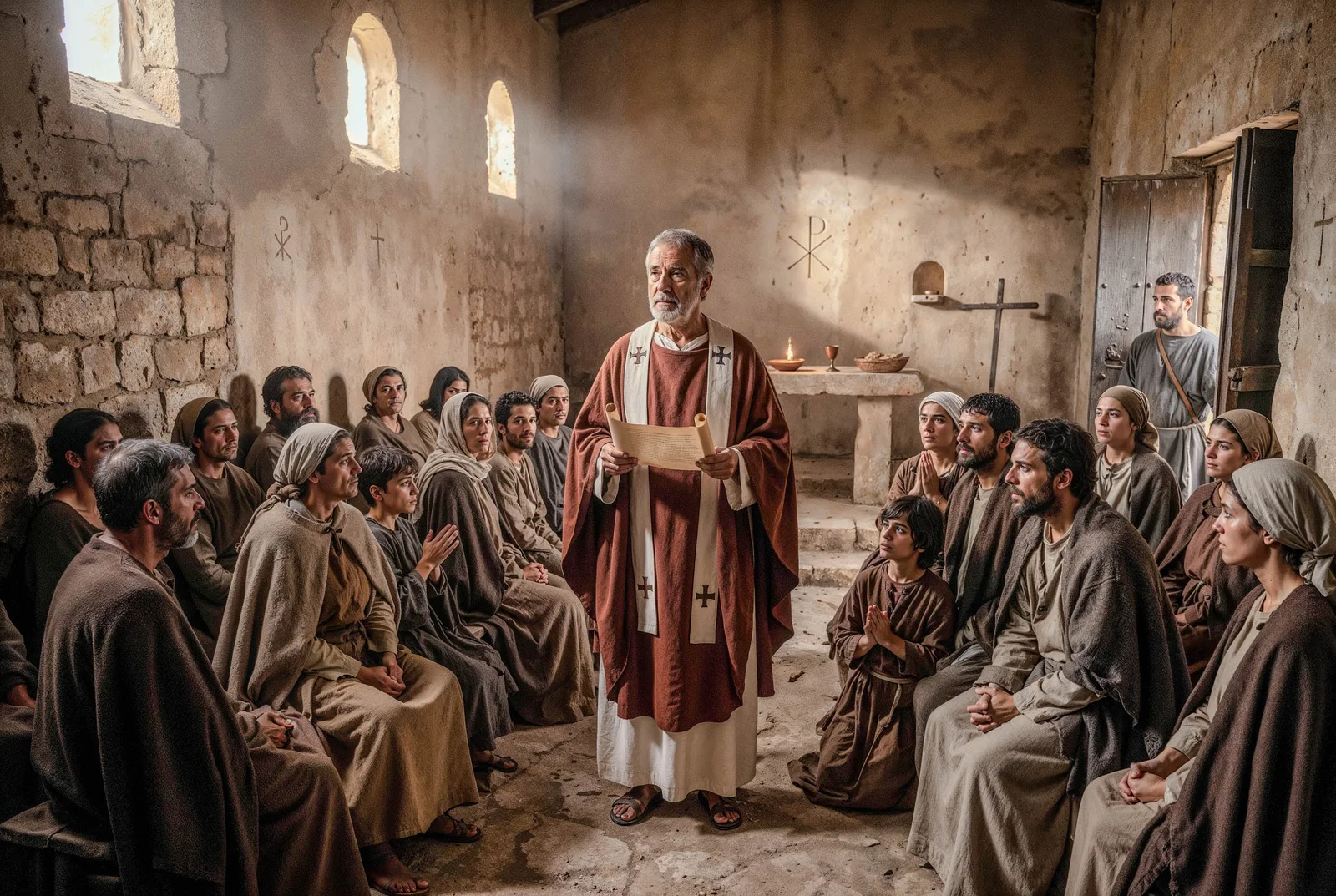
In 484, Mallorca appears in a list of bishops associated with a religious assembly at Carthage. It names Helias of Mallorca, Macarius of Menorca and Opilio of Ibiza, showing that all three islands had Christian communities with their own bishops.
The Vandal kings were Christians too, but followed the branch usually called Arian Christianity. A central disagreement concerned the relationship between Christ and God the Father. The Catholic bishops followed a different doctrine.
King Huneric persecuted Catholic bishops, although most surviving accounts concern North Africa. We do not know enough to say exactly which measures were enforced on Mallorca. The Mallorcan bishop's name in the list of 484, however, is direct evidence from the period.
 AI
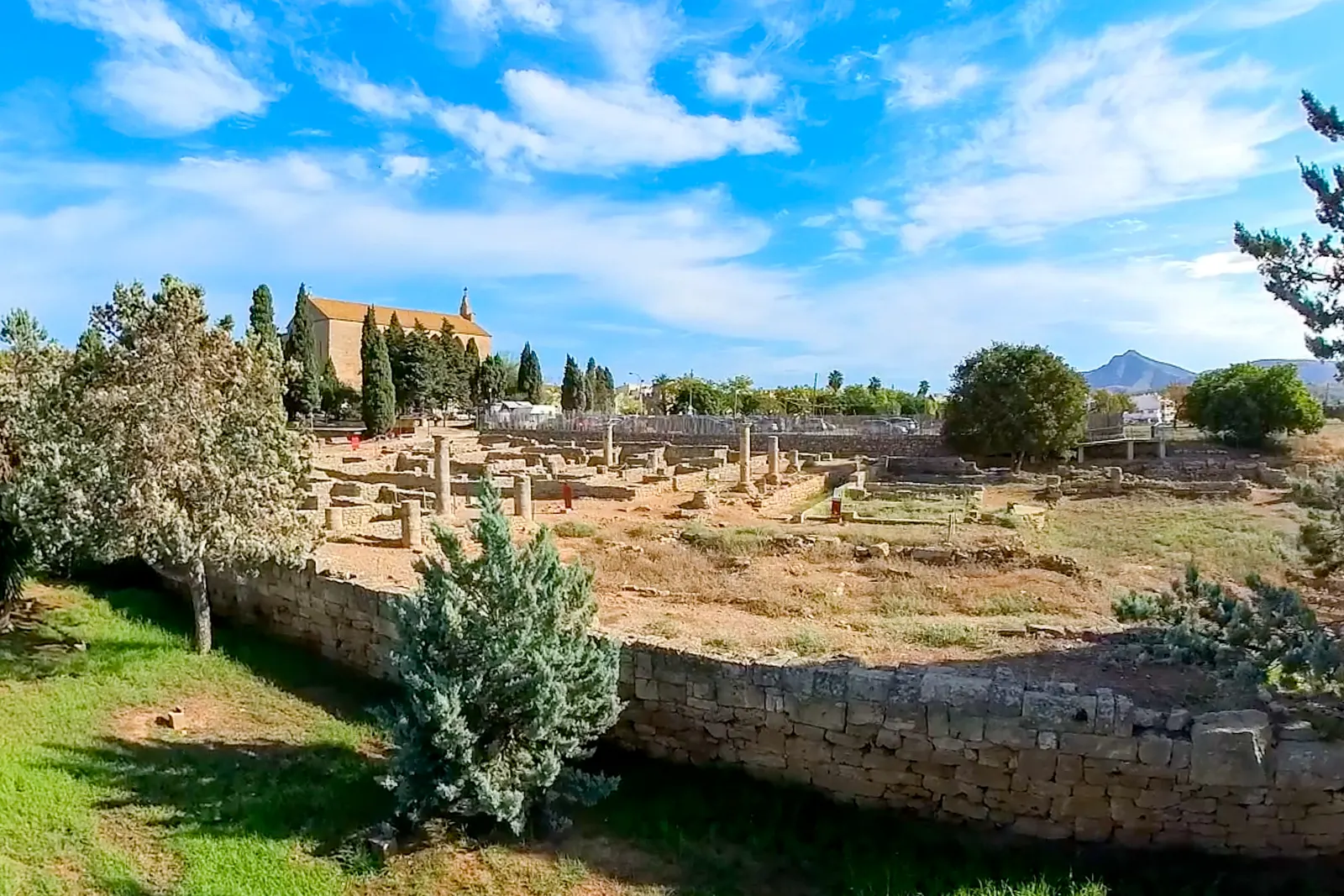
Ruins near Alcúdia
Did the Vandals destroy Pollentia?
The major fire at Pollentia is dated to around 270–280, almost two hundred years before Vandal rule on Mallorca. Its cause is unknown. It cannot therefore be attributed to the Vandals' takeover.
Pollentia remained inhabited after the fire. Houses and public spaces were altered or put to different uses. A fortification in the forum area dates from the first half of the 6th century and is probably connected with Eastern Roman rule.
Visit the excavations near Alcúdia and you will see buildings from several centuries. The theatre and Roman houses predate Vandal rule. Our Roman Mallorca guide takes you through the three main areas.
The word “vandalism” was coined much later, during the French Revolution. It was used in 1794 to describe the destruction of cultural heritage. That later term cannot explain why any particular ancient town became a ruin.
533–534
The Balearics join the Eastern Roman Empire
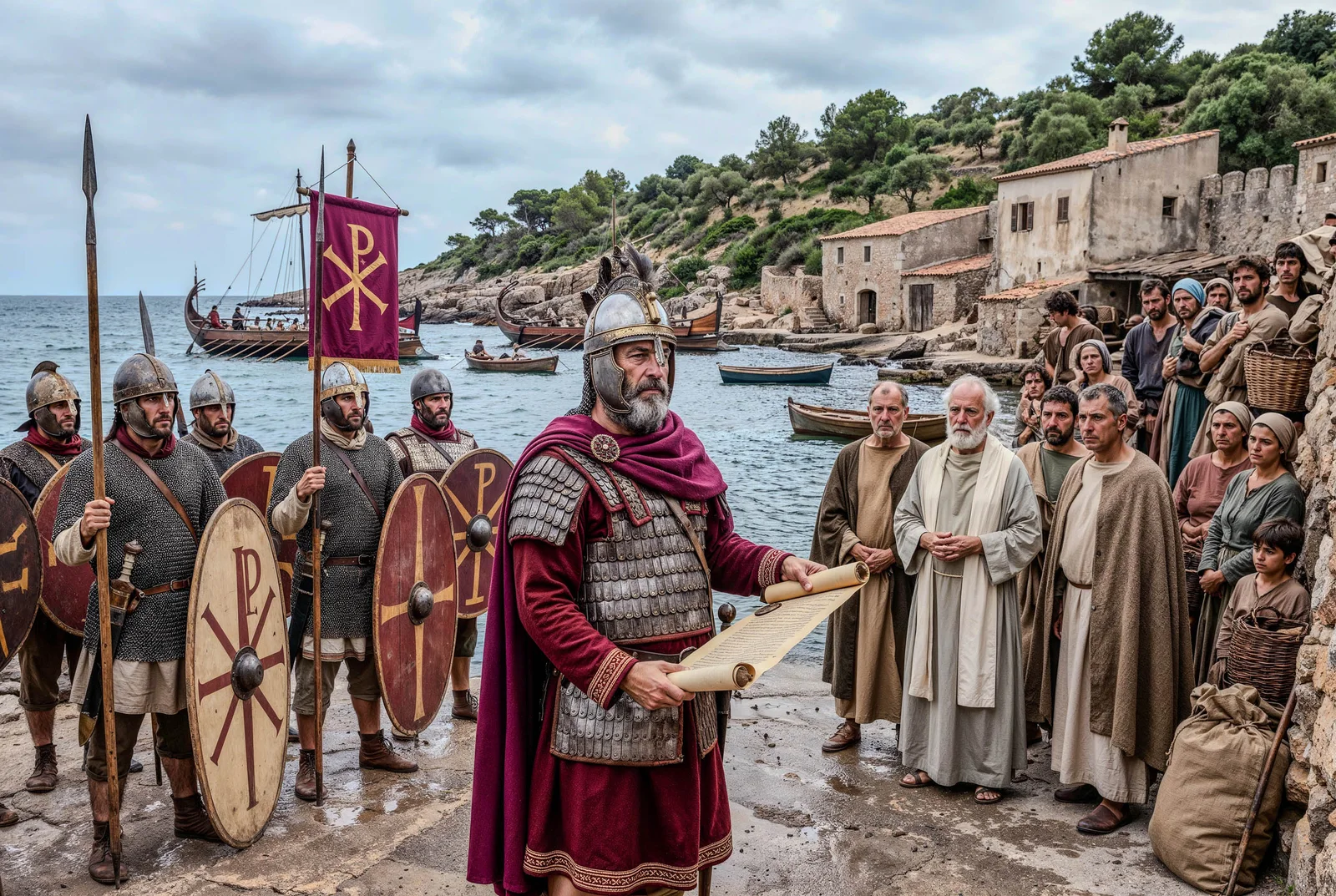
Emperor Justinian sent an army against the Vandal kingdom in North Africa. His general Belisarius defeated the Vandals in the campaign of 533–534. The Balearics were then incorporated into the Eastern Roman Empire.
The historian Procopius names the commander Apollinarius, whom Belisarius sent to Ebusa, Majorica and Minorica — Ibiza, Mallorca and Menorca. Belisarius himself need not have landed on Mallorca. The account describes no major battle on the island.
The empire's capital was Constantinople, now Istanbul. Today we also call it the Byzantine Empire, although its inhabitants continued to think of themselves as Romans.
The churches and settlements of the following centuries belong to Mallorca's Late Antique history. Son Peretó and the History Museum of Manacor are particularly useful places to explore this period.
 AI
Near Manacor · 5th–7th centuries
Son Peretó: church, baptismal pools and graves
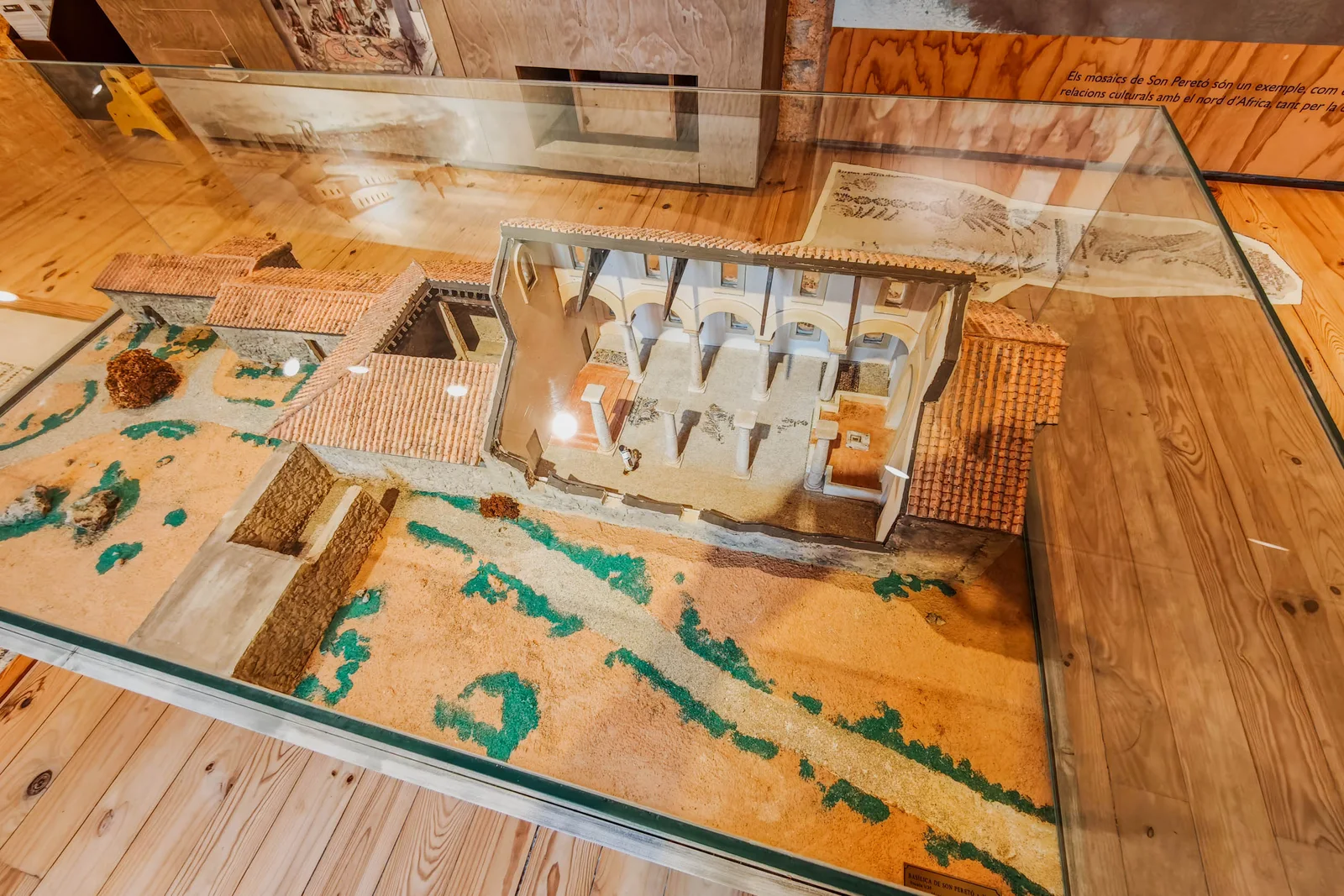
The remains of Son Peretó lie beside the road from Manacor to Sant Llorenç. The site includes an early Christian basilica, a baptismal area, adjoining rooms and a burial ground. You can trace the church's ground plan and identify its two baptismal pools.
The church had a nave and two aisles, with mosaic floors. The baptismal pools date from the 6th century and the mosaics from around its middle. The wider complex spans the 5th to 7th centuries, so it cannot all be assigned to Vandal rule.
Original mosaics and other finds are displayed at the Museu d’Història de Manacor. Replica mosaics have also been installed at the site. Combining the excavations and museum gives you a fuller visit.
Find visitor information on Manacor council's website.
Coins and seals
Other finds from Byzantine times
An early Christian church complex was excavated at Son Fadrinet near Campos. Two Byzantine gold coins minted in 737–738 and 739 were found there, much later than Vandal rule. Unlike Son Peretó, regular public access to Son Fadrinet has not been confirmed.
Byzantine lead seals have been found at Castell de Santueri, near Felanitx. Seals of this kind secured documents. However, these examples were not recovered in a scientifically documented excavation, so their precise original context is uncertain.
That does not make Santueri's visible castle walls Byzantine. The fortress you visit today is largely much later; the seals belong to an earlier part of its history.
Before the Muslim conquest
What happened between 534 and 902–903?
Almost four hundred years passed between the Eastern Roman takeover and the Muslim conquest. A few written references survive. Around 595, Bishop Licinianus of Cartagena wrote to the bishop of Ibiza. A letter from Pope Gregory the Great in 603 concerns a monastery on Cabrera.
Muslim fleets attacked the Balearics in the early 8th century, but raids did not yet mean permanent occupation. How firmly Constantinople controlled the islands during the 8th and 9th centuries is not consistently documented.
Only in 902–903 were the Balearics permanently incorporated into the Islamic world. Read what followed in our guide to Muslim Mallorca.
History on your travels
Places to explore Mallorca’s Late Antiquity
At Pollentia, Roman buildings continued to be used after the town’s heyday. Manacor’s museum holds original mosaics and other finds from Son Peretó. Byzantine seals found at Santueri belong to the history of the site before the castle walls you see today.

A Roman town used in later centuries
Pollentia
Residential quarter, forum and theatre near Alcúdia. The site remained in use after its Roman heyday.
Photographs and visiting tips →
Original finds from Son Peretó
Manacor History Museum
Mosaics, pottery and other finds from the late-antique surroundings of Manacor.
Photographs and visiting tips →
A site where Byzantine seals were found
Castell de Santueri
The castle visible today is later. Byzantine finds belong to its earlier history.
Photographs and visiting tips →A day out near Manacor
Combine Son Peretó with the museum
Begin at Son Peretó. You can see how the church, baptismal area and adjoining rooms fit together, with information boards to help you follow the layout.
Then visit the History Museum of Manacor for original mosaics and other finds. Manacor also makes a good stop for a meal or a stroll.
Sources and further reading
Friedhelm Fischer’s notes and research from 2013 to 2026, together with:
- Museu d’Història de Manacor: Mallorca in Late Antiquity
- Metropolitan Museum of Art: North Africa and the Vandal kingdom
- University of Barcelona: written sources and the bishops’ list of 484
- Cau-Ontiveros and others (2024): pottery production and trade under Vandal rule
- Procopius: Vandal War, Book II, Chapter 5
- University of La Laguna: Pollentia’s Late Antique fortification
- Manacor Museum: excavations at Son Peretó
- Manacor council: excavations and replica mosaics at Son Peretó
- Juan Nadal Cañellas: Byzantine lead seals from Santueri
- Catalina Mas Florit: settlement on Mallorca in Late Antiquity
- Las islas Baleares durante la Antigüedad Tardía (2024)
- Bibliothèque nationale de France: Grégoire’s 1794 report on vandalism