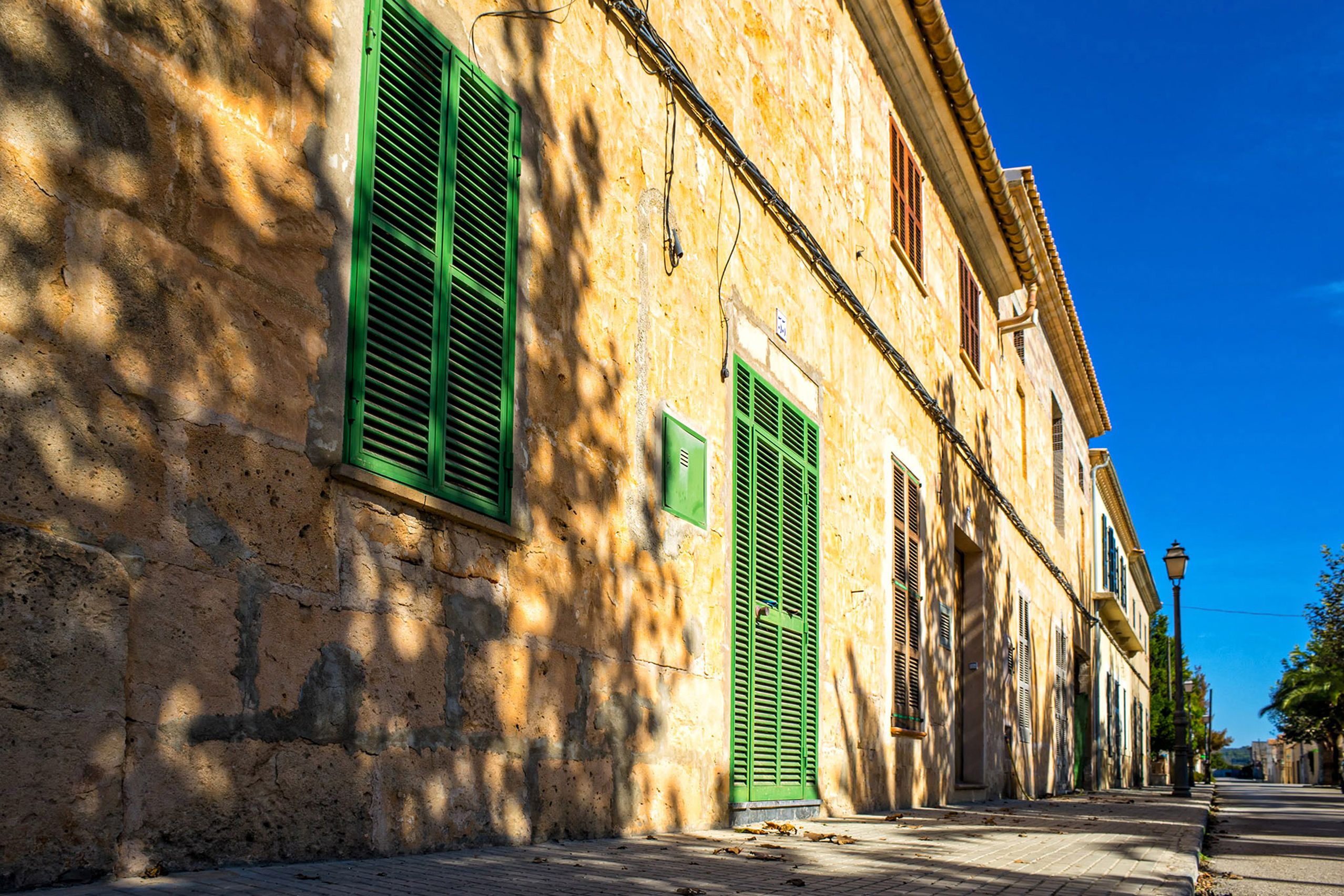
Petra
A golden sandstone village in the Pla, birthplace in 1713 of Juníper Serra, whose name is especially familiar in California. His small, low house still stands a couple of lanes from the friary.
Petra
Petra in 30 seconds
The essentials at a glance
- Worth visiting for
- A short visit
- Best for
- You want to explore the Mallorcan origins of California's mission history
- Best months
- January–May, October–December
- Time to allow
- Two hours
- Without a car
- Hire car needed
- Parking
- Straightforward and free on the village edge
- Keep in mind
- You want to swim
- Access
- Pushchairs: Straightforward · Wheelchairs: Village centre manageable; the birthplace has thresholds and small rooms
Get a feel for Mallorca. Find your kind of place.
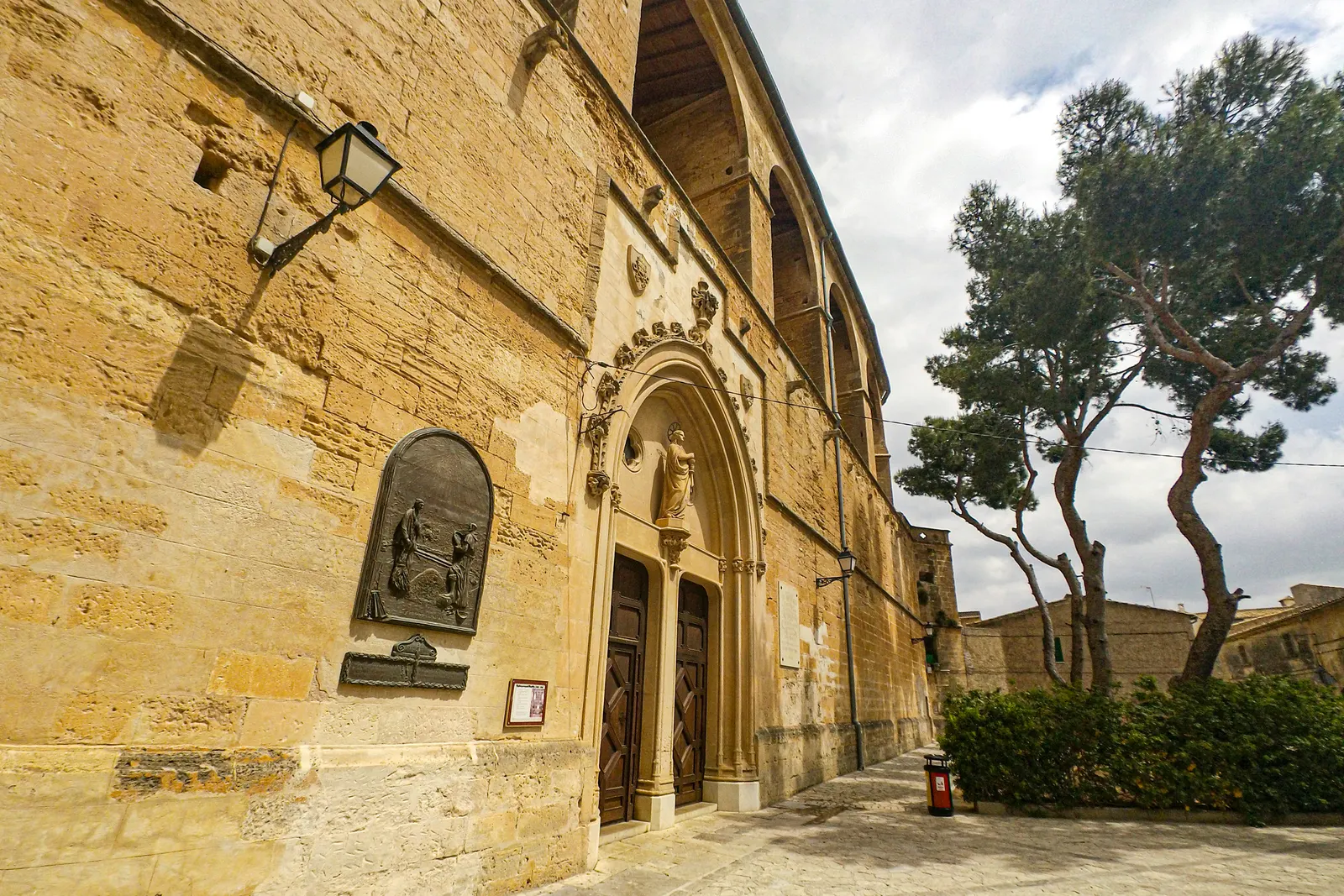
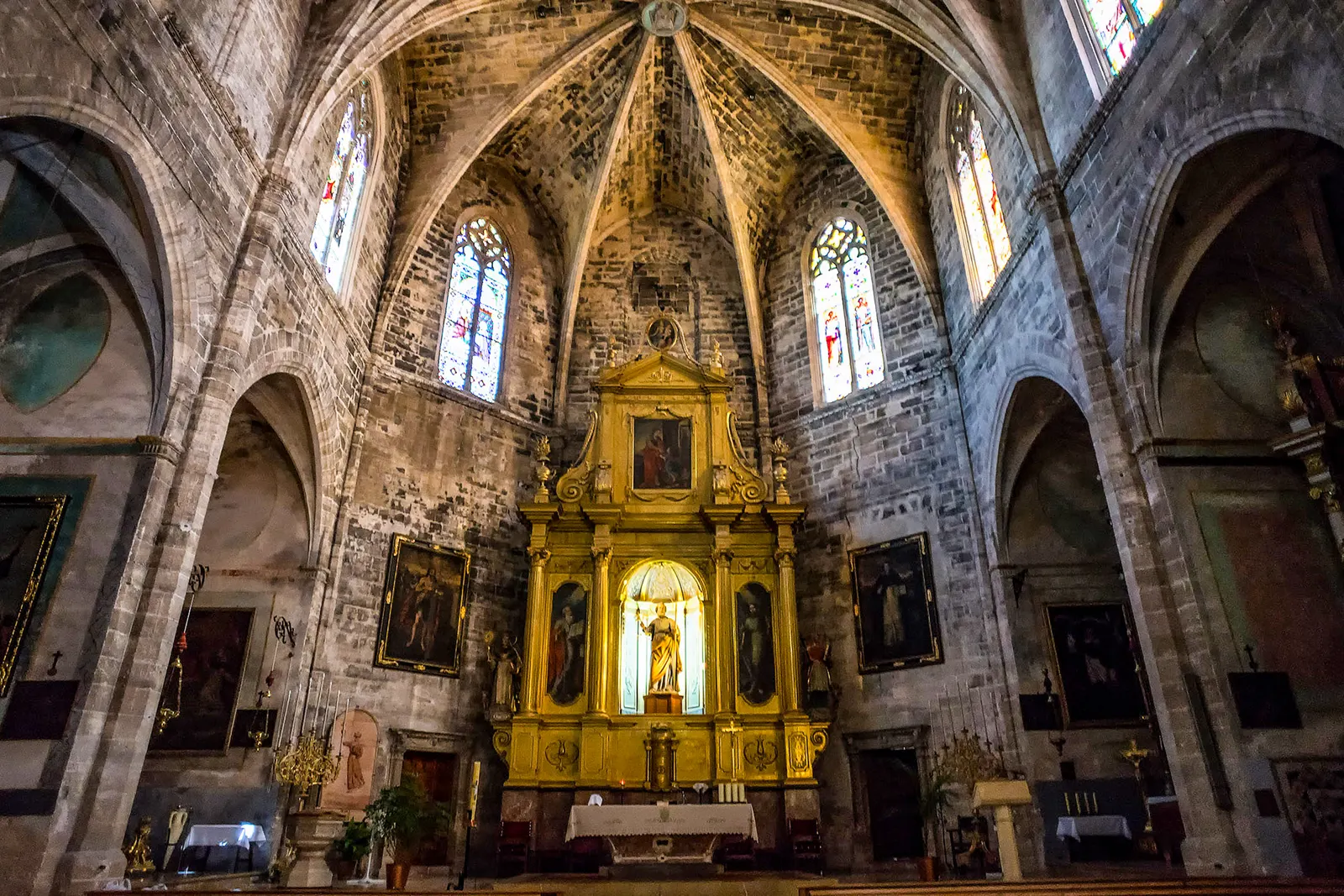
Sant Bernardí friary church. The plaque remembers Petra's best-known son.
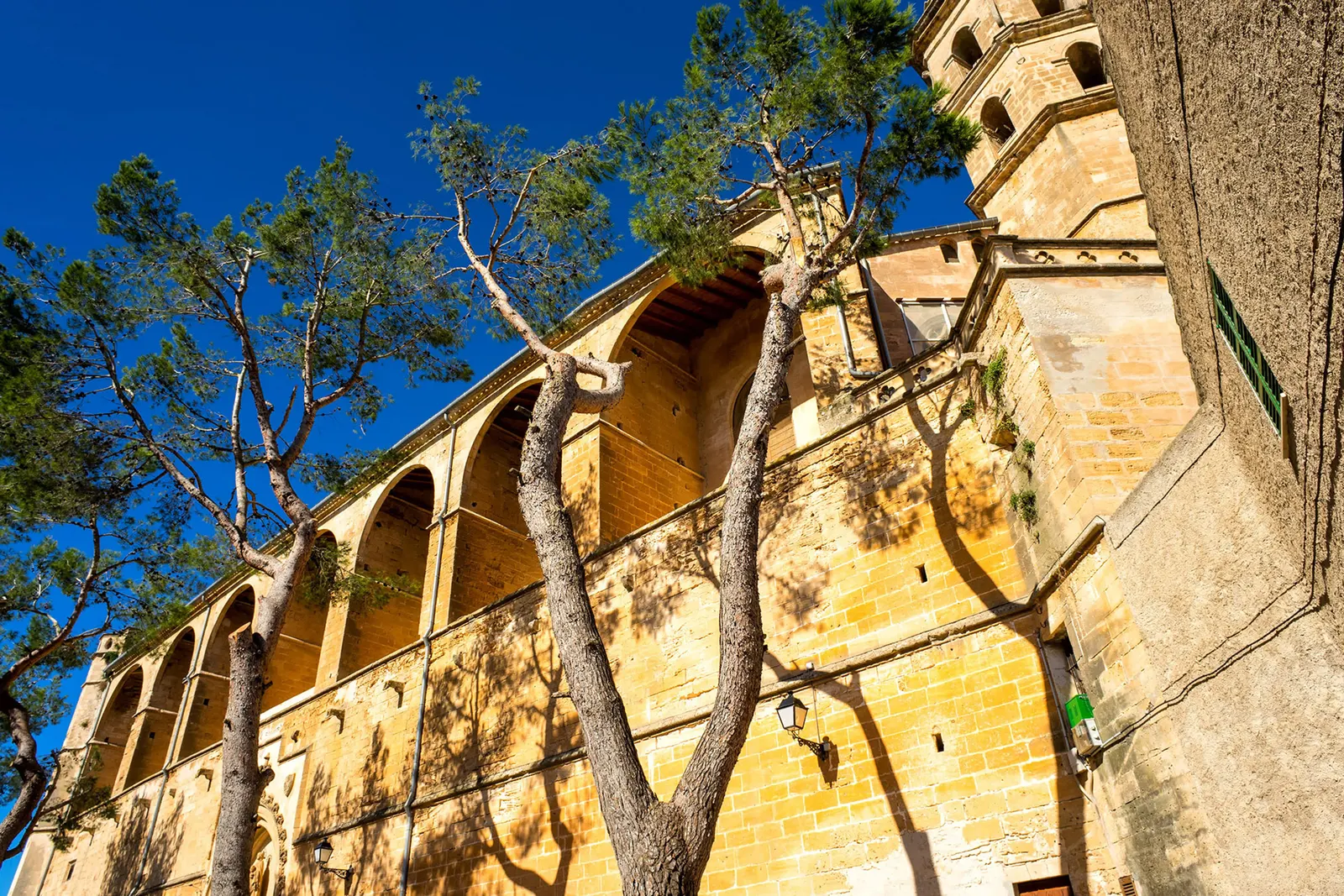
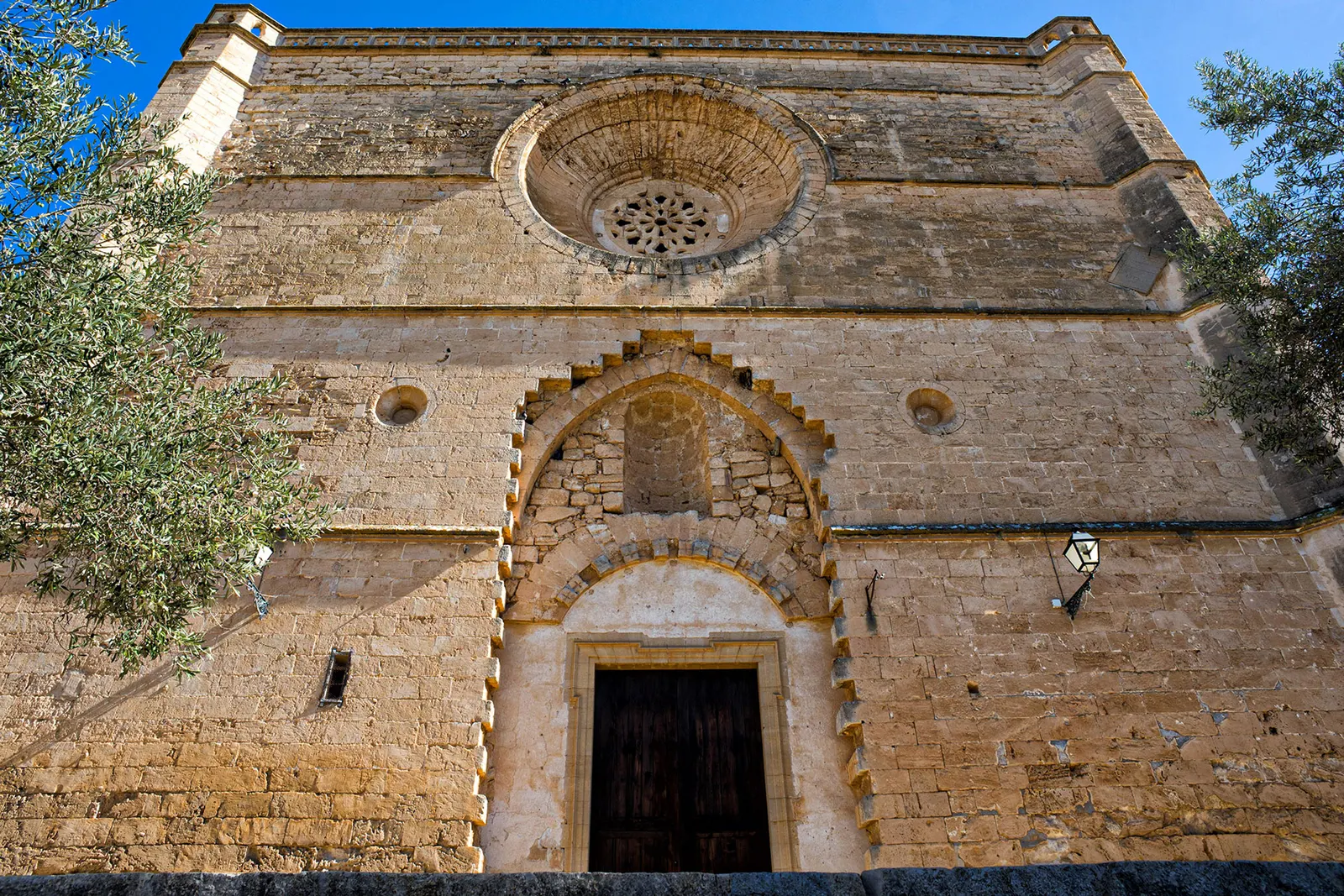
A remarkably large church for a village of around three thousand people.
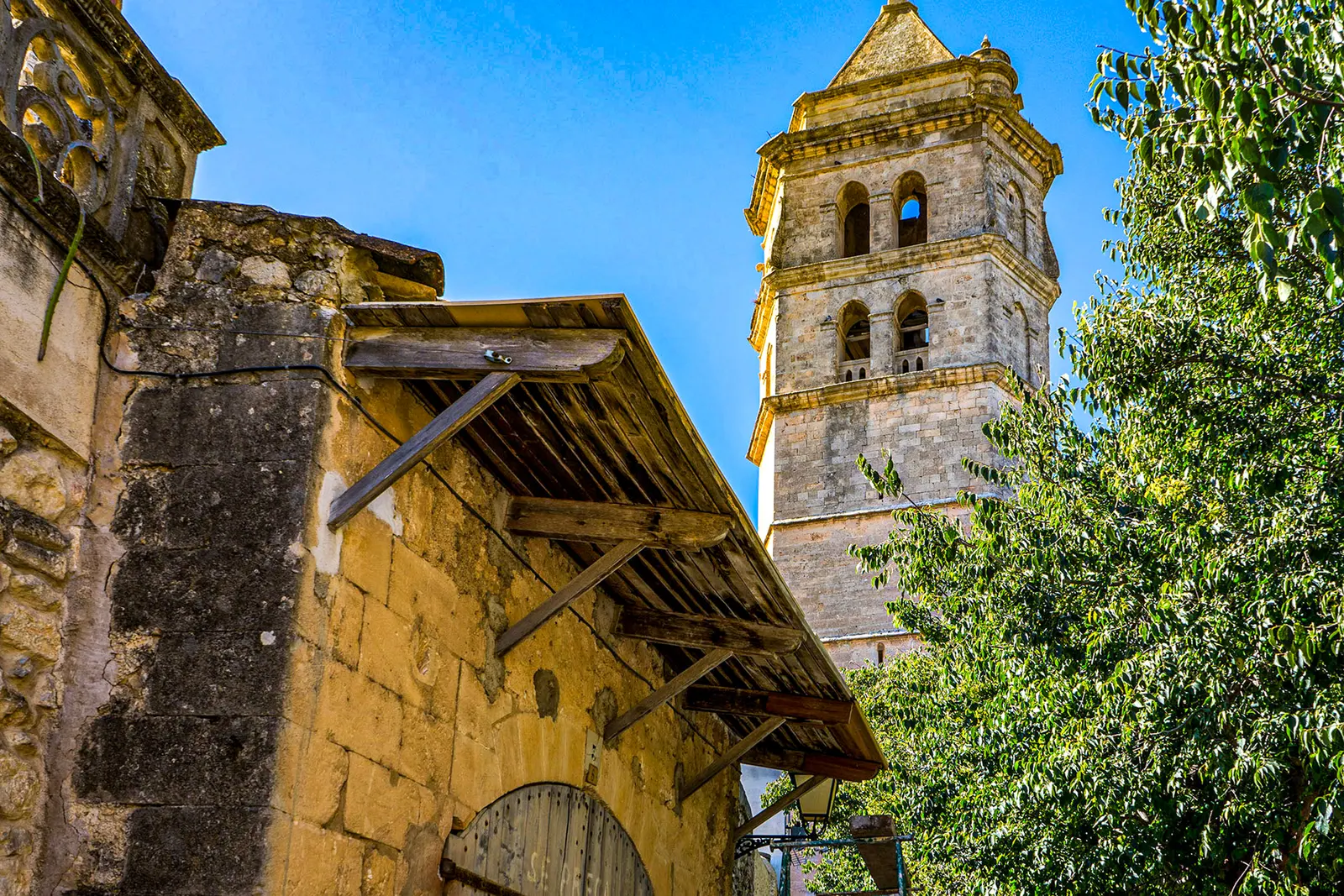
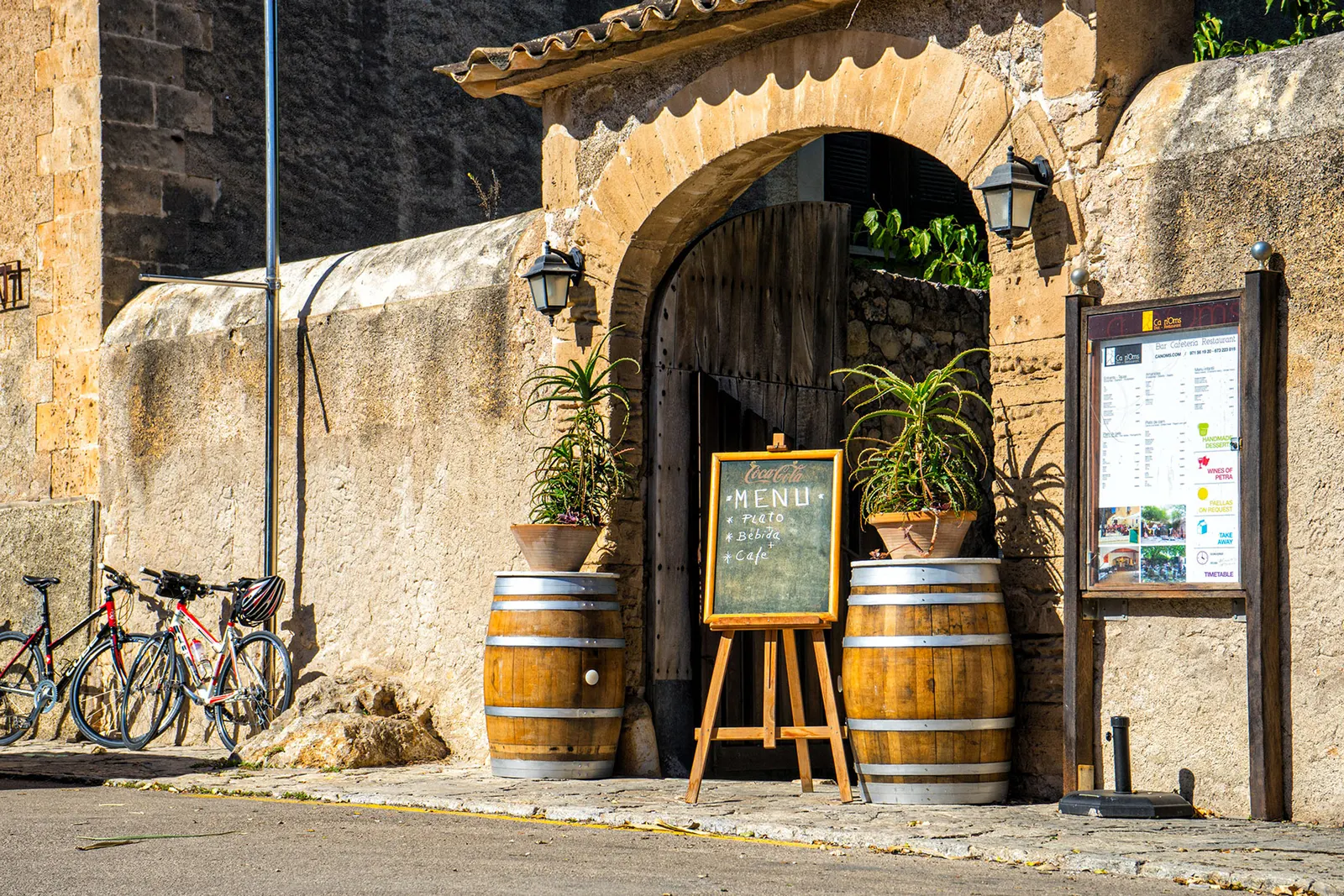
In Petra, a church and a barn can stand only a couple of metres apart.
Getting to know Petra
Does Petra suit your plans?
What to expect and what to know before you visit.
Who it suits
- You want to explore the Mallorcan origins of California's mission history
- You enjoy sandstone villages with a well-preserved centre
- Cycling — Petra is a well-known stop in the Pla
- Wine lovers; Pla i Llevant estates surround the village
Things to bear in mind
- You want to swim
- You want plenty going on; apart from Wednesday's market it is quiet
- You are arriving at midday in high summer
- You expect a large museum
Drive from the airport
40 minutes
45 km
Bus connections
Limited buses
Region
Pla de Mallorca
Elevation
110 m
above sea level
Season guide for Petra
November Worth a visit
Very quiet Open
Worth visiting in January, February, March, April, May, October, November and December. Less suitable in July and August.
Location
Location of Petra
- Region
- Pla de Mallorca
- Population
- 2,900
- Elevation
- 110 m above sea level
- Airport
- 45 km , around 40 minutes
- Hire car
- needed
- Worth visiting for
- a brief stop
- Coordinates
- 39.6142,3.1118
What is Petra?
A village of around 2,900 people in the Pla, between Sineu and Manacor. Its compact centre is built from golden sandstone, with a parish church unusually large for the village.
Wine estates belonging to the Pla i Llevant designation surround it, with the grape harvest in September.
Where the village comes from
The name sounds Latin, but Petra was not founded as a Roman town.
People lived in the area long before then. Around forty archaeological sites are recorded in the municipality, including caves and the talayots of Son Omar and Termenor. Roman grave goods, pottery and coins have been found, but these are finds rather than evidence of a town. Under Islamic rule, the area belonged to Yitnau-Bitra, with scattered farms known as alqueries and rafals.
The village itself was planned. Following Jaume II’s ordinances for new rural towns around 1300, Petra was laid out as a grid of right-angled streets for around a hundred settlers, with allocated farmland and infrastructure.
Today’s straight lanes therefore follow a plan from around 1300 rather than the winding pattern of a settlement that grew gradually.
Juníper Serra
Miquel Josep Serra was born here on 24 November 1713, into a farming family. He studied at Sant Bernardí friary, a few lanes away, took religious vows at sixteen and adopted the name Juníper. His progress in Latin, philosophy and theology led to further study in Palma.
As a Franciscan he travelled to Mexico, then California, where he established Spanish missions from 1769, personally founding nine. The mission network became associated with cities including San Diego, San Francisco and Santa Bárbara, though not every mission was founded by Serra himself. He died in California in 1784 and was canonised by Pope Francis in 2015.
A connection becomes clearer here: the Californian missions bear names of saints venerated at Sant Bernardí. Familiar names from his village travelled halfway around the world.
What to see in Petra
His birthplace on Carrer Barracar Alt, the village’s oldest street, is a low farmhouse with a few rooms, a hearth, a bed and an old wine cellar. You can walk through it in four minutes.
That small scale is what stays with me: such a modest home, set against the far-reaching history of its former occupant.
Next door is the museum, opened in 1959, with household objects, personal belongings and maps of the missions. Along Carrer de Fra Juníper Serra, tile panels on both sides depict the missions he founded.
Sant Bernardí friary completes the visit and is worth seeing for its cloister alone.
The controversy over Serra’s treatment of California’s Indigenous population, and over his canonisation in 2015, is part of this history and is not hidden here.
Ermita de Bonany
A few kilometres outside Petra, this hilltop pilgrimage church has broad views across the Pla. Serra gave his last Mallorcan sermon here before leaving for the Americas. The road up is narrow but driveable.
Petra’s centre is protected as a Conjunt Historicoartístic, a historic ensemble, with cobbled streets and continuous sandstone façades. Talayotic sites lie in the surrounding fields.
Spring brings the cyclists
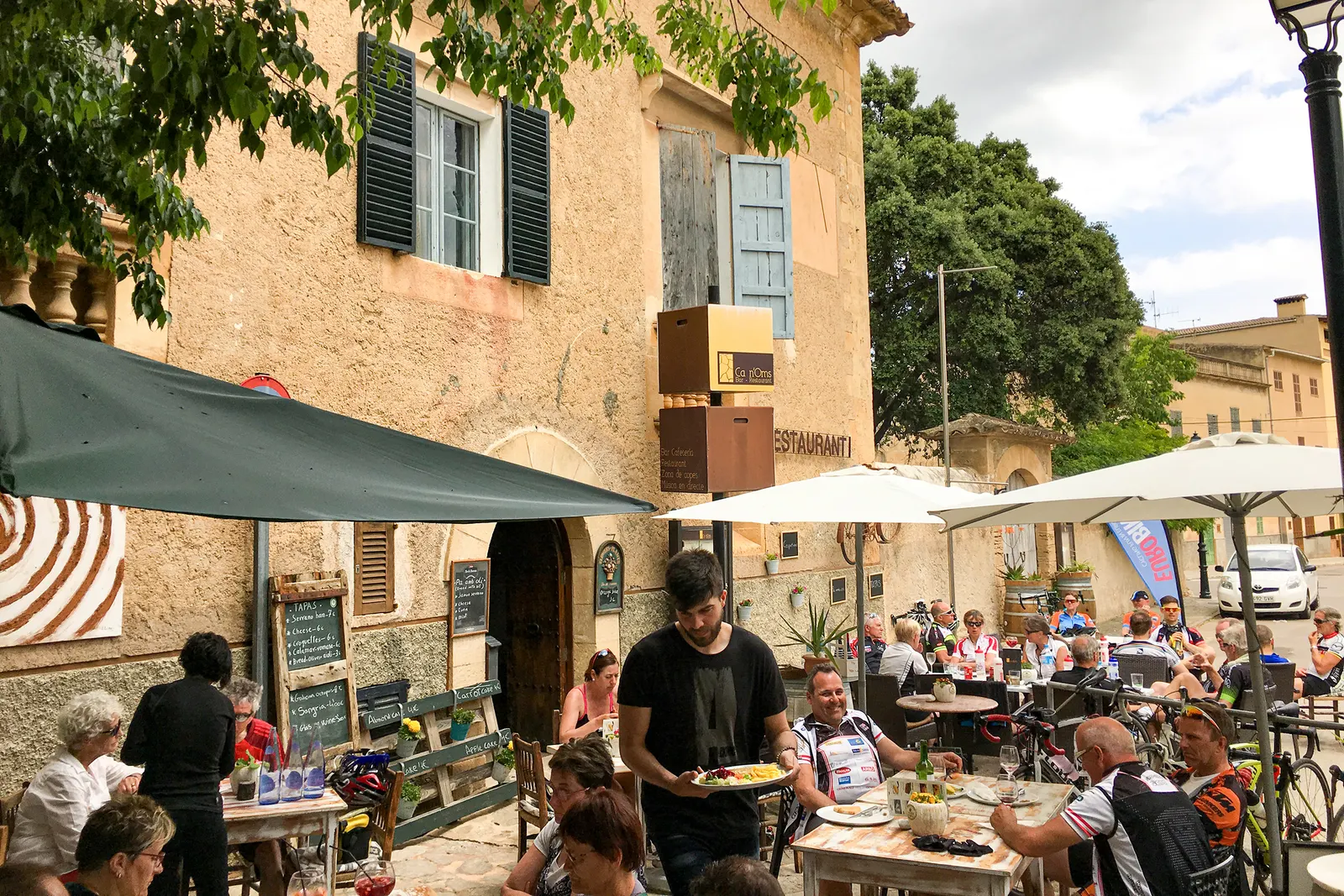
In March, April and May, Petra is a major meeting place for road cyclists in the Pla. Routes lead towards Sineu, Manacor and Ariany, or up to Bonany.
At lunchtime, central terraces are often full and bicycles line the walls. For a quieter meal, arrive before one or after three — or join the cyclists and pick up a few route tips.
When to go
March and October are good choices. Almonds blossom in February, while September brings the grape harvest.
The small Wednesday market serves local needs rather than attracting the visitor crowds of Sineu, which is part of its appeal.
In July and August, the streets are deserted between two and five in the afternoon.
Photographs
Petra in Mallorca
How much time do you have?
Things to do in Petra
Three hours
Walk through the lanes to Sant Bernardí friary, Serra's birthplace and the parish church, then find a parasol on the square for lunch.
Half a day
Add Ermita de Bonany, on a hill a few kilometres outside the village, with broad views over the Pla.
A full day
Combine Petra with Sineu, Sant Joan or Manacor, all roughly fifteen minutes away.
On a rainy day
Limited options. The church and museum are indoors, but much of a visit is outdoors.
Practical details
- Parking
- Straightforward and free on the village edge
- Public transport
- Limited services; station outside the centre
- Time to allow
- Two hours
- Good to know
- The weekly market is on Wednesday mornings. The birthplace and museum keep limited hours, so check before making a special journey.
- Bus
- Limited buses; a station on the Palma–Manacor railway outside the centre
- Shops and services
- Supermarkets: Small village shops · Pharmacy: In the village · Medical care: Local surgery; hospital in Manacor · Cash machines: On the main square · Fuel: On the Ma-3320
- Access
- Paved lanes, mostly level · Pushchairs: Straightforward · Wheelchairs: Village centre manageable; the birthplace has thresholds and small rooms · Dogs: Generally straightforward outdoors
- What you will not find
- A beach · Large hotels · A lively evening scene · A step-free birthplace
- Coordinates
- 39.6142,3.1118 Google Maps Apple Maps
Within reach
Places to visit
Nearby
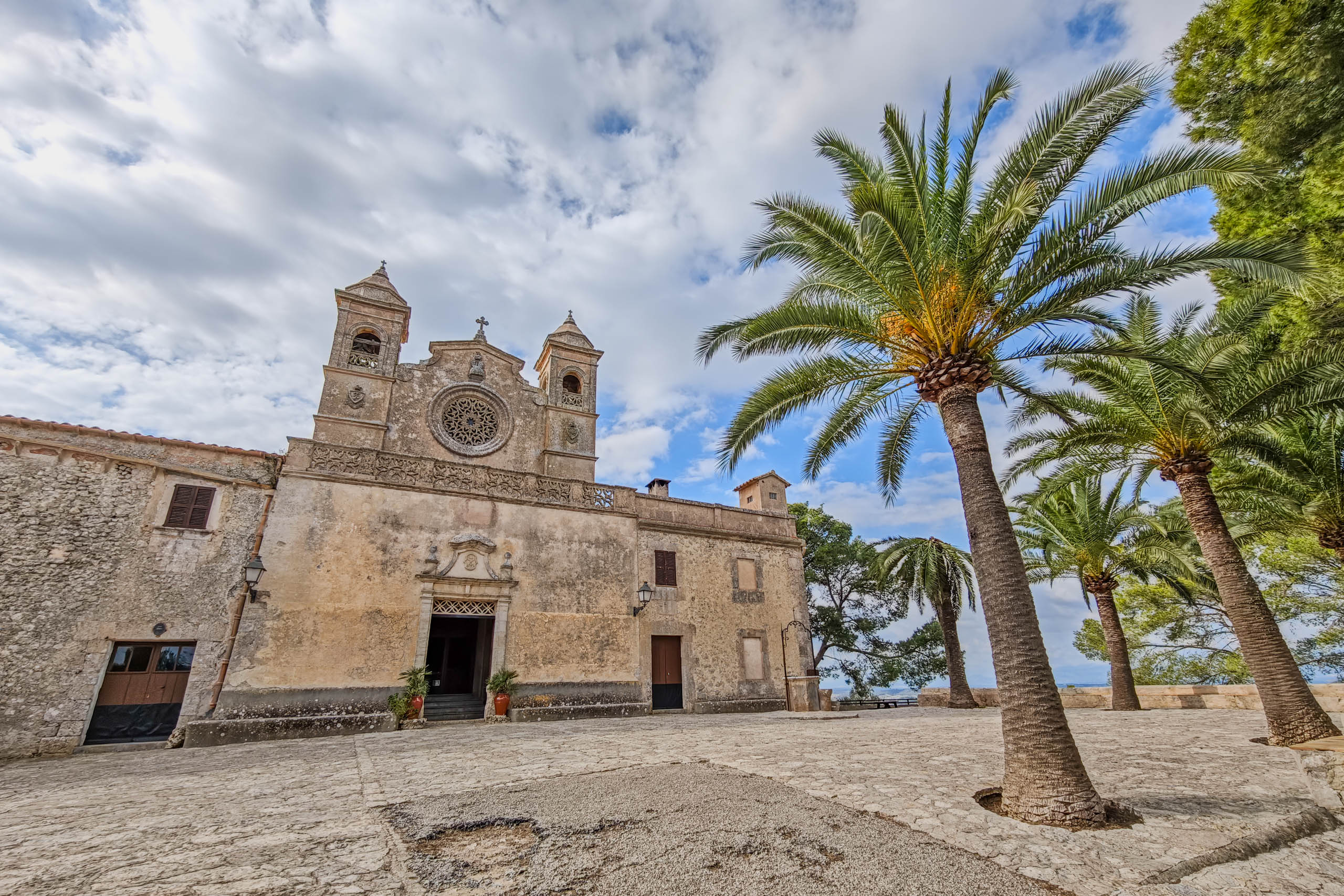
A pilgrimage sanctuary on the Puig de Bonany above Petra, 317 metres above sea level. Hermits lived here until …
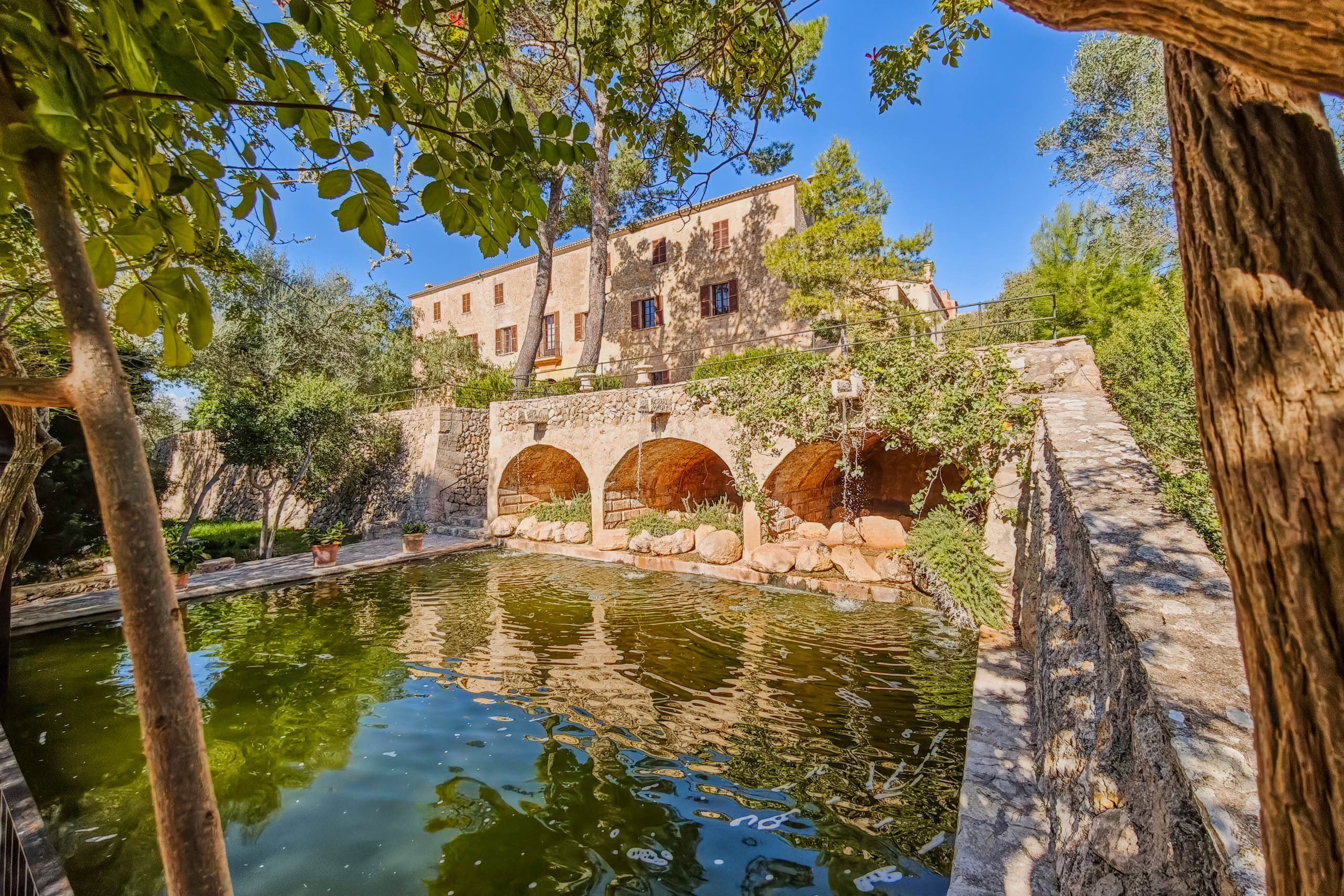
An old country estate near Sant Joan where it’s easy to stay longer than planned. Behind the substantial walls are …

A small pilgrimage church on a hill above Sant Joan, reached by a broad stone staircase. There is a well, shade …
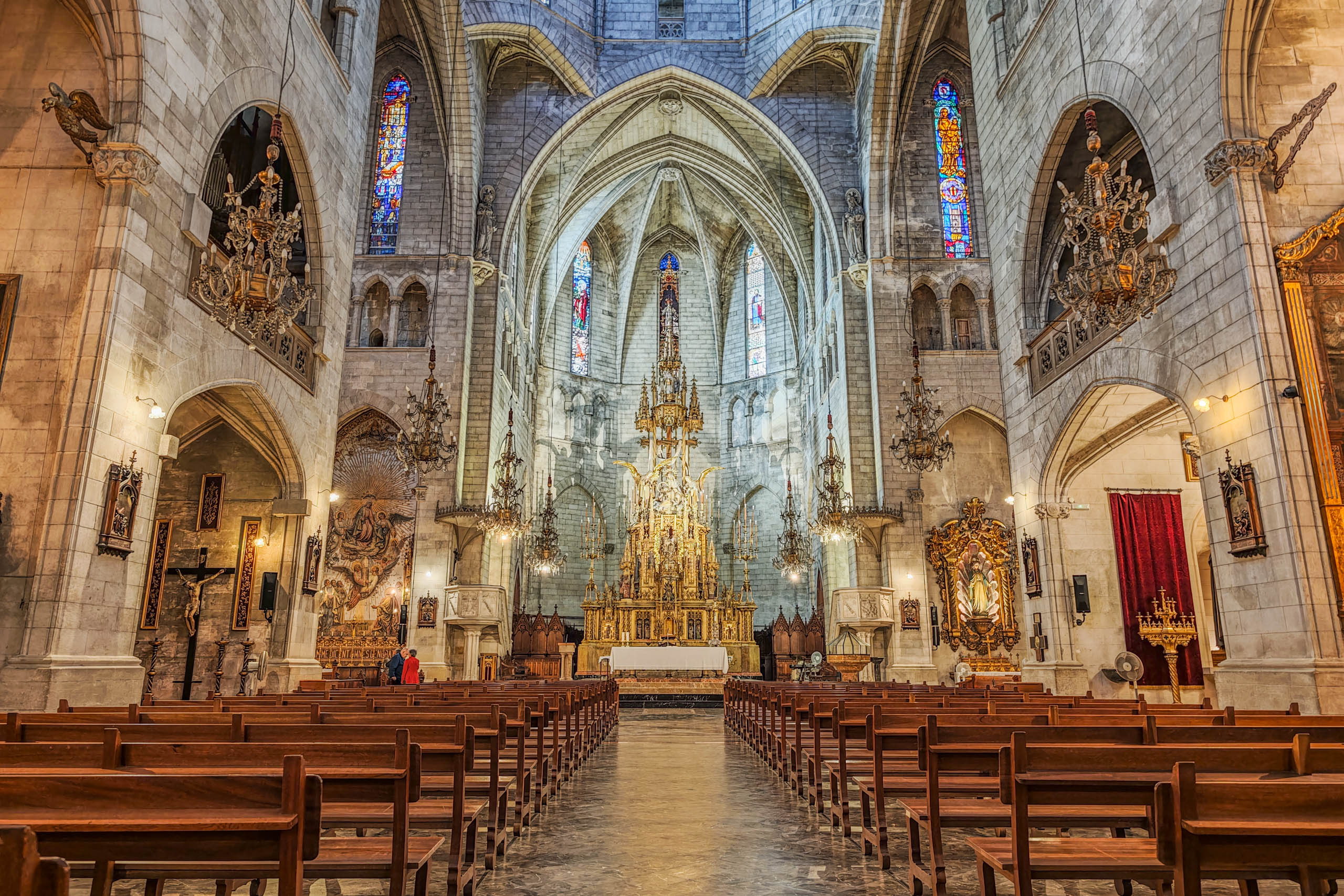
The tall bell tower of Nostra Senyora dels Dolors rises above Manacor’s rooftops. Inside are a lofty vaulted nave …
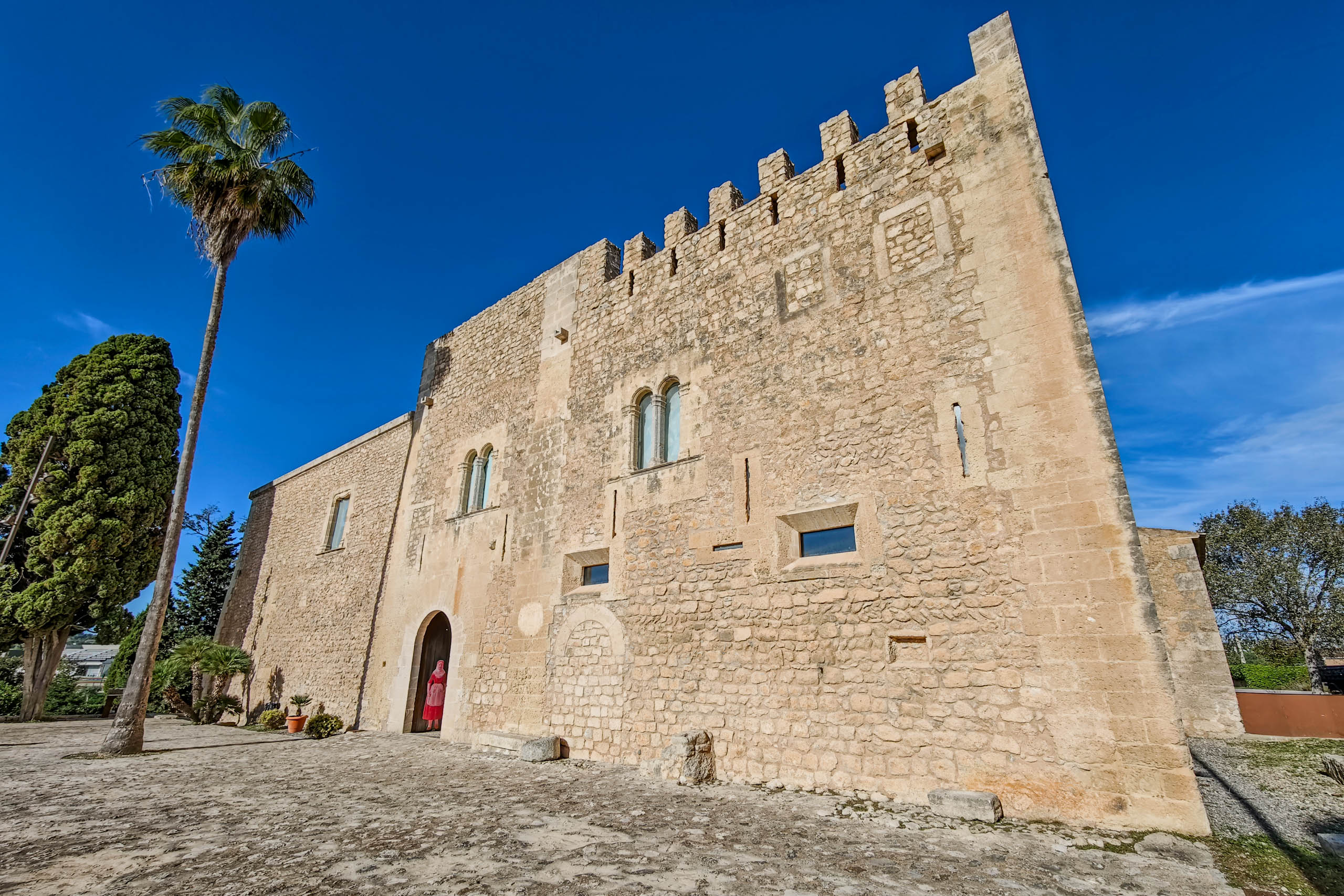
Behind the Rafa Nadal Sports Center is a museum worth taking time over. Inside Torre dels Enagistes, the galleries …
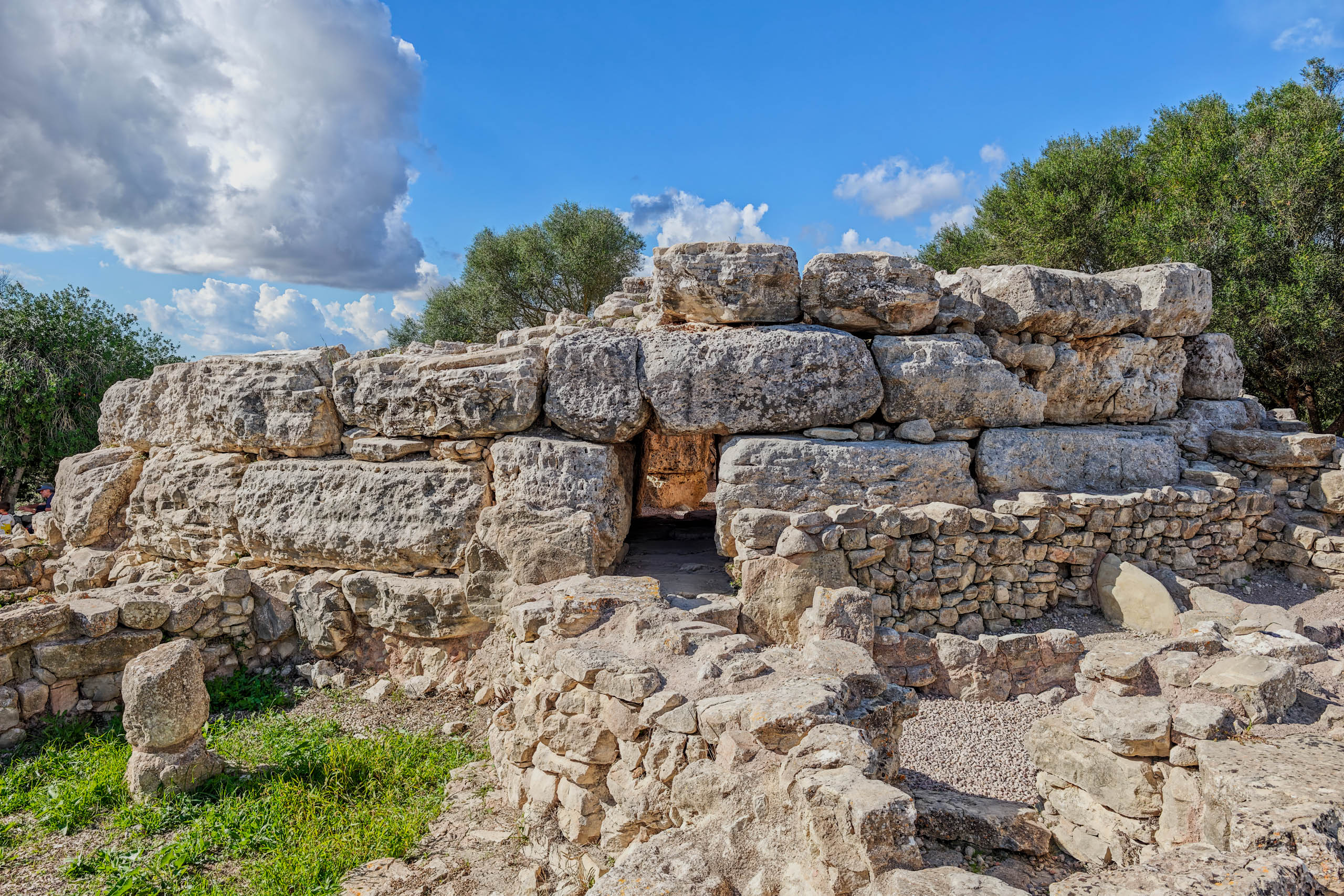
On a low hill near Montuïri are the remains of a settlement founded almost 3,000 years ago. Massive talayots, low …

A church among the pines, beside the old Son Serra estate with its towers and farm buildings. A glimpse of the …
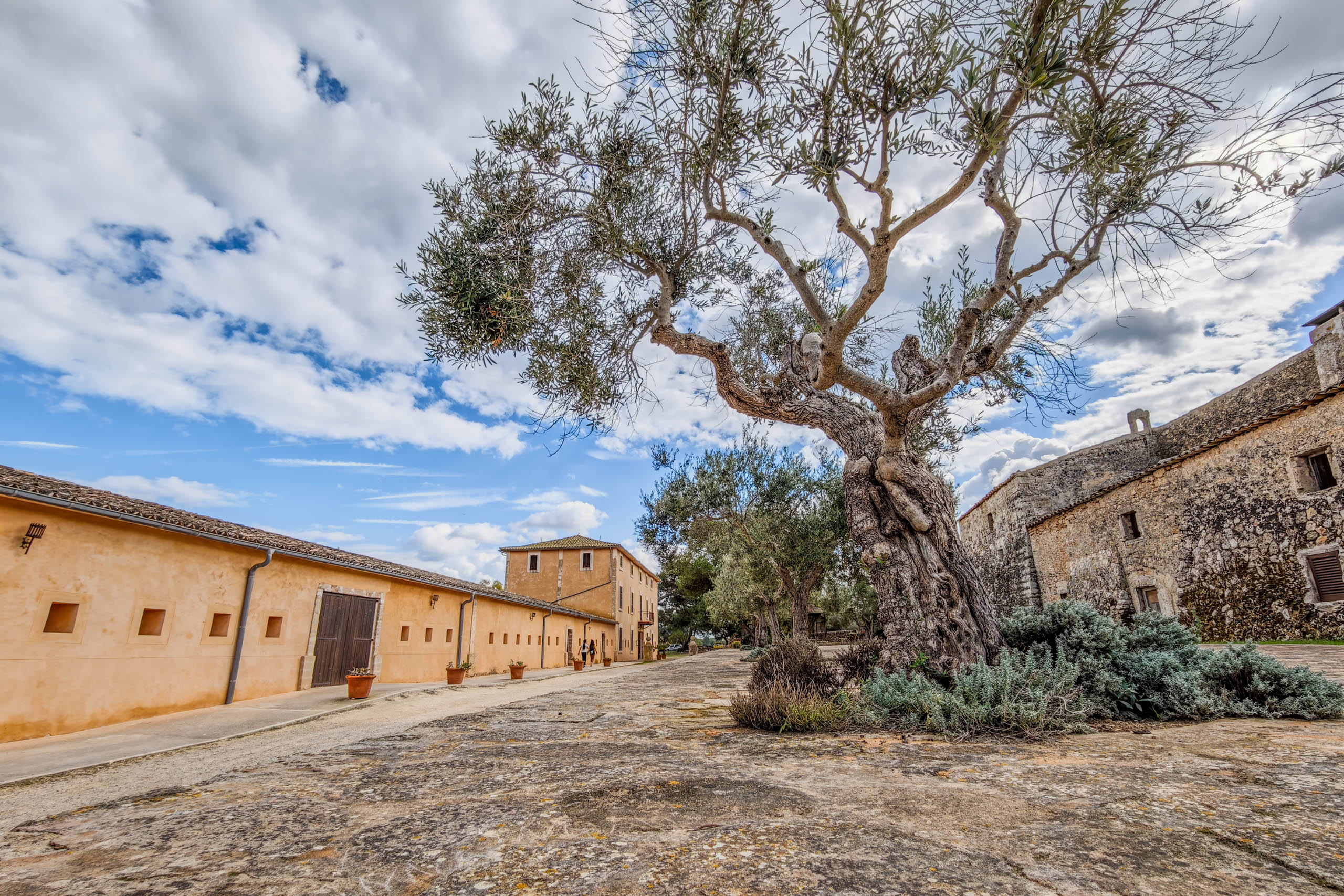
Old farm buildings, gnarled olive trees and a museum about earlier life on Mallorca. Son Real lies between Can …
Distances without a driving time are measured in a straight line. The road journey can be much longer; known driving times are shown alongside.
Explore from here
Your questions answered
Your questions about Petra
Who was Juníper Serra?
Born in Petra in 1713, he became a Franciscan and travelled to Mexico, then California. From 1769 he established a chain of Spanish missions, several associated with later cities including San Diego and San Francisco. He died in California in 1784. His treatment of Indigenous communities remains controversial.
Can I visit his birthplace?
Yes. It is a low farmhouse with a few rooms, a couple of lanes from the friary, with a small museum nearby. Opening hours are limited, so check before travelling especially for it.
What is Ermita de Bonany?
A hilltop pilgrimage church a few kilometres outside Petra, with wide views across the Pla. Serra gave his last Mallorcan sermon there before leaving for the Americas. The road up is narrow but driveable.
When is Petra's market?
Wednesday mornings. It is small and geared towards local shoppers, with less emphasis on visitors than markets such as Sineu or Inca.
Practical questions
When is the best time to visit Petra?
Recommended months: January, February, March, April, May, October, November, December.
Is Petra worth visiting in July and August?
July: another month may suit you better. Usually very quiet. Too hot; the streets are deserted between two and five. August: another month may suit you better. Usually very quiet.
How far is Petra from Palma airport?
About 45 km from Palma airport. Allow roughly 40 minutes by car. On the Ma-3320 between Sineu and Manacor. Parking on the edge is straightforward; central lanes are narrow and partly one-way.
Do I need a hire car for Petra?
A car is needed Limited buses; a station on the Palma–Manacor railway outside the centre
Where can I park in Petra?
Straightforward and free on the village edge
Can you swim at Petra?
There is no beach here. See the nearby swimming options on this page.
Can I visit Petra with a pushchair or wheelchair?
Paved lanes, mostly level Pushchairs: Straightforward Wheelchairs: Village centre manageable; the birthplace has thresholds and small rooms
Are dogs allowed at Petra?
Generally straightforward outdoors
Words and photographs: Friedhelm Fischer. Exploring Mallorca since 2013 — by bike, on foot and with a camera.