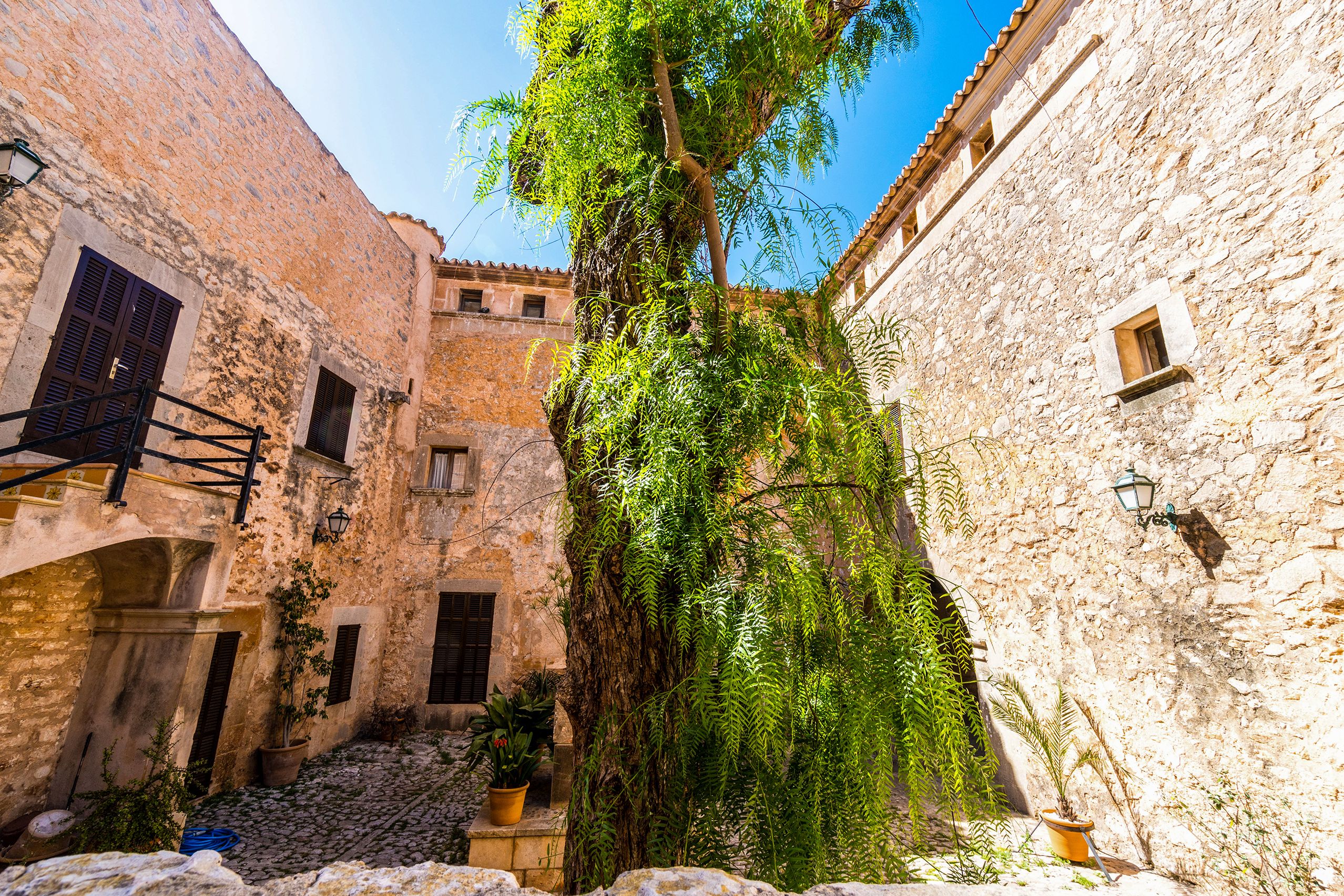
A town built from its own stone. Golden marès quarried locally has been used across Mallorca. There is a medieval town gate, a Baroque organ brought from Palma and, twice a week, a market that draws the whole area.
Santanyí
Santanyí in 30 seconds
The essentials at a glance
- Worth visiting for
- A day trip
- Best for
- Anyone combining the nearby coves with a town visit
- Best months
- January–June, September–December
- Time to allow
- Two to three hours, or half a day with the market
- Without a car
- Hire car recommended
- Parking
- Free spaces on the edge of town and along the approach roads. Very difficult once the morning market crowds arrive.
- Keep in mind
- Anyone wanting to swim in town — the coast is six to nine kilometres away
- Access
- Pushchairs: Largely manageable in the old town · Wheelchairs: Main routes are usable; side streets are more restricted
Get a feel for Mallorca. Find your kind of place.
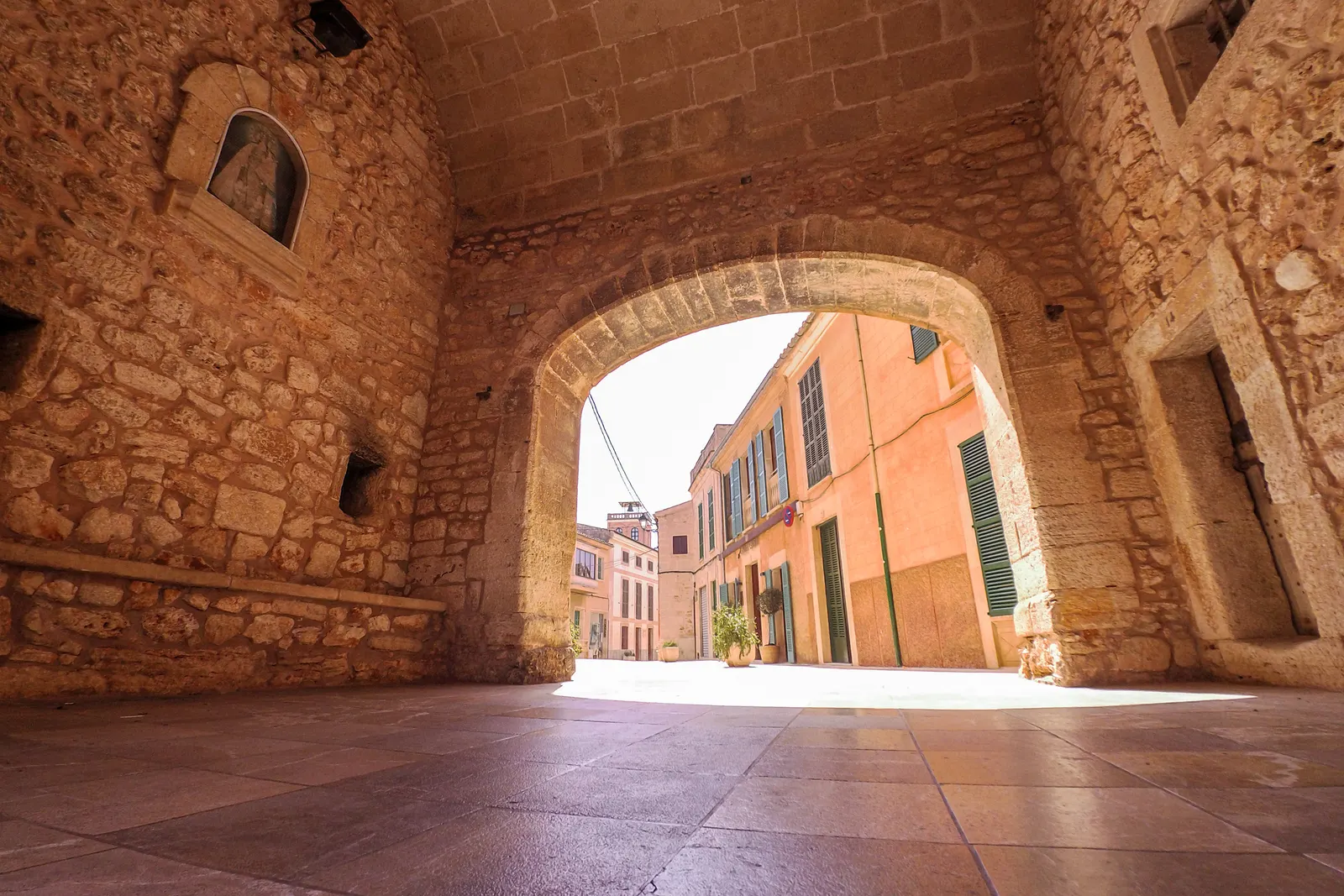
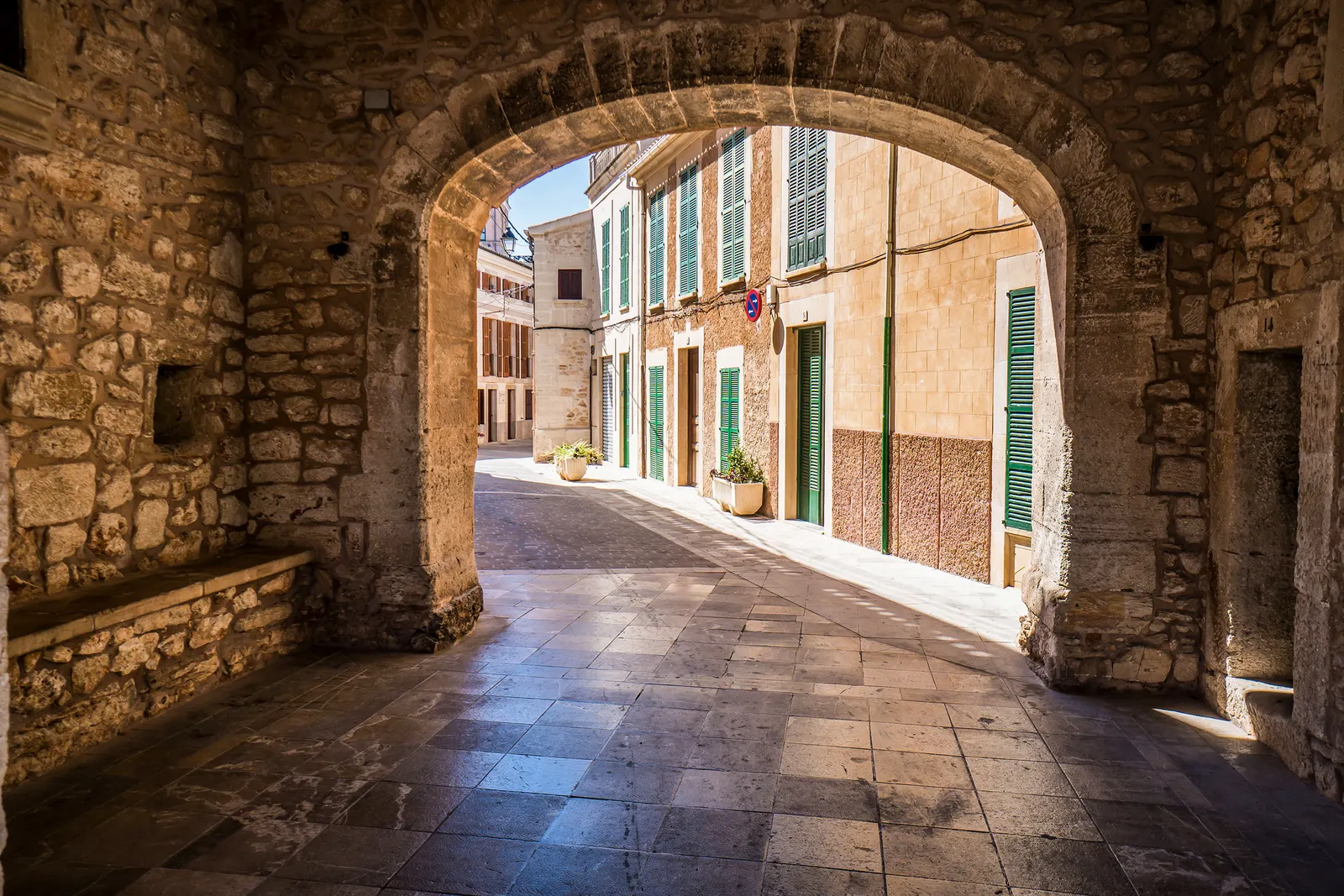
From inside the gate, you can see how thick the wall was. Much of the rest has disappeared.
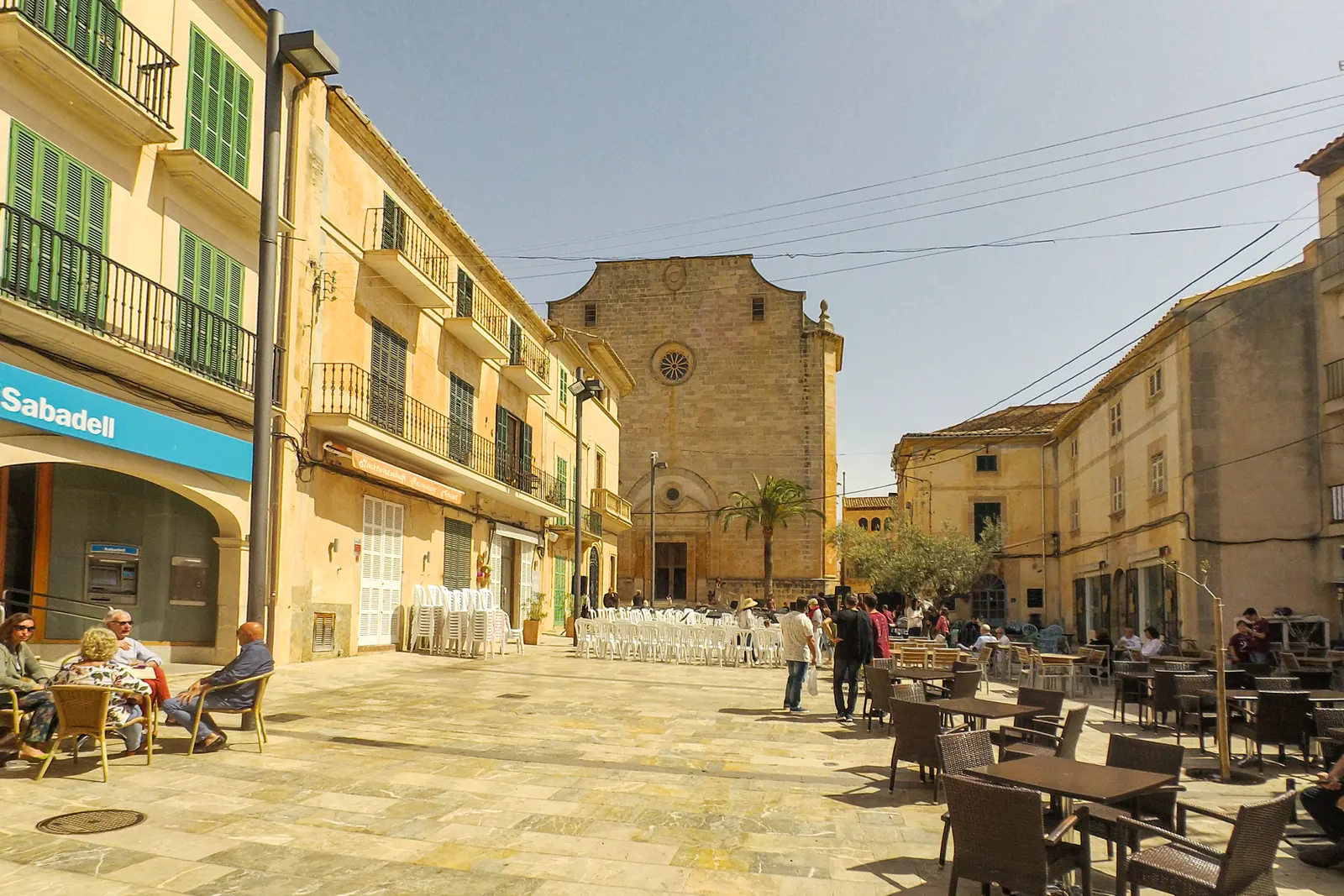
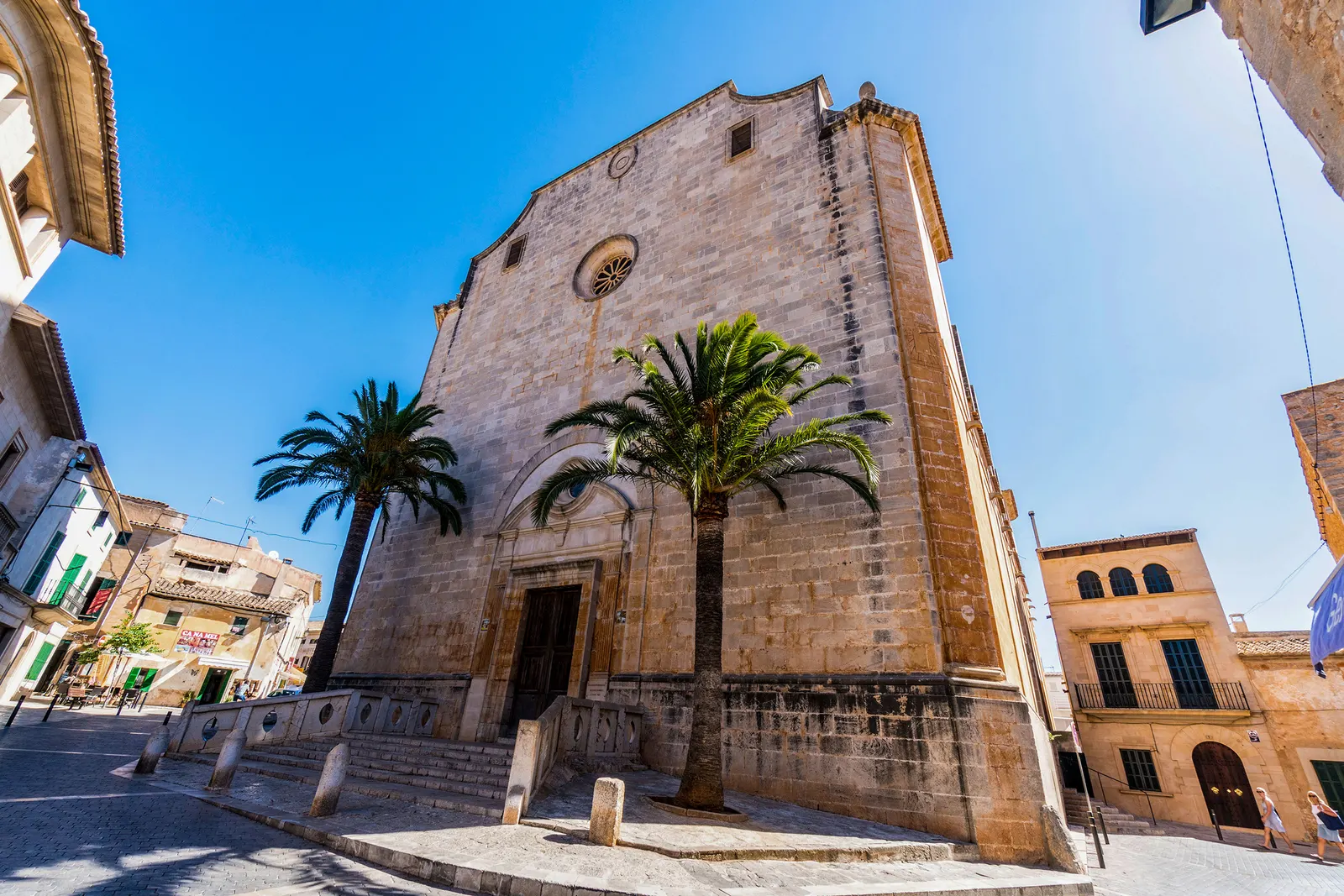
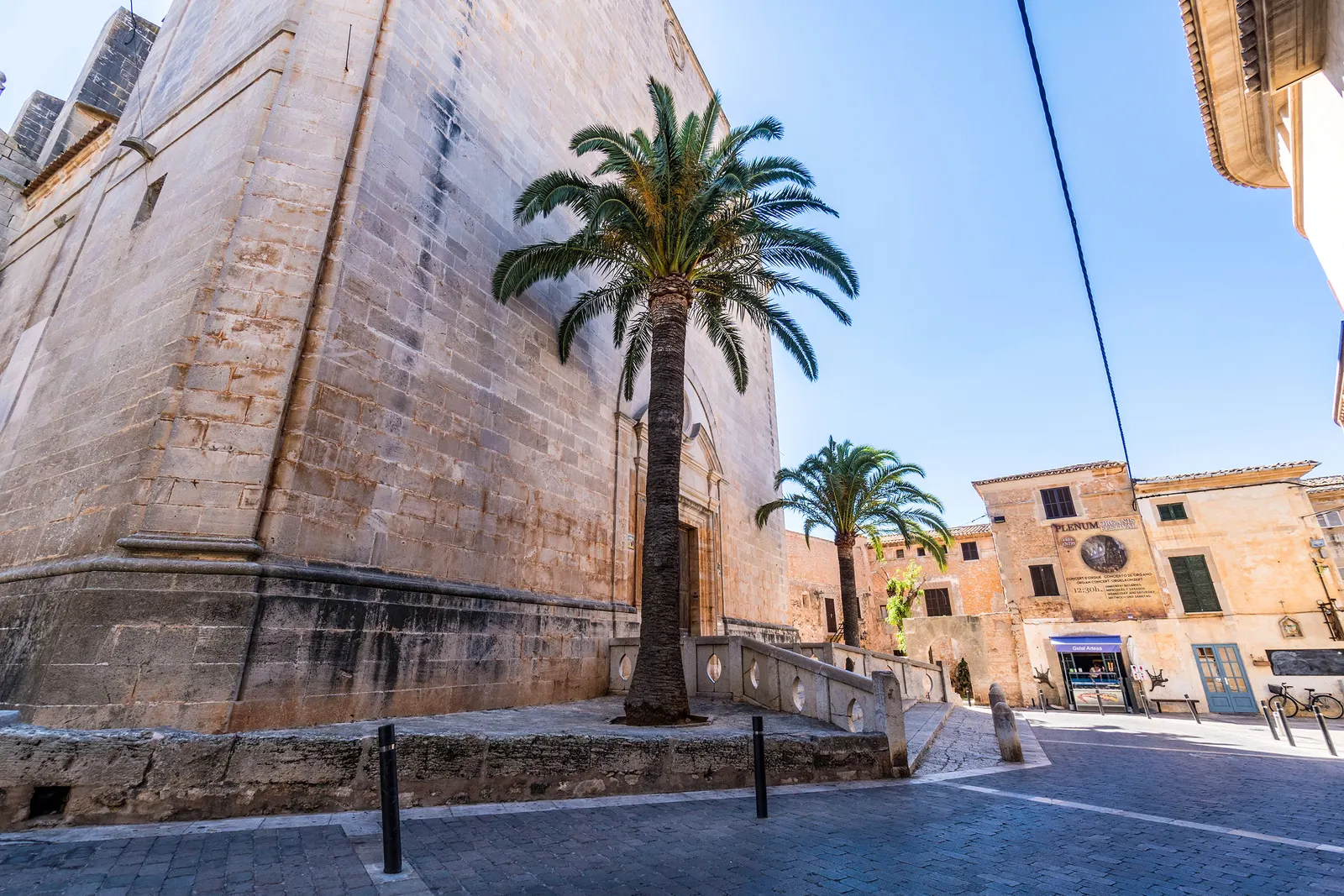
The square outside Sant Andreu. On non-market days, it is a peaceful place to sit.
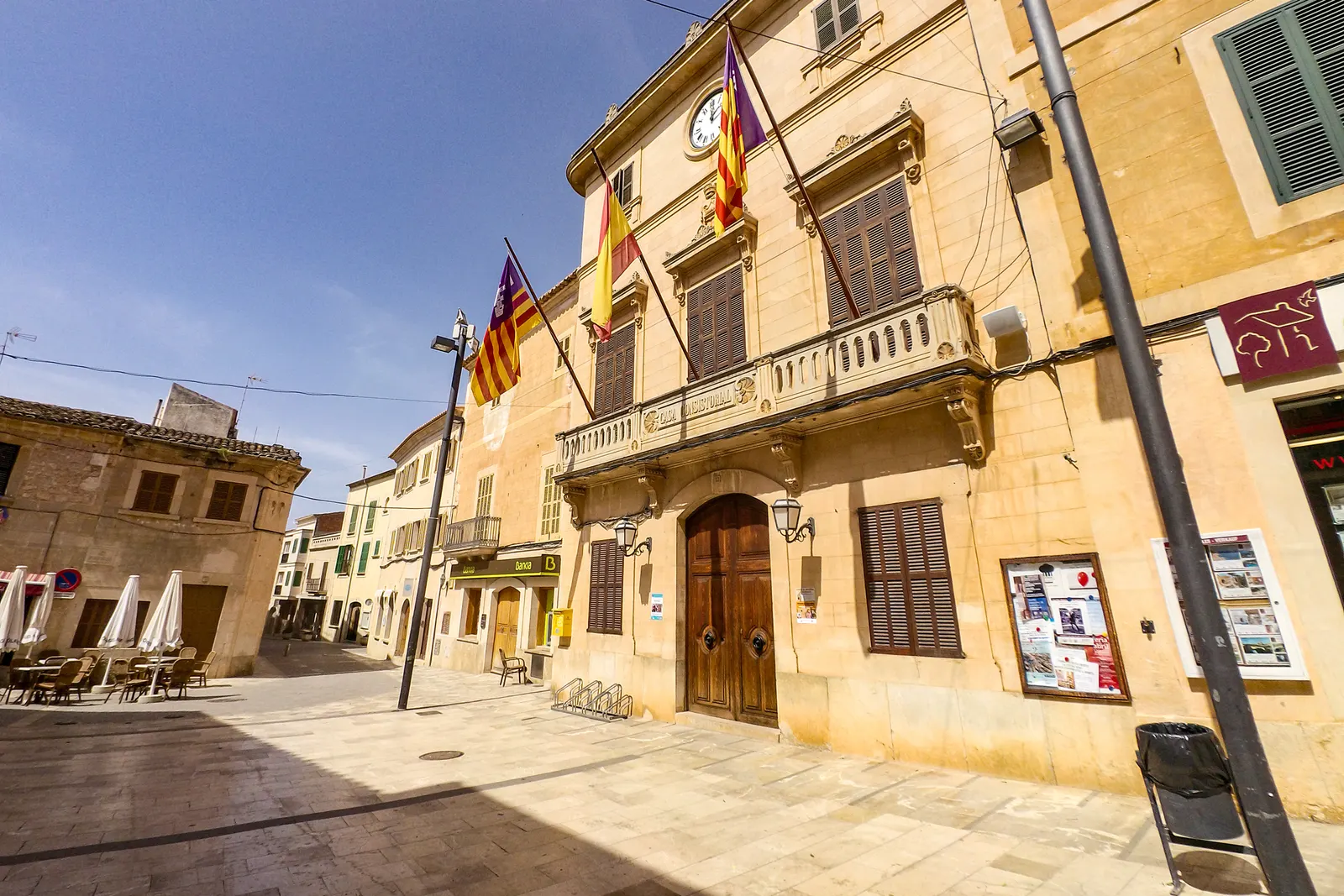
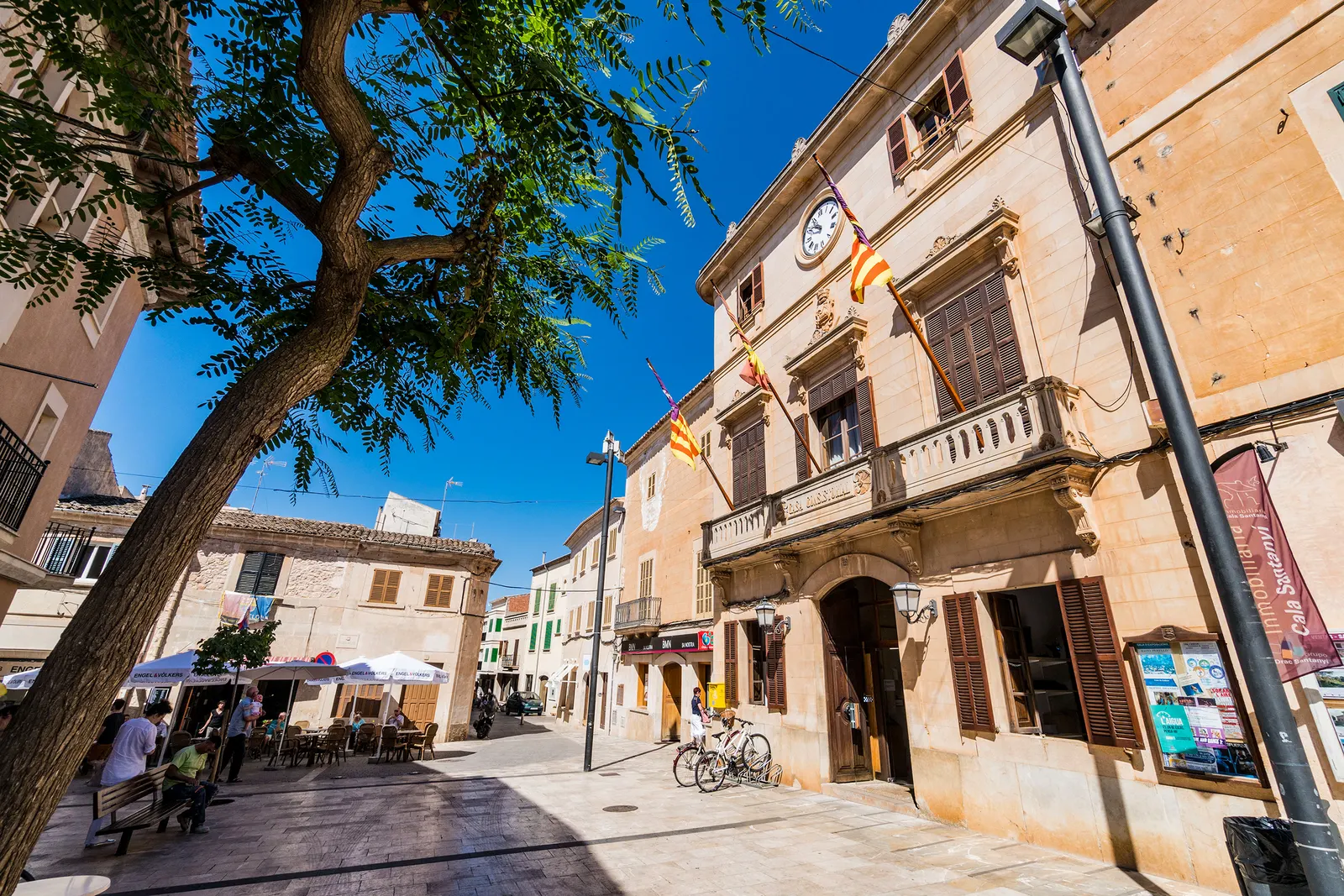
The town hall on the square, built from the same local stone.
Getting to know Santanyí
Does Santanyí suit your plans?
What to expect and what to know before you visit.
Who it suits
- Anyone combining the nearby coves with a town visit
- Wednesday or Saturday visitors — the market is one of Mallorca's largest
- Anyone who enjoys galleries and craft shops, unusually plentiful here
- Winter visitors wanting somewhere that does not depend on beach weather
Things to bear in mind
- Anyone wanting to swim in town — the coast is six to nine kilometres away
- Visitors expecting to park easily at midday on market day
- Anyone looking for nightlife
- Bargain hunters — Santanyí has become an expensive place to shop
Drive from the airport
45 minutes
50 km
Bus connections
Services from Palma
Region
Migjorn
Nearest beach
Cala Santanyí
3 km
Elevation
63 m
above sea level
Markets
Wednesday & Saturday
Season guide for Santanyí
November Worth a visit
Very quiet Open
Worth visiting in January, February, March, April, May, June, September, October, November and December.
Location
Location of Santanyí
- Region
- Migjorn
- Population
- 11,000
- Elevation
- 63 m above sea level
- Airport
- 50 km , around 45 minutes
- Hire car
- recommended
- Worth visiting for
- a day trip
- Coordinates
- 39.3550,3.1281
A town built from its own stone
Santanyí is built from marès, the golden sandstone extracted from quarries around town and also known as Santanyí stone. It has been used across Mallorca, including in Palma’s cathedral, the Palau de l’Almudaina, Castell de Bellver and the trading hall Sa Llotja.
How the stone is quarried
Marès is cut, rather than blasted or broken out in the usual way.
Fresh from the quarry, it is damp and soft enough to work with a handsaw. It hardens after exposure to the air. Quarry workers therefore cut a grid into the rock face and lift out individual blocks. The straight, terraced walls left behind make old marès quarries easy to recognise.
The traditional craft has its own name: trencador de marès. For centuries the work was done by hand, sometimes underground; today it is done by machine. Around sixteen quarries remain active on Mallorca, including those at Santanyí. Some of the oldest and most productive lie in Es Deume, outside town.
Builders chose this stone for practical reasons. Santanyí marès absorbs little water and withstands high pressure, making it useful for façades, vaults, columns and carving.
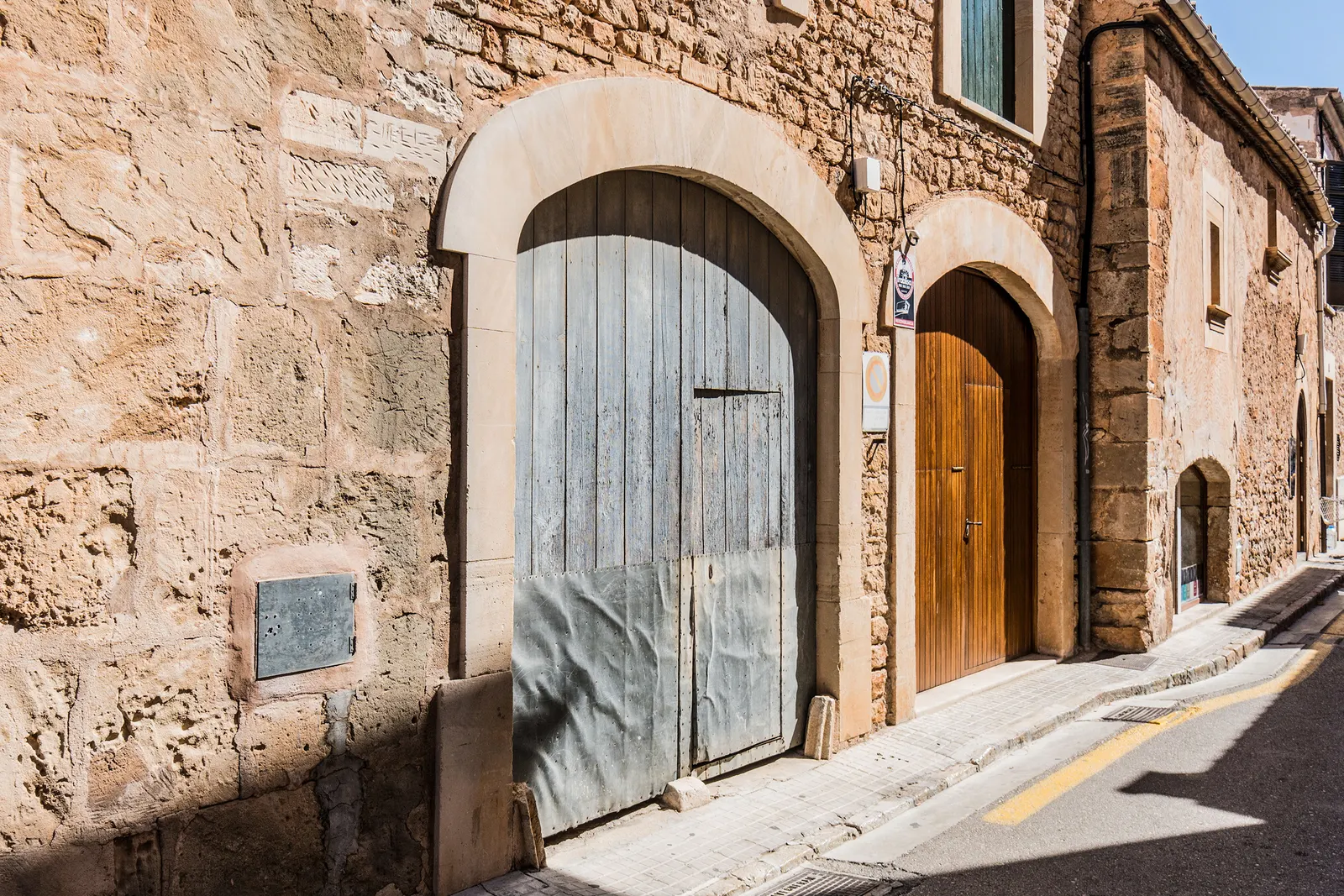
It also gives the town its consistent appearance. There is little render, and most colour comes from doors and shutters. In the late afternoon, the warm stone catches the sun. That is my favourite time to visit.
Quarrying remains part of the local economy.
What to see
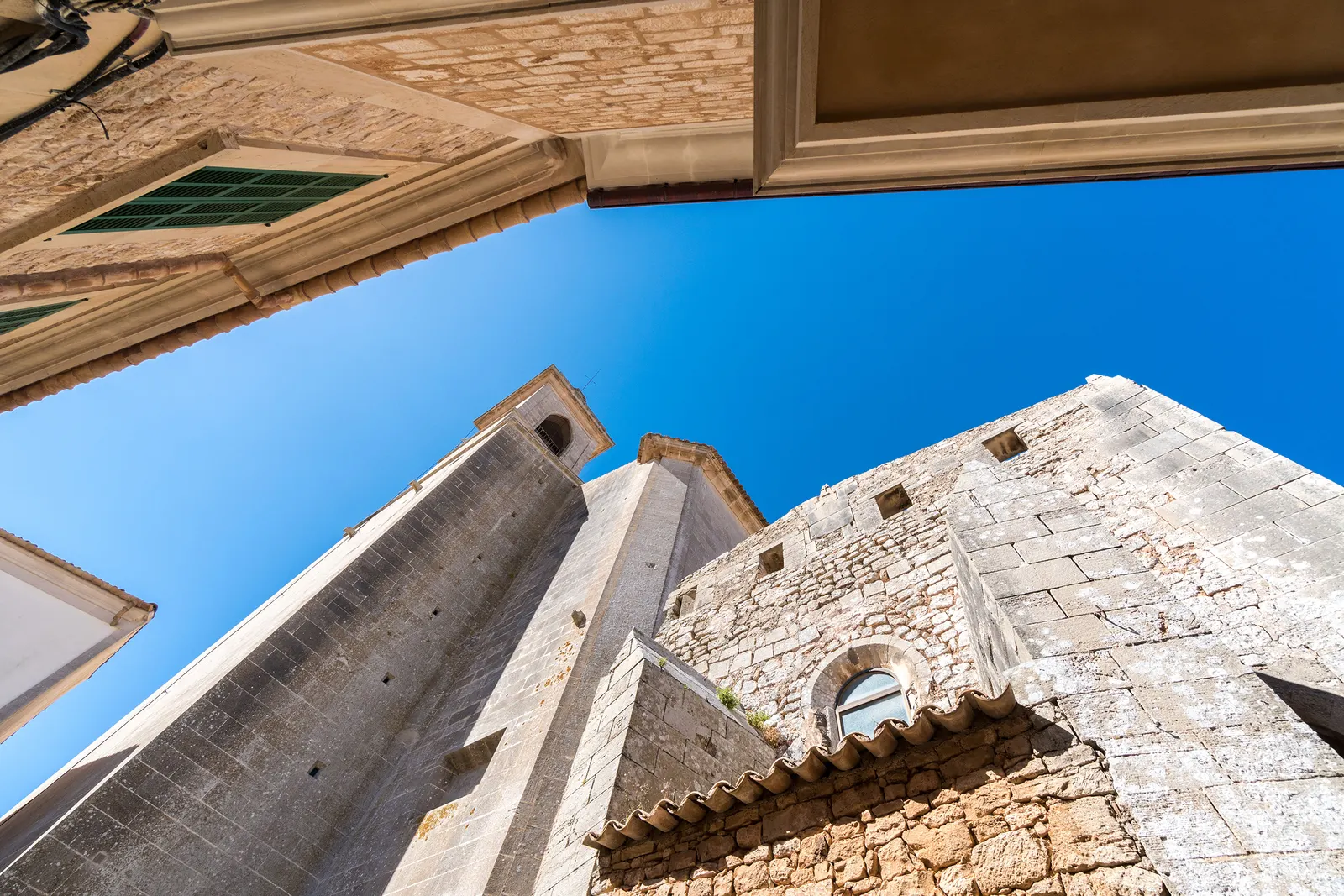
Porta Murada is the surviving town gate, with origins in the 14th century and rebuilding in the 16th. Parts of the medieval wall remain in a few places.
The 18th-century parish church of Sant Andreu overlooks the square. Inside is a Baroque organ brought from a Dominican monastery in Palma and attributed to Jordi Bosch, one of Spain’s best-known organ builders.
Explore the lanes and their softly coloured shutters, then browse the unusually numerous galleries and craft shops. Santanyí has built a reputation for these in recent decades, with prices to match.
The market
Wednesdays and Saturdays, roughly 8am to 1pm, around Plaça Major. It is one of Mallorca’s largest markets and draws visitors from across the south-east coast.
The downside is slow traffic, difficult parking and crowded lanes. Arrive before nine, or choose one of the other five days for a quieter visit.
A town that stays open in winter
This is one of Santanyí’s real strengths. While many businesses around Cala Santanyí, Cala Llombards and the smaller coves close between November and March, the shops, restaurants and market here carry on. If you are in the south-east in winter, this is a useful town to have nearby.
Nearby
The area’s coves are ten to fifteen minutes away: Cala Santanyí, Cala Llombards, Cala Figuera, Cala s’Almunia and Caló des Moro. Inland, a road climbs to Santuari de la Consolació, the destination of the local pilgrimage after Easter.
Photographs
Santanyí in Mallorca
How much time do you have?
Things to do in Santanyí
Three hours
Park on the edge of town, enter through Porta Murada and head for the square outside Sant Andreu. Wander through the lanes and stop for coffee.
Half a day
Add a visit inside the church to see the Baroque organ, then explore the galleries along the main streets.
A full day
Spend the morning in town, head up to Santuari de la Consolació around midday, then visit Cala Santanyí, Cala Llombards or Cala Figuera in the afternoon.
On a rainy day
One of the area's better rainy-day options, with a church, galleries and indoor places to eat around the square.
Local celebrations
- Wednesday and Saturday — Weekly market Around Plaça Major, roughly 8am to 1pm — one of Mallorca's largest markets.
- After Easter — Pilgrimage to Consolació Local residents make their pilgrimage up to Santuari de la Consolació.
- 30 November — Sant Andreu The town's patron saint celebrations.
Practical details
- Parking
- Free spaces on the edge of town and along the approach roads. Very difficult once the morning market crowds arrive.
- Public transport
- Services from Palma, Felanitx and the coastal resorts
- Time to allow
- Two to three hours, or half a day with the market
- Good to know
- Locally quarried marès was used across Mallorca, including Palma's cathedral. It glows in the late-afternoon light.
- Bus
- Services from Palma, Felanitx and nearby coastal resorts, with additional journeys to the coves in season.
- Shops and services
- Supermarkets: Several in town, open year-round · Pharmacy: Several · Medical care: Health centre in town; hospital in Manacor · Cash machines: Plenty around the square and main street · Fuel: On the roads out of town
- Access
- Paved lanes, with some gentle slopes · Pushchairs: Largely manageable in the old town · Wheelchairs: Main routes are usable; side streets are more restricted · Dogs: Straightforward
- What you will not find
- A beach · Nightlife · Low prices · Easy parking on market days
- Coordinates
- 39.3550,3.1281 Google Maps Apple Maps
Within reach
Places to visit
Nearby

A freestanding rock arch in the sea, one of the south-east coast’s best-known views. The viewpoint lies between …

A small 15th-century sanctuary on a 205-metre hill near S'Alqueria Blanca, rarely busy and with views over the …
final section on gravel, or more than 300 steps on foot
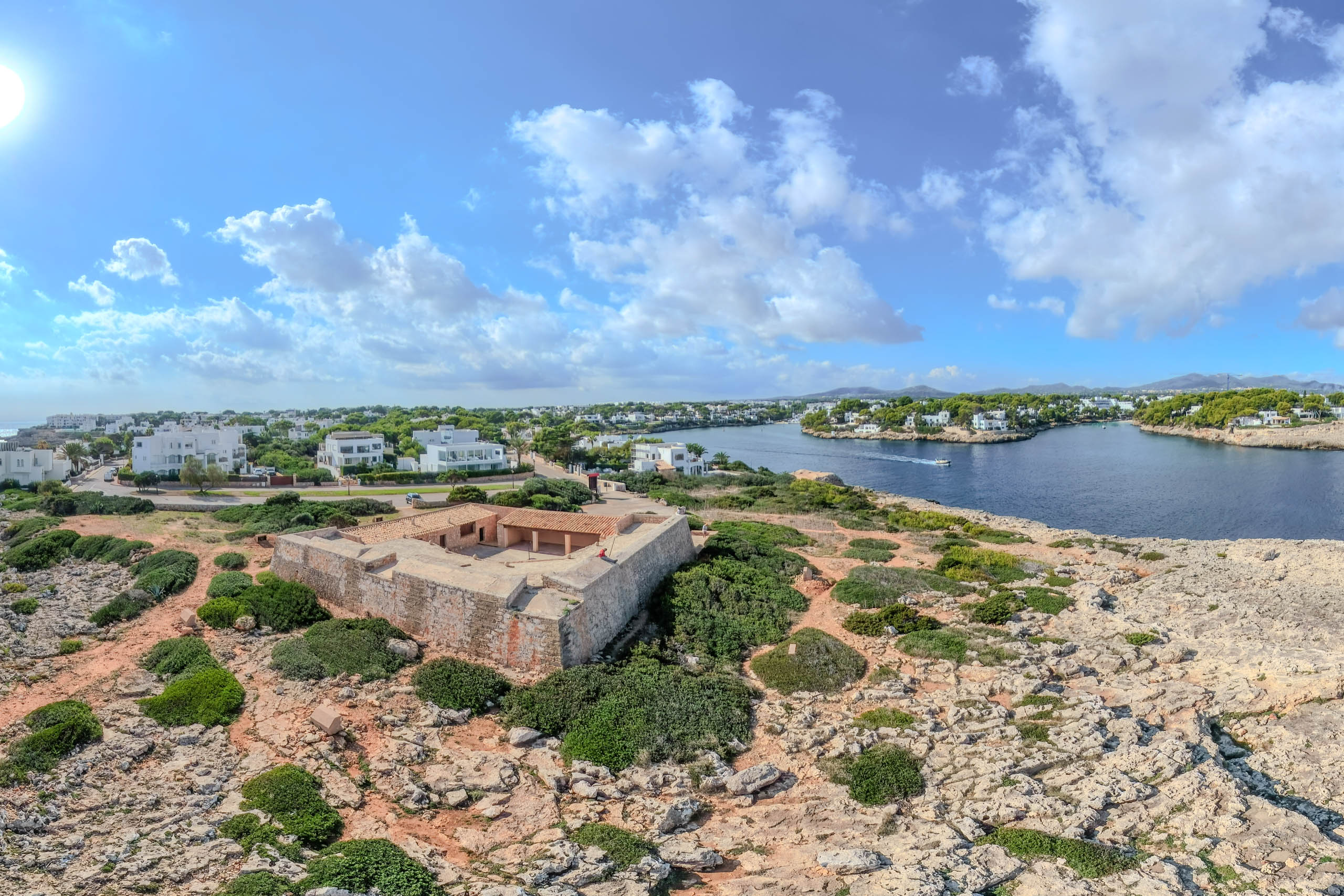
Es Fortí stands on the rocky headland at the entrance to Cala Llonga in Cala d’Or. Behind its thick walls is a …

A rocky hilltop fortress 408 metres above sea level near Felanitx, its walls rising directly from the cliff edge …

Mallorca’s southernmost point has a lighthouse built in 1863, flat coastal rocks and open sea, with the …

Around 170 hectares of salt pans between Campos and the coast produce roughly ten thousand tonnes of sea salt each …

A pilgrimage church has stood here since 1348, 509 metres above Felanitx at the southern end of the Serra de …
Distances without a driving time are measured in a straight line. The road journey can be much longer; known driving times are shown alongside.
Where to swim nearby
Beaches and swimming nearby

Pale sand and gently shelving water in a rocky-sided bay, with hotels close behind. Cala Santanyí is a practical …

Pale sand between high rocky sides, clear water and boathouses built into the shore. Cala Llombards is no secret …

Three beaches within a natural park — S'Amarador, Ses Fonts de n'Alís and small Caló des Borgit. Pale sand lies …

A fishing village around a narrow, forked inlet, with boathouses and slipways tucked against its rocky sides. Come …
Explore from here
Your questions answered
Your questions about Santanyí
When is Santanyí market?
Wednesdays and Saturdays, roughly 8am to 1pm, around Plaça Major. It is one of Mallorca's largest and liveliest markets, drawing visitors from across the south-east coast. Arrive before nine for a better chance of parking and space to browse.
What is marès stone?
A golden sandstone quarried around Santanyí, also known as Santanyí stone. It gives the town its colour and was used in buildings such as Palma's cathedral. In the late afternoon, the warm light makes it glow.
What is Porta Murada?
Santanyí's surviving town gate. Its origins date to the 14th century, with rebuilding in the 16th. Remnants of the medieval town walls can still be seen in the old town.
What is special about Sant Andreu church?
Its Baroque organ, originally from a Dominican monastery in Palma and attributed to Jordi Bosch, one of Spain's best-known organ builders. The church itself dates from the 18th century, with a sandstone façade overlooking the square.
Can you swim near Santanyí?
Not in town — the coast is six to nine kilometres away. Several beautiful coves are within a short drive, including Cala Santanyí, Cala Llombards, Cala Figuera, Cala s'Almunia and Caló des Moro.
Is Santanyí worth visiting in winter?
Yes. While many businesses in the coastal resorts close between November and March, Santanyí's shops, restaurants and market continue throughout the year.
Practical questions
When is the best time to visit Santanyí?
Recommended months: January, February, March, April, May, June, September, October, November, December. The town stays open all year, unlike many of the nearby coastal resorts.
Is Santanyí worth visiting in July and August?
July: worth considering with some reservations. Usually busy. Market days are crowded, and heat builds up between the stone walls. August: worth considering with some reservations. Usually busy. Some shops close for their annual holiday.
How far is Santanyí from Palma airport?
About 50 km from Palma airport. Allow roughly 45 minutes by car. Traffic is slow on market days and parking is the main difficulty. Arrive before nine if you want to browse the market.
Do I need a hire car for Santanyí?
A car is useful Services from Palma, Felanitx and nearby coastal resorts, with additional journeys to the coves in season.
Where can I park in Santanyí?
Free spaces on the edge of town and along the approach roads. Very difficult once the morning market crowds arrive.
Can you swim at Santanyí?
There is no beach here. See the nearby swimming options on this page.
Can I visit Santanyí with a pushchair or wheelchair?
Paved lanes, with some gentle slopes Pushchairs: Largely manageable in the old town Wheelchairs: Main routes are usable; side streets are more restricted
Are dogs allowed at Santanyí?
Straightforward
Words and photographs: Friedhelm Fischer. Exploring Mallorca since 2013 — by bike, on foot and with a camera.