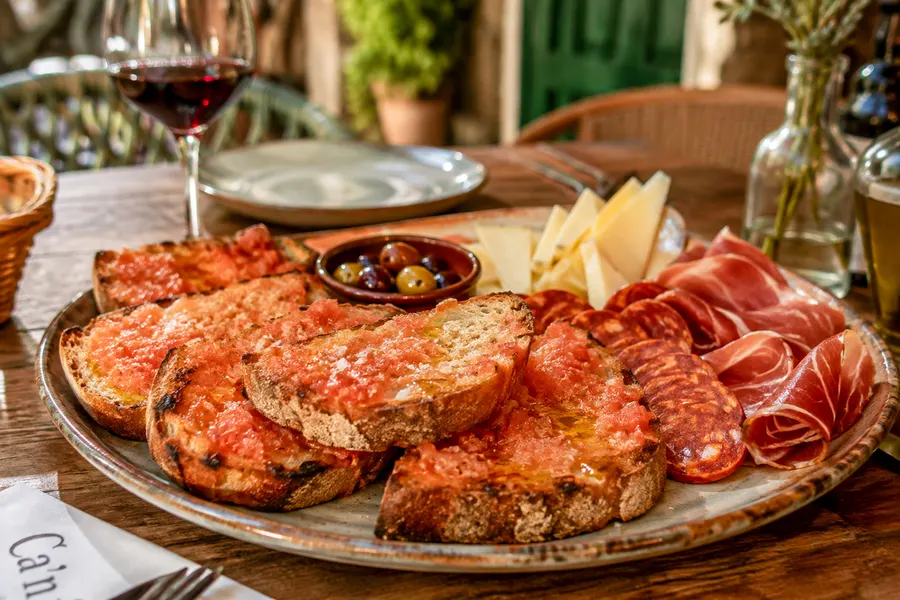
Pa amb oli
Bread, olive oil, tomato and salt, with cheese, sobrassada or cured ham.
Everyday island food, rather than just a starter. The bread, oil and type of tomato make the difference.
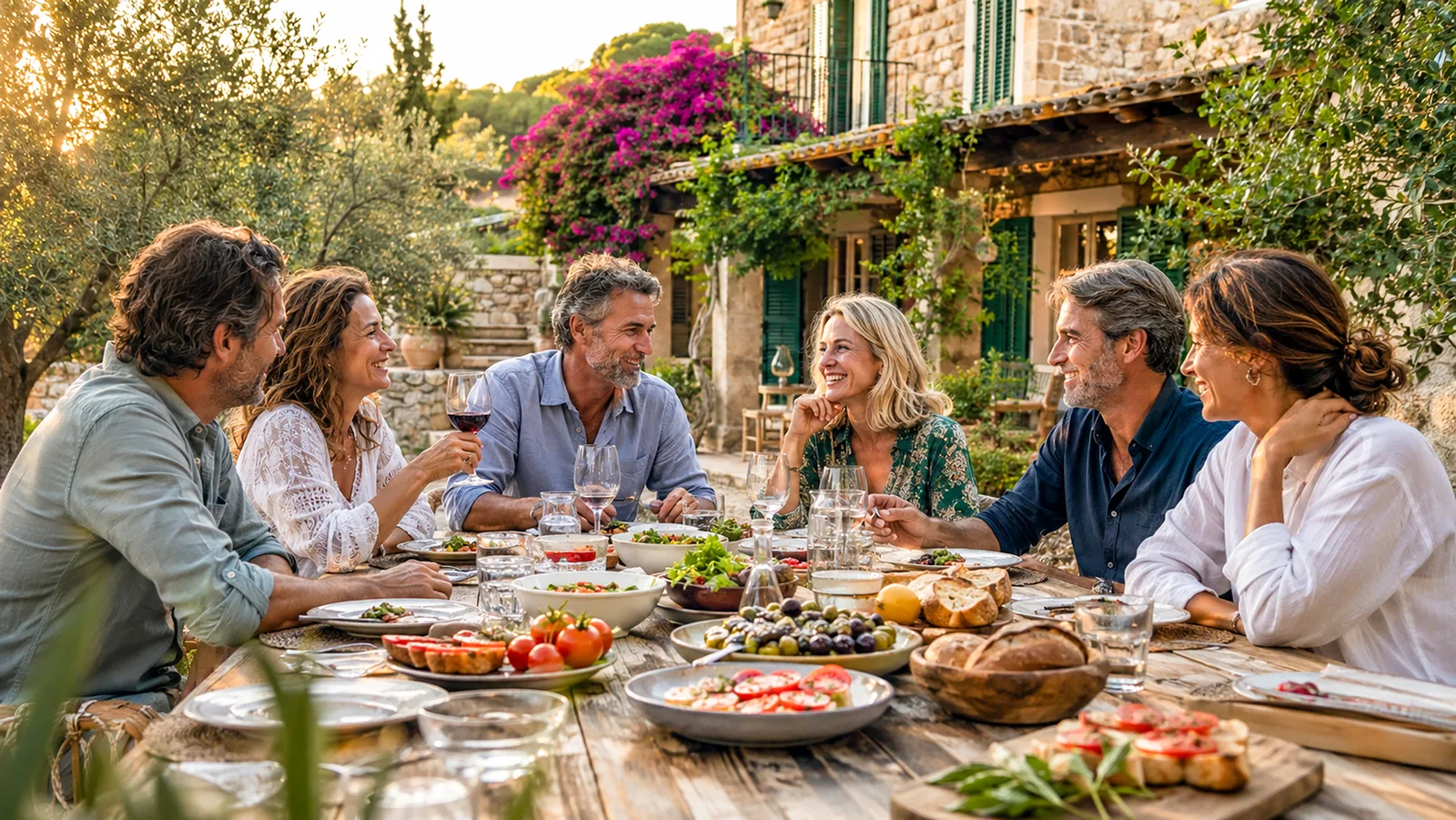
A long, leisurely meal together in a finca courtyard.
From pa amb oli to tumbet, get to know the island’s dishes and local produce, with a few practical tips for eating out.
Pa amb oli after a day out, tumbet for lunch or an ensaïmada with coffee: discovering Mallorcan food does not need a complicated restaurant itinerary.
The dishes below will help you find your way around a menu. Recipes and ingredients vary from kitchen to kitchen.
Mallorcan food has its roots in country cooking, making the most of bread, olive oil, vegetables from the central plain, pork and fish from nearby waters. Most traditional dishes use one or more of these, and several put leftovers to good use. Despite the name, sopes mallorquines is not a bowl of soup: it is vegetables with thin slices of bread that absorb the stock.
Paella originated in Valencia but is widely served in Mallorca. Tapas and sangria are also part of the offering at many restaurants today. To try local dishes, look for the Mallorcan names on the menu.
Nine dishes to recognise
Bread, olive oil, tomato and salt, with cheese, sobrassada or cured ham.
Everyday island food, rather than just a starter. The bread, oil and type of tomato make the difference.
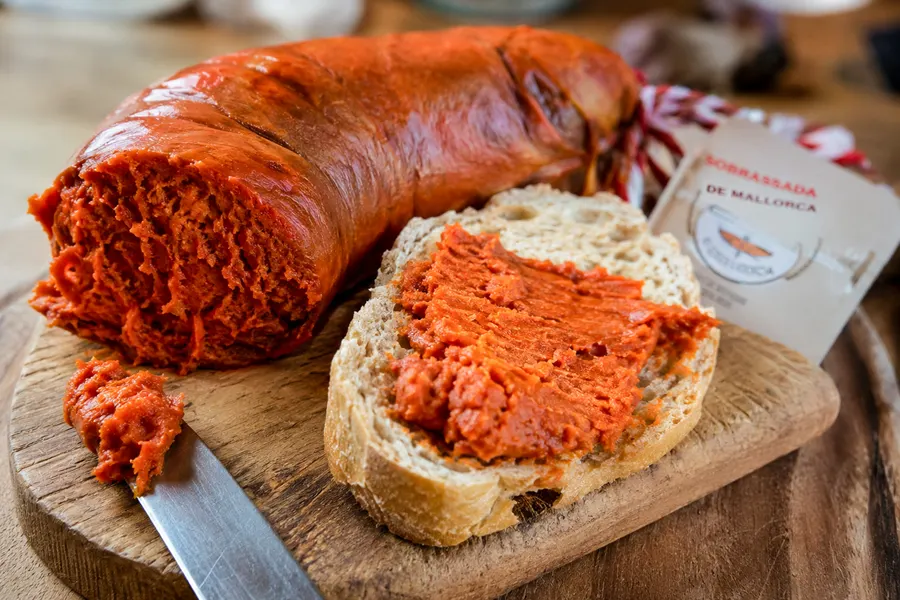
A spreadable cured pork sausage seasoned with paprika.
Sobrassada de Mallorca and Sobrassada de Mallorca de Porc Negre use different breeds of pig. Look for the origin label.
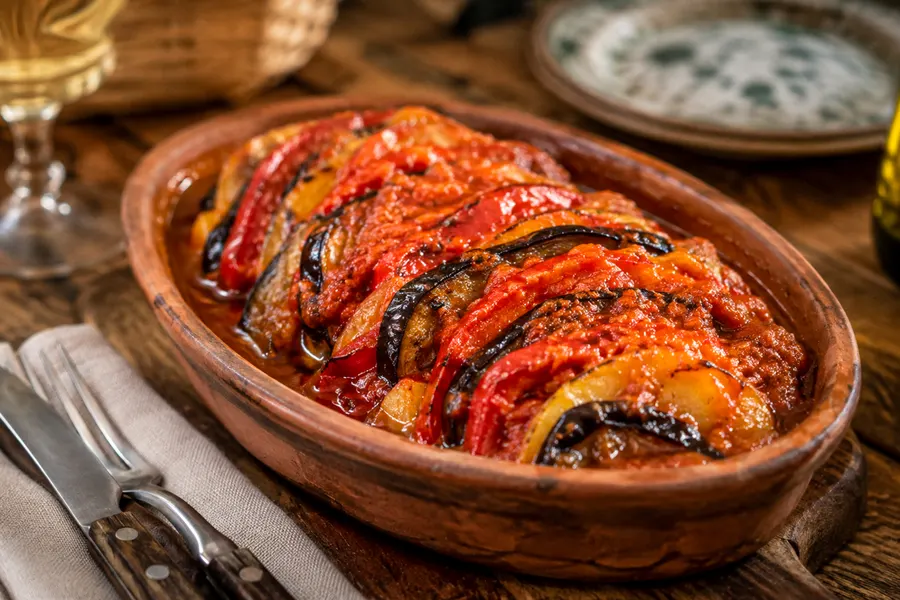
Layers of potato, aubergine and pepper with tomato sauce.
A traditional vegetable dish. If you are vegetarian, ask about how it is prepared and what comes with it.
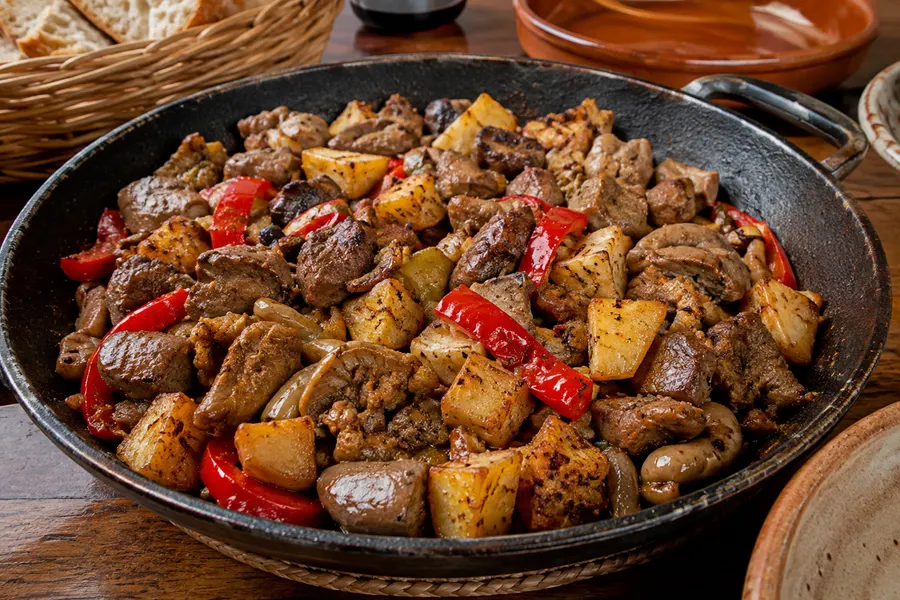
Offal, potatoes, peppers and fennel, fried together in a pan.
Hearty country cooking, though not for everyone. There is also a fish version, frit de peix.
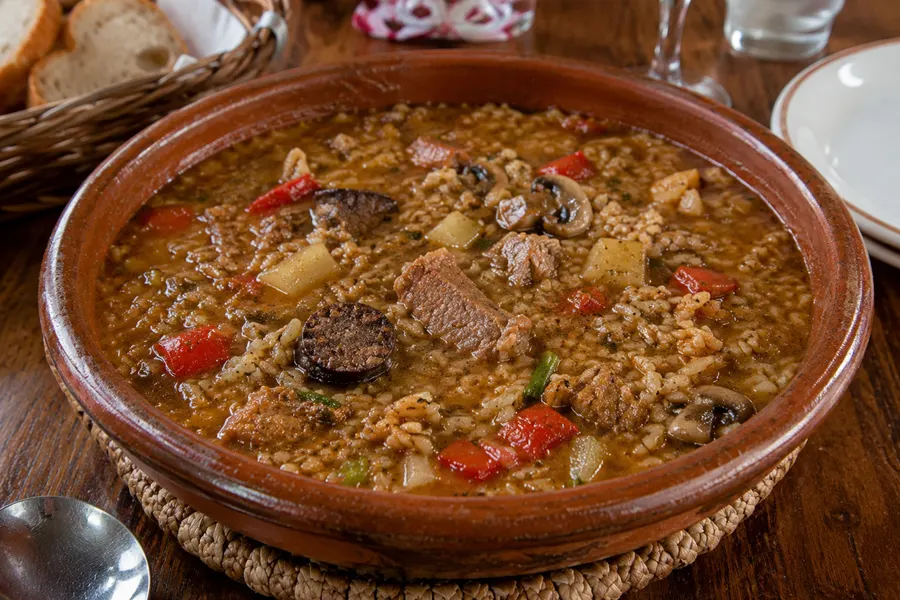
Literally “dirty rice”: a rich rice soup with meat, mushrooms and vegetables.
A full-flavoured dish whose ingredients vary with the season and the recipe.
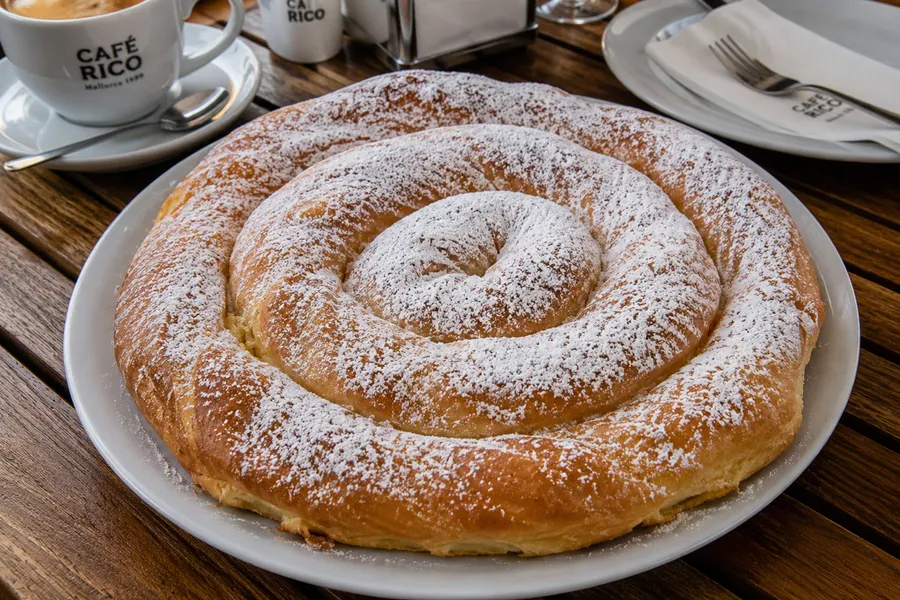
A coiled yeast pastry made with lard and dusted with icing sugar.
The name comes from saïm, meaning lard. Traditionally it is plain or filled with cabello de ángel, a pumpkin preserve. Bakeries offer other fillings too.
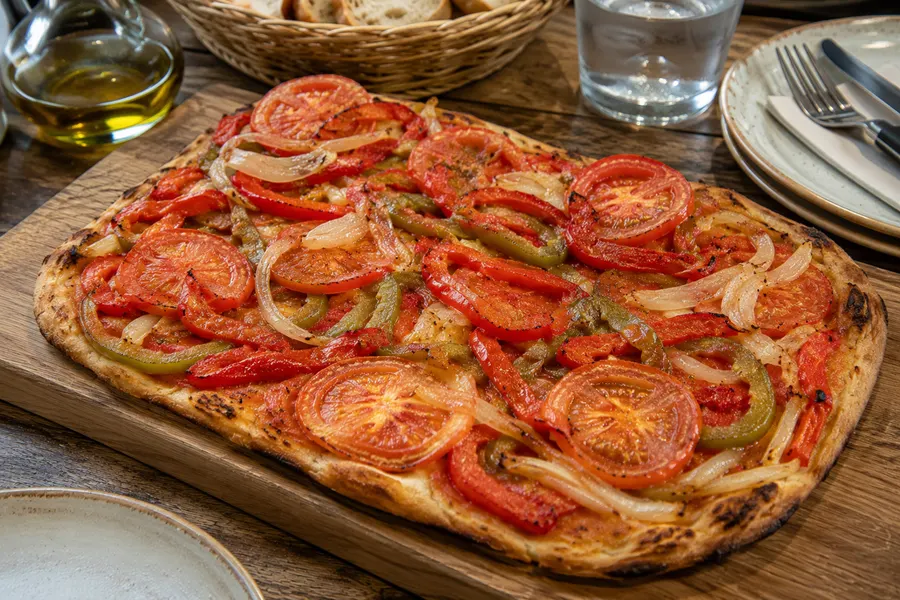
A flat pastry topped with tomato, pepper and onion, without cheese.
The base is more crumbly than pizza dough. The topping goes on raw before the whole thing is baked.
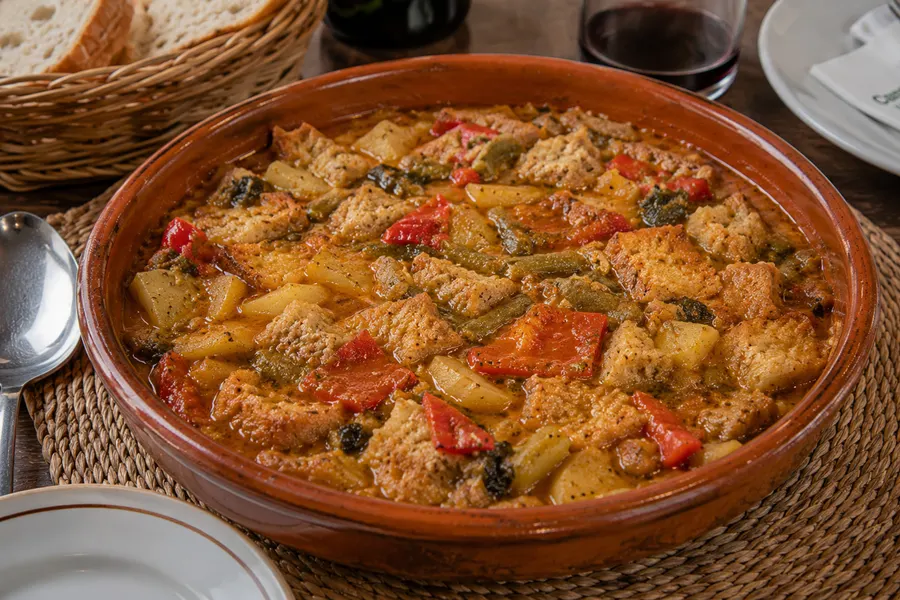
Vegetables and thin slices of bread that soak up the stock as they cook.
A traditional dish made with whatever vegetables are in season.
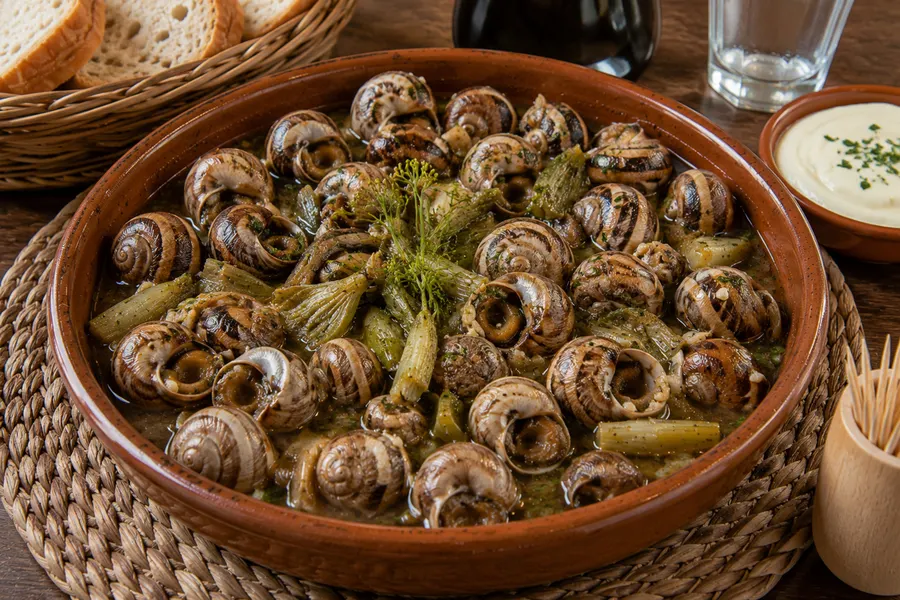
Snails cooked in a rich broth with fennel, herbs and garlic.
Traditional island cooking, usually served with aioli and bread. Particularly popular in spring.
The dish illustrations and main image are AI-generated and marked with the AI symbol. Recipes and presentation vary from restaurant to restaurant.
Lunch and dinner often start later in Mallorca than in Britain, although kitchen hours vary considerably. It is worth checking opening times or booking, especially outside the main season.
A menú del día can be a good way to try several dishes. Compare what is included in the price. A multilingual menu or photographs are neither a guarantee of good food nor a reason to rule a place out.
Mallorca has two protected designations of origin: Binissalem in Raiguer and Pla i Llevant in the east. Local grapes include Manto Negro and Callet for reds, and Prensal Blanc for whites. If you would like to taste wines where they are made, consider a winery visit around Binissalem.
Try the weekly markets and covered market halls. The Mercat de Santa Catalina in Palma is the city’s oldest market still in operation. You will find fish, meat and vegetables, with food stalls where you can stop for a bite. Across the villages, there is a market somewhere on almost every day of the week.
Country cooking based on a few ingredients: bread, olive oil, vegetables, pork and fish from nearby waters. Look for pa amb oli, tumbet, sopes mallorquines, frit mallorquí and arròs brut, along with sobrassada sausage and ensaïmada pastries. Paella originated in Valencia rather than Mallorca.
Look for dishes that interest you, ask about seasonal ingredients and check prices and kitchen opening times. A translated menu or early opening time does not tell you much about quality on its own.
A fixed-price lunch menu, often offered on weekdays. The courses, drinks or coffee included, and the hours it is available, depend on the restaurant. Ask before ordering.
Yes. Binissalem and Pla i Llevant are its two protected designations of origin. Local grapes include Manto Negro and Callet for reds and Prensal Blanc for whites. Other Mallorcan wines are produced outside those areas too. A winery visit is a good chance to try them.
At weekly markets and covered market halls. Palma’s Mercat de Santa Catalina is the city’s oldest market still in operation. Somewhere on the island, a village market takes place on almost every day of the week. Our weekly market guide lists where and when.